

Although we love the original Wingspan, its digital variants and its many expansions, Wingspan Pocket is a faster, tidier distillation of Elizabeth Hargrave’s modern classic — it keeps the theme and the pleasures of bird‑collection intact while stripping away the randomness and bloat, shortening the turns, and giving the whole experience a leaner, more elegant feel that takes the lessons learned from Finspan.
Opening the Wingpsan Pocket box feels like reconnecting with an old friend. Like so many people, I love the original Wingspan (with its beautifully realised theme, and gateway level engine building) and I want to be clear: this is not a total dismissal of that game, even though the years have not been kind to it. Wingspan earned its place as perhaps the most recognisable board game in the last ten years for good reason: it has evocative art, clever card design, and a satisfying sense of discovery as players build a unique tableau of bird cards.
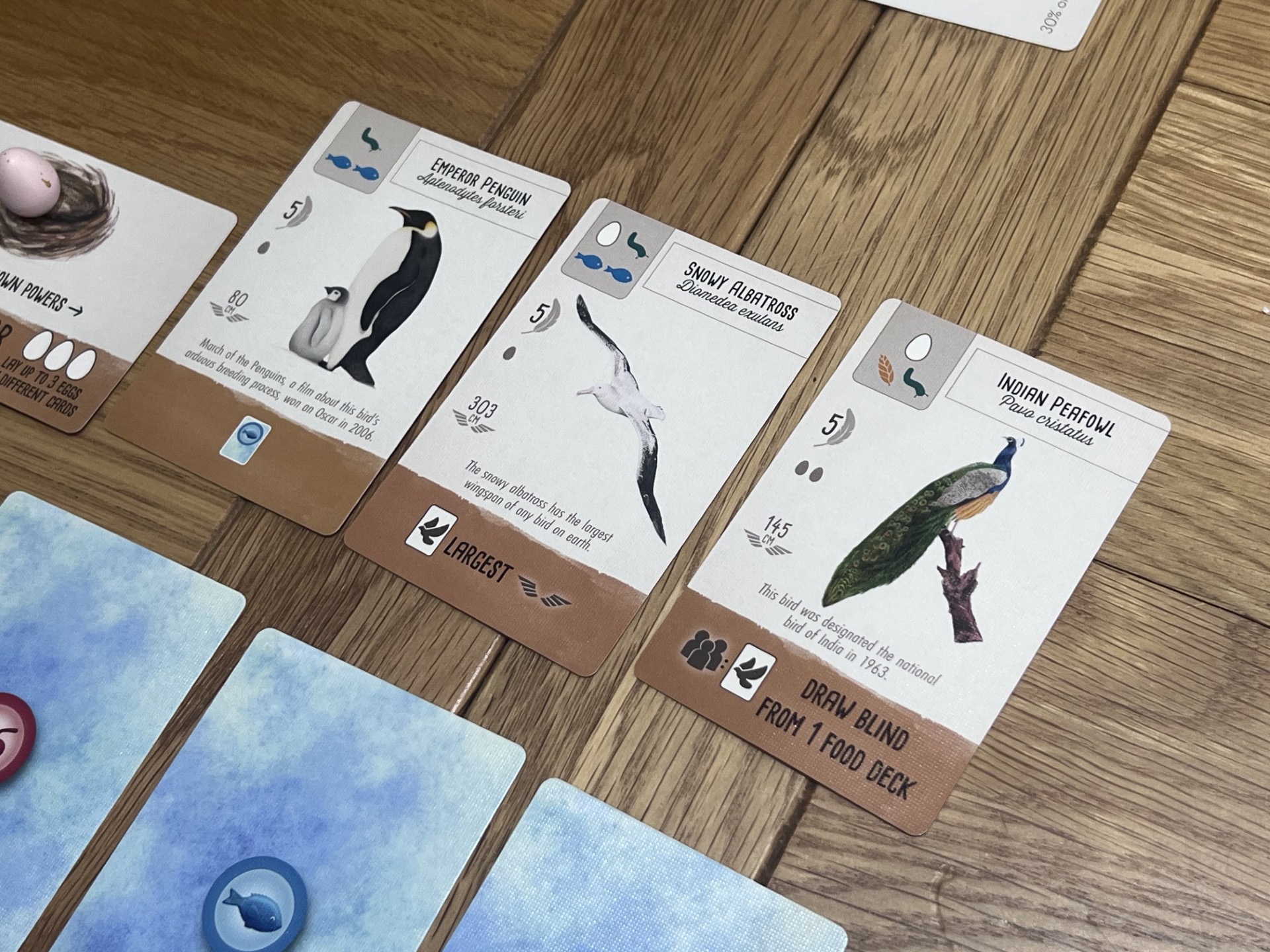
However, over the years the base game’s quiet charm has been complicated by an ever‑expanding catalogue of expansions and optional rules that distract and confuse newcomers, and make setup a chore. What began as a compact, meditative puzzle has, for some players, become a heavier and far too fiddly affair. Wingspan Pocket is a welcome course correction — it retains the beautiful art and core engine building, but it trims the fat in every possible area to create something as sleek and graceful as the birds it depicts therein.
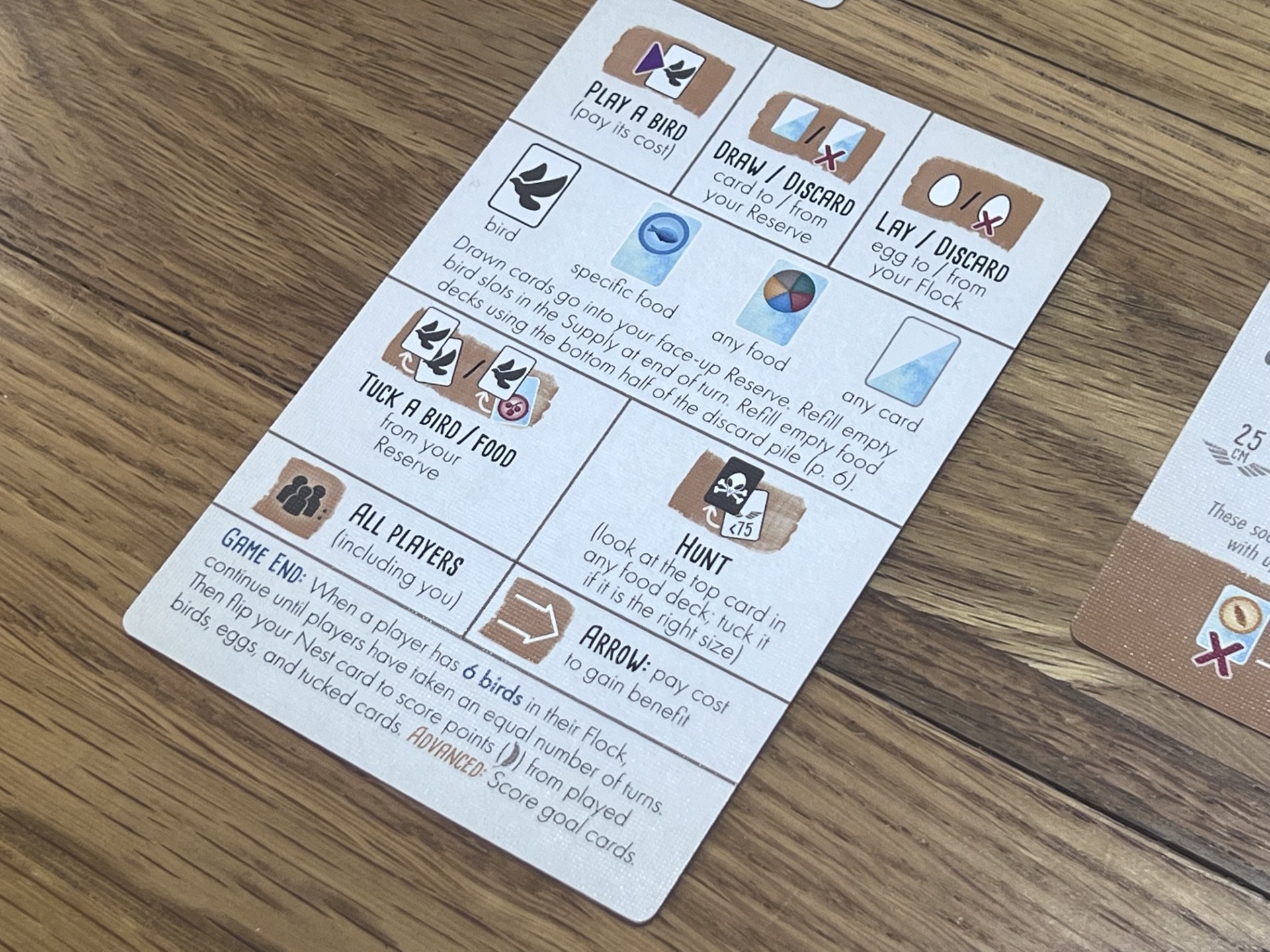
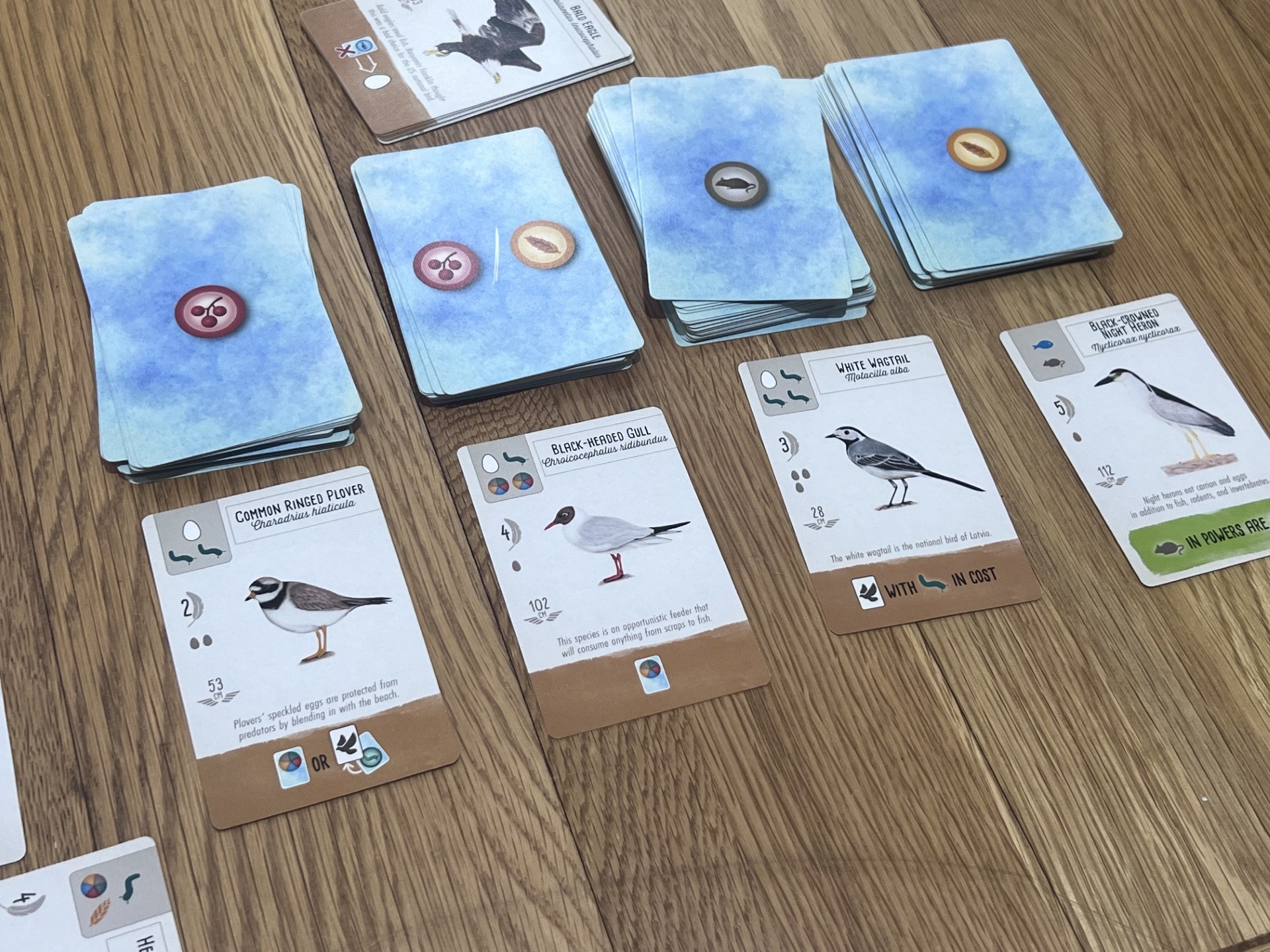
If you’ve ever felt the original’s rhythm slow under the weight of food dice, multiplayer downtime, and a growing list of expansion edge-cases, Wingspan Pocket will feel like a breath of fresh air. The ruleset here is intentionally light and the fiddly bits that used to interrupt flow (such as short and impactful turns drawing food from the random dice) are gone. Now, you just play a bird card, draw two cards (either for food as shown on the backs, or for the birds on the fronts) or lay three eggs. After this, you run your flock of birds (up to a maximum of six before the endgame triggers) and the next player goes.
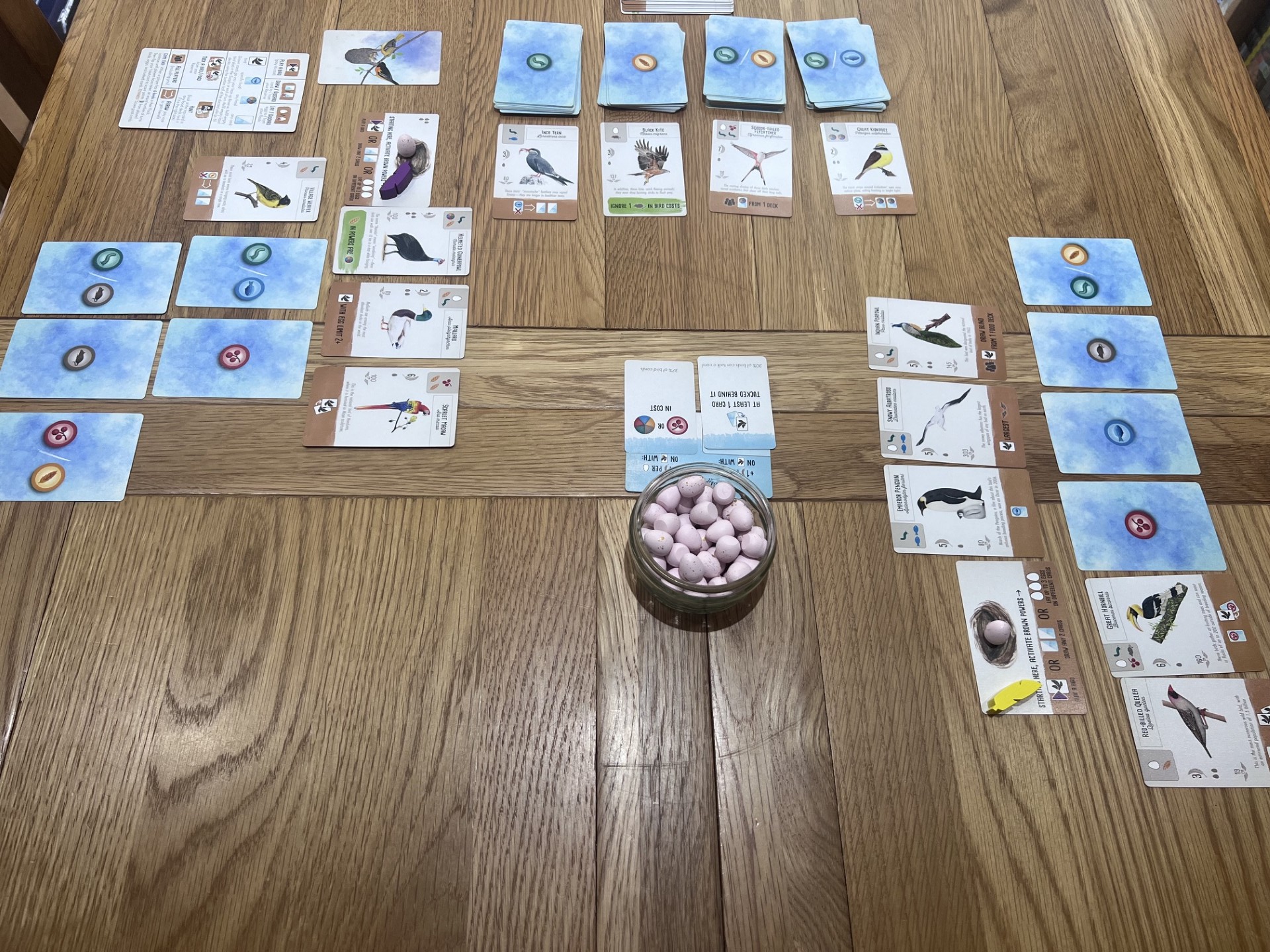
Mechanically, Wingspan Pocket borrows lessons from lighter, more streamlined designs such as Finspan. Where the original game was slow and methodical at times, Wingspan Pocket favours a simplified and more elegant flow. Actions are fewer but more meaningful; take cards to either feed the birds you already have in hand, or to add birds that you might be able to play with the food you have. This isn’t a “Wingspan for people who don’t like Wingspan” so much as it is an alternate universe version of the original game that simply exists with all of the aggregated experience of Wingspan players since the original was first launched.
Components are handled with the same care the original showed, but in a pocket‑friendly package. The cards are still the main attraction — well-sized, readable and full of the same little ecological vignettes that made the original so charming. There are no player mays here beside a single nest card, and the dual-use bird cards mean that no food tokens are needed either. Stonemaier Games know their audience though, and the wise decision to spend significant production budget on the same lovely tactile eggs of the original must have been a no-brainer really. Nothing feels cheap, and the tactile experience of building a tableau (albeit a smaller one) remains satisfying. If you’re someone who mourned the original’s increasing complexity but still wanted a beautiful, well‑produced game to sit on your shelf, Wingspan Pocket hits that sweet spot.
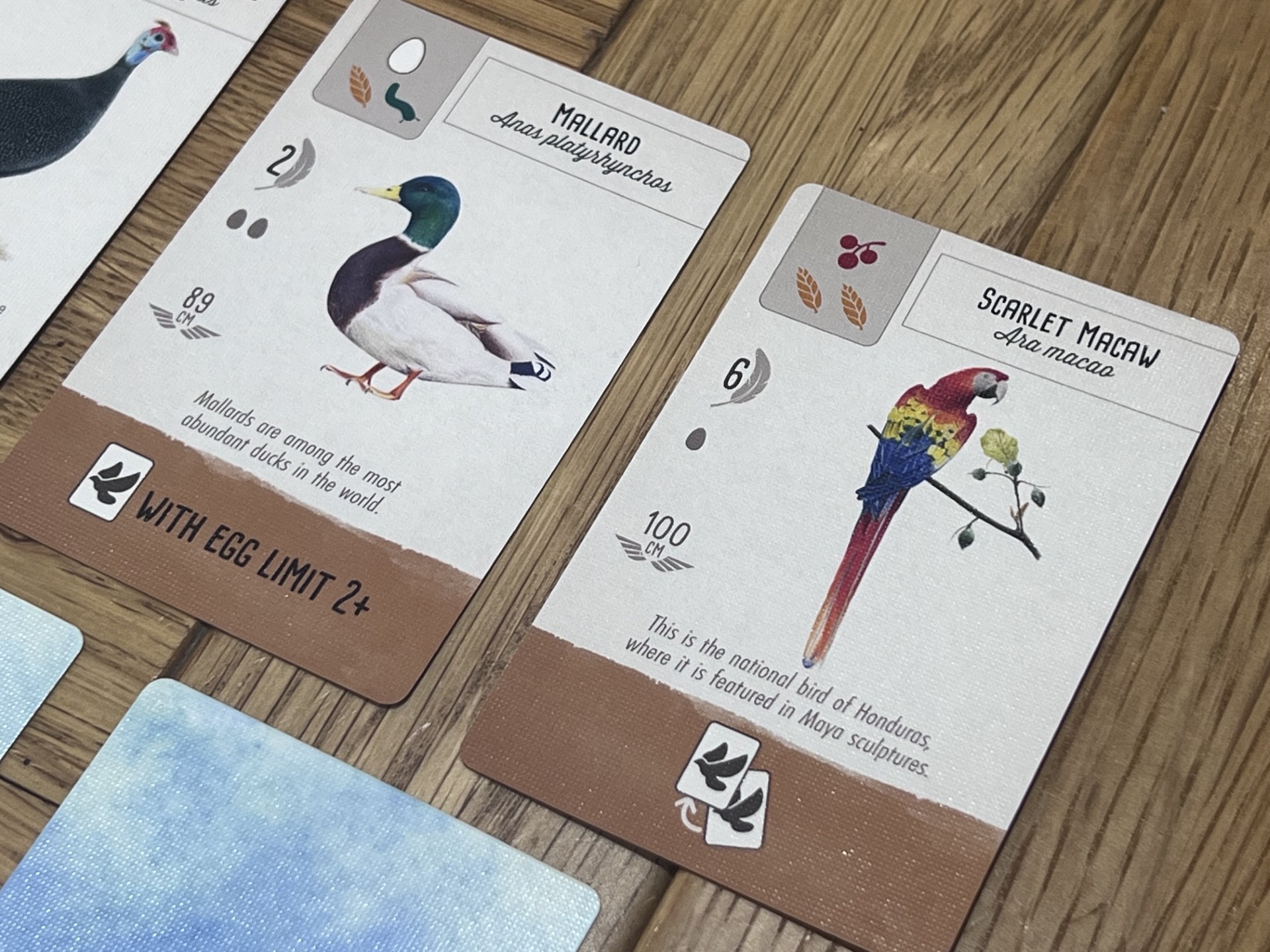
Where Wingspan Pocket really wins is in pacing. A full session moves with pleasing momentum and pace: you can feel the engine click into place faster, and the scoring milestones arrive before the game ever feels like it’s overstaying its welcome. That makes it a better fit for mixed groups and for players who want the thematic comfort of Wingspan without committing to a long, slow play. It also makes the game easier to teach: the core loop is intuitive, and the reduced number and variety of activation options keeps things moving.
That said, Wingspan Pocket is not a perfect answer for every complaint. If your main pleasure with the original was the depth of its engine‑building — the long, satisfying arcs that let you sculpt a tableau over many rounds — you will miss some of that slow‑burn satisfaction here. Wingspan Pocket trades some of the original’s long‑term planning for immediacy. For players who loved the original precisely because it rewarded patient, layered optimisation, the pocket version can feel a touch too brisk. I don’t actually think Wingspan Pocket is intended to replace Wingspan for most people (even though it may do for me), but to offer its own, much faster alternative that is largely focussed on the same audience.
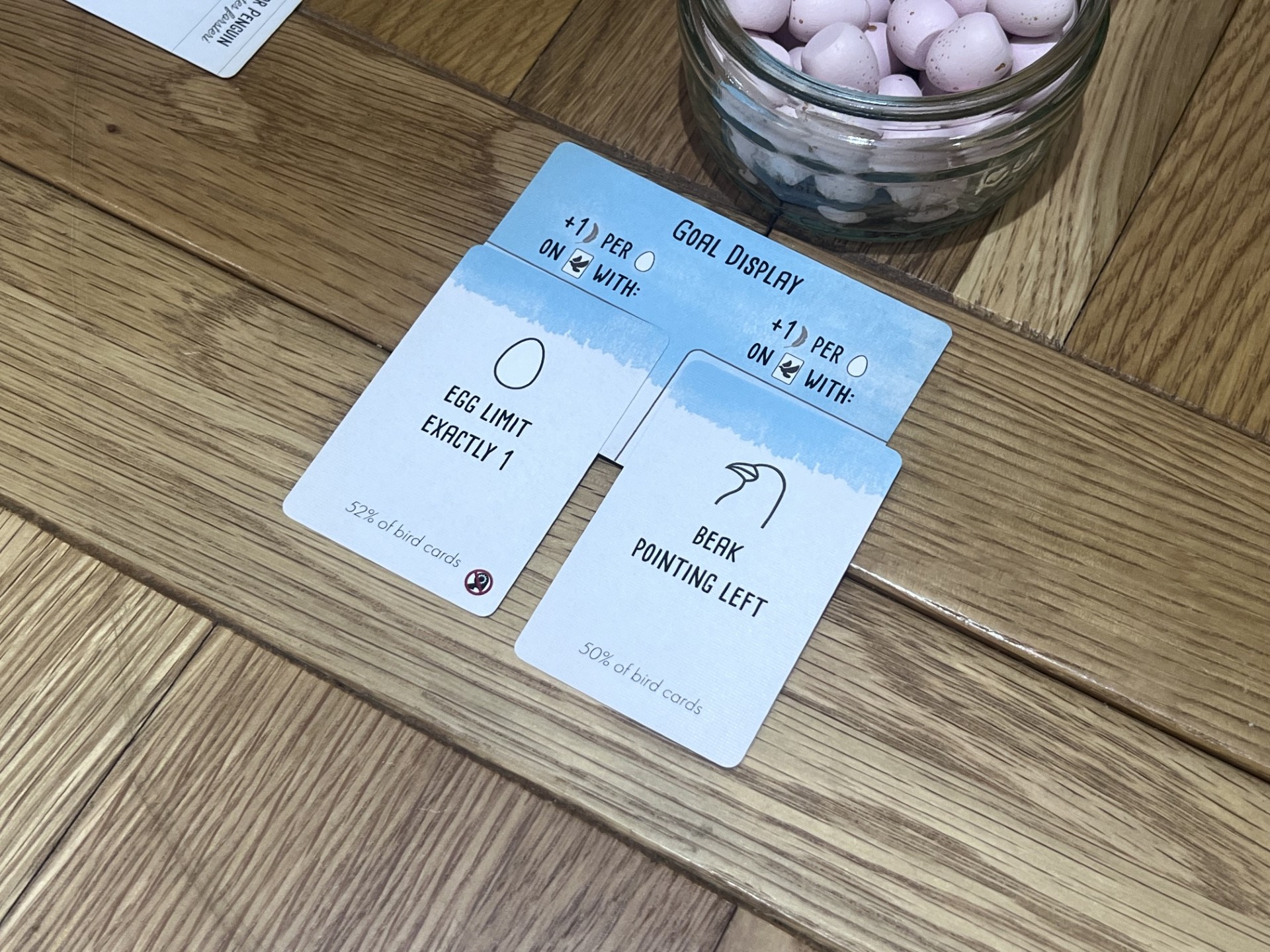
I also appreciate how Wingspan Pocket treats the original with respect rather than parody. There’s no attempt to “fix” the theme or to reinvent the game’s identity; instead, it refines the rules so that the theme can breathe more easily. The bird cards still sing with personality and their abilities have a meaningful impact, but you see that impact faster and often only once or twice before the game is over. The scoring and objectives are recognisable, but they’re presented in a way that reduces bookkeeping and keeps attention on the tableau itself, with just two objectives per game scored at the end, rather than being variable by round.
Replayability remains very strong, especially considering the portability of Wingspan Pocket. The compact card pool and the streamlined interactions mean that each play feels tight and focused; you’ll still find new synergies and surprising combos, but you’ll discover them faster. That makes Wingspan Pocket an excellent gateway for players who have been intimidated by the original’s growing complexity, and it also makes it a great travel or filler game for groups who want a satisfying 30–45 minute session with surprising decision weight.
If I have a quibble, it’s that Wingspan Pocket’s very success raises a question about the broader Wingspan ecosystem. The original game’s expansions were born from a generous and inclusive idea — more birds, more habitats, more stories — and for many players that was a joy. But there’s a point where optional content becomes a barrier to the clean experience the base game once offered. Wingspan Pocket argues for restraint: suggesting that a game can be both rich and compact, and that elegance often beats accumulation. I suspect some fans will prefer the maximalist route; others will welcome Wingspan Pocket as the version that finally gets the balance right.
To a certain extent, Wingspan Pocket also landed in my lap at exactly the right moment for me to take the most notice. In the last 12-18 months I’ve found myself moving away from larger, heavier games that have become difficult to table. Instead, I’m finding increasingly more joy in smart but simple games such as Rebirth from Reiner Knizia, or Fetching Feathers. I can play these games with my kids and everyone understands what’s happening, but the decision space is just as clever and rewarding as a bigger, more complex game. Try teaching Wingspan to a five year old and you’ll likely have no chance, but Wingspan Pocket on the other hand? She loves it.
In short: if you love the idea of Wingspan but have been put off by the slow turns, the expanding ruleset, or the fiddly feeder mechanics, Wingspan Pocket is the version you’ve been waiting for. It honours the original’s strengths — art, theme, and the quiet pleasure of building a tableau — while removing the friction that made some plays feel cumbersome. It’s not a replacement for the full‑blown experience for everyone, but it is a brilliant, respectful distillation. Smaller, faster, and smarter about what really matters. For me, that makes it one of the most satisfying re‑edits of a modern classic I’ve played in a long time.
Wingspan Pocket is available now, you can find out more about it on the website of publisher Stonemaier Games.
