

Fetching Feathers is a charming, streamlined card‑drafting game that takes the core appeal of Zuuli — quick turns, point-salady gameplay and irresistible artwork — and distills it into an even lighter, more accessible experience. It’s breezy, colourful and supremely engaging, with a simple purpose that makes it ideal for families and casual groups, whilst still retaining enough tactical bite to keep hobby gamers happy.
It’s based on a simple idea: build habitats, put birds into them and assemble the most appealing tableau by the end of three rounds. The rules are light and seem to be considerably simpler than the already straightforward Zuuli on which Fetching Feathers is based. This means that players will waste no time getting into the rhythm of drafting, placing and occasionally disrupting each other’s plans, and I was even able to play Fetching Feathers with my five year old.
What struck me first was how quickly players settle into the simple rhythm of the game — turns are short, choices are clear, and the game encourages a kind of relaxed forward momentum that feels very similar to Zuuli, but with less friction. If Zuuli sometimes demands that players think a couple of steps ahead, Fetching Feathers is content to let them enjoy the moment‑to‑moment decisions without too much to worry about; except the changing seasons of course.
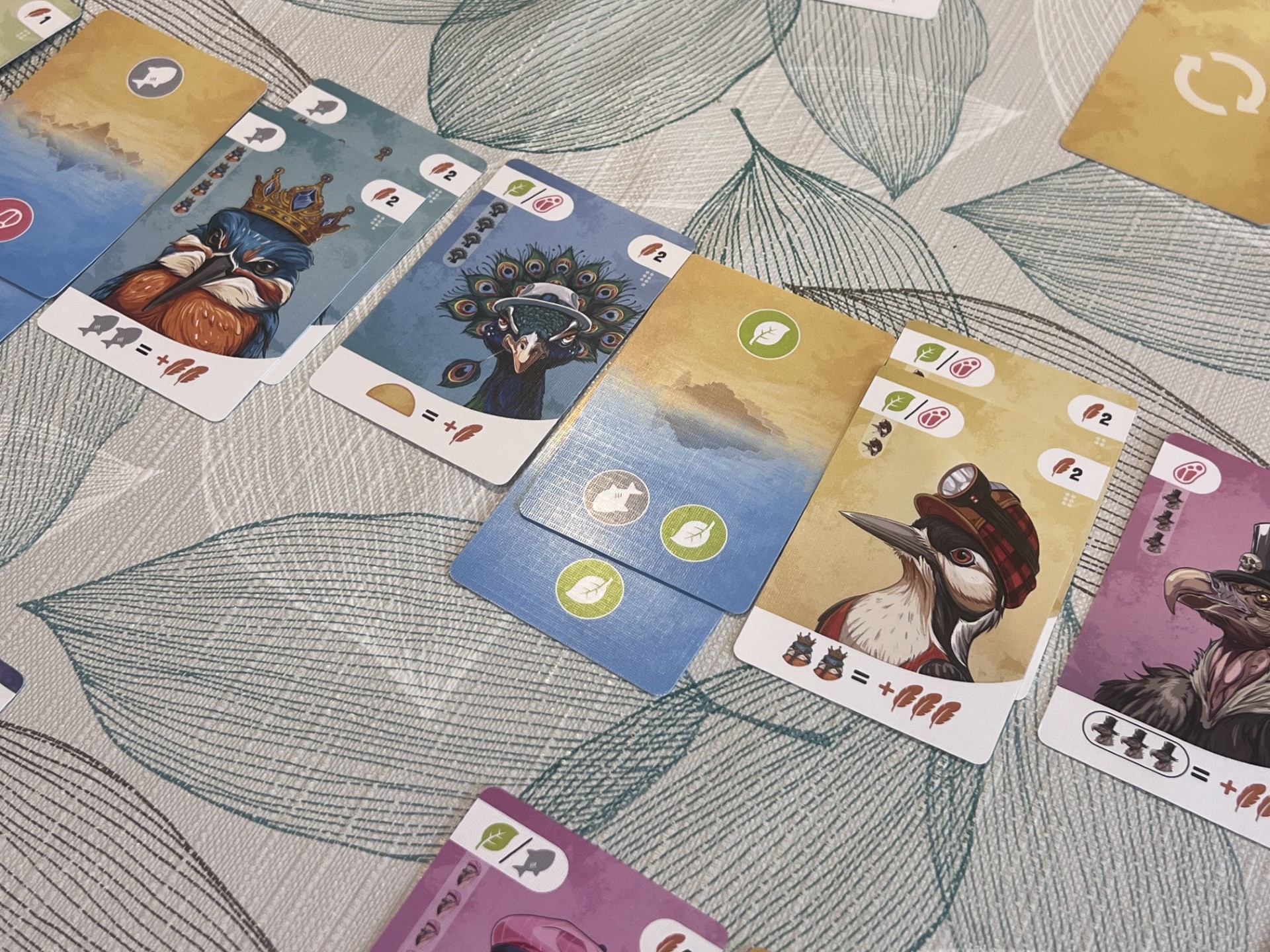
The season mechanic is the one twist that adds both decision-making complexity and planning to the game. In short, each habitat card has a summer and a winter “end” and broadly speaking, each one will have different food sources on each. A fish might be paired with a meat, or a meat with a leaf and so on. Each bird requires specific food, and when the seasons change, the habitat cards are rotated to their opposite season end, which can result in birds becoming displaced.
The artwork is, frankly, fantastic. One of the defining strengths of Zuuli was its warm, expressive animal illustrations, and Fetching Feathers continues that tradition with a very different (and even more distinct) art style. The birds are vibrant, characterful and full of personality, whilst the habitat cards are just super clear and simple. Fetching Feathers features artwork that stands out in a way that helps the game shine, and both children and adults are drawn to it immediately. Every bird features a highly individual personality, a fabulous bit of headgear and a ton of detail that makes people want to examine the cards closely.
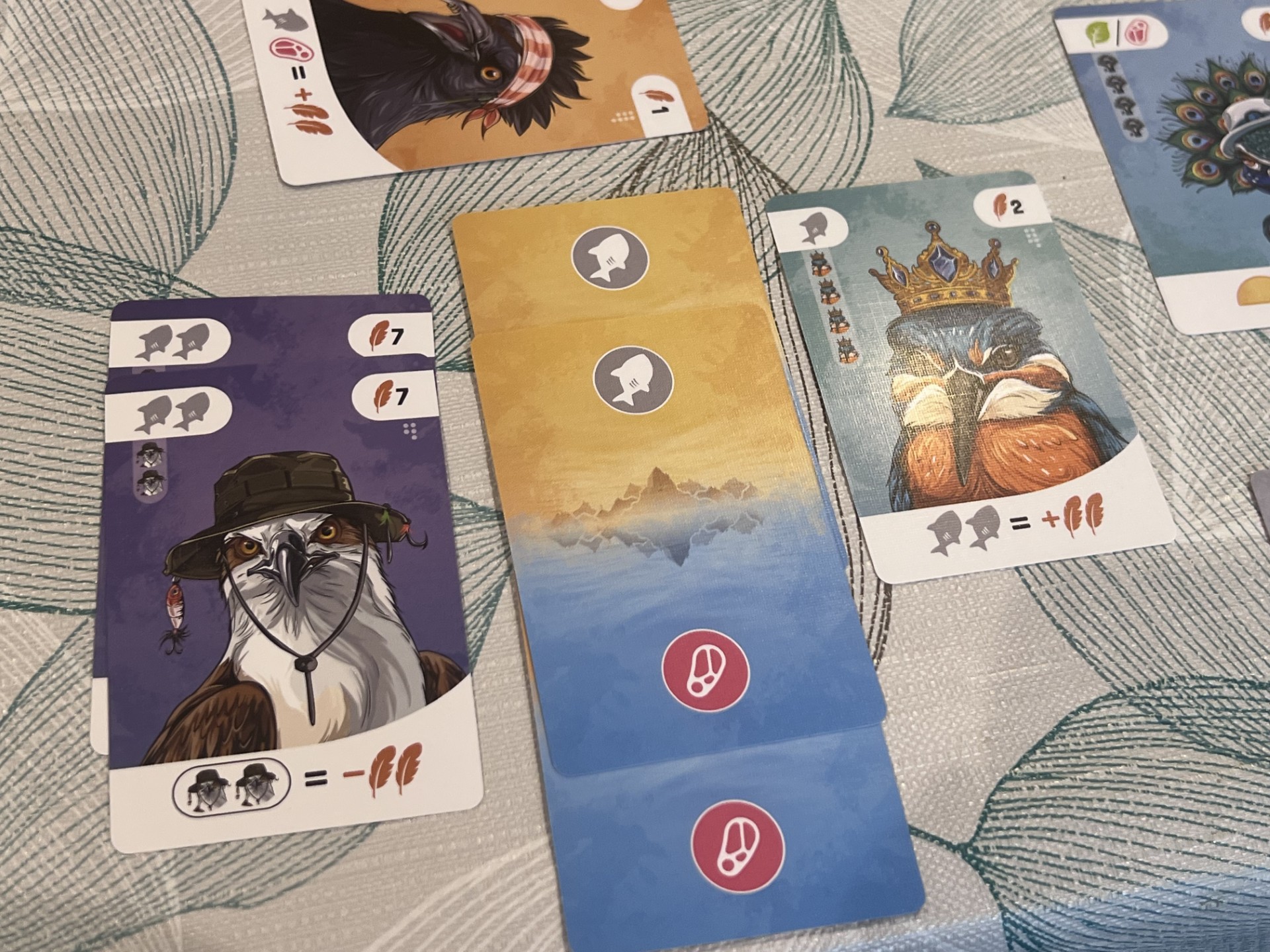
Mechanically, Fetching Feathers is more streamlined than its predecessor. Where Zuuli mixes drafting with spatial placement and set‑building constraints, Fetching Feathers pares things back to a cleaner loop: choose a card, add it to your tableau, and watch your scoring opportunities take shape. The crunch comes from knowing that if you draft a card that won’t have a suitable habitat (either immediately or when the habitats rotate) then that card is going to “migrate” to a neighbouring player if they can accommodate it.
Yes, that’s right. There’s a feature in Fetching Feathers wherein you might score a fantastic tableau in Round 1, then when the habitats rotate, most of your birds move on and you’re back to square one. The game manages this by tasking players to draft both bird cards and habitats at the same time, so if you go heavy on birds but neglect habitats, you’ll be the architect of your own downfall. Prioritising habitats and thus denying your opponents of them is a viable strategy, but you can be left behind in the point scoring by having too few birds to place.
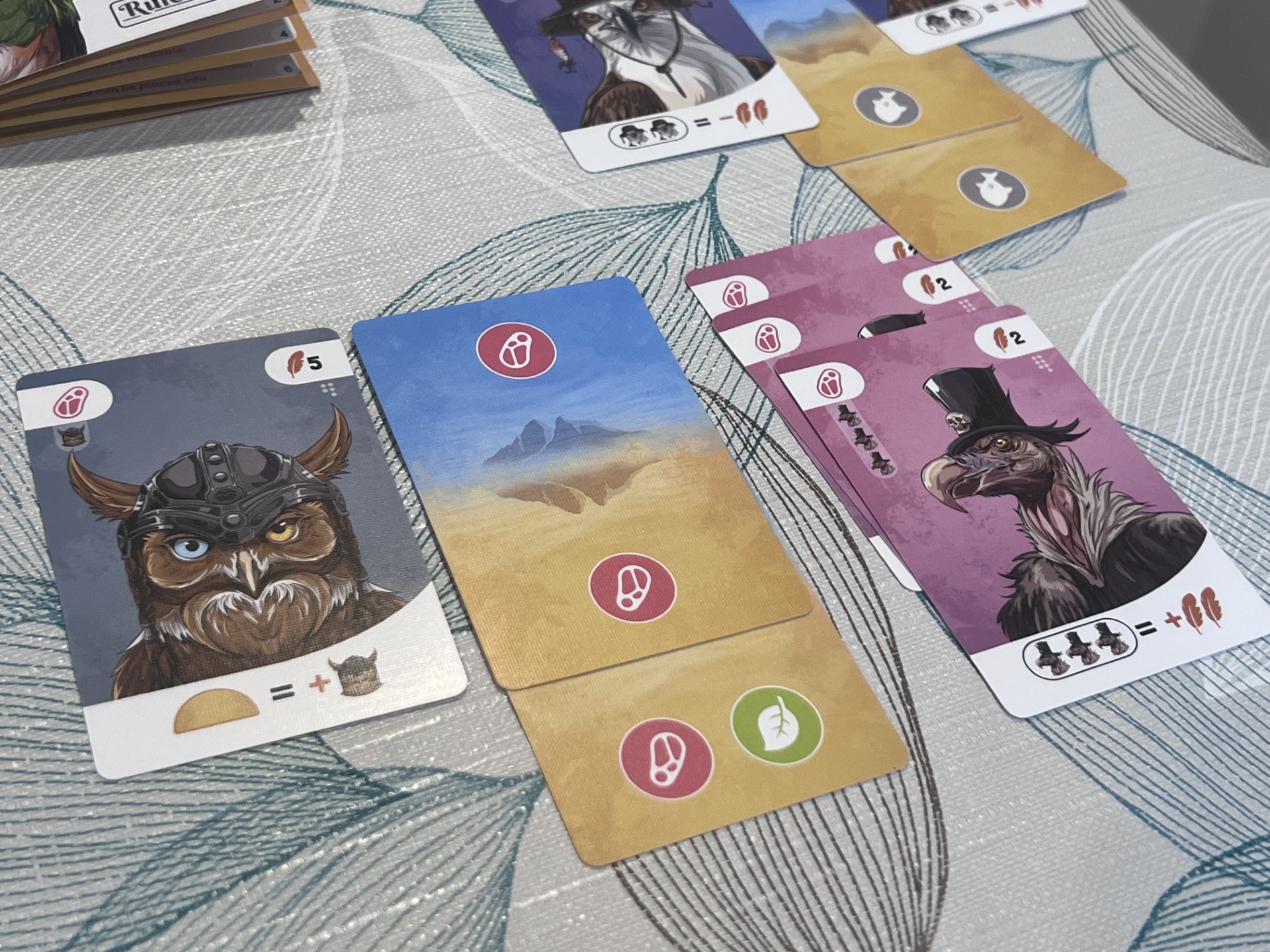
Despite surprising mechanical simplicity, there’s enough tactical nuance in Fetching Feathers to keep things interesting. Choosing when to commit to a particular bird type, when to diversify, and when to chase habitats to secure your scoring creates a gentle push‑and‑pull that rewards paying attention without ever punishing mistakes too much. Fetching Feathers is short enough that experimentation feels encouraged — you can try a new approach each round without worrying about being locked into a bad decision.
Component quality is spot on. The cards are sturdy, the iconography is clear, and the layout supports quick reading and fast turns despite the detailed and gorgeous artwork. The compact size makes it ideal for travel or casual play, and setup is almost instantaneous. Much as it did in Zuuli, the physical presentation reflects the work of a designer who understands how to make a small game feel polished without unnecessary embellishment.
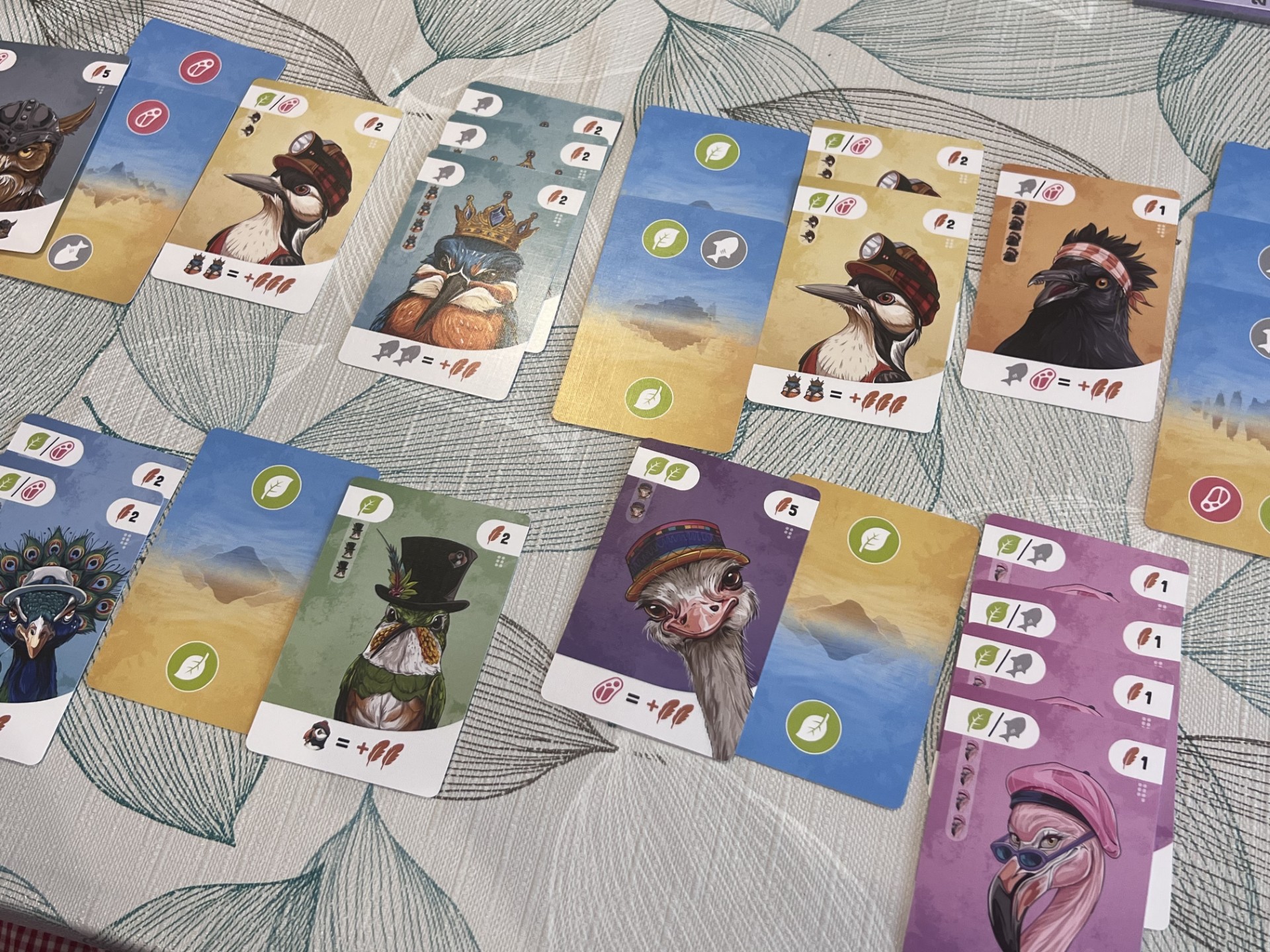
Player count flexibility is good. With fewer players, the game feels more controlled and slightly more tactical, whilst with more players, Fetching Feathers becomes livelier and more chaotic in a pleasant way. The drafting loop scales cleanly, and the game’s short length means it never overstays its welcome. It’s a title you can play two or three times in a row without fatigue, especially with younger players who enjoy the artwork and the simple satisfaction of collecting colourful birds.
If Fetching Feathers has limitations, they stem from its deliberate simplicity. Players who prefer deeper drafting games or more direct competitive tension may find it a little too gentle, and those who enjoyed the spatial puzzle of Zuuli might miss that extra layer of decision‑making. But these aren’t flaws so much as design choices, and Fetching Feathers is a cleaner game for it. Fetching Feathers sets out confidently to be a light, joyful, accessible card game — and it delivers that experience very, very well.
Ultimately, Fetching Feathers feels like a natural evolution of the ideas behind Zuuli. It’s cleaner, faster, more approachable, and wrapped in artwork that is genuinely delightful. It’s a game that understands its audience and embraces its strengths, offering a short, satisfying experience that’s easy to teach, fun to replay and perfect for families or casual groups. If you enjoyed Zuuli, you’ll appreciate how this design trims the fat while keeping the charm; if you’re new to the designer’s work, Fetching Feathers is a wonderful place to start.
Fetching Feathers is available now, including from Amazon.
