

The original Endangered was perfect for this, offering a superb framework that led to great stories. The second big box expansion is now with us, and I can safely say that Endangered: Australia is a generous, imaginative expansion that deepens everything I enjoyed about the original Endangered while adding four distinct scenarios that each feel mechanically fresh, grounded in real-world drama and highly satisfying to play.
Anyone who reads my reviews regularly will know that I love board games centred on clever, straightforward mechanics that reward smart play and don’t take too much time to process. Endangered: Australia feels like a thoughtful evolution of Joe Hopkins’ design philosophy; offering accessible cooperation, meaningful dice placement, and scenario‑driven tension that rises and falls in just the right way. The new Prime Minister role is a good addition, the scenarios range from fairly breezy to brutal and in general Endangered: Australia achieves its aim, which I still believe is to raise awareness whilst giving players a genuinely compelling insight into the risk these animals are in, and the challenges that face those who try to preserve them.
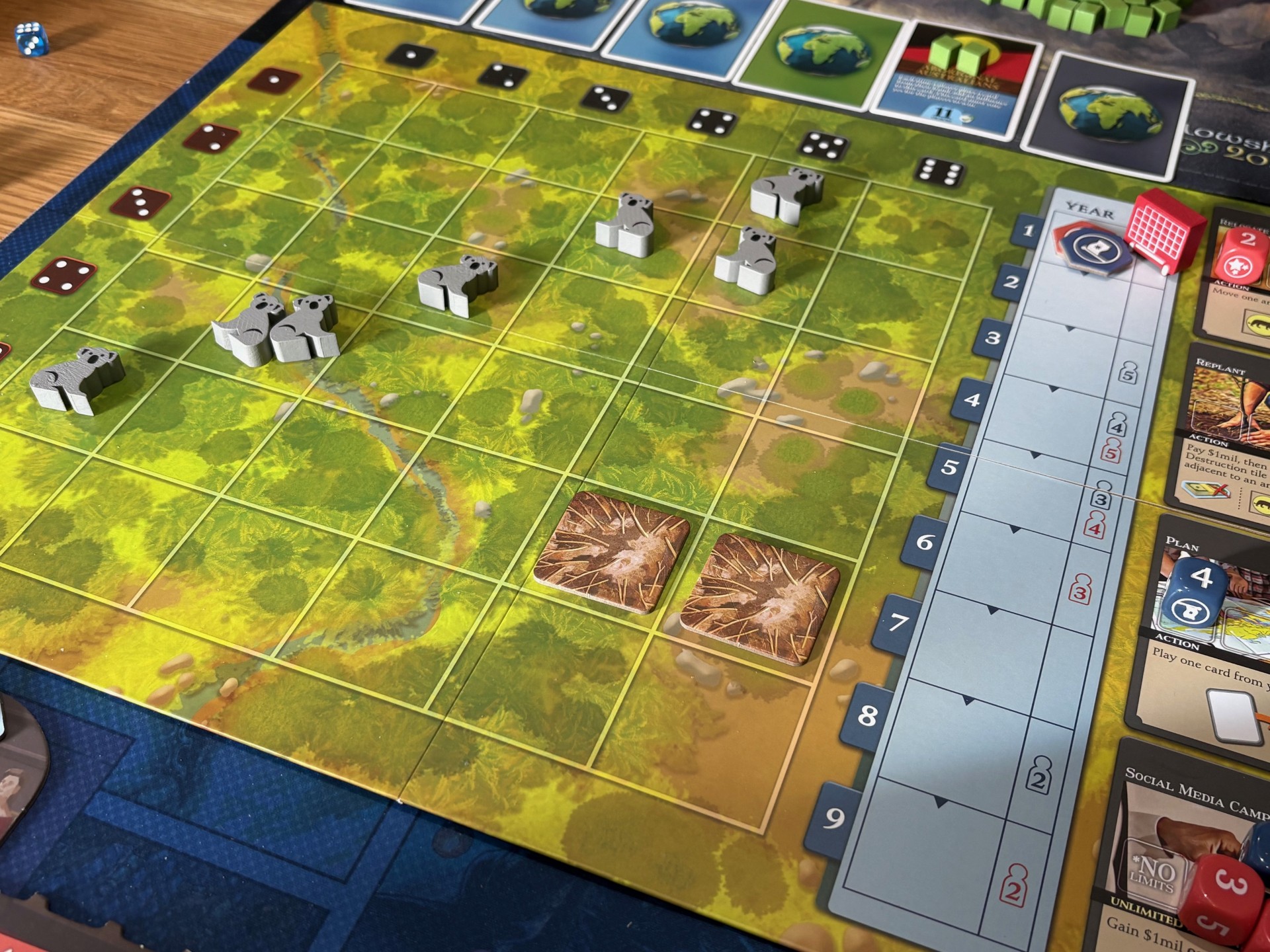
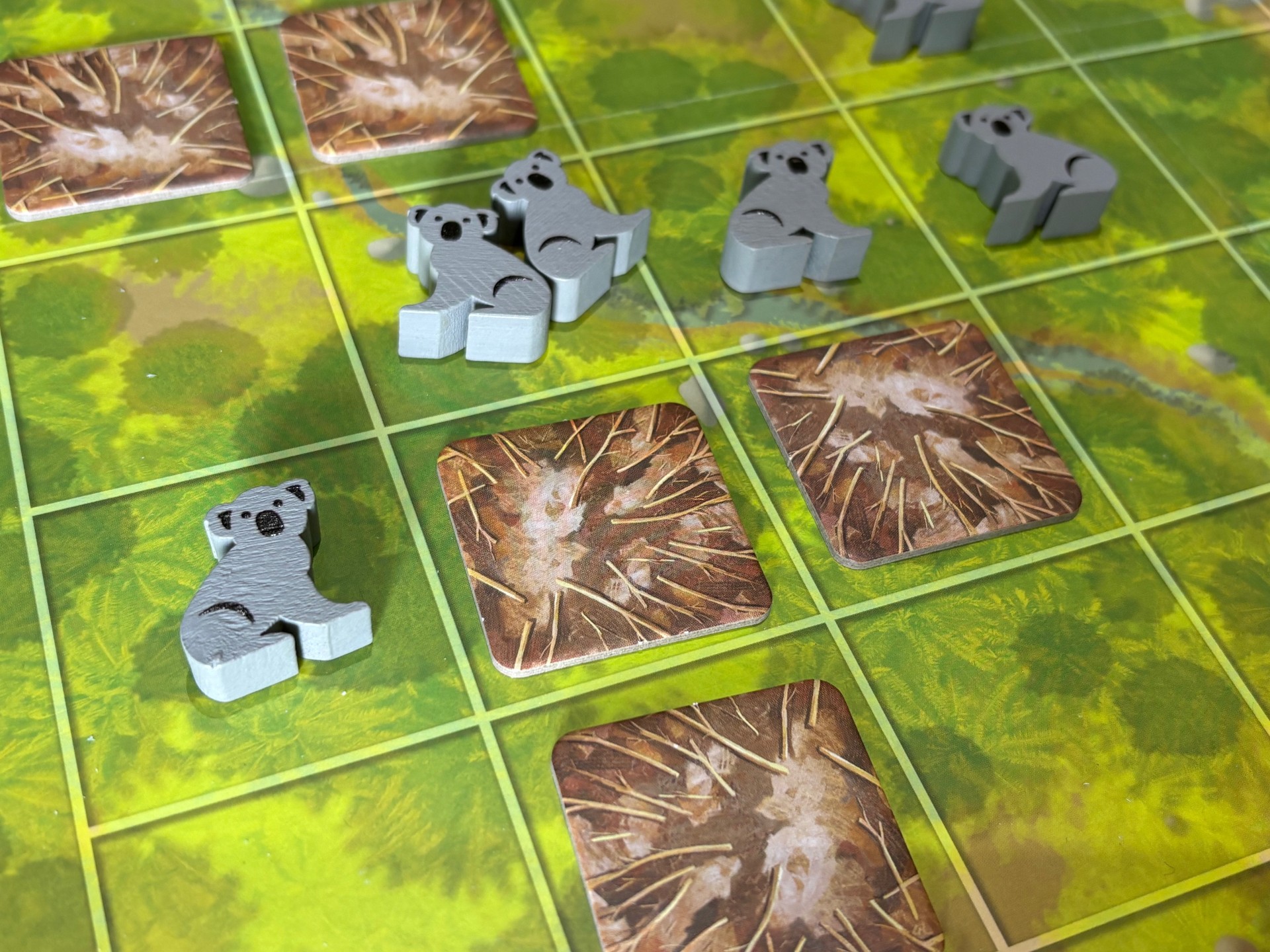
When I originally reviewed Endangered, I praised how cleanly it balanced emotional stakes with mechanical clarity and the way each scenario felt like a puzzle built from real conservation challenges with its own unique push and pull. Endangered: Australia continues that tradition, but with a broader palette and a more playful tone. The koala scenario is the gentlest entry point, built around habitat loss and population fragility. It’s clearly a simpler scenario, and I could perhaps call the game out for using a similar template to that of the base game tigers, but for many people Koala’s will be the preference, there are definitely quality of life upgrades in the gameplay and if at least half the mission is awareness then, well, tigers and koalas ain’t the same.
The Giant Barred Frog sat in the middle in terms of complexity for me. It is undoubtedly more demanding, more volatile, and more reflective of the amphibian’s real‑world vulnerability (and as the frog is the only animal in the whole Endangered series that I didn’t already know quite well, it was super interesting for me personally).
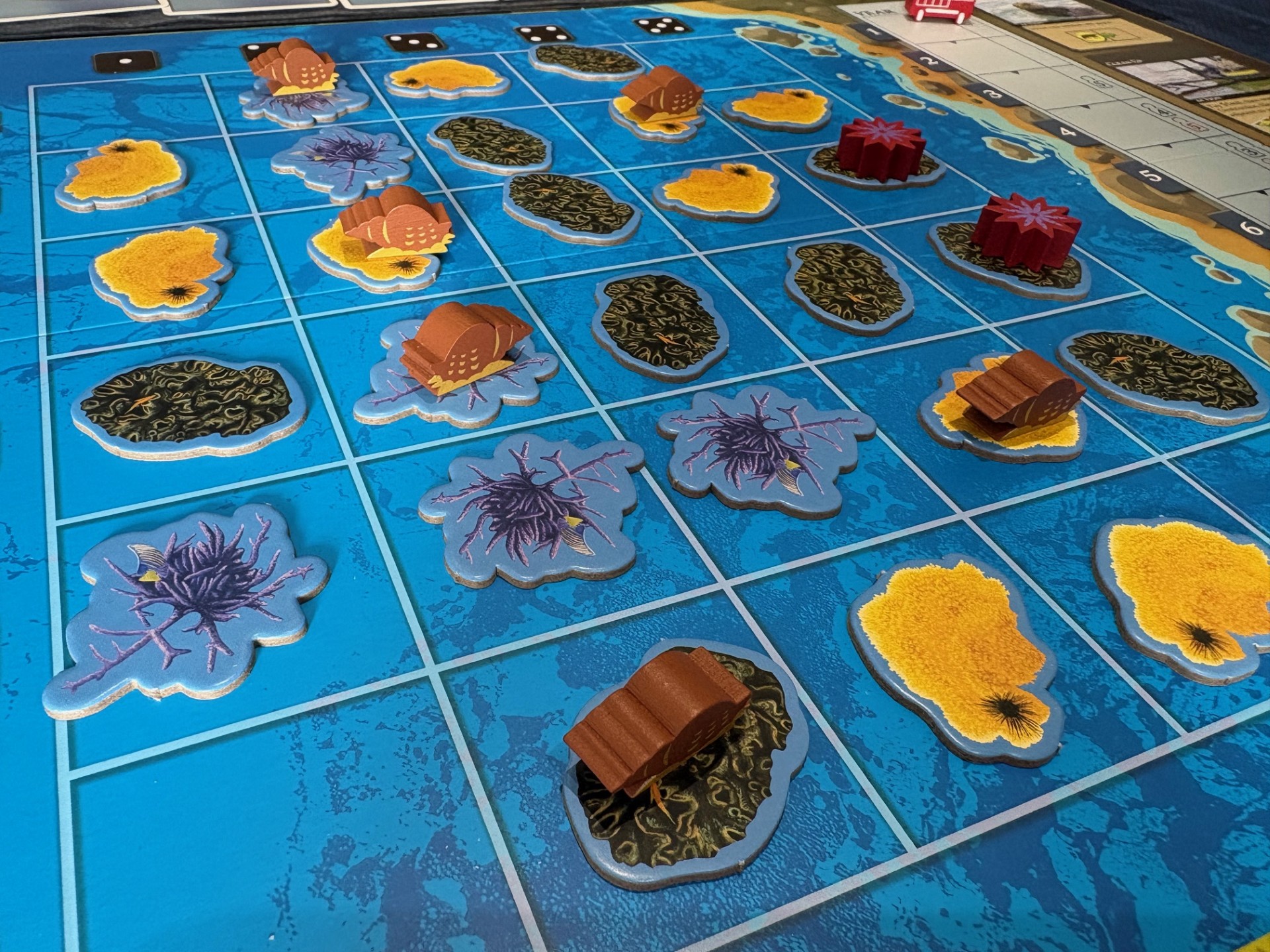
The Great Barrier Reef is the standout for complexity — a sprawling, multi‑layered scenario that models coral bleaching, environmental degradation, and the delicate balance of reef ecosystems. For anyone familiar with the game, this is a two-creature scenario that also uses double-sided tiles to show the decline in coral. It’s interesting, thought-provoking and, depending on how you’re able to connect these things to real-life (or not), it can be devastating.
And then there’s the Bunyip — a fun curveball that was included as a Kickstarter bonus. It’s a fictional creature, but the scenario is designed with the same seriousness as the others, albeit with a more playful edge. The Bunyip roams, disrupts, and behaves unpredictably, turning the board into a highly mobile puzzle that requires precise timing from the player(s). Whilst I felt that it was a clever inclusion (a scenario that lets the game extend beyond the strict realism of the other settings), I would probably name about a hundred real Australian animals that remain in grave danger. That said, the counterpoint to this is that adding some levity in a game that can often feel thematically heavy is no bad thing. Action requires engagement, and I have real world examples of people playing Endangered, losing and feeling as if they didn’t want to try again as it made them feel bad (thinking about the real challenges these animals face, as I perceive it).
Mechanically, Australia slots neatly into the original framework. You’re still placing dice, managing habitats, mitigating threats, and lobbying for support in exactly the same way, but each scenario introduces its own twist just as it has in each prior expansion. The Great Barrier Reef, for example, uses double-sided tiles to show bleaching, plus a water temperature board and then both predatory (good) snails and invasive (bad) starfish. The Giant Barred Frog scenario introduces environmental pressures that spread if not contained. The Koala scenario emphasises careful population management, and the Bunyip scenario adds movement and unpredictability that can derail even well‑planned turns. Each scenario feels distinct without ever feeling disconnected from the core game.
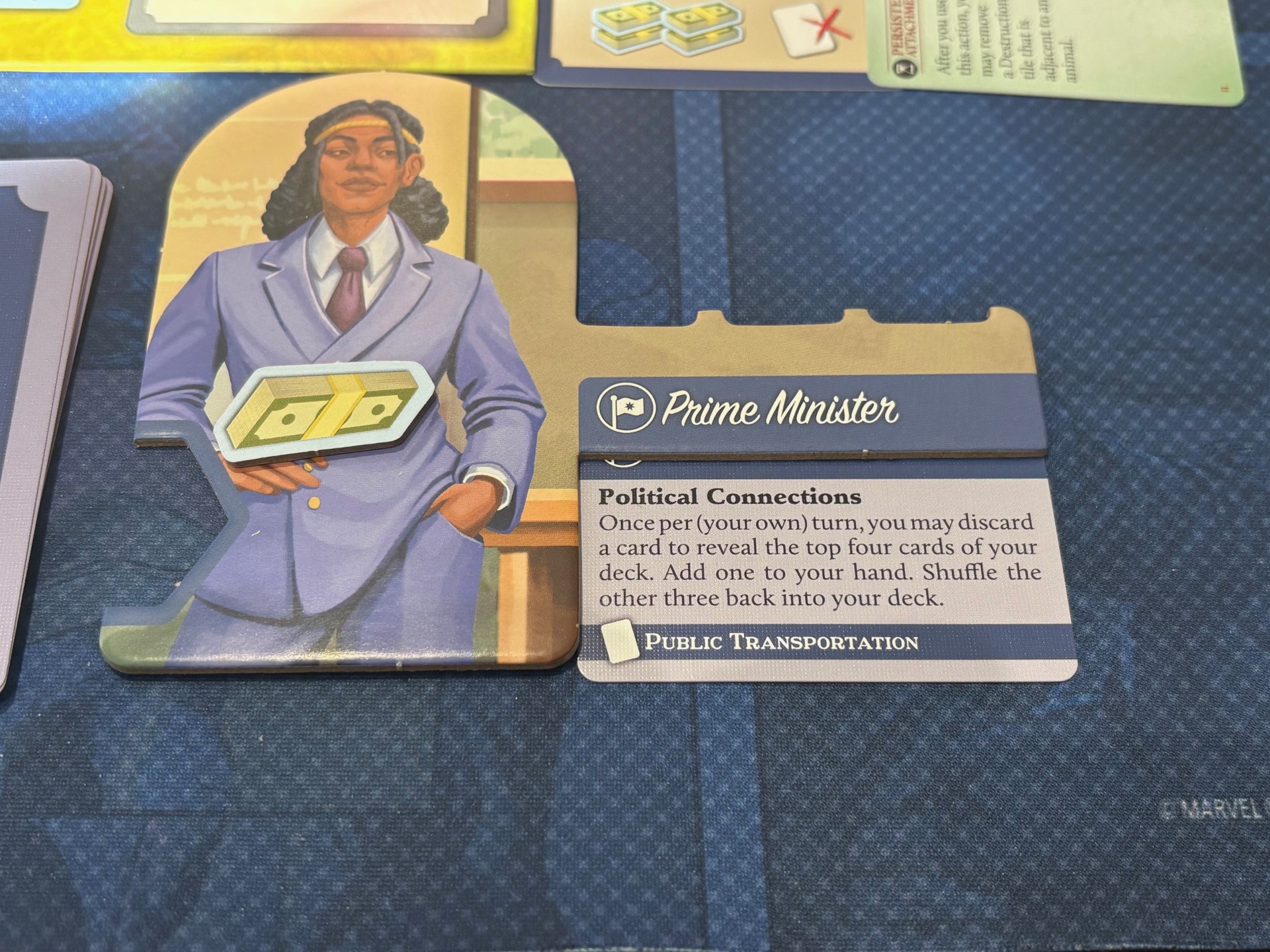
The new Prime Minister role is a strong addition that balances powerful actions with occasionally negative consequences (representing the conflicting pressures of the role). It’s a more political “feel” in terms of how you do things, and in a cooperative game it leads to some healthy debate as players try to decide whether a certain action is beneficial enough to activate. Nothing that the Prime Minister does feels unbalanced or as if it unbalances the existing systems — it’s just another solid choice among the already decent roster.
What stands out most to me is how Endangered: Australia expands the emotional range of Endangered and hopefully introduces new ideas to the audience. Each scenario is unique and well-tuned within the already very strong framework, and I enjoyed them, but I’ve been watching David Attenborough my whole life so little of this is particularly “new” news to me. What was amazing about playing Endangered: Australia was seeing my children and even some adult friends go through the process of learning about an animal (in some cases even its basic existence), then understanding its plight, and then really knuckling down into the story of how we save them.
Together, the new scenarios create a suite of experiences that feel richer and more varied than the original box, demonstrating both design maturity and how flexible the underlying system truly is. Endangered: Australia also maintains the clarity I praised in my original review — turns in this game are still readable, actions are intuitive and the dice placement puzzle remains the beating heart of the game even if sometimes in these scenarios, the decisions are harder and/or more conflicting.
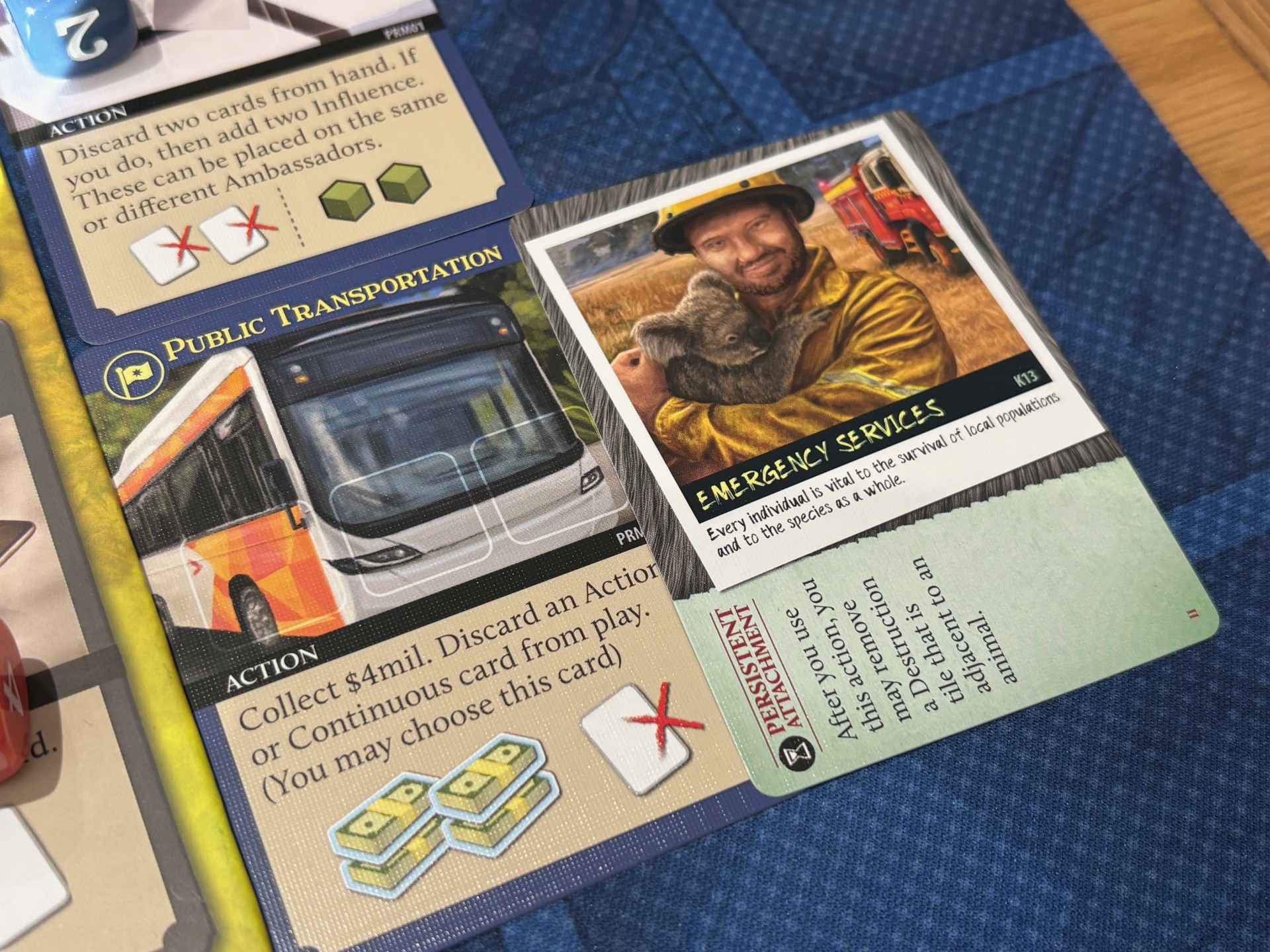
I usually try to include at least one negative in a review like this, but it gets harder and harder because there is almost no such thing as a glaring issue in a game that has been as well established and refined as Endangered: Australia has. That said, in this case, we have to look at the emotional weight of the game. The structure here is simple, the turns are mechanically easy to process, but you will definitely need to be ready to destroy a strip of habitat in order to put down a bus route (or similar) at some point. Why? Because you need the money. Why? Because one of the ambassadors you need to convince cares more about that than the animals. If you care, then you might care too much and it will weigh heavy; if you don’t care, then you’re probably not going to get the most out of Endangered: Australia anyway.
Endangered: Australia is, to me, exactly what an expansion should be: more variety, more personality, and more ways to fall in love with the system. It respects and builds upon the original design while pushing it into new thematic and mechanical territory. If you enjoyed Endangered — its tension, its heart and its clever dice economy — this expansion is a superb continuation. Whether you’re saving koalas, restoring reefs or chasing a mythical beast through the bush, Australia delivers a thoughtful, engaging, and beautifully crafted set of challenges that I continue to enjoy engaging with and exposing other people to. You do need to be careful with your audience, but for those who invest their care and win, few games are more rewarding than Endangered: Australia.
Endangered: Australia is currently available for preorder, you can find out more on the Grand Gamers Guild website.
