

Yotei is a charming, tightly engineered bidding‑and‑building game that blends worker placement, hidden‑information auctions, and escalating card synergies into a warm and yet surprisingly competitive contest at the foot of Mt. Yotei. The art design is gentle — with kawaii illustrations, potatoes for currency, and cosy Hokkaido vibes — but beneath that aesthetic there sits a sharp, tempo‑driven engine that rewards planning, opportunism and more than a fair share of petty sabotage.
In Yotei, debutant (as far as I can tell) designer Huy Pham has created that rarest of things in board-gaming — a game that feels both welcoming and tactical; a mid‑weight game with a breezy ruleset, evolving round‑to‑round tension, and a setting that enriches the experience by creating thematic curiosity that begins with the eye-catching art and then continues through some fun and unique mechanics.
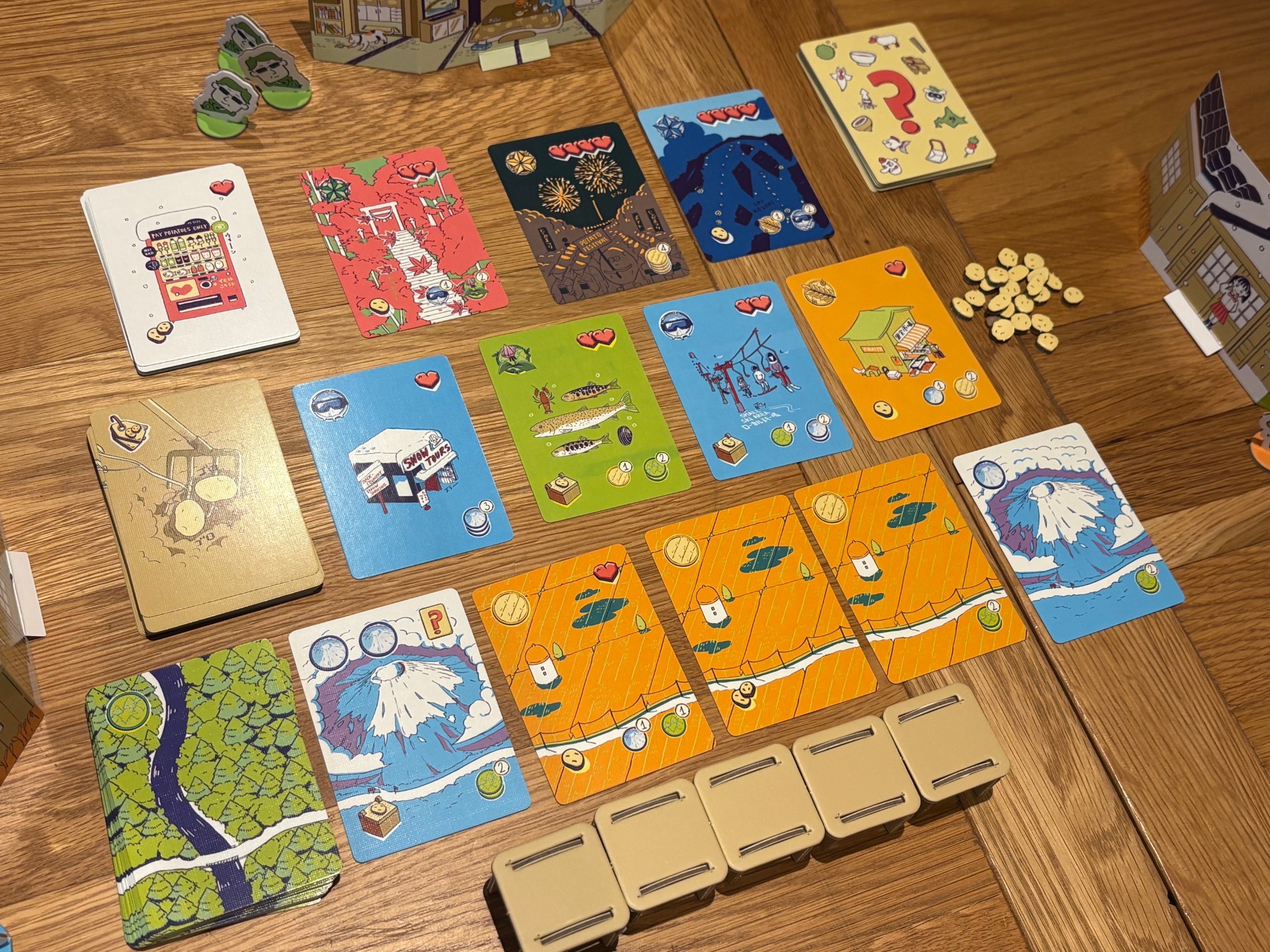
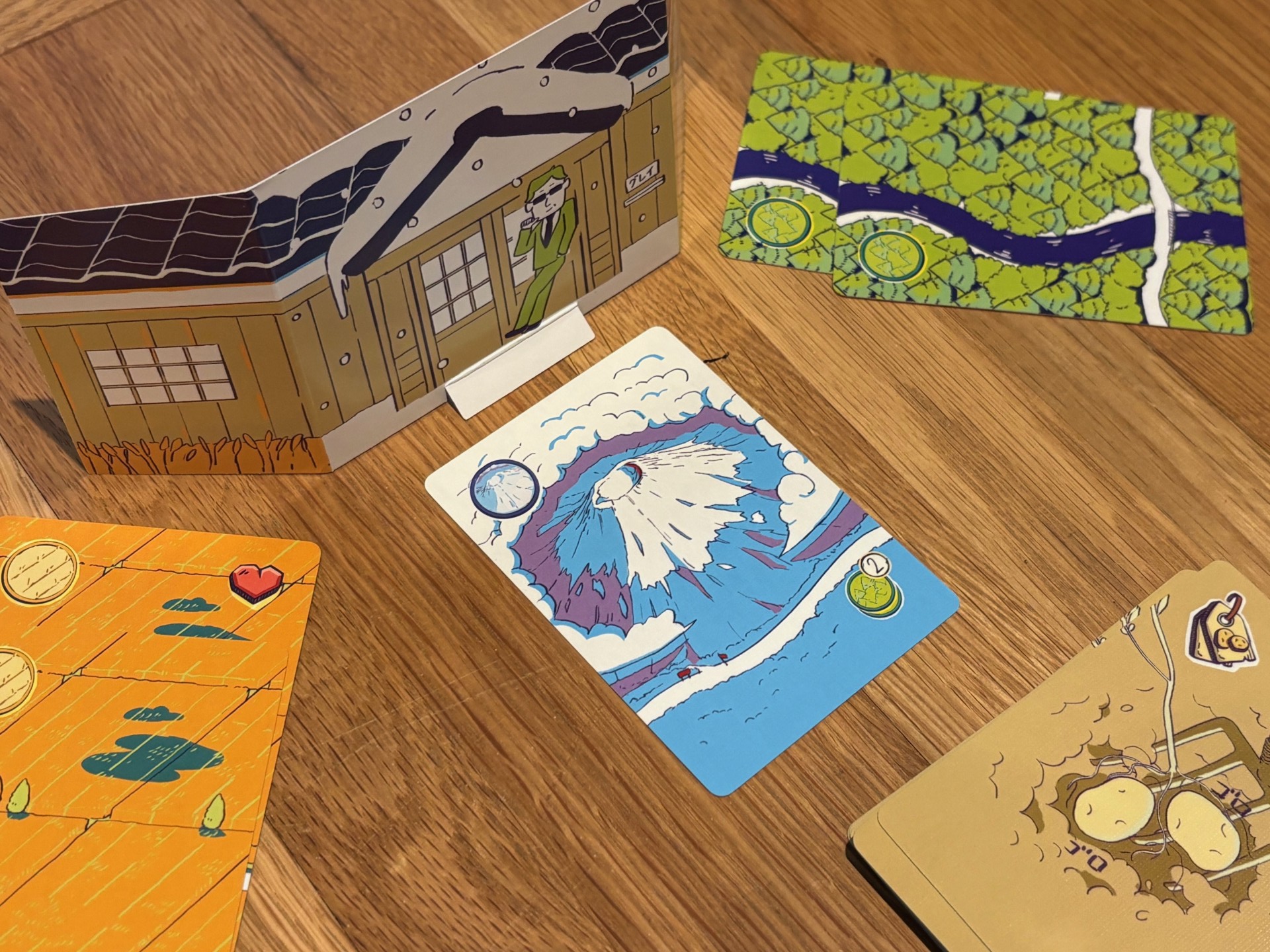
Each round of Yotei is split into two phases: Placement, where players place character tokens onto one of the available cards and commit potatoes to bids; and Harvest, where you collect the cards you successfully secured. The twist is that cards in the second and third tier may have prerequisites — symbols representing food, wildlife, culture, or development — and you can only claim higher‑tier cards if you’ve built the right foundation. For those who know it, this system borrows heavily from the Splendor concept, albeit the character placement and possibility of having to bid for a card here adds to the idea.
This system creates a lovely sense of escalation. Tier I cards give you basic elements, Tier II cards expand your economy or unlock new synergies and the most valuable Tier III cards are powerful, high‑value additions that require careful planning and add the most points. When taken, cards can be taken for their face value (offering elements or charm points and requiring certain conditions to be met) or they can be flipped to their rear side. The rear side of each card depends which deck it comes from, with the cheapest (Tier 1) offering forest icons, Tier 2 offering 2 potato tokens and Tier 3 providing a vending machine that gives a charm point at a cost of potatoes.
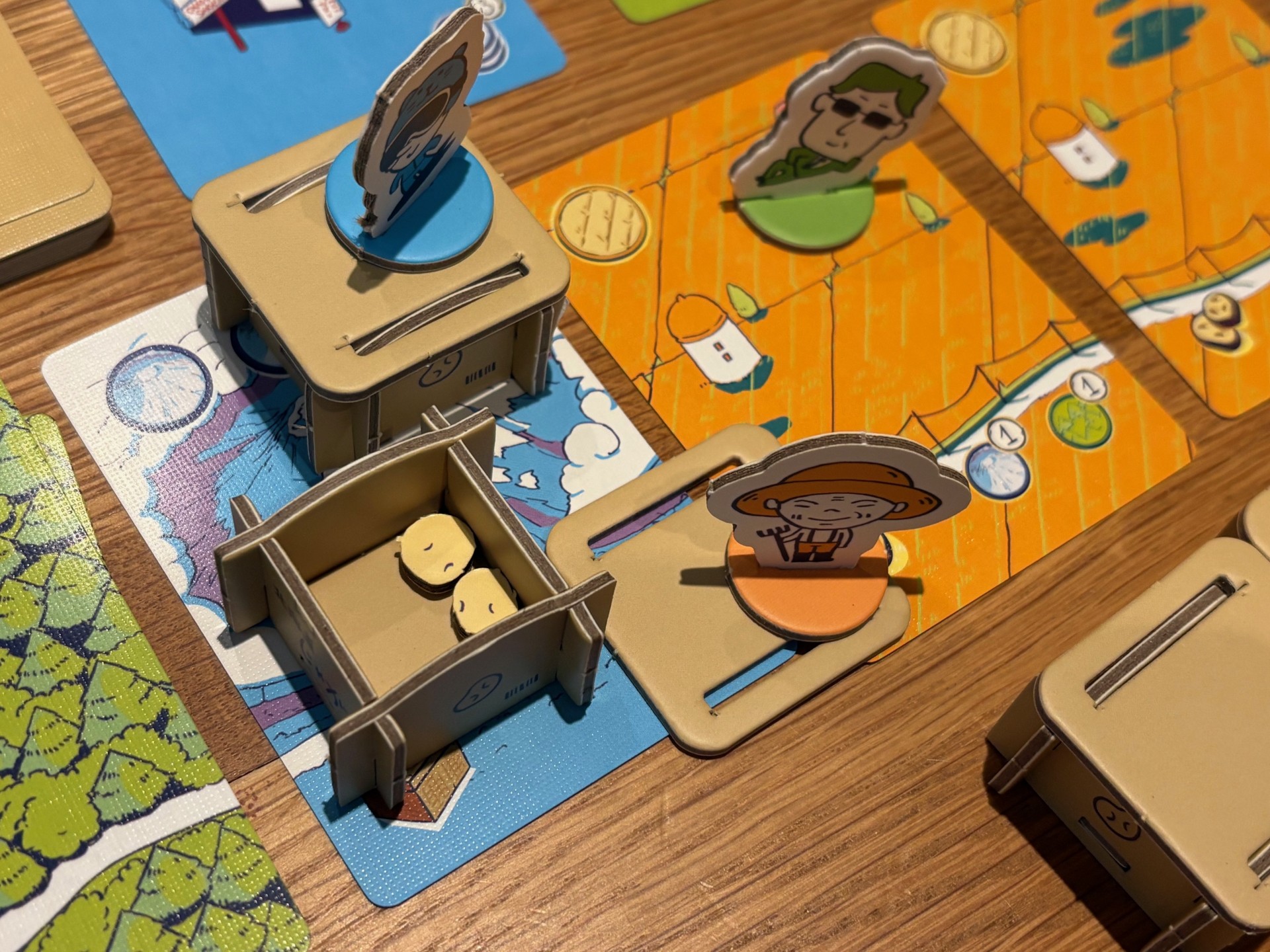
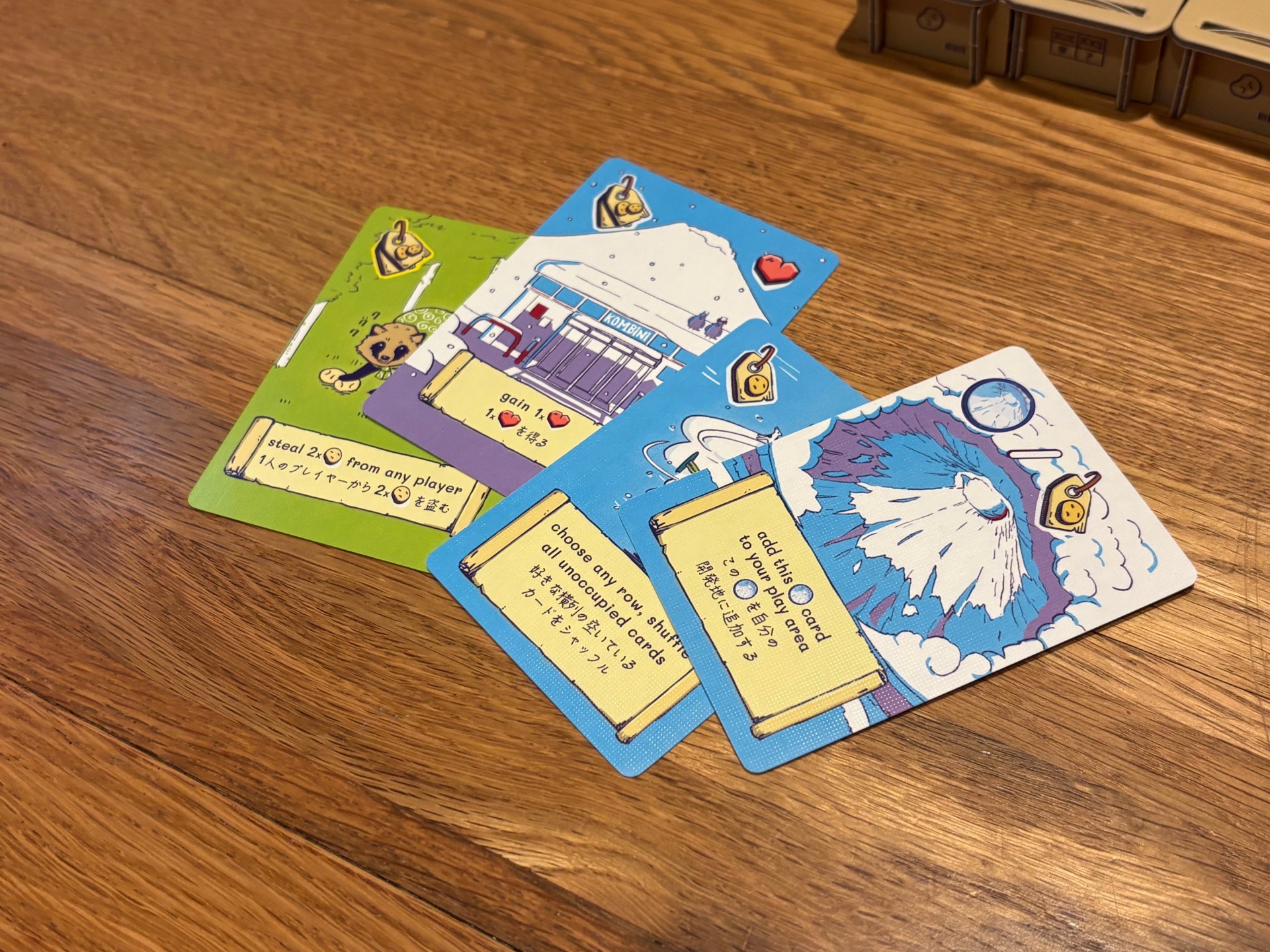
Some cards can be subject to bidding between multiple players. These are denoted by a little “potato box” icon, and in one of the cutest features of Yotei, the players must place their bids by putting potato tokens into a tiny cardboard box and placing it beneath their character token on the card. Bids are resolved during the harvest phase, and whoever bid most, takes the card. Finally, there are the Mystery cards. These come from a player successfully purchasing or bidding for a card with the mystery token on them. Mystery cards offer unpredictable, playful one-time effects that trigger whenever you choose to play them.
Besides the cards, potatoes are the main focus of Yotei. They’re your currency, your bidding resource, and your lifeline when you need to impact the game. Players hide their potato-wealth behind a player screen, creating a fantastic layer of uncertainty among the rival players. As the game develops, you’ll begin to see patterns in what your competitors want, and this leads to intriguing little battles between the bidders as players attempt to balance the worth of a card, versus the spending power both they and their opponent(s) might have.
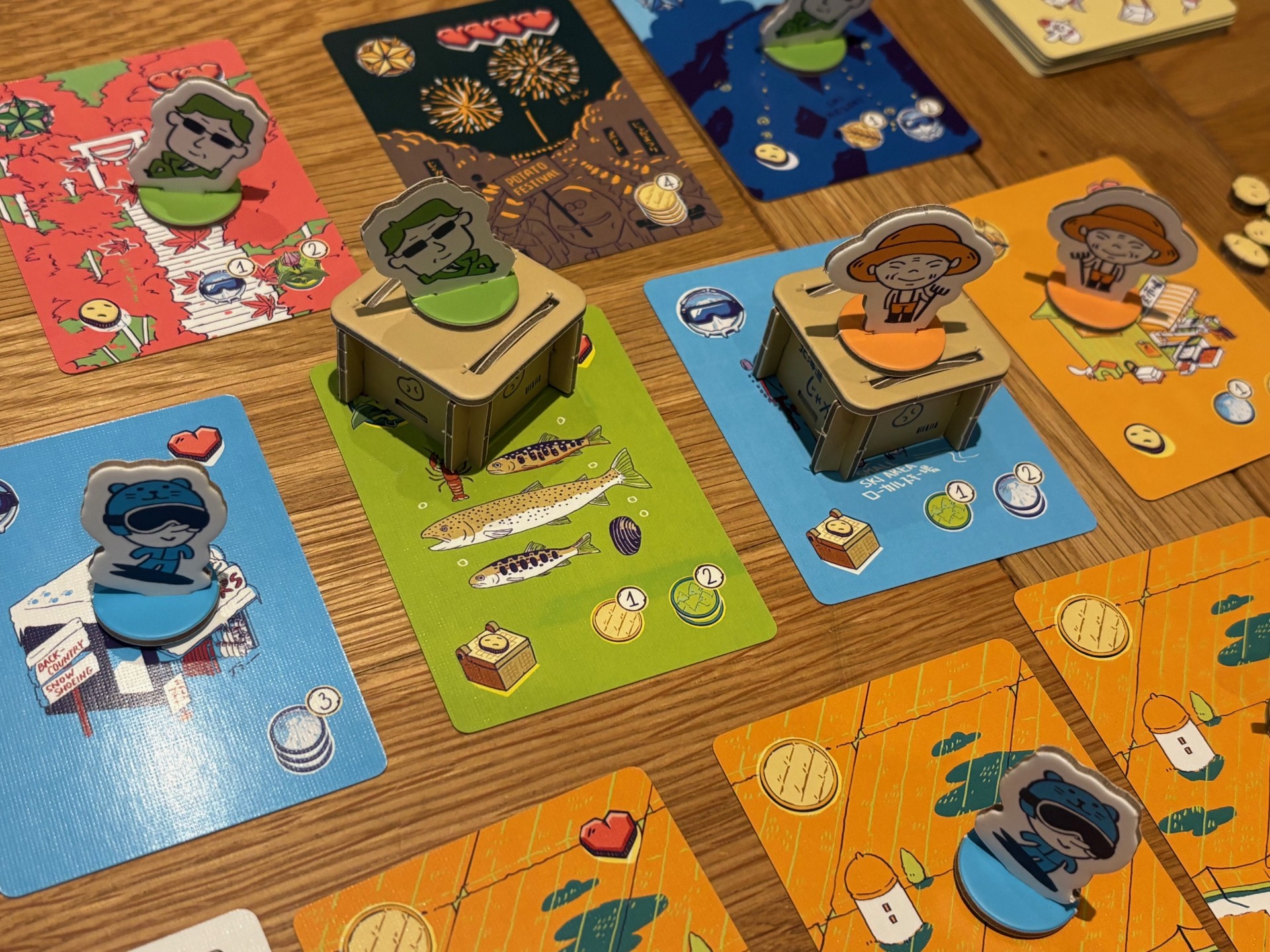
Investing in cards based on their absolute value is steady and more predictable, but cards that need to be won in bids (or at least those which invite bids) tend to be more powerful. Similarly, the mystery effects are almost always powerful, but given how situational they are, taking one can be both a risk and an opportunity for a struggling player.
In addition to the hidden economy, worker placement and turn order adds another interesting wrinkle. Cards that do not require bids will always be taken by the first character placed on them, so if you place early, you will secure a card uncontested — but you also reveal your intentions. If you wait, you risk losing the card entirely to someone who either has a similar strategy, or who has identified yours. The tension between open placement and bidding for powerful effects is delightful, and it gives Yotei a really nice rhythm that keeps all players engaged at all times.
What elevates Yotei above games like Splendor is how strongly the theme supports the mechanics. The cards aren’t abstract icons — they’re slices of Hokkaido life: wagyu farms, sushi stalls, ski lodges, hot springs, red foxes, Ezo bears, trout streams, ramen shops and much, much more. The charm points you collect feel like you’re building a town with real individuality and personality, even if quite often, a card might simply boil down to X charm points (making it functionally the same as several other cards).
Yet despite the adorable presentation, Yotei is highly competitive. You’re constantly watching what others collect, anticipating their requirements and blocking or outbidding them when necessary. Thankfully though, Yotei never feels mean‑spirited. The game’s tone is light, the turns are quick, and the evolving card display keeps everyone engaged. Replayability is excellent thanks to the shifting card market, the variability of Mystery cards, and the multiple paths to charm‑point victory.
For me, Yotei is a game that makes really good use of the time you spend with it. It’s fast and it’s thoughtful, with lots of heart and a strong mechanical engine. Each potato you spend is important and every placement has to be made with purpose, but every new round feels like a smorgasbord of opportunities. If you enjoy bidding and town-building games with charm, personality and a strong sense of place, Yotei offers a trip to Hokkaido that has all the right touches, but with stronger gameplay than its gentle visuals might suggest.
Yotei is available now, you can find out more about it on the Mighty Boards website.
