

For whatever reason, I tend to find that I almost always enjoy games published by Mighty Boards. In the spirit of transparency, we’ve been working with them for years and have reviewed games like Posthuman Saga and have even interviewed David Turczi in relation to his Excavation Earth, but I think what really impresses me about Mighty Boards is how they can pick up games like Pinched! which always seem to have such a strong individual identity.
Pinched!, designed by Jonathan Gilmour‑Long and David Gordon, is a light‑to‑midweight deduction and set‑collection game that hides a psychological guessing game beneath its breezy theme of “wealth redistribution.” On the surface, Pinched! Presents itself as a playful heist game about burglars sneaking into wealthy mansions to skim valuables. In practice though, it’s a tense, timing‑driven guessing game where reading the table and misdirecting your friends is the real path to victory.
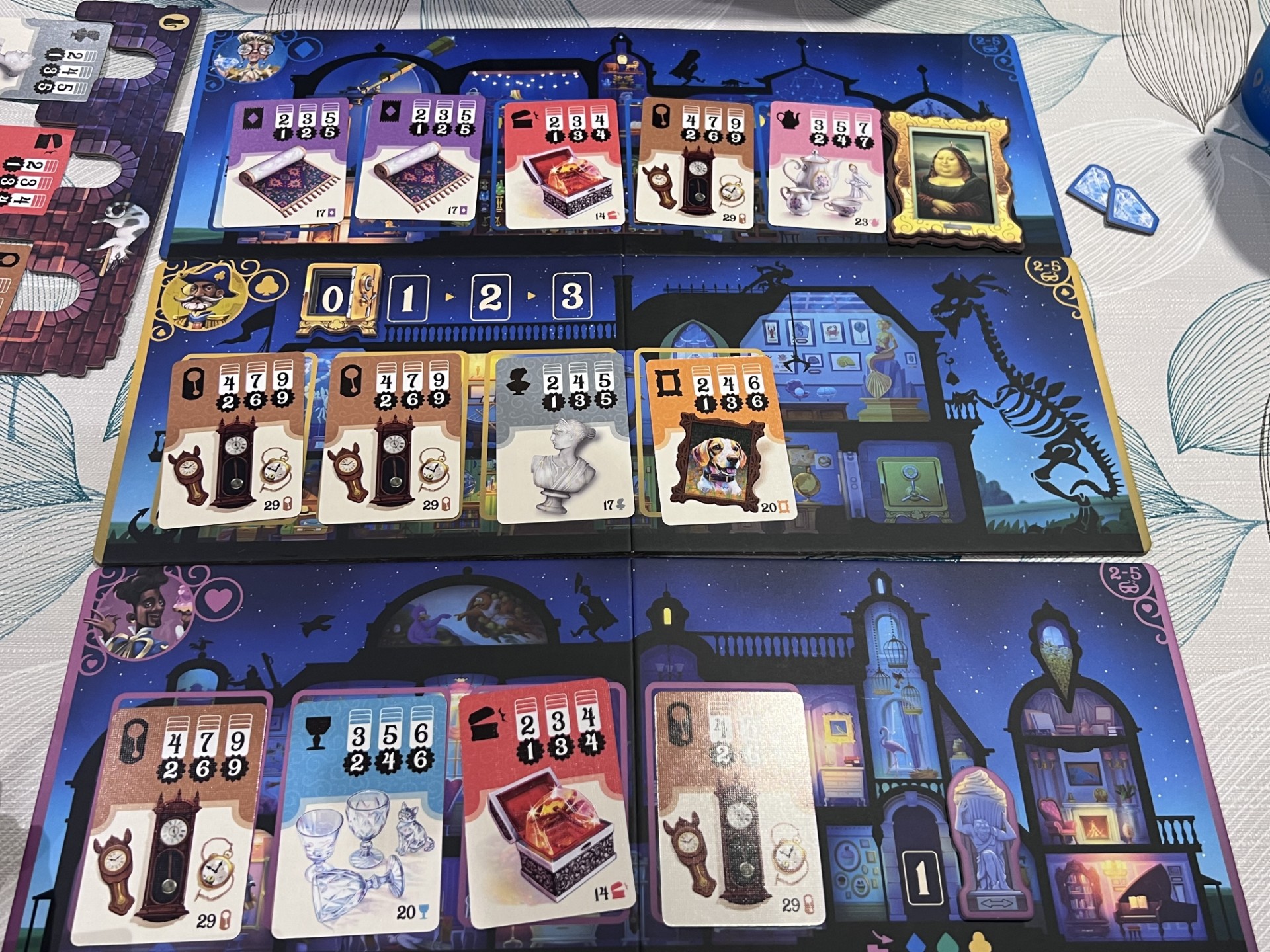
Pinched! supports 2–5 players, plays in around 45–60 minutes, and is built around a simple but compelling idea: one player becomes the Mastermind for a given turn, chooses a mansion to rob (from among several interchangeable and reversible boards), and everyone else tries to predict where that heist will take place. If the Mastermind goes alone, they take everything; if others guess correctly, then the Mastermind has to split their haul.
The structure of each round is fairly intuitive. Players secretly choose one of the available mansions — by picking a card from their hand which contains one card per mansion in play — and reveal simultaneously. The Mastermind wants to be alone in their chosen mansion so they can scoop up all the valuables there. Everyone else wants to anticipate the Mastermind’s choice because showing up in the same place lets them steal from the Mastermind’s haul rather than settling for a weaker fallback option of visiting “the river.”
This creates a constant push‑and‑pull between signalling your intentions and deceiving the opposition. The Mastermind must decide whether to play honestly, double‑bluff, or deliberately mislead opponents based on what they’ve been collecting so far. Meanwhile, the other burglars must weigh the visible board state, the Mastermind’s stash, and their own set‑collection goals to decide whether to follow instinct or second‑guess themselves. This is achievable because the loot available in each mansion is visible before the heist, as is the loot that each player (including the current Mastermind) already has.
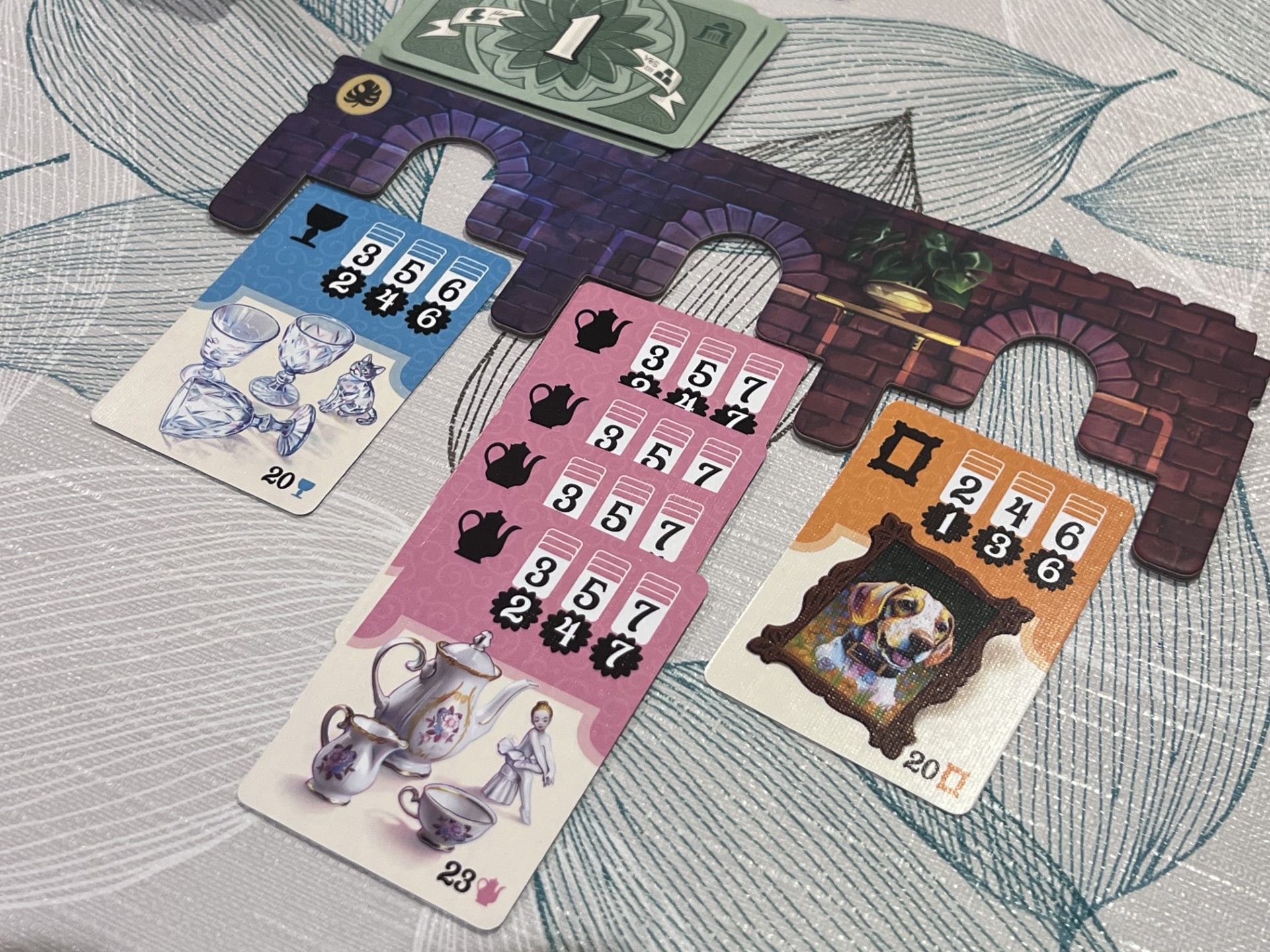
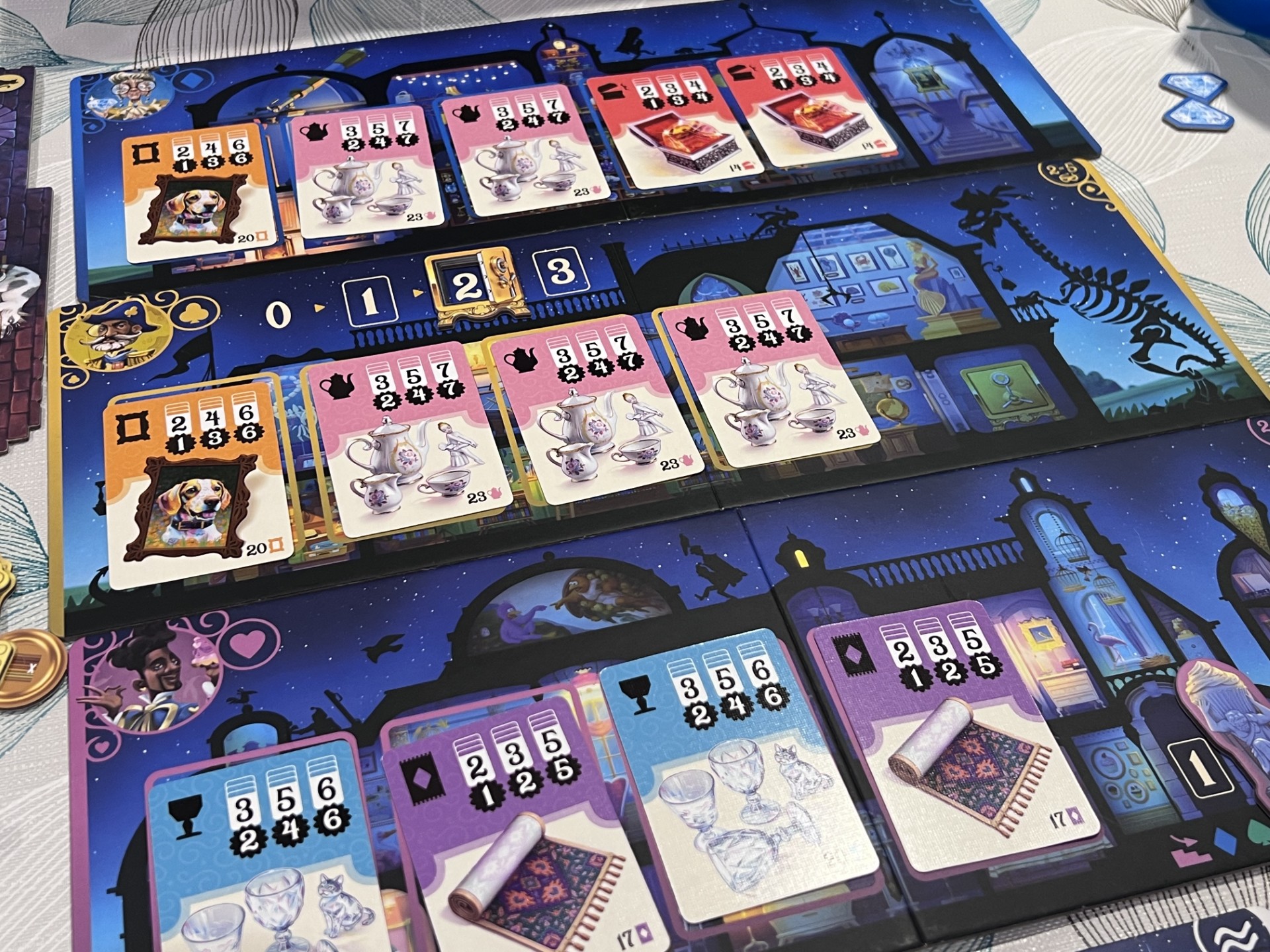
On this note, set collection is the backbone of scoring. Each valuable belongs to a group such as jewels or antiques, and players can only store three types in their stash at any given time. This limitation forces tough choices when setting up a heist, because you want to get your sets up to a certain value (with bigger sets being converted into larger sums of money/points), but at the same time, you need to cycle through those sets to get items sold as quickly as possible so they don’t stagnate in the limited space you have.
Players who gain goods whilst not acting as the mastermind keep those cards in hand until they actually take their Mastermind turn — at which point they must commit them to their stash following the heist. This creates a minor memory game where you’re trying to recall what others have taken, what they’re likely to be chasing, and how your choices might influence their guesses. Once valuables hit the table, they become public information, and the game shifts into a more open contest of reading intentions and blocking opponents by taking what you now know they want. The tension between hidden and revealed information is one of Pinched!’s strongest structural elements and the backbone of a lot of the fun.
The mansions themselves add variety. Each one has slightly different rules governing how valuables are taken, and in the advanced mode these differences become more pronounced. Some rooms offer features like the Safe — which fills up with “random” goods each time there’s a multi-thief heist, then gives up all its goods to a single Mastermind should one ever appear. Another mansion features a secret passage, and when a thief is choosing a good from that location, they can use the passage to sneak into another mansion — but this can only happen once per heist.
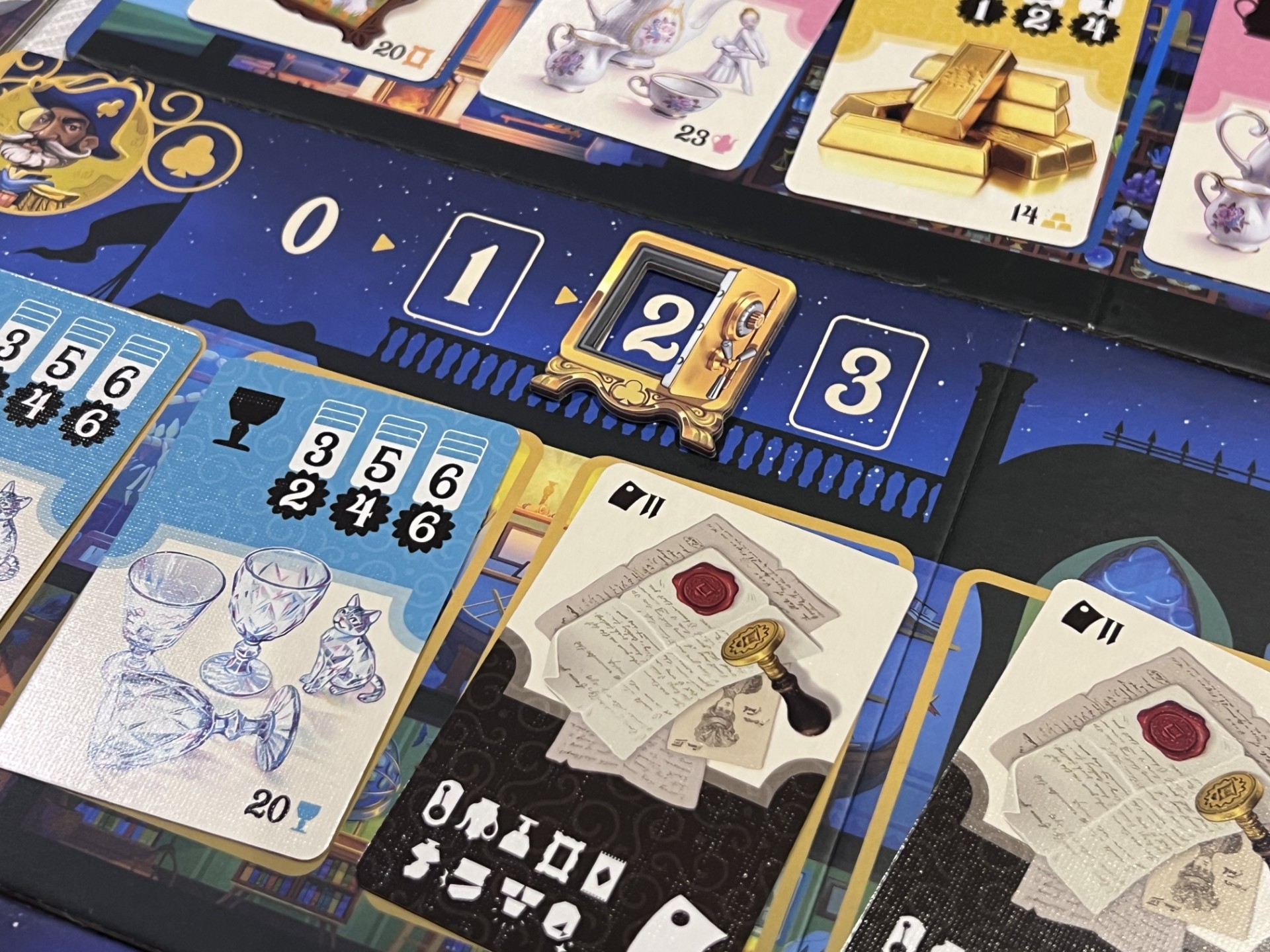
Each board also features an advanced mode which introduces additional wrinkles that deepen the decision space without overcomplicating the game too much. Even with these additions, Pinched! remains easy to teach and quick to play — to the extent that my nine and eleven year old kids had no trouble — but the advanced mansion effects give experienced players more levers to pull and more opportunities for clever misdirection.
Thematically, the Pinched! leans into its playful tone. You don’t feel like “burglars” so much as cheeky opportunists engaged in “wealth redistribution,” and the art direction by Max Kosek and Vesna “Vesner” Redesiuk reinforces the lightheartedness. The presentation is bright, expressive, and immediately table‑friendly, with a dual‑layer box lid and clear iconography that makes everything feel nicely polished. If I were to liken the look and feel to any other game, then I would say that Pinched! clearly draws from the videogame Monaco.
What makes Pinched! work so well is how tightly its mechanisms and theme are intertwined. The game is fundamentally about predicting behaviour: where will the Mastermind go, and how can you exploit their greed or natural caution? But because the stakes are tied to set collection rather than simple trick‑taking or point‑grabbing, every decision has both immediate and long‑term consequences that feel more weighty than most similar games.
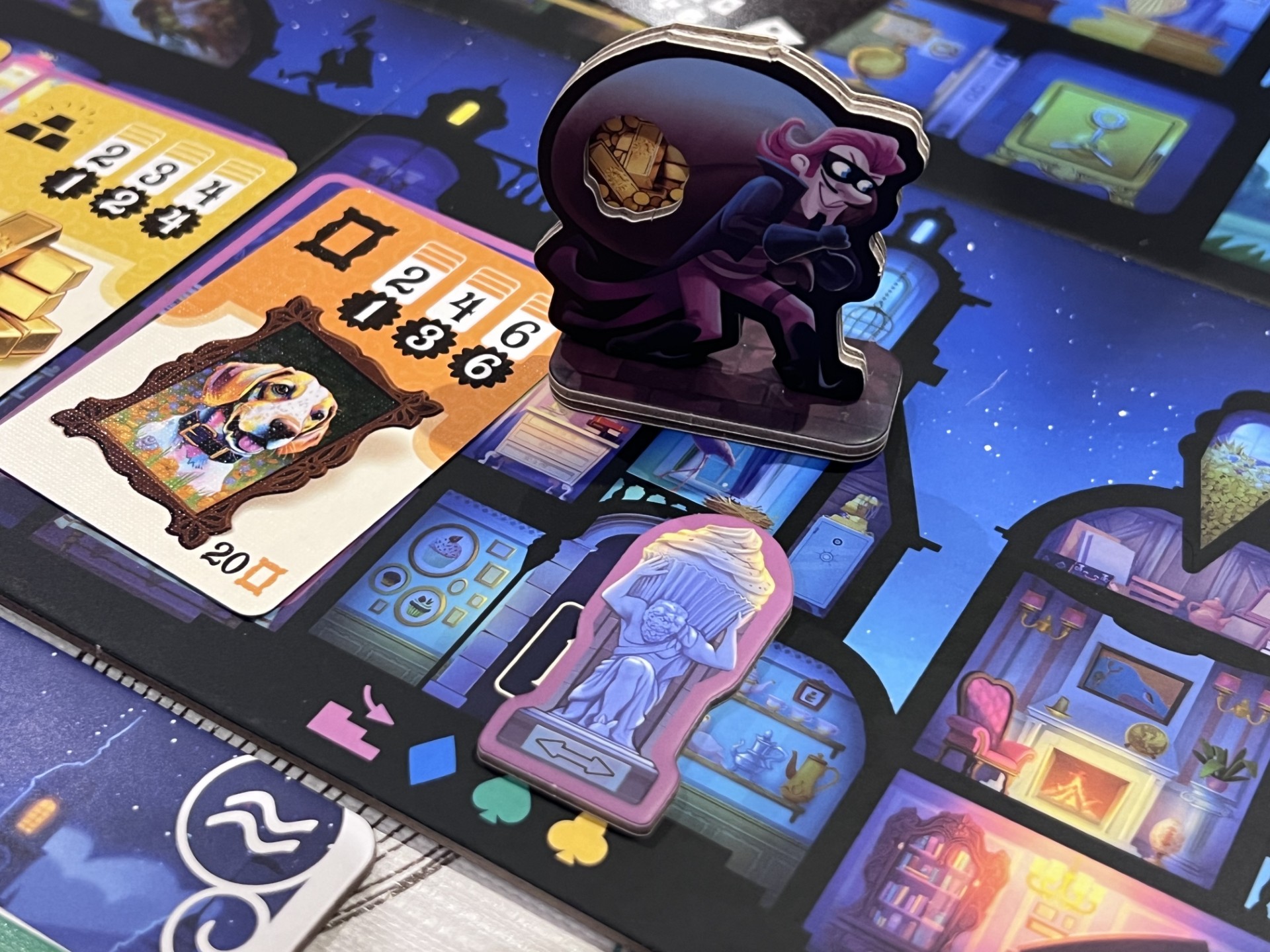
Choosing the “right” room isn’t just about stealing from the Mastermind — it’s about advancing your own collection while denying others the chance to complete theirs. The best rounds are the ones where a perfectly timed misdirection lets the Mastermind slip away with a full haul, or where a coordinated guess from multiple burglars turns a greedy play into a mistake that costs the Mastermind the game. This might sound harsh, but in a game that lasts less than an hour but “feels” like a real game, I can’t complain.
From a design standpoint, Pinched! succeeds because it achieves both halves of its identity really well. As a heist‑themed game, it captures the ebb and flow of a burglary gone slightly sideways with opportunism, misdirection, and sudden reversals in almost every game. As a set collection game, it remains tight because of the risk of how you actually get the cards along with the way in which it limits how many sets you can run at once.
It’s tempting to “wait” for an elusive fifth card of a rare valuable to come (and it might double your score if you can get it) but when such a card turns up, everyone will know you want it and you might have waited too long and let one or two opportunities to sell and start another set slip. Going back to the secret passage, this is another great mechanic — because the mastermind might go straight to the location where an item is, or they might go to the mansion with the secret passage instead, and all the table talk that comes with such decisions is as good as you might hope.
If you enjoy light‑to‑midweight games that blend deduction, bluffing and set collection — and especially if you like games where reading the table is as important as reading the cards — then Pinched! is a clever, lively design that plays beautifully at a wide range of player counts. It’s approachable, polished, and full of those small, satisfying moments where a well‑timed guess or a perfectly executed bluff pays off. Mighty Boards has delivered a smart, characterful game that earns its place on the shelf through charm, clarity, and a surprisingly rich psychological core.
You’ll be able to find out more about Pinched! on the Mighty Boards website.
