

Hive Blight is the latest in a growingly established subgenre of roguelikes – that is auto-battler ones.
Rather than turn-based tactics or deckbuilding, Hive Blight instead opts for a hands-off autobattler where placing your units and synergising their aggro at the beginning of a battle will make or break the entire automated fight that follows. Fortunately this process still allows the player a good amount of agency, with multiple factions, archetypes and synergies. While all of that might sound like your typical roguelike stuff, it’s the unique inspirations behind the various buggy bois of the Hive that really bring the game to life and kept me interested in unlocking a surprisingly large roster of little gremlins.
Real-Life bugs and fungus are your troops
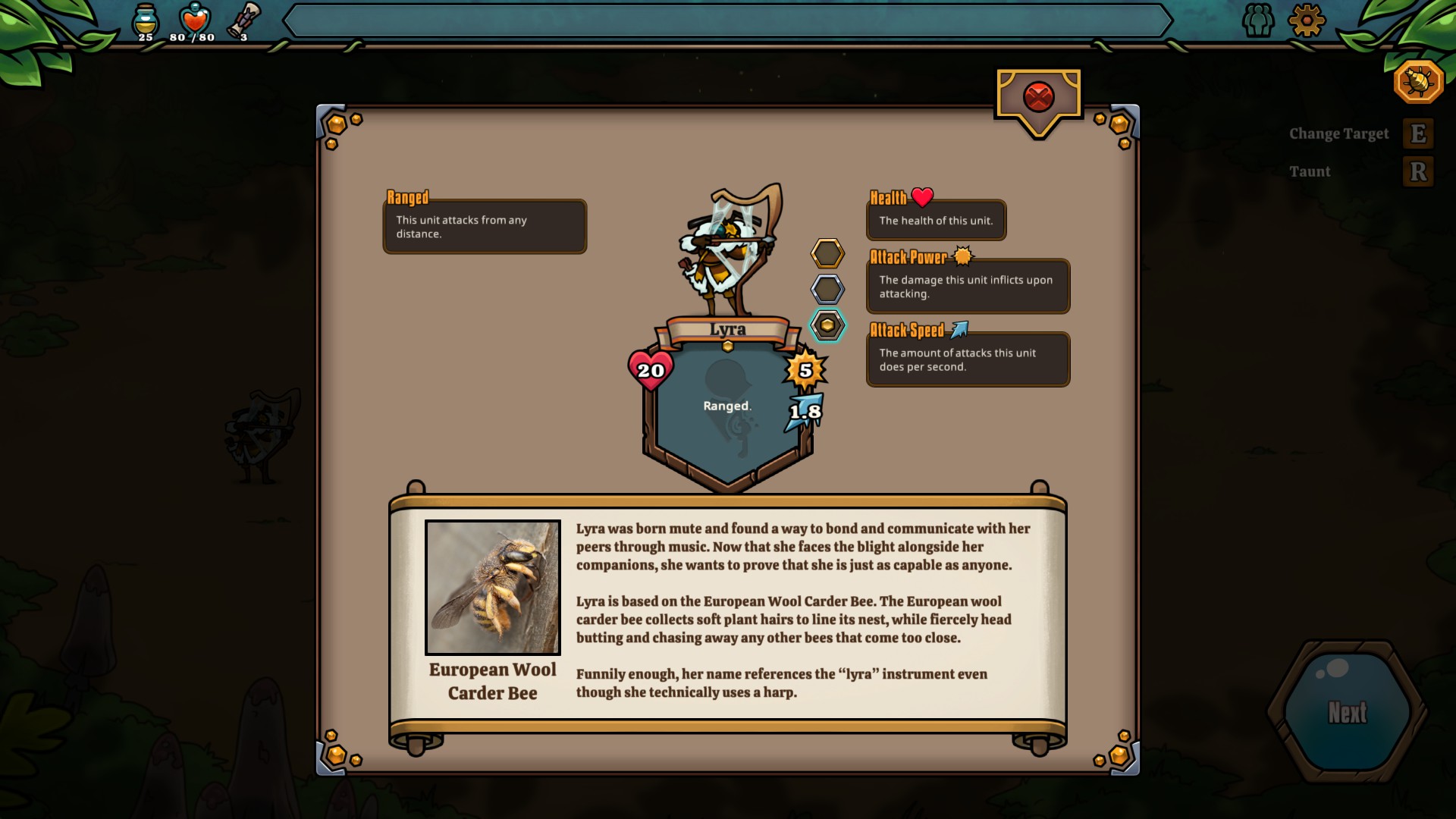
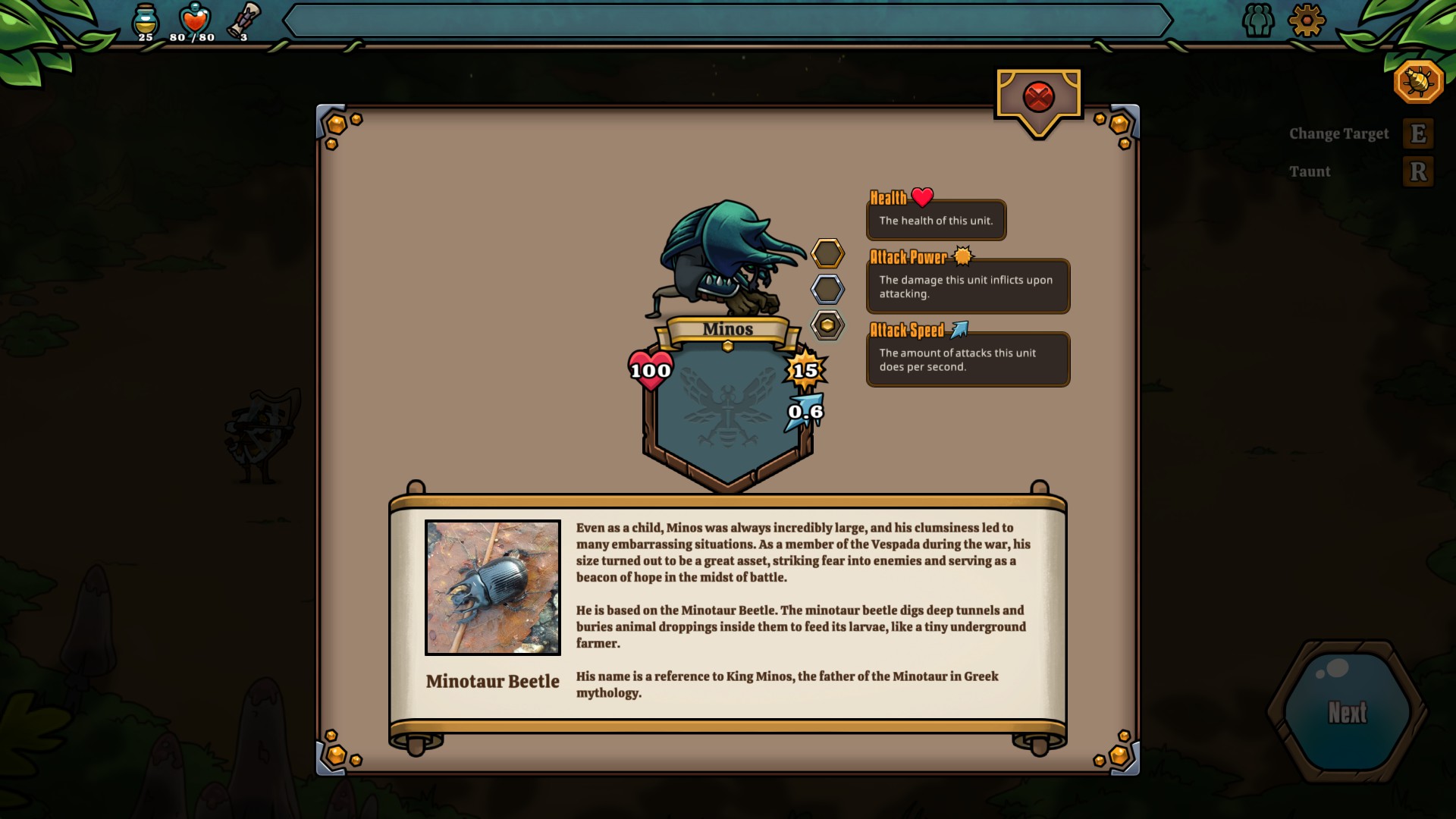
While the process of drafting new units and positioning them for each battle is a familiar gameplay loop, the presentation is anything but. Each of the creatures you enlist and face have a clickable icon that brings up their in-game art, a description box of the character and, most importantly, a real-world picture of the unit’s inspiration. Everything from Bollette mushrooms to Honeybees to Leaf bugs are represented, and having that connection to the real-world creatures that we can find all around us really pulled me in.
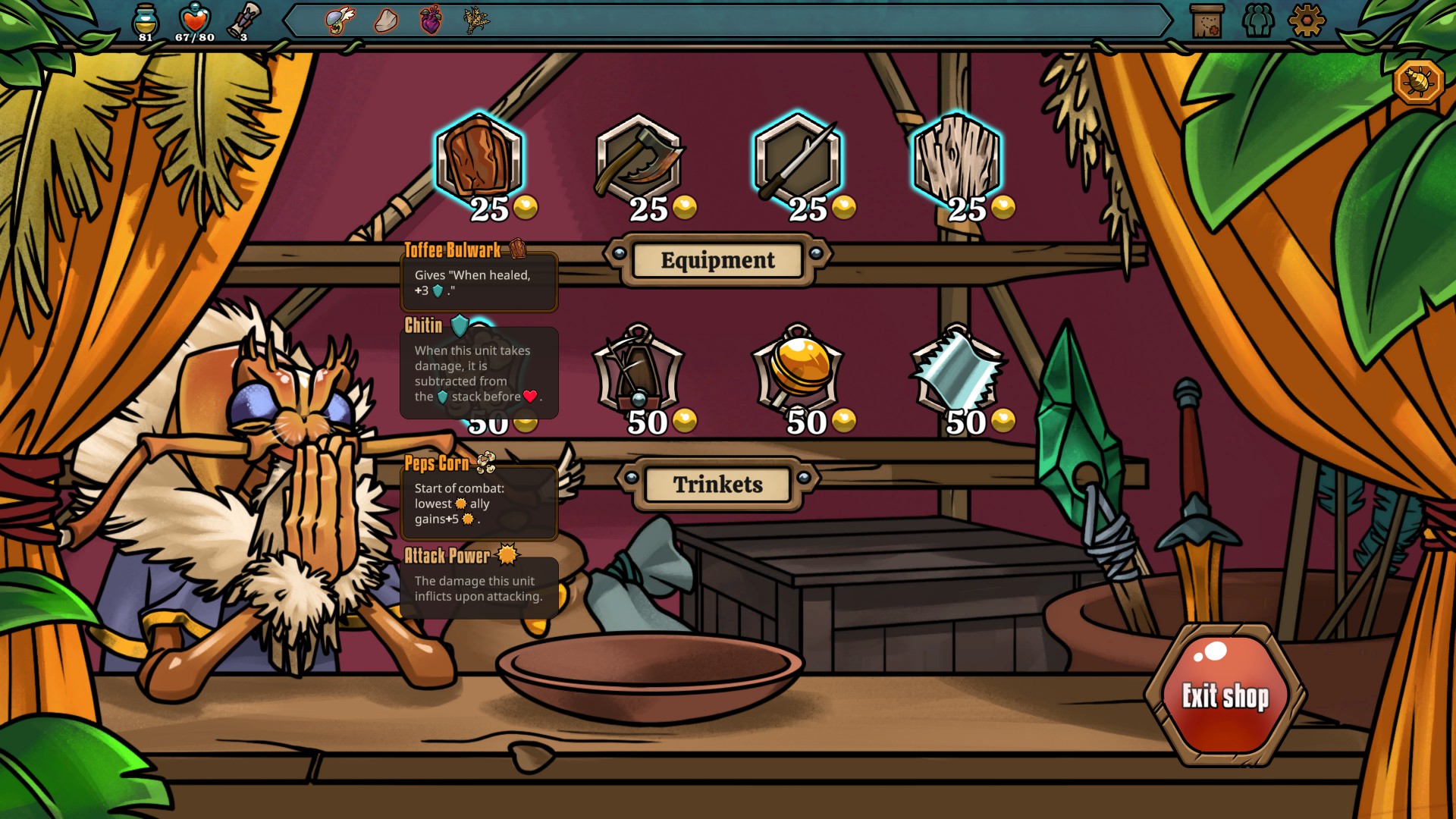
The real-world influence extends to little things like the shopkeeper rubbing his grubby little protuberances together when you highlight an item to buy, making the world that much more interesting and fun to be in, even when you aren’t in combat. Stick bugs can stay hidden for a set amount of attacks, shield-head ants can damage enemies who attack, while swarming creatures can all inspire and buff each other. This gives each bug and faction a unique feel beyond just visual flair, and it’s all baked into what these bugs do in real life.
Stand together and fall together
Mechanically, the largest difference Hive Blight brings to the table is how it handles losing a run. Your life total isn’t a damageable pool like Pyre Health from Monster Train or player health in Magic: The Gathering. Instead, your life flask is used to heal your troops after each battle, and when it’s empty, you lose. Your troop’s health and your own health aren’t separate. This means having one insanely tanky bug carry you to victory in a battle might mean you actually lose the war, as healing that big boy up will deplete your flask quickly. In this way, prevention or recovery is better than curing troops after the battle. Any damage you can stop, avoid or recover is worth much more than damage you can tank. This also explains why the MVB (Most Valuable Bug) each round is whoever dealt the most damage, as dealing damage is a requirement for a decent run in Hive Blight because of the life flask system.
The goal being to win and sustain your troops, rather than just win, also encourages you to think about how many troops you field. Vladimir, the Mosquito will heal himself equal to his power when he attacks, for example. This means he is an effective recovery tank, provided it’s not so much damage per second that he can’t recover fast enough. Judging how many enemies the tiny brave soul can handle and then taunting the rest with another bug makes for an engaging planning phase. These decisions can be the difference between a clean victory, or a pyrrhic one.
Effects that heal or buff “other” bugs, as well, make you think about maybe not fielding all the troops you possibly can. If all those buffs only have one target, they will be exponentially more powerful. But, if that target can’t survive long enough to make use of it then your defensive wall has a sizable crack in it. It’s these sorts of decisions that make Hive Blight feel like a worthy addition to the tactical roguelike genre.
Quality of life and player-first design
After the dust settles and your troops (or what’s left of them) are victorious, you can review the details of the battle. Hoverable tooltips have breakdowns of which specific buffs were added to each stat. You can see how much of a bug’s attack power was from your trumpeting moth friend and how much was from an equipped weapon, allowing you to make more informed tactical choices. You might think your healer was doing great, but then the numbers reveal that it was actually armour regeneration that kept your tank alive.
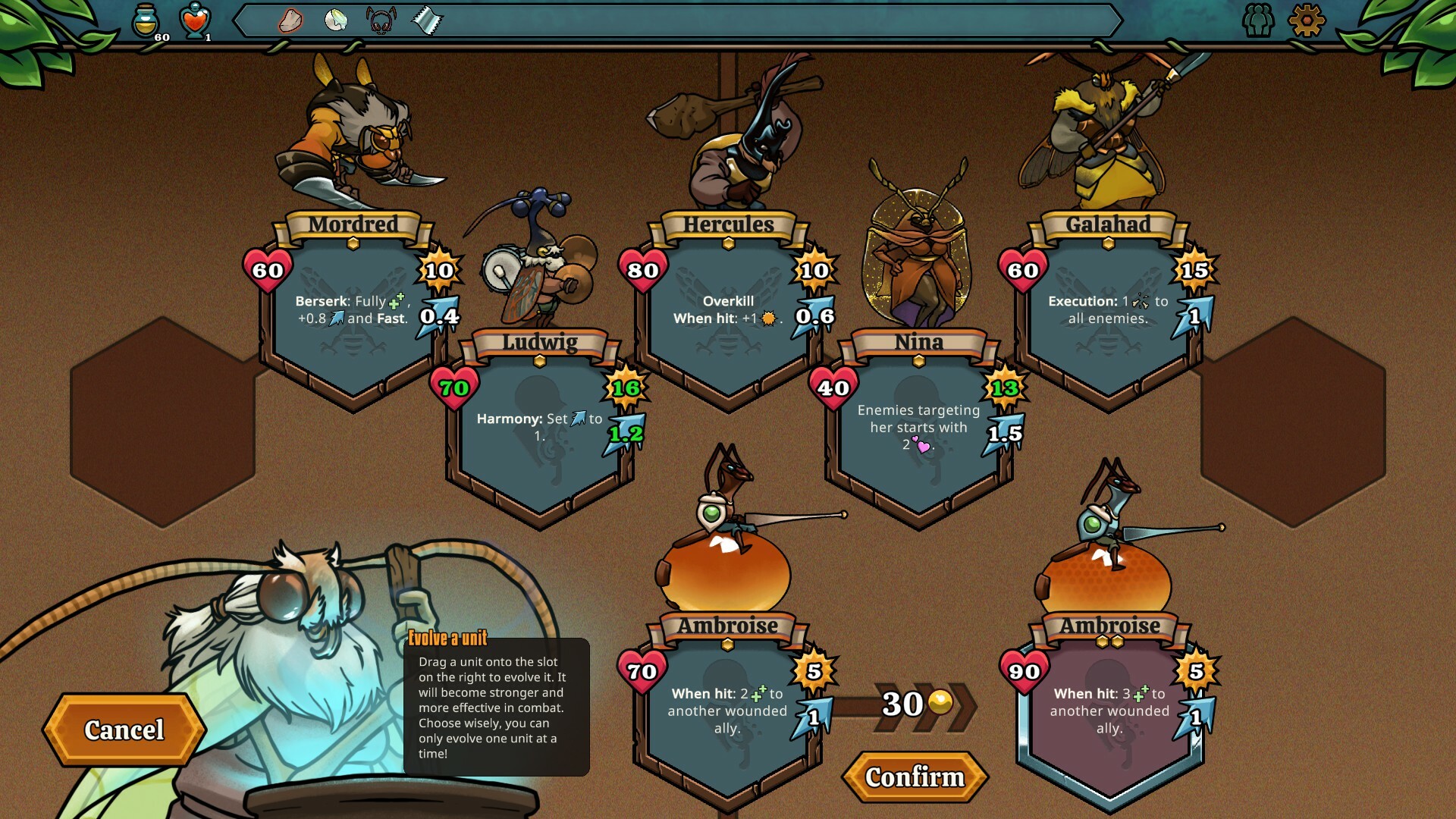
All of the denizens of your insectoid army are pooled from factions. You’ll choose a primary and secondary faction each run, with a free unit from each and a trinket from the primary. This can help get an engine built in the way you want, as faction choices also limit the pool of available trinkets and units in the run itself. It’s relatively reliable to try different strategies, which is a blessing for buildcrafting but can make runs blend together a little over time (Then again, we all fought Snecko 100s of times in Slay the Spire and still love the lil goober).
It’s not as deep as Monster Train and not as wide as Slay the Spire, but everything Hive Blight does it does with aplomb – in a style and with a visual identity you won’t get anywhere else. Something about seeing real little pictures of the bugs made me instantly connect with Hive Blight, and this only deepened as I progressed through its starting roster of 3 factions. There’s meant to be 5 in line for full release, so be sure to pick it up or add it to your wishlist on Steam for updates!
Hive Blight is available now in Early Access on Steam.
