

If you’ve heard the term “cosy game” in recent years you might think of Unpacking, Dorfromantik or Islanders. These games take town-building or object-placement and wrap it up in a colourful palette with some chill music alongside. Time limits are out, cute little sound effects for perfect placements are in. ShantyTown provides one thing that the genre can sometimes miss out on, despite the cute art and high-score chasing management gameplay: a coherent emotional core to the world and story.
Unpacking managed to combine world-building and cosy placement gameplay, but others in the genre tend to focus on repeatable maps devoid of pre-set worldbuilding. ShantyTown entered the stage set by these great indies and has, frankly, shown us what the genre needs.
A cosy game with the guts to have intrigue and undertones
Surprisingly you aren’t actually a new inhabitant that somehow has the power to manage multiple cities. In fact you belong to a mysterious entity called The Council. In what is seemingly a court-mandated chore, you have to catalogue the islands and then report back to your bureaucratic masters.
After each level you fill out your dossier with a picture and a little note. The first dossier note reads “Violations are immediately apparent. Population growth far exceeds designated living silos.” A cosy game, with huge amounts of creative freedom that still maintains challenge and puzzle elements, but that dares to have our character be an incriminating bad guy…? I long for this level of originality in my cosy games. ShantyTown had me asking questions, had me hooked, so that the simple but satisfying revelations of world-building hit all the harder.
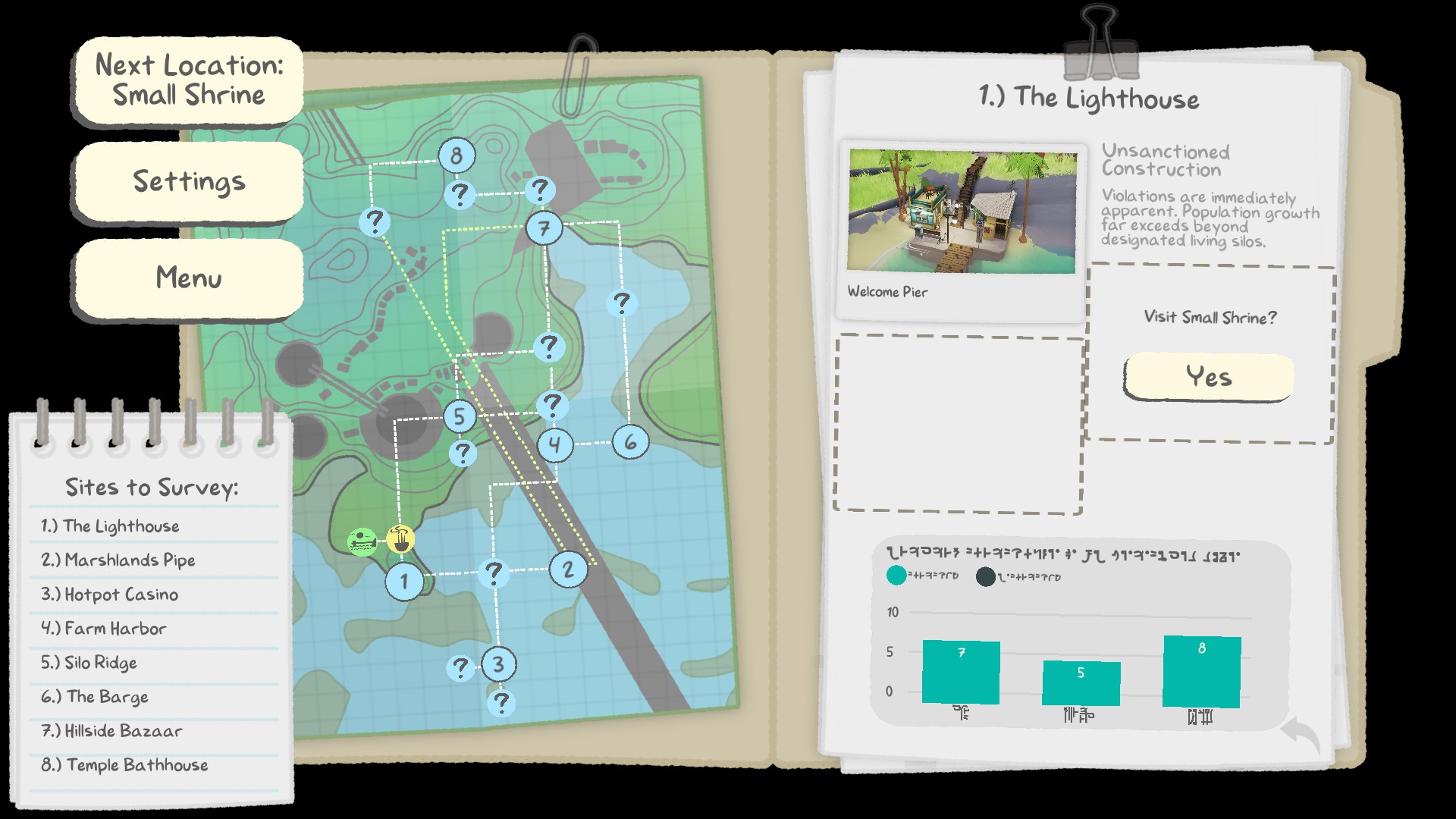
It even has details like the dossier being in the in-universe language, only “translating” to English when you click the text. It wasn’t tutorialised, I just clicked and it happened (complete with immersive pencil scratching audio).
Unexpectedly intriguing premise aside, the levels themselves are when things really get intriguing…
The freedom to customise doesn’t dumb down the depth of the management gameplay
ShantyTown has a level of detail that I simply didn’t anticipate. Compared to genre standout Islanders, ShantyTown is much more micro in scale. You do build grand towns by the end, but every single building has placeable doors, windows, air-con units — every cafe has placeable signs, every light is rotatable through 360 degrees rather than fixed angles. If you showed me footage of the game I might think it’s a sandbox creation tool.
But the best thing about ShantyTown is that this level of freedom isn’t just for a creative sandbox. From the very start buildings have requests for light, utility and comfort. Placing items and other buildings nearby fulfils these requirements. This gives a sense of direction amongst the frankly absurd sense of freedom and creativity the game instills. You’re managing your resources, checking upcoming requirements, and focusing on optimising placement but at the same time your town will end up looking entirely different to mine, or anyone else’s.
Explore Diverse Build Sites
Prev 1 of 6 Next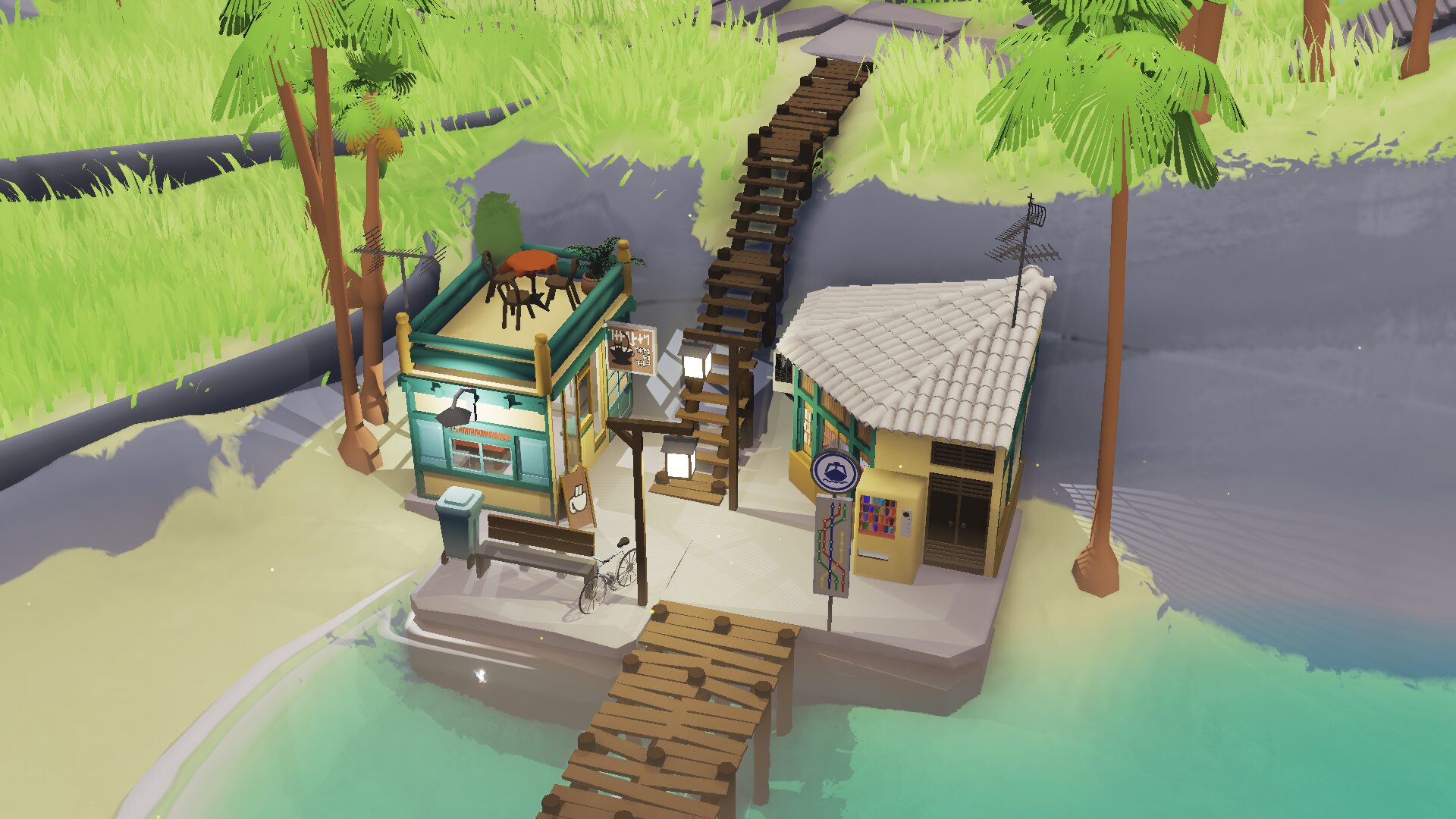
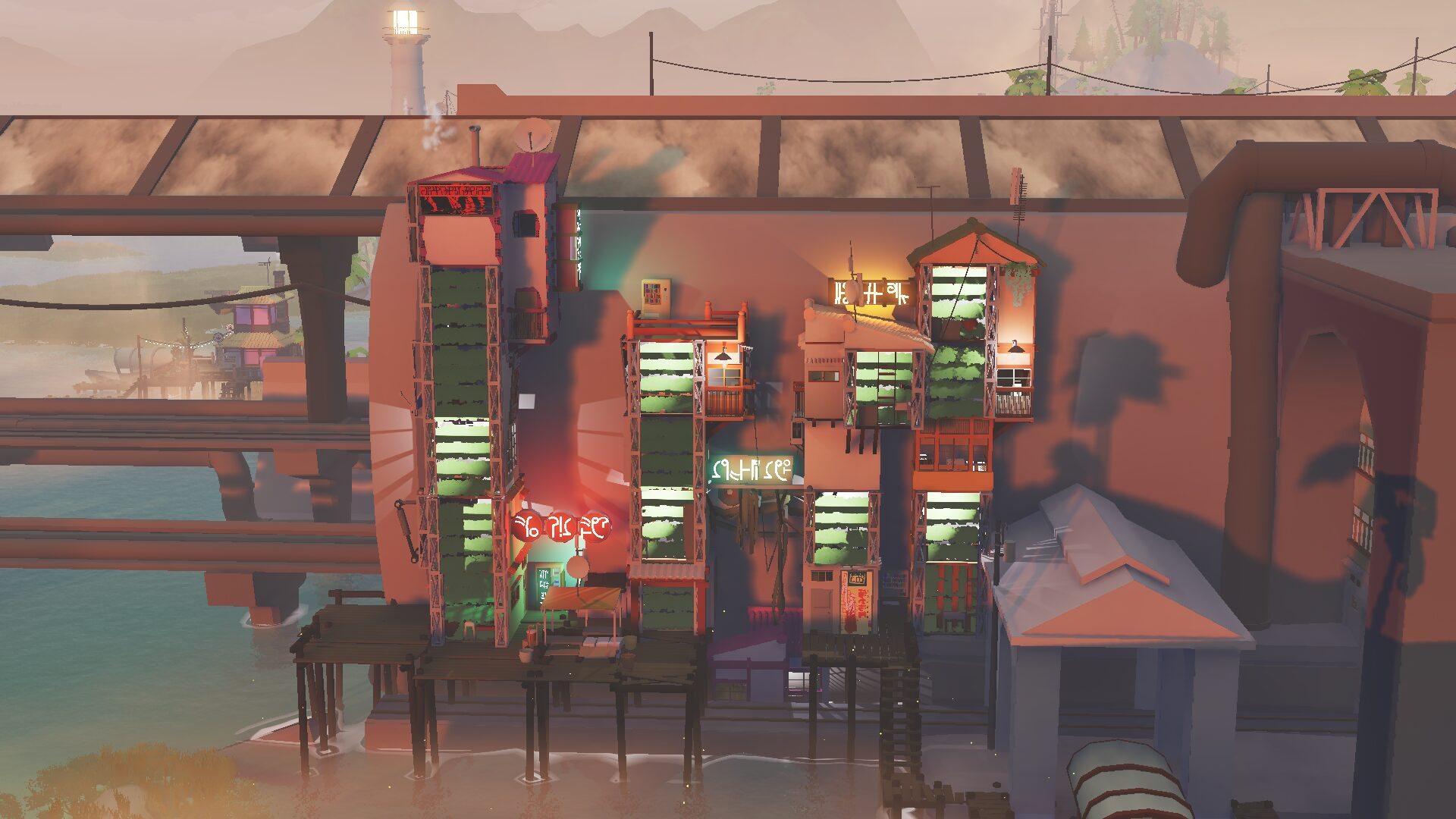
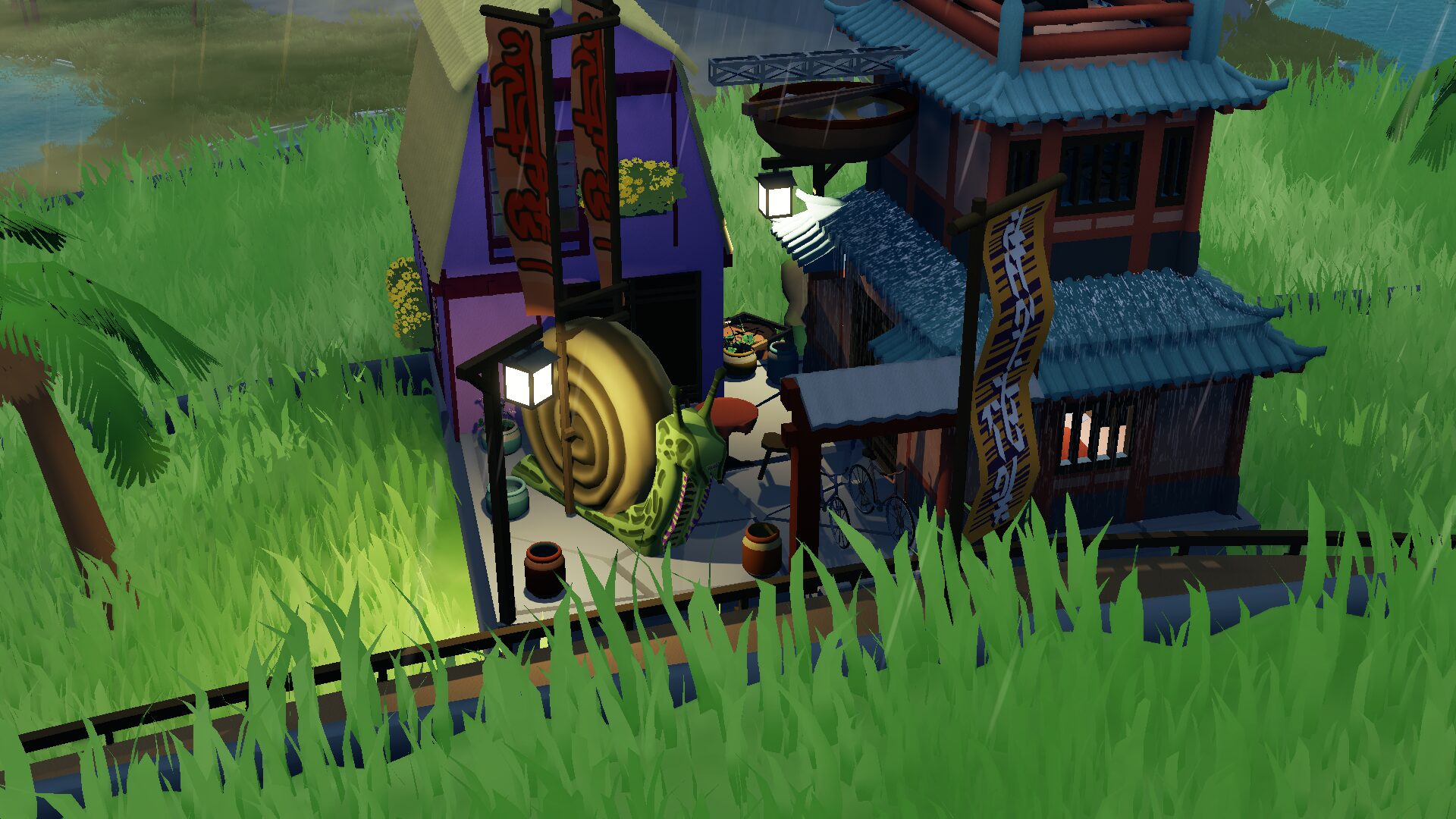
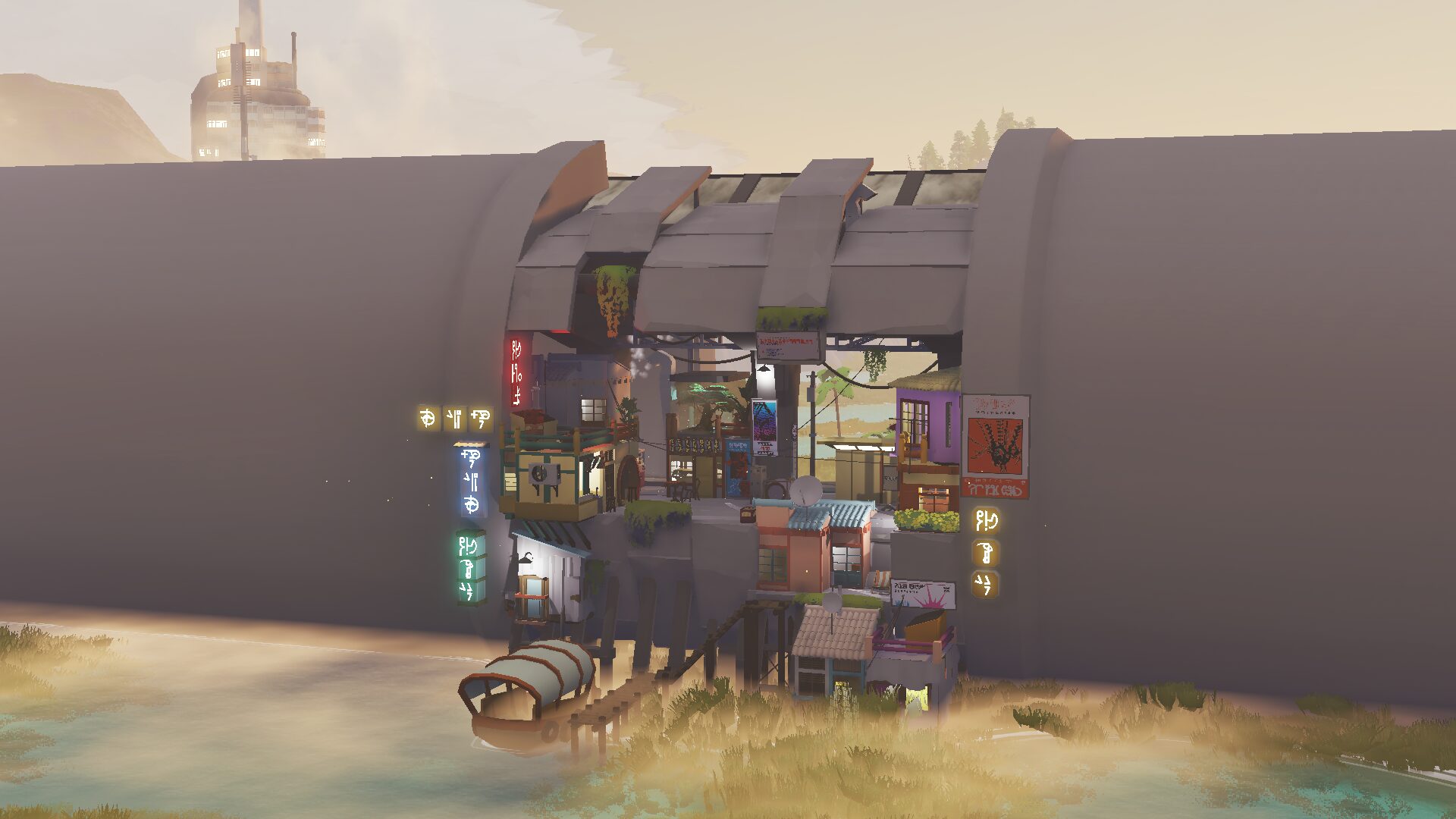
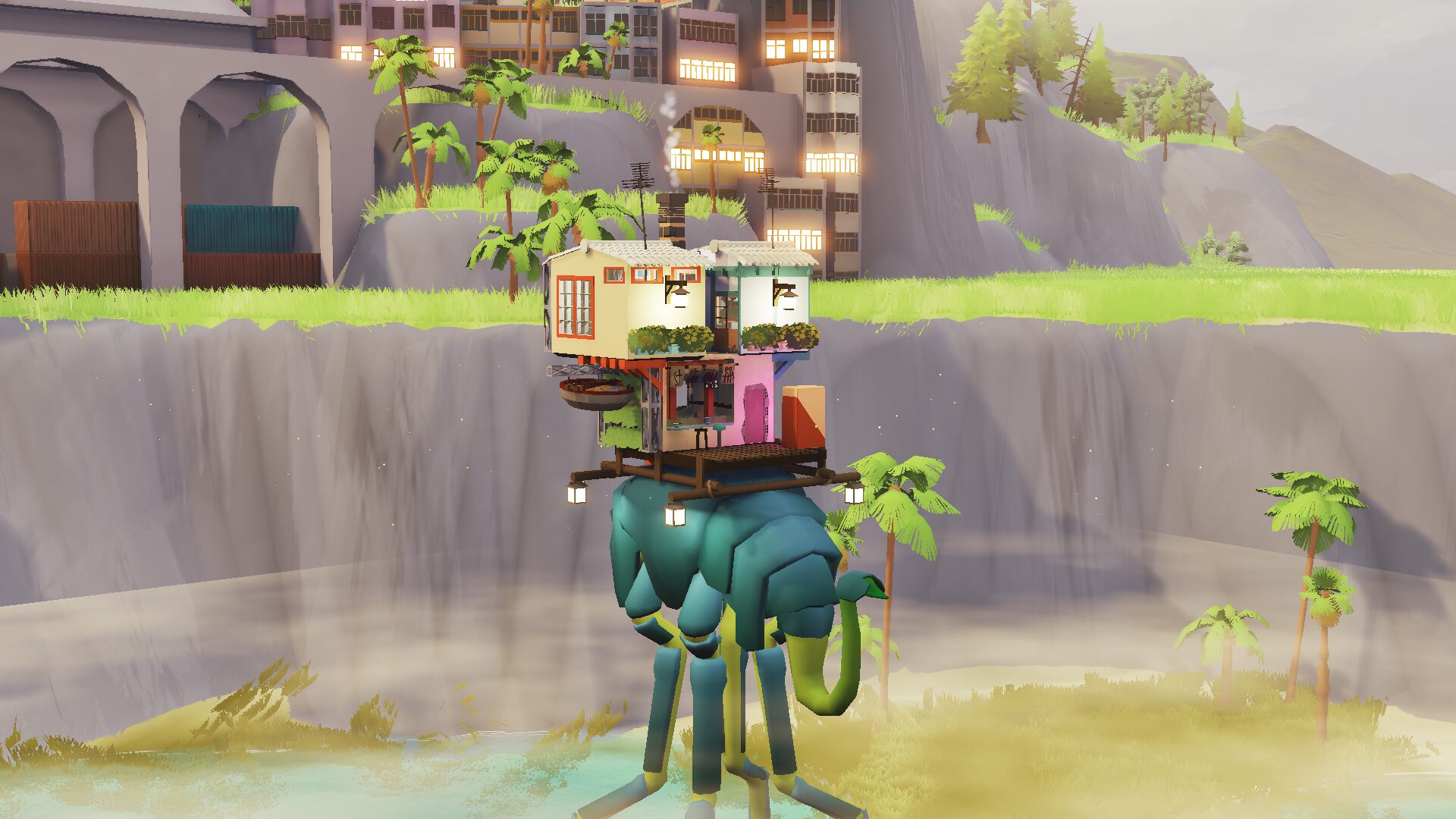
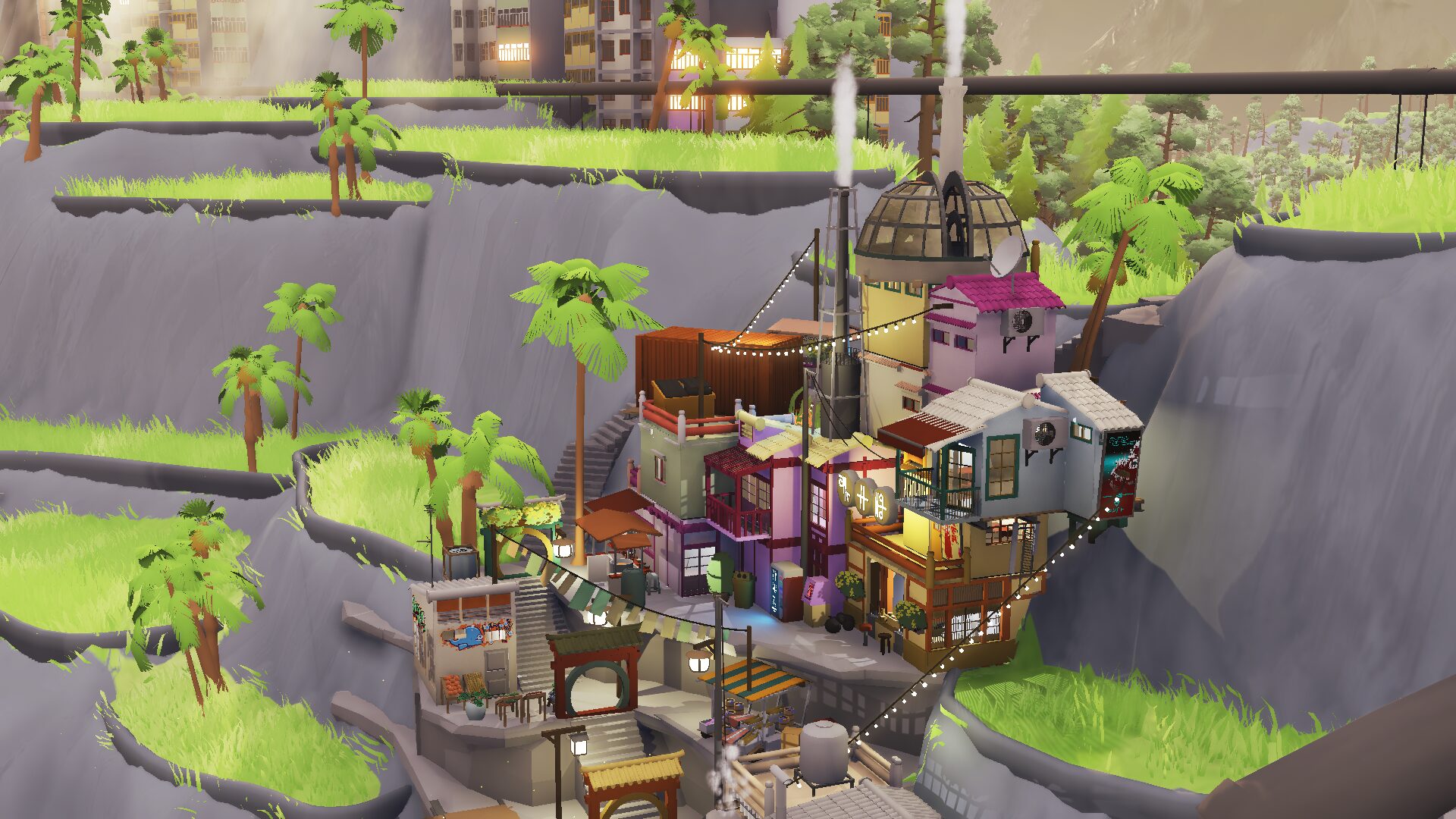
With not only the eight required locations but many, many more available I was like a kid in a candy shop — I couldn’t wait to see all the buildings and detail and unique challenges to each area. It sounds silly to be this excited about a “Cosy game”, but so rarely does one really commit to gameplay and intrigue like this. More often than not, “Cosy game” is an excuse for a game to look cute but be, on the whole, pretty minimalist when it comes to things like progression.
You shape an entire world and the world shapes you
I was in love by the time I finished the first level, but what happened when I started the second?
The camera starts on the level you just finished, then pans up, follows a little path up a hill, and stops. A circle appears showing you the second level’s boundary.
“OH MY GOD THE SECOND LEVEL EXISTS IN THE SAME PHYSICAL SPACE AS THE FIRST!” – My brain.
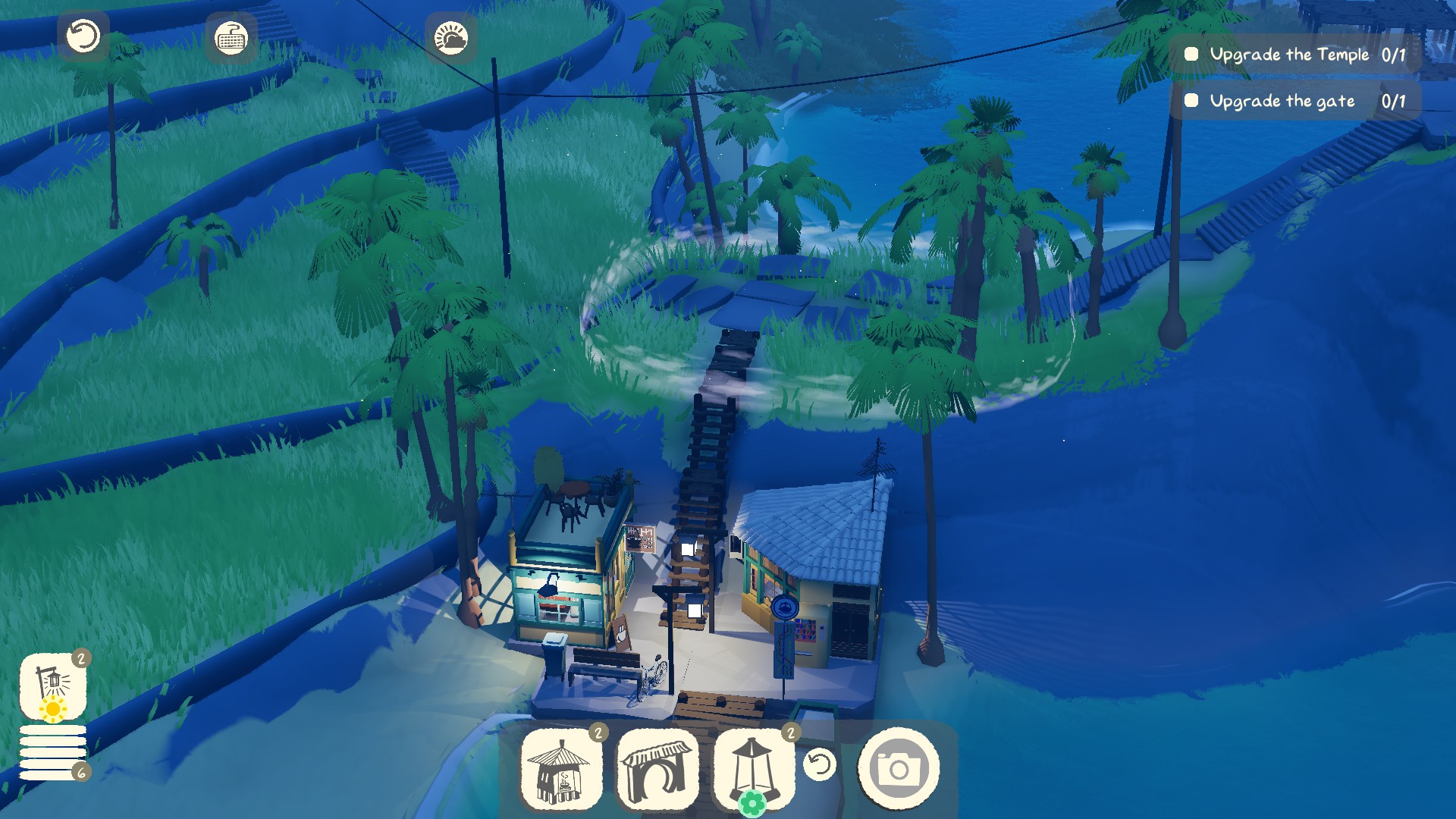
This trend continues, with increasingly diverse methods of transport as you progress. Seeing previous levels in the background as you build a lighthouse community, a hidden casino district or an abandoned radio tower makes you feel like this world is as much yours as you are a guest inside it.
By the end, the sheer excitement of finishing this game made me smile so wide I felt my eyes light up. Then the epilogue level started and I cried. I won’t spoil the emotional payoff, but it encapsulates the idea of creation and agency.
Some quality of life wouldn’t go amiss
The minor grievances do show themselves by the end. Placement is entirely cursor-based, so if you want to attach a building to a face you need to have direct line of sight, rather than being able to “Shift” placement with arrow keys. This means you have to compromise positioning and playability in some cases. If you are familiar with real-world Favela, Shanty Towns and Ghetto design then you might appreciate how hap-hazard that system is, but it would be nice to have the option for more precise placement.
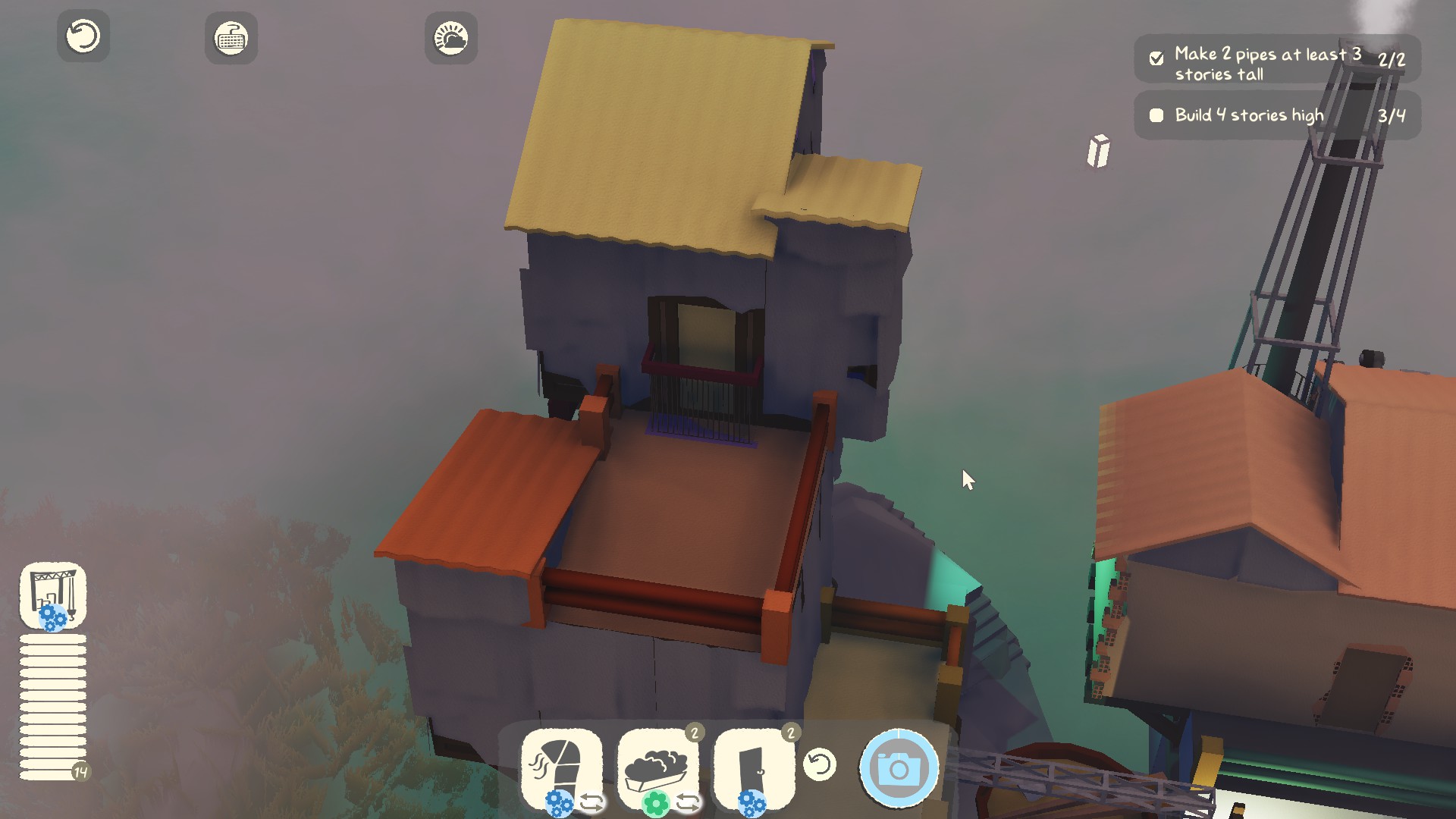
It also has no infrastructure for moving objects. You can pick up and move objects after placing them, but their supply (Of light, comfort, etc) will not change. The building they were originally attached to keeps the bonus and the building you move them to does not gain anything. This means that mistakes can make you have to reset an area if you want to complete all the side objectives, which can feel harsh. The areas are so interesting, though, that replaying a map with the foreknowledge of what you’re building up to almost always makes the levels come together more coherently.
On first launch the jumpy menu frames and lack of a confirmation box meant I actually quit the game within three seconds of starting it, but that’s more user error than anything else (And I shared it merely for your amusement). Turning post-processing to 0% removed the input lag entirely, as it always does with indies, and I had no further performance issues.
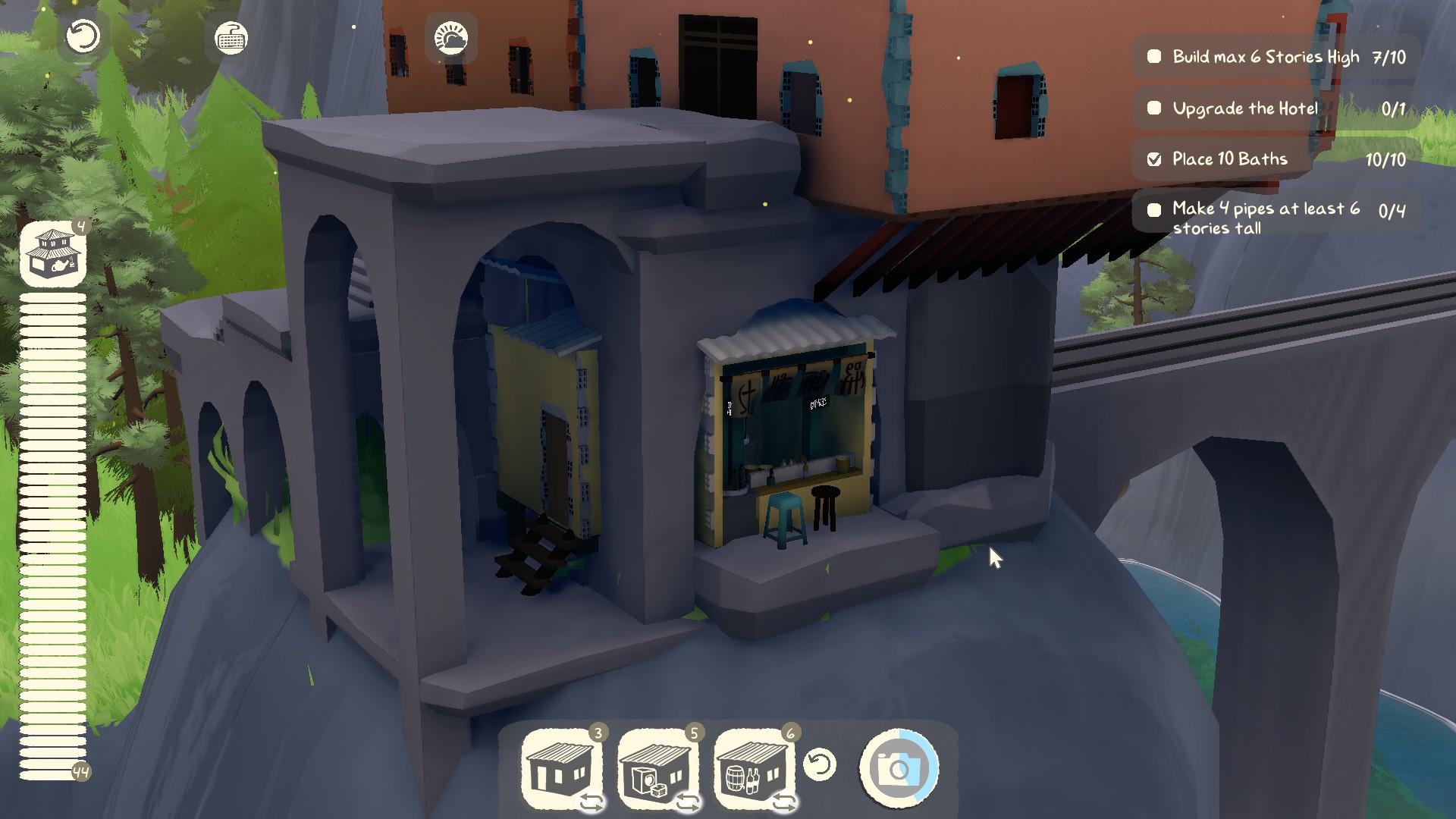
ShantyTown is an exemplar of how gameplay-first doesn’t mean story-less
The issues with the game might be dealbreakers if the placement and supply/demand was all ShantyTown was — if we were simply aiming for a high score and had “runs” like a roguelike. In a game like that, every optimisation and annoyance counts. But, ShantyTown is so much more than that, and I found myself forgiving the minor drawbacks in favour of spending more time with this world and its weird, intriguing undertones.
Being able to build a world beyond just what’s on the screen, and even culminate in an emotional payoff at the end, is such an impressive feat for a management game. I can’t wait to see more innovation in genres I wouldn’t expect.
ShantyTown is available on Steam
