

Altay from Ares Games and designers Paolo Mori and Ole Steiness is a compact civilisation game that wears its influences on its sleeve while carving out a distinct, table‑friendly niche. It is not trying to be a sprawling 4X epic; instead it compresses the pleasures of expansion, conflict and technological progress into a brisk deck-builder that rewards opportunistic thinking, timing and tactical opportunism.
The first thing that becomes clear when you open Altay’s box is how tightly the designers have focused the experience. The core loop is elegant and simple: each player manages a small, evolving deck of cards which they will use to produce resources and take actions on a shared map. They’ll also buy new cards from a market row that add more powerful effects and resource generators to advance the game. For anyone who has played Dominion, Clank or any other deckbuilder, this concept will be familiar, albeit here the “sub-genre” is the area control aspect of the map itself.
And indeed, where Altay distinguishes itself is the way board control and deck composition feed each other. Many cards gain bonus effects or increased value when you control matching terrain or hold settlements in particular regions which creates a satisfying feedback loop. The map and board state informs your deck choices, and what is in your deck (or perhaps more of ten what is in your hand) influences where you contest the board. That interplay gives the game a pleasing sense of coherence — your decisions on the table and in your deck feel interconnected in a simple and straightforward way.
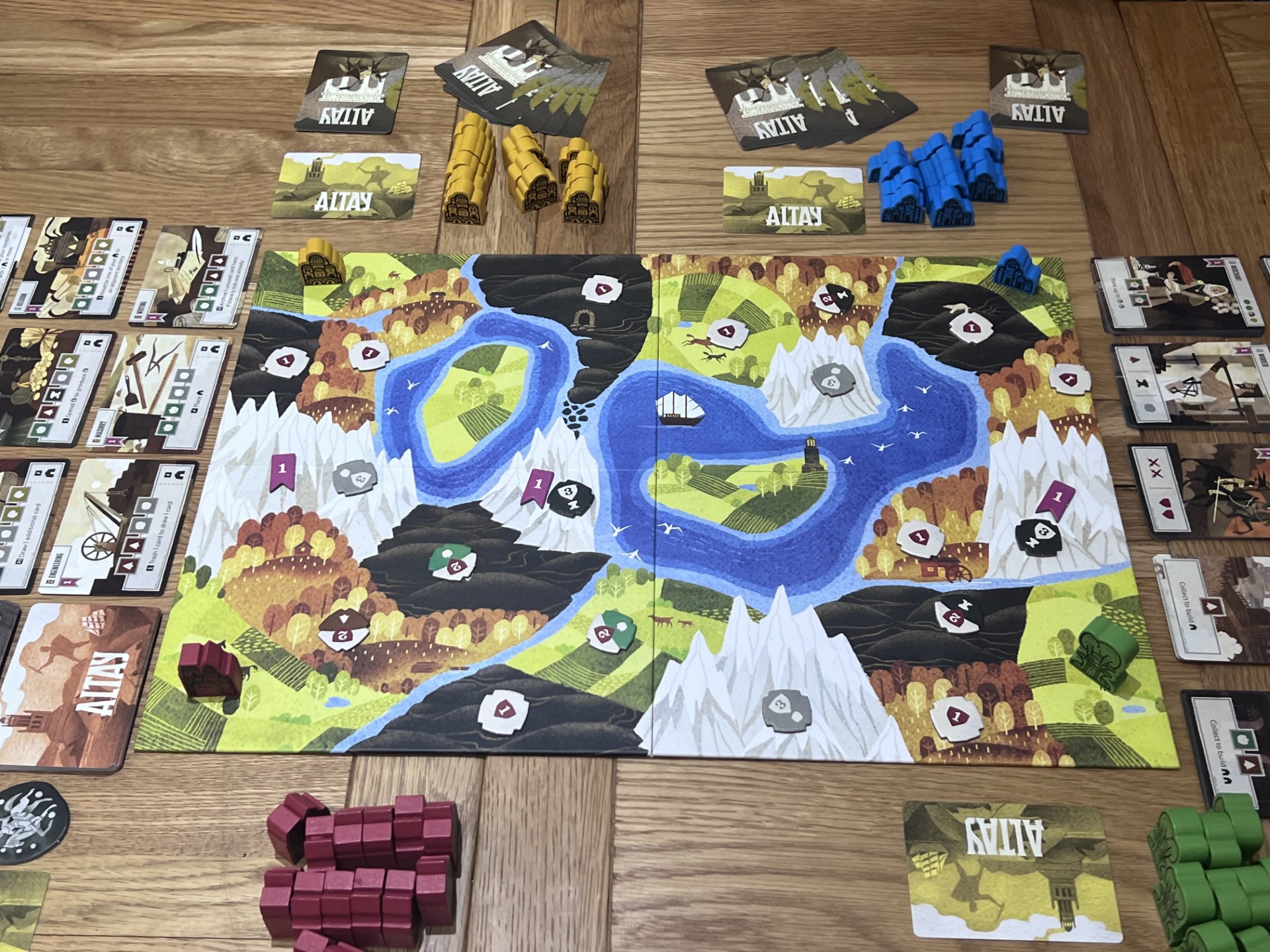
Pacing is one of Altay’s greatest strengths. Turns are compact and meaningful with very little filler. Veteran designers Mori and Steiness have deliberately avoided the bloat that can make civ games feel interminable and Altay is all the better for it. Instead of long, multi‑phase turns, Altay offers a sequence of crisp choices: play cards to generate goods and actions, place settlements, contest regions, and purchase new cards or achievements/wonders that provide persistent bonuses. The end condition — a race to place a set number of settlements or to trigger a decisive level three achievement — keeps the tension high and prevents the game from meandering. This means that Altay can be comfortably played in a single game night, without any need for players to rush or watch the clock.
Interaction in Altay is direct but streamlined. Combat and territorial disputes are resolved quickly, usually by comparing settlement presence and attack icons rather than through complex dice or layered combat systems. This keeps the board dynamic and readable: when you push into a region, the consequences are immediate and clear. The trade‑off is that combat lacks the granularity and perhaps the gravitas that some players might expect from heavier area‑control titles.
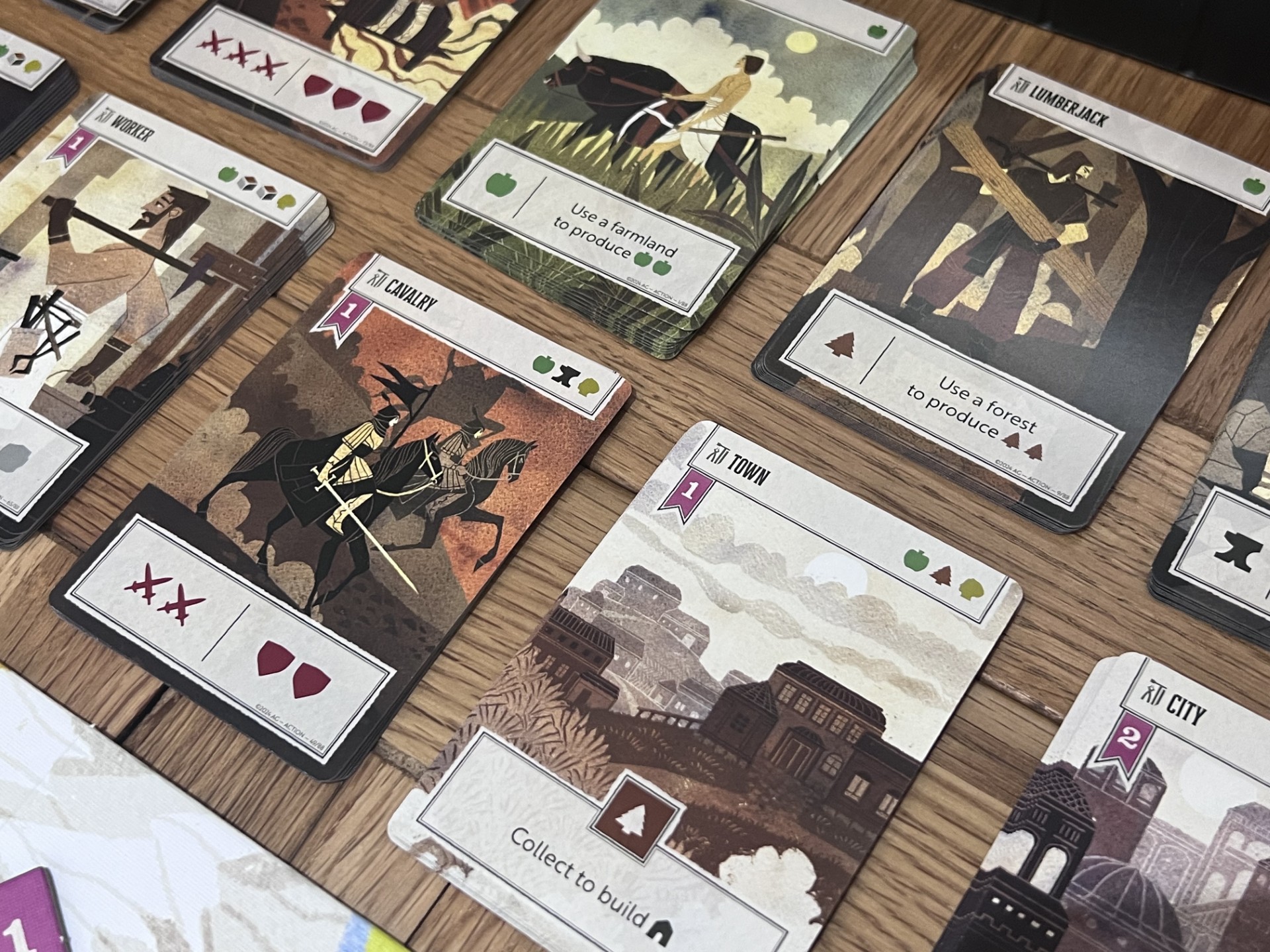
Battles are decisive and fast, which suits the game’s tempo but reduces the tactical depth of individual skirmishes, with essentially no unknown information or randomness to factor in. That said, the strategic layer — timing your expansion, denying opponents key terrain and choosing when to pivot from growth to conquest — does give Altay a healthy tension in the decision space. A well‑timed settlement or a cleverly purchased achievement can swing momentum dramatically, and the compactness of the system means those swings feel meaningful enough to never become arbitrary.
Deck‑building in Altay is light but satisfying. You start with a mildly asymmetric base deck that nudges you toward certain strategies, and the market row offers a steady stream of upgrades, specialists and one‑off effects. The cards are not about infinite combos or runaway engines; they are about incremental improvement and tactical flexibility. Some cards provide immediate resources or actions, others sit on the board and “collect” resources in order to give an effect later, whilst advancement cards offer bonuses that synergise with board control, and a few act as situational tools that can be used to blunt an opponent’s momentum.
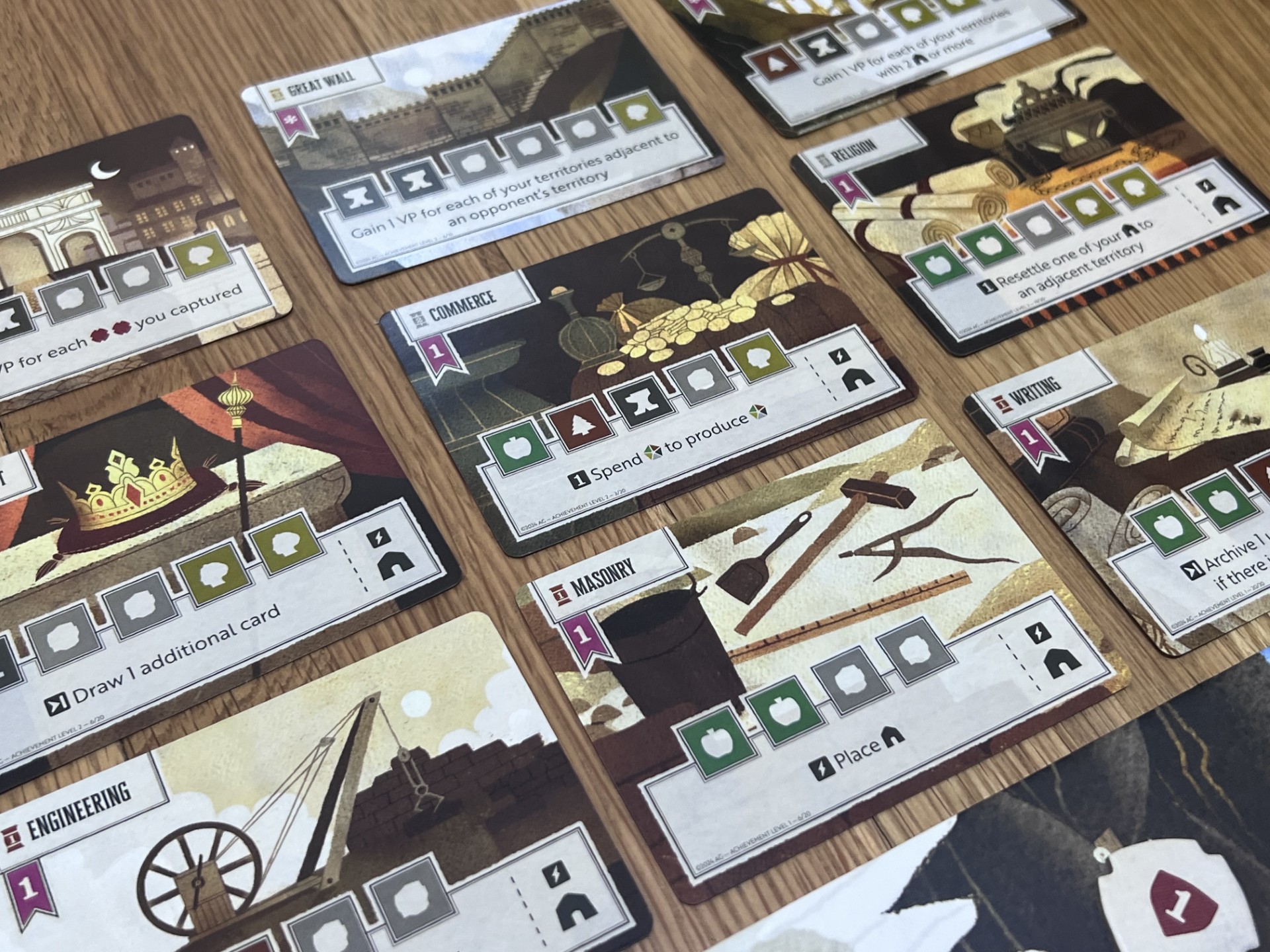
Because the market is shared, there is a constant tension between buying what you need and denying powerful options to others, although it’s rare for a deck of any specific card to run out before each player gets at least one copy of a card (assuming they want to). This market pressure is a clever way to inject player interaction into what might otherwise be a solitary deck‑tuning exercise, but denial of access to cards (aside from the game-ending wonders) isn’t really a game feature.
Achievements and tech cards function as a light tech tree, offering persistent benefits that reward focused investment. They are small but impactful: securing a particular achievement can make a midgame strategy more viable or lock in a late‑game scoring engine. The achievements also serve as a soft guide for players who prefer a clearer path to victory; if you see an achievement that complements your board position (such as having X settlements in a certain terrain) it gives you a concrete objective to pursue. This helps mitigate the sometimes aimless feeling that can afflict lighter civ games, providing short‑term goals that feed into the larger victory condition.
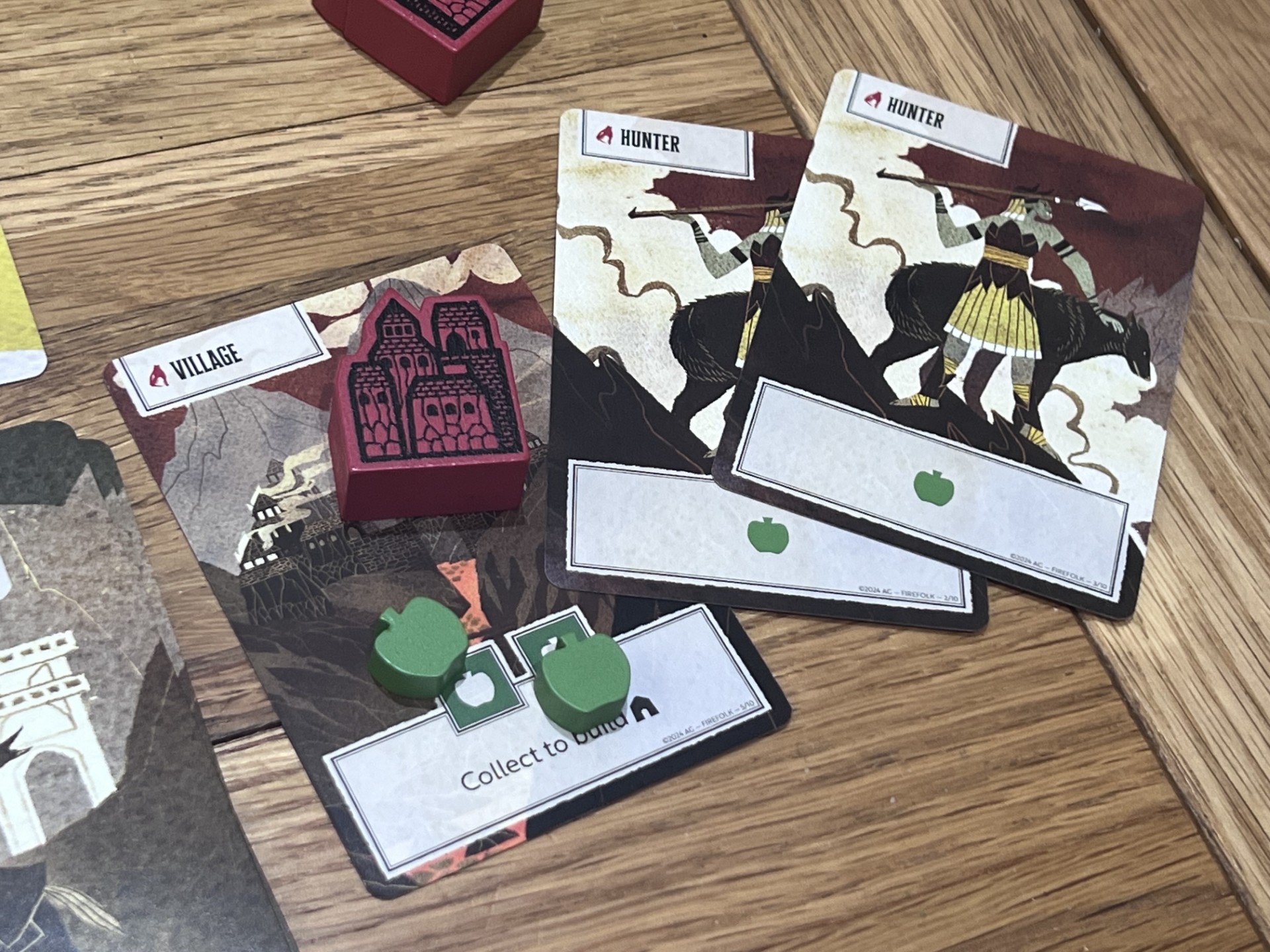
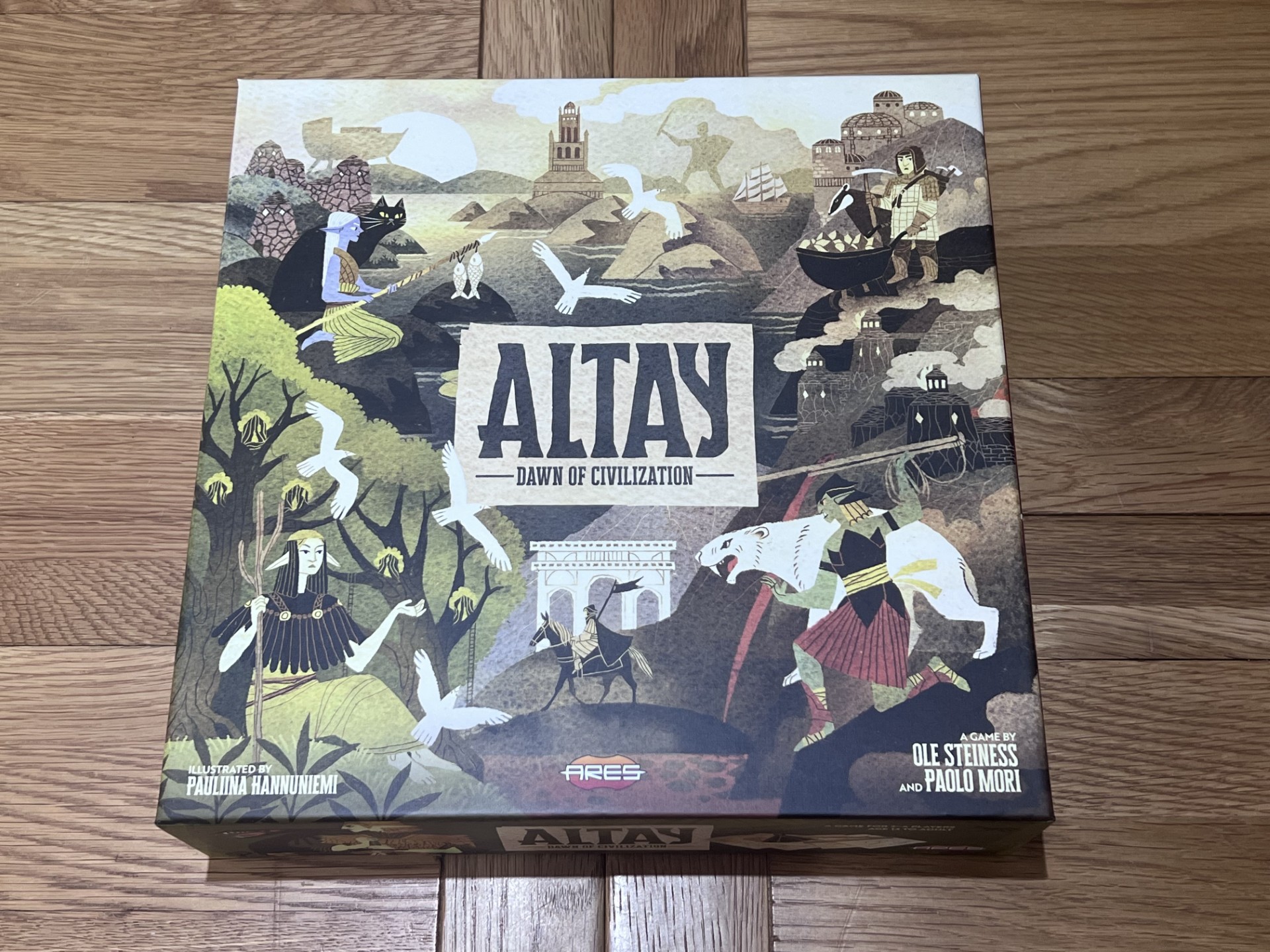
Component quality is solid and attractive. Altay’s physical presentation is designed to support its fast pace: the market cards are easy to scan, the inclusive inserts keep the wooden resource tokens organised, and the map is abstract, stylised and very attractive. Large wooden settlements with screen-printed art and mild differences in shape represent player cities on the board, and these look good in the context of their setting.
I wouldn’t say that Altay is unnecessary frilly, but the components are durable and clear, with iconography that communicates information efficiently and the art style is distinct and pleasant to look at. For a game that prizes speed and readability, this is exactly the right approach in my opinion and people walking past Altay tend to stop and admire it. The rulebook is concise and the setup is straightforward, with relatively few areas of clarification left open.
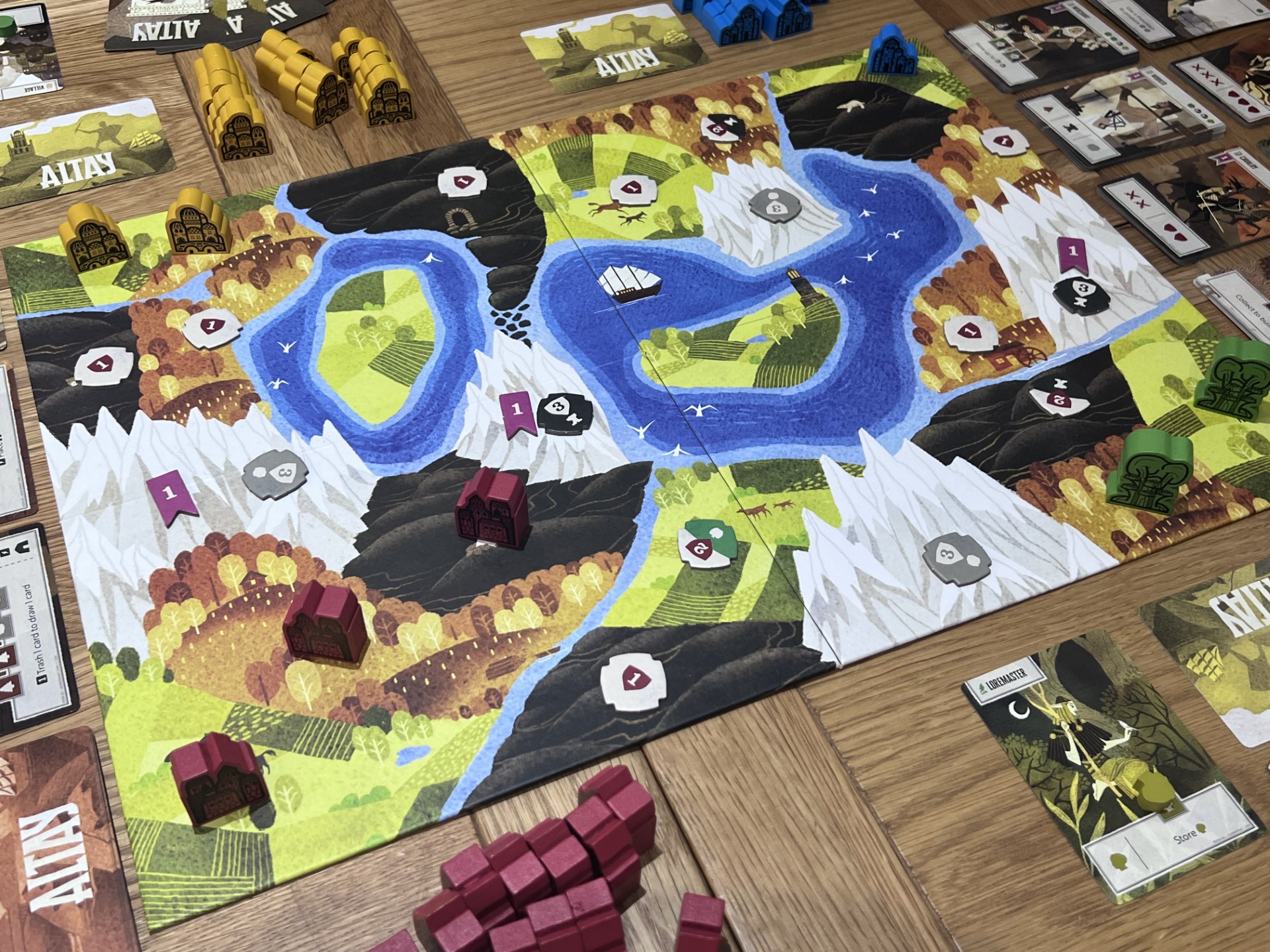
Strategically, Altay rewards opportunism and timing more than long‑term engine planning. Early diversification is often wise: keeping your options open allows you to react to the card market and the map. Midgame, you can begin to specialise if you have secured the right terrain or achievements; this is when the game’s feedback loop becomes most apparent, as your board position amplifies the value of certain cards. Endgame decisions are frequently about converting board presence and/or resources into whatever victory condition you’re going for.
If the game has weaknesses, they are mostly a matter of scope and expectation. Altay is intentionally light‑to‑medium in weight, and never tries to be a deep, emergent civ simulator. Players who crave sprawling tech trees, long campaigns, or highly asymmetric factions will find Altay fairly modest. The combat, while fast and readable, lacks the tactical depth of heavier area‑control titles, and because the market and achievements are finite, the long‑term variety depends on player matchups and the particular cards that appear in a session. After many plays, patterns will emerge, and the game’s compactness means it can feel familiar sooner than a larger, more complex title would.
That said, these trade‑offs are deliberate and in a lot of cases, quite desirable. Altay is designed to be played often, not to be considered a “once a year” landmark game. Its strengths are immediacy, clarity and the satisfying feedback between the map and your deck ov cards. It is a civ game you can play on a weeknight and still feel like you’ve had a meaningful strategic experience, and it rewards players who enjoy tactical decision‑making, timing and the small‑scale drama of contested regions.
In the end, Altay is a well‑executed civ‑lite that hits its design goals with confidence. It is not the deepest civilisation game you can buy, but it is one of the most successful attempts to distil the genre’s pleasures into a compact, accessible package. For groups who want a civilisation experience that plays quickly, scales well and keeps the table engaged, Altay is an excellent choice. For players who need heavyweight depth, long campaigns or highly granular combat, it will feel limited. But judged on its own terms as a brisk and straightforward experience, it is a polished, enjoyable game that deserves a place on the shelf of anyone who likes civs in miniature.
You can find out more about Altay – Dawn of Civilization on the Ares Games website.
