

Control was one of 2019’s standout games. Lauded for its visuals, incredible particle physics and lighting, as well as its engaging gameplay, it was always going to be a tough act to follow. Thankfully, Control Resonant is a bold, ambitious sequel that reshapes the foundations of Control into something stranger, louder, and somehow far more physical.
Control Resonant a melee‑driven action‑RPG set in a paranormally warped Manhattan, with Dylan Faden (brother of Control’s Jesse) stepping into the lead role as reality buckles, streets twist, and the Hiss spill out of the Oldest House and into the real world. It’s bigger, more varied, and more aggressive than the original, trading Jesse’s stylistic, telekinetic gunplay for a brutal, shapeshifting melee-style and a sprawling progression system that constantly pushes you to experiment. Control Resonant is a confident experience: Visually dense, mechanically rich and atmospheric in a way that only Remedy seems able to deliver.
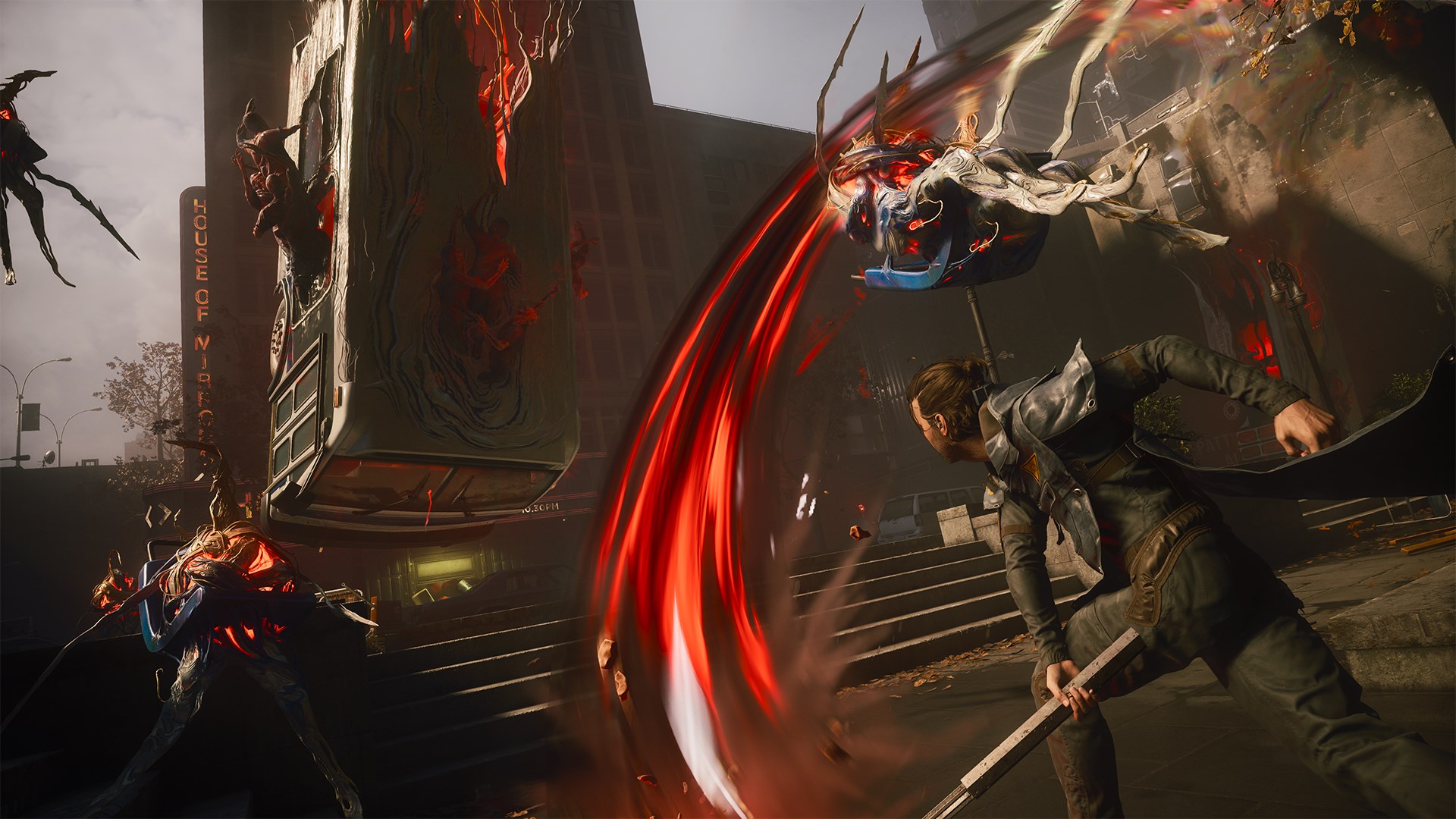
I still remember the first Control as a game defined by its surreal brutalism — a labyrinth of grey concrete corridors, shifting walls, and eerie stillness punctuated by sudden and considerable violence. With its larger and more open environments (befitting of its gameplay) Control Resonant feels like the moment that world finally breaks open in both gameplay and thematic terms.
Manhattan is fractured into zones, each distorted by cosmic forces in different ways: gravity is bent and twisted, streets are folded in on themselves and entire districts feel like they’ve been pulled through a dream logic blender. It isn’t quite a seamless open world, but it generally feels like one, with dense, interconnected areas and lots of clever secrets and strange encounters that encourage exploration. Remedy’s goal was to deliver far greater visual variety than that shown in the Oldest House, and the result is a city that feels hostile, dynamic and ever-changing.

Combat is where Resonant truly diverges from its predecessor. Dylan’s primary weapon, the Aberrant, is a living, shapeshifting melee tool that splits, extends, and morphs into new forms mid‑fight. Paired with Dylan’s supernatural abilities, it creates a fast, physical combat style that feels like Remedy’s take on a character‑action game. You’re encouraged to build Dylan in wildly different ways: Raw melee power, ability‑driven agility, environmental manipulation, or hybrid builds that mix all three.
The talent tree that dictates these developments is sprawling with each weapon form having its own upgrade path, whilst secondary weapons add further layers. As is the trend these days, these upgrade paths are all sufficiently meaty, with some upgrades (such as significant buffs or new abilities) being clear, whilst others are a bit less obvious until you’ve spent a lot of time with the game. Basically, Control Resonant is a stealth‑RPG hidden inside a melee action game,
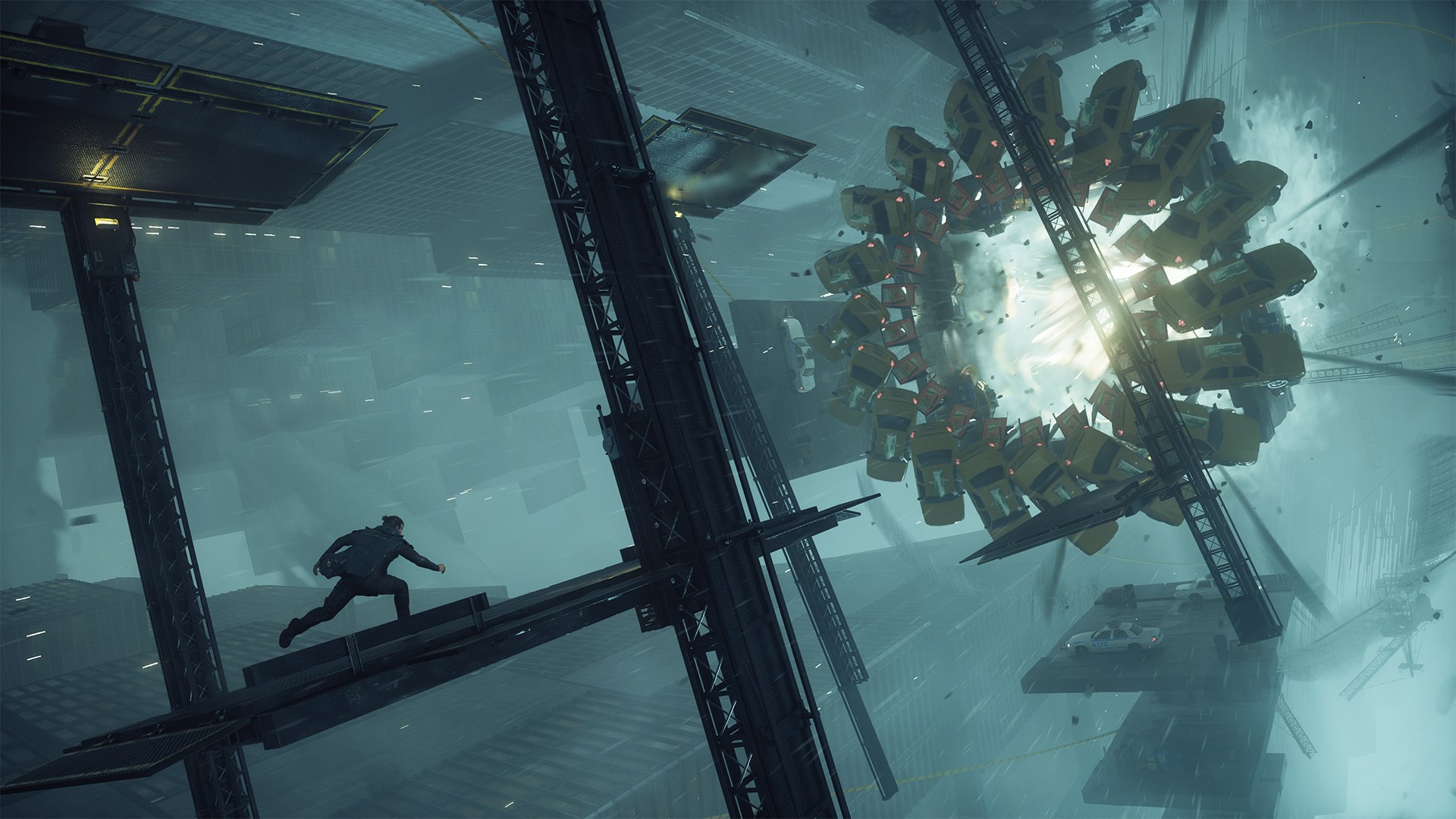
The structure of Control Resonant supports this ambition. Manhattan is divided into major zones that spoke out from a central FBC field office that acts as your evolving hub for story and character development. Each zone (or most at least) has its own vibe, challenges, and Resonant Entities (area bosses) that reshape the district when defeated. Some areas become safer as you clear them; others become more dangerous, opening new opportunities.
This gives the game a fairly familiar rhythm where you’ll explore, fight, upgrade, return to the hub and then push into increasingly warped territory. Remedy’s worldbuilding is as impeccable as ever, blending cosmic horror with superhero-like movement and a sense of escalating dread as the Hiss tighten their grip on the city, whilst you fight back desperately to recover zones that feel as if they’ve fallen.

Dylan himself is a compelling shift in perspective. Years after his confinement, he’s pulled into the crisis at the height of a supernatural catastrophe, forced to confront both the Hiss and the consequences of his past. His journey is one of identity and emerging power, and the search for Jesse (now the FBC Director) gives the narrative a personal anchor amid the chaos. Control Resonant is designed as a new entry point for players, but returning fans will recognise echoes of the Oldest House, familiar threats, and the broader mythology woven through Dylan’s story, in addition to the tantalising possibility of catching up with Jesse..
Control Resonant performs admirably considering its occasionally massive scale. The console (I played on Xbox) handles the dense environments and warped geometry with surprising stability, and while it probably isn’t going to match a brand new PC, the art direction carries the experience. Remedy’s Northlight engine remains one of the most atmospheric in the industry, and even on this now ageing hardware, Manhattan’s distortions feel vivid and unsettling. Combat retains its fluidity, exploration feels smooth, and the Control Resonant’s zone‑based structure helps maintain performance without sacrificing ambition.

Unfortunately, I did sometimes feel that Control Resonant’s ambition could overwhelm players expecting a more traditional sequel. The melee focus is a dramatic shift from the original’s gunplay, the RPG systems are deeper and more demanding and the world is far more open and distraction‑rich. To me it felt like the smarter, unexpected indie sequel to a big-budget blockbuster movie — and in most ways I preferred that — but sometimes you just want to blow everything to bits.
Control Resonant is, to me, a game that respects both the legacy of Control and the appetite for something a bit different. It’s fast, it’s strange and it’s atmospheric in a way that only Remedy seems able to achieve. If you enjoy supernatural action, dense worldbuilding, and combat that rewards creativity and aggression, Resonant is a descent into cosmic chaos that’s well worth exploring, whether or not you enjoyed the original game.
Control Resonant is available now, for both PC & Xbox.
