
Stupid Never Dies is indeed stupid, but fun
Stupid Never Dies, but it seems like the public’s desire for stupid things might have…

There comes a moment when watching a film, reading a book or playing a game that you wonder if you’re meant to be cringing, or if the authors actually think this tripe is good writing. Stupid Never Dies is that for 30 hours. Solid combat and fun abilities exist under the veneer of awful dialogue and characterisation, which to some players will scratch the “game developers remember they have free will” itch while others will be left feeling the experience is less than worthless.
Tempering expectations is important in a gaming industry that lists the Witcher 3 Remastered right next to “Adultery Marriage Punisher”. A game existing on Steam or any other storefront, with any genre labels they attach, can never quite prepare you for what’s inside anymore. Stupid Never Dies is a fun-enough roguelike that is best played in 30-minute to an hour bursts, but the price tag and description don’t present the game in such a casual light.
In my 30-hour playthrough I found more to enjoy than I expected, but can certainly see the lack of player communication, cringey dialogue and repetitive gameplay being a turn-off for people wanting to sit down and play for hours on end. If you need to kill a little time every night for the next month, you could do a lot worse than Stupid Never Dies.
A mundane story that thankfully isn’t important
The core world of Stupid Never Dies posits that humans and monsters “coexisted” until the King of Monsters (Or “K-O-M” as they call him) gave monsters “Overtechnology”, which allowed them an upper hand. After killing 98% of the population the monster split off into different “layers” of reality, with basic, disposable and weak Zombies being one of the only monsters left behind on the human layer.
The game sees Davy, a basic zombie, attain K-O-M level power and start punching, biting and transforming his way through these “layers”. Thus is born the roguelike structure of the game. Descend, find quest items, unlock new gear and transformations, descend even further next time.
Oh, and Davy’s motivation for all this rebellion is simply to revive a frozen girl he stumbled upon. In the classic one-sided love-affair with an inactive being (WALL-E still did this best) Davy gawks at and glorifies her every step of the way. This is where you, as a player, have to make a decision that will affect how much you enjoy this game…
Do you place trust that every time you cringe, every time you wince and every time you audibly exhale that this is what the writers were trying to make you feel? Or do you resign yourself to the view that the writers are really just this bad? There’s a surprising amount of dialogue to stomach, and while none of it is relevant to the gameplay itself, you’ll have a better time if you can laugh. Whether you laugh with the game or at it is up to you.
A tried-and-true roguelike action game with a twist
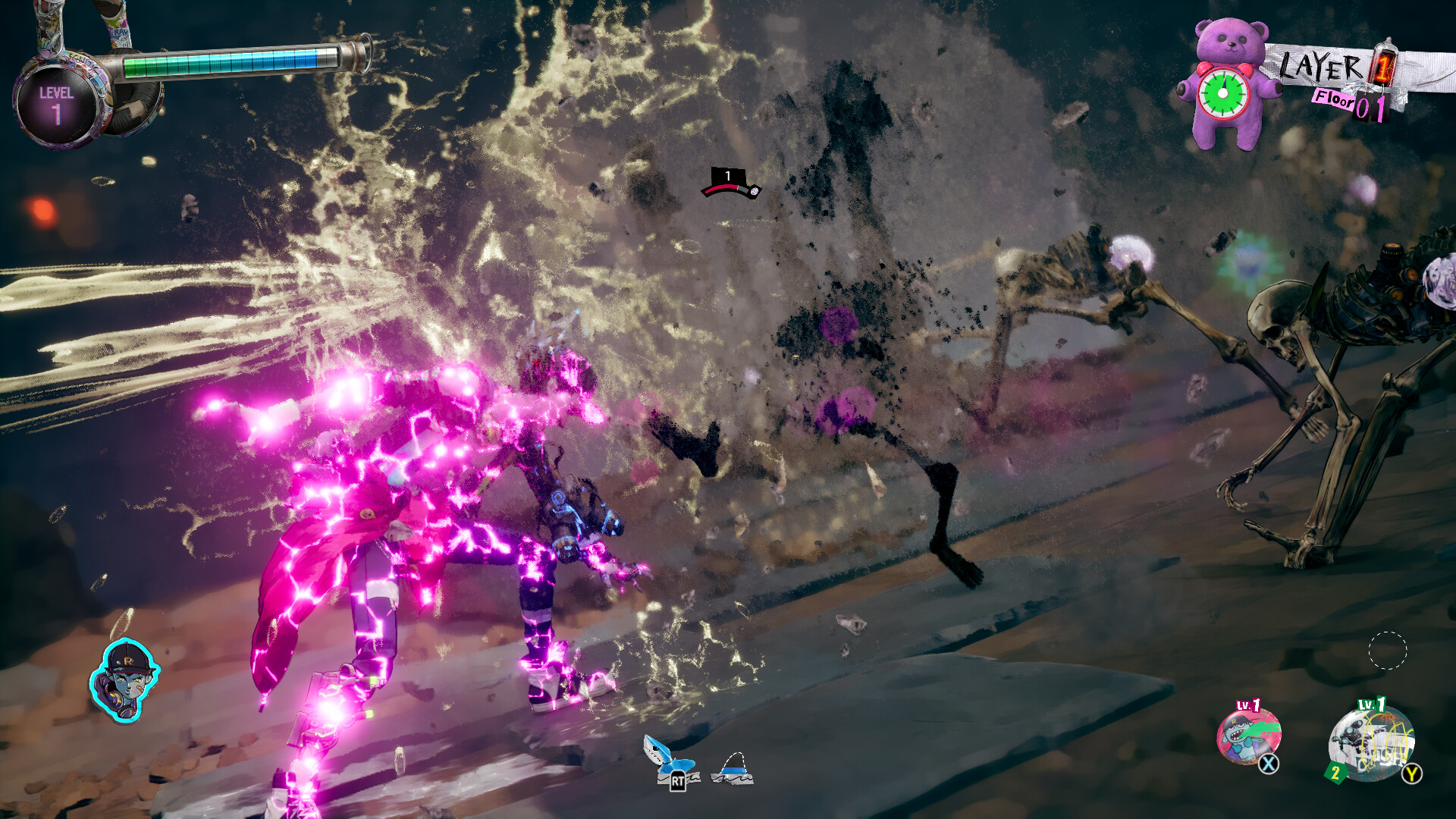
Within each run your main gameplay decisions are which forms to inherit (forcefully, via eating enemies) and which floors to visit. You can skip ahead to deeper layers, but if you haven’t got enough exp from previous floors the extra time and energy it’ll take to skip ahead may not be worth it. This is due to two main gameplay elements:
- The timer. The entire run is on a timer. If it runs out you take constant damage over time.
- Growth and EXP level. Killing enemies and opening chests gives you exp, and your level directly carries raw stats. Hitting a level 56 enemy while level 56 is substantially more effective than being level 54, for example.
Balancing speed, combat and meta-progression is a fun loop and keeps runs engaging every single second, since every second lost can matter if you’re on your way to one of the deepest layers of the dungeon.
Even the way you change form, by eating the core of an enemy, is stylish and engaging. The combat revolves around DMC-light style action but with the addition of seamless transformations into 3 forms. Zombie is always available, but you’ll be playing as a Harpy, Werewolf, Lich, Golem and Snow Fairy among many others. Each form has their own abilities and passives, used in both combat and exploration.
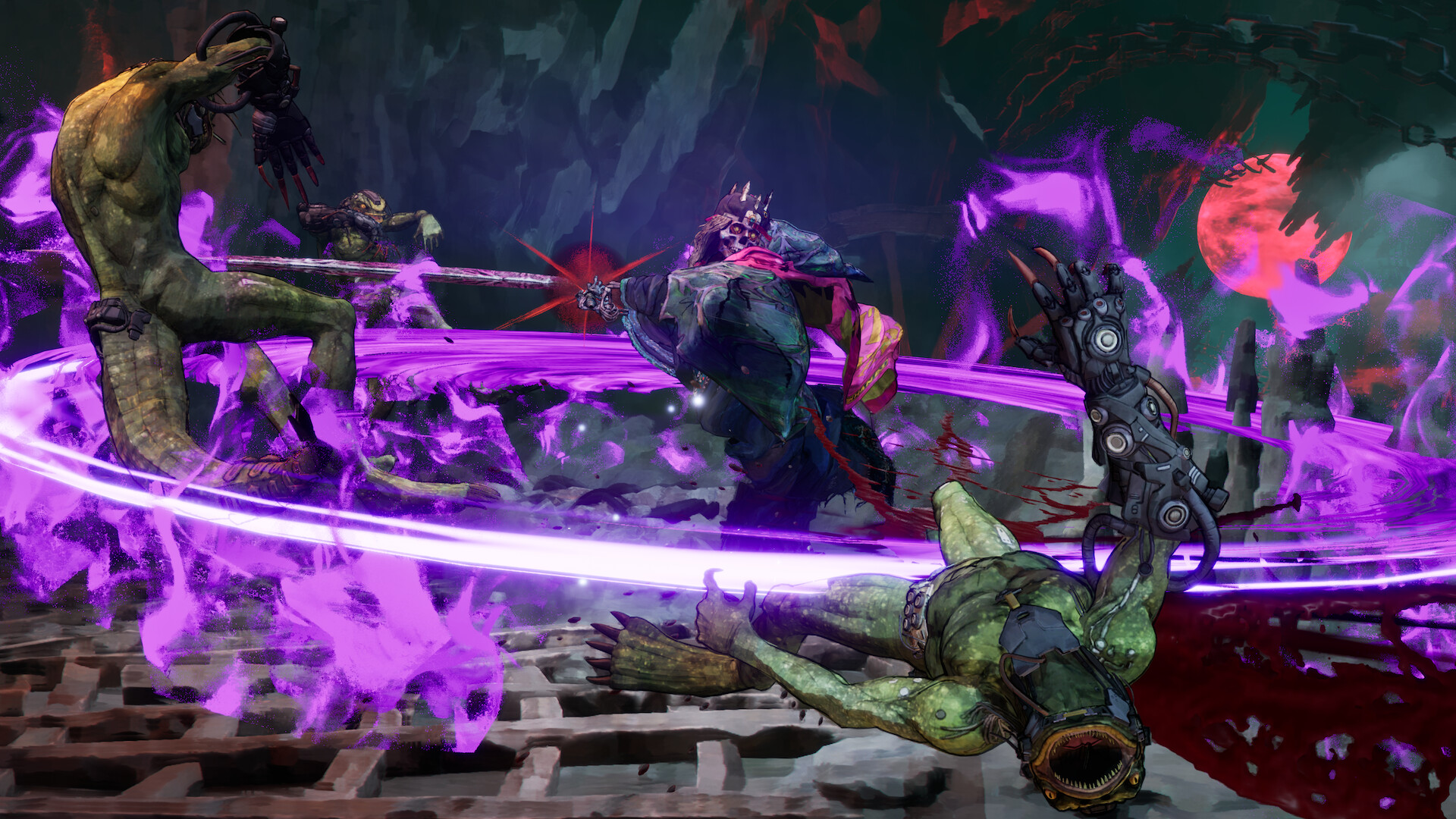
There’s no “pick which room to go to” shenanigans, every upgrade and form you have access to you have to actually find in a layer and earn, which removes analysis paralysis and makes a fast-paced speedrun through layers more seamless.
Meta progression is also a little different to the usual fayre as it happens mainly via “growth rate”, not specific buffs to the player. This might sound overly simple, but it means you spend less time in the hub and more time beating up enemies which is no bad thing. Over time your “growth rate” will ramp up to over 5000%, meaning completing the first floor of a dungeon gets you to player level 25 alone. This means you can comfortably skip more floors, which makes venturing deeper faster (so you can beat the timer).
Stylish visuals and pulsing soundtracks enhance a simple gameplay loop
Finishing a run shows all your monster kills as little stickers that fill up the screen from the bottom, creating a cascade of little cut-outs. Enemies’ cores are specifically modelled so that a bite on an Ogre’s left arm won’t consume their core, but from the right side will. Bites into these cores are visceral and rewarding, with a swish of a sound effect and a splash of colour based on the rarity.
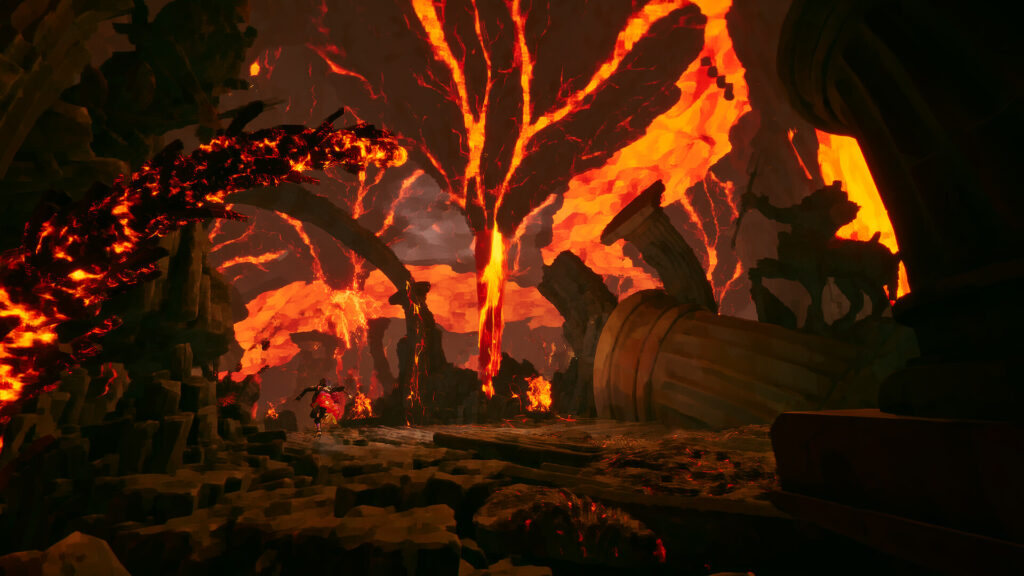
All the while you are treated to a soundtrack that slaps together 2000s pop-punk vibes with modern gaming influences to create something upbeat and fitting for the character. Biomes range from the molten fall of Rome to icy Viking townships and vampire castles, and enemies vary from place to place. Learning bite-spots on enemies and navigational challenges provided by each biome makes this variety more substantial than simply just stylish.
Stupid Never Dies isn’t going to win any awards, but is far from the worst game of the year
I suppose in 2026 being “mid” (did I use that right?) is worse than being hot garbage, because you run the risk of flying completely under the radar like Stupid Never Dies looks set to do. With just 136 Steam reviews a full week after release, I could probably legally call myself an Expert on the game if I desired. Alas, while I will defend its’ form-switching combat and general casual gameplay flow, I can’t in good conscience not mention the pacing, writing and price-point for what is at most a 30-hour experience.
Stupid Never Dies, but it seems like the public’s desire for stupid things might have…
Stupid Never Dies was played on PS5 but is also available on PC via Steam
