

Rival Restaurants, designed by Gary Alaka, Rob Chew, and Jon Kang and published by Gap Closer Games, is that rare party‑strategy game hybrid which manages to be loud, chaotic, interactive, and still surprisingly tactical. It’s a game that thrives on energy — real‑time trading, frantic ingredient grabbing, sabotage, negotiation, and the constant race to cook recipes faster than everyone else. Yet, beneath the noise and humour is a clever economic engine that rewards planning, timing, and a fair bit of opportunism.
Rival Restaurant‘s premise is simple and instantly appealing. Each player is a chef running a restaurant, trying to become “The Wiener” of the best restaurant in town award. You start with a unique chef power, a restaurant board that can be upgraded, and a handful of basic ingredient cards. From there, the game unfolds in a series of real‑time trading rounds where players scramble to gather ingredients and haggle with each other, followed by a chance to cook recipes worth victory points. The first player to reach 20 points wins.
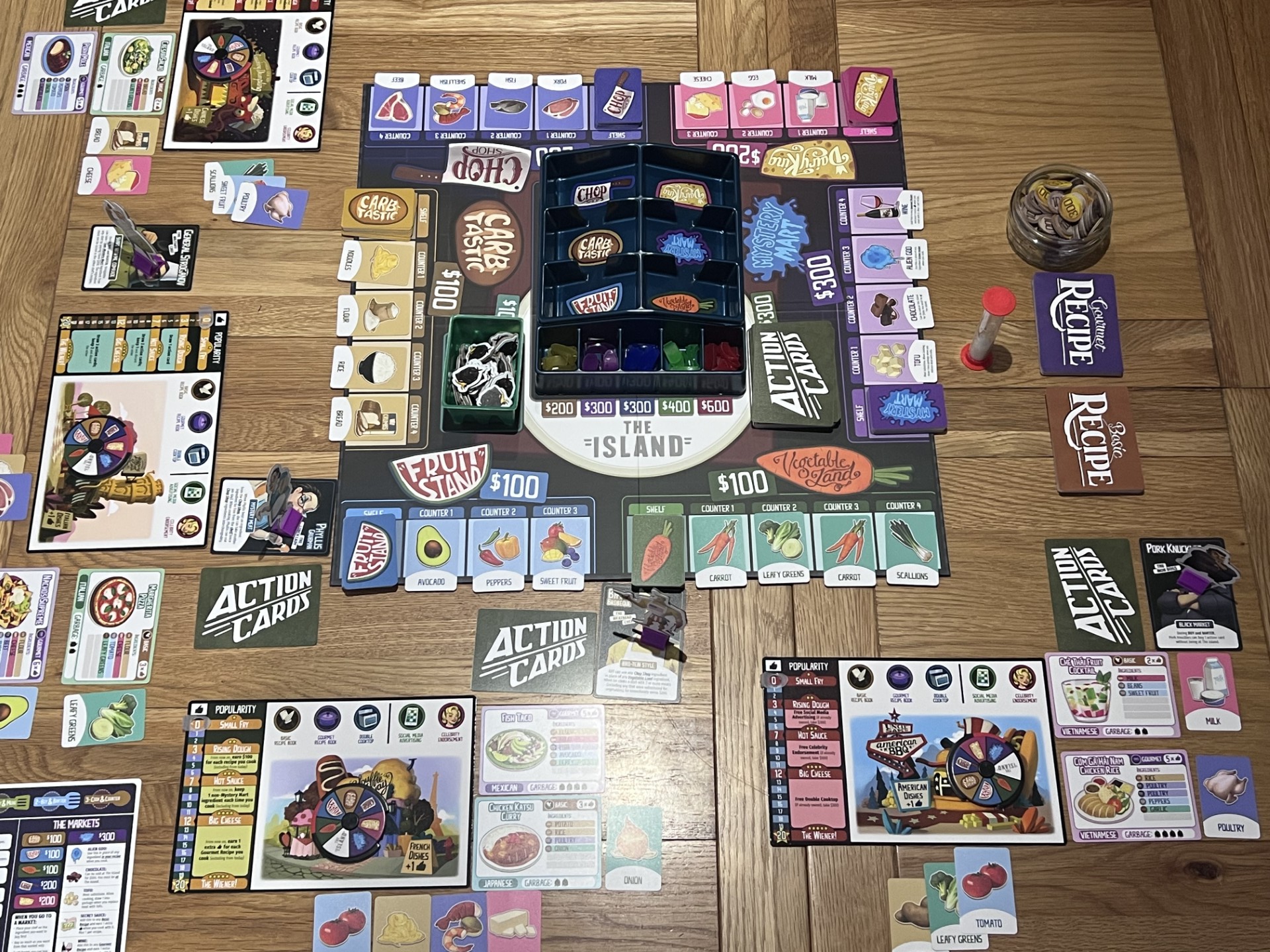
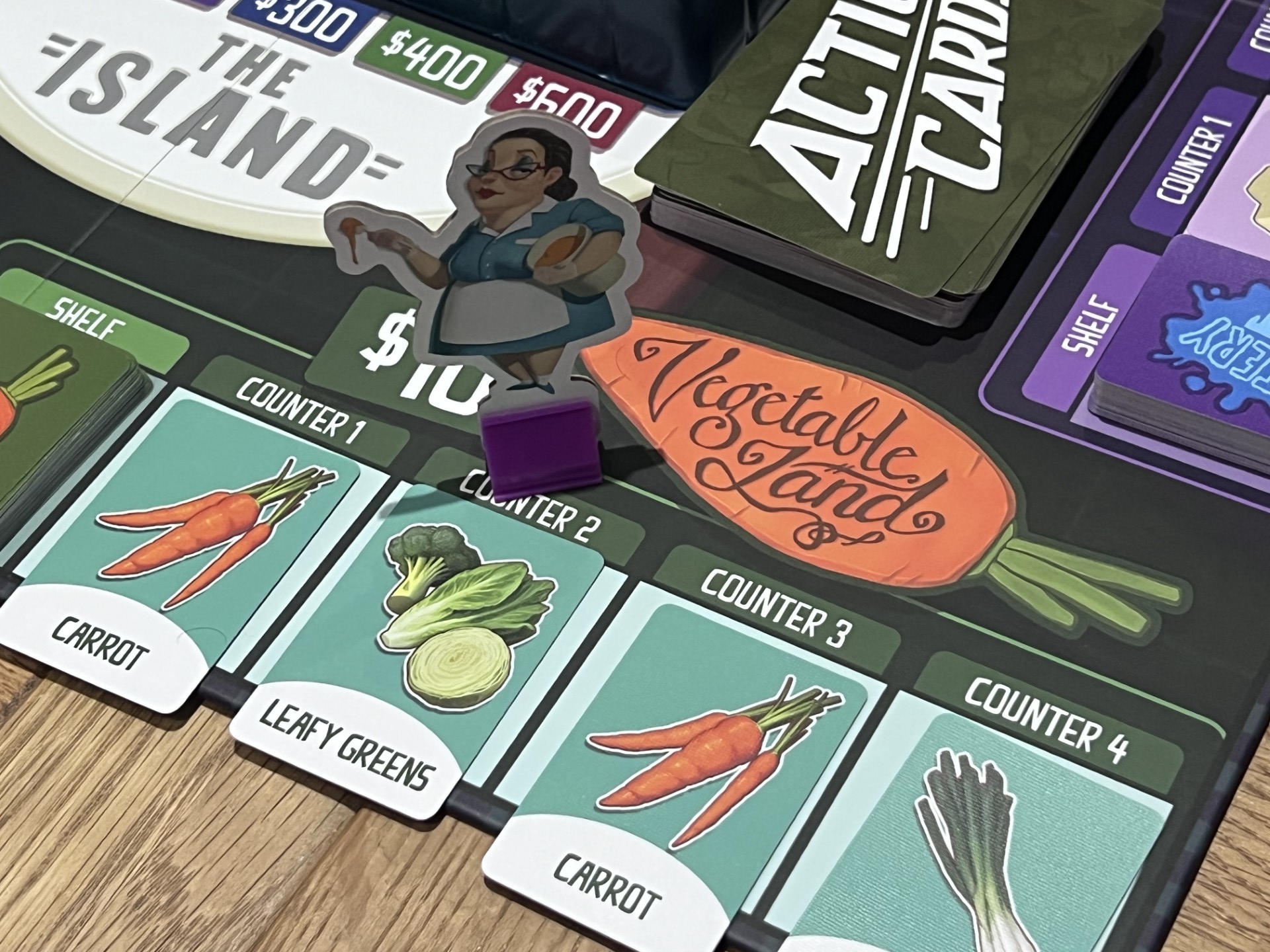
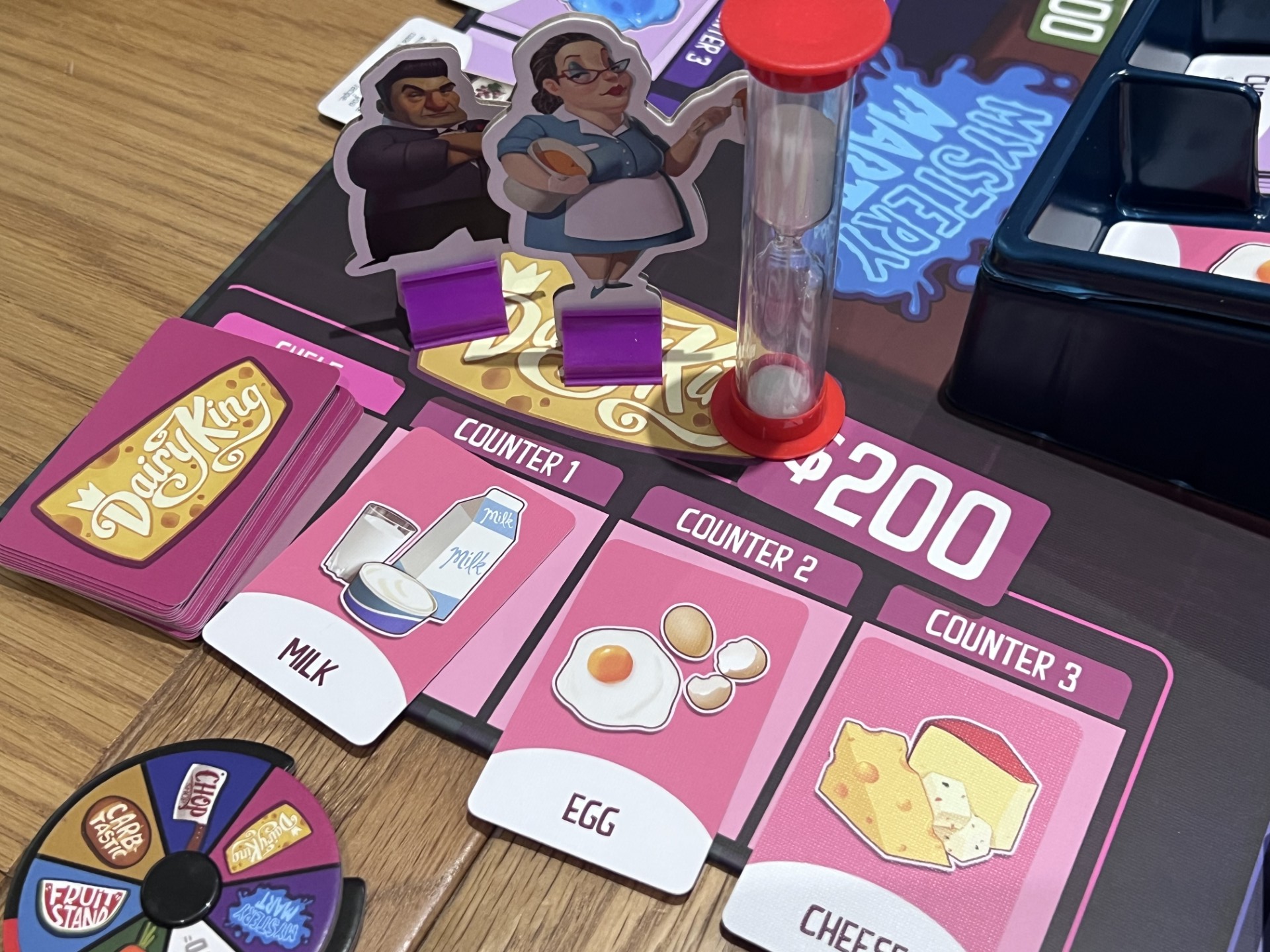
What makes Rival Restaurants stand out is its structure. Each round is divided into two phases: the real‑time “Buy & Barter” phase and the turn‑based “Cook & Counter” phase. During Buy & Barter, players have one minute — literally one minute — to “run” around the market, buy ingredients, trade with each other, and use their chef abilities. When two players visit the same location, a bidding war occurs. It’s loud, messy, and at its best, full of table talk. Deals are made and broken, players shout offers across the table, and the tension of the timer keeps everyone on edge.
In the Cook & Counter phase, players calmly (in theory) check whether they have the ingredients needed to cook a recipe, upgrade their restaurant, or use special action cards. This rhythm — frantic action followed by quiet resolution — gives the game a unique heartbeat. It’s a design that keeps everyone engaged, even players who normally dislike real‑time games, because the chaos is contained and purposeful.
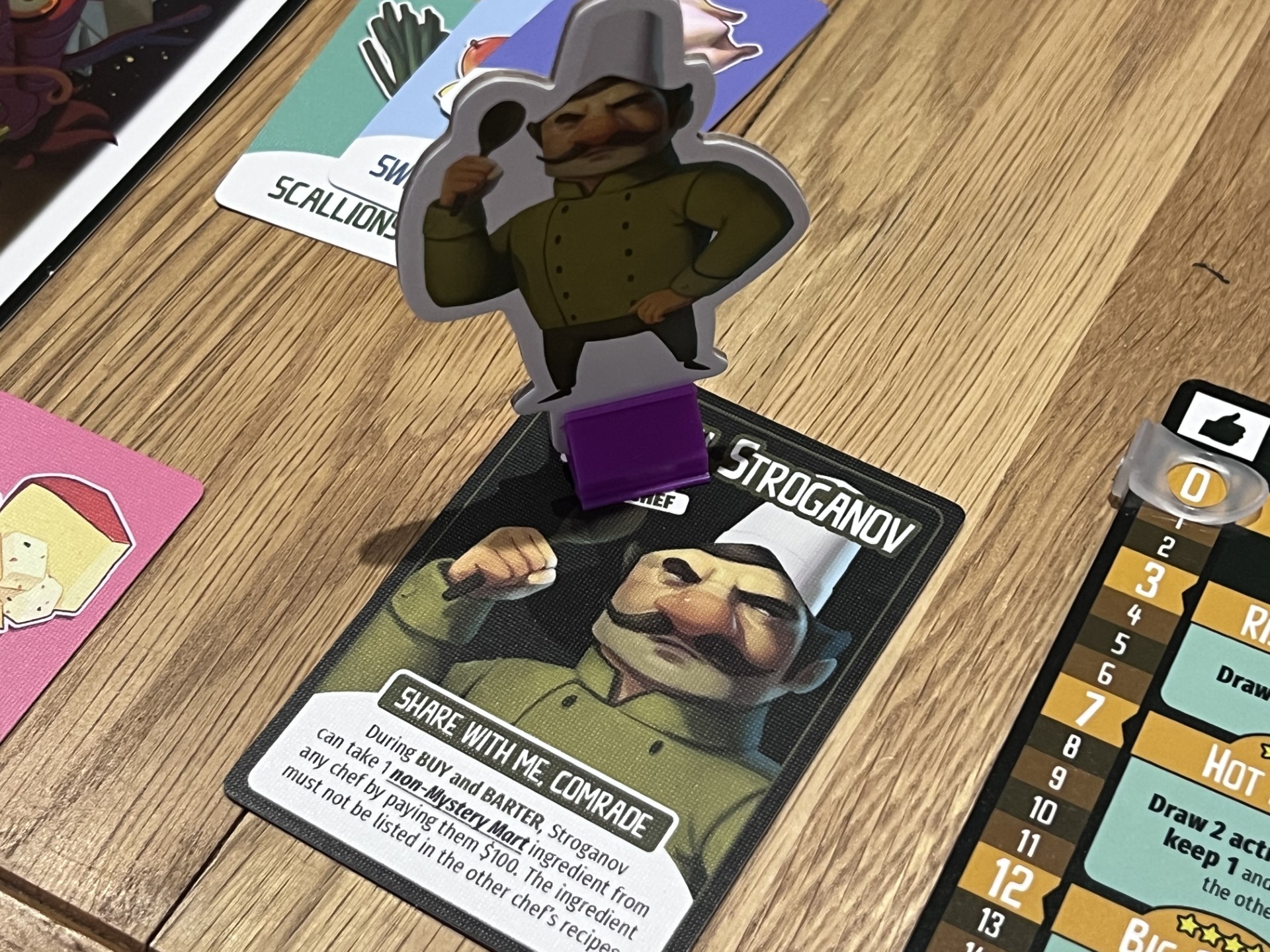
The chefs themselves are a highlight. Each one has a unique ability that meaningfully changes how you play. Some chefs are economic powerhouses, generating extra money or discounts. Others excel at sabotage, stealing ingredients or manipulating the market. Some are mobility‑focused, letting you move more freely between market locations. These powers are asymmetric without being overwhelming, and they give the game a strong sense of personality.
The restaurants add another layer of strategy. Each restaurant can be upgraded three times, unlocking new abilities or improving efficiency. Upgrades might give you discounts, extra cooking slots, or passive bonuses. Choosing when to invest in your restaurant versus when to push for recipe points is a key decision. Upgrading early can pay off, but it also slows your scoring tempo — and in a game where players can leap ahead with a single big recipe, tempo matters.
Recipes themselves are varied and thematic, ranging from simple street food to elaborate gourmet dishes. Each recipe requires specific ingredients and awards a set number of points. Some recipes are cheap and fast, ideal for early momentum. Others are expensive but lucrative, forming the backbone of late‑game scoring. Because ingredients are limited and players can block each other at market stalls, competition for certain recipes can become fierce.
Sabotage is another defining feature. Action cards allow players to steal ingredients, spoil food, raise prices, or otherwise disrupt opponents. Used well, sabotage can swing a round dramatically — knocking a player out of cooking a high‑value recipe or forcing them to waste precious time. But sabotage is also costly, and using it too aggressively can make you a target. The game encourages a balance of aggression and diplomacy, with players constantly negotiating alliances and temporary truces.
The real‑time trading is where Rival Restaurants personality shines. Players can trade ingredients, money, or even promises — though promises are, of course, non‑binding. The negotiation is fast and loose, and the social dynamics at the table matter as much as the mechanics. Some groups will lean into the chaos, shouting and wheeling and dealing. Others will play more quietly, making careful trades and subtle deals whilst undeniably, there are some groups (or at least some individuals) for whom this part of the game will fall completely flat.
Despite the chaos, Rival Restaurants is more strategic than it first appears. Managing your economy, planning your recipe path, timing your upgrades and reading the table all matter. The real‑time phase creates pressure, but the underlying engine is fairly tight and rewarding. You can’t win by luck alone — you need to make smart decisions, adapt to the market, and exploit your chef’s strengths.
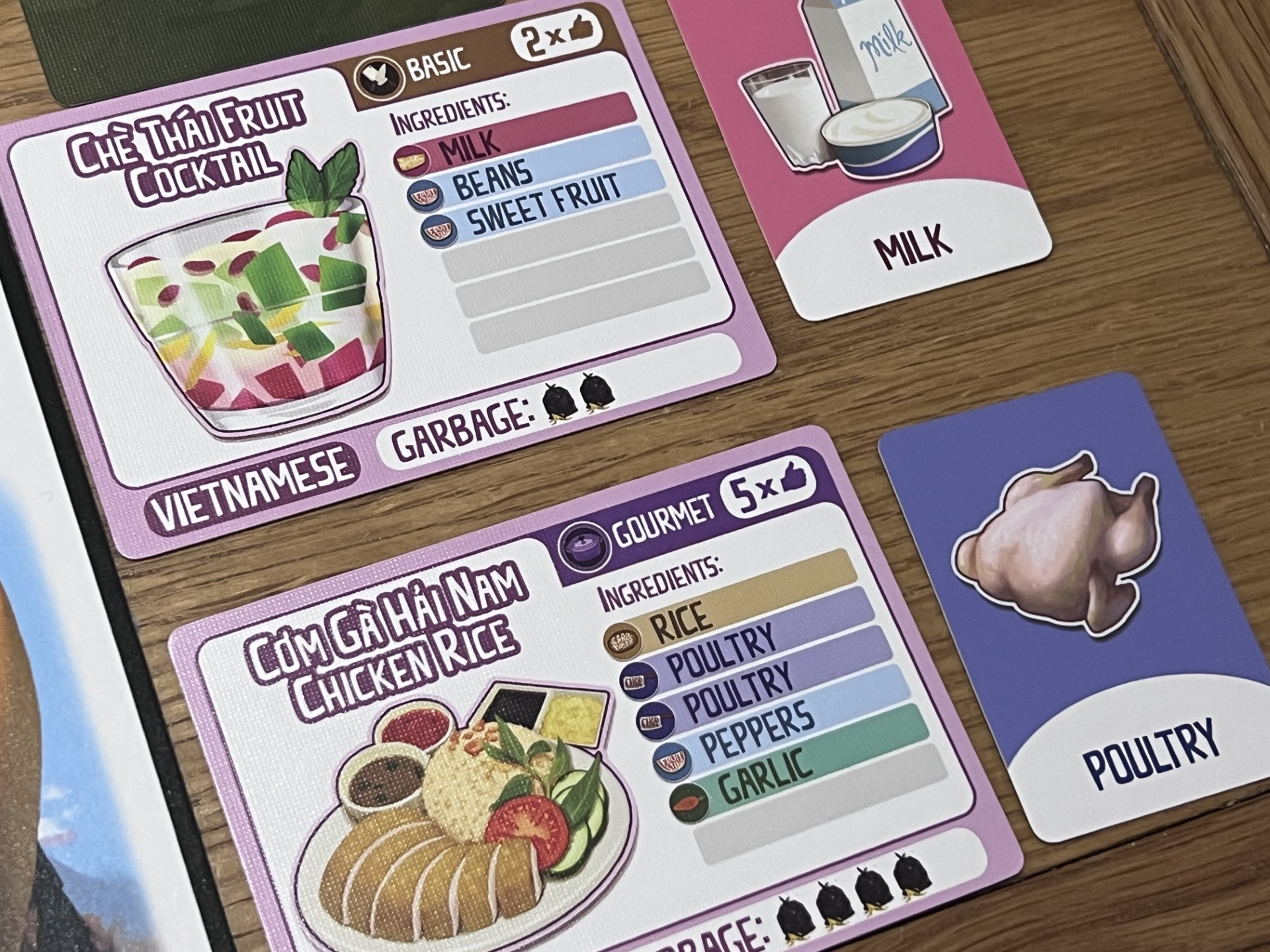
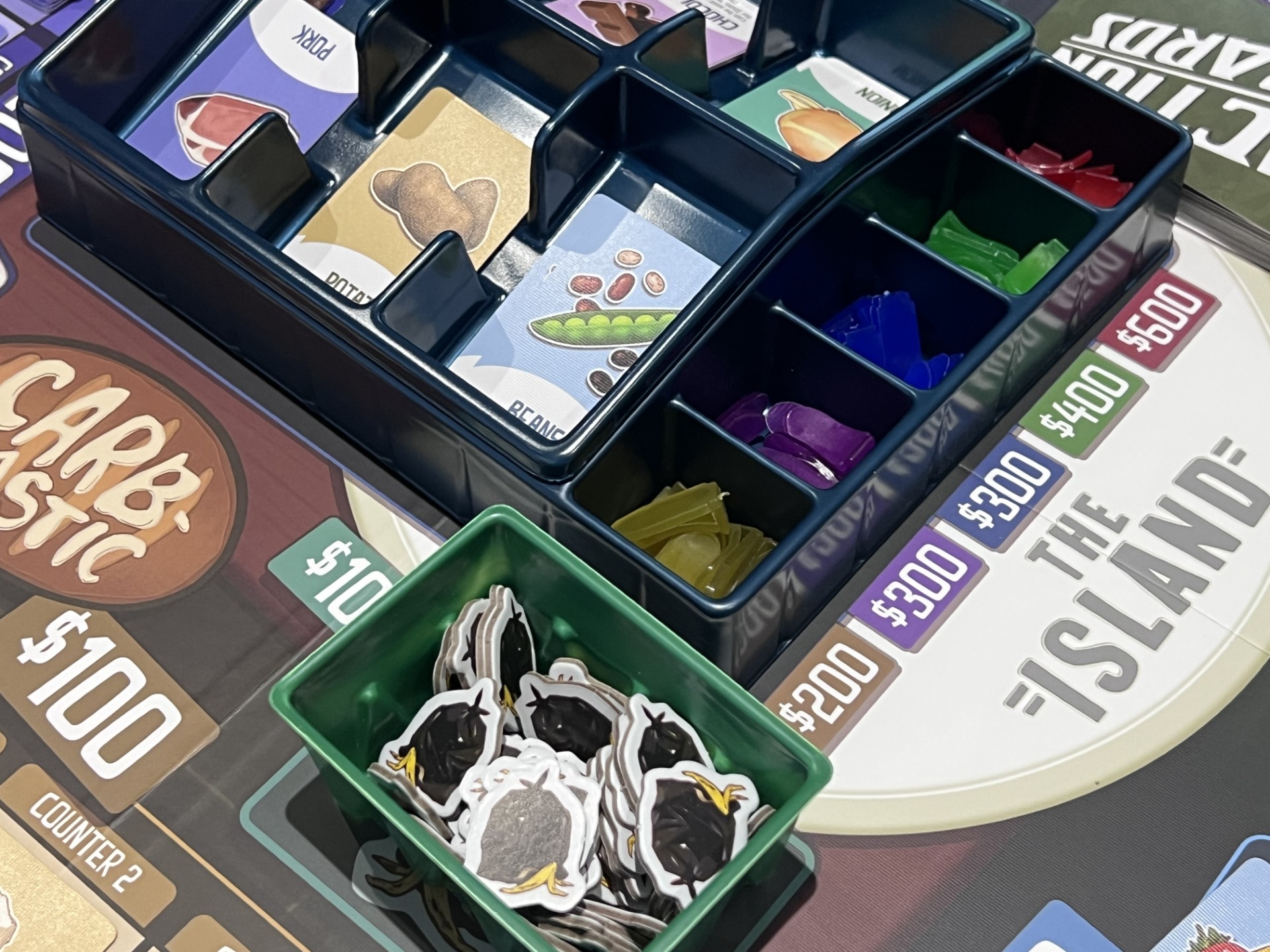
The production quality is excellent. The artwork is bright, colourful, and full of humour. Ingredient tokens are chunky and satisfying, the market boards are clear, and the chef and restaurant boards are well designed. The deluxe edition (which sadly we don’t have) adds even more flair, with upgraded components and acrylic standees. It’s a game that looks as fun as it plays either way, but I can imagine the deluxe version feels that bit more special.
Replayability is high thanks to the variety of chefs, restaurants, recipes, and action cards. Different combinations create different dynamics, and the social nature of the game ensures that no two sessions feel the same. Expansions like Back for Seconds and Sporks Out add even more chefs, recipes, and mechanics, further increasing variety whilst — at a glance — expanding the core experience without convoluting it.
For me, Rival Restaurants succeeds because it captures the joy of competition without becoming mean‑spirited. It’s interactive, chaotic, and full of laughter, but it also rewards clever play and strategic thinking. It’s a game that works with families, casual groups, and hobby gamers alike — a rare feat.
Rival Restaurants is a vibrant, energetic, and endlessly entertaining game that blends real‑time action with strategic depth. It’s a celebration of negotiation, timing, and culinary chaos, and it delivers memorable moments every time it hits the table. If you enjoy games that get people talking, laughing, and plotting, this one is a standout — a dish best served loud.
You can find out more about Rival Restaurants on the website of Gap Closer Games.
