

History of the World — Rio Grande Games’ new release of this Ragnar Brothers classic — is an epic area-control board game that lets 2–6 players reenact the rise and fall of empires from ancient Sumeria to the 20th century. This latest edition arrives with a beautifully illustrated map board and high-quality components, bringing a fresh visual appeal to a game originally published over 30 years ago.
Despite its grand scope, History of the World remains a relatively straightforward game at heart. Players take turns commanding a different historical empire each round, vying for territories and building monuments to score points, with the highest total winning at the game’s end. The core rules are simple — expand your empire, eradicate declining empires (or use the new dice option to fight them), and score for land and cities controlled — making the game more about strategic positioning and timing than heavy mechanics.
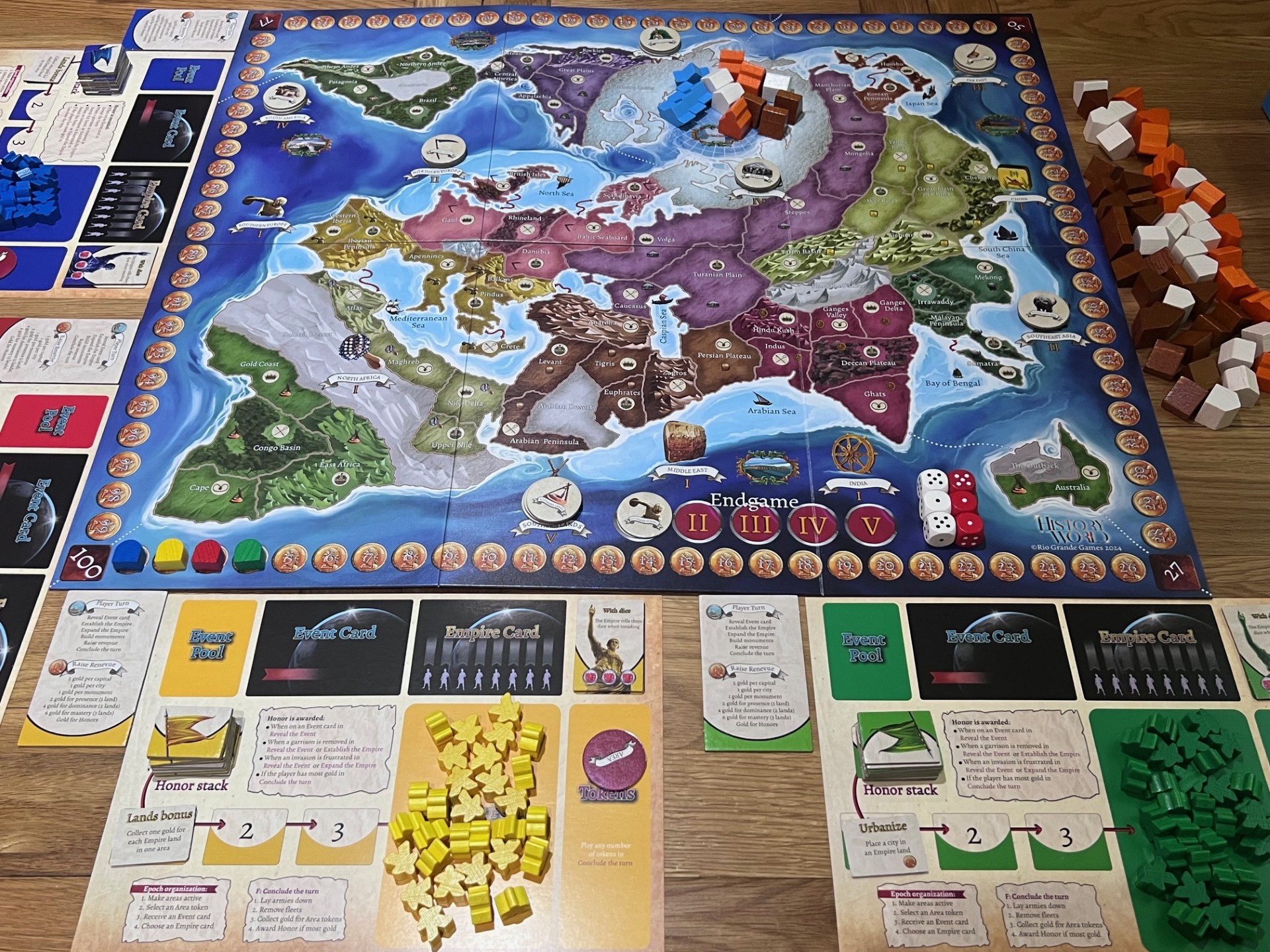
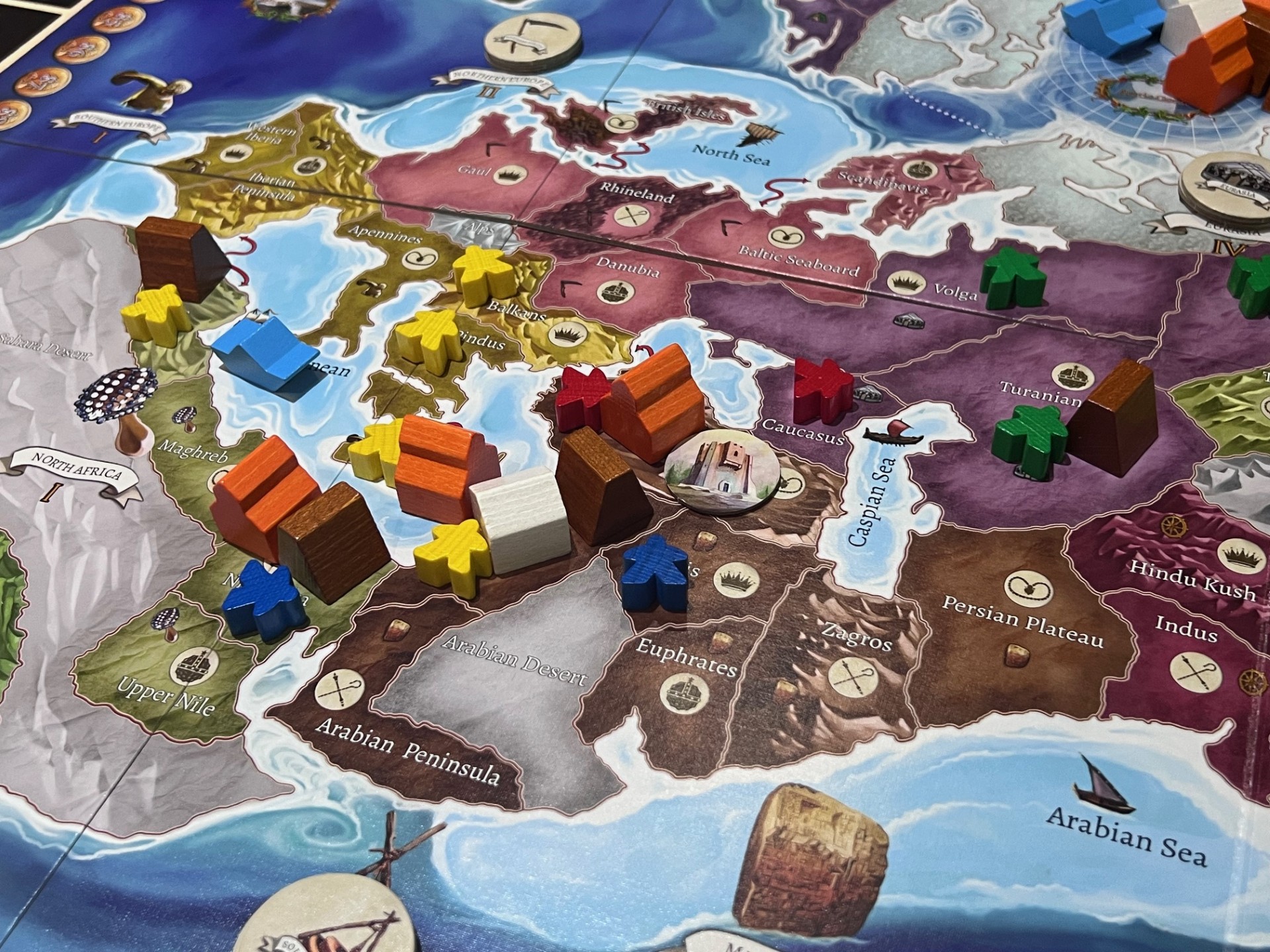
However, the new edition isn’t without quirks: the wooden building pieces (capitols, cities and monuments) are noticeably oversized for the board, causing crowding on the map during play, and the rulebook, while comprehensive, is a touch verbose in explaining what is ultimately a straightforward system. These two issues stand out in an otherwise impressive production.
Whilst I wouldn’t normally cover this, History of the World has, well; history. Specifically, BoardGameGeek.com lists not less than six different core versions of the game, dating back until I was just eight years old. If only I’d had this game then, rather than the classic but much-maligned Risk as my go-to empire building game.
Whilst I could discuss some of the older versions here, perhaps the only one of note to this review was 2018’s Z-Man Games edition, which I actually owned and reviewed for another publication. That version came with bright plastic pieces and was in itself a fantastic production, but for whatever reason I seem to recall the game was a touch on the light side, offering less spectacle than the premise deserved.
In this version of the game, Rio Grande’s edition keeps the spirit of the game intact while blending elements from past versions with a few new ideas. It retains the 5-epoch structure and gorgeous board, but reintroduces some classic concepts and adds fresh twists such as “Honor” tokens (that twist the rules) and new ways to score gold.
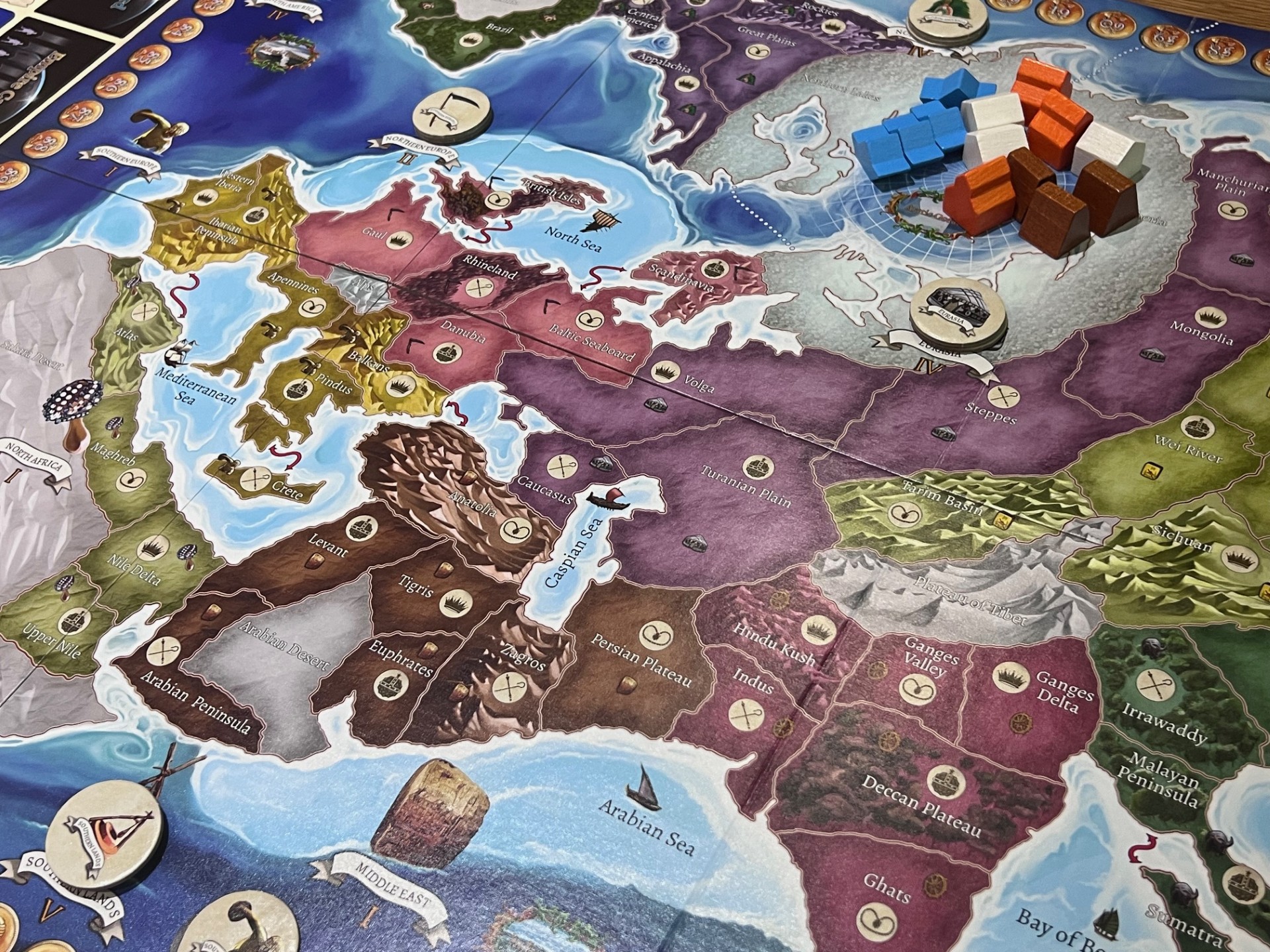
Rio Grande’s edition certainly delivers on visual appeal. The game board is large, colourful, and lavishly illustrated, depicting a world map that highlights historical centres of civilisation — a notable upgrade from earlier editions’ plainer boards with traditionally oriented globes. The cards and player aids are likewise attractive and clear. The wooden pieces representing armies and historical monuments are detailed and robust, giving the game a grand table presence.
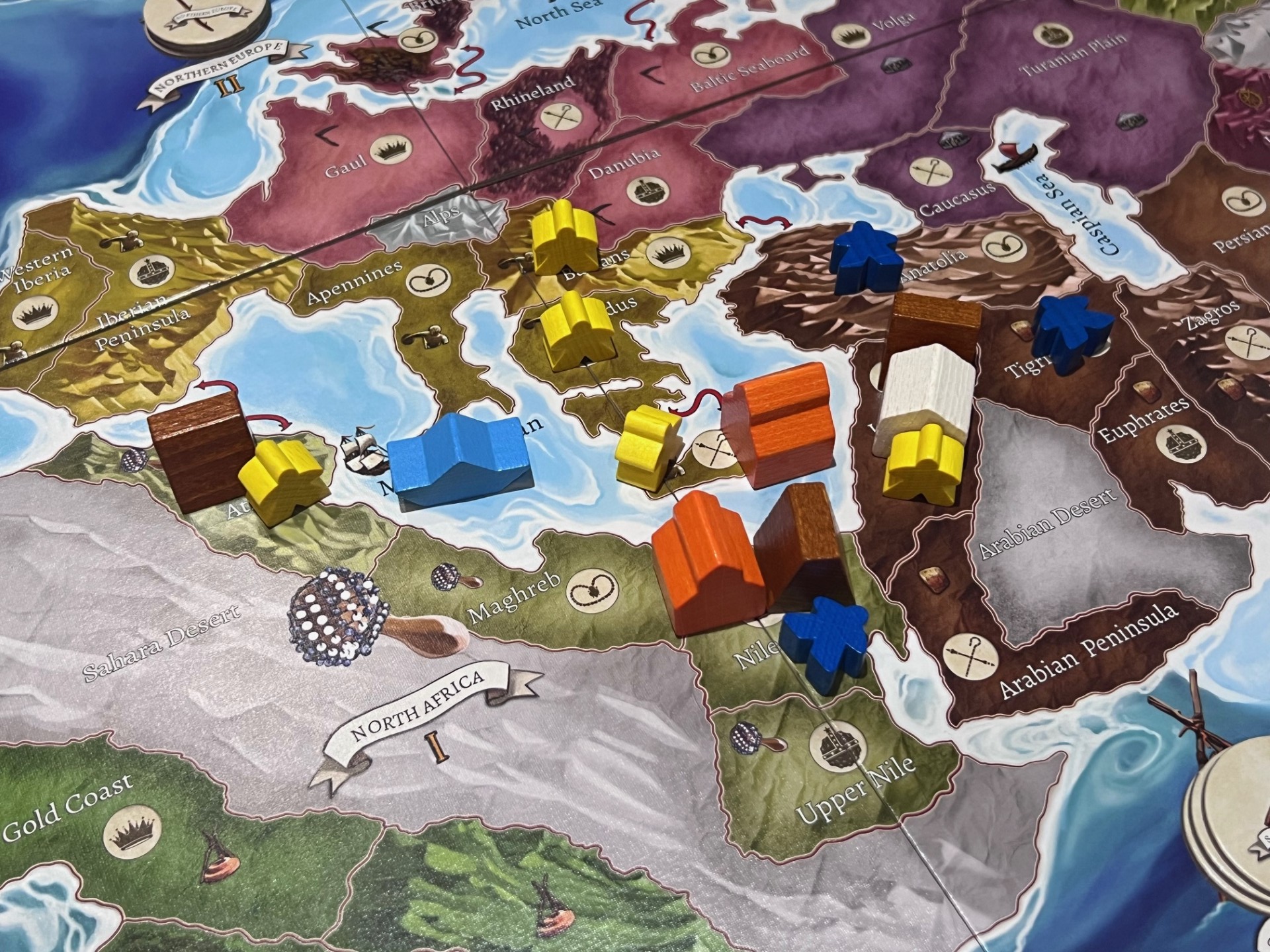
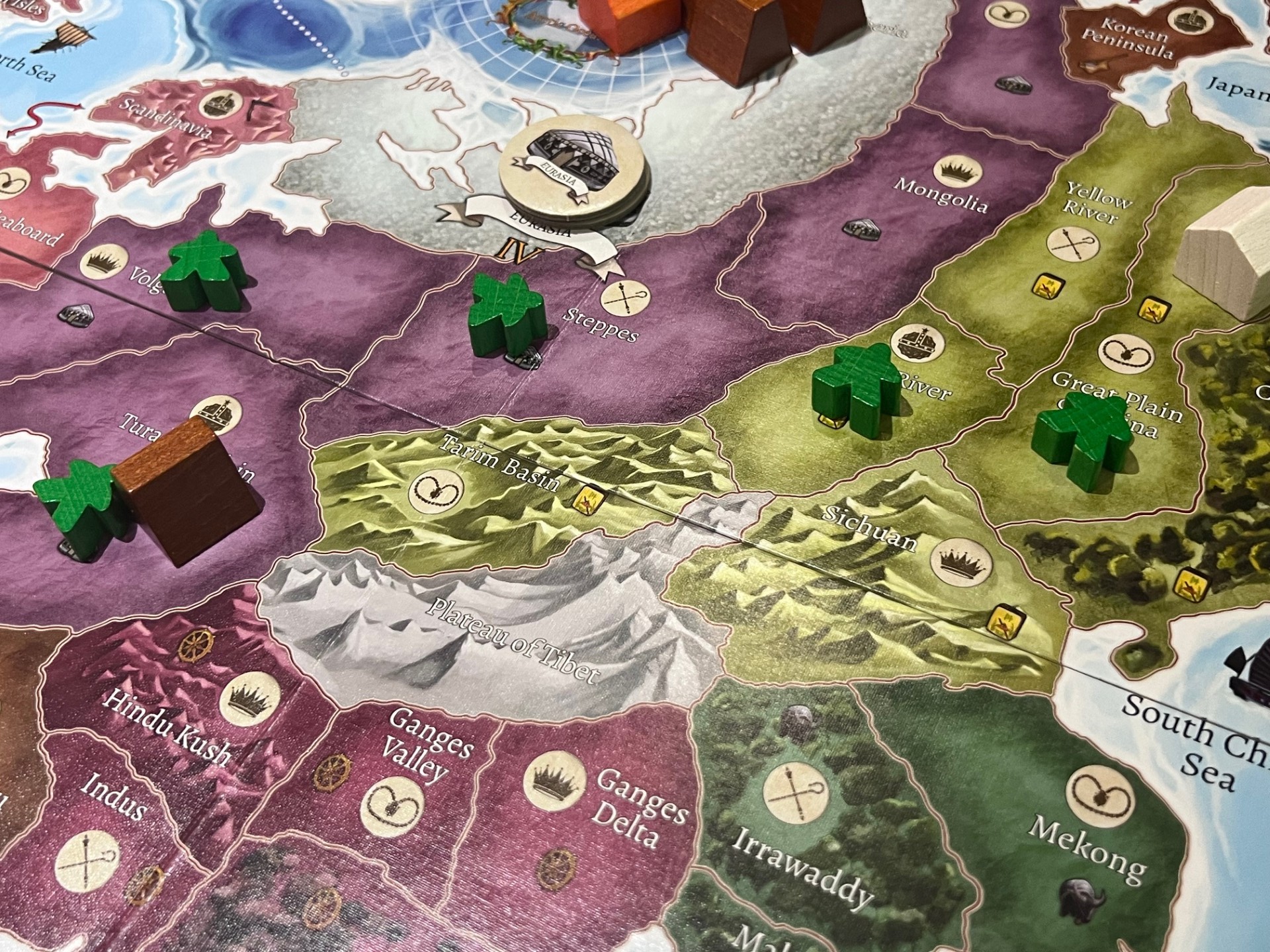
Notably, this edition includes chunky three-dimensional pieces for capitols, cities, and monuments. These “building” pieces are striking on the board — however, their size is incredibly impractical. The large buildings tend to congest the map, especially in early epochs when many empires cluster in the same regions across the centre of the board. Having looked into this a bit, even the publishers acknowledge that while the oversized buildings were a deliberate aesthetic choice to celebrate the civilising elements of human endeavour, they do cause more congestion than preferred on the map.
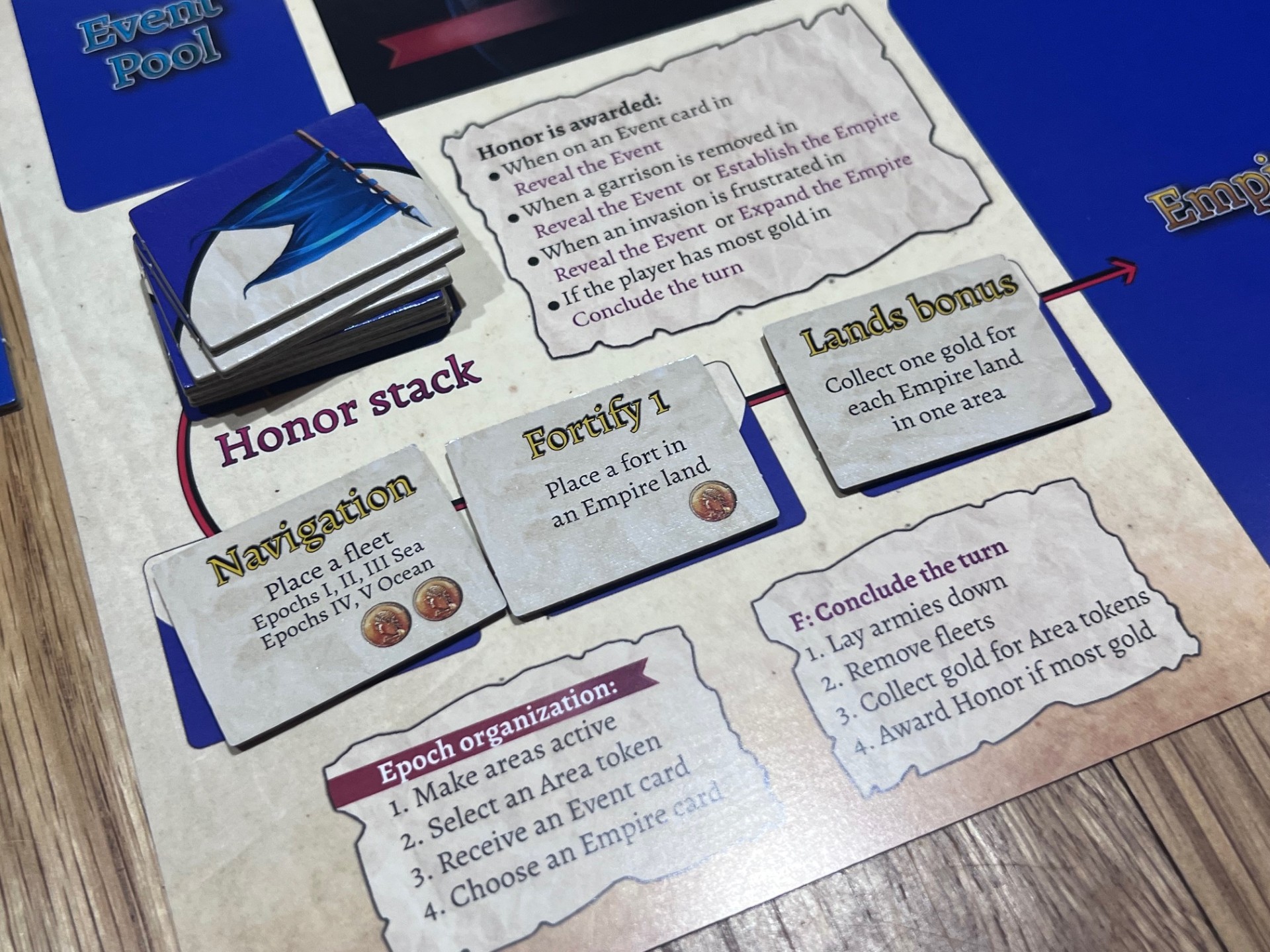
Aside from the map being a bit crowded, the aesthetic is impressive and it gives History of the World a sense of progress even though actual turns last just seconds. One new component in the Rio Grande edition is the set of Area tokens and Honor tokens, which add a hidden element to scoring and add strategic variety. The game also comes with optional dice and rules for resolving battles either with or without luck.
Despite its epic sweep through history, History of the World has always had relatively accessible rules. That remains true in this edition — turn structure and scoring are straightforward, and the rule changes introduced over the years have shaved away much of the old fiddliness. New players might be initially daunted by the game’s scope, but in practice the system is easy to learn.
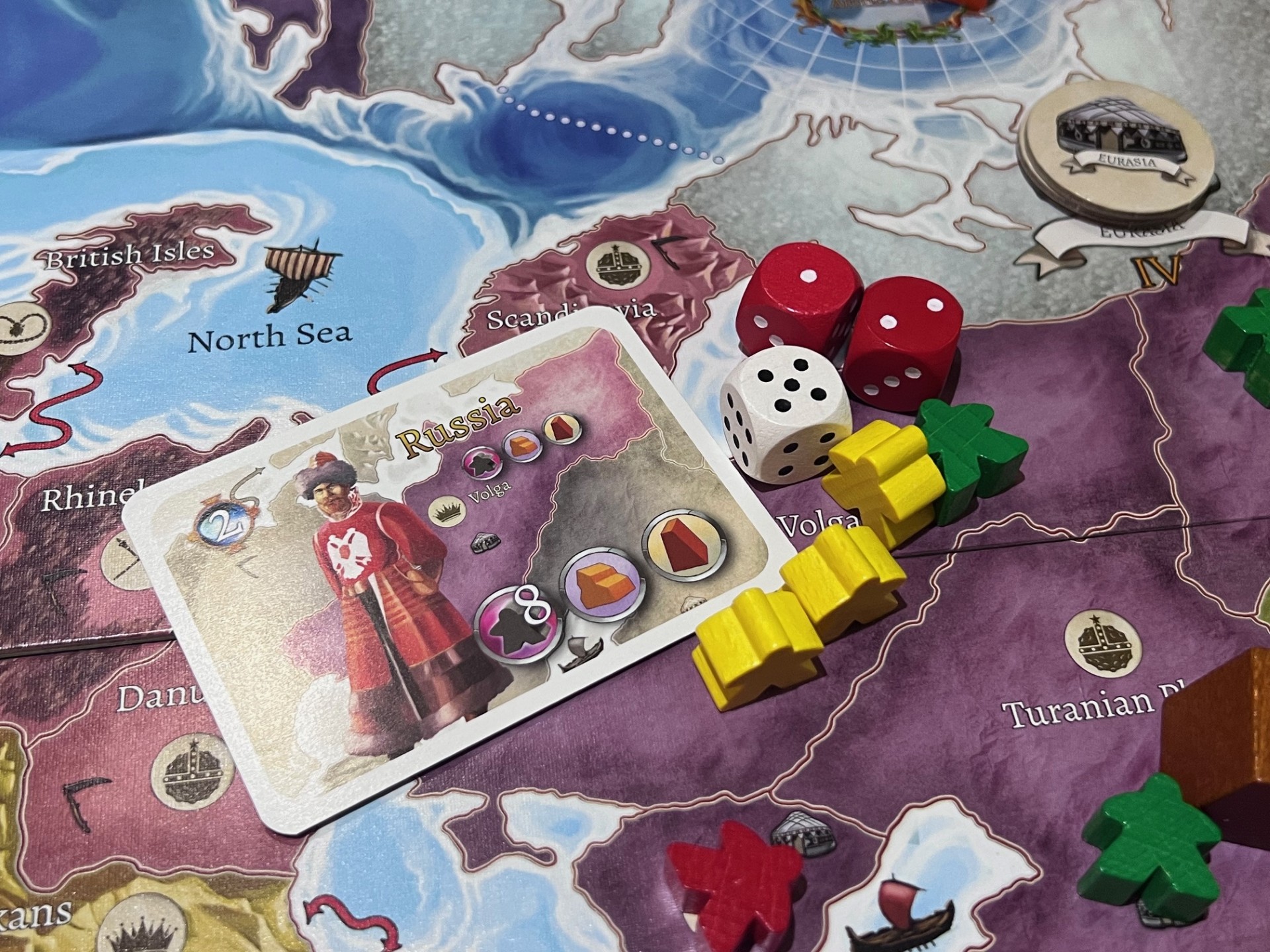
That said, the 2024 rulebook might not be the leanest path to learning the game. In an effort to be thorough, the rules include extensive examples, optional variants, and even historical quotes to set the mood. The result is a wordy rulebook that over-explains a fairly simple gameplay loop. Experienced gamers will find the rules logically organised and clearly written, but some readers may feel that the same concise game could have been explained with fewer words. In short, learning the game is not difficult — but reading the rulebook cover-to-cover feels more laborious than necessary.
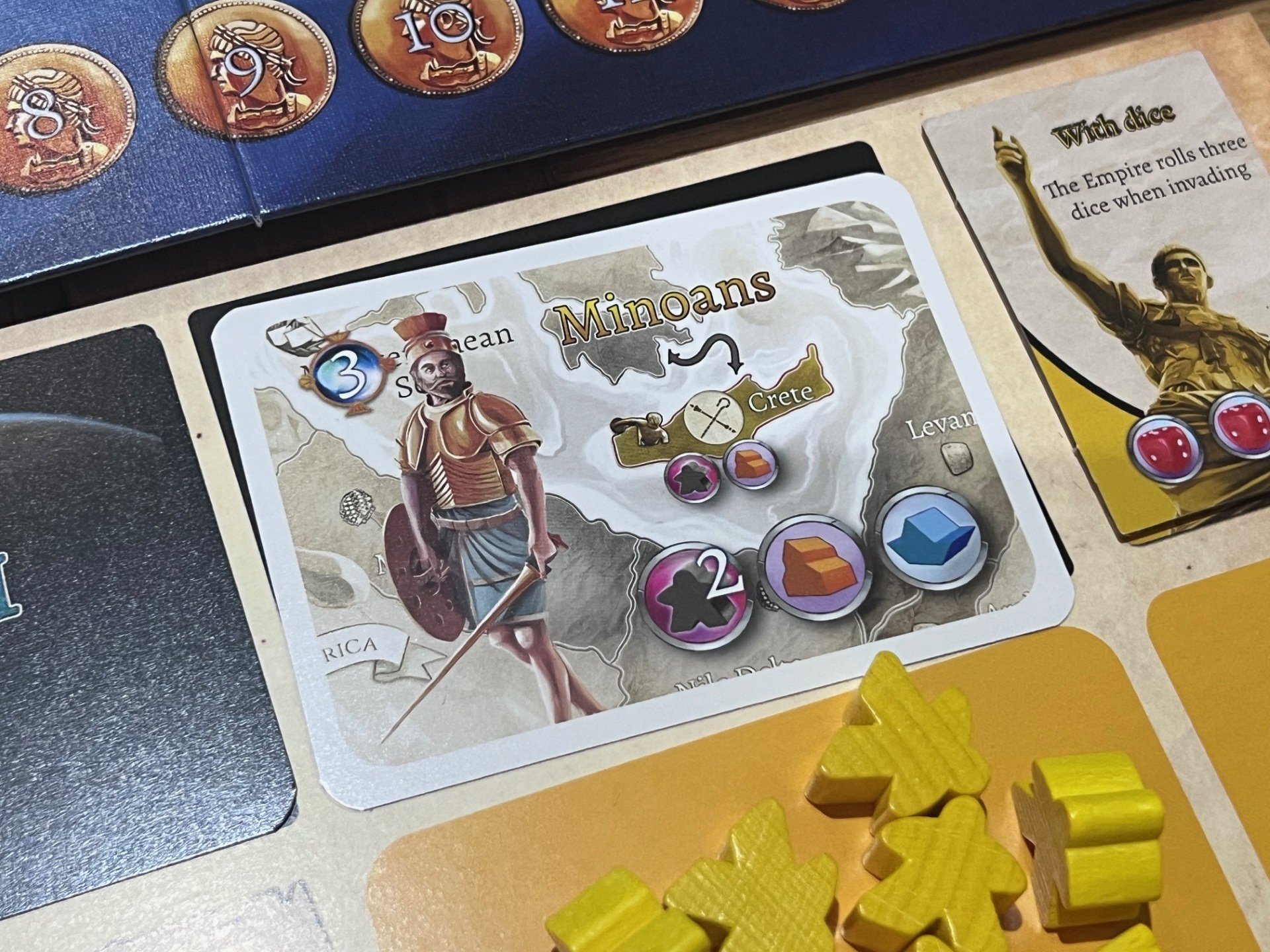
As an example, when a new Empire rises, it adds a number of people to the Empire Pool (essentially making them available for placement.) Each Empire also has a starting location which includes a single army. Despite a lot of descriptive wording and a couple of images, the rules never explicitly state whether the army placed in the starting Empire space is taken from the pool or in addition to it – so you’ll have to decide one way or another.
The fundamental gameplay and “feel” of History of the World remain true to the earlier version that I played, and you still get the grand narrative of history unfolding in waves, and the “rise and fall” arc of each empire creates dramatic table moments. The key difference now is that certain events trigger the Honour tokens which in turn bend the rules slightly, and the area tokens allow for secret ways to score (like temporary objectives.)
History of the World a pioneering design that has certainly influenced later civilisation-style games. Over the years, players and critics alike have admired the game’s ambition but also pointed out its old-school flaws like lengthy downtime and reliance on luck. The 2018 edition addressed many of these issues, and the 2024 edition continues that trend. The attention to player experience is clearly a lesson learned over the game’s evolution.
From a historical standpoint, the 2024 edition is almost a homage to the game’s journey. The Ragnar Brothers, who have been involved every step of the way, poured their design experience into making this edition feel both nostalgic and refreshed. Longtime followers will notice callbacks to the original as well as nods to A Brief History. New players encountering the game for the first time get the benefit of all these years of refinement in one package.
History of the World successfully resurrects a classic board game for a modern audience. It offers a sweeping, satisfying experience of building and toppling empires, with a mix of strategy and luck that can produce memorable comeback stories and dramatic last stands. The new edition’s lovely board and upgraded components do justice to the game’s epic theme, and the rules tweaks ensure the gameplay is as smooth and balanced as it’s ever been.
Critically, most gameplay improvements hit their mark, though a couple of production choices fell a bit short: the oversized building pieces, meant to inspire awe, might instead inspire a little annoyance as you cram them onto territories, and the rulebook’s language could have been trimmed down for clarity. These issues are relatively minor in the big picture.
Ultimately, History of the World remains a unique and enjoyable journey through time, and Rio Grande’s edition stands as a tribute to its enduring appeal. Whether you’re a new conqueror or a veteran emperor, you’ll find a lot to love in this grand strategy romp — from the thrill of expanding your ancient empire across a gorgeous map to the tactical challenge of outmanoeuvring rivals in later epochs. Just be prepared for a bit of reading up front and some cosy crowding on the board. As the Ragnar Brothers have shown through each edition, good games can indeed stand the test of time.
You can find out more about History of the World on the Rio Grande Games website.
