

The Vibe, designed by Jacob Jaskov, is a social game that manages to feel both effortless and yet somehow high-brow and important all at the same time. It’s light, warm, and instantly accessible, yet it creates moments of genuine connection (and sometimes laughter) that linger after the game ends.
Jaskov has a knack for designing experiences that bring people closer — Fog of Love did it through narrative roleplay in board game form, and The Vibe does it through intuition, empathy, and shared interpretation. Games like this often succeed or fail based on both your friend group and the mood, and I was curious to find out if The Vibe ended up the same.
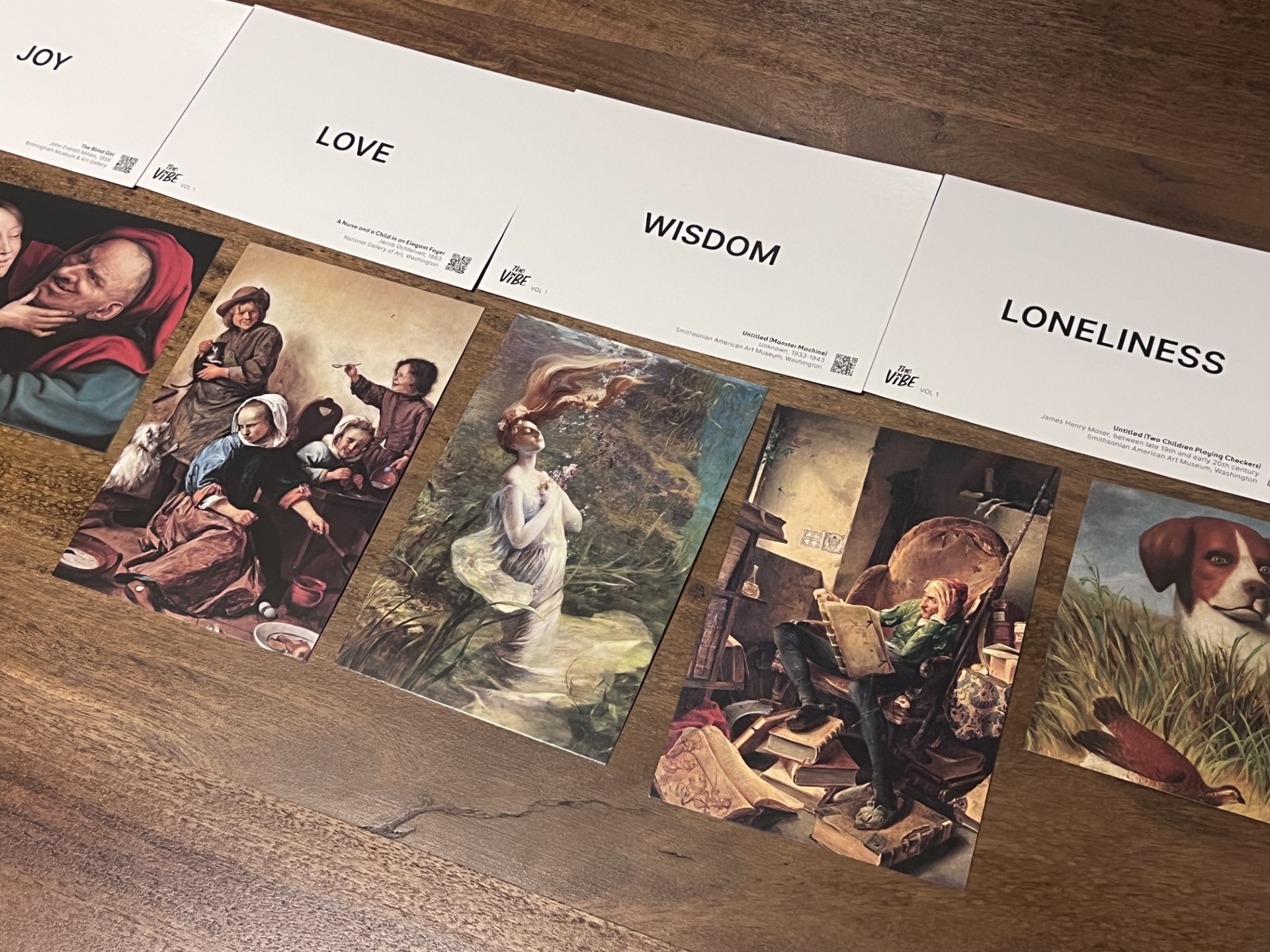
At its core, The Vibe is about reading the room — or more specifically, reading each other and how the different players interpret visual suggestions. One player — known as the titular Vibe — draws ten cards from the deck of about seventy, then places five of them face down and five of them face up. The face down cards each depict a word (such as “compassion” or “sadness”) whilst the face up cards depict famous pictures, almost all of which are quirky pieces of fine art that you may or may not have seen before. The Vibe (as in, the player chosen to be The Vibe) then chooses one of the words (the theme) in their head and then arranges the five picture cards from left to right in order of how well they capture the theme.
As with many games that use this kind of abstract mind-melding/guesswork as their main schtick, The Vibe can swing wildly from virtually impossible to ridiculously easy, and there’s no denying that a second layer of “randomness” is introduced via the players. As an example, I remember one game where I chose a theme related to sadness or disappointment (I can’t remember exactly) and at least four of the five pictures clearly demonstrated the theme. A sober, clear-headed audience would have got this easily, but on this occasion my drunken teammates spent a long time in rapturous, heated debate before deciding on completely the wrong thing — much to all of our amusement.
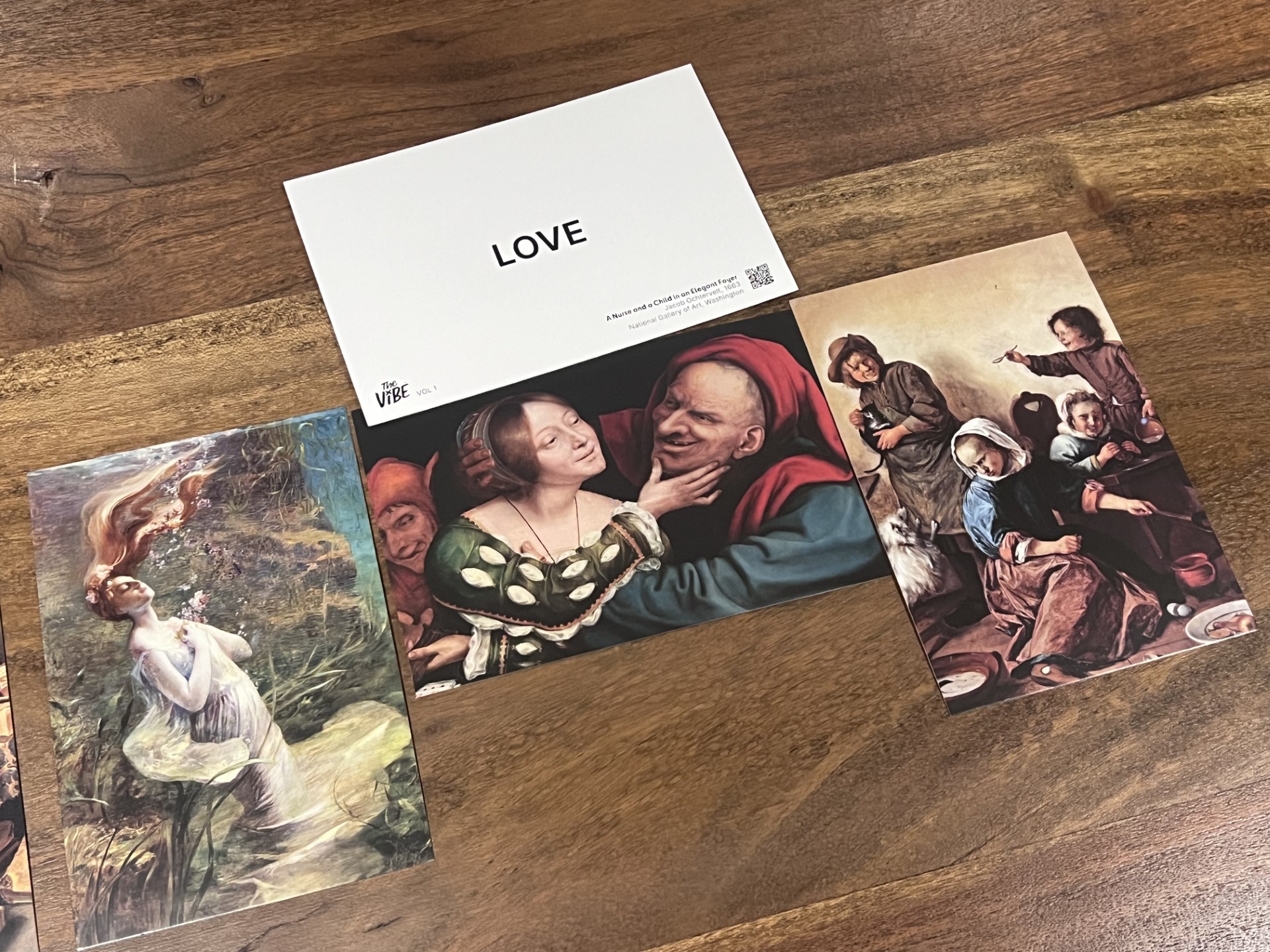
This means that whilst the “gameplay” happens in the reveal once the guessing players have decided which theme to go for, most of the fun is found in the debate that builds up to that. Sometimes everyone is perfectly aligned, and you get that satisfying sense of “Yes, we’re all on the same wavelength.” Other times, the table erupts in laughter because someone’s interpretation is wildly off, or unexpectedly brilliant. The Vibe thrives on these moments of surprise and recognition.
What makes it work so well is how simple the structure is. There’s no heavy rules explanation, no complex scoring, no pressure to perform. You can teach it in under a minute, and from that point on, the game becomes a conversation — not in the literal sense, but in the way players just dive into the puzzle it presents. What do they know about The Vibe and how that person sees the world? What is their personal interpretation of the pictures, and how well do they line up with The Vibe?
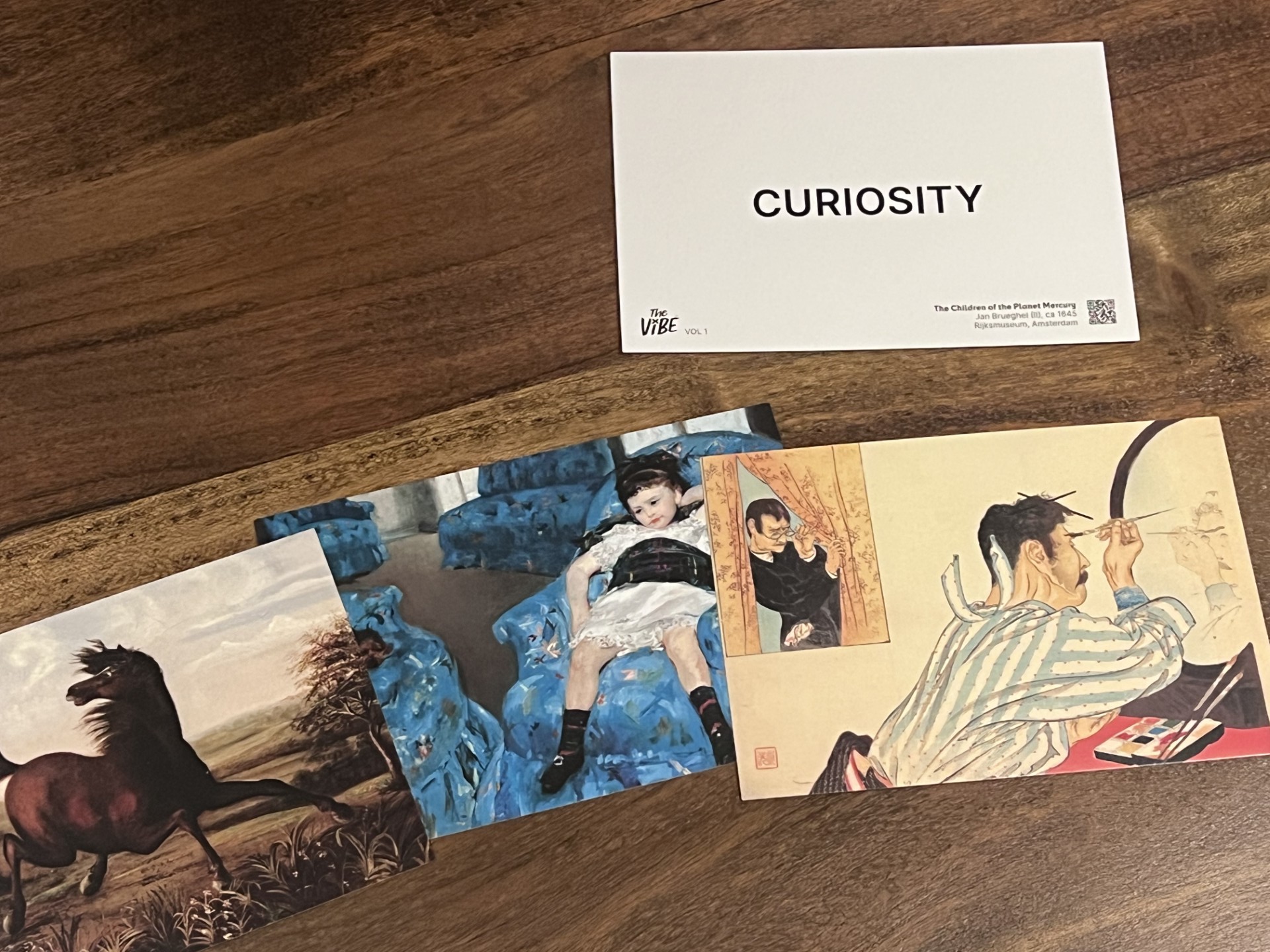
There’s very little to The Vibe (as in the product, not the person acting as The Vibe), and even the rules are just printed in the box lid and on the base. The contents are quite literally limited to 70 cards with fantastic, high quality prints on the front and words on the rear. The box (and the cards within it) are perfectly sized to create gravitas, but the actual footprint is more or less bang on. You can throw The Vibe in your work laptop bag, a backpack or even a large handbag or shoulder bag if you want to take it to the pub. And you know? You should, social spaces are a natural habitat for The Vibe.
What I liked most about the game is how The Vibe encourages players to be intuitive rather than analytical. You’re not trying to solve a logic puzzle or optimise a strategy; you’re trying to tune into someone else’s emotional frequency. That makes the game feel refreshing in a market full of dry eurogames and themeless point-salads. It’s a reminder that games can be about people as much as mechanisms.
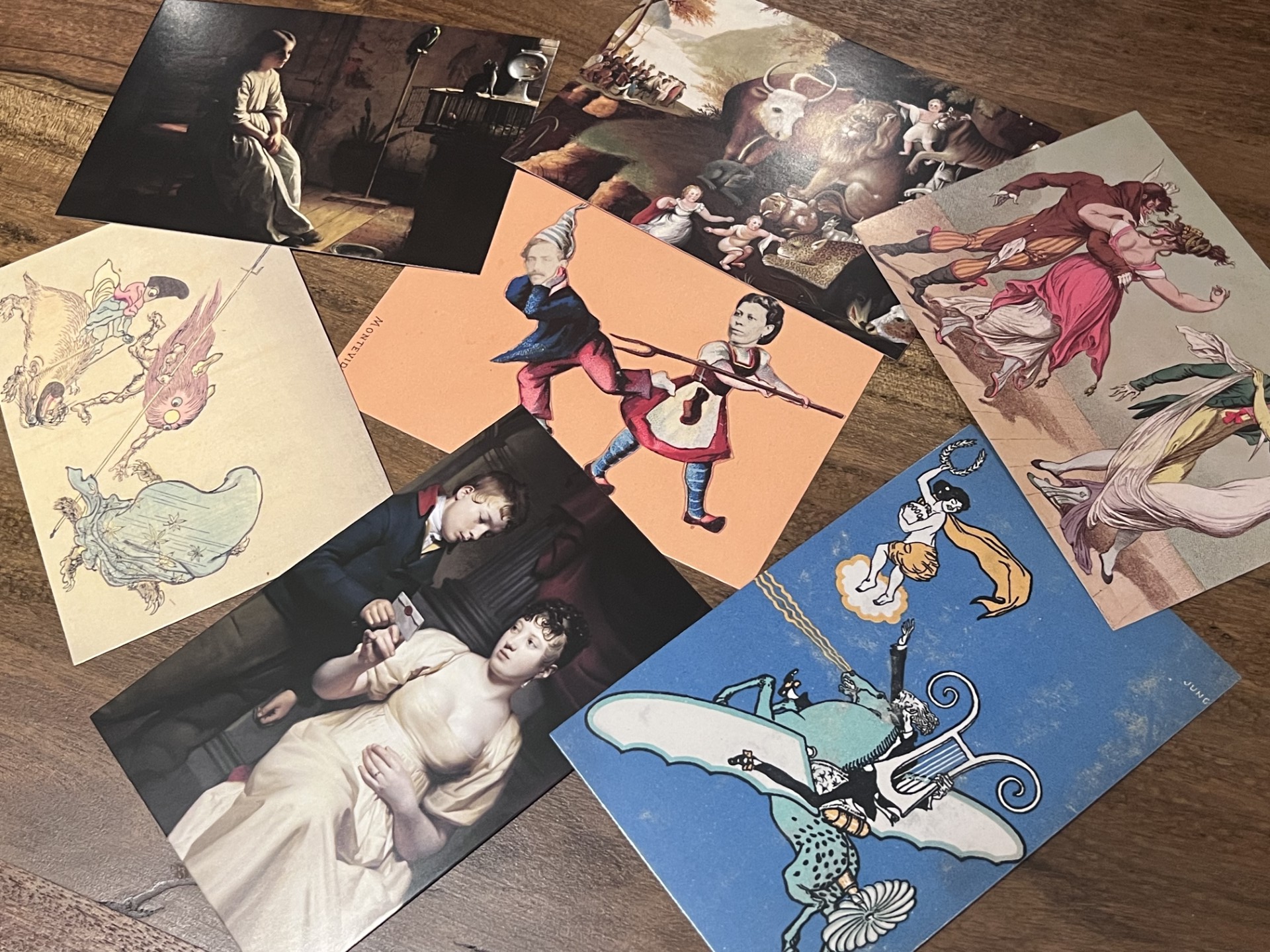
If there’s a criticism to be made, it’s simply that The Vibe is very much a mood‑driven experience. It shines with the right group — people who enjoy reading each other, laughing at misunderstandings, and leaning into the social energy of the table. With a quieter or more reserved group, it may not work quite as well. But that’s true of almost any social deduction or party‑style game, and The Vibe is far gentler and more inclusive than most. It’s just as much fun to guess three Vibes in a row (and win) as it is to get to two, lose, then try again with lots of hooting and hollering.
Ultimately, The Vibe succeeds because it understands what makes social games special. It’s not about winning; it’s about the connection between players. It’s about those little sparks of recognition when two people are able to interpret a series of cards in a certain way, or even when someone surprises you with an interpretation you never would have considered. It’s warm, human, and quite replayable — especially when you consider that a few expansions are already in the works.
You can find out more about The Vibe on its website.
