

Strategos is an ambitious Early Access title that has its ancient crosshairs set firmly on one target. It wants to deliver the kind of sweeping ancient‑world battles that strategy fans usually only get from the Total War series — large formations clashing across wide fields, cavalry sweeping around flanks, and infantry lines grinding against each other in a way that feels grounded in historical tactics.
In theory, it’s exactly the sort of simulation‑driven battlefield engine that many players have been waiting for. Regardless of my personal (very positive) experiences with Total War, there are many people who think they could do it better — and this has been proven through many successful mods over the years. In practice, though, battles on this scale are complex and Strategos currently feels like a clever design wrapped in a slightly unfinished shell, with Early Access rough edges that hold back the experience.
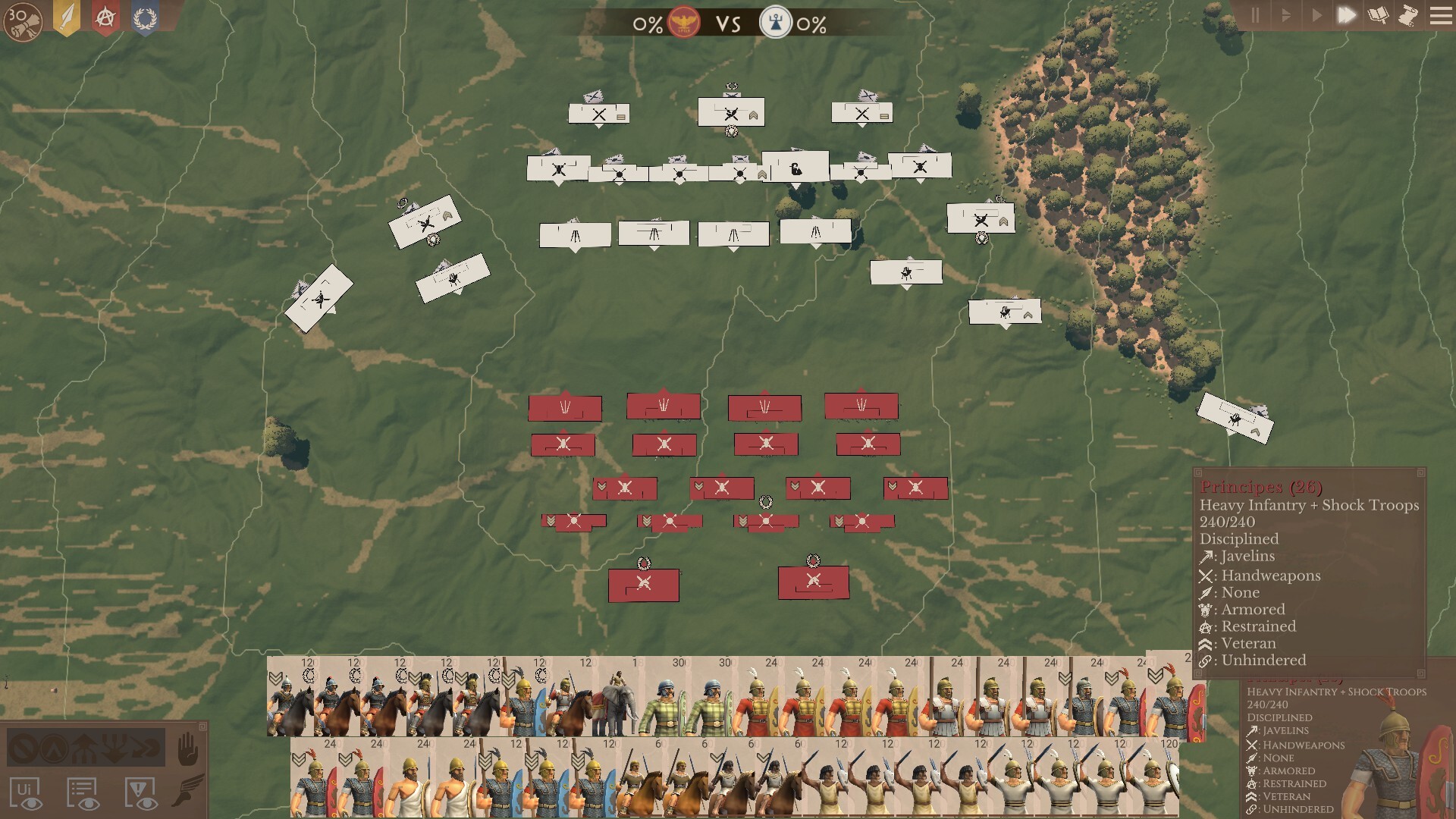
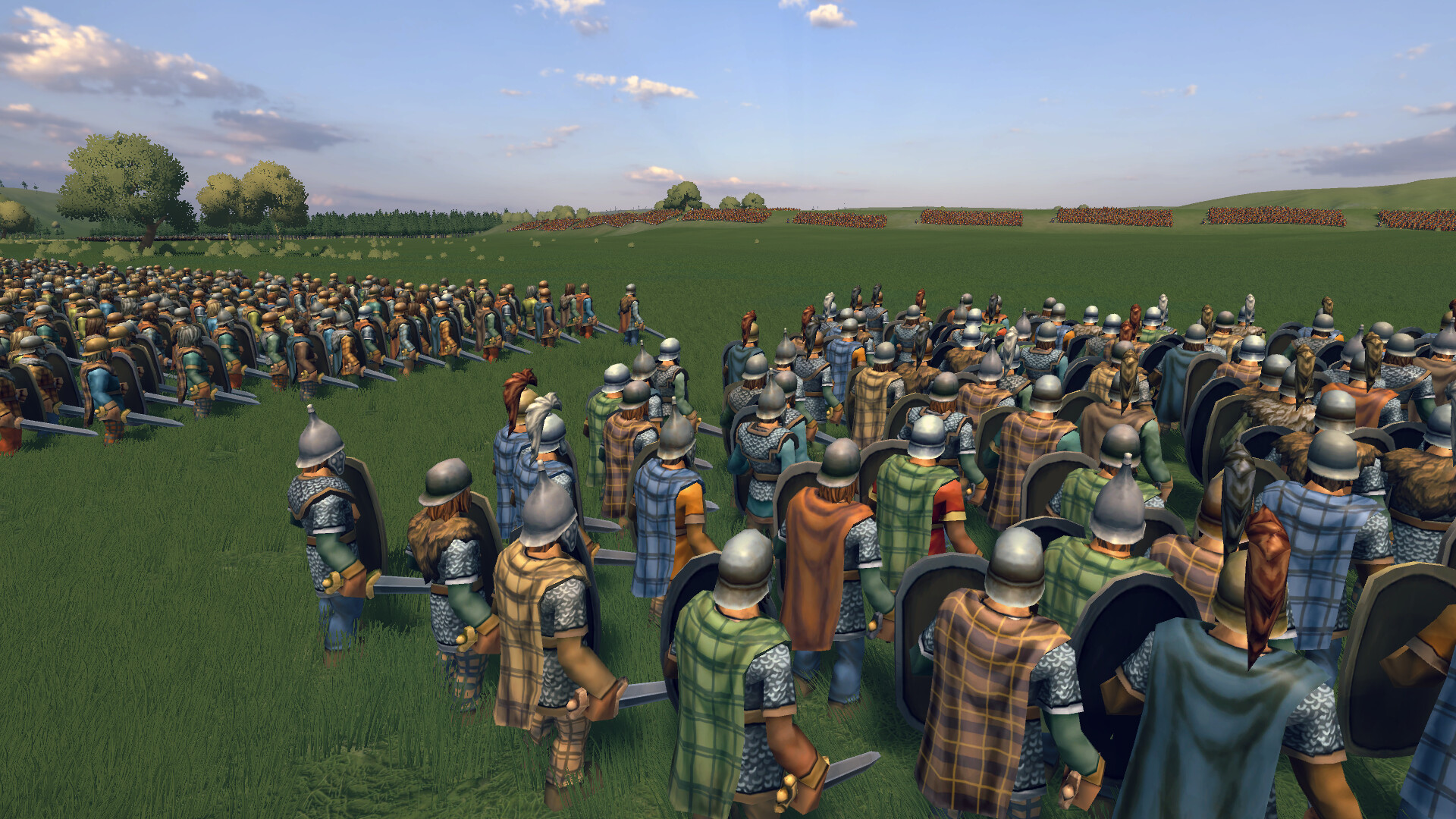
Following a relatively underwhelming series of menus that reveal various famous campaigns (Alexander, Hannibal etc), the scale of battles is the first thing that impresses in Strategos. As with other titles like this (and specifically Total War), units are arranged in large blocks, the battlefield is spacious (but not as large or well populated as those we see elsewhere) and the stage is set for two sides to go toe-to-toe.
Whilst maneuvers are an option here, I wouldn’t say that Strategos encourages them in the same way as other games with larger and more complex maps. Forests and villages seem more spartan here (although hiding in trees is still a feature), and there are fewer and less interesting elevations or impassable areas. With that said, Strategos focuses on line versus line combat with relatively basic cavalry maneuvers to the flanks and that’s OK.
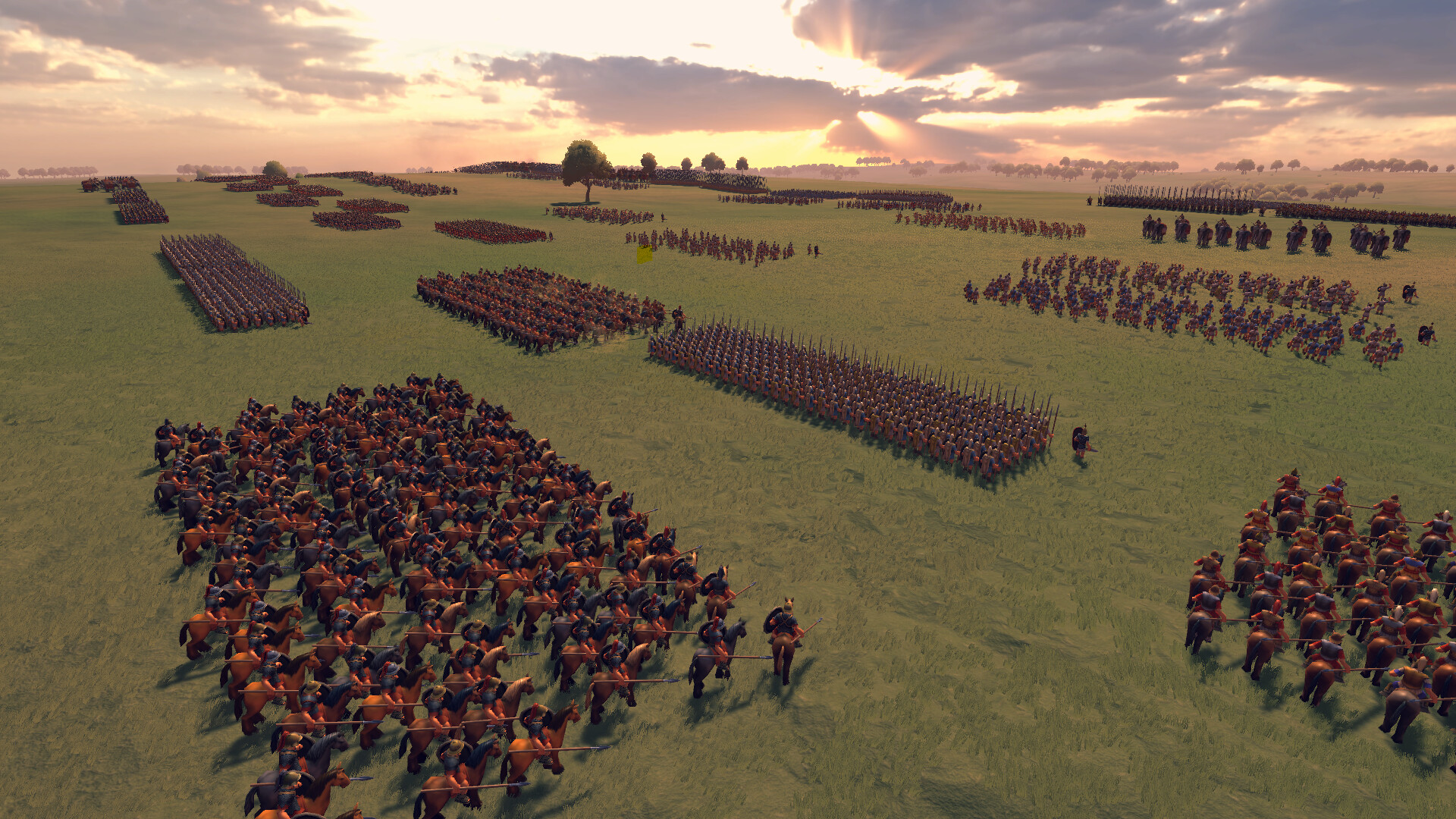
You can see the underlying systems trying to model ancient warfare with authenticity: formation cohesion, morale, fatigue, terrain, and timing all play a role. Beneath the surface, the mechanics appear thoughtful and surprisingly deep — the kind of systems that could, with refinement, offer a more simulation‑heavy alternative to Total War’s cinematic approach. Stratego also offers insight to the keen commander by offering a huge range of current stats (including recent cohesion and morale rolls).
However, as an Early Access title, Strategos currently offers very little guidance on how any of this works. There’s almost no onboarding, no tutorial, and no real explanation of how the game expects you to use its tools. You’re handed a complex set of mechanics — formation controls, charge behaviour, morale interactions — but left to decipher them through trial and error. It’s the kind of experience where you can feel the design trying to communicate something interesting, but the interface and feedback systems aren’t yet developed enough to help you understand it.
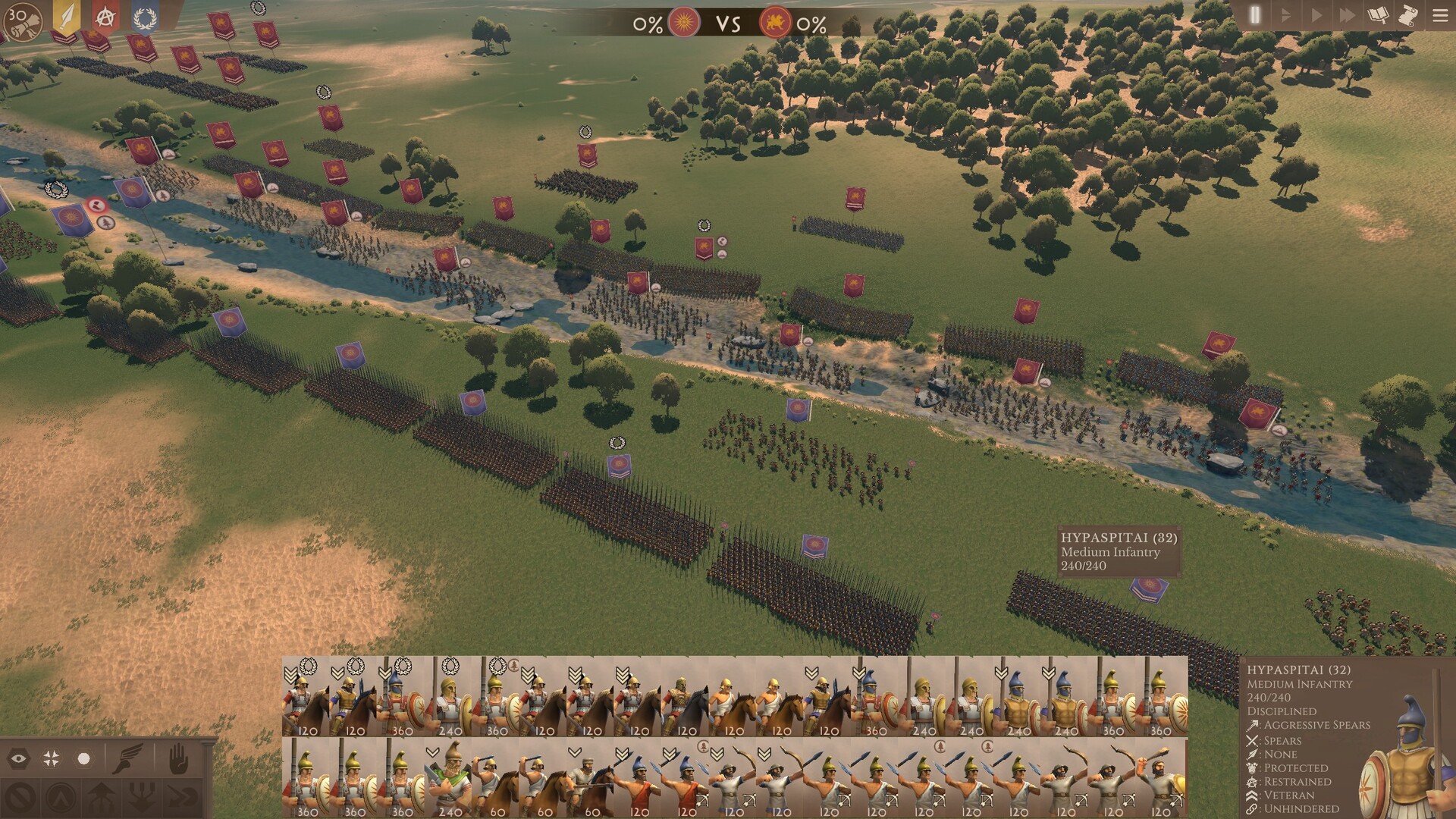
This lack of clarity becomes especially noticeable once combat begins. Units often fail to charge convincingly, or they drift into engagements without any sense of impact. It’s not always clear which units are actually fighting, which are idle, or how the battle is progressing. In Total War, even at its most chaotic, you always have a visual and mechanical sense of what’s happening. Strategos doesn’t yet offer that level of feedback. A cavalry charge that should feel decisive instead looks like a gentle nudge. Infantry lines engage without clear indicators of morale or momentum. You’re left guessing whether your decisions are working or failing.
The result is a game that can feel laborious, not because the battles are slow, but because the lack of information makes every decision feel like a shot in the dark. When a unit collapses or a flank disintegrates, it often feels arbitrary simply because the game hasn’t yet developed the UI or visual language to communicate why. This is a common Early Access issue — the systems are there, but the player‑facing clarity isn’t.
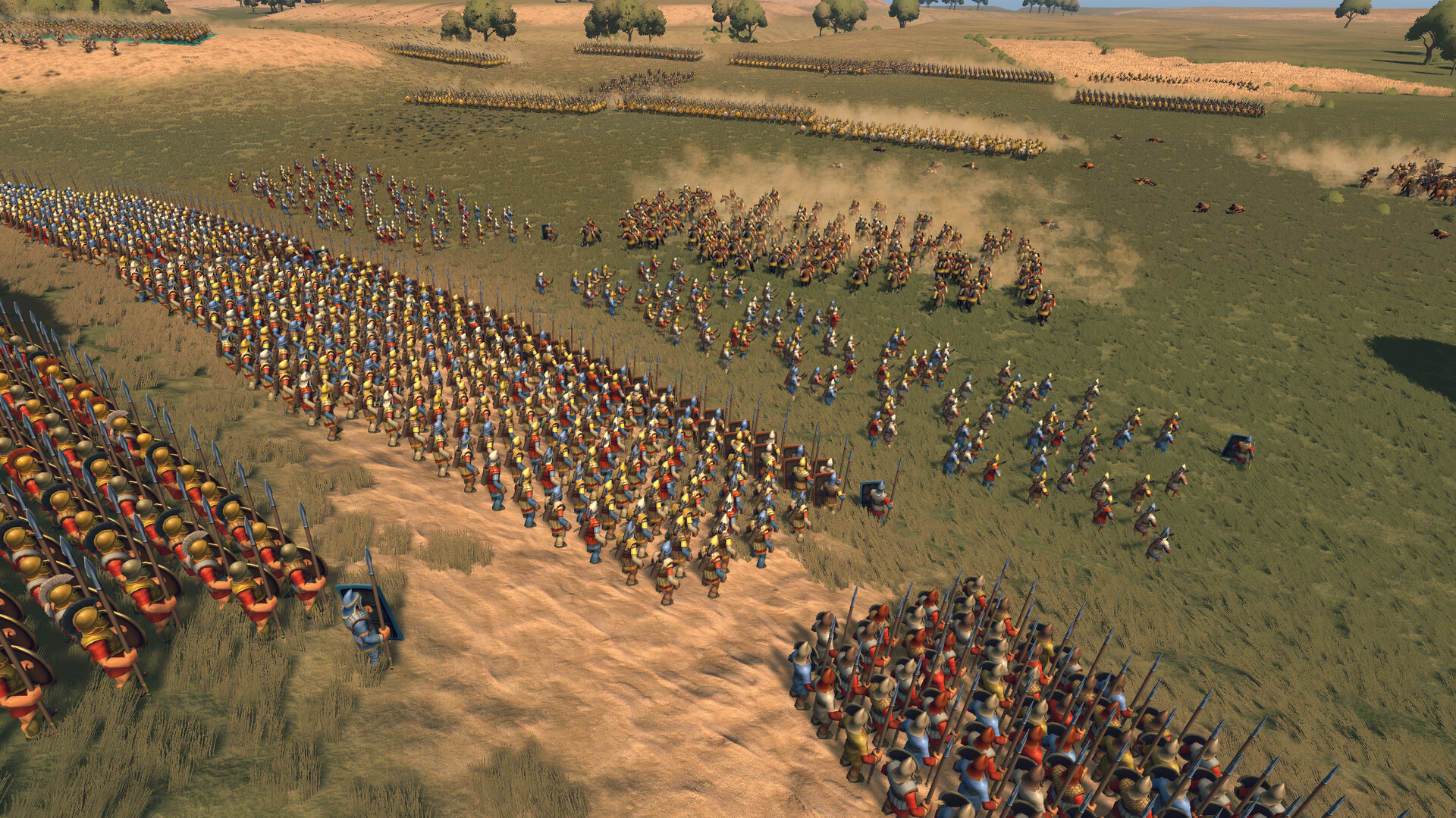
And yet, despite these frustrations, Strategos shows real promise. When the systems align — when a charge actually lands, when a line holds under pressure, when a flank collapses because you timed a manoeuvre correctly — the game briefly becomes exactly what it wants to be: a thoughtful, large‑scale ancient warfare simulator with real tactical nuance. Those moments reveal a design that is far from amateurish. The underlying logic is sound; it’s the presentation and usability that need time to mature.
Strategos isn’t a finished product, and it doesn’t pretend to be just yet. The foundation is strong enough to support something genuinely compelling, but the game needs more development time to surface its depth and make its battles enjoyable in the moment they’re happening. Better tutorials, clearer combat feedback, more responsive unit behaviour, and a UI that communicates morale, engagement, and momentum would transform the experience.
Right now, Strategos is an intriguing but uneven idea — clever beneath the surface, but still struggling to bring that cleverness to the forefront. For players willing to engage with an unfinished system and watch it grow, there’s a lot of potential here. For those expecting a polished alternative to Total War, it’s not there yet. But with continued development, refinement, and community feedback, Strategos could evolve into something genuinely special.
Strategos is available now for Windows PCs.
