

I’m going to break two of my unspoken rules during this review of Front Mission 3: Remake. Firstly, I’ve been influenced by factors outside the game itself, and secondly, I’ve had to supplement my gameplay experience by looking online for information. I always try to gather my thoughts on a game purely through my own gameplay. It’s how I’ve played games all my life and it feels like the most authentic way to present my thoughts to you. However, I’ve gone down a rabbit hole here.
Front Mission 3: Remake is, unsurprisingly, a remake of Front Mission 3, a Playstation game from 1999/2000 (depending on region). As far as I can tell, the experience is relatively unchanged. You control a team of mech pilots through turn-based grid combat as you navigate a story mostly told through text boxes, menu screens, and animated maps. The writing is clearly from the late 90s, with cliches and cheesy dialogue bleeding out of every pixel. If you want an angry main character with a dudebro best friend (flirting with anything with she/her pronouns and a pulse), female characters that exist purely to be named Tramp (I wish I was joking, a genuine early character designation in a dialogue box), the entire experience is definitely a “product of its time”.

I’m going to draw a line here, regardless of the fact this is a 25+ year old game, I’m playing it in 2026. So, Front Mission 3: Remake will be reviewed as such. The above, and other things I talk about, may not have been a problem on release, but if Front Mission 3 is going to sit on my virtual shelf, it needs to meet similar standards to its contemporaries.
Looking at a big positive, even with a ropey script, the game oozes charm. There was clearly a lot of love and effort put into the original material. As seems to be common in Japanese games of this kind of setting, you can navigate “forums” (basically webpages) for various organisations you encounter during the game, and read and write emails to contacts. The entire menu system feels incredibly lived in, as if you are at the main character’s computer yourself. The whole experience is incredibly enticing, and if the writing was a little better, I can easily see myself spending hours just perusing the lore and exploring.

You’ll notice I specified “original” material here, because this is where I’m breaking my first rule. In this remake (according to other online sources), AI has been heavily used. A sticky subject in this modern age, some amount of AI upscaling might be understandable, but an amount of assets have also been generated using generative AI also. I’m going to keep personal politics out of this review (I’m a writer, both for this dear website and other personal projects, take a guess what I think) but this definitely bears mentioning in case it affects your own spending decisions, and due to the poor quality of this content in some cases.
Back to the game itself (and the breaking of my second rule), very early on in the game, a seemingly inconsequential decision will result in your save file being labeled “Alisa’s Story” or “Emma’s Story”. Funnily enough, this decision has nothing to do with either character at a surface level, and I only found out about the split because I saw that note on my data and had a bit of a search online. According to the internet, each route can take up to 30-40 hours to complete, so you’re getting plenty of bang for your buck here (Sorry folks, I did not complete both routes for the sake of this review).
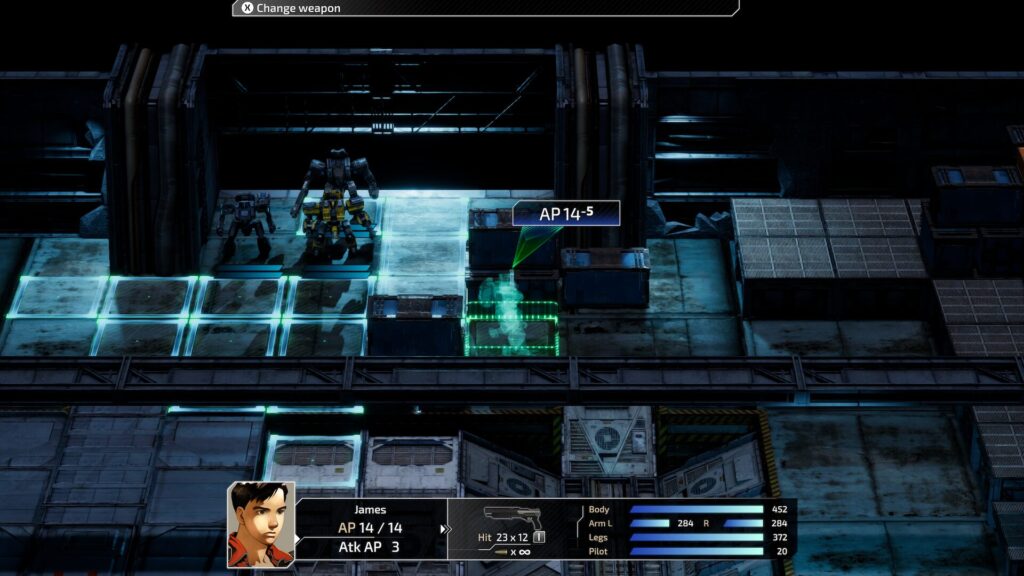
Combat itself is differentiated from the general turn-based tactics template by the fact your units have several health bars, one for each part of the mech (and the pilot themselves). Enemy units that aren’t mechs also have relevant bars, but I’ll focus on the most prevalent here. If you blow up the legs, a unit’s movement is reduced, the arms take out the weapons, and the body kills the unit full stop. This isn’t anything revolutionary, but each weapon distributed damage differently, and it’s another thing to consider to make gameplay a little more interesting. Fight cutscenes are relatively dynamic and fun, and the maps themselves have varied elevations and different terrains, along with destructible obstacles. Mission objectives feature the standard rotation of kill, escape, survive, but it’s varied enough to keep you playing. Enemy pilots can surrender, or panic, and have more complex behaviours than just shooting you until one of you blows up, even if the mechanics behind this aren’t always clear. You can also knock enemy pilots (or be knocked yourself) out of mechs, making them waste a turn climbing back in.
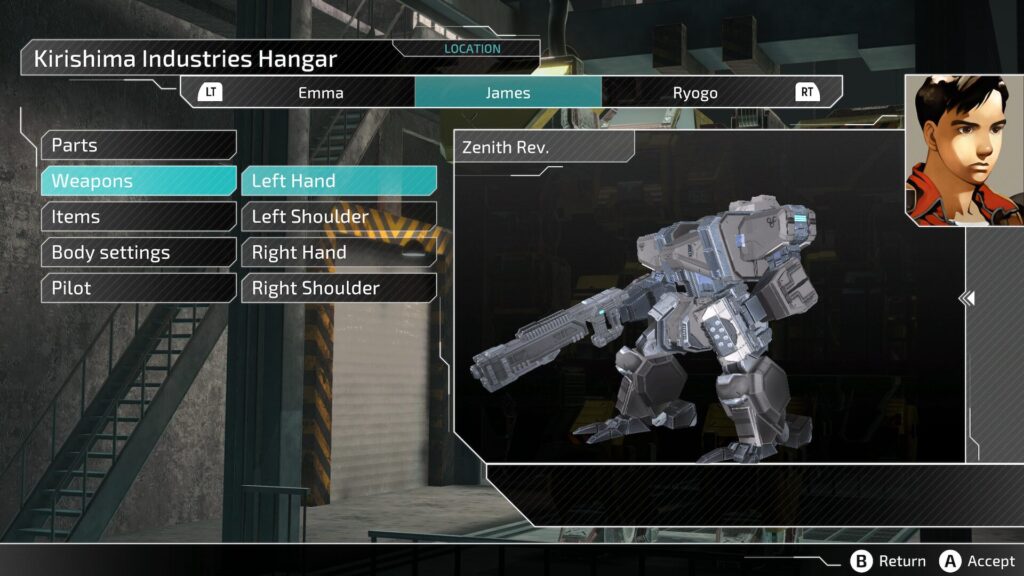
The pilots in your team can be assigned to any mechs, whether they be enemy ones you capture during missions, or ones you build yourself in the garage menus. This is the other place you’ll be spending a lot of time. You can buy or sell parts, break down mechs and build them back up as you please. This lets you adjust the stats of your units, and your only real restraint is a weight restriction. This whole mechanic is what drew me to Front Mission 3 in the first place, but it really does take its time in letting you actually play with the garage properly.
I’ve persevered with Front Mission 3 through both the poor writing and moral objections, and I’ve put off writing this review for a while because I really did want to play as much as possible before submitting it. If, like me, you want to build yourself a few action figures and go stomp around in a 90’s robot movie sandbox, the game is worth considering. Just make sure you have the time and the stomach to put up with it.
Front Mission 3: Remake was reviewed on Xbox Series X, but is also available on Nintendo Switch, Playstation 5, and Steam.