

Mina the Hollower is a fascinating and deliberate 8-bit throwback that shows its inspirations openly whilst still carving out an identity that feels both modern and groundbreaking.
Developed by Yacht Club Game (best known for Shovel Knight), Mina the Hollower is a top‑down action‑adventure that draws heavily from late 1990s vibe of the Gameboy Colour, with particular inspiration from the likes of The Legend of Zelda: Link’s Awakening, Castlevania, and the more obscure gothic action titles of both that era and possibly even back to certain NES classics of the late 80s.
Whilst Mina the Hollower’s aesthetic and structure evoke nostalgia, the execution is far more sophisticated and modern than a simple homage. This is a game built with modern ideas, tight controls, and a level of mechanical precision that would have been impossible on the hardware it imitates. If anything, my only complaint is that it holds true to the North-East-South-West facing mechanics of the era that inspired it.
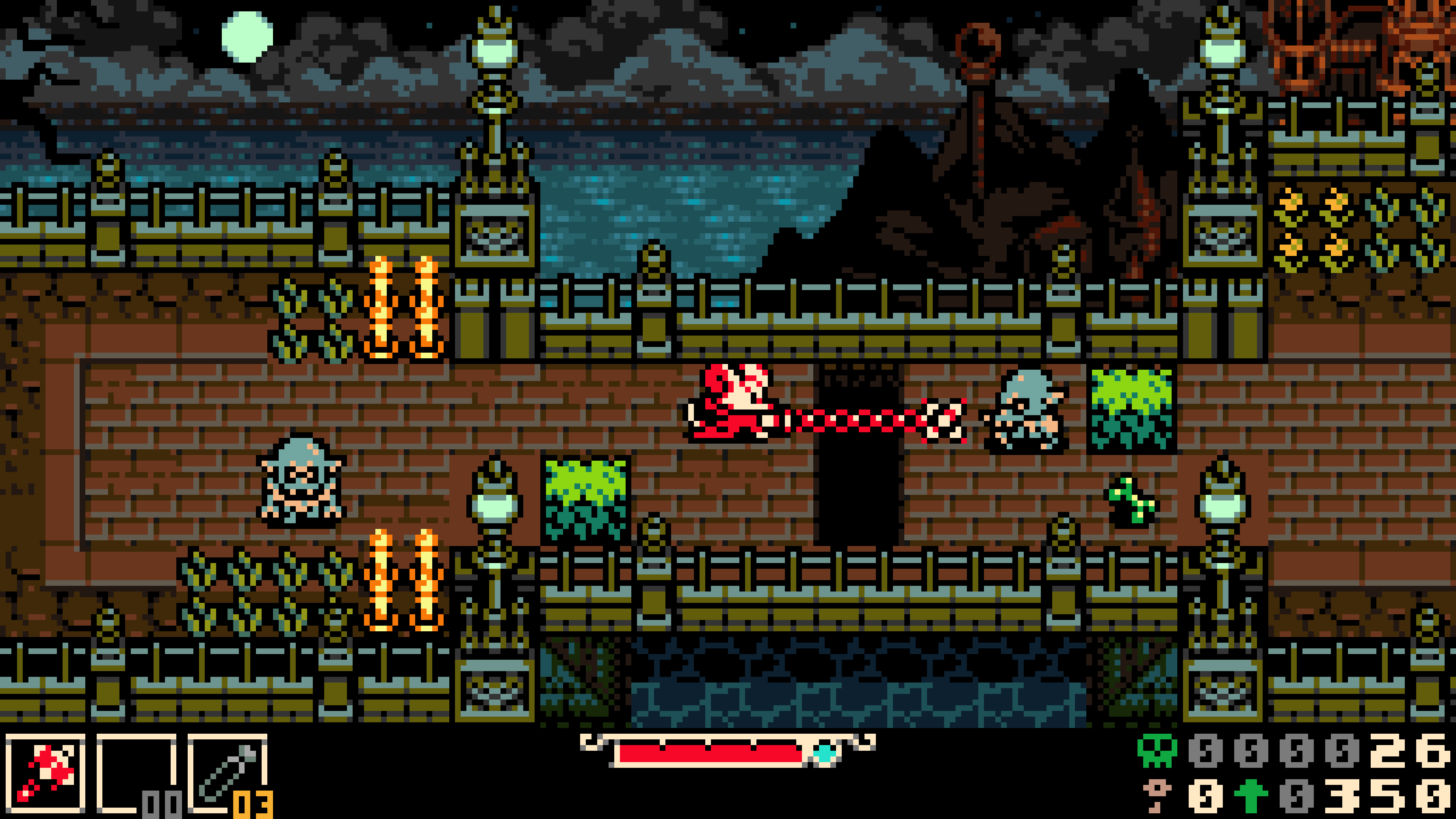
The premise is straightforward. Mina, a multi-skilled inventor known as a Hollower, travels to Tenebrous Isle after receiving a distressing message from her mentor. The island has fallen into darkness, overrun by monsters and corrupted machinery, and Mina must uncover the cause while navigating a series of interconnected regions filled with secrets, hazards, and challenging enemies.
The narrative is fairly sparse, delivered through brief interactions and environmental cues rather than lengthy exposition. This is a conscious design choice, echoing the minimalist storytelling of the Game Boy era, but it also allows the world to feel mysterious and slightly unsettling. The tone is darker than Shovel Knight, leaning into gothic horror without ever becoming oppressive. It doesn’t quite have the environmental story-telling of a Souls game, but given the limited graphics, it does its very best.
The most distinctive mechanic is Mina’s ability to burrow underground. With a push and hold of the A button, she dives beneath the surface, moving quickly and invulnerably for a short distance before resurfacing with a burst of momentum that works a bit like a double jump. This mechanic is central to both combat and traversal. It allows Mina to dodge attacks, cross gaps, bypass hazards, and reposition herself rapidly.
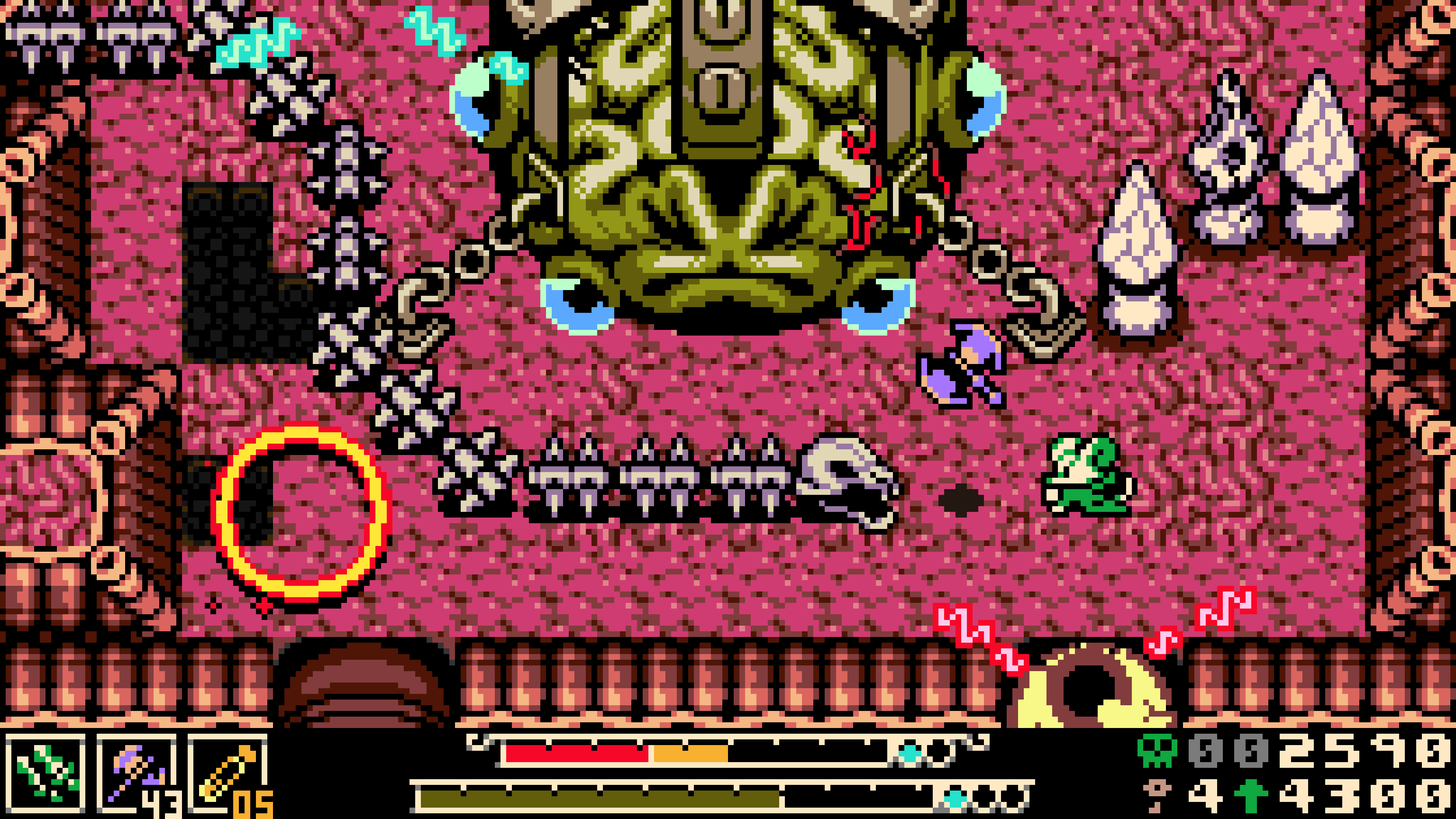
Mastering the timing and distance of the burrow is essential, and Mina is designed around its use. Many enemies have attacks that can only be avoided by burrowing, and several platforming sequences require precise chaining of burrow movements to reach distant ledges. It is a mechanic that feels immediately intuitive but reveals surprising depth as the game progresses.
Combat is fast, responsive, and very, very demanding. Mina chooses from one of three weapons during the opening sequence, and each weapon is surprisingly unique. For most of my playthrough, I used a whip which has good speed and range and can be upgraded with different properties, allowing players to tailor its behaviour to their preferred style. I also dabbled with a magical Warhammer, which comes with a slowish, chargeable AoE attack that feels completely different to the whip.
Whichever primary weapon you choose, secondary weapons and tools, known as sidearms, add further variety. These include throwing knives, explosive axe things, magical projectiles, as well as defensive tools that can block or reflect attacks. Each sidearm consumes energy, a resource that regenerates slowly or can be replenished through relatively common mob item drops. This creates a rhythm where players must balance aggression and caution, using sidearms strategically rather than spamming them.
Enemy design is one of Mina’s strengths. Each region introduces new foes with distinct behaviours, attack patterns, and vulnerabilities. Some enemies require careful spacing, others punish reckless burrowing, and many are designed to work in combination, creating layered combat encounters that feel both tough and puzzle‑like. Boss battles are a brutal highlight, offering multi‑phase fights that test mastery of the burrow mechanic, weapon timing, and sidearm usage. These encounters are challenging and usually fair, with clear telegraphs and patterns that reward observation and adaptability. That said, Mina is verging on being the hardest game I’ve ever played, and you should know that going into it.
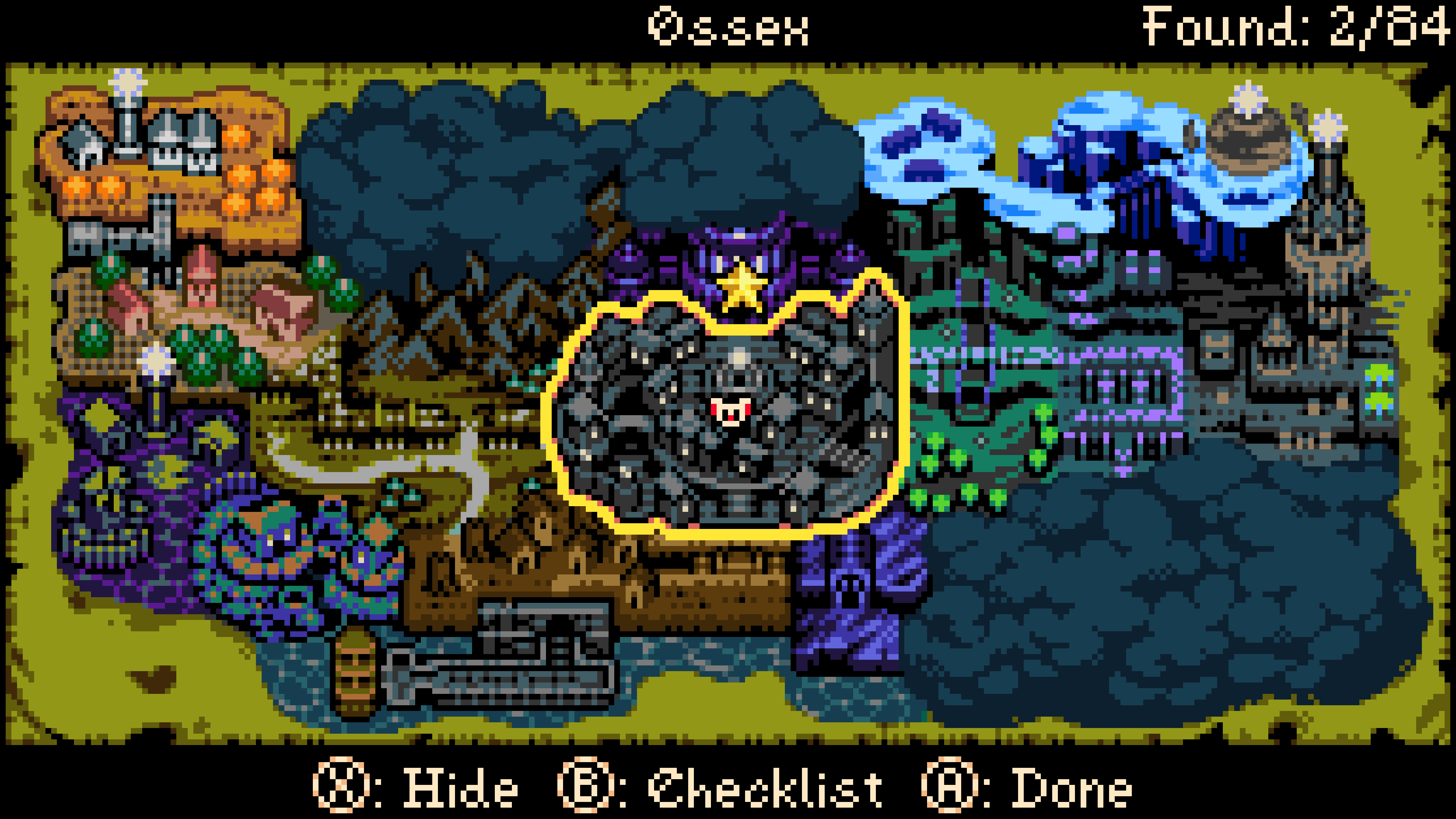
The world of Mina the Hollower is structured as a series of interconnected regions, each with its own theme, hazards, and secrets. While not a full Metroidvania (because almost any area can be visited), Mina does encourage exploration and backtracking. New tools unlock access to previously unreachable areas within zones, and hidden rooms contain upgrades, lore fragments, and optional challenges. The level design is very tight and obviously deliberate, with a strong sense of flow.
Additionally, and impressively for a low-fi game, each region actually feels distinct, from haunted forests to crumbling catacombs to mechanical fortresses filled with traps. The environmental hazards are varied and often cleverly integrated into combat encounters, forcing players to consider positioning and movement carefully. Again, this often verges on the brutally hard, but like the From Software games that clearly inspired it Mina rewards progress with shortcuts such as rope ladders, open gates and permanently revealed tunnels to pass through.
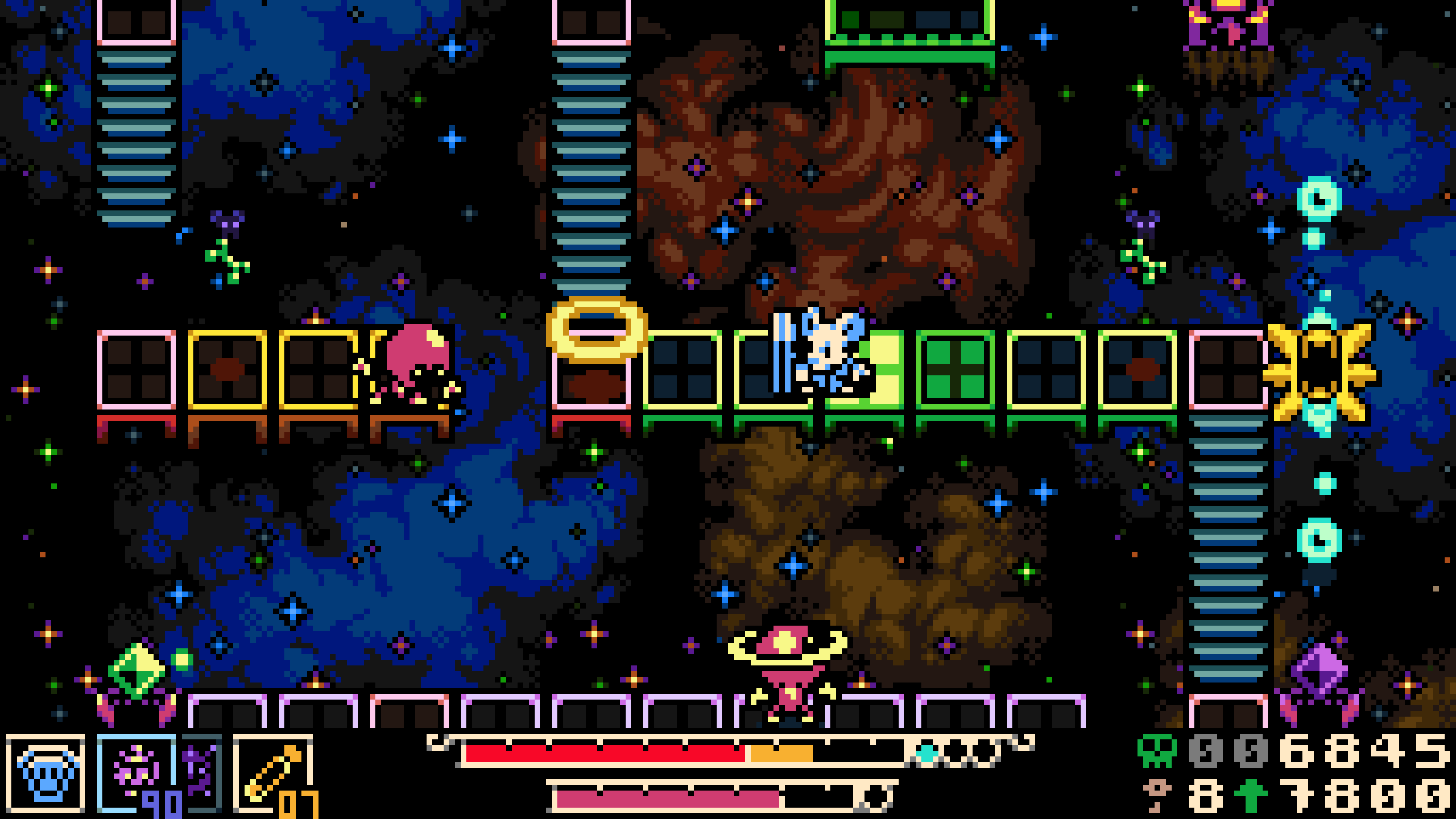
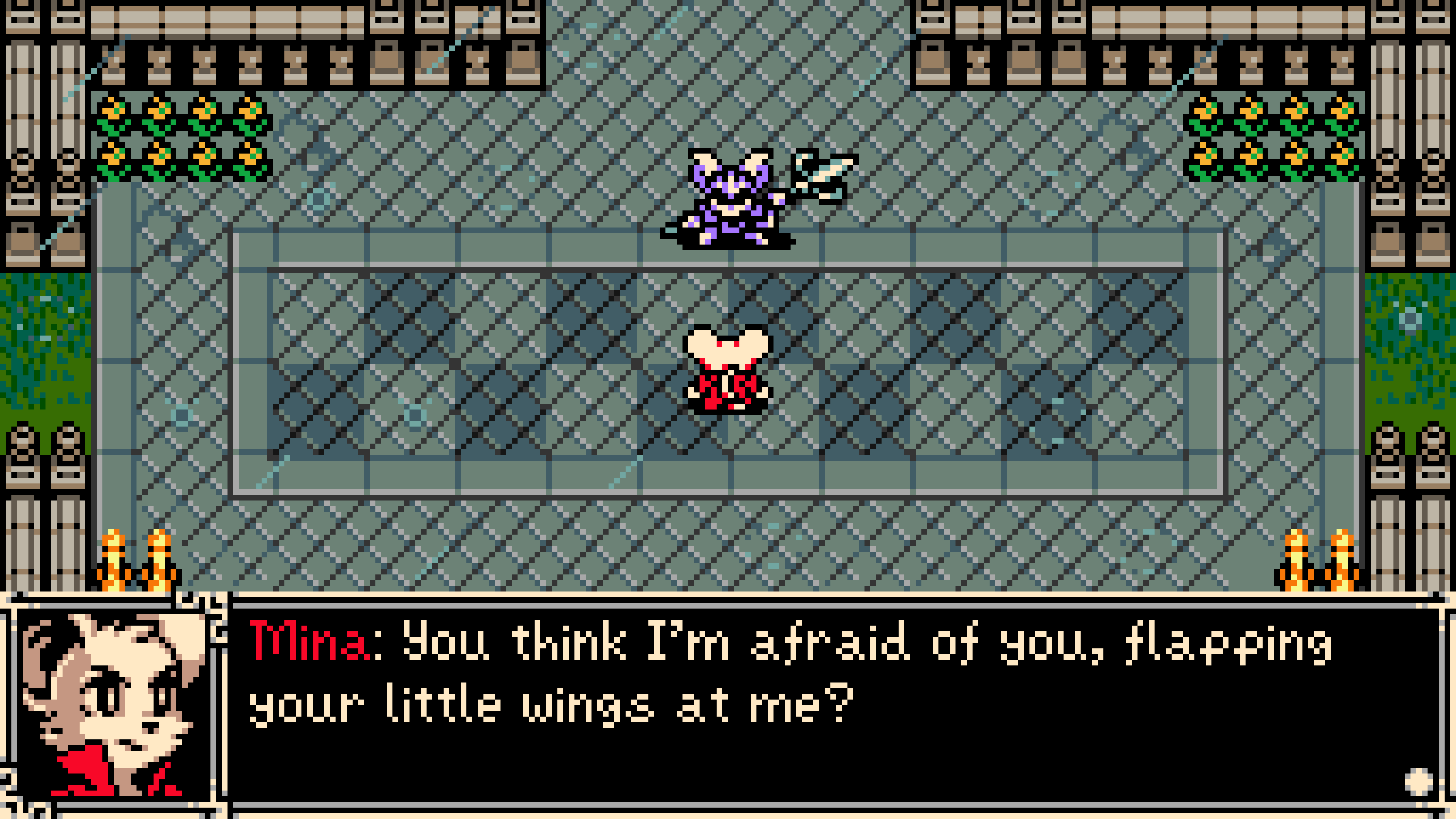
One of the most impressive aspects of Mina is its visual presentation. Yacht Club Games has recreated the retro look with remarkable authenticity, using a limited colour palette, chunky sprites, and simple but expressive animations. However, the fidelity is far beyond what hardware of this era could achieve. The lighting effects, particle systems, and animation smoothness are all modern enhancements that blend seamlessly with the basic look and feel completely at home. The result is a game that feels nostalgic without being constrained by that same nostalgia.
On Xbox One, Mina performs exceptionally well. The hardware easily handles the retro‑styled visuals, and the framerate remains stable even during intense combat sequences. Load times are minimal, and the controls feel responsive and precise. The game’s design is well suited to a controller, with intuitive button mapping and smooth movement. There are no noticeable compromises compared to other platforms, and the experience feels fully optimised for the console. I do kind of wish that I’d been able to experience Mina the Hollower on the Switch however, as the Gameboy Colour style graphics make it feel as though a handheld format is its natural home.
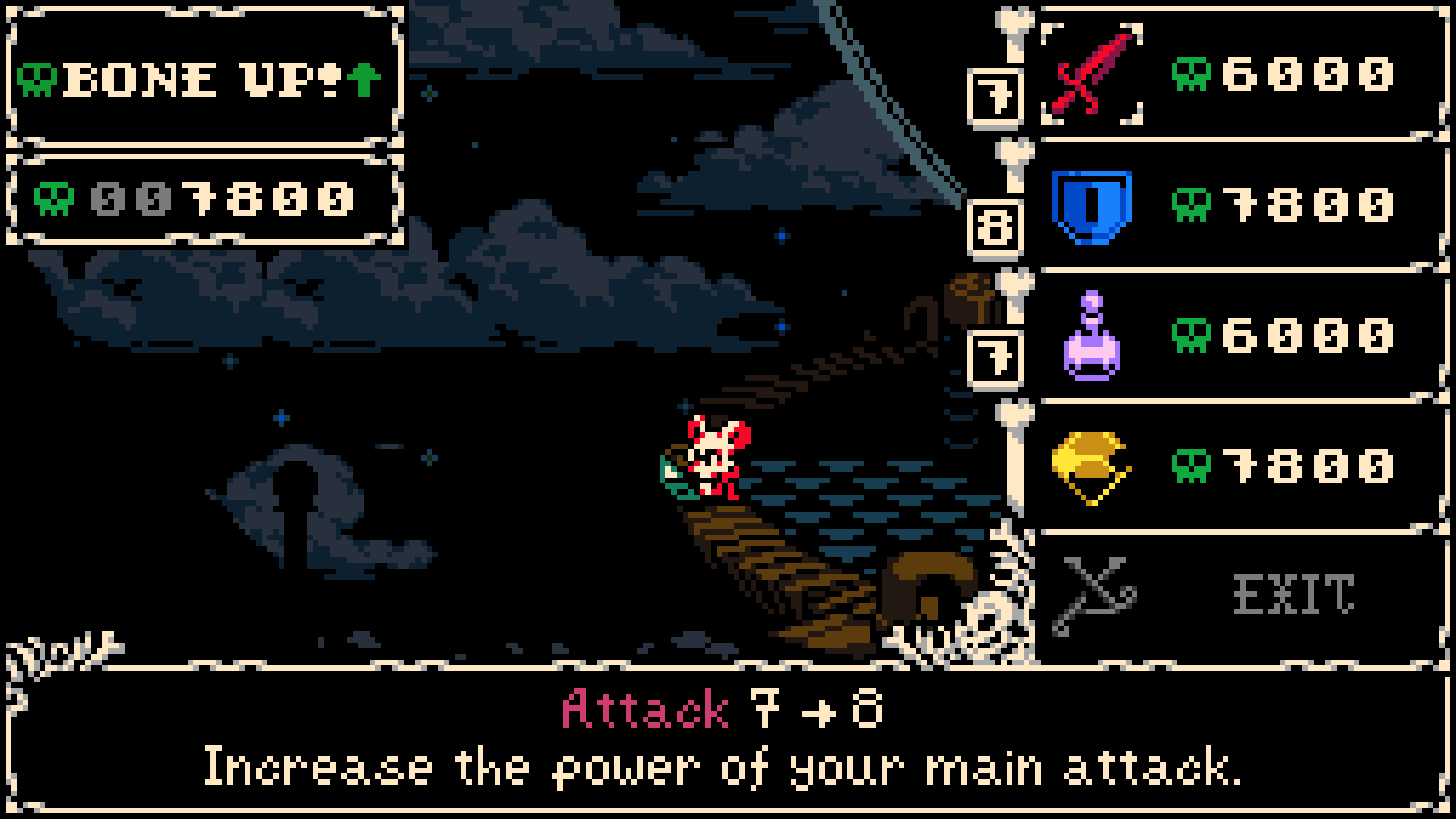
As I’ve hinted, the difficulty curve will certainly be one of Mina’s most divisive elements. Mina the Hollower is challenging from the outset, and it never shies away from punishing mistakes. Enemies hit hard, hazards are unforgiving, and boss battles demand precision. However, I rarely felt that I was being punished unfairly. Checkpoints are frequent, and death typically results in a manageable loss of “bones” (which act like Souls in From’s games) rather than a major setback.
Players can also customise Mina’s abilities through relics, which offer passive bonuses such as increased health, faster energy regeneration, or enhanced burrow distance assuming that you can find them. For those who need real help, there’s also an old school cheat menu built into Mina which allows various modifiers to be applied. I didn’t use these as I didn’t want to remove any achievements associated with the base game, but I think this is a great idea in a tougher game like Mina.
Mina’s narrative, while minimal, is fairly effective. The world feels haunted and mysterious, with hints of tragedy and corruption woven into the environment. Characters are few but memorable, and their interactions with Mina add emotional weight to the journey. The story unfolds gradually, with optional lore fragments providing additional context for those who seek it. The ending is satisfying and certainly leaves room for future expansions, sequels and inevitable DLC.
If Mina has a weakness, it is that its commitment to retro design may limit its appeal for some players. The difficulty, the sparse storytelling, and the deliberate simplicity of the mechanics may feel restrictive to those accustomed to more modern action‑adventure conventions. Additionally, while the burrow mechanic is innovative, it can take time to master, and some players may find the precision required for certain platforming sequences frustrating. Personally, I have struggled with the burrowing part the most, and my first boss encounter took a lot longer than some of my later ones.
In the end, Mina the Hollower is a triumph of focused design even if it might be more at home on the Nintendo Switch (and that’s certainly where I’d recommend you purchase it, if you can). Mina’s combat is tight and satisfying, the world is rich with atmosphere, the mechanics are inventive, and the presentation is both nostalgic and modern. It is a worthy successor to Shovel Knight in spirit, though entirely different in structure and tone. For players who appreciate challenging action‑adventure games with retro sensibilities, it is one of the most distinctive and rewarding titles of its kind in recent years.
Mina the Hollower is available now for PC, as well as Nintendo, PlayStation and Xbox consoles.
