

Super Meat Boy 3D on Xbox One is both the most obvious thing ever and of course the one thing that I didn’t see coming until it was already here. Somehow completely new and yet unmistakably faithful to its now 15+ year old origins all at the same time, Super Meat Boy 3D picks up where the original left off, albeit in a completely different style.
For a series defined so strongly by its 2D identity, the shift into full 3D could easily have gone wrong for Super Meat Boy 3D. At its release, the original Super Meat Boy was probably the most notorious platformer ever made. Built around precision, speedrunning, instant restarts and a joyful cruelty that made every death feel like part of the learning process, Super Meat Boy was responsible for a wave of indie titles that are in part responsible for the existence of websites like B3.
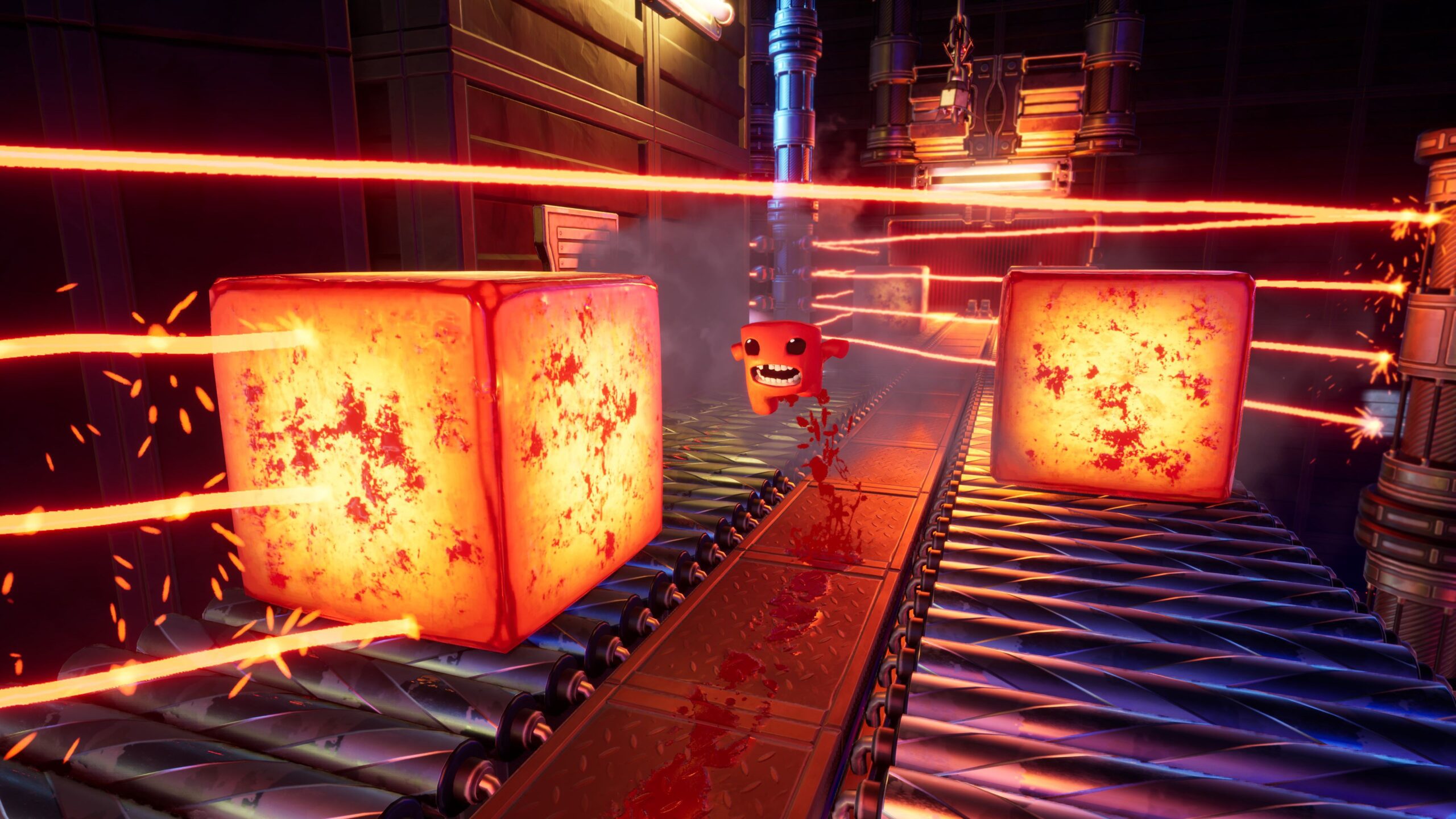
Translating the ideas of Super Meat Boy into a 3D space is no trivial task, and neither is capturing the right mood with so much water under the cultural bridge since the first game was released. Many franchises have stumbled to make the transition — to either technical or cultural modernity — losing the clarity and immediacy that made their 2D incarnations special. The first thing I want to say is that Super Meat Boy 3D makes the leap, albeit only just.
The first thing that stands out is how carefully the developers have rethought the fundamentals. Meat Boy’s movement in 3D is fast, responsive and intuitive, whilst retaining the “slipperiness” of the original. He accelerates quickly, stops sharply and retains the same sense of momentum that defined the unique gameplay of the original title. The controls are tight, with a level of responsiveness that is essential for a game built around precision platforming. The camera, often the Achilles’ heel of 3D platformers, is handled with confidence that rarely mis-steps. It is mostly player‑controlled but subtly guided in key moments, ensuring that jumps, hazards and landing zones remain visible without feeling too forced. The result is a game that feels fluid and readable, even in its most demanding sequences.
The level design is where Super Meat Boy 3D truly distinguishes itself. Rather than simply recreating 2D levels in 3D space, the designers have embraced the possibilities of the new dimension. Levels twist, spiral and fold back on themselves, creating routes that require spatial awareness and quick decision‑making. Verticality plays a huge role, with towering climbs, plunging drops and multi‑layered arenas that challenge players to think in three dimensions. Despite the added complexity, Super Meat Boy 3D’s core philosophy remains much the same: short, intense levels built around the try, die, retry and laugh concept.
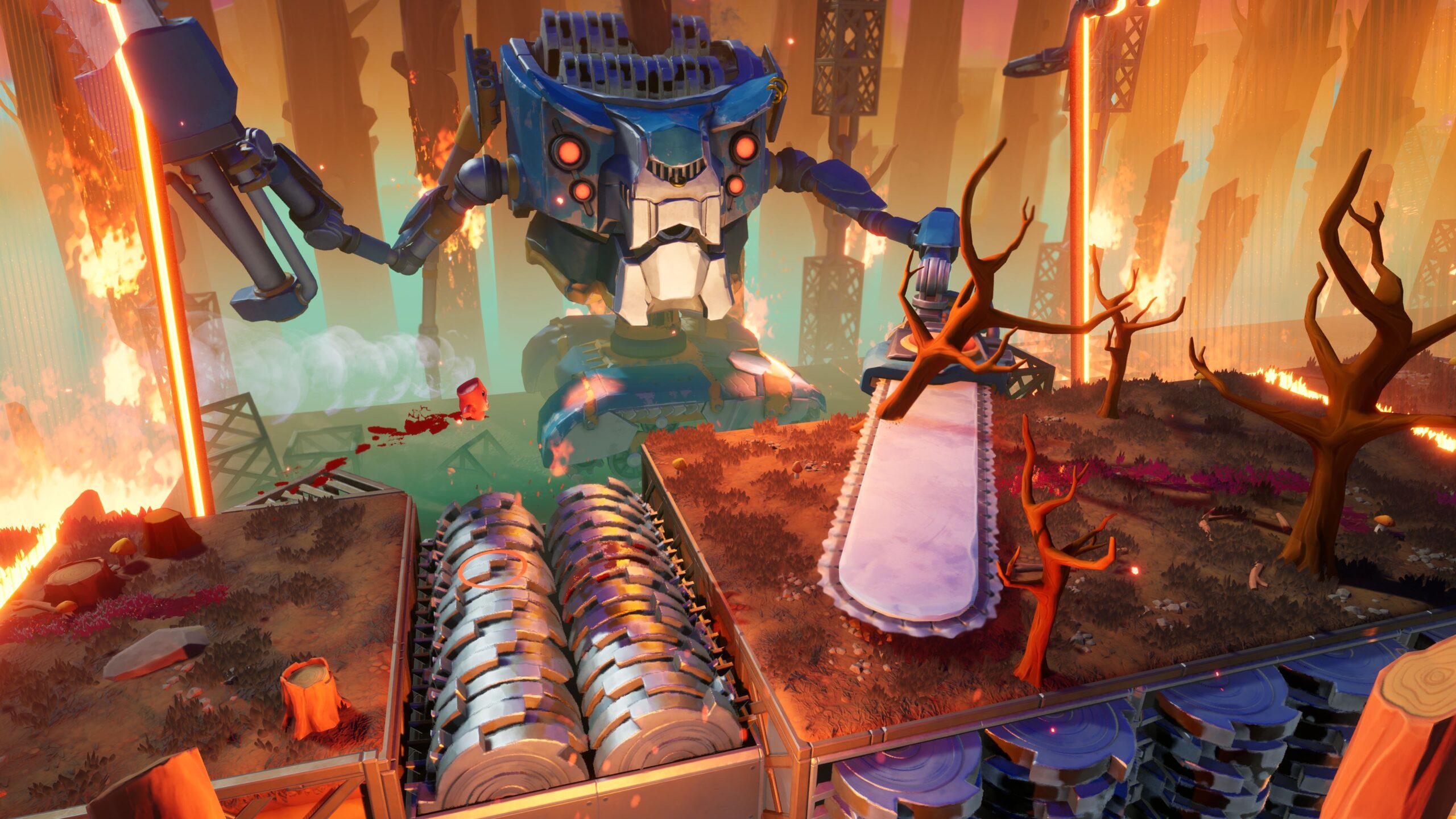
Much like our meaty hero, a few familiar hazards make the leap to three-dimensions. Saws, blades, missiles and meat grinders return, but their placement in 3D space allows for more interesting patterns. Saws sweep across platforms in arcs, missiles track Meat Boy through twisting corridors, and environmental traps trigger chain reactions that force players to keep moving.
Super Meat Boy 3D retains the trademark brutality both in terms of what happens to Meat Boy when he meets his end, and in terms of the difficulty of the gameplay. Thankfully, every pattern is learnable and every death a lesson that means you should be able to progress within a few follow-up runs. The instant restart remains one of the game’s greatest strengths, keeping frustration at bay and maintaining the addictive loop of attempt, fail, retry, succeed.

One of the most interesting aspects is how it handles speedrunning. The original Super Meat Boy became a favourite among speedrunners because it was super fast and super tough. Super Meat Boy 3D embraces that legacy with a suite of features designed to support that play natively. Leaderboards track times globally and among friends, ghost replays allow players to race against their best runs, and the game includes optional “Meat Challenges” that push players to complete levels under strict time limits. This isn’t for me, but it’s an excellent insight into how Super Meat Boy left its own imprint on gaming, and how Super Meat Boy 3D now operates within the resulting ecosystem.
Super Meat Boy 3D’s structure follows the familiar world‑based progression of the original. Each world introduces new mechanics, dangers and visual themes, culminating in a boss fight that tests the skills learned along the way. The bosses are a highlight, combining spectacle with a real test of your mechanical learning. They are large, aggressive and often multi‑phase, but they remain grounded in the game’s core platforming mechanics rather than shifting into unrelated combat systems. Defeating them feels like a natural extension of the skills developed throughout the world and it’s rare that it stretches the mould to frustration.
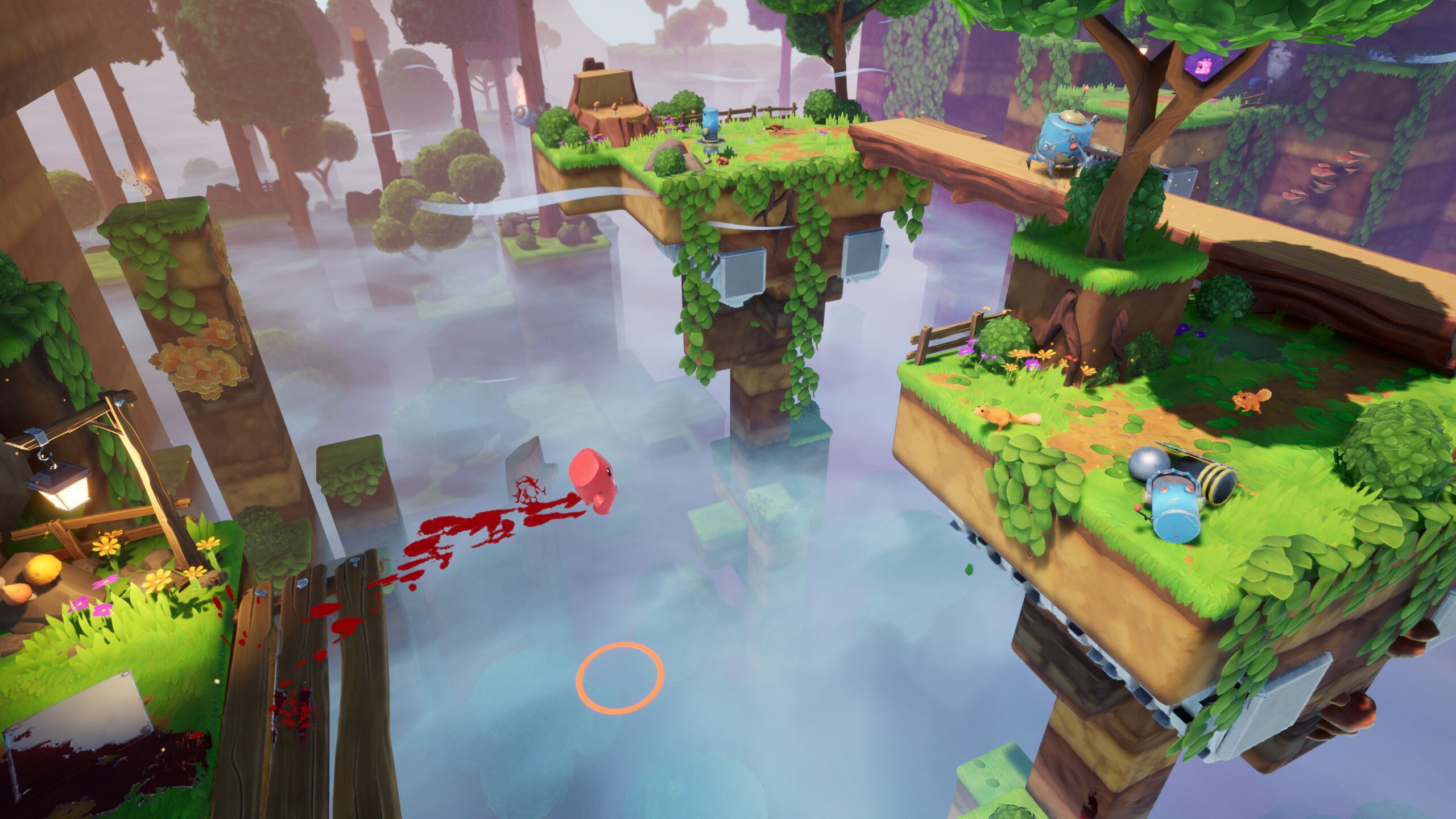
Visually, Super Meat Boy 3D strikes a careful balance between modern fidelity and the exaggerated cartoon style of the original. Meat Boy’s animations are expressive, with subtle squash‑and‑stretch effects that make his movement feel lively. The environments are colourful, varied and filled with small details that reinforce the game’s darkly humorous tone. Blood splatters mark every failed attempt, gradually painting the level in a way that is both gruesome and strangely helpful, as it highlights the paths you’ve taken. The Xbox One handles the visuals smoothly, maintaining a stable framerate even in the most chaotic sequences. Super Meat Boy 3D’s art direction is clean and readable, ensuring that hazards stand out clearly against the environment — a crucial factor in a game where split‑second decisions determine success or failure.
On that note the difficulty curve is steep but generally fair. The early worlds ease players into the mechanics, introducing hazards gradually and allowing time to master Meat Boy’s movement. Later worlds ramp up significantly, with levels that require perfect timing, spatial awareness and mastery of advanced techniques. Thankfully, the game never feels insurmountable because the hazard sequences are generally well-spaced and of a manageable length in terms of the number of consecutive things you need to navigate. The instant restart, short level length and clear telegraphing of hazards keep frustration at a sensible level for the most part. Super Meat Boy 3D respects the player’s time, even as it challenges even the most seasoned platform specialist.
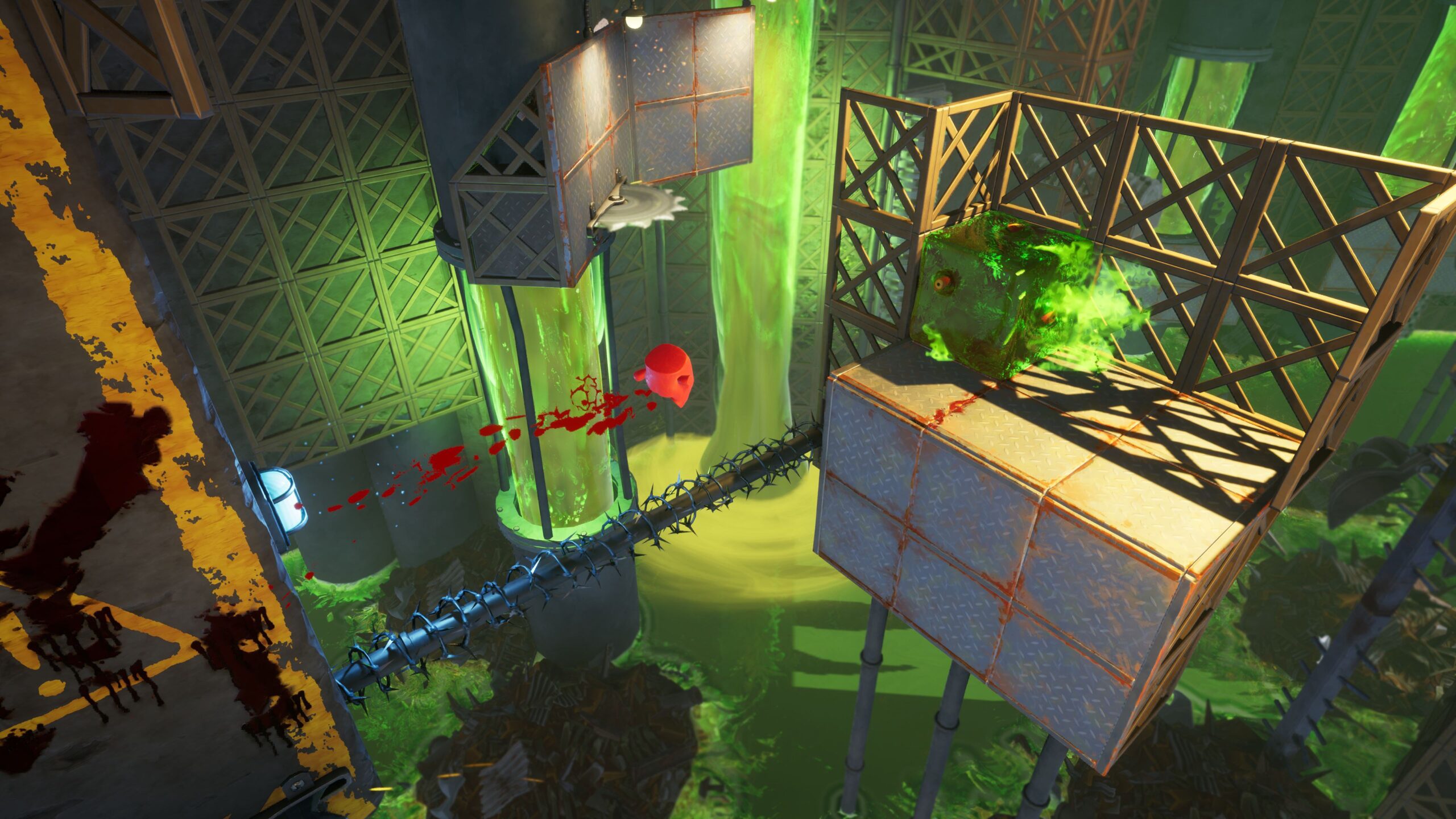
If Super Meat Boy 3D has weaknesses, they stem from the inherent challenges of translating a 2D precision platformer into 3D space. Depth perception can occasionally be tricky, especially in levels with complex geometry or overlapping hazards, and considering the slippery controls. The camera, while generally excellent, can struggle in tight spaces or during rapid vertical movement when it sort of “lollops” behind the pace. These issues are infrequent, but they do stand out when they occur and can kill you. Additionally, some players may find the difficulty spikes in later worlds abrupt, particularly if they have not fully mastered the movement mechanics.
Another potential limitation is Super Meat Boy 3D’s commitment to its core identity. Super Meat Boy 3D is unapologetically focused on precision platforming. It does not include exploration, narrative depth or alternative gameplay modes beyond time trials and challenge levels. For players seeking variety or a more relaxed experience, this will feel narrow in scope. But for those who appreciate the purity of its design, this focus is a strength rather than a weakness.
In the end, Super Meat Boy 3D on Xbox One is a pretty strong but not quite perfect achievement. It takes a beloved 2D classic and reimagines it in 3D without losing the qualities that made the original special. The movement is tight, the level design inventive, the difficulty satisfying and the presentation polished. Super Meat Boy 3D is a game built with confidence, clarity and respect for its audience and its history. It challenges players, rewards mastery and delivers a constant sense of momentum and excitement. As a conversion from 2D to 3D architecture, it’s very well done, with the new format only occasionally introducing some of its well-worn flaws (such as the camera).
Super Meat Boy 3D is available now for PC, as well as Nintendo, Xbox and PlayStation consoles.
