

Terrinoth: Heroes of Descent is a surprisingly solid, console‑ready adaptation of Fantasy Flight’s long-standing and now defunct dungeon-crawler (known as Descent). Somehow, FFG’s vision has been successfully translated into a video game that offers the tantalising appeal of turn-based tactical games, escalating hero builds and a world that keeps pulling you forwards. We’ve seen digital re-imaginings of the world of Terrinoth (where Descent takes place) before, but I don’t recall ever seeing one as complete or as comprehensive as this.
Terrinoth: Heroes of Descent opens with a familiar set of mundane expectations: a small band of adventurers, a map dotted with quests, and a world in crisis that needs clearing one room, street or cellar at a time. What stands out early is how clean and straightforward the designers have built their tactical combat system. Movement, threat, and ability timing are all readable at a glance and with little guidance and the Xbox One controller mapping is surprisingly elegant meaning that quite unusually for this kind of game, I was up and running in minutes.
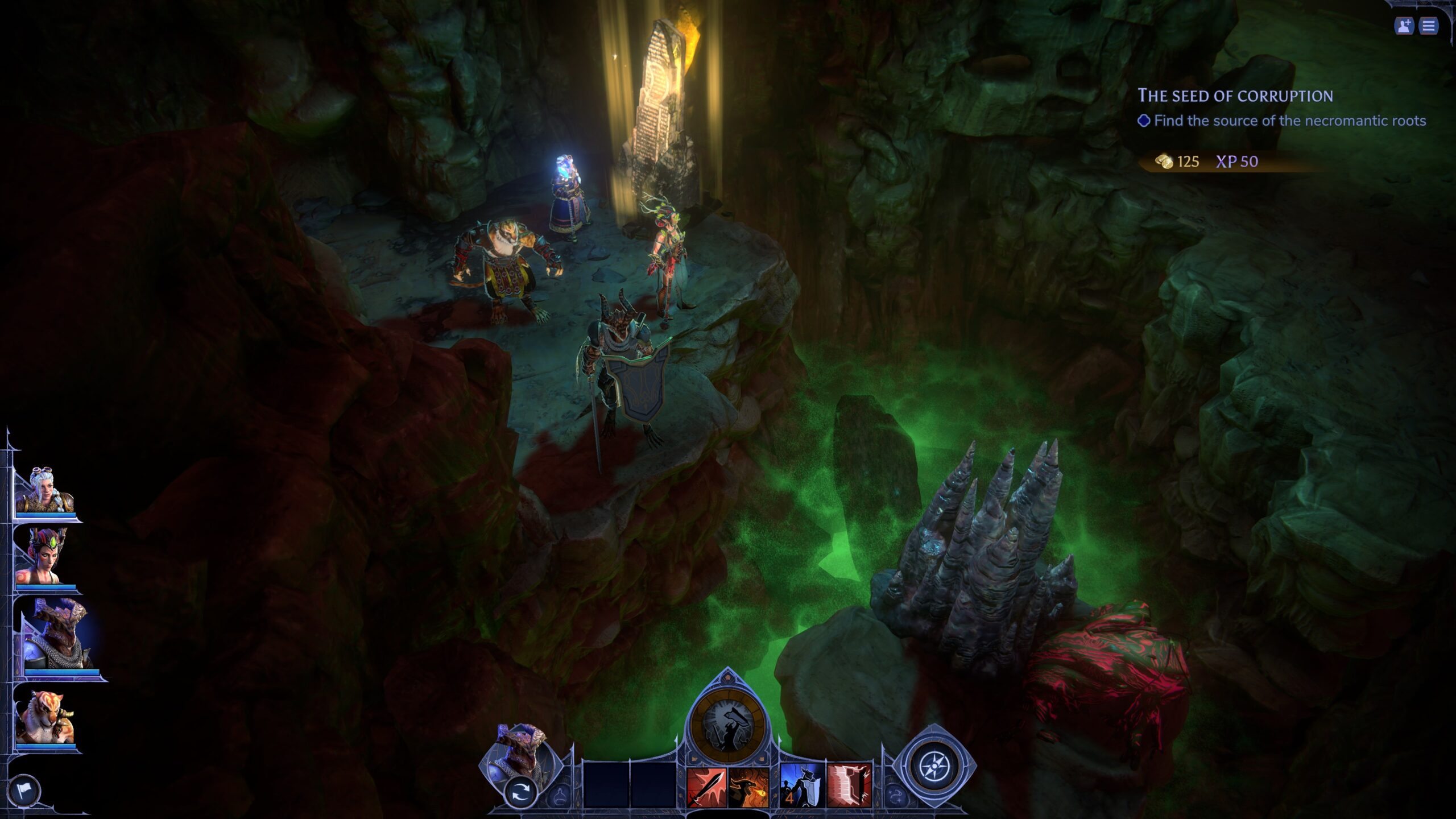
Despite ample dialogue and modest exploration, combat is the heart of Terrinoth: Heroes of Descent, and for those who know, it leans pleasingly into the Descent DNA without becoming beholden to it. Each hero has a distinct identity — just as they do in the board game — and as has been the tradition of late, these aren’t entirely stereotypical tropes such as tanks, rogues and classic mages. I am not saying that Terrinoth: Heroes of Descent has completely unique characters, but it does do things that create unusual tactical decisions and provide a wide range of options for the player.
On that note, encounters are built around synergy rather than raw stats, and Terrinoth: Heroes of Descent rewards players who think in party turns rather than solo heroics. Abilities chain nicely into others with one ally slowing an enemy so that another can apply burn or bleed and leave that enemy stranded (for example), whilst the enemy groups themselves are clearly designed to pressure you into movement rather than static trading. This isn’t an overly punishing game, but it is one that will beat you fair and square if you don’t actually lean into the tactical element.
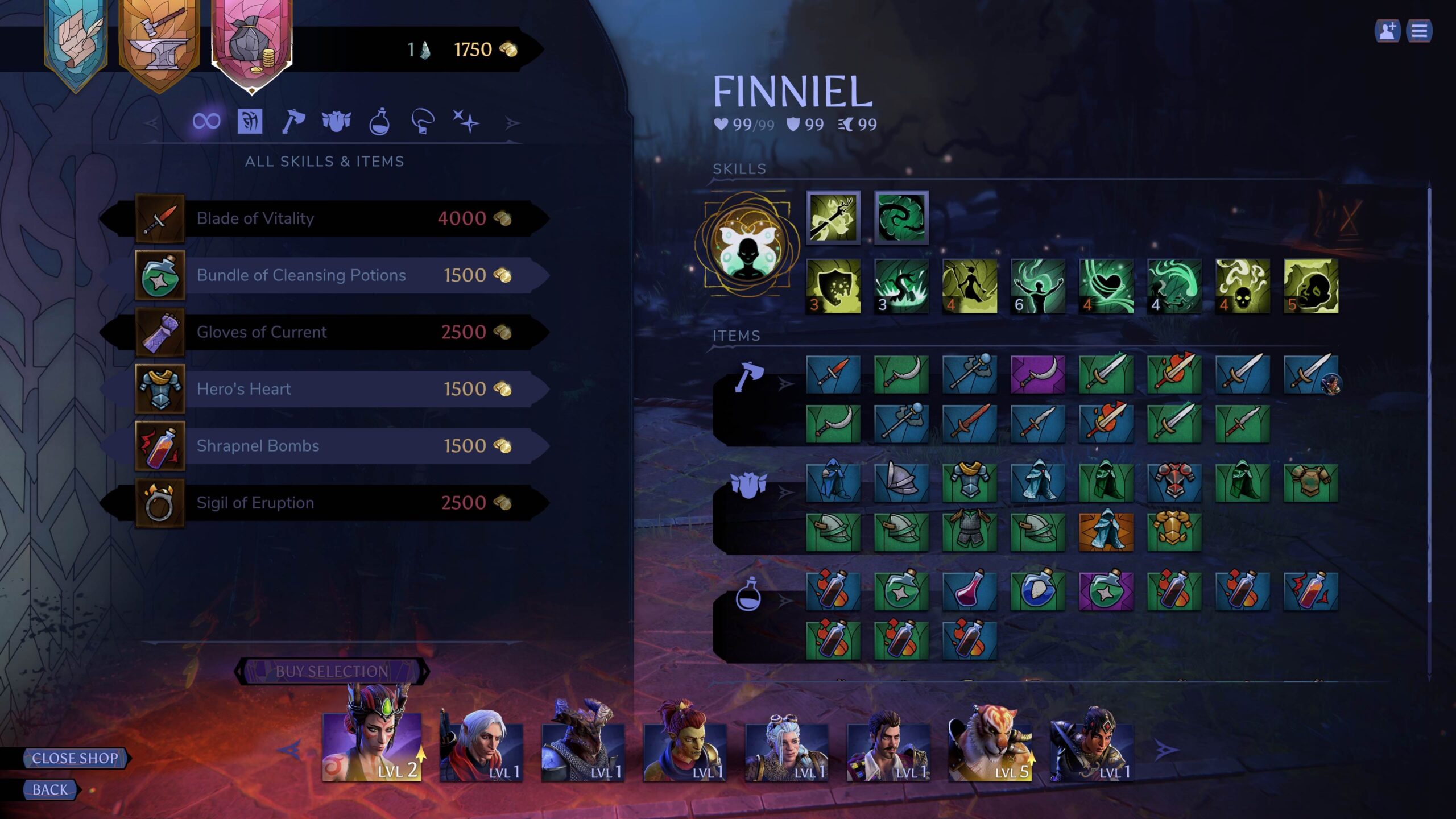
Progression is where Terrinoth: Heroes of Descent shows its strongest hand. Each dungeon run feeds into a broader campaign structure with all the stuff you’d expect. Customisation of each character includes gear upgrades, skill unlocks, party composition tweaks and the slow, satisfying growth of your heroes into specialised roles. Terrinoth: Heroes of Descent avoids bloat pretty well — probably thanks to its tabletop roots and the systems that inspired it being therefore fewer. In videogame terms, there’s a welcome sense of restraint here, and perhaps unusually for this kind of RPG, I felt from the outset that these were systems I might one day be able to completely master.
The world of Terrinoth is presented with a painterly confidence that brings its rarely used-but-quite-well-developed world to life. Environments are colourful without being garish, and the game’s lighting gives dungeons a warm storybook quality similar to Trine. Character models are stylised but expressive, and while the Xbox One hardware shows its age in texture detail and loading transitions, the art direction means that you don’t really feel that you’re missing out. The soundtrack does a surprisingly decent job of providing an orchestral fantasy soundtrack supplemented by combat cues that rise and fall in step with the action.
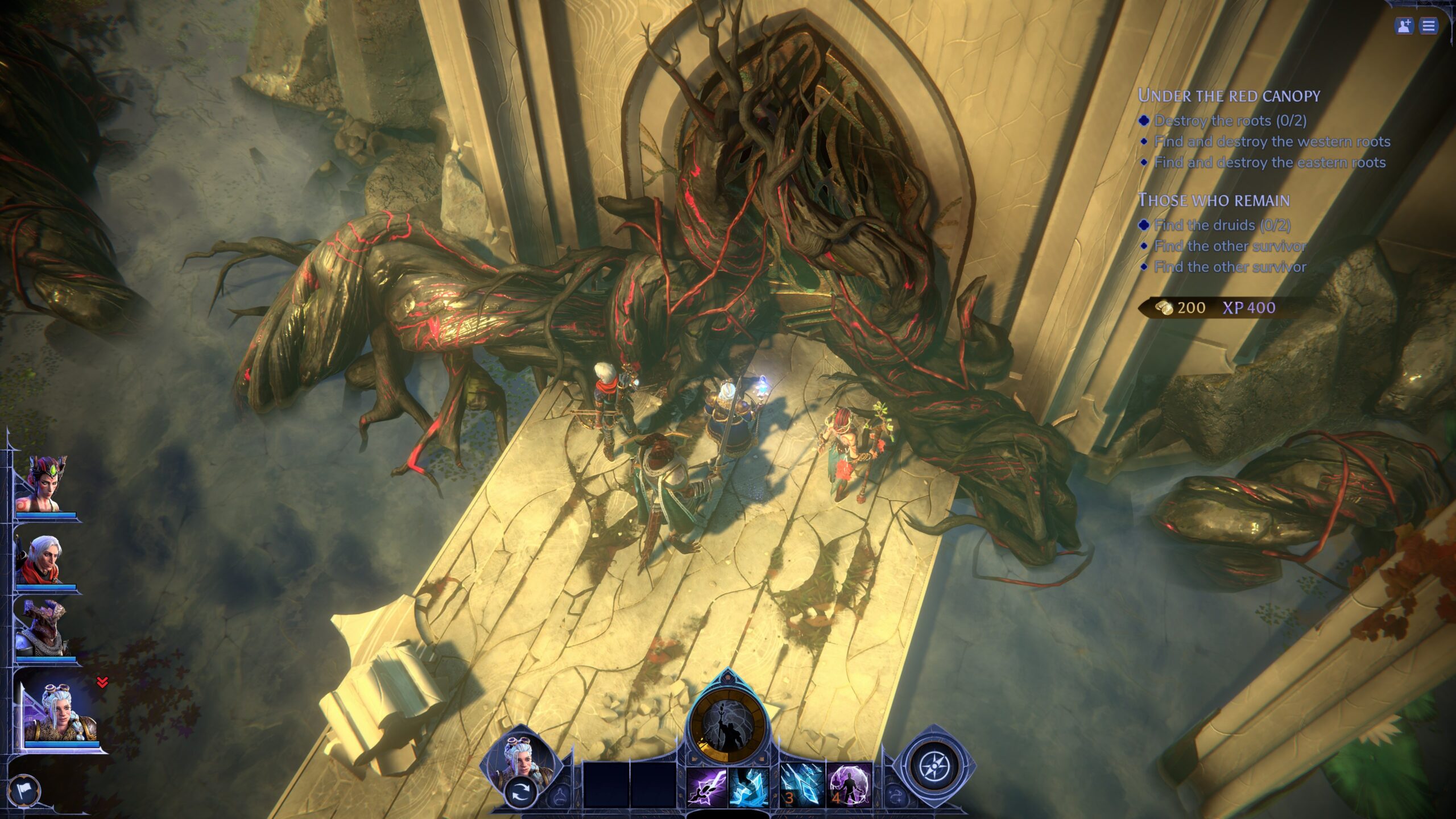
Where Terrinoth: Heroes of Descent begins to deepen is in how it handles pacing across its campaign. Quests unfold gradually before the player, but the game is careful not to overwhelm us with branching paths or excessive micromanagement. Instead, it offers a curated sense of progression with new regions unlocking at a measured pace, side missions appearing as gentle diversions rather than mandatory grinds, and the campaign’s difficulty curve rising in a way that encourages experimentation.
In terms of gear drops, Terrinoth: Heroes of Descent is more restrained than generous. Most items are purposeful rather than randomised noise, and the crafting system feels designed to reward engagement without slipping into busywork. Materials are easy to understand, upgrades feel more tangible than in most games, and the game rarely forces you into grinding for a specific item. I welcome this in the same way as I welcome the clarity of character development — not everyone has time to grind and tinker endlessly, and some of us (specifically me) like the idea of being able to reach a clear end point and leave a game behind me with no unfinished business.
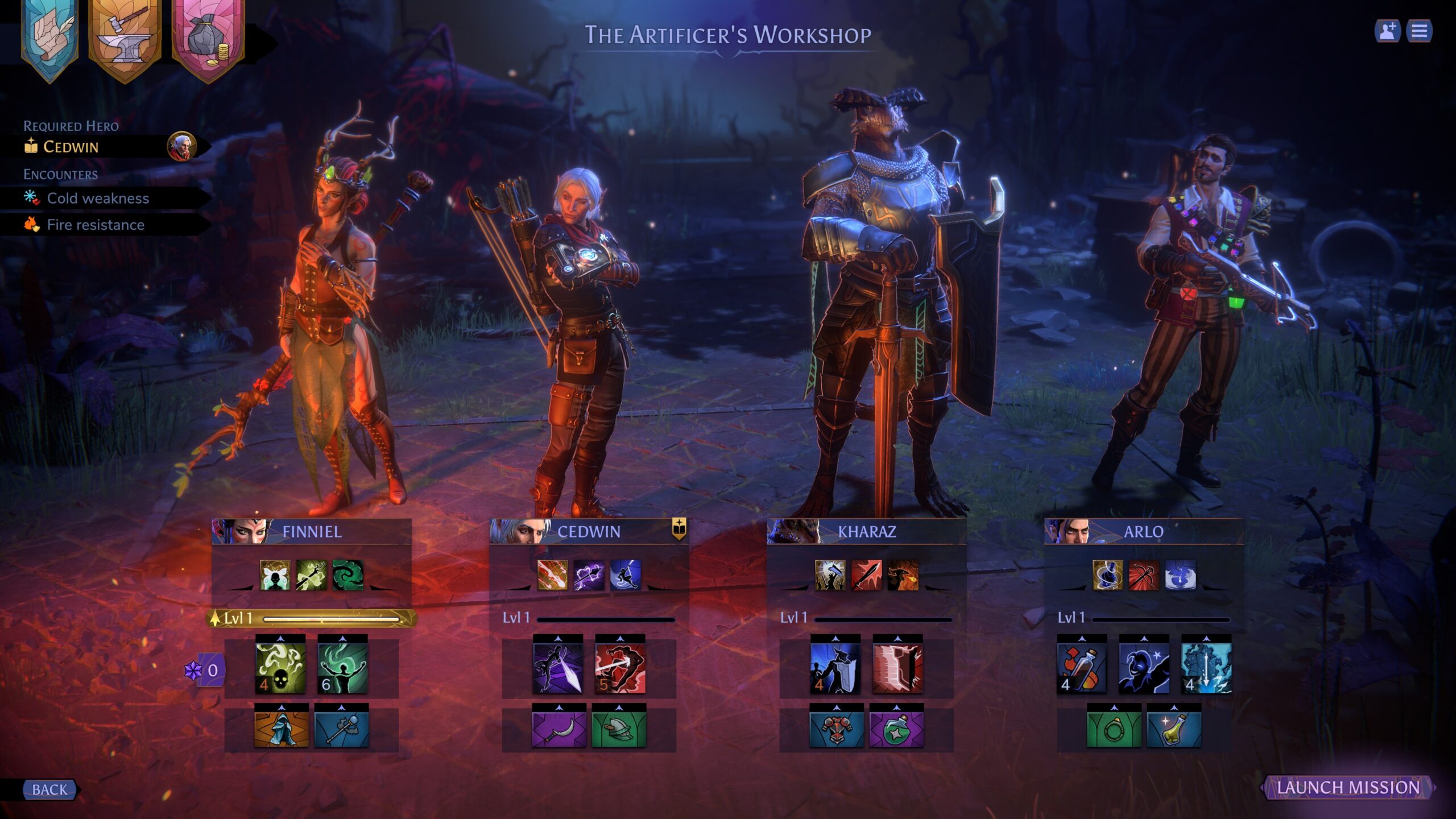
Even the narrative, modest as it is, benefits from this clarity. Terrinoth: Heroes of Descent doesn’t chase sprawling lore or dense exposition; instead, it sets each quest up with enough context to give purpose to your descent. Characters speak with a light touch that says enough without waffle, villains are sketched with broad strokes, and the world’s history is hinted at rather than exhaustively detailed. The result is a campaign that feels cohesive, even if its storytelling is more functional than dramatic, although perhaps if I knew more about the Terrinoth lore, I might feel more strongly one way or another.
Where Terrinoth: Heroes of Descent stumbles is in repetition. Its encounter design is strong, but its mission structure can fall into predictable patterns: clear a room, push forward, fight a miniboss, collect a reward. This rhythm obviously worlds (especially in board games) but extended sessions show this structure a bit too bare. Enemy variety is solid but not spectacular, and while elite variants add spice, they don’t fundamentally change how you approach fights. The campaign’s narrative beats are serviceable rather than memorable, and players looking for sweeping fantasy storytelling may find the plot more functional than compelling.
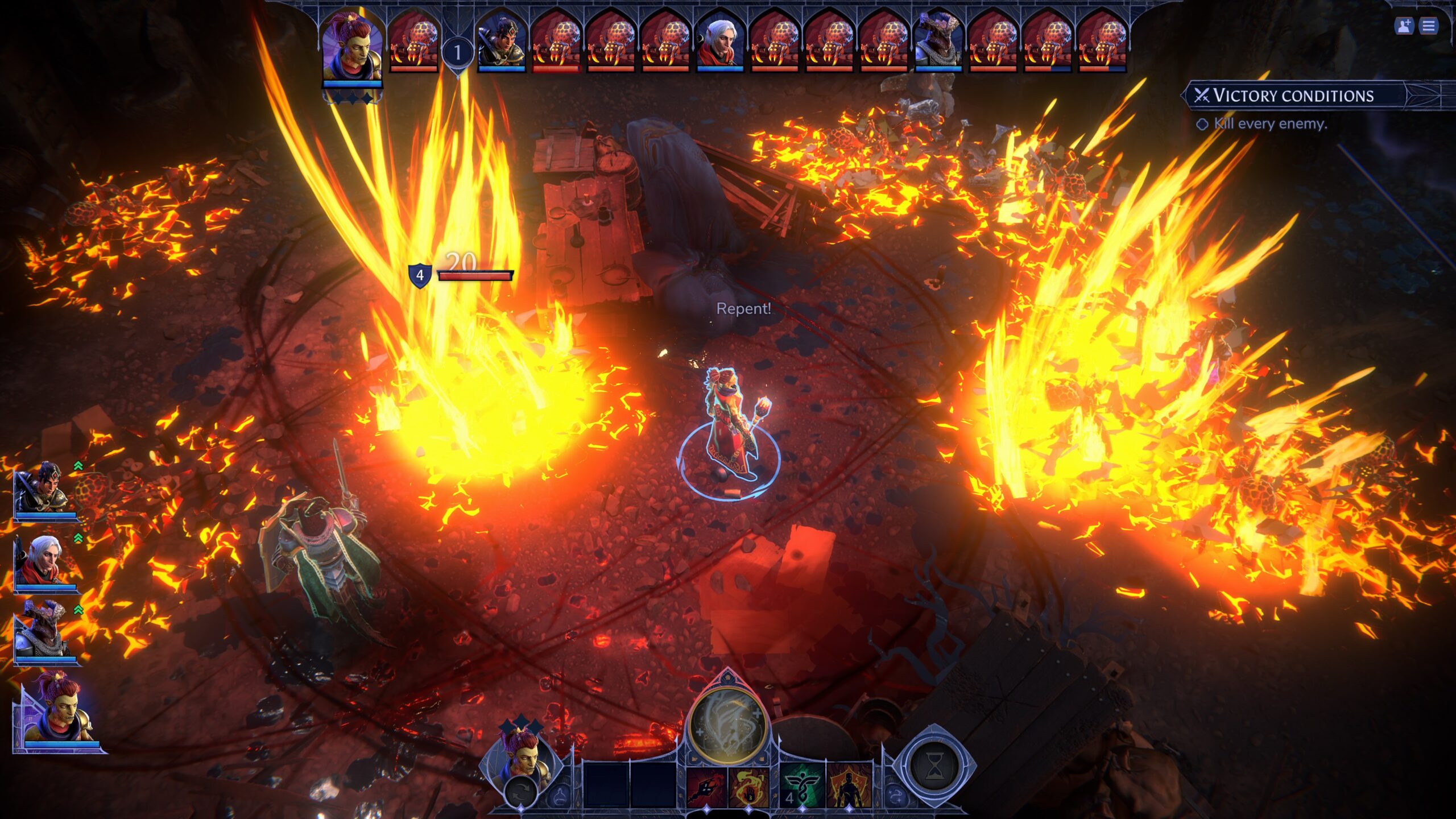
Yet even with these limitations, Terrinoth: Heroes of Descent remains engaging because it understands what it is: a tactical dungeon‑crawler built on tempo, synergy, and the satisfaction of incremental, straightforward systems mastery. To me, Terrinoth: Heroes of Descent is a game that generally allows you to progress at a steady pace, seeing new things, introducing them to your build in a way that you can understand and working through a story that never offends or skips a beat majorly. The Xbox One version runs smoothly, handles well, and delivers the kind of evening‑length sessions that make dungeon‑crawlers so enduring.
Terrinoth: Heroes of Descent won’t redefine the genre I don’t think, but it is a reassuringly confident, readable and quietly compelling tactical RPG that respects your time and rewards your attention. If you enjoy dungeon‑crawling with a focus on synergy, progression, and clean tactical play, this is a world worth “descending” into.
Terrinoth: Heroes of Descent is available now on Xbox, PC and PS5.
