

Warhammer 40,000: Speed Freeks on Xbox is a blisteringly straightforward game. It makes no pretense about being a tactical shooter, a precision racer or a traditional Warhammer adaptation. Instead, it embraces the Orks’ anarchic philosophy of speed, noise and improvised engineering with such enthusiasm that the entire experience feels like a playable Ork manifesto that manifests as something like Twisted Metal or Vigilante 8 for the current generation.
Warhammer 40,000: Speed Freeks is loud, chaotic, messy and relentlessly aggressive, and it is all the better for it. This is a game built around momentum, spectacle and the sheer joy of smashing metal into metal at ridiculous, breakneck speeds. In that sense, Warhammer 40,000: Speed Freeks captures the essence of this particular part of the Ork mentality more faithfully than any digital interpretation before it.
The premise is straightforward. You choose one of several Ork vehicles, each a barely functional heap of scrap metal held together by rivets, hope and the unshakeable Orky belief that “if it goes fast, then that’s good enough”. You then hurl yourself into large, objective‑driven multiplayer battles that blend racing and vehicular combat into something that is neither genre in the strictly traditional sense.
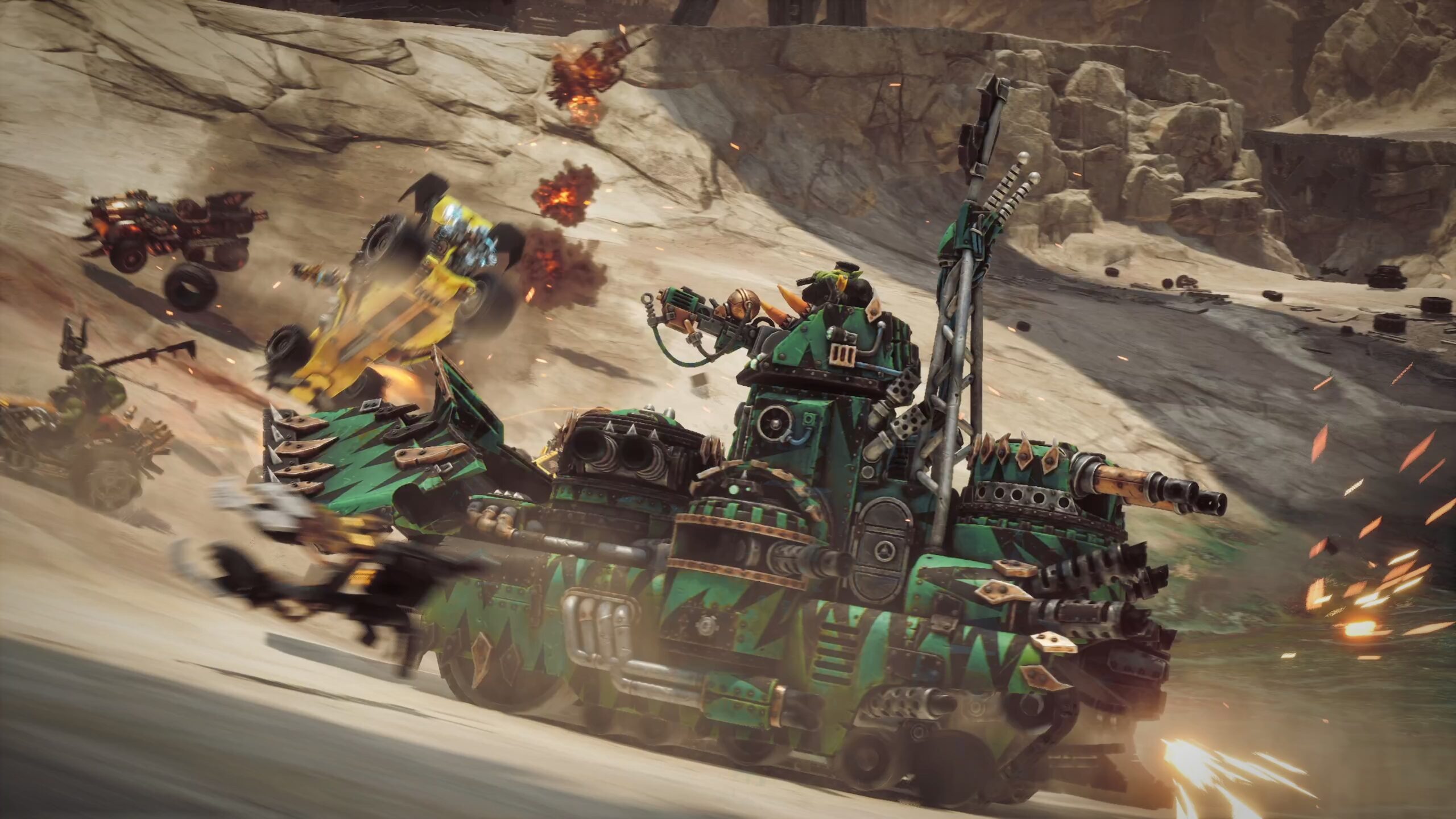
You’ll never find yourself shaving seconds off lap times, nor are you engaging in careful, tactical firefights. Instead, you are participating in a kind of vehicular brawl, where the goal is to move fast between ever-changing objectives or checkpoints, shoot constantly and overwhelm the enemy through sheer noise and aggression. It is an idea that suits the Orks perfectly, and once you get going, it works so naturally that I can’t believe this idea wasn’t done before.
The vehicles are the heart of the experience and actually offer highly varied gameplay. Each one has a distinct role which affects model and weapon loadout, and the differences between them are more pronounced than you might expect. Damage‑focused vehicles are built for raw “dakka”, spraying bullets, rockets and scrap‑firing contraptions in every direction. Support vehicles offer buffs, repairs and area‑control abilities, often through bizarre contraptions that look like they should explode the moment they activate.
Tankier vehicles are slower but capable of absorbing enormous punishment, acting as battering rams that can break enemy lines or hold objectives under heavy fire, albeit at the cost of much slower movement and occasionally limited firing arcs. The variety is not enormous, but each vehicle feels considerably different, and learning their strengths and weaknesses is part of Warhammer 40,000: Speed Freeks long‑term appeal.
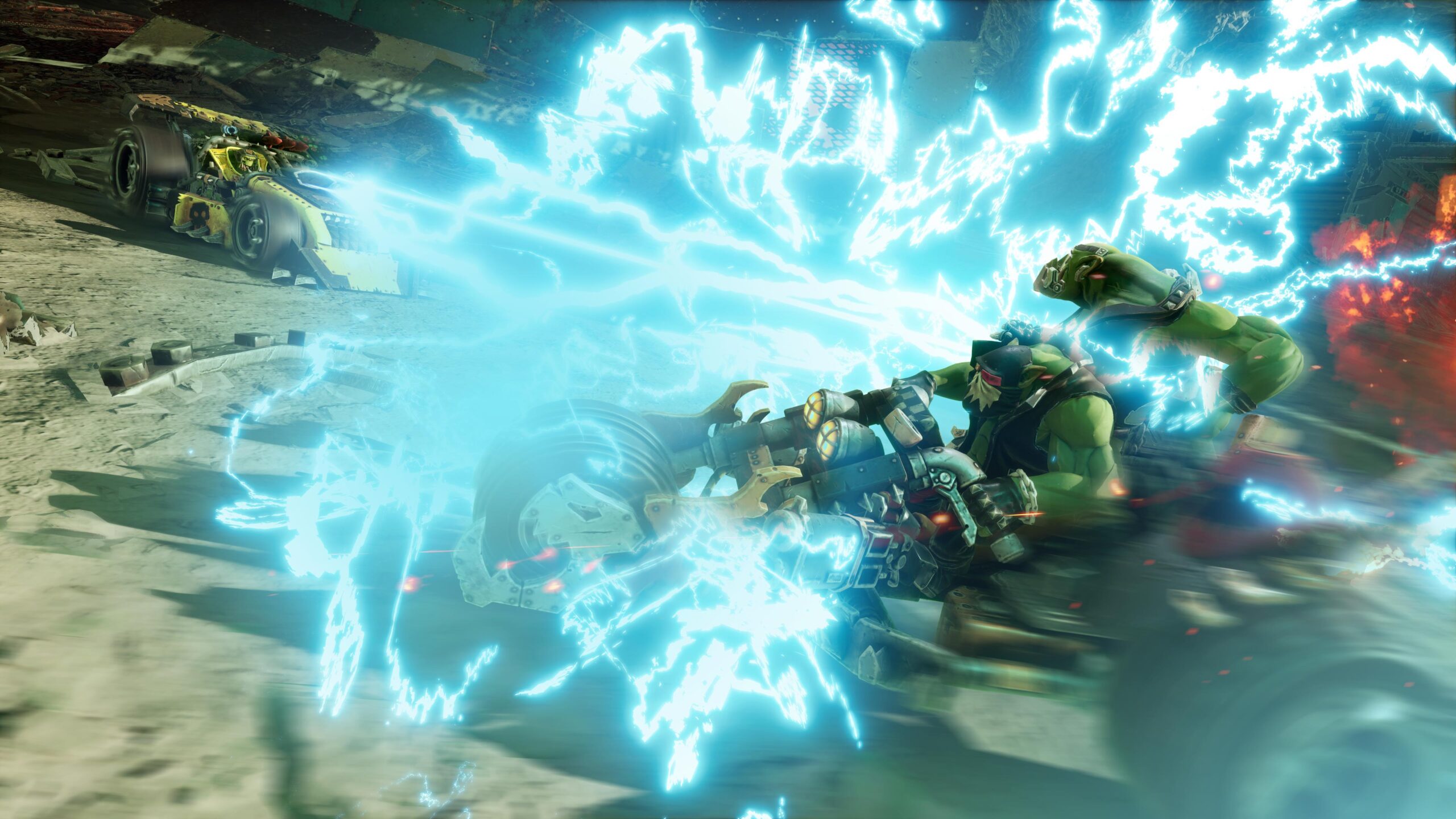
Handling is arcadey and loose, but pleasingly predictable, making it one of Warhammer 40,000: Speed Freeks defining characteristics. Vehicles skid, bounce and fishtail with exaggerated physics that underpin the chaos rather than enabling precision. Warhammer 40,000: Speed Freeks is not a game where players carefully brake into corners and optimise racing lines. Rather, you boost constantly, drift wildly and use the environment as a playground. Ramps, half‑pipes, vertical drops and boost pads are scattered across every map, encouraging players to stay airborne, maintain speed and throw themselves into danger. When the game flows well, it creates a sense of momentum that few vehicular combat games manage to achieve. You are always moving, always firing and always reacting to the unpredictable behaviour of both your vehicle and your opponents.
Combat is absolutely chaotic. Weapons have a satisfying weight, with chunky sound effects and exaggerated visual feedback that make every shot feel well-weighted and correct. The Orks’ ramshackle aesthetic is captured perfectly in the weapon designs: guns rattle, rockets wobble in flight and explosions feel like they were assembled by a Mek who values volume over structural integrity. The sound design is one of Warhammer 40,000: Speed Freeks strongest elements, as engines roar, metal screeches and bullets patter continuously.
The Xbox version looks good and performs well, with stable framerates and crisp visuals that highlight the open environments. The maps are large, multi‑layered and filled with hazards, shortcuts and verticality. They are designed to encourage constant movement, and they succeed in doing so by having checkpoints appear all over them. There are few safe spaces, and even fewer moments where you can slow down without being punished, and despite the size of the maps, the game engine does a fantastic job of keeping the players grouped together.
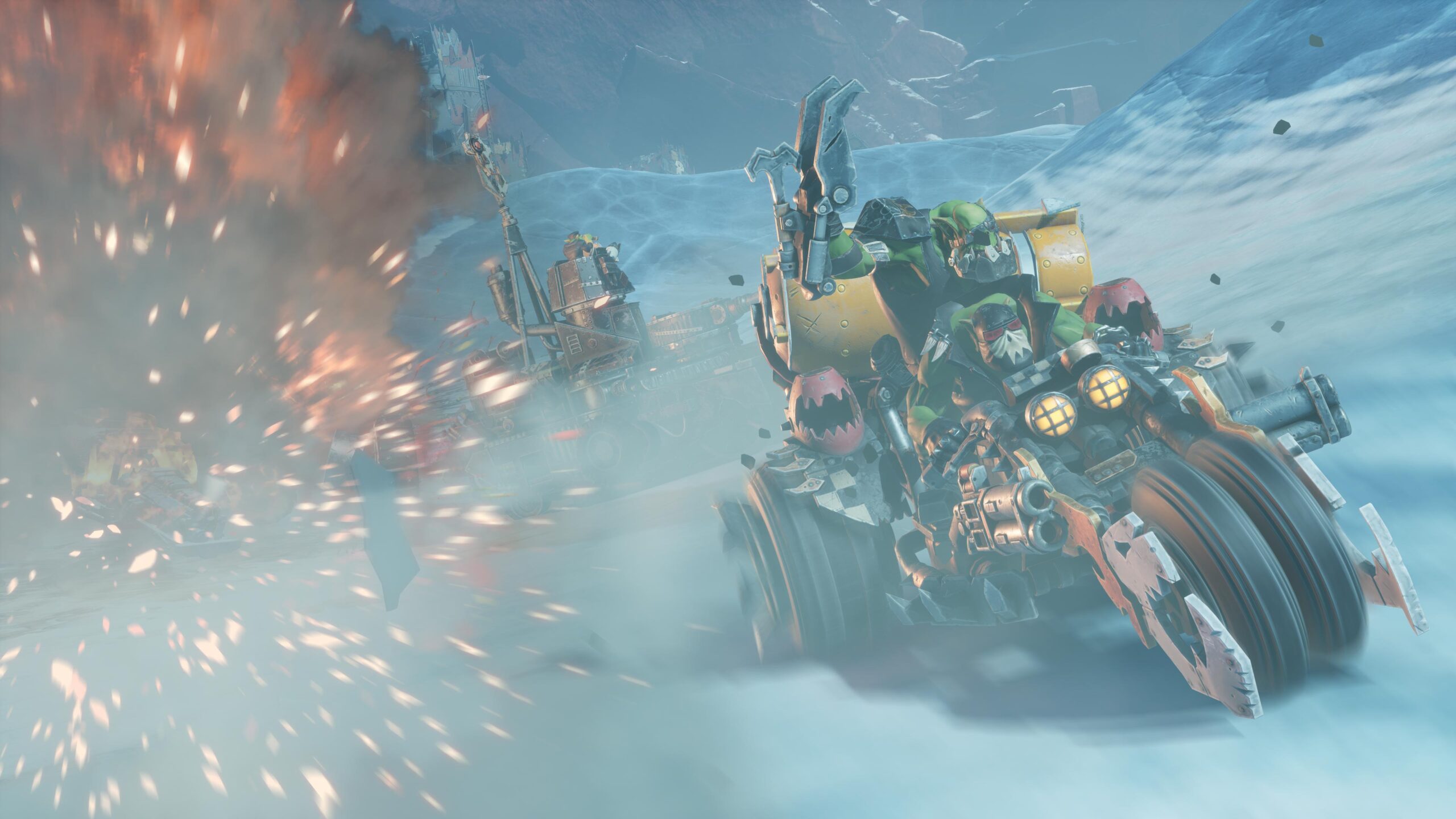
Warhammer 40,000: Speed Freeks’s visual style leans heavily into the Orks’ love of scrap metal, graffiti and improvised engineering, and the result is a world that feels appropriately messy. Nothing about Warhammer 40,000: Speed Freeks is clean or elegant, but it is not meant to be, and any Warhammer player with a love for Orks will recognise their distinct style in almost every feature.
Warhammer 40,000: Speed Freeks structure revolves around two objective‑based and strictly multiplayer modes. These include a checkpoint based “race” where points are awarded for reaching the designated area, and then a bomb-run mode where the two opposing teams collect a bomb, race it towards an opposing Titan Mek and try to blow it up. The objectives are simple, but the chaos of the gameplay makes them feel really dynamic.
A bomb run can turn into a desperate chase, with vehicles boosting, crashing and exploding in a chain reaction of metal and fire, or it can be a tense back and forth as the bomb changes hands several times as each successive carrier gets destroyed in a certain choke point. The “proper” races often devolve into swirling brawls where vehicles collide repeatedly, spraying bullets and flames in every direction whilst just a handful of players focus on the checkpoints. Warhammer 40,000: Speed Freeks thrives in these moments, where the noise, speed and unpredictability combine into something genuinely exhilarating.
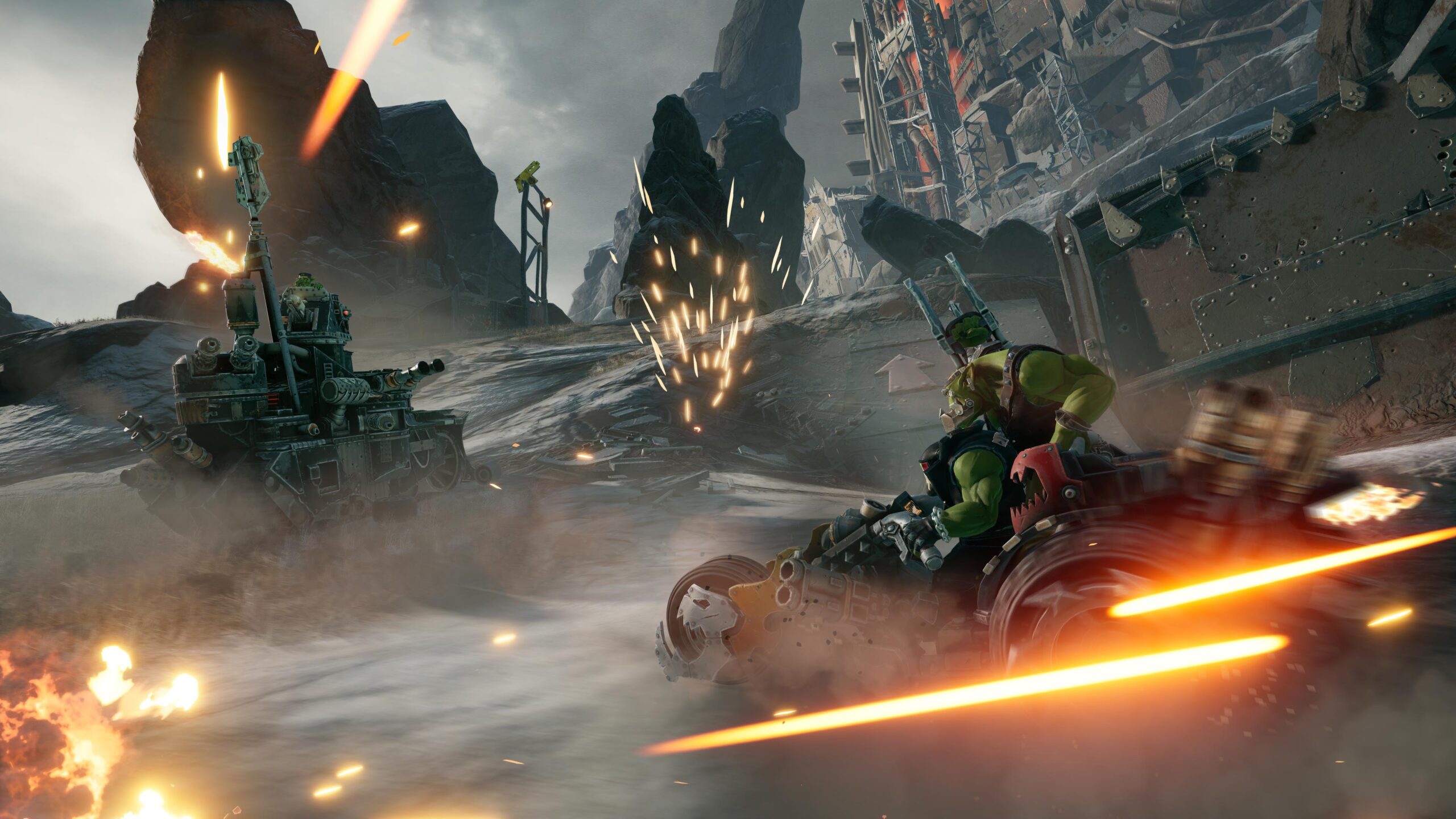
However, Warhammer 40,000: Speed Freeks simplicity is also one of its limitations. While the core loop is entertaining, the long‑term depth is modest. Vehicles have upgrade paths and customisation options, but these are relatively shallow compared to other multiplayer titles. The maps and modes, while fun, are limited in variety, and the chaotic physics can sometimes undermine competitive play. There are moments where a single collision or unpredictable bounce can determine the outcome of an encounter, and while this fits the theme, it can be frustrating for players seeking consistency.
There’s no single player mode beyond a basic tutorial, and Warhammer 40,000: Speed Freeks is clearly designed for team play, which is where it shines. Coordinated pushes, combined firepower and strategic use of support abilities can turn the tide of a match. This is harder to achieve on Xbox and certainly in the limited time I’ve spent with it, but you can see hints of greatness there when it all comes together.
Despite a few limitations then, Speed Freeks succeeds because it embraces its identity fully. It is a game built around Orkish philosophy: go fast, make noise, cause destruction and never stop moving. It captures the humour, energy and brutality of the faction with remarkable accuracy. It’s a shame that there isn’t some form of campaign for solo players (even if a short one) and perhaps that there aren’t a few more or well-rounded modes of play. That said, what’s here is polished to a mirror shine and unlike most things Orkish, focusses on quality not quantity.
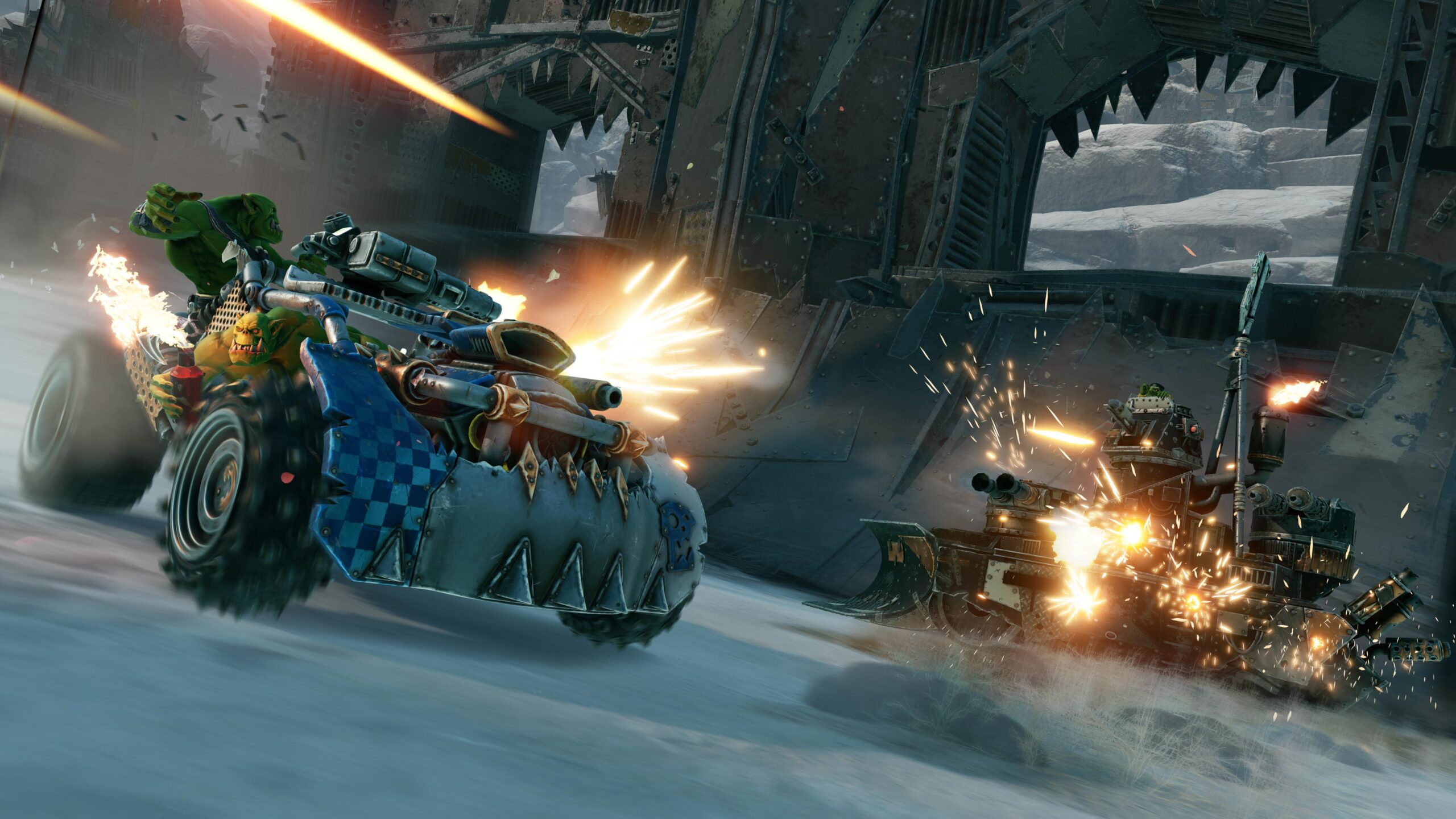
On Xbox, Warhammer 40,000: Speed Freeks feels polished and responsive. The controls are intuitive, the performance is stable and the presentation is strong. The exaggerated physics and chaotic combat translate well to a controller, and the fast pace suits the platform’s strengths for pick up and play experience. Warhammer 40,000: Speed Freeks is a game that feels at home on a console, where quick matches, loud action and immediate feedback are key.
In the end, Warhammer 40,000: Speed Freeks is not a deep or complex game, but it is an honest one. It delivers exactly what it promises: fast, messy and joyful vehicular mayhem. It is a multiplayer brawler disguised as a racing game, built for players who want noise, spectacle and constant madcap fun. It’s probably not for everyone, but for those who appreciate the Orks’ unique brand of chaos, it is a wildly entertaining experience and one that I will enjoy for some time after this review is written.
Warhammer 40,000: Speed Freeks is available now for PC, as well as PlayStation and Xbox consoles.
