

Wispwood, published by Czech Games Edition and designed with that unmistakable CGE blend of charm and cleverness, is a family‑weight game that is both whimsical and strategic. It’s a design that looks approachable thanks to friendly artwork, a magical woodland theme and cute cat tokens, but once you start playing, you realise there’s a thoughtful puzzle beating underneath.
At its heart, Wispwood is a game about collecting wisps of various colours and placing them throughout a forest filled with tricky placement rules and conflicting scoring opportunities. Each turn, players choose a wisp from the communal, and then select one of the two shapes at either side of it. The wisp, along with forest tiles (which are just face down wisps) must then be placed into your personal forest grid in the shape that matches the one you chose. This might be a straight line of four, a dogleg of three or four, etc and the total size of your forest grid must be respected (but increases in size round by round).
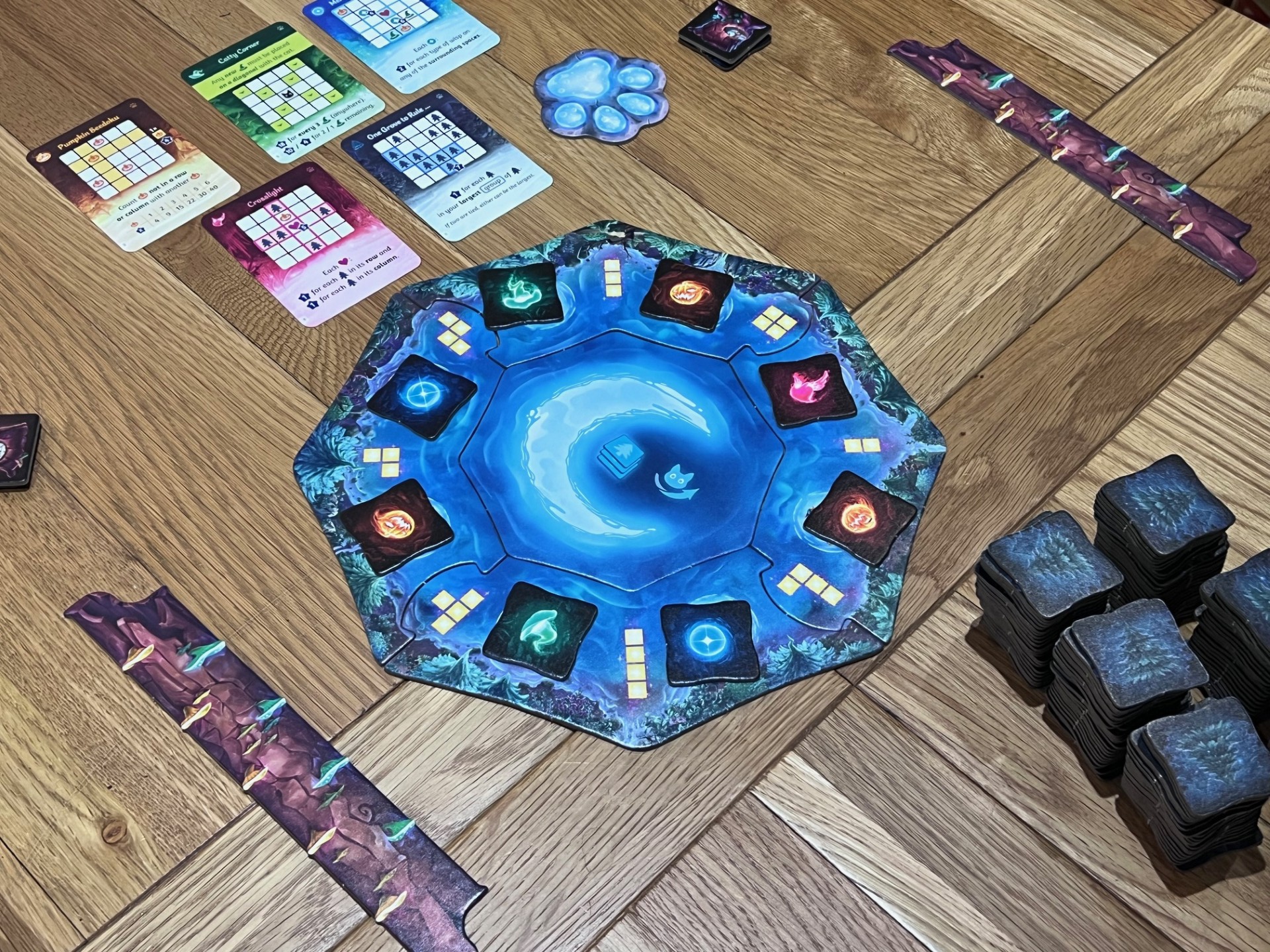
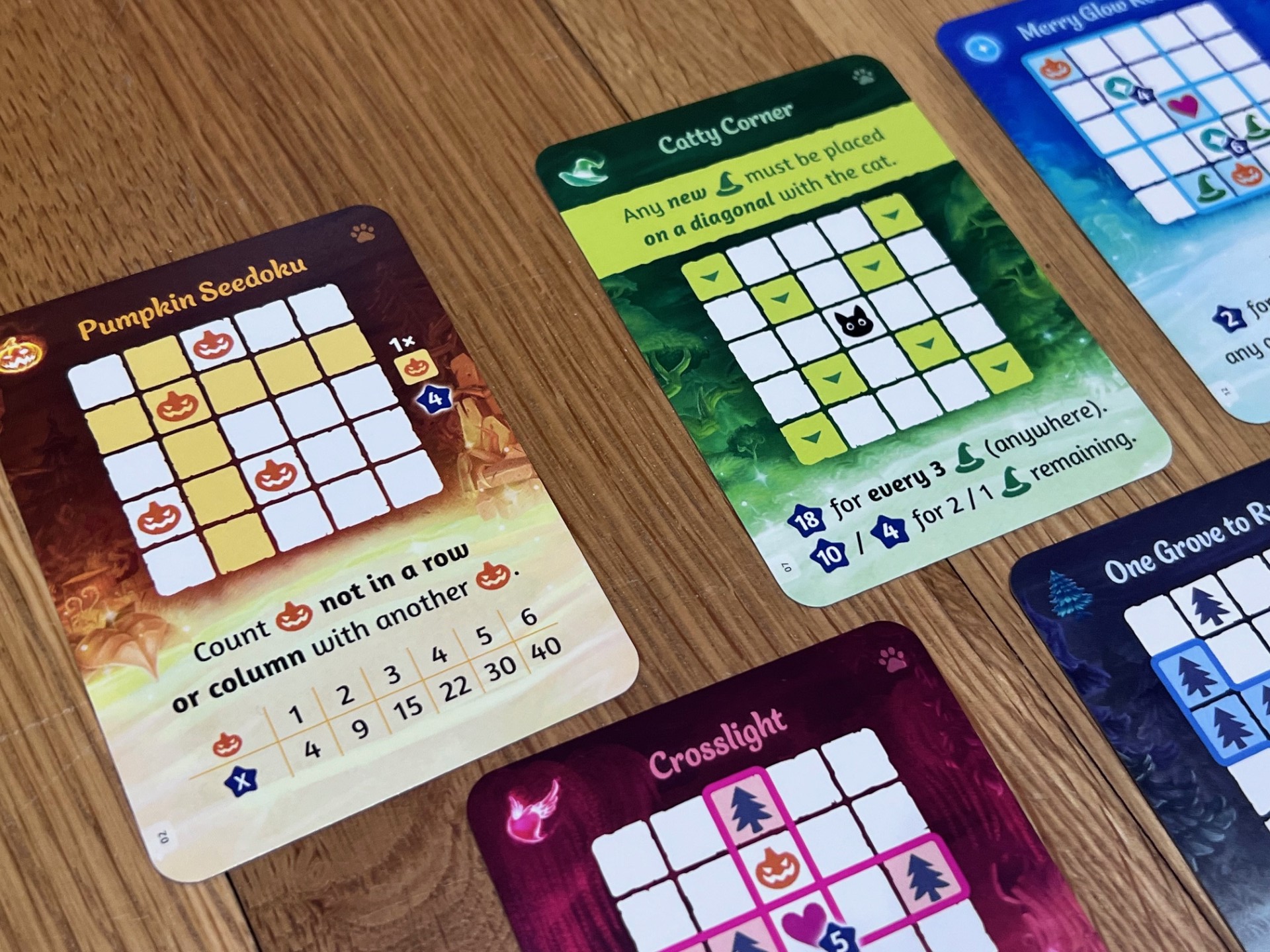
But why are you doing this? Well that depends on the scoring cards in play. There are five different types of wisp and each comes with a deck of about five or six cards. You’ll choose a card representing each wisp to articulate how it will score in the current game, and sometimes you’ll want wisps to be on their own, other times in spaces adjacent to others, and sometimes they need to be the only wisp of their type in a row or column. There’s loads of variety among the scoring conditions and some are a bit complicated, but with a difficulty “paw” in the top corner of each, you can tailor your game for any audience.
What makes Wispwood interesting, aside from your own forest and the way it scores, is the choice at the central pool. You may want a certain wisp, but not the two tile placement configurations next to it — but you have to choose! This tension is the beating heart of Wispwood: every turn feels like a small puzzle where you’re weighing immediate gain against the long term planning of your forest. It’s intuitive enough for children to grasp, but there’s a surprising amount of nuance in how you plan your route through the forest.
If you really are stuck, or if the options available to you are simply unpalatable, you can do a kind of refresh turn — where instead of taking a wisp and then building a shape with forest tiles, you simply take a single tile (to fill a gap) and then flip your cat token to allow other mildly rule-breaking effects. Games like this tend to fall flat for me if there’s no way to drive your own choices, and I’m glad that Wispwood provides players with flexibility here.
One of the standout features of Wispwood is those scoring cards that I’ve already mentioned. Rather than offering a single static setup, the game includes practically unlimited options that dramatically change the way wisps score. This scoring (or scenario) variety gives Wispwood excellent replayability. Each new setup feels like a fresh challenge, and the game encourages you to experiment with different approaches rather than settling into a single dominant strategy (because frankly, what works in one game won’t always work in the next.)
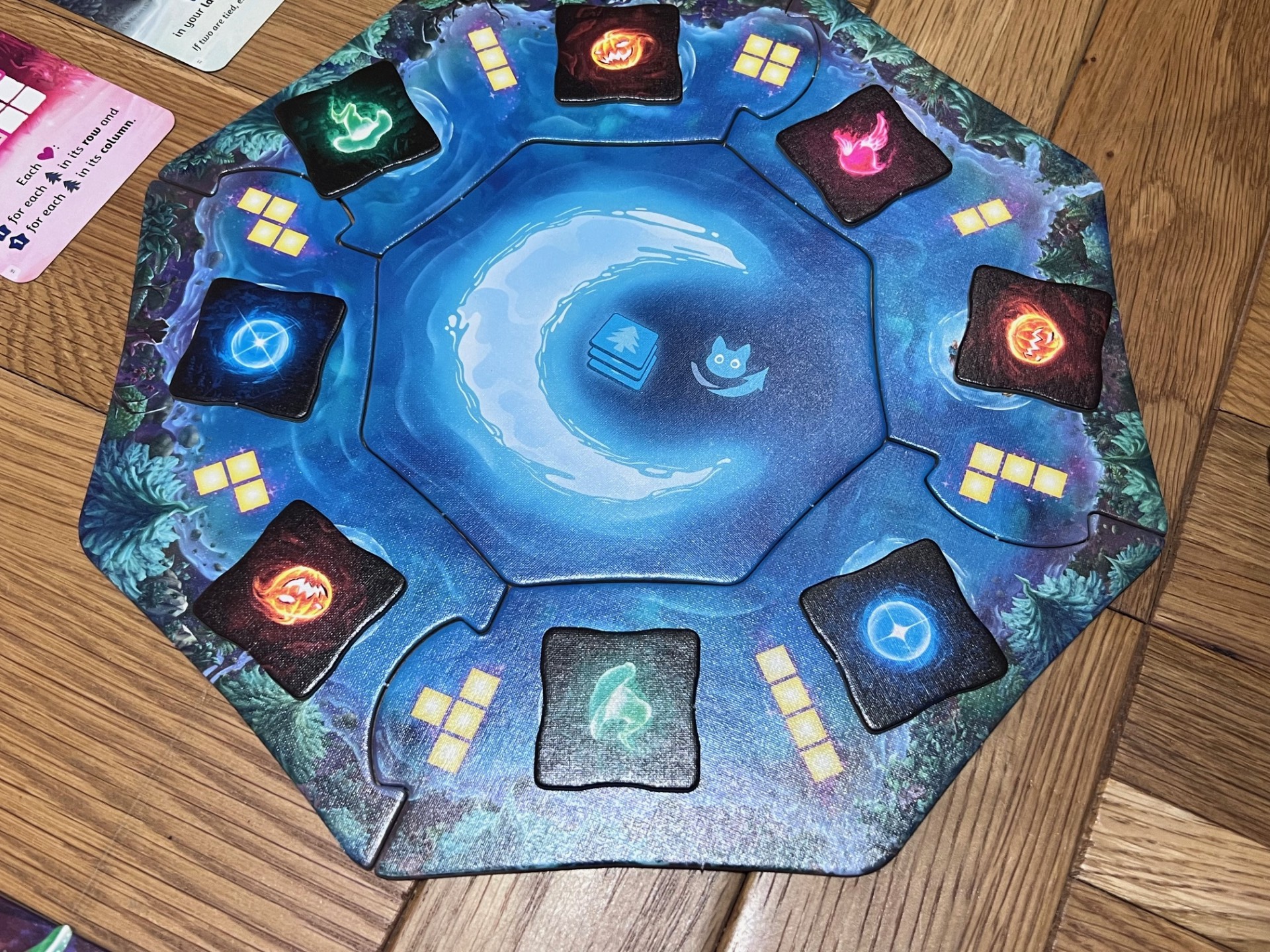
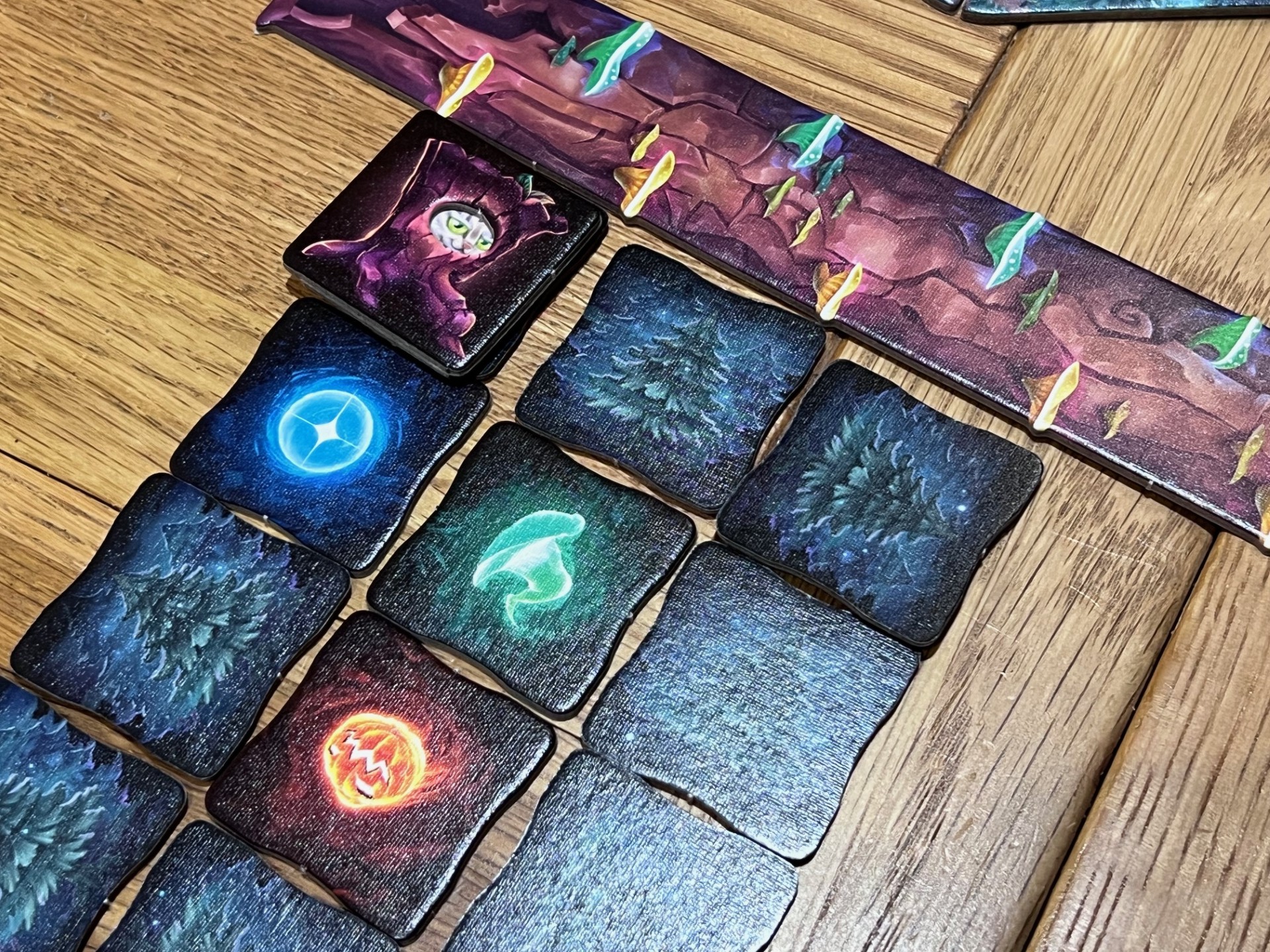
Production‑wise, CGE has done a lovely job of balancing production nicety with retail price. The components are good quality, tactile and inviting, with a visual style that perfectly matches the game’s tone. The tokens are satisfying to handle, and the overall presentation makes the game feel warm and approachable, though I do wish that the face down forest tiles were a bit brighter as they spend more than half the game face down and are quite dark. I also wish CGE had included a draw bag of some kind, as that would easily resolve the many piles of tiles that have to be sorted and placed face down during setup.
What I appreciate most about Wispwood is how it balances accessibility with depth. It’s easy to teach, quick to play, and friendly enough for children, yet it offers enough strategic texture to keep adults engaged. The selection puzzle is consistently interesting and there’s a real crunch to the timing of when the market refreshes, whilst the scoring variety ensures that no two games feel quite the same. It’s a design that understands how to create meaningful decisions without overwhelming players.
If you enjoy family‑friendly strategy games with a gentle learning curve and a surprising amount of replay value, Wispwood is an easy recommendation. It’s charming, clever, and nicely replayable — a magical little forest that invites you back again and again.
Wispwood is available now, including from Amazon
