

Middle Ages, designed by Marc André and published by Studio H, is a masterful blend of familiar mechanics and fresh presentation.
Supplied to us by Hachette UK, Middle Ages is the clear spiritual successor to Majesty: For the Realm, but with a tile-drafting mechanic that evokes Kingdomino. The result is a tight, competitive tableau builder that’s easy to teach, extremely satisfying to play, and visually stunning.
Let’s start with the artwork, because it’s impossible not to. Claire Conan’s illustrations are exceptional — each tile a miniature scene of medieval life, rendered with warmth, detail, and a painterly charm. Printed on the thick, interlocking tiles, you’ll find festivals, weddings, feasts, markets, and more, each one telling a story and giving your fiefdom a sense of lived-in vibrancy.
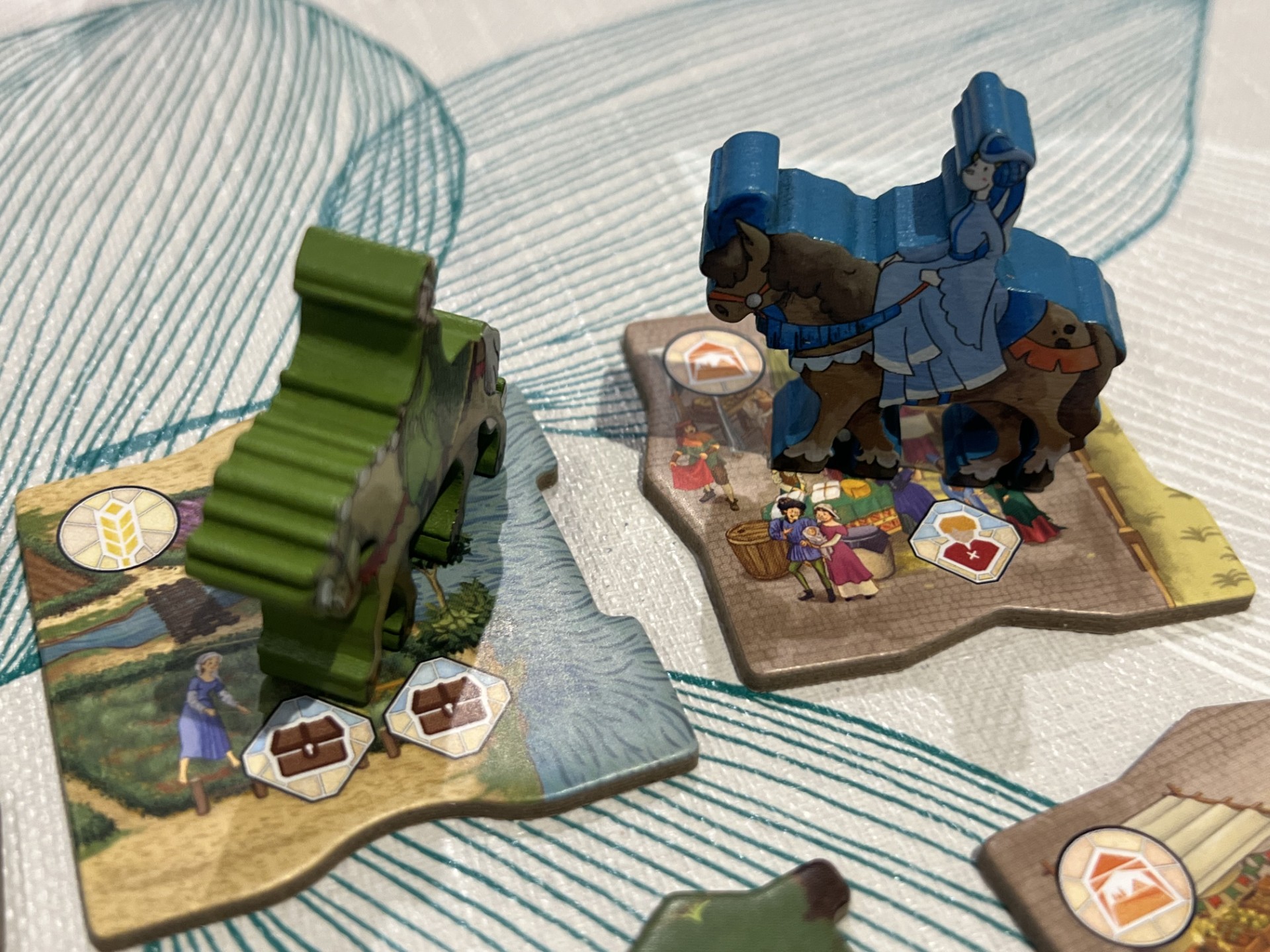
Whilst almost entirely cosmetic, these tiles elevate the game from abstract strategy to thematic immersion, creating conversations with my children that I never knew I’d be having. The colour palette is rich but restrained, and the iconography is clean and intuitive, making the game both beautiful and practical in a way that very few seem to manage.
Mechanically, Middle Ages is built around two interlocking systems: Tile drafting and tableau building. The drafting is handled via rows of visible tiles — with a minimum of two for the specific mechanics to work, and usually four for practical reasons, as long as you have the space. Players place their screen-printed wooden knight on a tile in the top row and this both determines which tile they will draft, and also the turn order for the next choice.
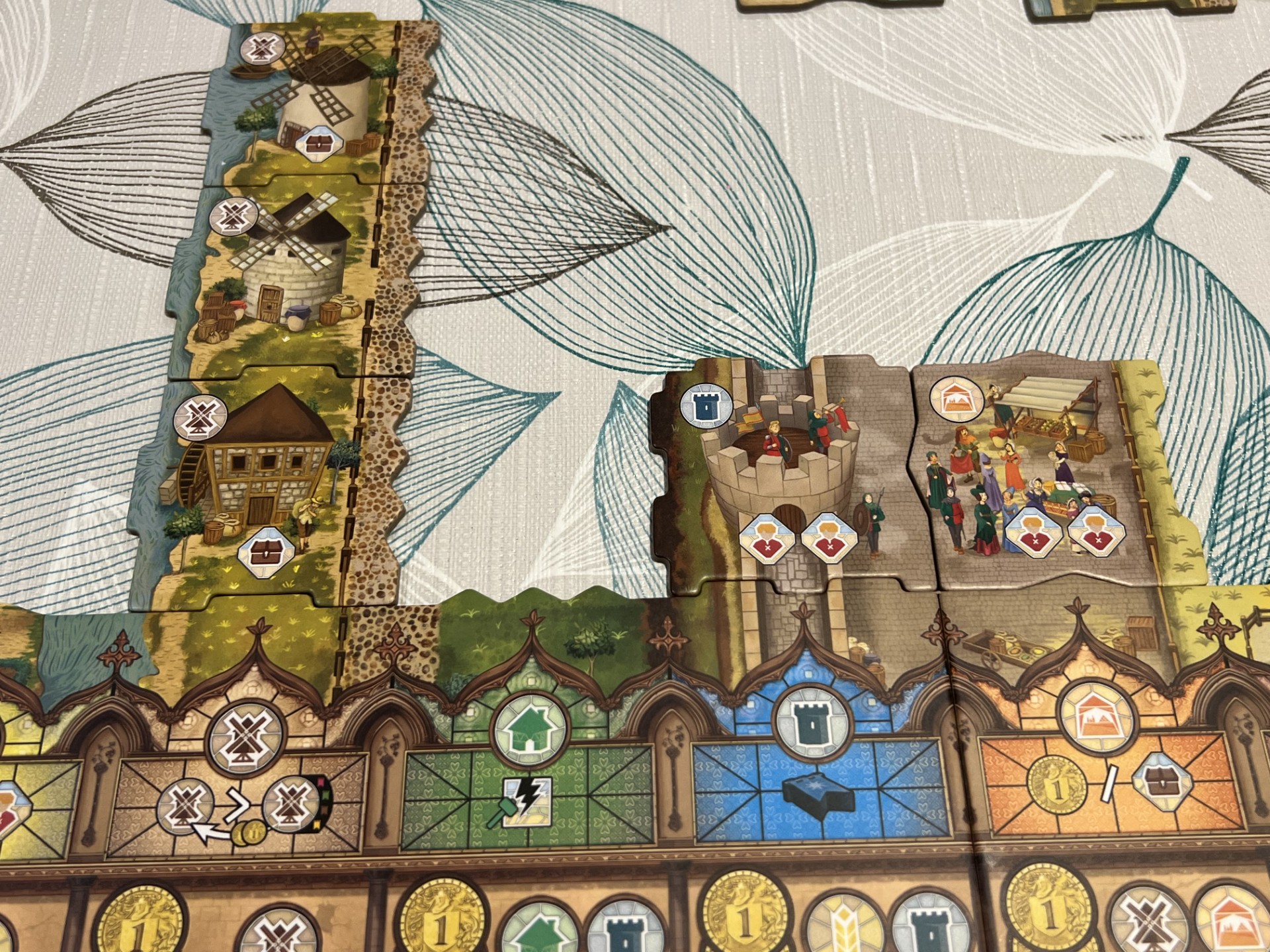
Tiles are arranged via the numbers on their back, with lower numbers to the left usually indicating a slightly lower power level. If you choose the leftmost tile then you will definitely choose first from the next row, but will you miss out on a stronger tile?
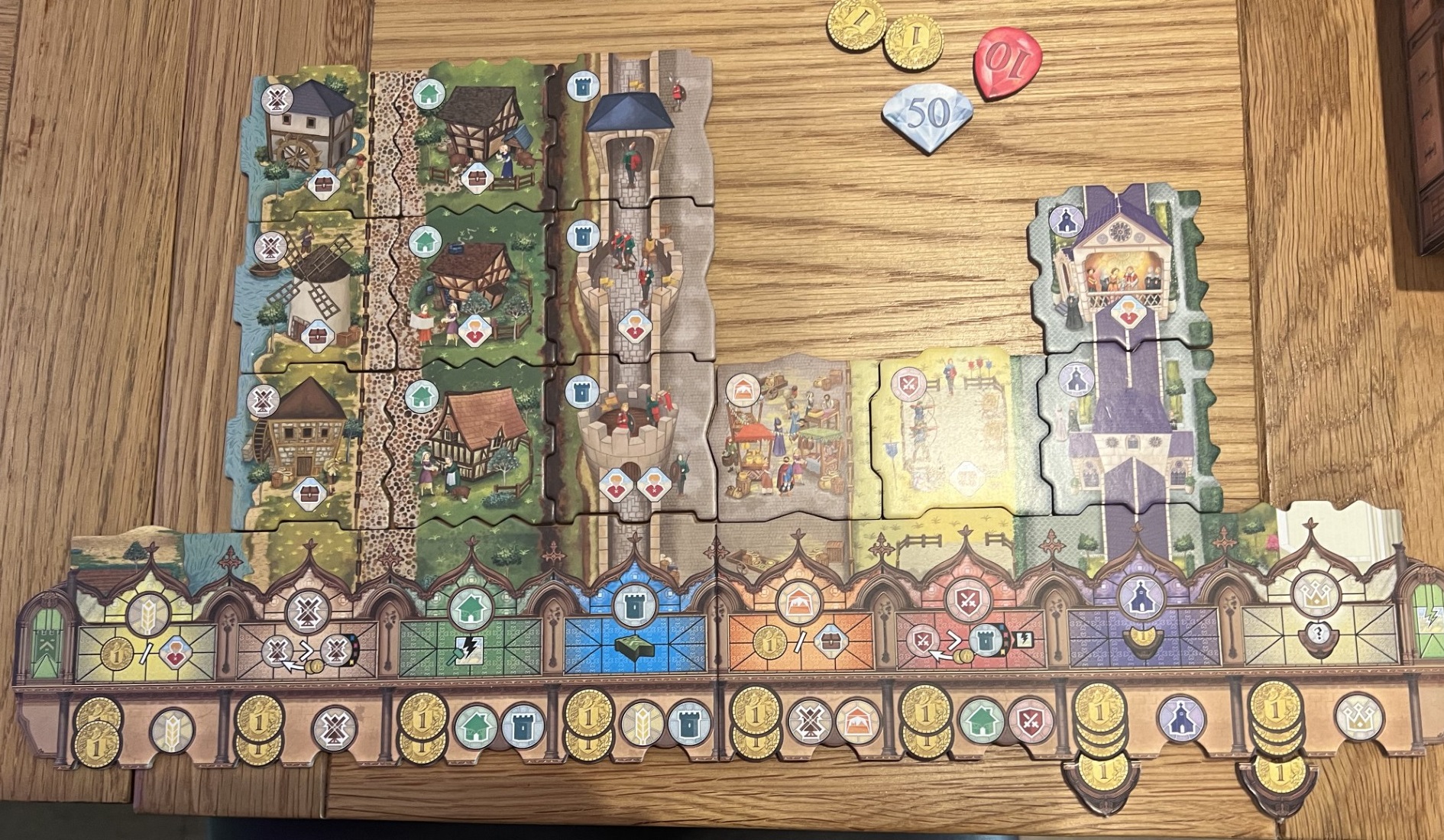
Once drafted, tiles are placed into your personal fiefdom — a grid of buildings and locations that trigger special effects and then generate income. This is where Middle Ages draws most directly from Majesty: For the Realm. Each tile type interacts with others, creating synergies and combo chains.
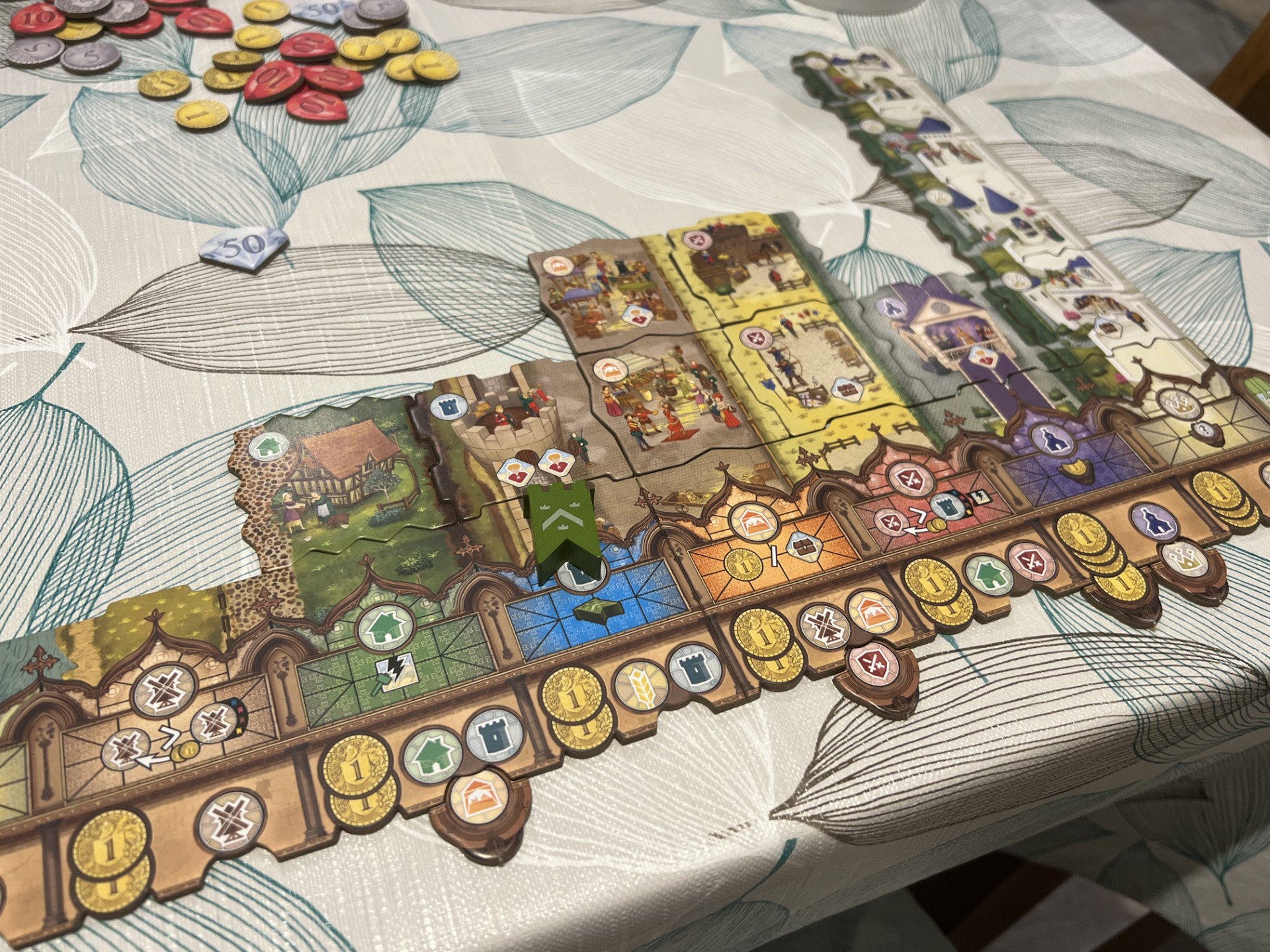
Each tile has both a special action and a way of generating income. Special actions themselves are often just an alternative form of income, with coins equating to points at the end of the game, and the most coins (points) determining the winner. Aside from the placement of a Scout which I’ve already explained, other special actions include those from the Church or Palace, which add additional scoring modifiers to other buildings, the Village, which allows a destroyed tile to be brought back, or the Barracks, which allows a player to take money from their neighbours and to destroy one of their buildings if they are not defended.
After a special action has been resolved, any building will generate income. This is usually based on a simple multiplication sum between the number of coins shown on the incoming tile type and the icons next to it. For example, Ramparts provide two coins for each Rampart and Village tile that you have (including the one you just placed).
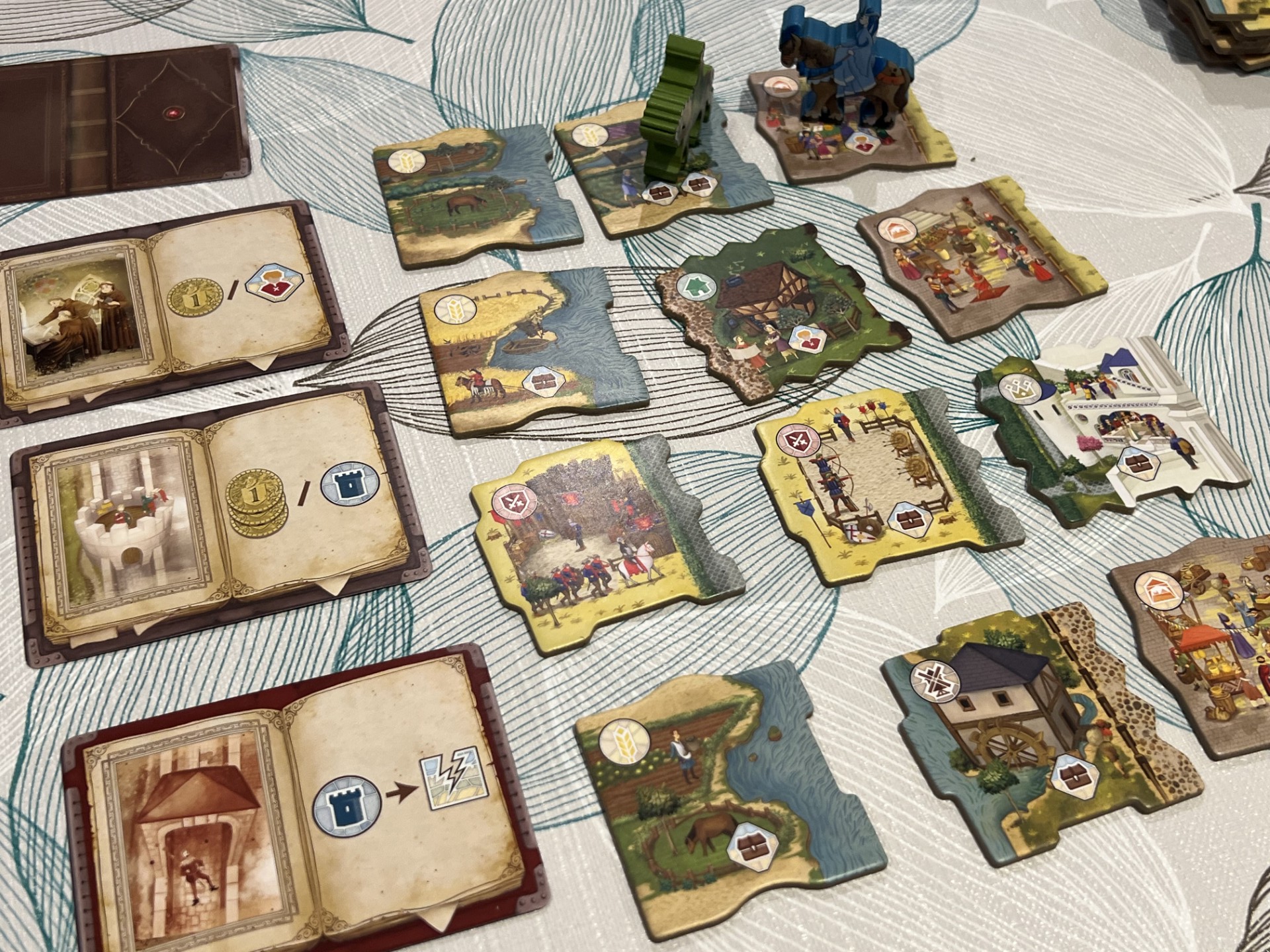
If you want to revisit our original thoughts on Majesty, https://bigbossbattle.com/review-majesty-for-the-realm/. What’s notable is how Middle Ages refines that formula to make improvements in almost every area. The drafting adds a layer of strategic tempo that wasn’t present in Majesty, and some of the tile abilities (like the Scout, or the Church and Palace) are the clear product of design iteration over the original game.
Middle Ages plays over sixteen rounds, with event cards triggering after every four rounds to shake up the flow. These events are simple but impactful, offering new scoring opportunities or disrupting established plans. They help break up the rhythm and keep players engaged, especially in longer games, and can certainly set the tone right from the outset of the game. For example, if you know that after round two you’re going to lose a Palace to a peasant revolt, will you still build one? Alternatively, perhaps you’ll take the chance to lean into Palaces whilst your opponents are being more wary.
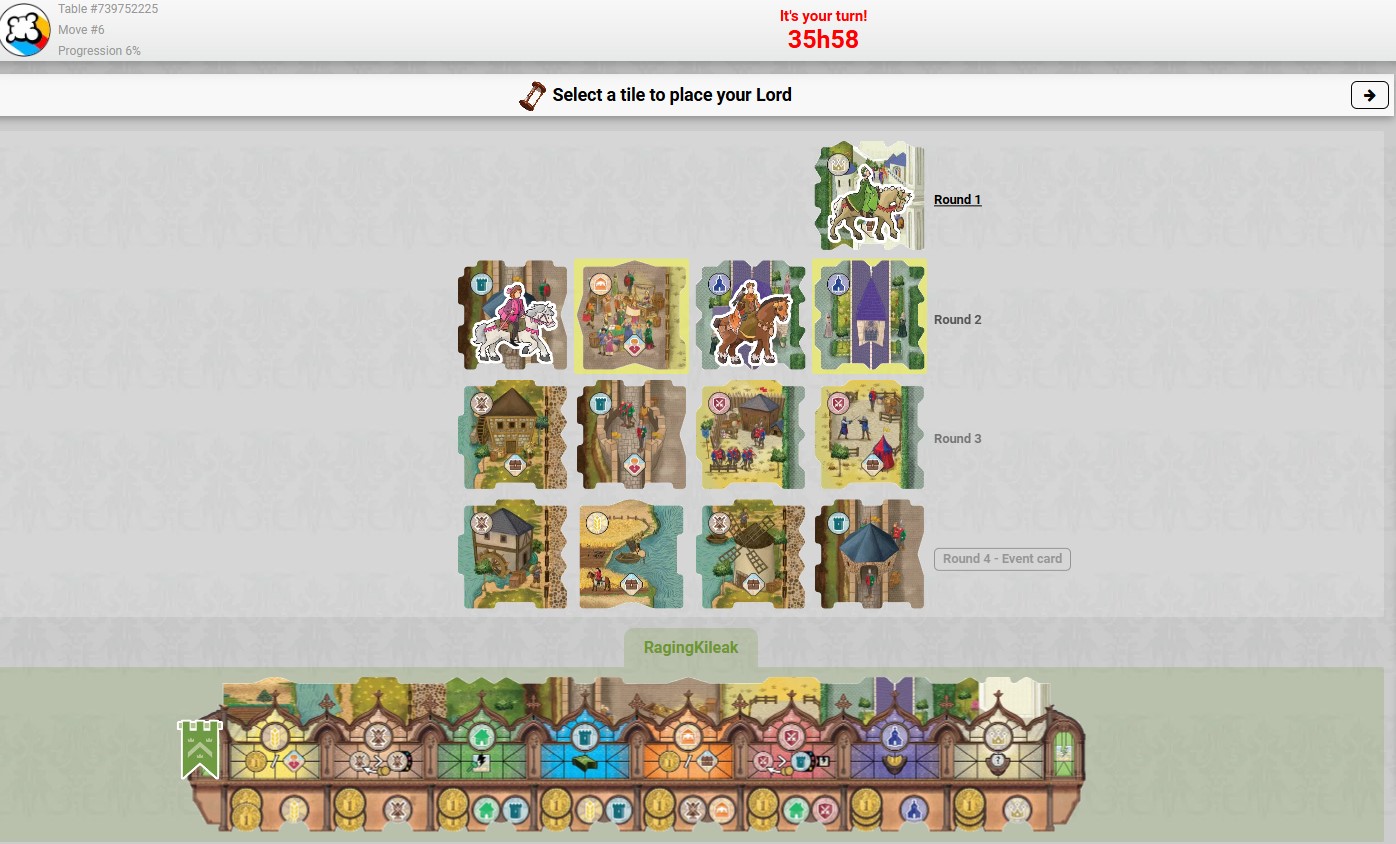
Middle Ages scales beautifully across all player counts because you’ll always present a row of tiles equal to player count plus one per round. In two-player games, the drafting is tight and tactical, with direct competition for key tiles. In larger games, the display becomes a bustling market, and turn order manipulation (plus use of Scouts) becomes even more critical.
For those who want to explore the game digitally, a fully featured implementation of Middle Ages is available on Board Game Arena. It’s a great way to learn the rules, test strategies, and appreciate the game’s pacing in a digital format. But make no mistake — the physical edition, with its screenprinted wooden pieces and gorgeous thick and beautifully illustrated tiles is the definitive way to play.
Middle Ages is a beautifully produced, mechanically refined tableau builder that honours its lineage while carving out its own identity. It’s quick to teach, satisfying to play, and visually stunning. Whether you’re a fan of Majesty, Kingdomino, or just looking for a game that blends charm with challenge, this is a fiefdom worth building — and one you’ll want to return to again and again.
Middle Ages is available now from Zatu Games.

