
Thousand Hells’ fantastic writing and conflict system have made it my favourite game of 2026

Whether you’re a fan of choice-driven narrative games, curious about heisting from a large quantity of hells, or have a deep love of A Sharp’s Glorantha-set King of Dragon Pass and Six Ages games, Thousand Hells definitely has you covered.
If, like me, you’re a massive fan of narrative titles that serenade you with choices and consequences, exist outside of our own laws of physics and don’t bother bogging you down with details and depth that simply isn’t relevant at that moment then Thousand Hells is for you. You take on the role of a hell heister, assembling a party of three other champions and setting off on a deadly quest into one of various hells on a deadly, myth-like fetch quest.
Described as “a tactical narrative game that blends Orpheus, Gilgamesh, and Ocean’s 11”, Thousand Hells operates in a world that isn’t A Sharp’s familiar territory, but has all the charm and god-meddling of it. Glorantha, Orlanth, Yelm and Ernalda are out, but many microgods and dozens of demons are in to replace them.
There is, at launch, four different hells and there are ten heists, however those can all be jumbled up, and while locations at each hell are often the same, the events that trigger aren’t, and the party members that you get to choose from aren’t either. A heist might challenge you to travel through a tunnel city, or cross a deadly lake, and if you have a savvy pickpocket or a sailor with you then you might just avert the issues that come with them. However, each character isn’t simply a job and a couple of traits; among each heister’s character sheet you’ll find negatives, odd traits that never seem to really crop up, and ill-fitting traits that don’t match the rest of their sheet.
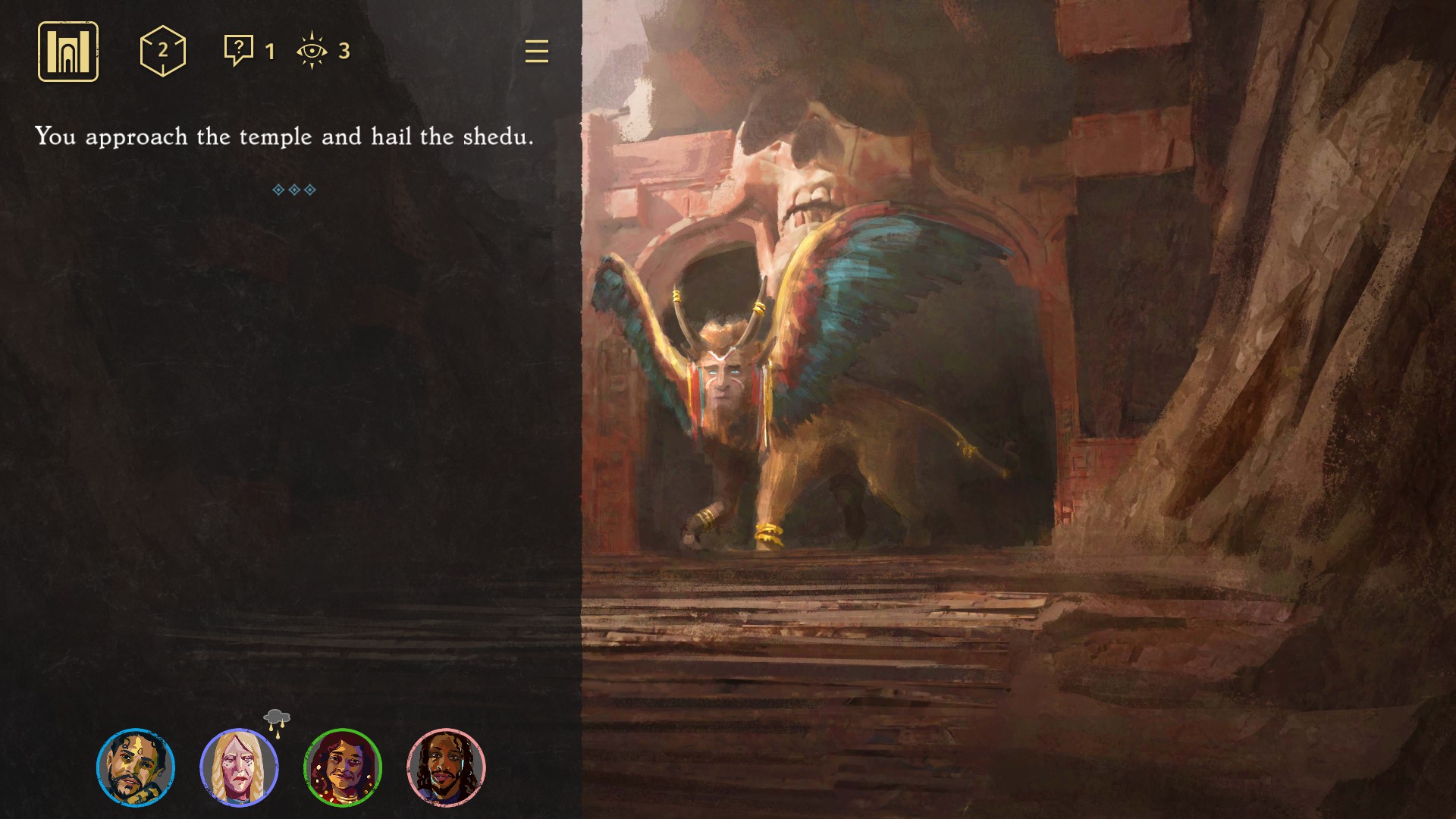
Got a warrior for your party ahead of your violent mission? Well, that’s all well and good, but do they have traits that back that up? If they don’t then they might not be useful at all; the reason for that is Thousand Hells’ conflict system.
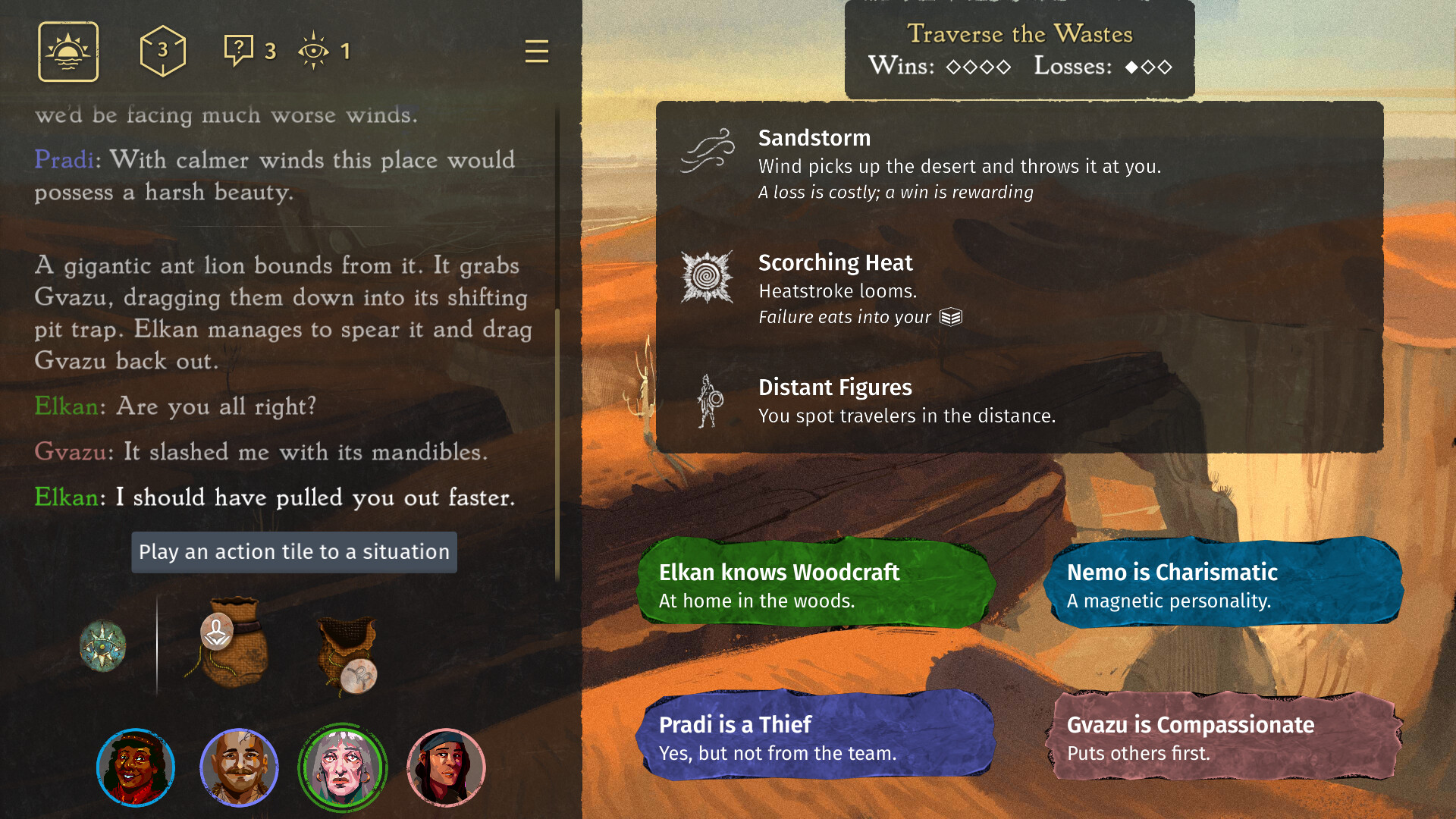
In Thousand Hells you don’t fight. Instead, every challenging problem requires a conflict resolution (similar to TTRPGS). In this case this is managed through drawing from trait bags. For each challenge (crossing a lake, navigating a maze, convincing a guard to let you past, etc) you’ll select one of your four heroes. Their traits are then ‘dropped in the bag’ and form a hidden draw pile while a selection of traits from your other characters then form a second bag. If you’ve collected any plot objects then they’ll form a third pile. You then draw four tiles from across the bags and match them to a series of obstacles, and you keep doing this (replacing used tiles between) until you accrue either four wins or three losses.
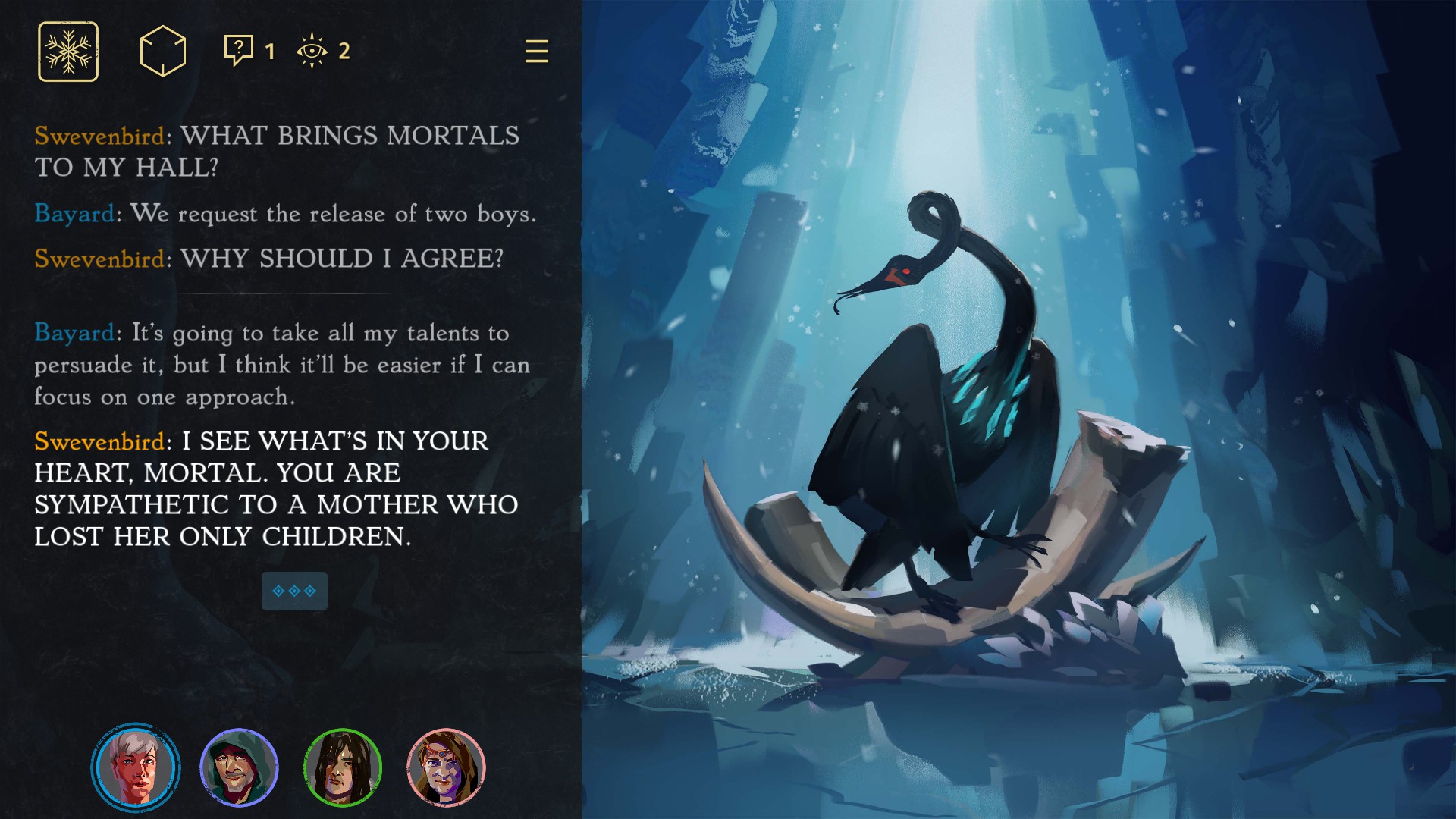
Sometimes you’ll draw a critical, or urgent challenge, which will change the order that you need to complete them in, and sometimes there’ll be some that only come in because of your previous successes and losses, however, this system works for everything from deadly duels through to market negotiations.
Here, three is the magic number. Three fails and you’ll fail the task, although that often doesn’t mean death, only a handicap; Three mental injuries and your character will break, leaving the party (or, if they’re your leader, losing the heist); Three physical injuries and the character will succumb to them, or, if they’re your leader you’ll lose instantly. As such, you’ll want to rotate between your characters, but most importantly you’ll want a group of specialist heroes who can work in alternation through challenges. That’s what I alluded to earlier, the characters should have at least three or four traits that can defeat a challenge that they’re a good fit for – maybe your sailor is a strong, brave brawler as well… just make sure they’re not also afraid of the water.
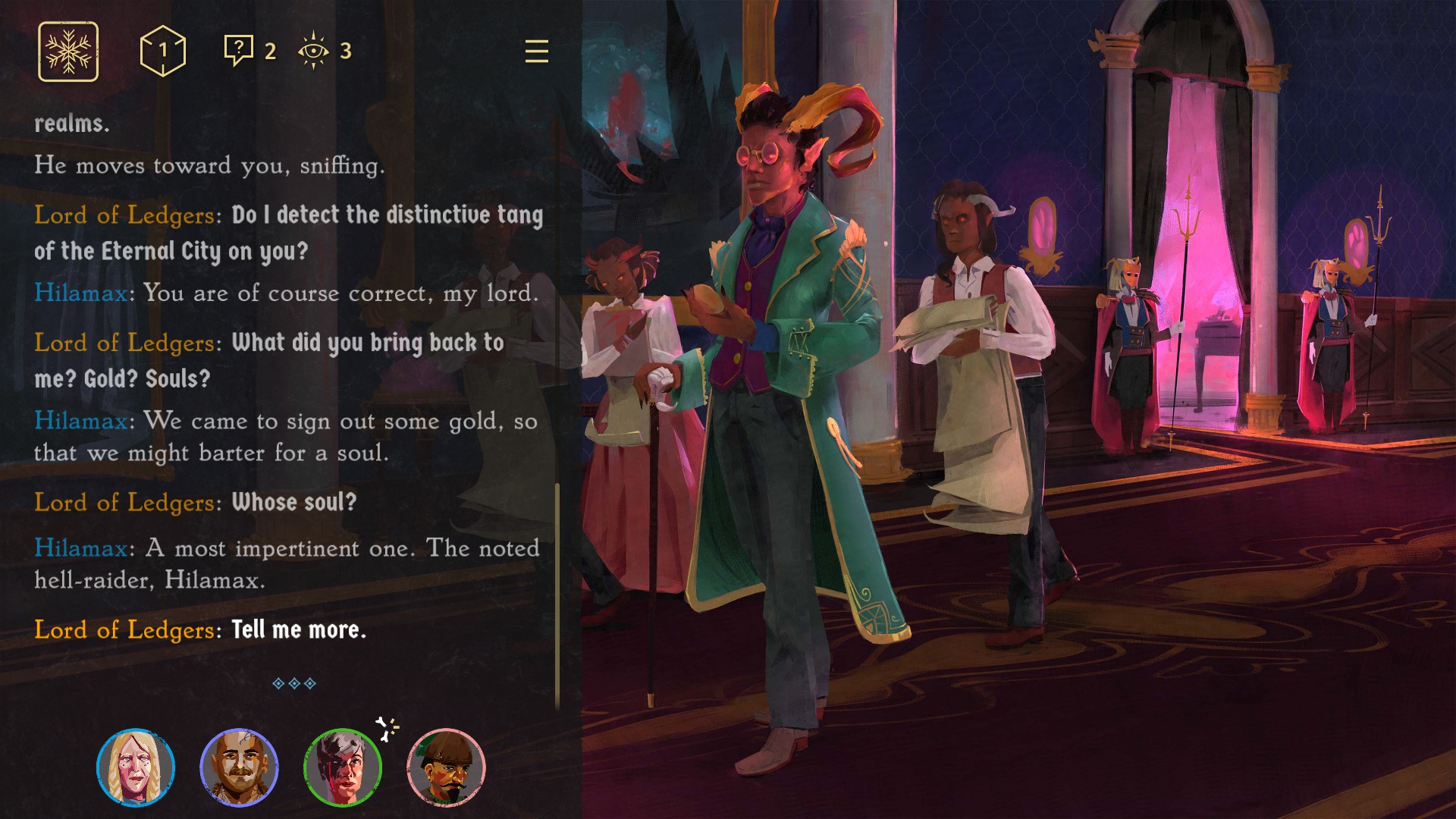
There are a few other mechanics that really make Thousand Hells sing, and several of them are essentially a ret-con ability. I absolutey adore this idea, that you can say ‘Wait, I prayed to this god before I left’ or ‘Ah – but I have this magical inflatable boat!’ to shift up the narrative, and even though they are a finite resource, the way that they are written makes them genuinely exciting to use. This isn’t a situation where you finish the game with them all intact, you’ll feel like a fool if you don’t use them, and you’ll feel clever when you do.
There’s also insight, which is – at present – a little bit poorly explained (as is the maths behind the conflict system), but is a real gamechanger once you get used to it. As you can imagine, a challenge such as ‘Sandstorm – Wind picks up the desert and throws it at you’ likely calls for stubbornness, survival skills or some degree of determination… but, what happens when you use the Lucky, or Afraid of Water trait on it? Well, there’s an odds system behind the scenes that allocates a success chance to each trait and challenge combination, and Insight allows you to click around the different challenges and see how certain traits would perform. If you use this intelligently then you can effectively guarantee three successes, with the right traits in your pile.
Anyway, if mechanics are the bones then Thousand Hells’ skin is amazing. The writing is – as you might expect from A Sharp – compelling, sharp and expertly composed. For me, an RPG is only as good as the characters and the dialogue, and here you can see the character’s traits in how they talk and act… bring along a shaman and you’ll get regular lessons on your journey, bring along a sailor and they’ll chip in with comments that remind you that they’re a sailor throughout your heist. Some of my favourite companions have been the stupid warriors, or the adventurer who is doing their final heist before retirement – their little quips and comments are often really funny and juxtapose the seriousness that accompanies a dive into hell.
Thousand Hells is almost certainly my favourite game of the year so far, and even in the narrative-led space that’s against incredibly tough competition. Incredibly writing and unconventional (but familiar) mechanics make it both stand out and very replayable, and I’m hoping that maybe… just maybe… we get a couple more hells in time.
Thousand Hells is available now for PC.
