

Reactor Rescue is coming to Kickstarter on 21st April. You can see the holding page (or back the game) by clicking going to the Kickstarter preview page.
Here at B3, we love to support upcoming Kickstarter projects — especially when they do something we’ve never seen before. Reactor Rescue (from Fiona Shehu Lohaj, Arta Shehu Zaimi and HaPe International) is one of the most unusual and ambitious family‑weight strategy games that I’ve seen in years, with a hook that is so simple you’ll kick yourself for not having invented it yourself. Reactor Rescue is a game where you actually build real, functioning electronic circuits as part of your turn, learning lessons and witnessing the tangible effects of electricity in action.
That hook alone sets it apart from almost anything else in the tabletop space, with perhaps Forbidden Sky being the only exception I can think of. What makes Reactor Rescue particularly interesting is how it tries to merge a competitive race game (where players must complete circuits to repair their space ship) with a hands-on STEM toolkit that uses Labbox’s modular electronic blocks to turn each round into a miniature engineering challenge.
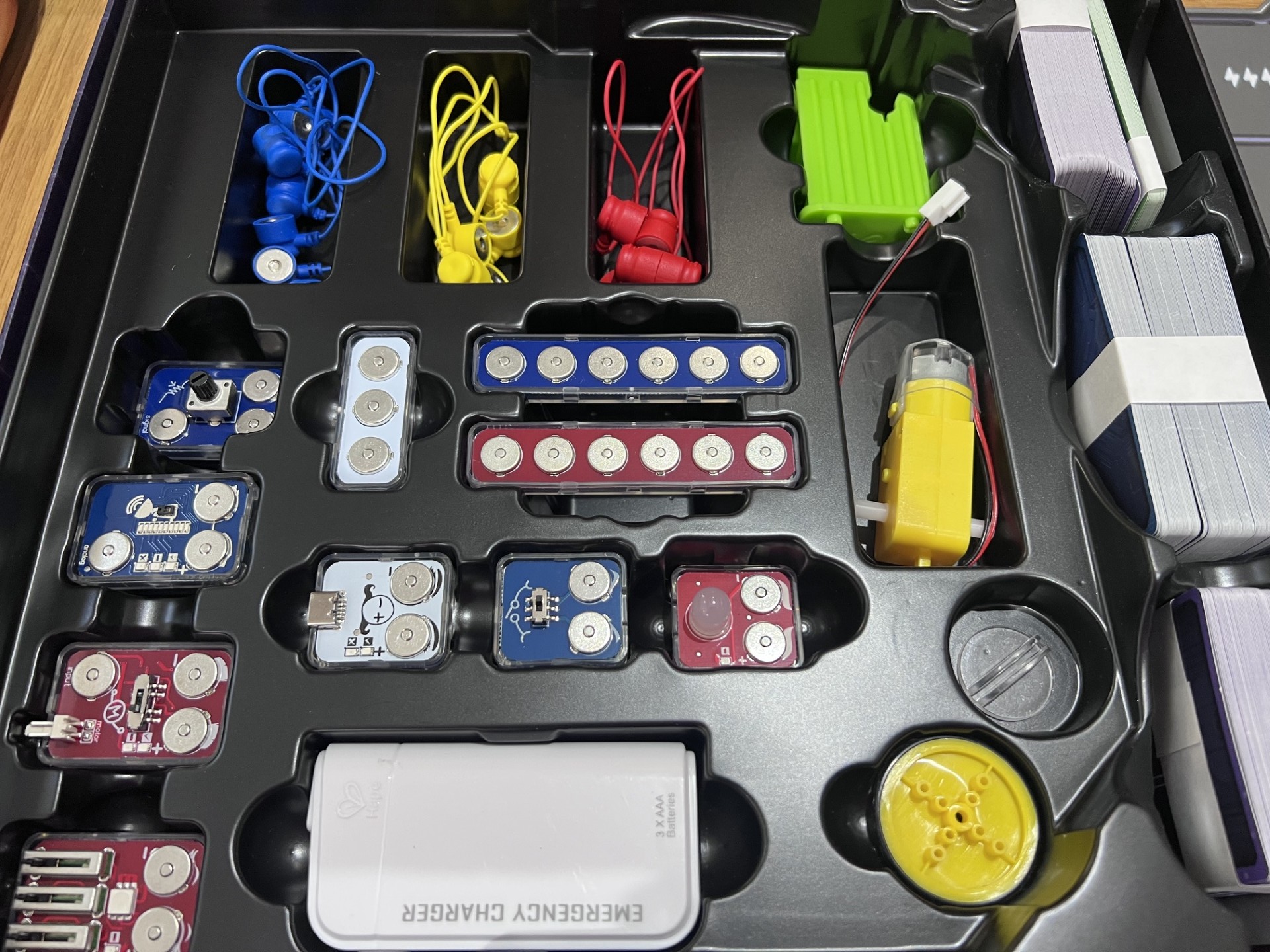
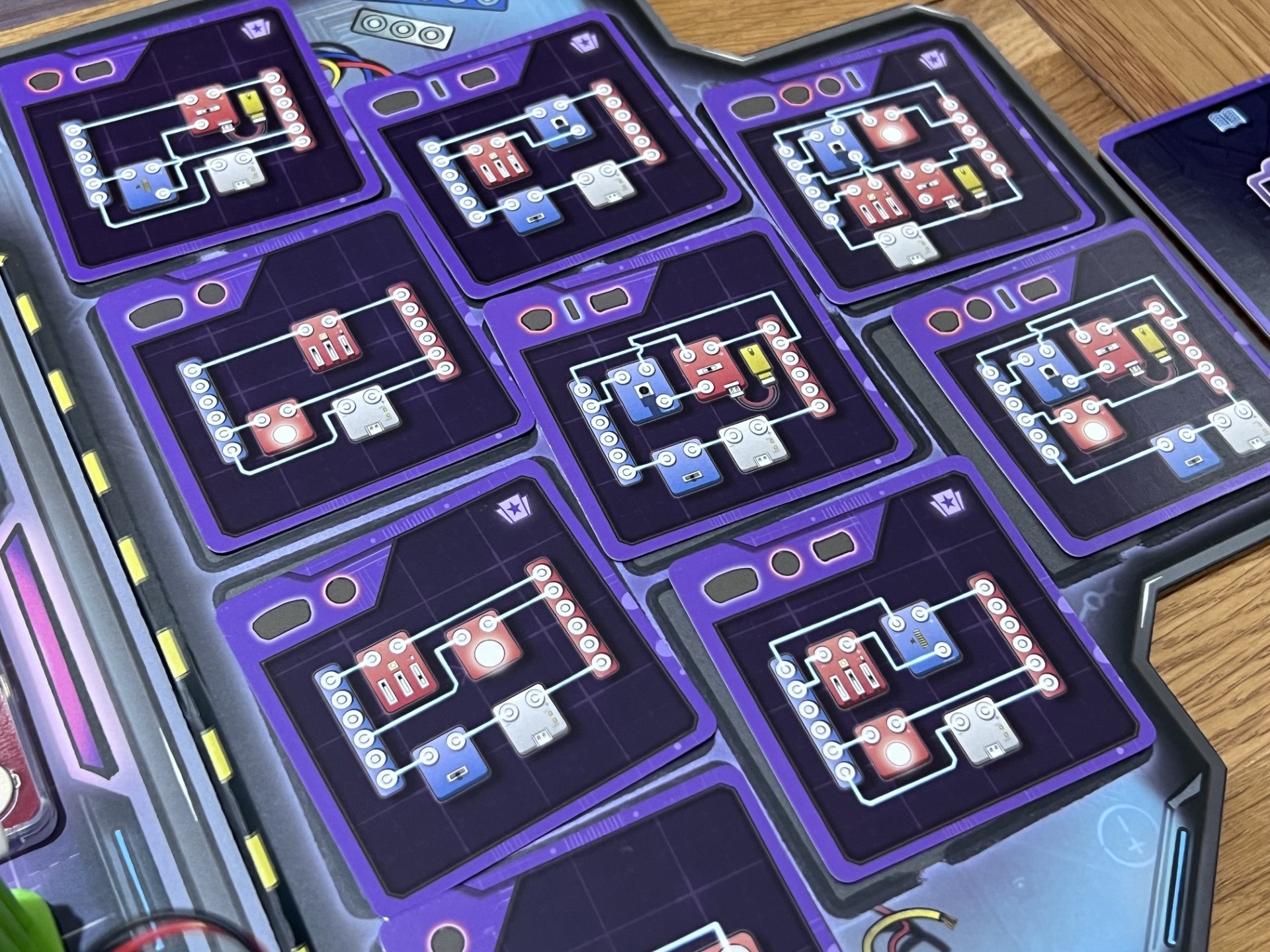
The theme is simple and if I am honest, mostly set dressing. Electra, a floating megacity, is losing power after a meteoroid storm. The players act as engineers sent to repair the city, but their ships are damaged in the attempt. Each player controls one of these damaged space ships, stranded on the outskirts of the city and racing to repair themselves and get back online before the reactor fails completely. The main impact of this is that each player receives a ship control board with around 20 component pieces that need to be added (repaired) by completing circuits that show matching symbols on them.
The structure of the game is built around three interlocking systems: resource drafting (taking resource cards), circuit construction (choosing a circuit card of simple, medium or hard difficulty and spending resource cards to have a go at building it), and repair progression (where you take components shown on completed circuit cards and add them to your ship).
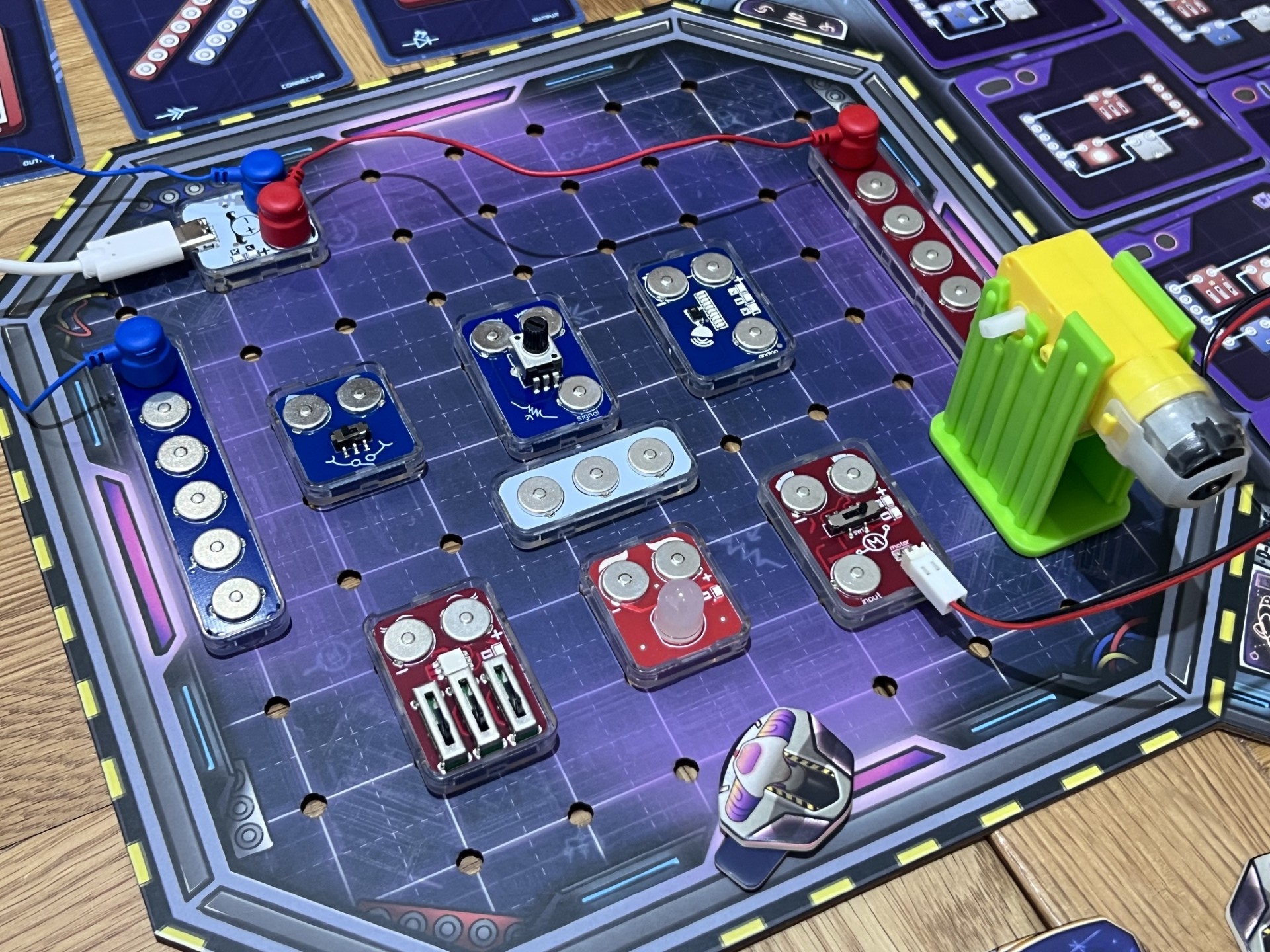
On a normal turn, you either draw two resource cards or attempt to build a circuit if you have resource cards that match already. The resource cards represent actual electronic components — RGB lights, switches, sensors, wire extensions and more — and the cards you collect determine which circuit challenges you can attempt. Reactor Rescue has two modes (simple and expert) and in the simple game with standard setup, the power supply (a battery pack) and the power receivers (lights etc) are already placed on the board. This leaves players (children in this mode) to work out how to make the right connections to build a circuit.
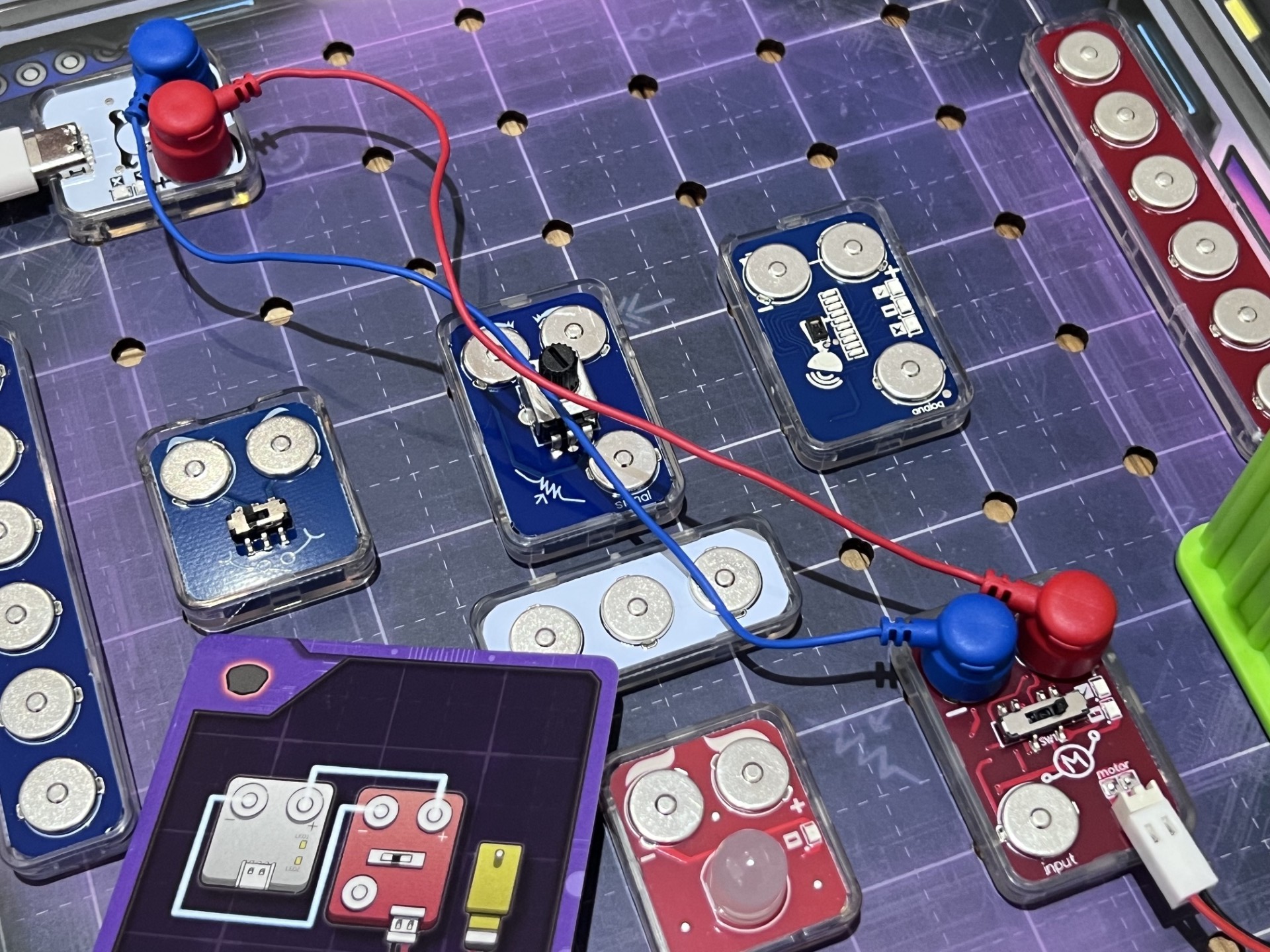
This is where Reactor Rescue becomes something more than a typical family strategy game. When you choose to build a circuit, you physically assemble the components on the included circuit board, following the blueprint on the card. You have two minutes to wire the system (and will require a timer on your phone or similar), after which the circuit is tested — either by you or by the timer expiring. If the circuit works, you earn the repair tokens shown on the circuit card and can slot them into your spacecraft panel. If it fails, you’ll be forced to spend your next turn re-attempting the failed circuit and may also need to take a malfunction card which penalises you further.
The physicality of this process is undoubtedly Reactor Rescue’s greatest strength. It’s tactile, educational and genuinely satisfying when a circuit lights up or a motor spins exactly as intended. The Labbox components in our near‑final version feel pretty sturdy and well‑designed, and the modular snap‑together system makes the circuits approachable and easy to use even for younger players. The rulebook reinforces this accessibility, explaining each block’s behaviour in detail — from polarity indicators to how signal snaps work — and even includes tutorials on series and parallel circuits which helped everyone — even the grown ups.
However, Reactor Rescue isn’t just a STEM kit with a competitive wrapper. The race element is where the actual gameplay comes into it. Each spacecraft requires 20-odd repair tokens, and completing certain sets unlocks permanent resource cards, giving you more flexibility in future builds. This creates a good sense of progression and escalation, and it rewards players who plan their resource collection efficiently. The tension between hoarding cards, risking malfunctions for tougher circuits, and choosing when to attempt a circuit gives the game a strategic backbone that complements the hands‑on engineering.
That said, I don’t think Reactor Rescue is without rough edges — at least in its current pre‑production form. The ruleset is quite ambitious, and at times it feels like the game is juggling slightly too many subsystems: resource drafting, malfunctions, events, permanent upgrades, re-tries, and the physical circuit‑building itself. When I played, I admired the creativity and the educational value, but I also felt that the flow of turns could be a bit smoother, especially in the simpler mode.
Some of this comes from the inherent stop‑start nature of building circuits under a timer; some comes from the number of small rules that govern card draws, overrides, malfunctions, and re-tries. These are the kinds of things that can (and may be) refined before final release, and given the clarity of the manual and the structured nature of the system, there’s every reason to expect the team will tighten the experience as the Kickstarter progresses. On that note, I’ve already been advised that the manual has been iterated since my original pre-prod copy was printed, and the draw deck has been refined for balance purposes.
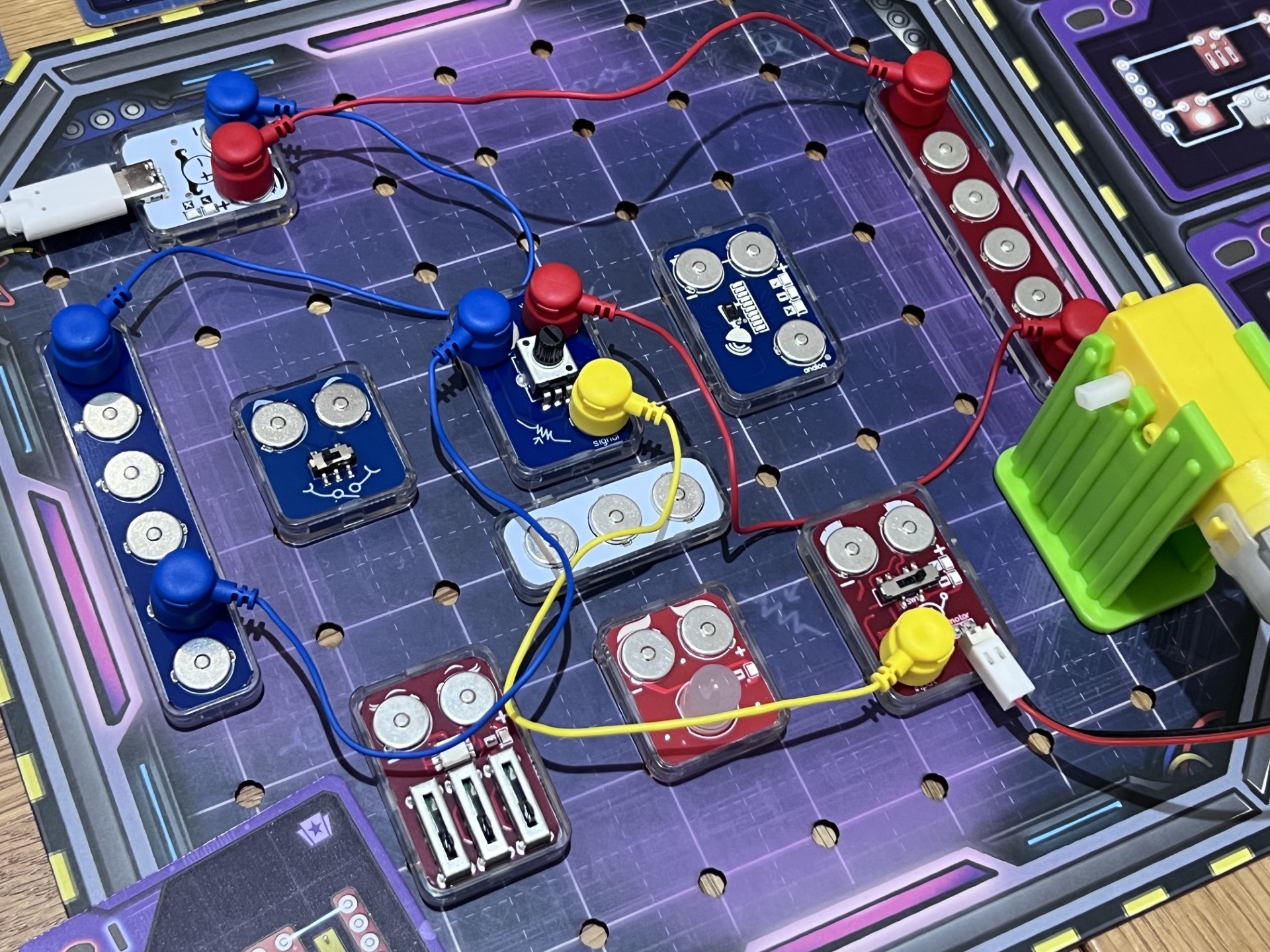
What’s undeniable is that Reactor Rescue has a unique concept that I really like. It’s rare to see a game that genuinely teaches something through play, and rarer still to see one that does so in a competitive, replayable format rather than a one‑off educational kit. The Kickstarter page describes Reactor Rescue as a “hands‑on engineering race,” and that’s exactly what it feels like. The combination of real electronics, tactile, multi-stage problem‑solving and a race‑to‑finish structure gives it a strong personality.
If the final version smooths out some of the pacing and clarifies a few edge‑case rules, Reactor Rescue could become a standout family‑plus title — something that sits comfortably between a STEM toy and a strategy game, offering both decent family fun alongside subversive educational techniques! As it stands, Reactor Rescue is already one of the most intriguing projects hitting Kickstarter this spring, and its core idea is strong enough to make it worth watching closely when it launches on April 21st.
