

Hell Clock has been on PC for a good stretch, but now with a full console release we have picked it up on PS5 to see how the indie ARPG rougelike(ish?) has stuck the landing. As it would happen, adding in the best mechanics from all your competitors can, sometimes, strike gold. For every mechanic that Hell Clock steals, it has a twist of its own that makes the game the most concentrated shot of ARPG goodness you can get without hundreds of hours of investment and grind.
Over the course of a 30+ hour “playthrough” which, in Diablo 2 style, is actually three playthroughs back-to-back, your Hell Clock build is sure to be constantly evolving and adding in fresh ideas. Pivoting is a little difficult later on, in no small part to the lack of any in-game auto-sort or auto-recycle functions, but the tight gameplay and interwoven progression systems mean that this lack of QoL doesn’t stop the game being fun to progress. The most unexpected thing is that I cared about the story, something the likes of Diablo 4 couldn’t achieve in its wildest dreams.
If you want the crunchy progression depth of Path of Exile but with a faster-paced 0-loot-filter-needed gameplay experience then Hell Clock is your dream game.
Chapter 1 – Player-first Campaign Options and Presentation
When you start a game of Hell Clock you have some choices to make. You can choose Softcore or Hardcore, and then Regular or Veteran. As you might expect, Hardcore is just the simple “one life” mode. However, the difference between Regular and Veteran is more nuanced. Regular is pitched as only presenting a challenge in Abyss mode onwards (New Game Plus 1, essentially) while Veteran mode is described as “a challenge from the start”.
Unfortunately, Veteran is described as “the definitive Hell Clock experience” and thus is the only real option for someone like myself. I can’t turn down an option that the dev’s state is the “intended” or “definitive” one.
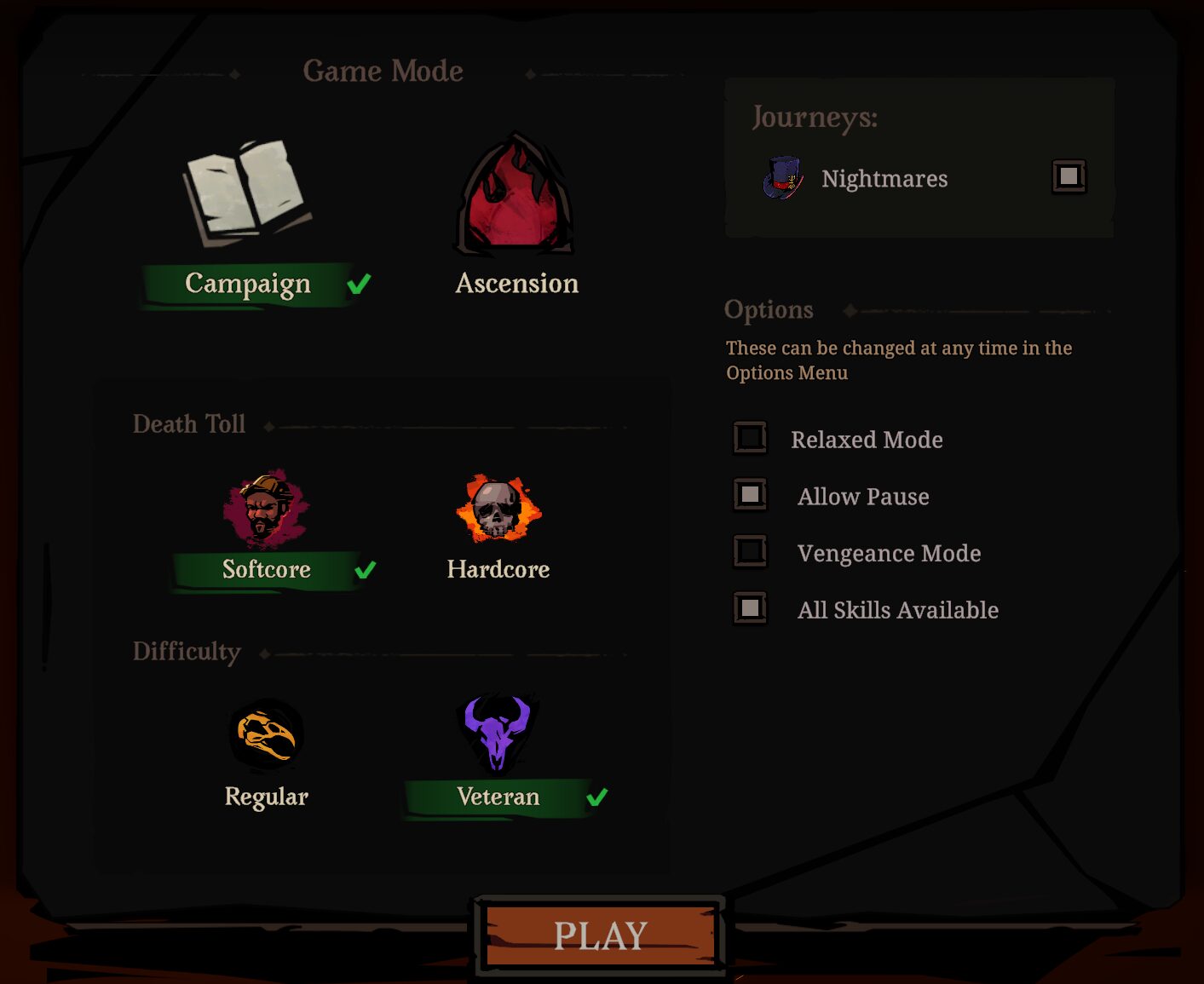
On top of all that, Hell Clock has a “Relaxed mode” which disables the timer (I guess the game would just be called Hell, then) and a Vengeance mode which adds permanent stats to you every time you lose a run, to make any “head-banging-against-wall” moments easier to overcome.
While I played as vanilla as possible on Softcore Veteran, the options were nice to see and set the impression that this game understood what an ARPG can be to different audiences.
It’s a shame one of the many campaign options wasn’t the choice between Quality or Performance mode, as I only discovered that a couple of hours later when larger packs were causing my frames to tank on base PS5. Fortunately, once toggled, framerates were restored everywhere except the most chaotic Nightmare floors and largest packs.
Chapter 2 – Welcome to Canudos
A coherent, engaging and reality-soaked story wasn’t on my wishlist for a tight ARPG experience, but I am so glad developer Rogue Snail delivered it regardless. As an England-born and England-educated White British man, I had no idea what or where Canudos was. Already, the game has done its job narratively; It’s given me a place to Google!
Seriously, though, I actually did go down an archival footage and report rabbit hole after hitting the Abyss mode credits, because the setting and story in Hell Clock is just so intriguing. Having never learnt about the Republic of Brazil and any civil wars or unrest there, seeing a depiction of the four expeditions to destroy Canudos was eye-opening.
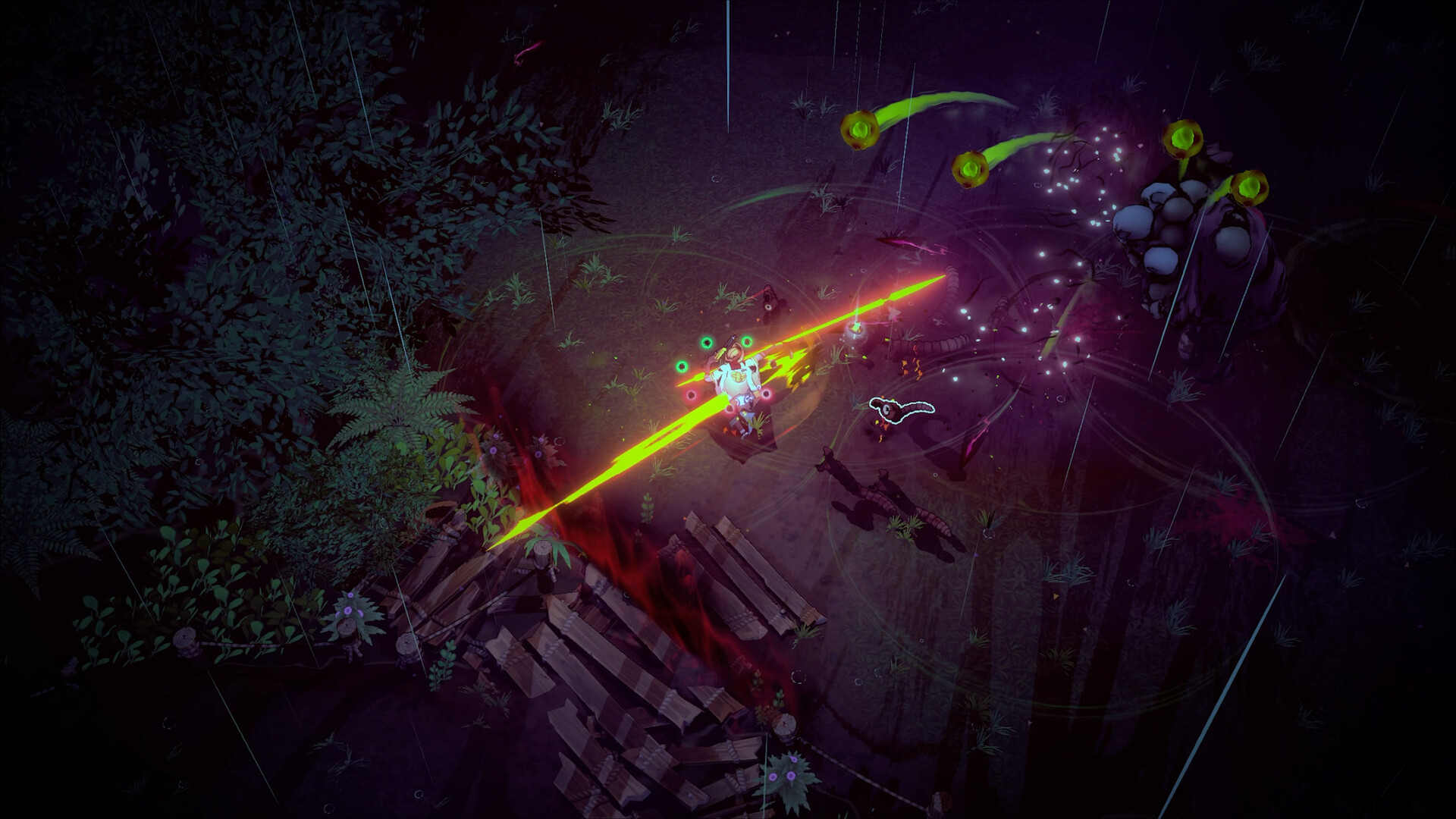
Best of all, the artistic intent seeps into every pore. I saw a picture of a cannon that the Brazilian Republic Army used in real life against Canudos, and immediately recognised it as one of those bastard enemies in-game that cover the area in shells in Act 4. I saw names I knew from the game, weapon and uniform designs, even skill names. The attention to detail without turning the game into a history lecture is a fine achievement — bear in mind you can easily blast through Hell Clock paying 0 attention to any of this, as the game prioritises gameplay first, but to soak up the atmosphere and reality of the game adds another level, to me.
Chapter 3 – Moment-to-moment gameplay meets minute-to-minute planning
The campaign’s four Acts have you race through distinct stages with their own enemies and navigational quirks. I won’t spoil what they are, but suffice to say that over the course of Acts you’ll have to learn to balance move speed, damage, layers of defence and more. It’s very similar in structure to Rifting in Diablo 3’s endgame, except Hell Clock oozes with more character than mindless Rifting.
You go from floor to floor, clearing enemies and opening chests. Or, do you?
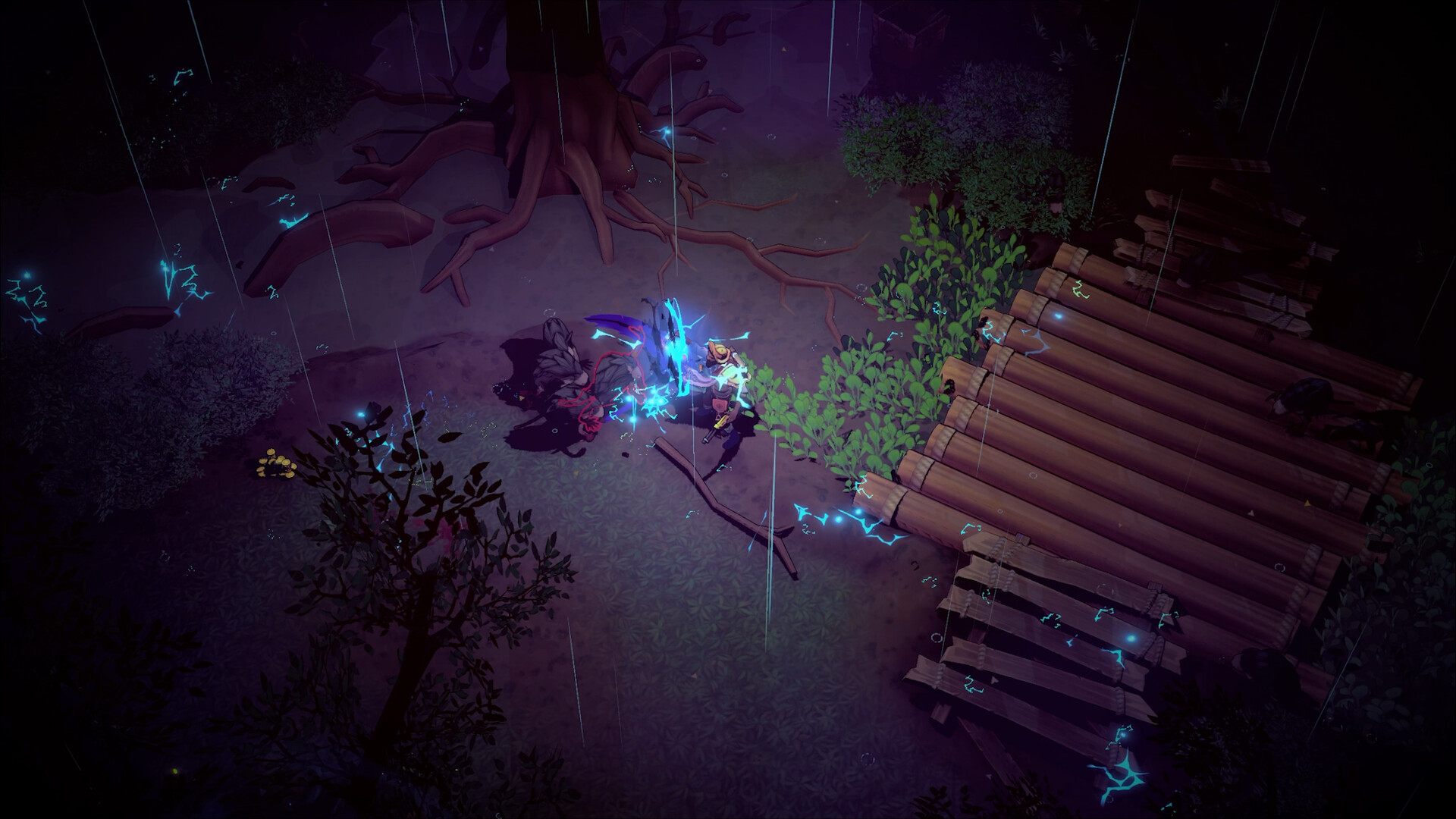
See, in Hell Clock you can’t afford to run out of time, but you also can’t afford to skip every chest and mob pack as they could provide a valuable trinket or level up that makes the next boss far more killable. From the very start, before the drip-feed of deeper and deeper mechanics, the core question of “time vs power” grips you.
You’ll be facing wave defence events and bosses on some floors, which provide a break from the clock (for your first playthrough, at least…) to focus on testing your damage and survivability. Creating a build that can handle both fast exploration (what a PoE player would call Clear Speed) and these intense floors (what they’d call Bossing) is a fine art, and makes the longer-term planning just as vital as short-term opportunism.
Defeat the boss on floor [redacted] of each Act and you progress to the next, with more relics added to the pool.
Chapter 4 – Builds, builds, builds
Speaking of relics, they are a key part of your build. In Hell Clock you make a build with these elements:
- Skills. You equip up to 6 skills before embarking on a mission. These do everything from dodging to buffing to shooting bouncing bullets or summoning allies.
- Relics. You equip your reliquary with relics. Relics have certain sizes and shapes, and you need to juggle fitting your best ones in for the ultimate build. Crafting relics to make the space they take worth it is vital later on. Unique and Rare relics come with modifiers for skills, such as damage conversion or changing how they trigger.
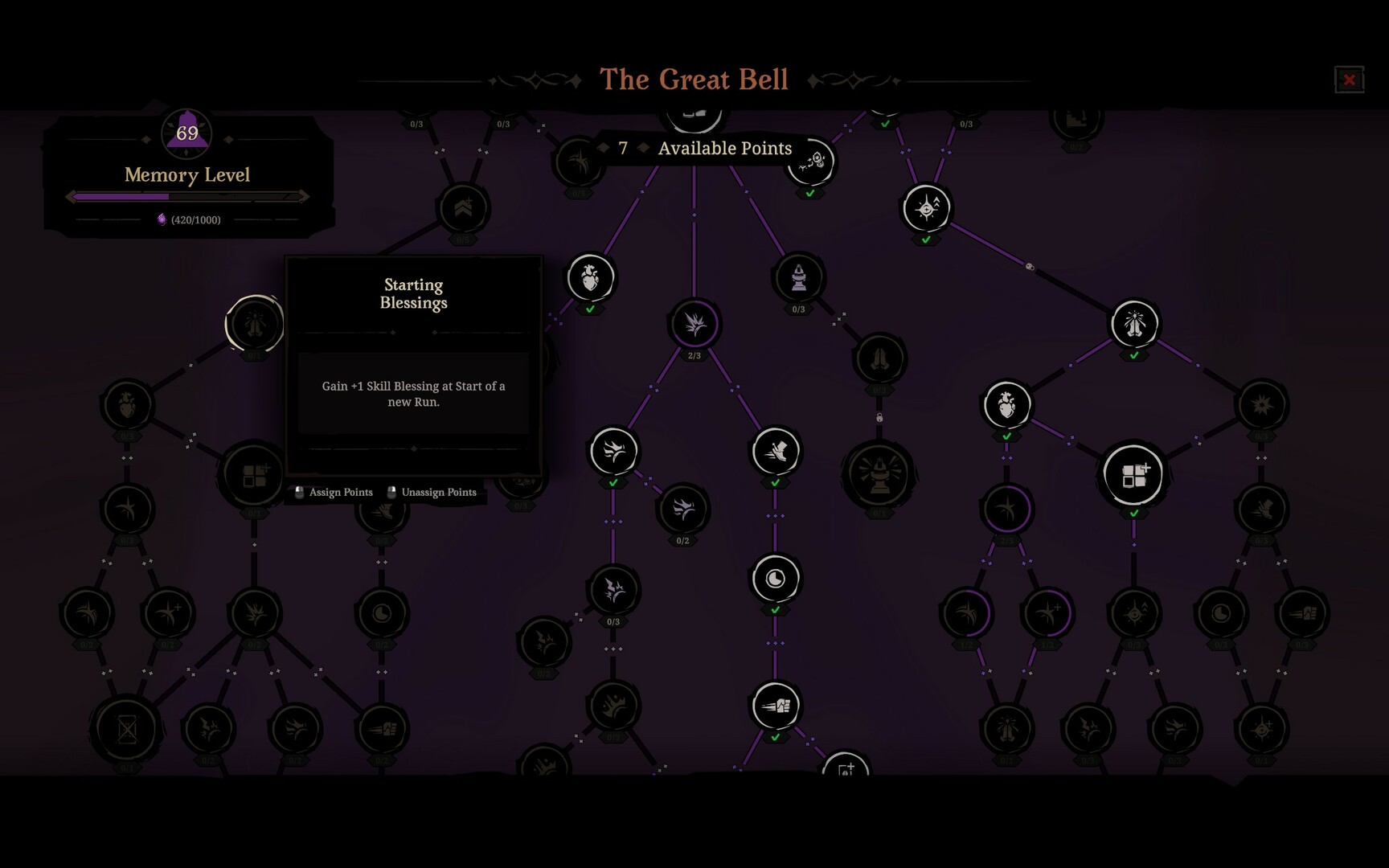
- The Bell. The bell is your meta-progression tool for increasing your skill’s starting level, reliquary capacity and unlocking other core mechanics like Conviction. When you reach the endgame, all standard Bell upgrades are automatically applied and a new, far larger, bell tree is added.
- Blessed Gear. Blessed gear is the equipment you can take from mission to mission, mode to mode. They mostly provide base stats, with weapons providing flat damage and % to a specific type to specialise further. Boots provide move speed and/or evasion while your necklace provides max life%.
- Trinkets. Trinkets are an emblematic system of how you loot during a mission. As the game is on a timer, there’s no inventory management or comparing complicated gear choices as you play. The trinket system is a beautiful way for the game to make chests and mob packs worth killing, and hit that ARPG vibe, without turning the game into Nioh 2. Basically, the more you loot and kill the better your character will be each mission, but you lose trinkets when a mission ends.
- Constellations. Later on, you can add constellations into your build. Yes, these are like Grim Dawn constellations. “Like” is probably not strong enough of a comparative, actually. This is the Grim Dawn constellation system. Fortunately, that is fantastic.
For the most part, it’s your equipped skills and relics that really define a build. By using a conversion relic for my Repeater skill I could ignite enemies with the fire damage, then I could use a relic to convert my Split Shot into a single physical slug. Then, I could socket a relic that made physical damage against ignited enemies consume the remaining ignite damage to perform a huge explosion based on the triggering damage. So, Repeater was my primer, and Split Shot my trigger, and everything started to melt.
Of course three relics doesn’t make a complete build, but that’s the core of how you can create skill interactions that suit you. I went through a melee phase where I could move full-speed while using a whirlwind-type ability and that meant I didn’t have to sacrifice Hell Clock time standing and shooting, I could just rip and tear my way through levels.
That build suffered in boss fights, though, until I could add Conviction as a layer of defence. Conviction is perhaps one of the most unique additions Hell Clock has for the genre. Conviction is a shield above your HP just like Energy Shield from Path of Exile, but how you gain it is what makes Conviction interesting.
Conviction is earned through spending mana. This means all your instincts to make mana costs as low as possible might increase your DPS, but will slash your Conviction generation too. The best situation in Hell Clock is when you’re spending mana, but not running out. Regen and leech can help, but some more advanced strats and synergies are hidden on the Constellation map.
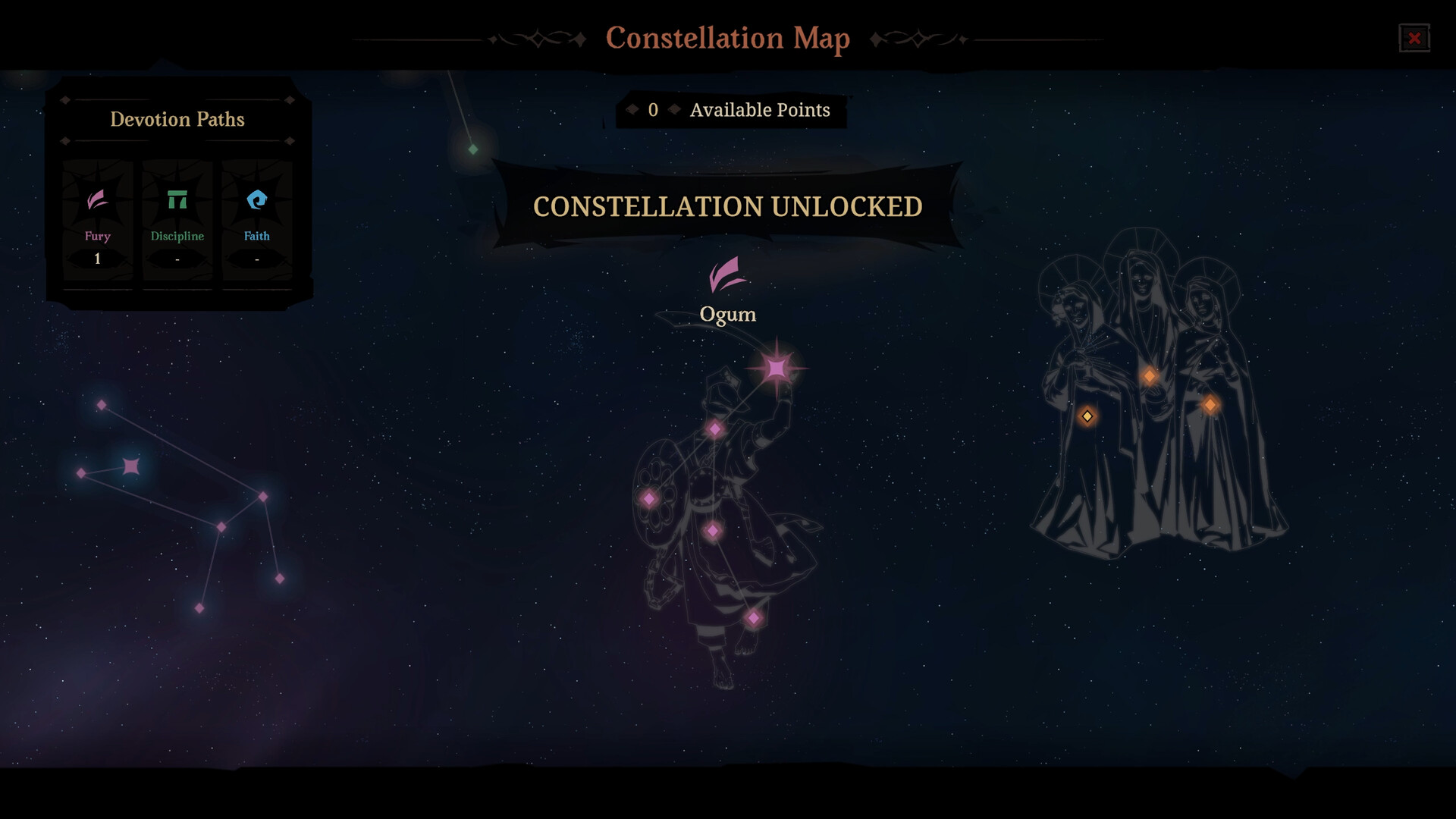
My current build has my mana costs reduced to zero for 5 seconds when I run out of mana, for example. This means I get my full Conversion generation for my whole mana pool, then five seconds of dodging and playing it safe before unloading again. It’s the best compromise I could find, but I bet there’s ways to make Conviction almost permanent.
Chapter 5 – Endgame and QoL
The endgame in Hell Clock sees you run Acts on higher difficulties, with new boss mechanics and all. You can also access a mode called Endless Nightmare. In this mode you go from biome to biome, many of which are not even included in Acts which makes things feel fresh, adding modifiers and challenges as you go. Complete the full Nightmare and you level up the mode, similar to getting to a higher Greater Rift floor in Diablo 3’s endgame.
While you’re refining your build and crafting maxroll god-like relics, you can also progress the new Oblivion Bell. I mentioned earlier the standard bell skill tree is replaced by a far grander one in the endgame, and it’s worth working out exactly what you want from your tree and what you want from gear + relics.
Finding new relics that enable a skill you never found good to actually perform and be viable is exciting, and there’s so many builds I’d try…
That’s right, I would. If the relic system had any QoL.
Don’t get me wrong, the game is fantastic and the relic inventory is serviceable, but it’s clearly built for mouse inputs. There’s no auto-sort, no auto-recycle (which clogs up your curated pages with naff relics from runs) and manually organising the boxes is a lesson in tedium. I had managed to get all my Marksman relics on one page, summon skill relics on another, mobility on a third…but it’s just something I should be able to do far quicker.
Often I’d know what I need for a build, and have the relics, but the thought of actually having to go through all those inputs put me off. The issue might be console-exclusive as on PC you just drag-and-drop via mouse, but even so the PS5 version is in 1.0 just as much as any other, so should deliver a level of QoL the game deserves.
Chapter 6 – Console crashes and rollbacks
I don’t mean to brag, but being the first PS5 player to complete the campaign on Abyss on Veteran, and being well over Oblivion Bell level 100 made the rollback sting all the more…
I had made frankly absurd progress, refined my build and crafted some maxrolled relics. I’d gotten the constellations I wanted all set up, and was saving and quitting full of dopamine.
Then the save screen comes up.
All slots empty.
I immediately closed the game, to reduce the chance anything is cached and overwritten. On launch, my save file was back (Huzzah!) rolled-back about 4 hours…(Oh…)
That sort of hit when I’d spent time doing so much technical shit, rolling mods and getting shrines etc, felt awful. Not only that, but I’d have to get lucky enough to re-attain the unique relics found that enabled me to buildcraft as far as I did in the first place.
I gave up, I’m afraid to say. What was going to be my first 24 hours of playtime became my only 24 hours of playtime.
Still, I cannot recommend this game enough. It’s surprising and engaging in all the right ways. But, check in with the devs if they’ve fixed that little PS5 save file issue if you’re thinking about the console version, because it genuinely hurts.
Hell Clock is available on PC as well as PlayStation
