

Deckbuilding roguelikes are far from undersaturated, but that doesn’t stop indie devs from putting out their take on the divisive genre. While Relief has many cards that are direct copies from Slay the Spire, it presents progression and builds that other games in the genre haven’t. The name and key art make Relief seem like it’ll be a ‘gooner’ game but at no point does that actually become true, and I fear many genre fans will miss out on the cute characters and deck themes this game has to offer, sheerly because of poor presentation on the Steam store.
After my first 90 minute run, in which I faced one of the 8 final bosses and a handful of character-specific minibosses and events, I had done away with all the misconceptions about this game. It’s easy to assume with the artstyle and name that you’re in for Female Injured Sound Effect #4 every time you play a card, with an animation to match. As it happens, I was more surprised by how familiar and safe the game felt. It was far less raucous and ravishing, and far more Slay the Spire clone.
The fact that I could slip into a build so easily and have synergies and combos firing on all cylinders might seem like a good bit of accessible design — but actually I think it’s more down to the fact that this game is too similar to Slay the Spire. Not every roguelike deckbuilder is, for example Into the Grid manages a unique perspective and exploration mechanics. Relief, though, sticks to simply being its own take on Slay the Spire rather than being particularly innovative.
That’s not inherently a problem, I do love Slay the Spire after all, but for some players I can see the similarities being too on-the-nose.
Small differences provide big character
The differences are there, though. For one, there’s a host of new charming and summoning mechanics that are unique to the first two playable characters, and I was genuinely engaged by hoping my Enchantment stacks triggered on a boss (making them hit themselves instead of me). By the end of my first victory I was playing 5–10 Bloodline and Kirin cards a turn, all of which triggered my ongoing powers for card draw, chip damage and more. Once I was suitably buffed, I would play an AoE nuke and finish the turn, much in the style of The Watcher from Slay the Spire.
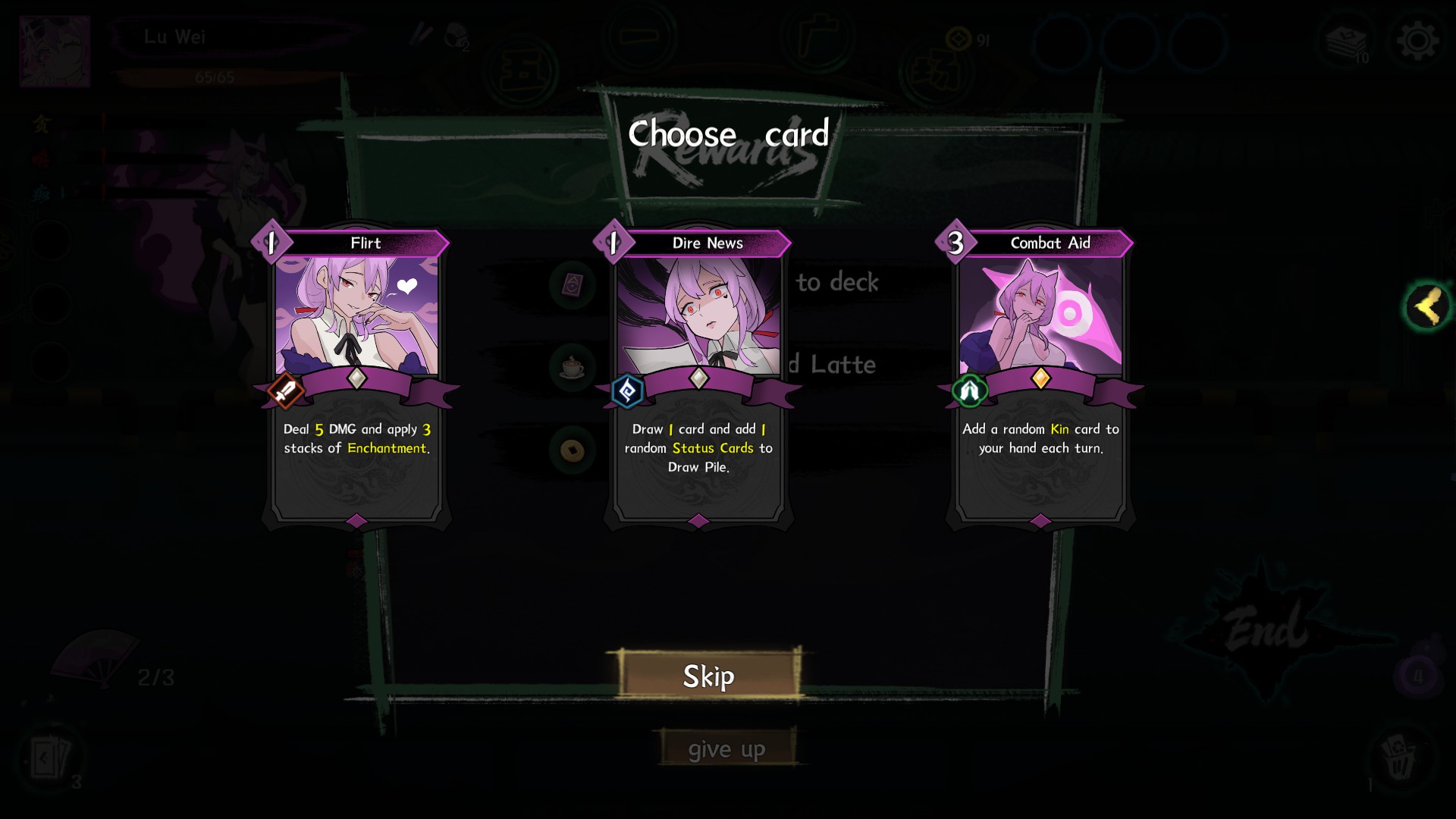
The second character I played is a summoner who works in a similar way to Slay the Spire’s Defect, summoning extra help and then consuming it to gain other effects. The difference is, this character is a femcel weeb who summons ghost cats. The ghost cats trigger every turn or can be commanded, and even evolved up to two times. Builds with small decks that can reliably get a King Ghost Cat out in turn 1 or 2 are wildly different to play than the same character relying on her Backlash mechanic, which makes use of more powerful cards but damages her in return. For every stolen card or status effect from Slay the Spire, Relief has its own little quirk going on somewhere else.
A city to explore in the order you choose
Rather than setting each run’s encounters out in a linear map, Relief places all the encounters for one act on the city map at a time. You’ll have to visit them all to complete the act, but the order you do so is up to you. Fighting a miniboss early makes sure you’re at full HP, but your deck will be comparatively weaker.
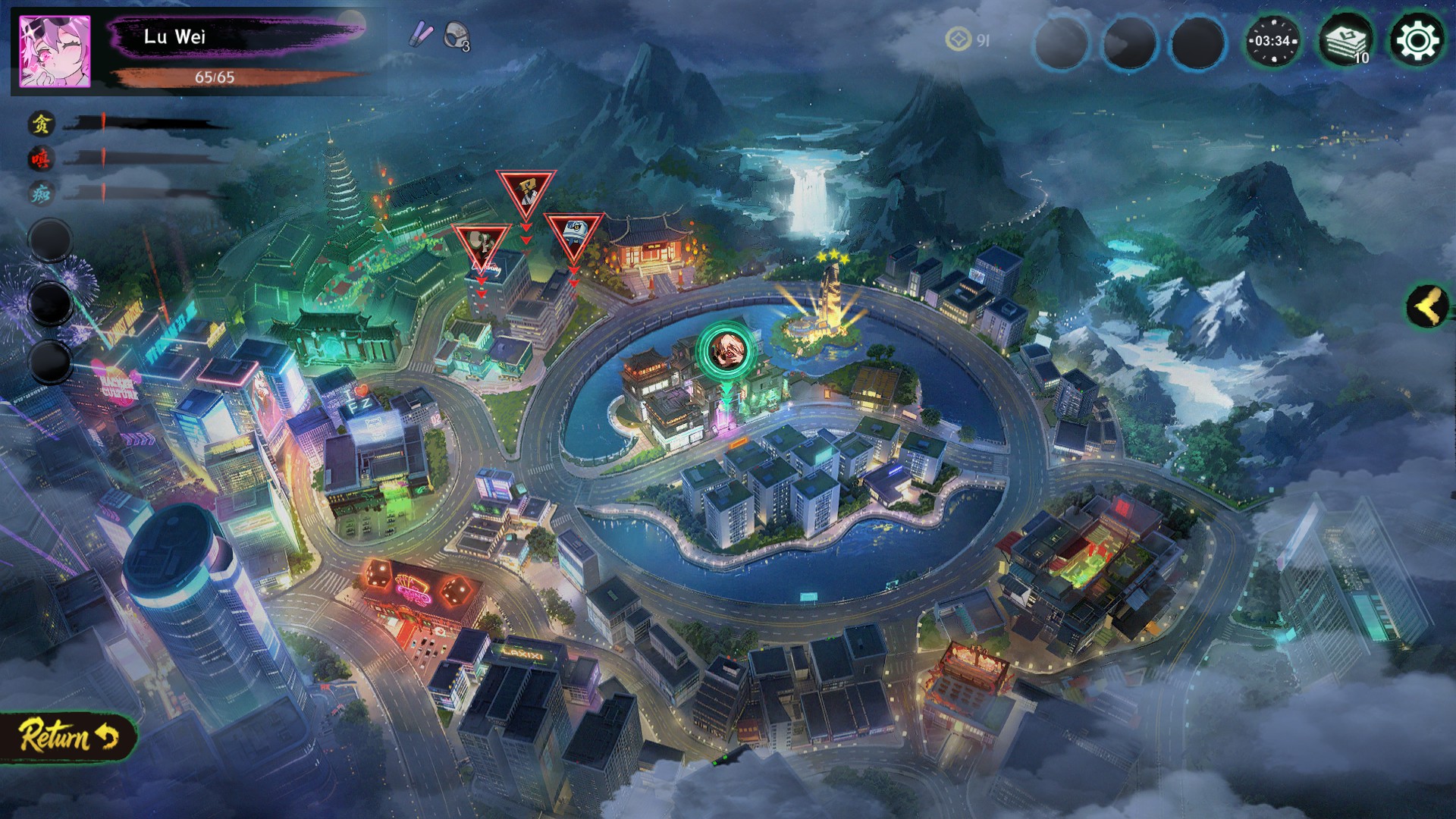
More than that, every encounter with enemies shows a preview of the main enemy you’re facing. This means that, over multiple runs, you can learn which enemy encounters might provide a problem and deal with them first, or explore the city to hopefully pull an answer. For example, my ghost kitty army build got a lot of hits in every turn, but only dealt 1-3 damage per hit. This meant the loudspeaker Yokai-esque creature that gains strength when it takes damage was a hard counter to my build philosophy during that run.
Discovering encounters and events and new ways to build your decks is as engaging as in any other deckbuilder, which is why the misconceptions on its identity really sting.
I know saying it sounds insincere, but this genuinely isn’t a gooner game
Speaking of things being visually interesting, I’m sure that at first glance Relief runs the risk of being categorised as a Gooner game. It has anime-style female characters with a subtle but noticeable amount of jiggle, I won’t lie. However, none of the opportunities that this game has to be proper degenerate are actually taken. You go to a masseuse to remove cards from your deck, go to a hotspring bath to heal, and the entire gimmick of the first playable character is flirting and teasing enemies for various effects. However, none of these things are rendered in any detail.
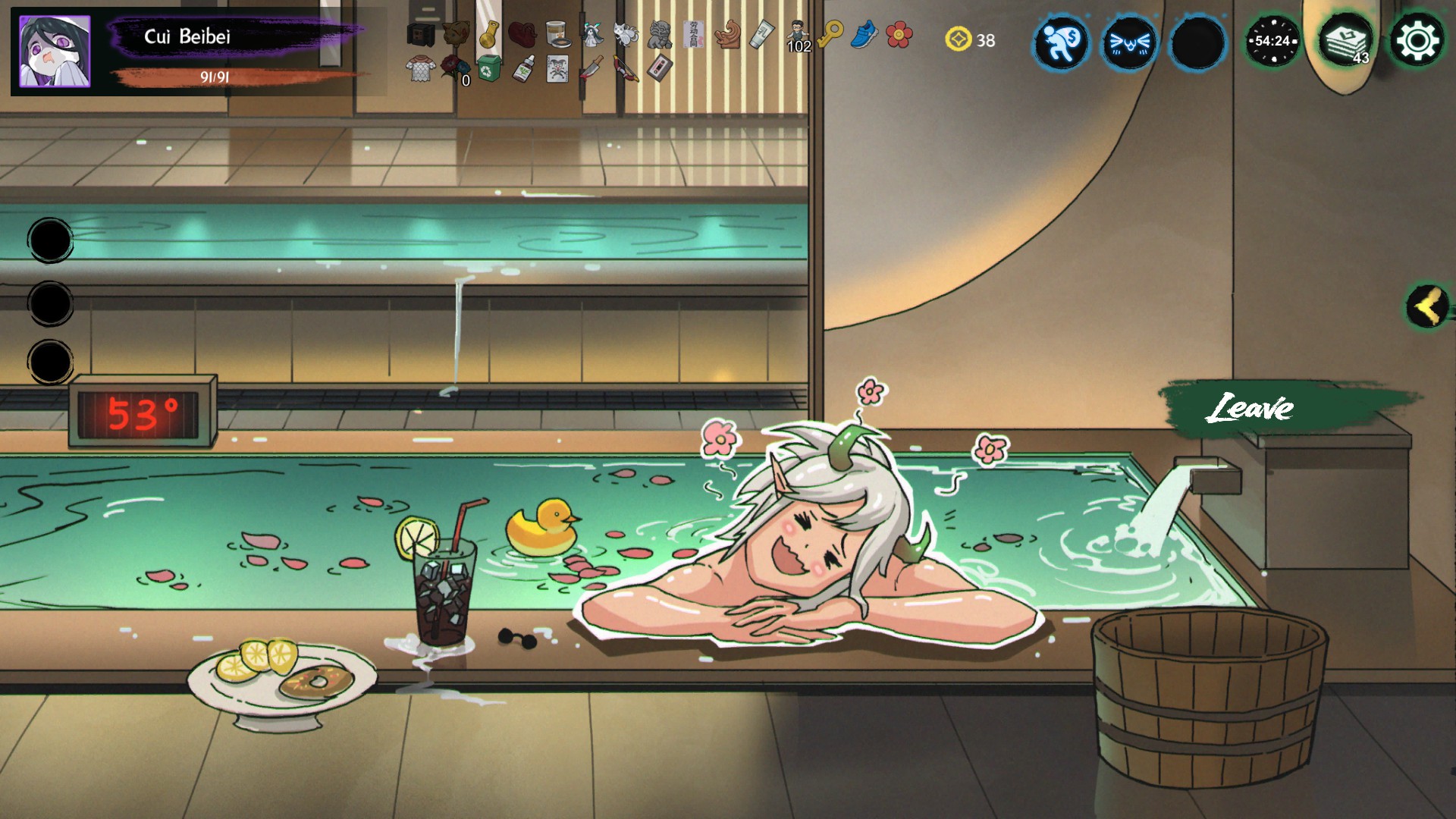
The hot spring splash screen is actually one of the tamest, showing barely any skin and more being a “playful time chilling from killing demons” vibe. The card art, rather than the scenes and character models, is actually where the most raucous artwork is shown and really, you care more about what the card does than what it looks like. They’re easily identifiable too, which means you aren’t sitting re-reading your deck every fight as the card’s visual identity is well defined (even if, yes, sometimes that definition is “Semi-naked fairy lady”).
It’s clear the creators just like the artstyle and wanted a Slice-of-Life vibe, and if this was meant to be a Gooner game I know for sure I wouldn’t be able to share the hot spring screen…
You control the final boss by balancing three Poisons
You have choices to make both in and out of combat, and balancing the three Poisons is a neat addition to the overall formula. Throughout a run you will face enemies and events that increase one of three “Poison” gauges. These reflect the different final bosses you can face, and that can then mean you plan on increasing one Poison because your deck will be better against that specific boss.
However, if any of the poisons gets too high, you start getting negative effects. Too much wrath and you start taking 2HP of damage for every attack card played, for example. This creates a carefully considered compromise between favourable event outcomes and increasing or decreasing the Poison levels that run.
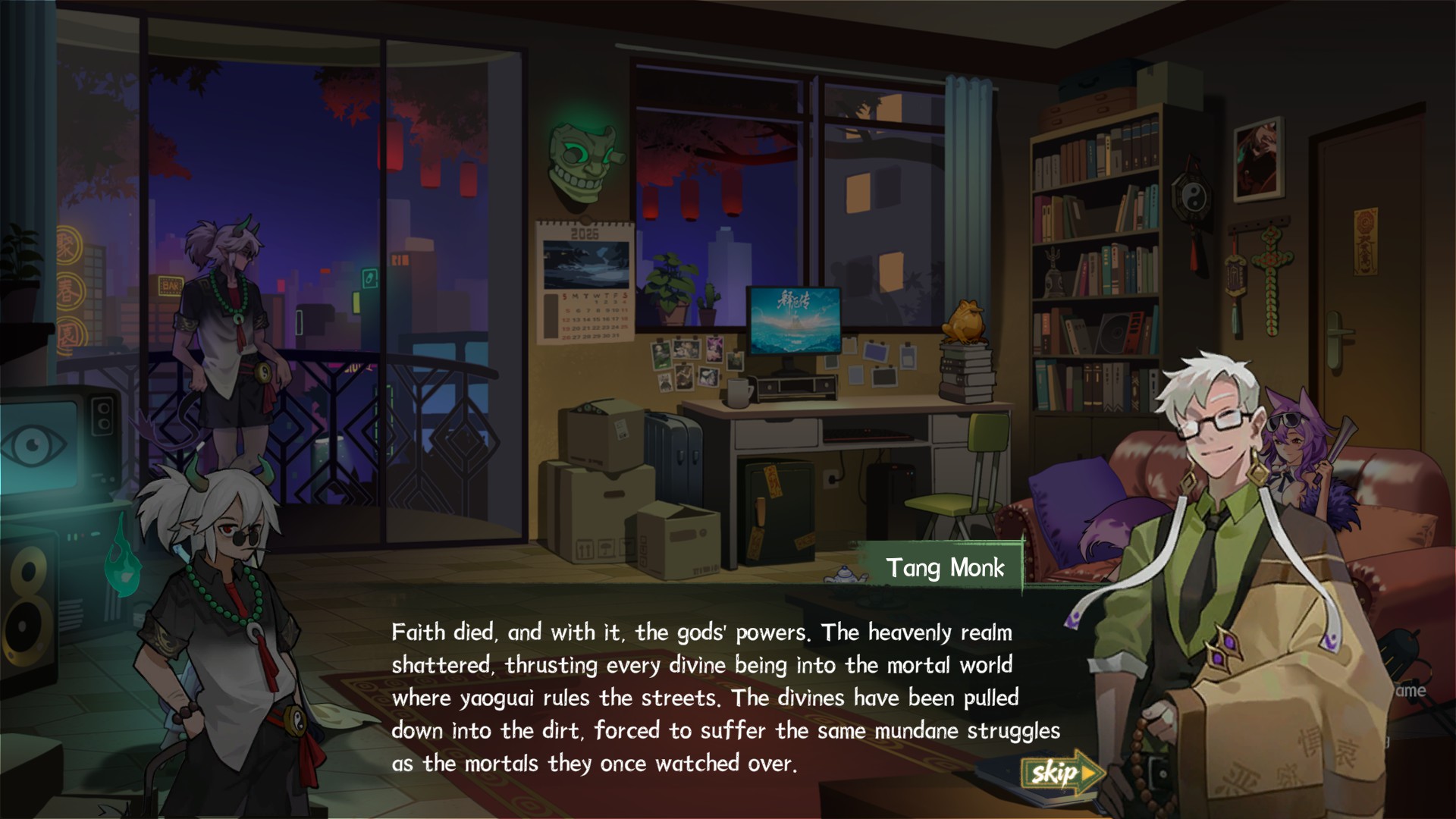
There are unique mini-boss and boss mechanics, too. While the framework is exactly the same as Slay the Spire, right down to extra energy artifacts after each act, potions, Weak / Vulnerable and more — Relief does still have some originality up its sleeve. Some enemies are immune to damage unless you meet certain conditions, card upgrades are provided if you complete “Tasks” such as gaining 20 block a turn or spreading debuffs to all enemies in a fight, and the new Affection and Enchantment effects are novel.
Tasks in particular make upgrading your cards a separate process from earning money or rolling results from fights, which can make runs less RNG-dependent as you can dedicate fights to finishing those Tasks, guaranteeing a card enhancement.
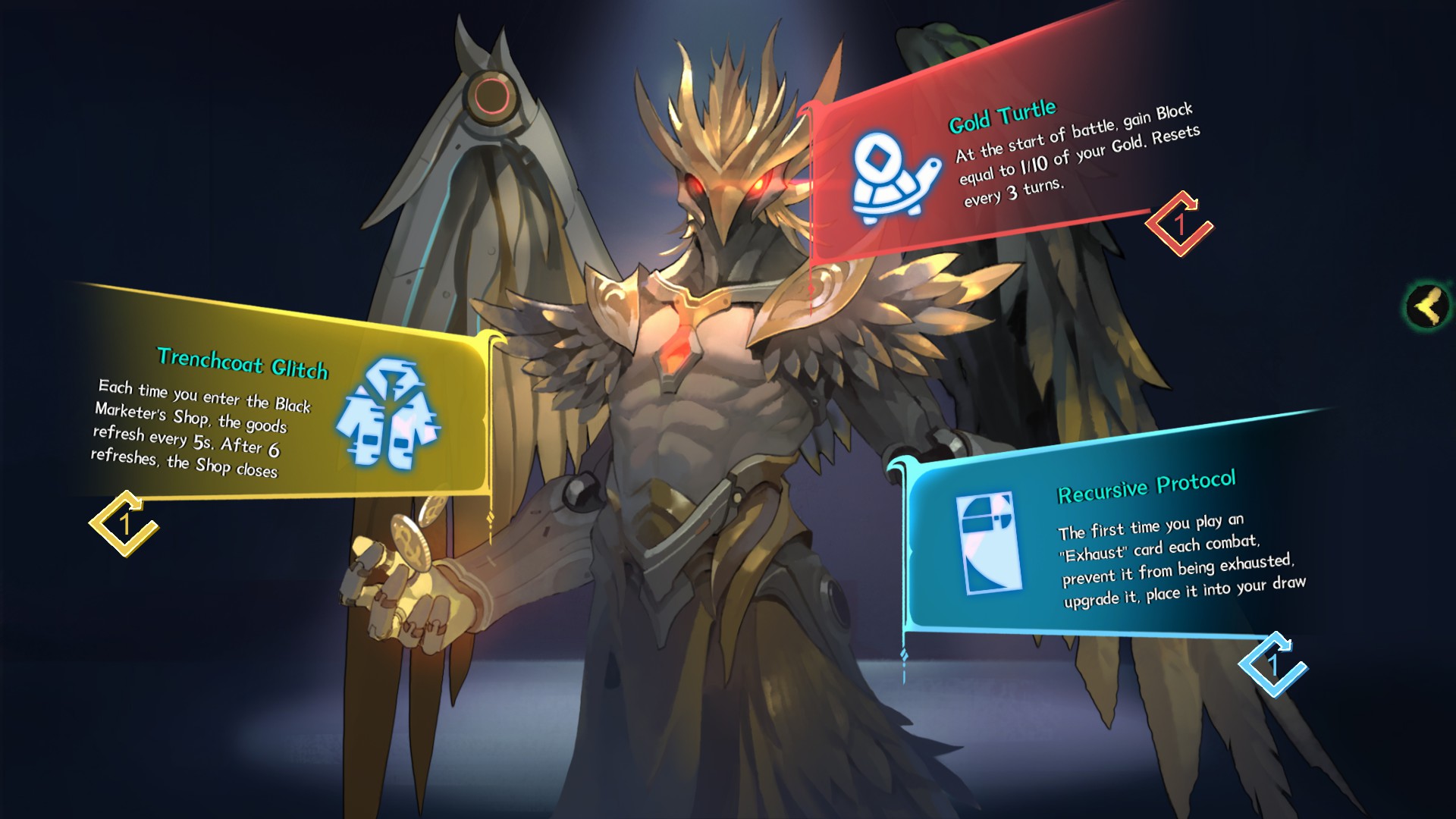
One boss had me having to avoid playing the same types of cards consecutively, which in my “Oops all skills” bloodline deck was a laugh, as I simply ignored her rule and saw the buffs stack up and up on both of us. Luckily, a few turns later I still had mine and hers were negligible so my nuke was ready to roll.
Not the next big thing, but a solid entry in a competitive genre
If you particularly like the idea of a melting pot of cultures and demons and yokai, then Relief could certainly be of interest. If you just like roguelike deckbuilders and adore Slay the Spire, you might not find Relief has enough new to really hook you, but that’s really down to the player.
I myself am partial to a game that does pretty much what’s expected. An ARPG just needs some solid looting and mapping and skill unlocks, a deckbuilder just needs good cycles and synergies etc. The fact you can control the final boss via events that spawn throughout the whole run is novel, and the events themselves are consistently interesting and even character-specific. Relief is perfectly serviceable, absolutely not a Gooner game, and could be right up someone’s alley while we wait for Slay the Spire 2 to release. (Yes, games aren’t released until 1.0…)
Relief is available now on PC via Steam
