

For many RPG fans, Morrowind is the go-to for describing what an experience should look like. An open world, interrogatable characters, simple combat that is more about player choice and preparation than minutiae like “Movement” or “Aiming”. It’s no surprise that retro RPG Dread Delusion gets compared to Morrowind, but it is unfortunate. It’s unfortunate because if we’re going to make comparisons it should really be to Kingsfield and the modern slew of classic real-time dungeon crawlers like Lunacid, but also because comparison really doesn’t do Dread Delusion justice.
It’s its own unique experience, with all the excitement and revelation and disappointment and flaws which that entails. For that uniqueness in itself, Dread Delusion is an instant classic.
The stage is set and the adventure begins
Dread Delusion opens to a range of character creation options, including three different background stages and stat choices. The richness of the RPG mechanics are a little overstated, but nonetheless it sets the mood. I was ready to get meaty, to get nitty and gritty and involved in this new RPG world with my charming noble occultist who had fallen from grace.
Once the gameplay begins, you’re thrust into a retro-3D prison. I guess my argument that it shouldn’t be compared to Elder Scrolls has fallen flat since you also start in a prison, but I digress. Meeting a former prisoner, now a floating cyborg in the vein of Quake or the grim darkness of Warhammer 40,000, you advance through an atmospheric and entirely unknown tutorial.
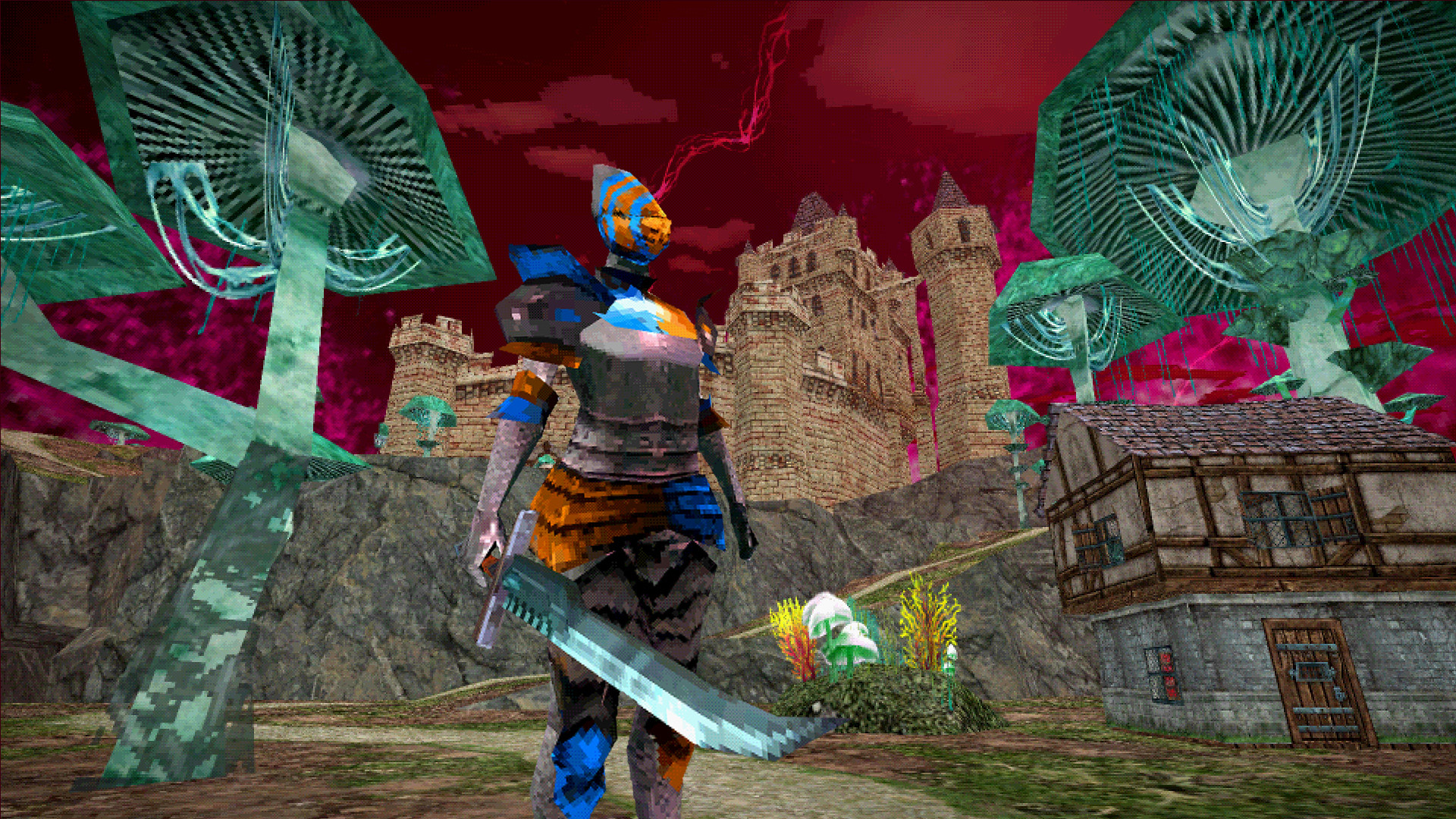
Unfortunately this is where the Switch 2 version showed its first blemishes. On a mouse and keyboard I’m sure the menus and controls are somewhat intuitive, but having completely worded tutorials made learning the stiff control system on Switch 2 a chore. Non-contextual tutorials are pretty much pointless, with statements like “Press Spell to cast a spell and Item to use an item”. Then you have to go to the controls menu to see which buttons those commands actually correspond to.
Once you grapple those controls, though? Dread Delusion delivers in spades…
Going in blind made me appreciate “scope” in a whole new way
One of the classic adages of the Elder Scrolls series became “See that mountain? You can climb it” and while Dread Delusion doesn’t allow climbing many mountains in quite the same way, it delivers on that promise of scope and adventure.
Right out of the gate there are hidden secrets, invisible walls, unique potion effects and interactions, hints of housing upgrades, multiple regions and most surprising of all: Buying and flying your own airship. As someone who went in expecting very little, the bombardment of expectations and hints the game dropped in the first area alone was…exhilirating. I hadn’t been so excited to progress and uncover a game piece-by-piece this much since Elden Ring.
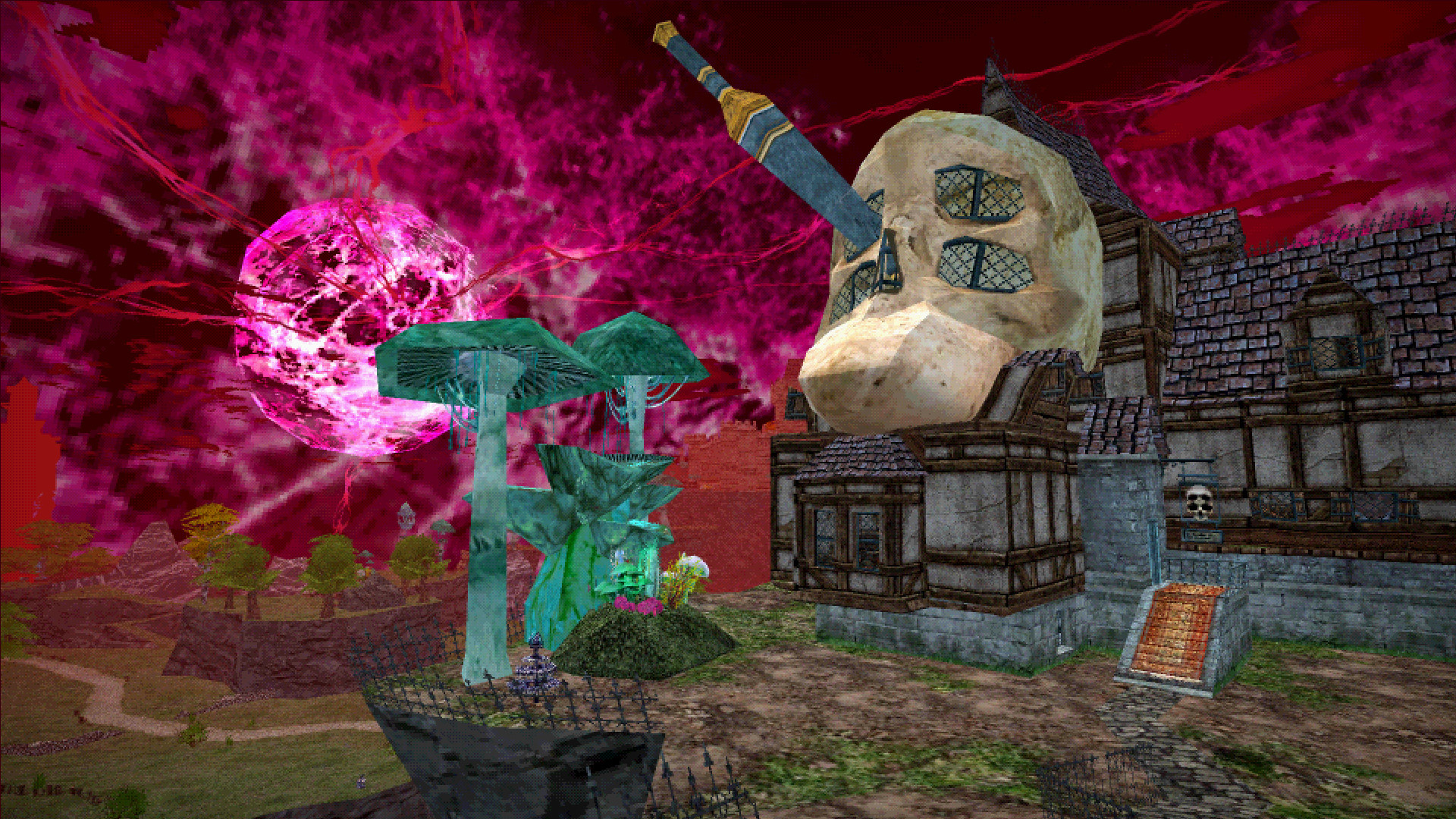
“Uncover” is exactly the right word: I once spent five minutes looking for a candlestick to pull to open a door, only to discover it led to an area I’d already gained access to with lockpicking. That was a valuable Immersive Sim lesson that I should’ve remembered from Dishonoured: You don’t always need to do everything in front of you. I don’t want to spoil too much about specific hidden oddities, but let’s just say there were lore-heavy secrets strewn just about everywhere if you knew what to look for.
Simple mechanics in a complex world
With these expectations in place and being realised all the time, and the world around you begging to be plumbed, you get into the meat of the gameplay. This is another slight lack to what you might be expecting. There’s very few weapon options, and while spellcasting has plenty of utility and alternative solutions to combat, nothing really makes the combat itself “pop”. There’s parries and stamina management and a range of consumables, but you can beat basically anything by charging a heavy attack and running at it, then backstepping out of range.
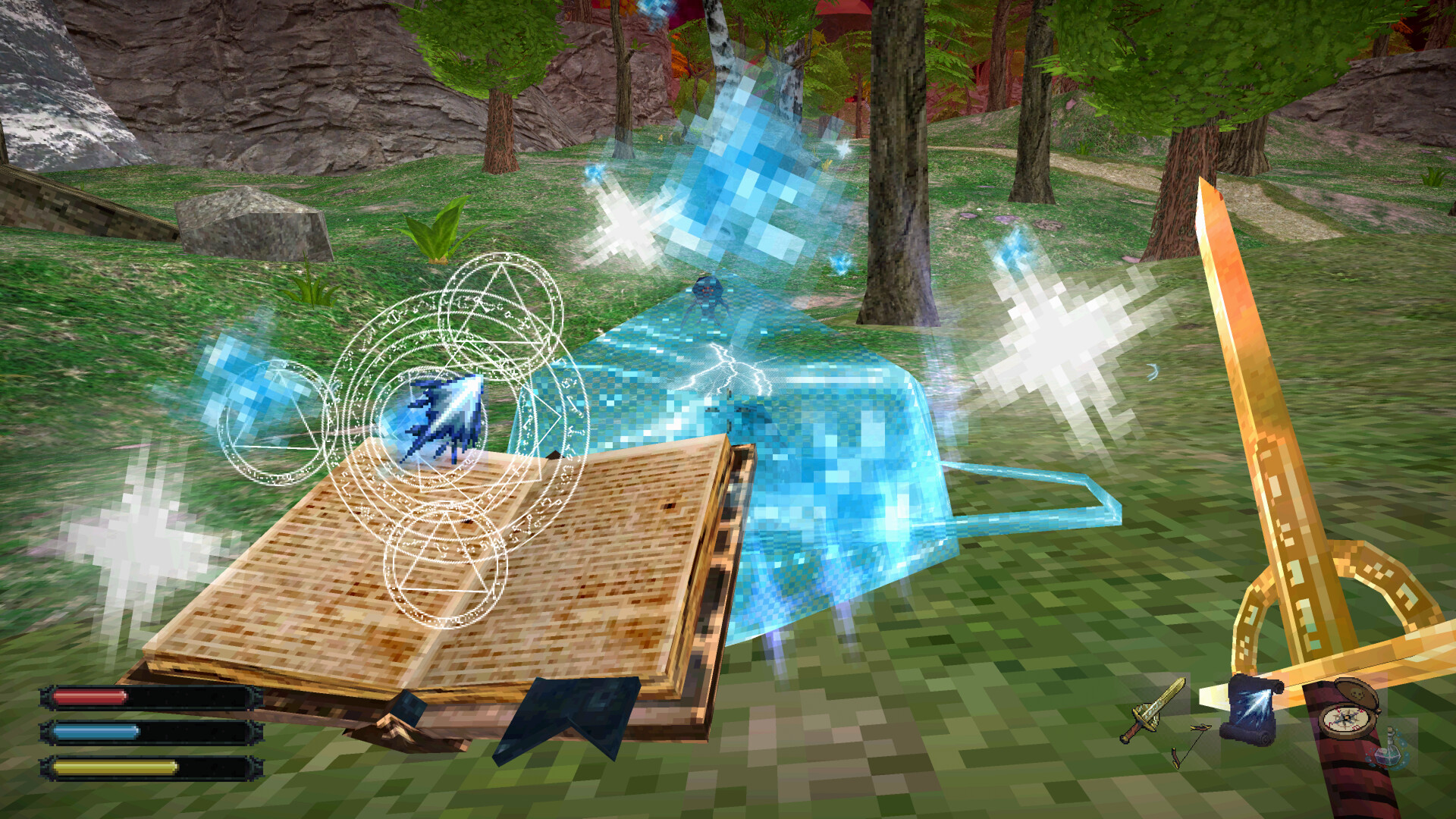
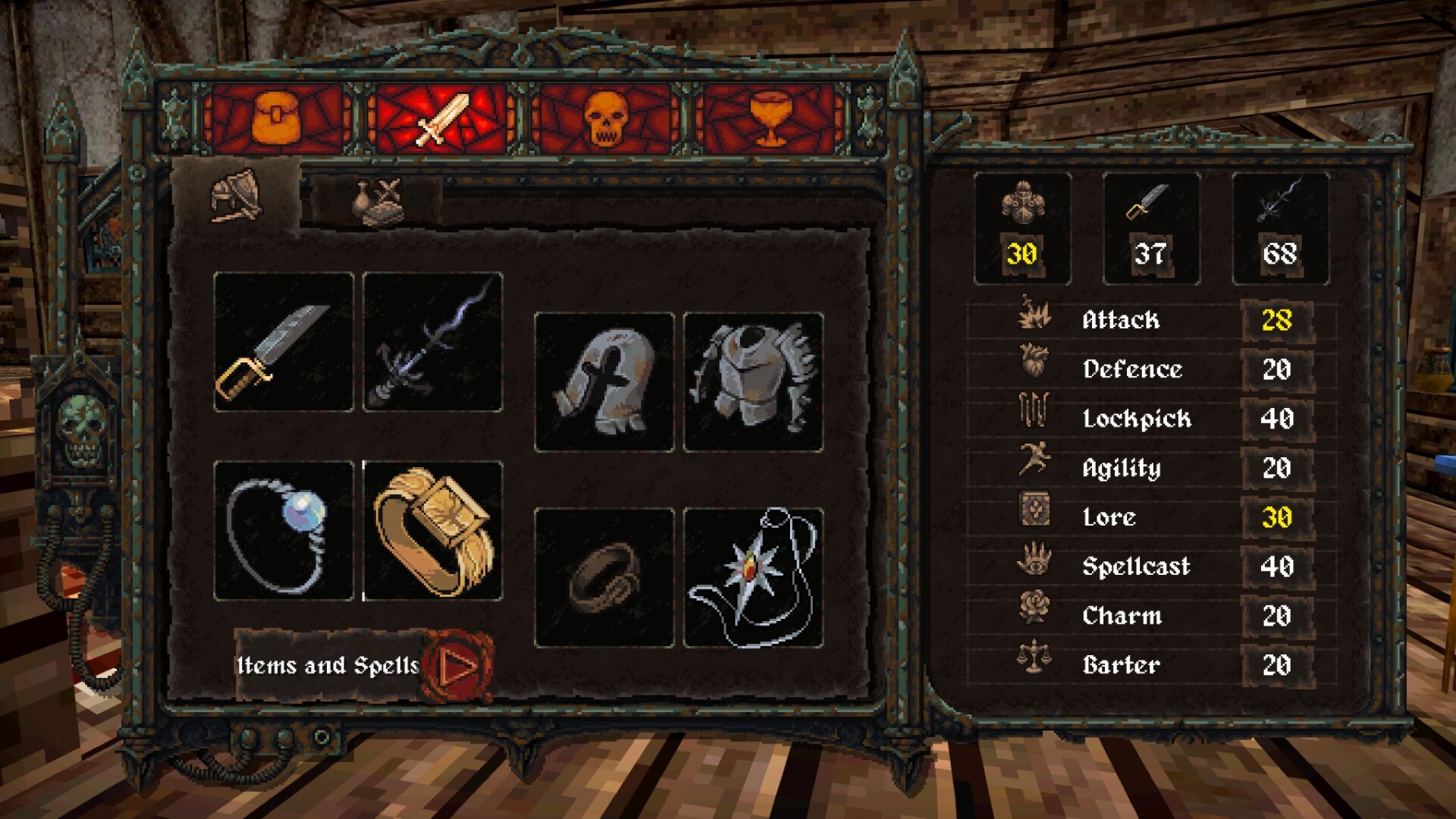
It wouldn’t be the end of the world, I could accept the combat being simple since the world is so rich and exploration is the key draw…however, the stat Might exists. I didn’t level Might until the finale of the game, sitting on a grand total of 4 by the time credits rolled.
“Oh, so you used consumables, spells and stealth to solve combat challenges and could invest in those skills rather than Might?” you might be thinking.
No, dear reader, in fact I swung my sword at everything until it moved no more. It’s just that it is a perfectly viable playstyle even with 1 Might. Herein lies the problem: What is the point of the stat?
I’d have loved to be dealing next to no combat damage and be forced to adapt to my statline. If I have 1 Might I should have to rely on spells and consumables, but Dread Delusion doesn’t commit to anything so extreme. It’s less about challenging you and more about just freedom of expression, which is a perfectly valid design choice but was not the one I was expecting in this type of game.
Unfortunately, this simplicity does sometimes seep into other areas of the game. I had a questline where someone was kidnapped and tortured, but after the fact they had their bog-standard dialogue options with some that didn’t even make sense given what had transpired. Don’t get it twisted: dialogue is very well written, very intuitive to go through, and exposes a genuinely interesting story with far more character and soul than I expected from a game of this size. It’s just a bit of a disappointment when these NPCs finish their gloriously engaging questlines just to go back to the same old dialogue from before. It’s sad how little the world reacts to player presence. While the game is expansive in ways I never would have imagined with home-making and airship travel and much more, that only highlights something that’s missing: reactive dialogue.
Distinct regions with distinct stories
It would be remiss of me to nit-pick the dialogue inconsistencies and statline simplicity without clarifying one final thing: The questlines in Dread Delusion slap. It would have been so easy to have the shroom-addled Hallowshire, robot-ruled Clockwork Kingdom and cannibalistic Endless Realm be embodiments of r/iam14andthisisdeep. Fortunately, the stories and characters in these areas go far beyond the region’s “gimmick”.
- The Clockwork Kingdom presents a story of intrigue and politics, asking questions about automation, efficiency and personhood.
- Hallowshire asks what prosperity is worth, and will make you assess the value of the past, present and future.
- The Endless Realm makes you think about recovery, tradition and normalcy in a way that I think will particularly resonate with OG Dr. Who fans.
Each main quest and all the sub-quests attached to them deliver atmosphere, exposition and most importantly a playable space to be yourself. Quests very rarely have a “Good” and “Bad” result, they simply have different results based on your choices. Characters make it clear their options are their opinions, and that reality will be what you make it. In a world of binary Mass Effect-style choices, Dread Delusion is a breath of fresh air that allows you to mull things over, go back on yourself, miss connections and make connections in your own time.
A unique experience that hits as hard on Switch 2 as anywhere else
The Switch 2 version of Dread Delusion is an opportunity for more people to play this gem, and that’s all it needed to be. Controls will be a learning curve, but the combat itself and moment-to-moment gameplay is so simple (in terms of inputs needed) that even those who struggle learning new control systems should be able to enjoy Dread Delusion in all its weird, enigmatic glory.
Dread Delusion is available now for Windows PC & Nintendo Switch 2
