

Zoo Vadis by Reiner Knizia and Bitewing Games is a sharp, negotiation-driven strategy game that reimagines Knizia’s classic Quo Vadis with a rather nice animal theme, streamlined rules, and incredible modern production values. We’re reviewing the standard edition here, but it’s worth noting that a deluxe edition exists with upgraded components — and we enjoyed the game so much that we actually paid to upgrade to that version ourselves.
With that said, some of the pictures in this review relate to the review copy of Zoo Vadis that we were kindly sent by Bitewing Games, whilst others are from the deluxe version that I had to track down on the secondary market. The differences are all cosmetic, with the retail version having cardboard tokens for laurels and player powers, and the animal pieces don’t get their own bags. You really do NOT need the deluxe version and neither did I. Not really. Ahem.
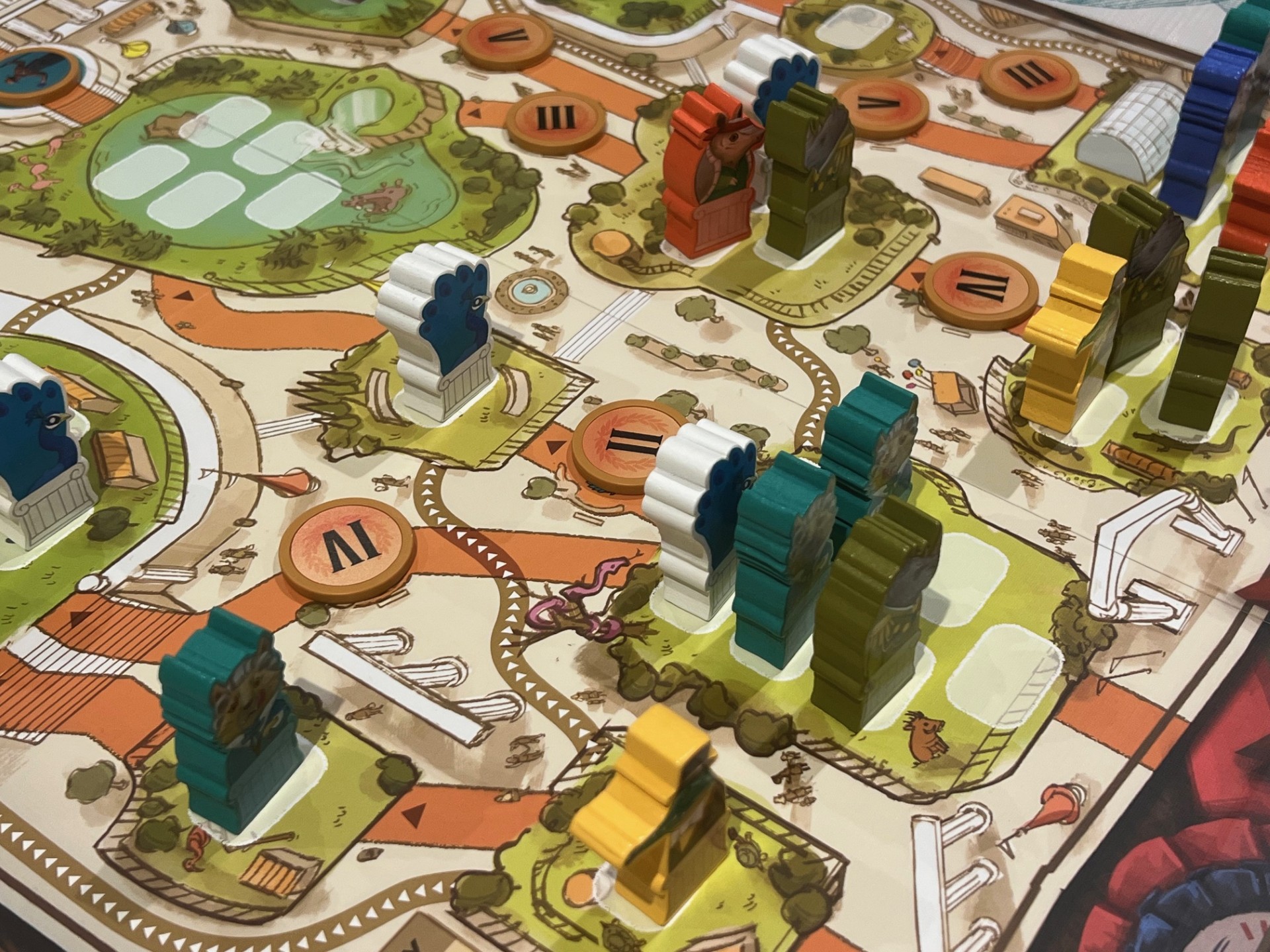
At its core, Zoo Vadis is about influence, bargaining, and timing. Players represent different animal factions vying for admission into the prestigious Star Exhibit at the zoo. To get there, you must move your animal tokens through a series of enclosures, each requiring votes from other players to advance. This creates a dynamic of constant negotiation: you’ll need to trade favors, promise support and occasionally bluff to secure the votes you need. The game ends once the Star Exhibit is filled, and only animals that make it inside are eligible to win — meaning that you can’t focus entirely on scoring laurels (points) by moving at the lower end of the board alone.
The rules are refreshingly simple. On your turn, you can add an animal to a starting enclosure, move an animal (if you can get the votes), move the zookeeper or move one of the neutral resident peacocks. The tension comes from the fact that most moves require cooperation. You can’t advance without having a majority vote based on the size of enclosure you’re in. For a size five enclosure, that’s three votes. A size seven? That’s four.
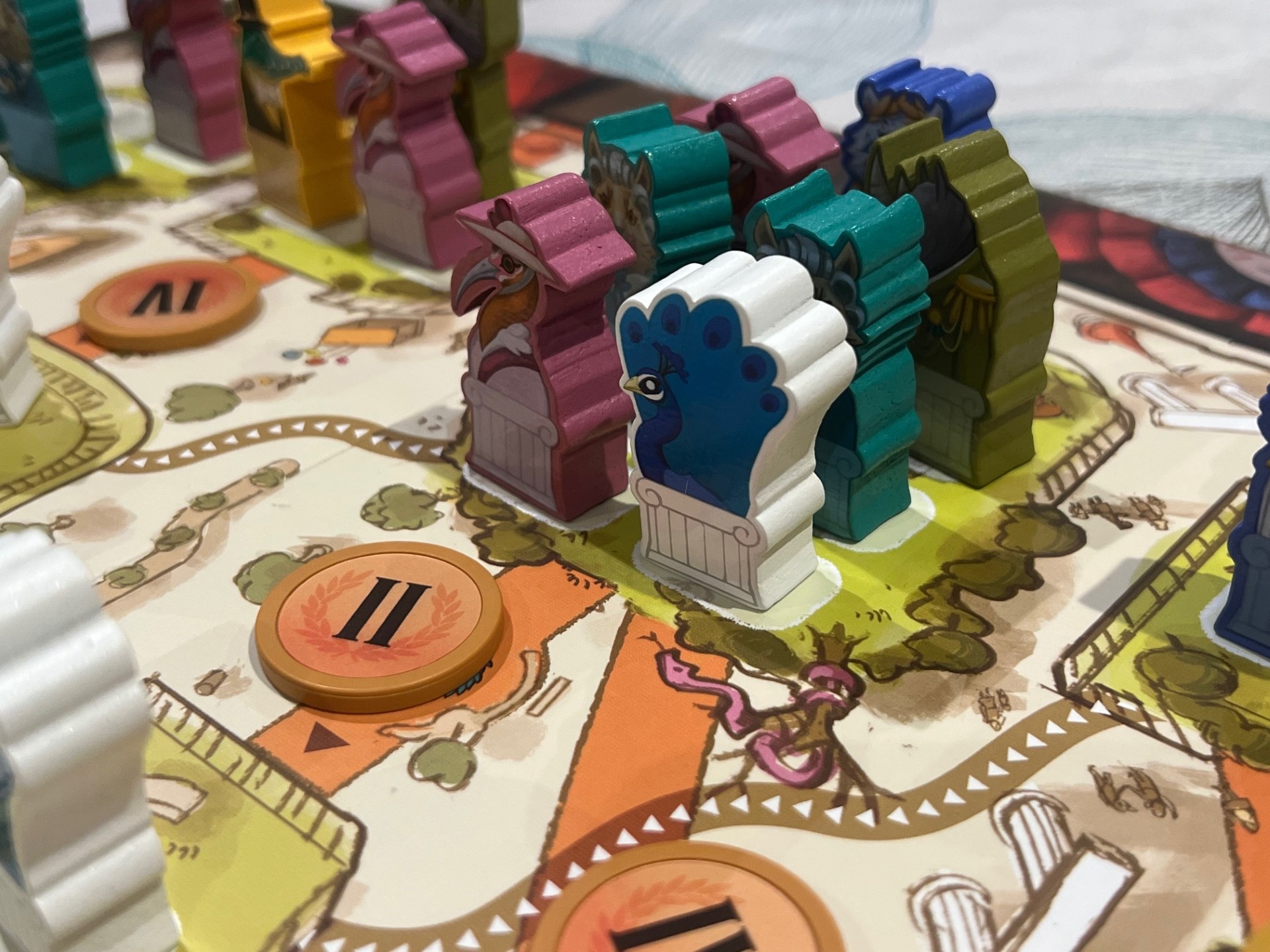
Whilst it’s possible to bribe one of the peacocks for a two (or higher) laurel chit, you’ll often find yourself unable to move without other players agreeing, and they’ll expect something in return — whether it’s votes later, laurel tokens or use of your animals special ability. This creates a lively table dynamic where deals are struck, promises are made (and broken), and alliances shift constantly. It’s Reiner Knizia at his very best: elegant mechanics that generate drama and interaction, but a relatively low complexity ruleset that’s quick to teach and easy to learn.
Compared to the original Quo Vadis, Zoo Vadis introduces several refinements. The zoo theme makes the game more approachable, with charming animal artwork and a playful setting. The addition of the peacocks ensures that progress can always be made, and taking a turn to move one will actually generate you a single laurel and potentially either advance your own plan or disrupt that of another. The zookeeper is also a new addition, and their role is to effectively an animal to exit their current enclosure without a vote — albeit this comes at the cost of not being able to collect a valuable laurel token when moving along the path that follows.
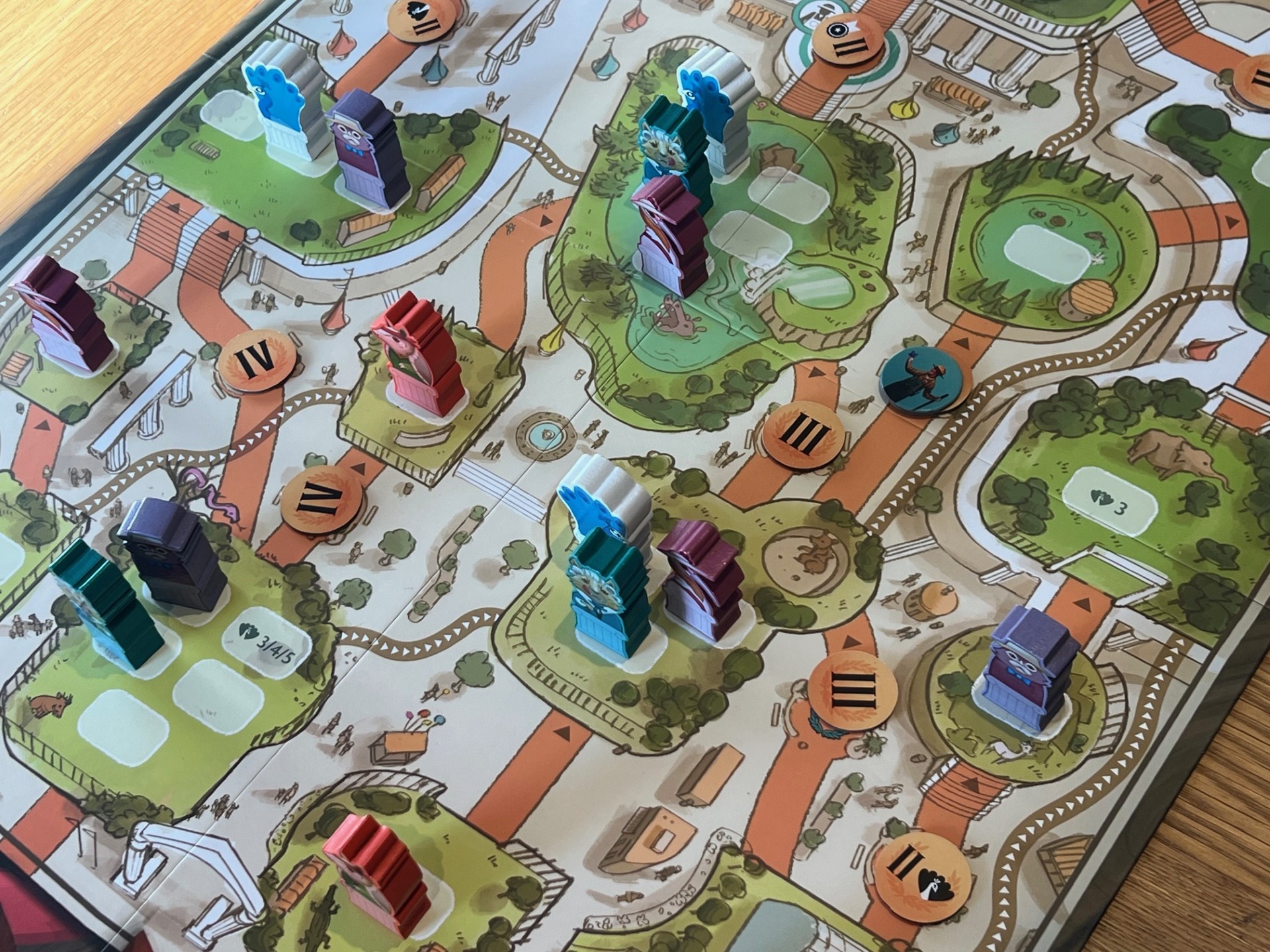
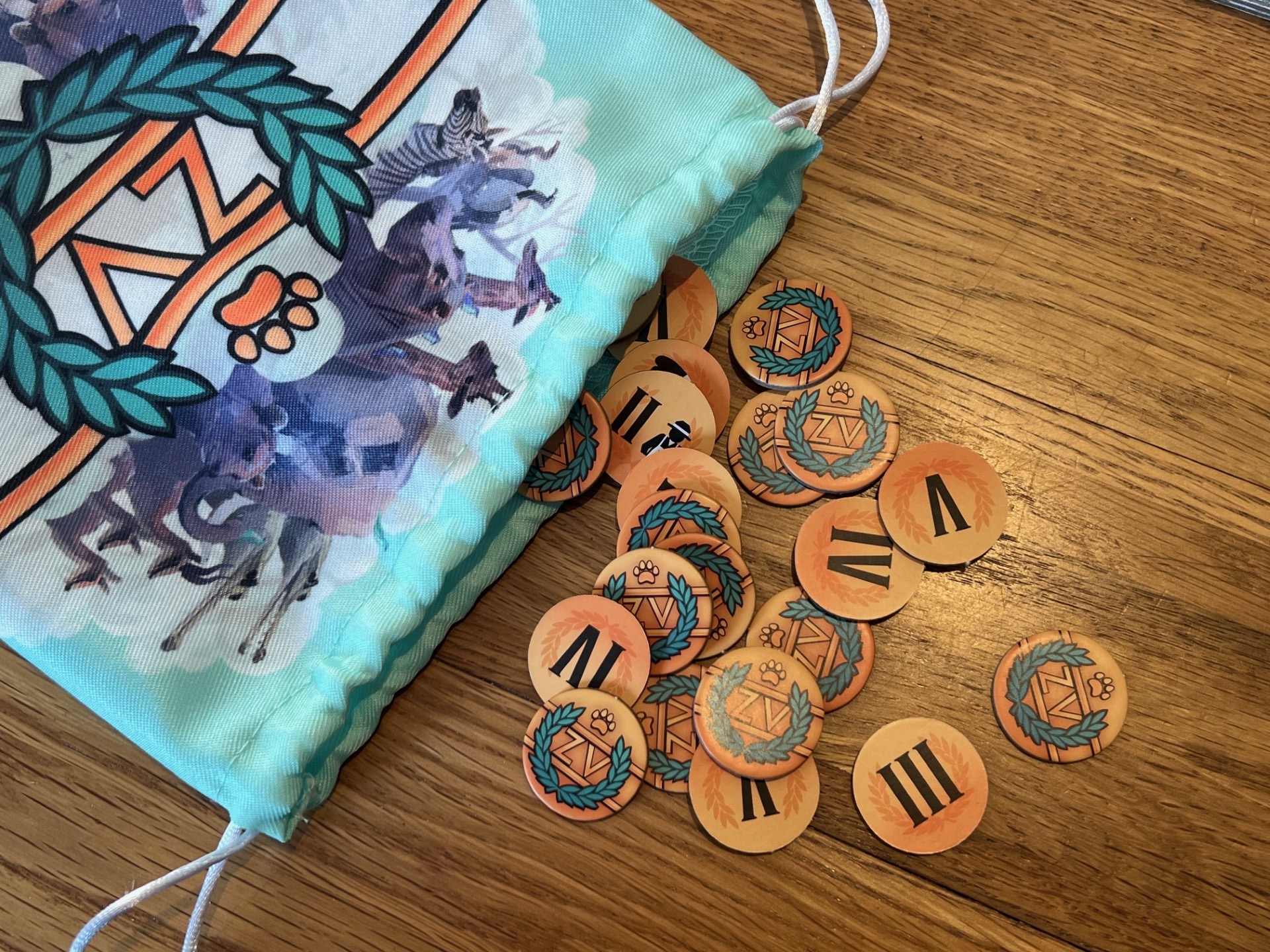
As I mentioned earlier, the standard edition we played features sturdy cardboard tokens, a colorful board, and clear iconography. It’s perfectly functional and attractive, and perhaps most critically, still includes the chunky wooden animal pieces that gave the game such an immense table presence. After several plays, we found the negotiation and table presence so engaging that we decided to pay for the upgrade to a deluxe version, and to be honest that is pure opulence. The main difference in terms of components you’ll touch often is just the laurel tokens which are bigger and “clack nicely” in the bag versus the cardboard variant. As I said at the top of this review, you don’t need it… No, really, you don’t!
Player count is hugely versatile Zoo Vadis. This is a rare game that supports 3–7 players, and while it works at the lower end, the game truly shines with 5 or more, where negotiations become more chaotic and alliances more fragile. Playtime is amazingly brisk, usually 45–60 minutes, and the rules are easy enough to teach quickly enough to any level of gamer. Despite its simplicity, the game offers remarkable depth, as every decision carries weight and every promise can shape the outcome.
Replayability is strong thanks to the negotiation-driven gameplay. No two sessions feel alike, because the personalities at the table matter as much as the mechanics. Some groups will play ruthlessly, others more cooperatively, and the game adapts to both styles. It’s a social strategy game that thrives on interaction, and it rewards players who can read the room as much as the board.
Zoo Vadis is a brilliant update of a Knizia classic, combining elegant mechanics with a charming theme and modern production. The standard edition is more than enough to enjoy the game fully, but the deluxe edition adds a layer of resplendent delight that enhances the experience. We liked it so much that we upgraded — a testament to how engaging and replayable this design is. For fans of negotiation games or anyone looking for a lively, interactive strategy title, Zoo Vadis is pretty much a must-have.
Zoo Vadis is available now from Zatu Games.


Comments are closed.