

Valkyrie: A Black Orchestra Game, designed by Philip DuBarry and published by Tabletop Tycoon, is a fascinating return to one of the most thematically charged cooperative games of the last ten years — but this version has a sharper focus, a shorter playtime, and a design philosophy that feels like a deliberate response to the strengths and criticisms of the original Black Orchestra. Where the first game was sprawling, tense, and often punishing in its pacing, Valkyrie aims to deliver the same emotional arc in less than half the time, without losing the sense of dread and urgency that defined its predecessor.
In our original review of Black Orchestra, I described it as “a game that thrives on tension, paranoia, and the constant feeling that the walls are closing in.” That atmosphere is still very much present in Valkyrie, but the way it manifests has changed. The map is much tighter, the actions are more direct, and the path to an assassination attempt is clearer. The result is a game that feels less like a slow‑burn thriller and more like a compressed, high‑stakes operation — fitting, given that it focuses specifically on Operation Valkyrie, the most famous attempt to kill Hitler from within the German military.
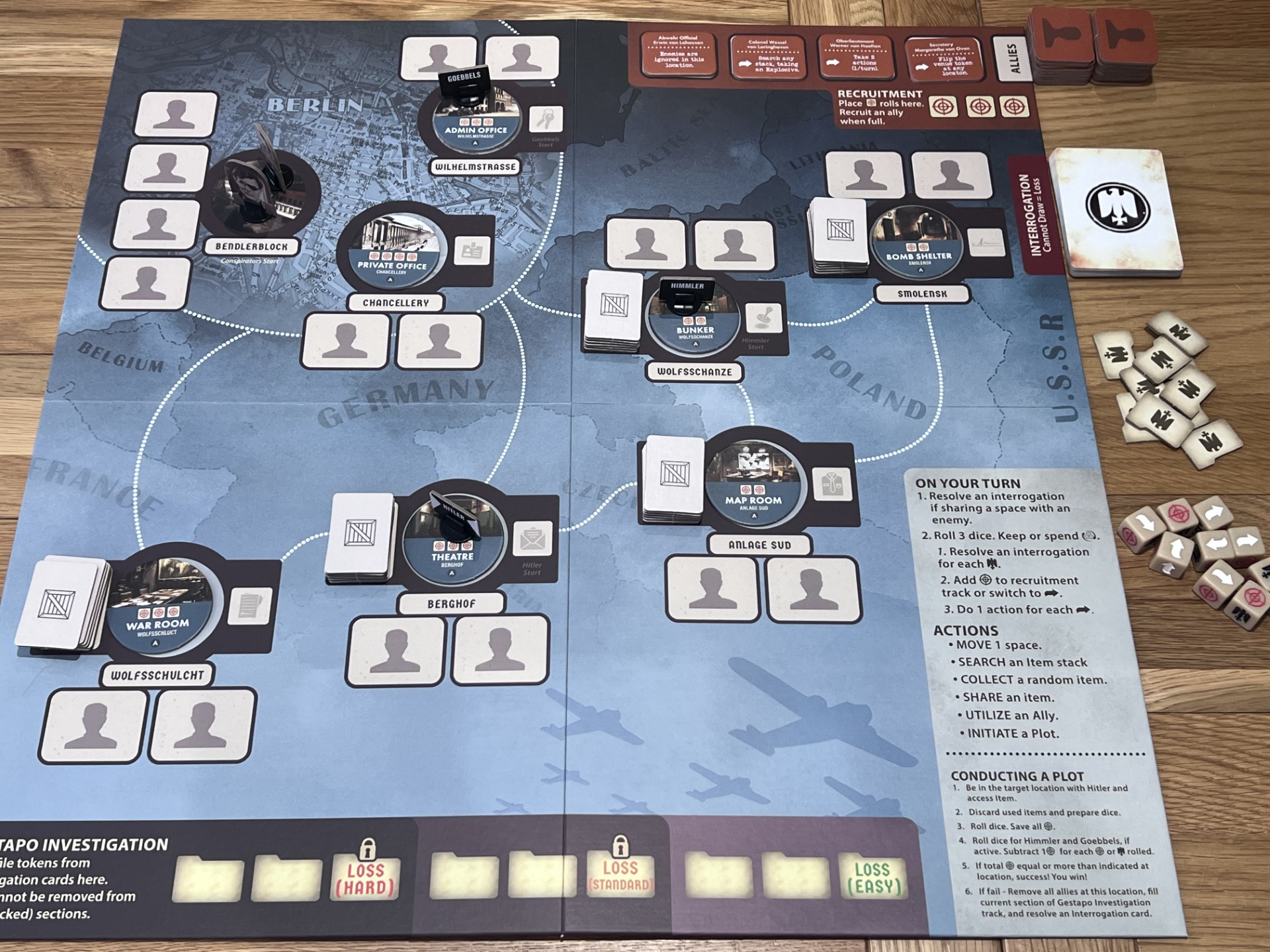
The core loop is pretty familiar. Players take on the roles of conspirators working together to gather resources, build support, and avoid the ever‑present threat of the Gestapo. Suspicion rises and falls, events escalate, and the pressure to act mounts as Hitler’s grip tightens. But where Black Orchestra could sometimes feel like a long, grinding march toward a narrow window of opportunity, Valkyrie is structured to get you into the action quickly. The game wastes no time in presenting you with meaningful decisions, and the shorter playtime means that every turn feels consequential.
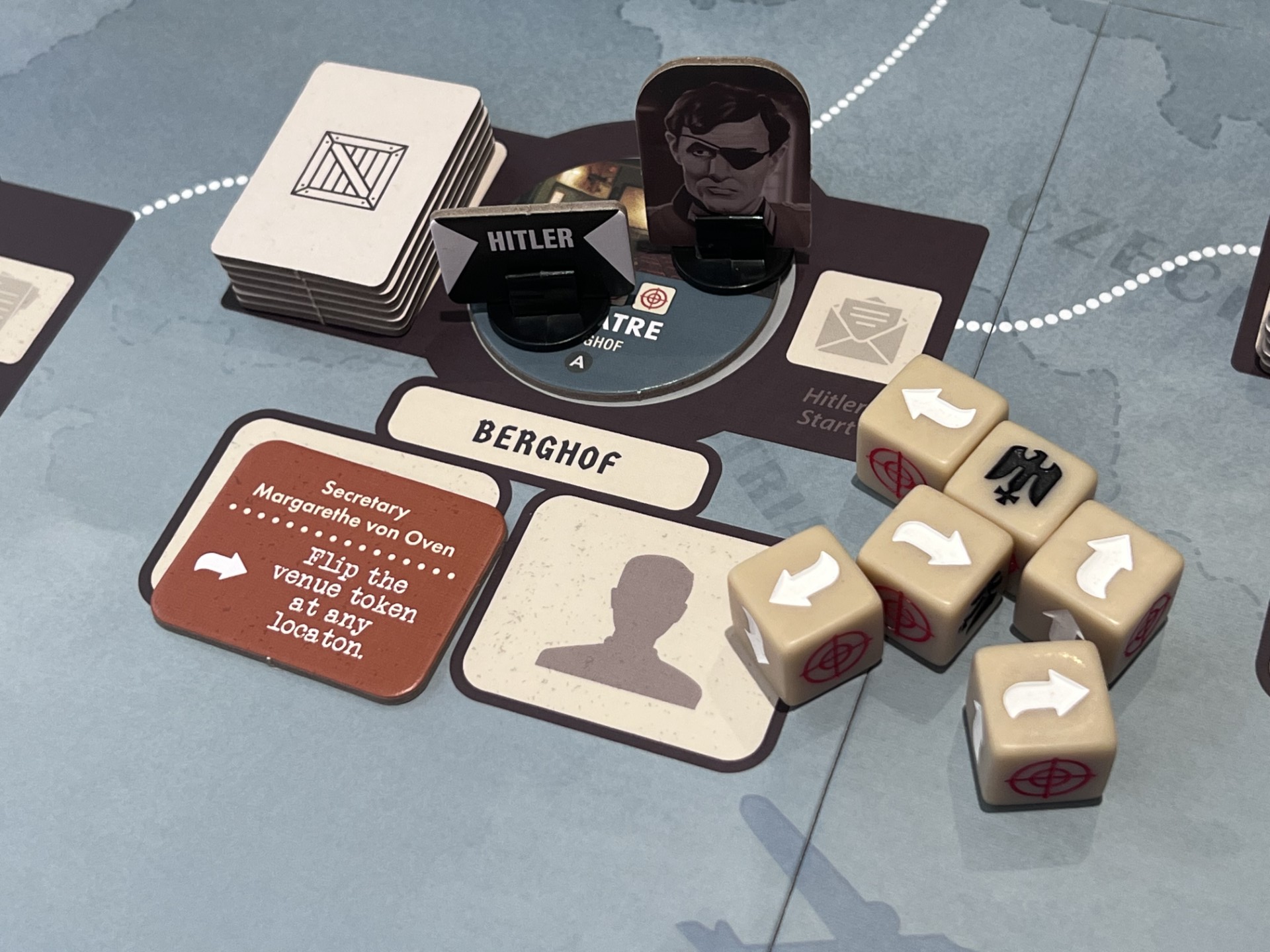
One of the biggest changes is the streamlined action system. In Black Orchestra, the variety of actions and the breadth of the map created a sense of scale, but they also introduced downtime and occasional analysis paralysis. Valkyrie reduces this down to a cleaner set of choices, each with immediate tactical implications. Movement is faster, resource gathering is simplified, and the steps required to prepare an assassination attempt are more transparent. This doesn’t make the game any easier — the Gestapo are still relentless — and the consequences of missteps are still severe — but it does make the experience more dynamic.
The event deck (which was always a highlight of the original game) has been reworked to match the new pacing. Events hit harder and faster, and they push the narrative forward with a sense of inevitability. In our Black Orchestra review, we noted how the event system “creates a constant sense of motion, even when players feel stuck.” Valkyrie amplifies that effect. The game rarely gives you time to breathe, and the escalating pressure mirrors the historical desperation of the conspirators.
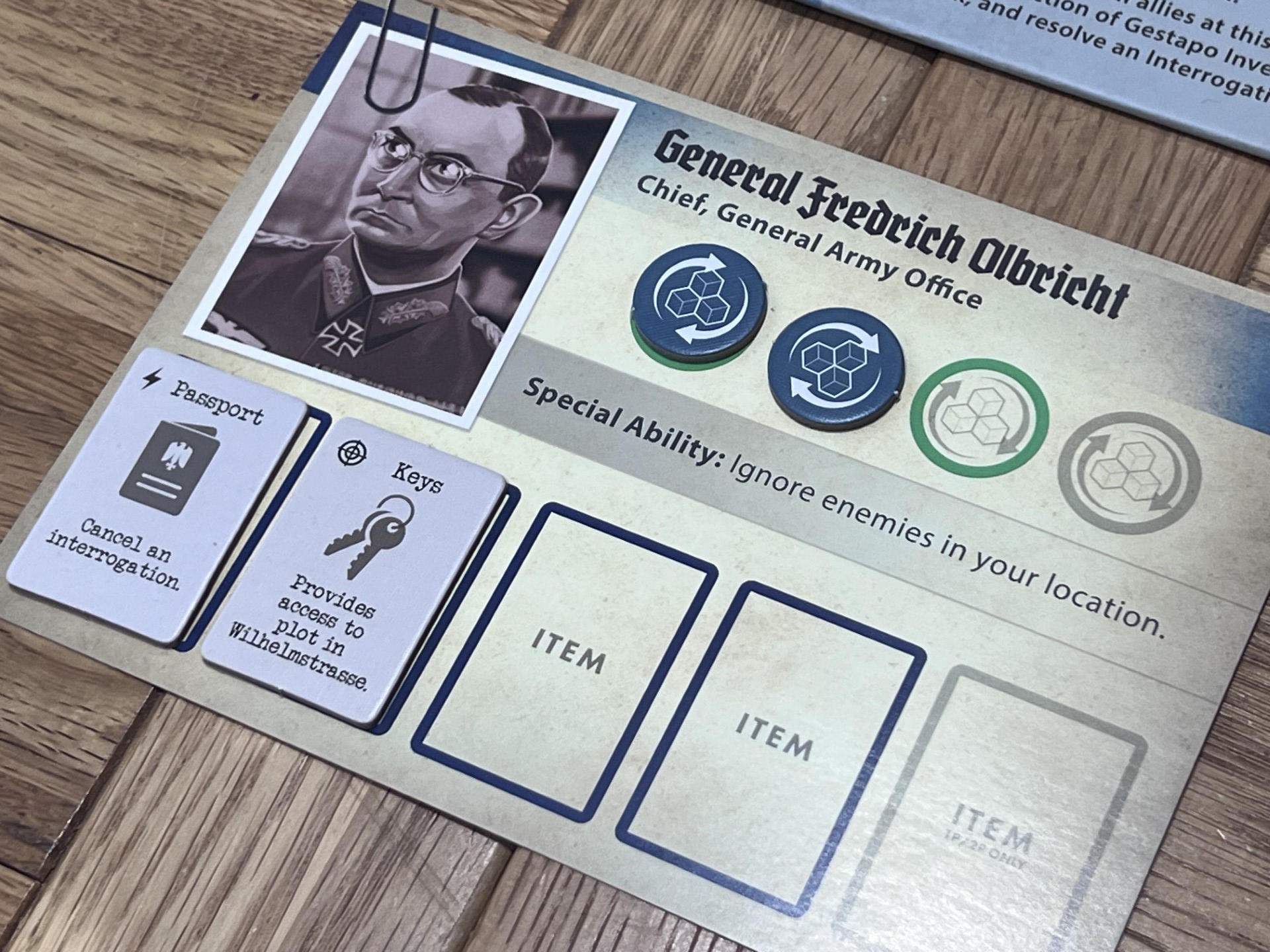
The assassination attempts themselves are more focused and thematic. Rather than a wide array of plots, Valkyrie centres on explosive‑based plans tied directly to Operation Valkyrie. This gives the game a stronger narrative spine, reduces the item combinations and reinforces the idea that players are working towards a single, monumental act rather than a series of abstract possibilities. The dice‑driven resolution remains, but the modifiers and preparation steps are clearer, making the outcome feel more tied to your decisions than to luck alone.
What’s particularly impressive is how Valkyrie manages to retain the emotional weight of the original game despite its shorter length. The sense of dread is still there. The fear of arrest is still palpable. The moral complexity of the conspirators’ actions still lingers over every decision, but the game delivers these feelings in a more concentrated form, making it easier to bring to the table and more likely to hit the table often.
For players who loved Black Orchestra, Valkyrie feels like a respectful refinement — a game that understands what made the original special but isn’t afraid to tighten the screws and reshape the experience. For newcomers, it’s a more approachable entry point into one of the most compelling cooperative themes in modern board gaming. Even with that said, different variables can be applied to make the game more or less difficult, and there are certainly combinations that make the game extremely challenging to beat, even if it’s very simple to learn.
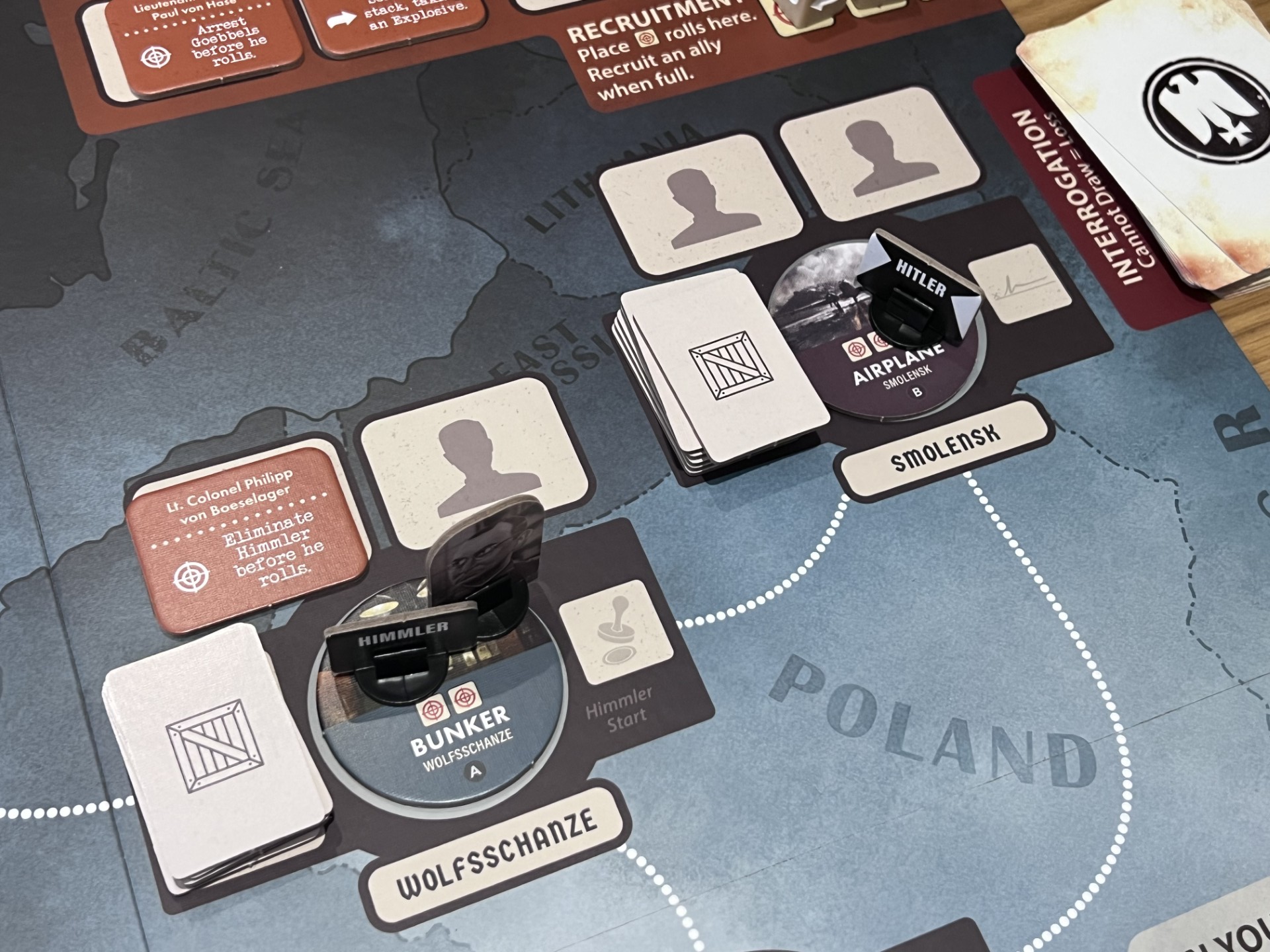
If Black Orchestra intended to create a slow, suffocating descent into desperation, Valkyrie is the moment when the conspirators finally decide to act — tense, focused, and over before they realise how much danger they were in. It’s a worthy successor, and in many ways, a sharper, more confident game. I love games like this, and whilst Valkyrie is the simplest of them, I’d also recommend the excellent Dutch Resistance: Orange Shall Overcome which (like Black Orchestra) has a similar idea but at a much higher level of complexity.
Valkyrie: A Black Orchestra Game is available now from Zatu Games.
