

If you ever wondered what the Tower of Terror ride would be like as a roguelike deckbuilder, The Spirit Lift has you covered.
I’ve played a lot of rogue-lite deckbuilder games over the years, with many of them written up right here. Whilst few of them manage to reach the heights of the current champ that is Monster Train 2, the likes of Fights in Tight Spaces and of course the poster child that is Slay the Spire are enjoyable in their own right. The Spirit Lift isn’t quite on the same level as these, but does offer enough of a unique twist to keep me playing long after I should have gone to bed.
There’s a plot of sorts, as many games in this genre have. A 90s high school graduation party is going on at a run down hotel, and your particular group of teens wander off and manage to find the titular elevator that carries them to the off-limits upper floors. They’re off-limits for good reason, as there seem to be all manner of ghosts and monsters here, ready to lay claim to your party. You’ll need to work your way up to the thirteenth floor to confront the leader of these beasties to escape with your life intact. There’s a little more to it, with various bits of lore you can uncover, as well as an overarching metanarrative, but as is often the case with rogue-lite deckbuilders, the gameplay is what you’re here for.
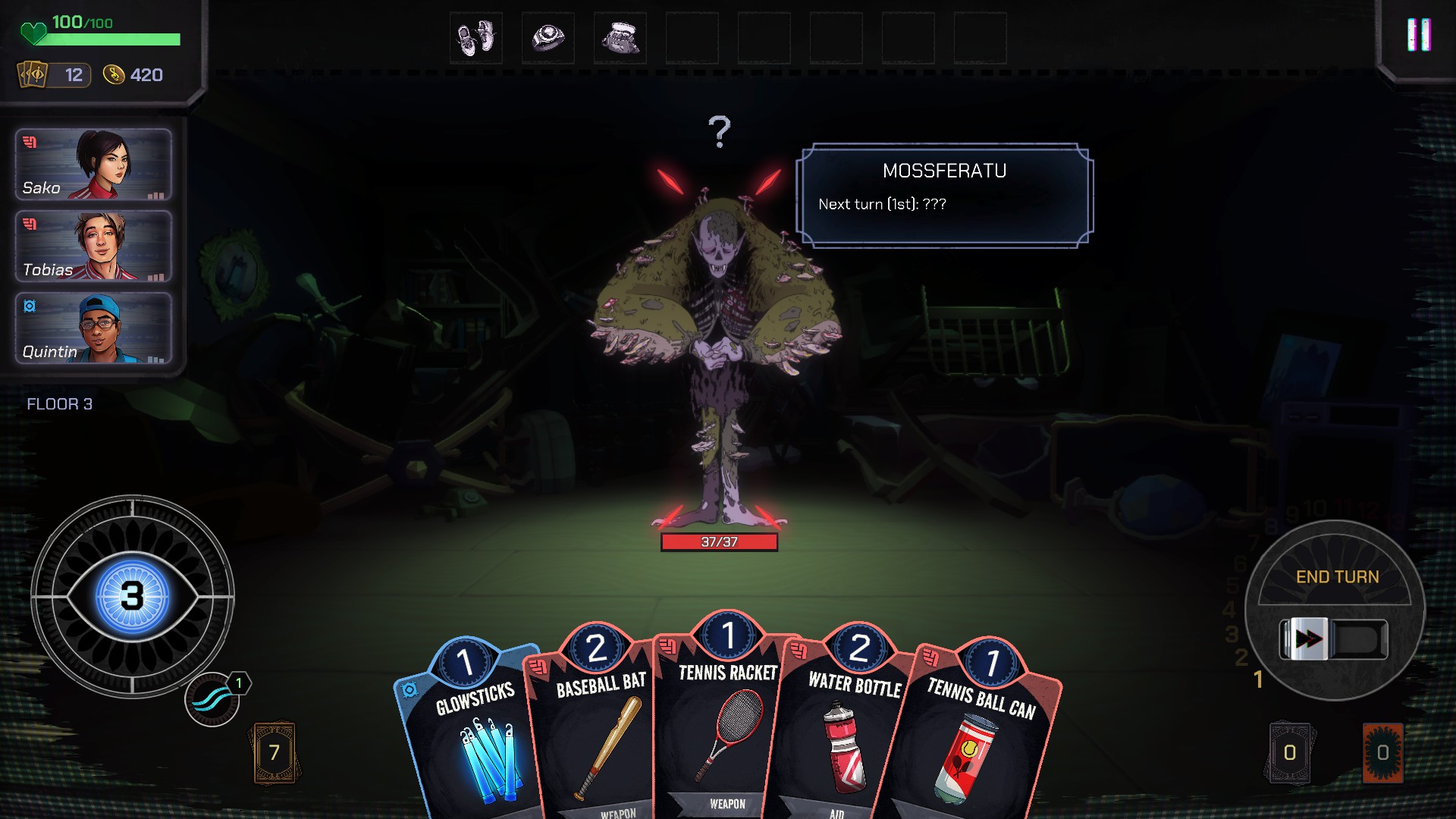
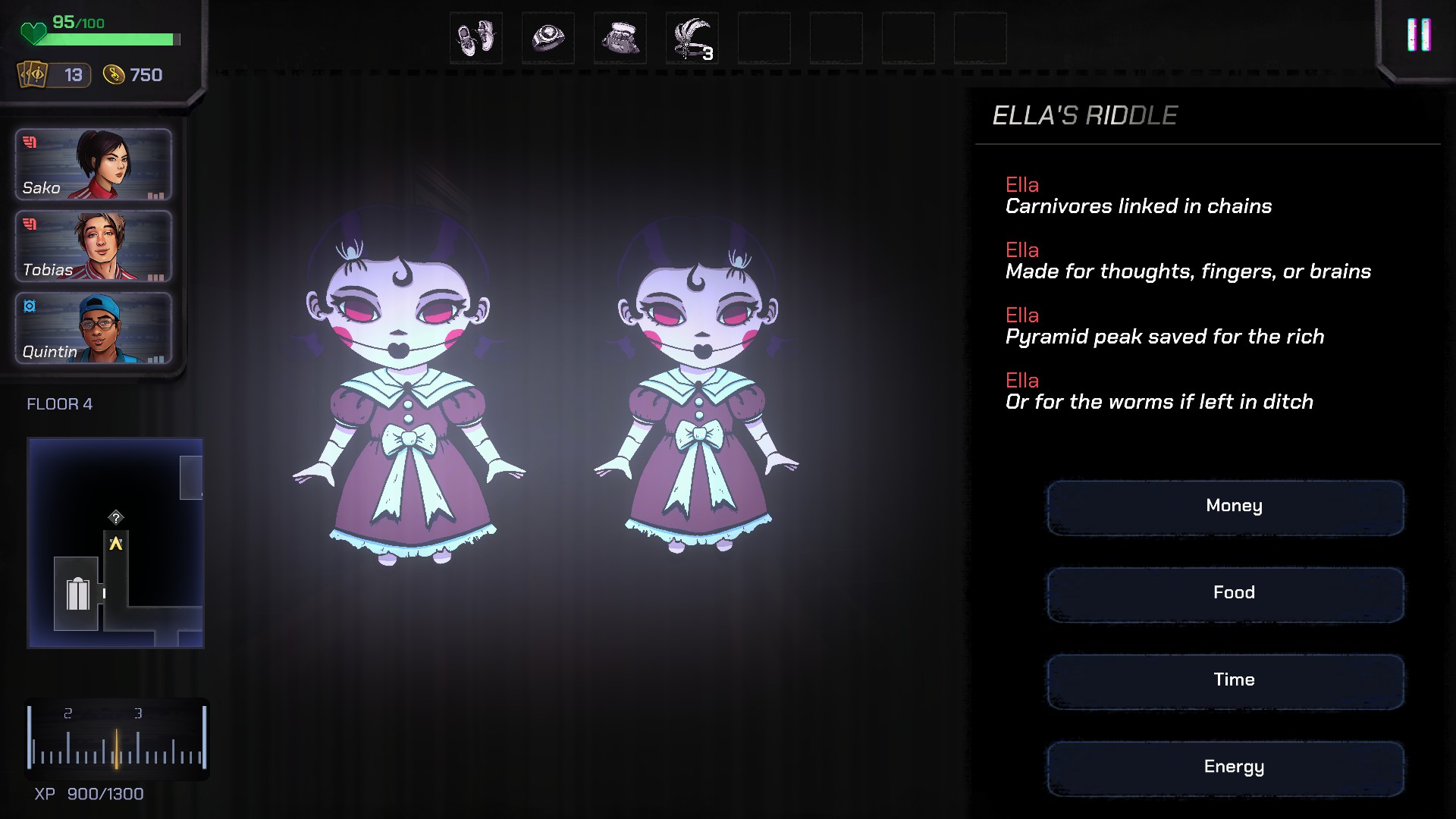
At its core, The Spirit Lift isn’t all that different to a lot of other games in the genre. You’ll move around the floor you’re on, fighting battles and dealing with events to strengthen your deck before moving onwards in the hopes that your build will be strong enough to take on the boss. Unlike a lot of games though, this isn’t node based. Instead, on each floor you’ll walk around the corridors, checking rooms until you find the lift to the next floor. Quite why the lift moves, I don’t know. Magic, probably!
Anyway, this gives you an interesting way of avoiding a lot of encounters you don’t want to deal with. Most battles and events are in rooms, and if you don’t go into them then you won’t have to handle them. Admittedly, you’ll need to enter rooms to find the lift, but you can avoid a lot of conflict if you want to. Then again, combat and events are how you level up, strengthen your deck, and earn money to spend at the shop run by a dapper wolf. For what it’s worth, I never avoided rooms simply because I wanted as many resources as I could get. Because you earn XP by winning battles and completing events that can be used to upgrade your cards for that run, avoiding areas means you’ll likely be pretty weak later.
Battles play out as you might expect if you’ve played the likes of Slay the Spire. Enemy intentions are displayed, and you use your hand as best you can to attack enemies and avoid harm. If you’re familiar with the genre, there’s little here that you won’t have seen before, but it’s as fun as it is anywhere else. I liked the dodge system, where you could stack the dodge buff to completely avoid all incoming damage turn after turn. Used well, you can be practically untouchable.
The bulk of The Spirit Lift plays like most rogue-lites, but I really did like how you would set up for your runs. Because you’re a group of students, before each run you choose your group of three that act as your starting deck and items. Each student plays in quite a different way, with Tobias being a blunt instrument for smashing enemies, whilst Maria can keep on topping up your energy to allow you to play more cards each turn. Whilst it’s fun to find broken combinations that allow you to run roughshod over the game, it’s just as enjoyable to take a team that lacks any combat punch and still make it through. There’s even an indicator showing how difficult a run will be based on your selected team. It’s a nice way to start each game and offers some fun replay value.
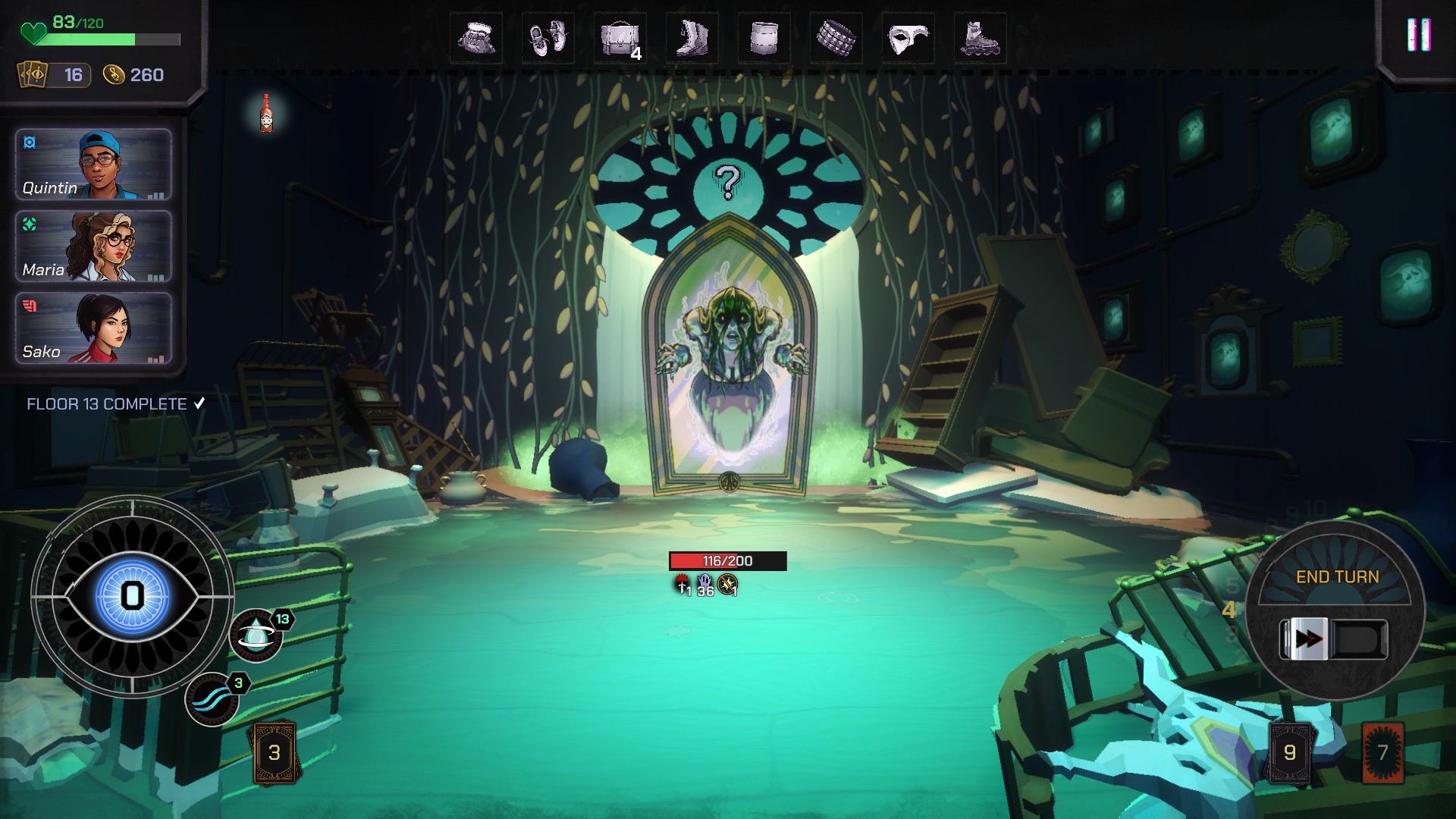
You kind of need that replay value too, as The Spirit Lift isn’t the hardest game to win runs on. In fact, I was successful on my third attempt. Fortunately, each run has a randomised boss that changes the enemies you fight on your way up. Less fortunately, even then the enemy variety is pretty slim, with minor variations on about five enemy types being what you can expect. Each variant does behave in a different way though, so you do have to plan your attacks somewhat, even if what they do isn’t anything you won’t have seen before.
I did like the inclusion of challenges to complete that will unlock new items and cards for future runs. These can be by playing certain card types or defeating certain types of enemies and bosses. It’s a neat way of gradually introducing more content without the standard earning XP system that other games use.
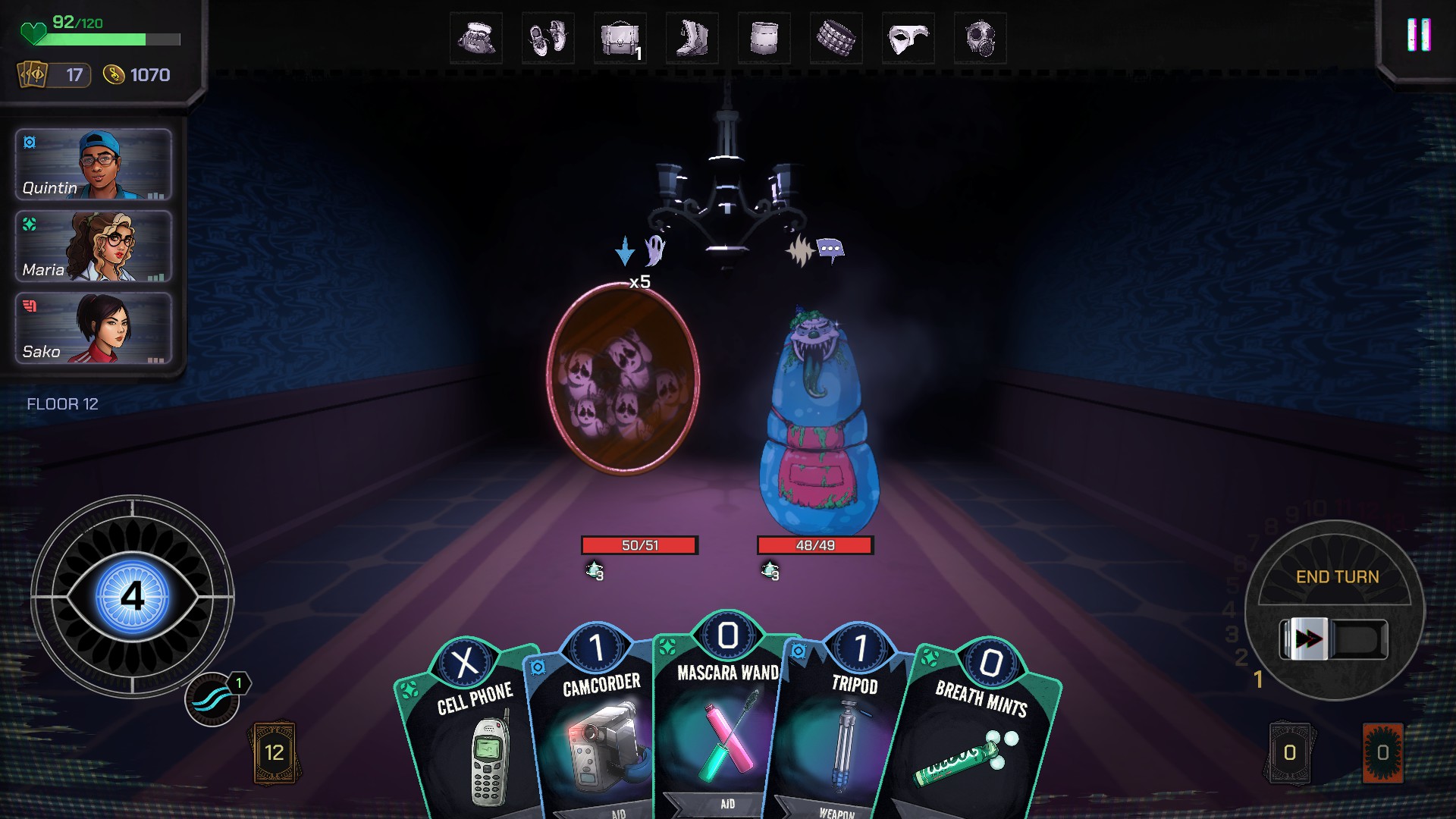
Something else I liked was the visual presentation. Whilst it took a little getting used to, the Saturday morning cartoon style works quite well for what the game is going for. Enemies, whilst limited in terms of animation, have a great, bright look to them. Though the variety may be lacking, they aren’t stereotypical monsters, with ghostly children trapped in mirrors, moss covered monstrosities, and ball gown swathed spider ladies. The environment is less impressive, as the hallways are pretty much the same, and you navigate every floor in the same, grid based pattern. It won’t take long for you to realise that the layout of each floor is pretty much the same, and though the rooms you enter look interesting at first, you’ll have seen them all before long. Sounds are also pretty anaemic, with weak sounding attacks from you and your enemies. The music is nice though, and surprisingly catchy.
The Spirit Lift is a solid rogue-lite deckbuilder with a neat theme and design that I don’t think I’ve seen in another game in the genre. Being able to form your party to make your deck feels fun, and the minor bits of banter between characters is a fun little inclusion. This isn’t going to set the genre ablaze in terms of creativity, but it is an enjoyable new entry into it.
The Spirit Lift is available now on PC.

Comments are closed.