

Quoridor Pac-Man is a curious hybrid that manifests as part abstract strategy, part arcade homage and if you were just in the market for Quoridor alone, it might be all the more interesting for it.
Published by Gigamic, this edition of the classic Quoridor offers two distinct modes of play: the original and well-loved pawn-and-wall duel, and a Pac-Man variant that reimagines the grid as a ghost-filled maze. It feels like a match-made-in-heaven reskin that — at least at first glance — doesn’t quite live up to expectations.
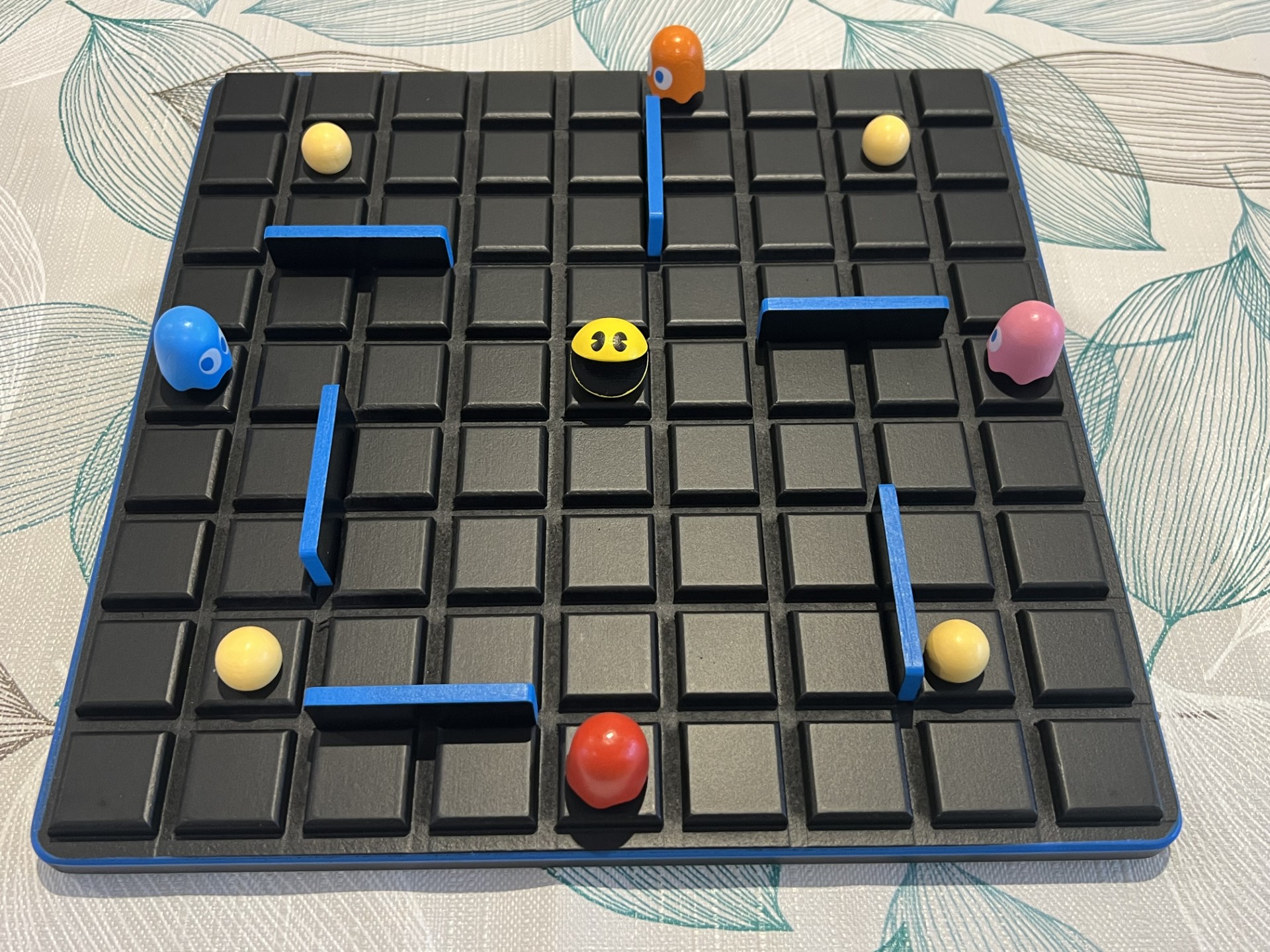
Let’s start with the classic variant. Quoridor is played on a 9×9 grid, with each player starting at the centre of one edge and aiming to reach the opposite side. On your turn, you either move your pawn one space orthogonally or you place one of ten walls — two squares long and always perpendicular to the grid lines. The twist is that walls are permanent and finite, and while you can block paths, you can’t fully trap your opponent.
That rule — no complete obstruction — forces players to think spatially, tactically, and with restraint. Classic Quoridor is a game of tempo and tension, where every wall placed is potentially a barrier to both players, and usually games play out as a tug-of-war as one player or the other makes a minor mis-step and “wastes” the opportunity to either advance closer to their objective, or effectively stop their opponent from doing the same.
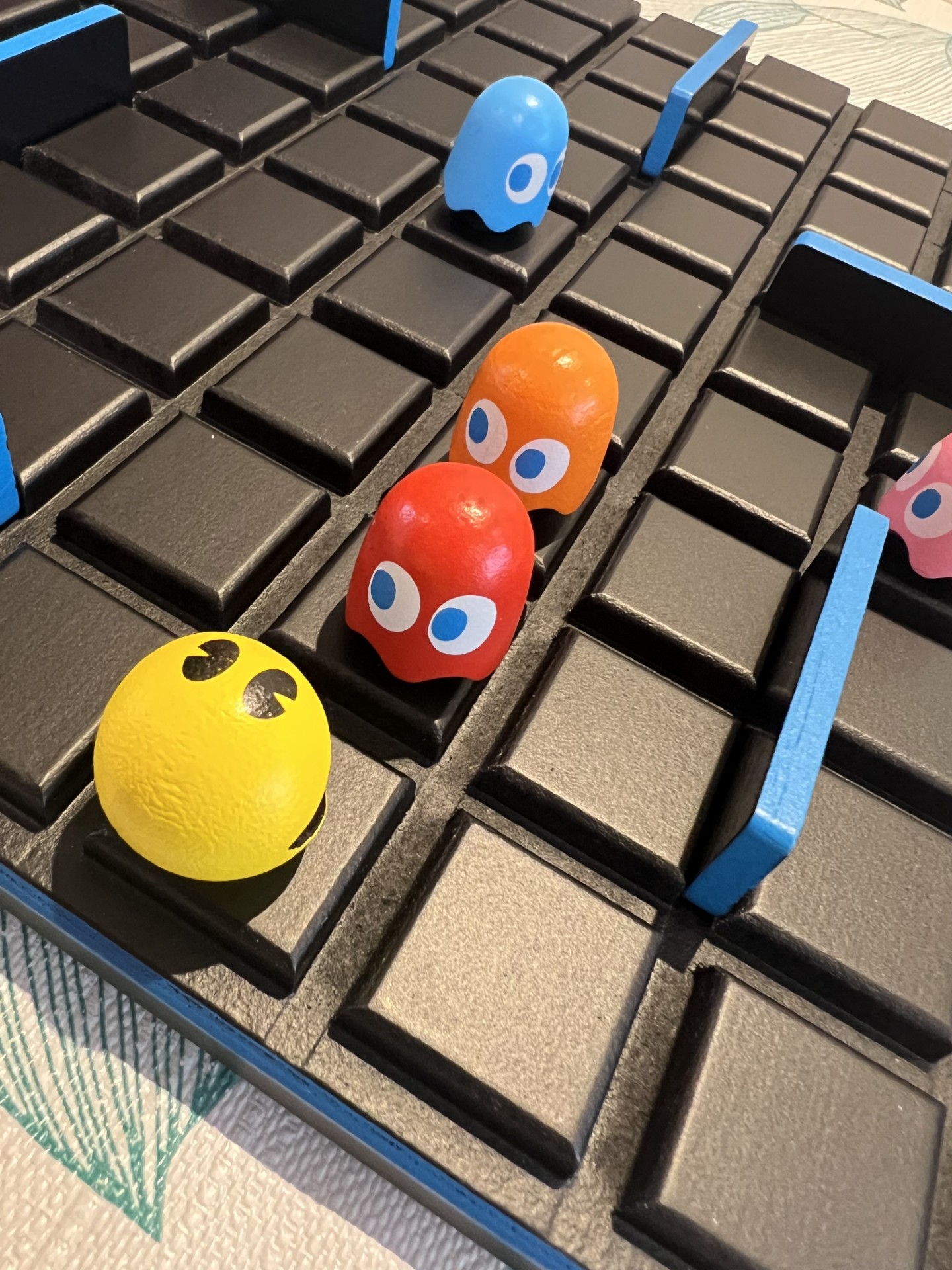
The elegance of the original Quoridor lies in its simplicity. There are no dice, no cards, no randomness. Just movement and obstruction. And yet, the decision space is quite rich. Do you race forward or try to slow your opponent? Do you conserve walls or spend them early? The game supports two to four players, but it’s at its best as a head-to-head duel — where repeat games start to reveal patterns of play, and with games played one after the other, clear openings and developments in play start to show.
Now enter the variant: Quoridor Pac-Man. Here, the grid becomes a (relatively basic) maze, and the pawns are replaced with Pac-Man and the four ghosts — Blinky, Pinky, Inky, and Clyde. One player controls Pac-Man, who starts in the centre and must collect four power pellets placed in the corners. The other players control the ghosts, starting from the edges and trying to catch Pac-Man before he completes his objective.
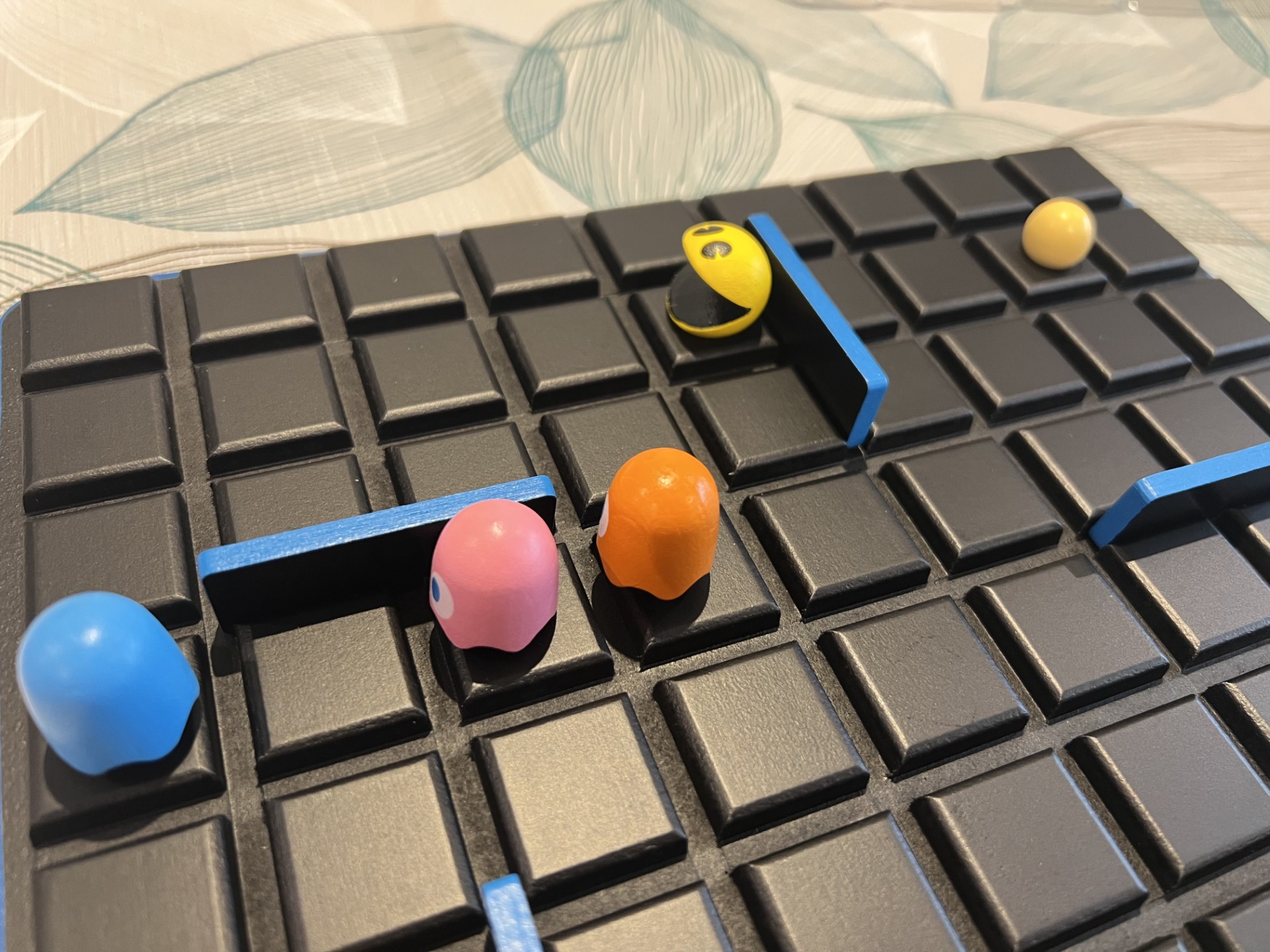
Movement rules shift slightly. Pac-Man moves two spaces orthogonally per turn, while all four ghosts will each move one, unless they have a direct line of sight to Pac-Man, in which case they can move two. If Pac-Man reaches a power pellet, he gains a temporary boost — three spaces of movement and the ability to eat ghosts if he crosses their path. If caught, he loses a life and the board resets (minus any eaten pellets). He has three lives to complete his mission.
The variant is somewhat fun for younger players, and certainly quite visually engaging, but in its base form, it leans heavily in Pac-Man’s favour or at the very least drives some “weird” behaviour where the ghosts just camp around a single power pellet. Whilst I had fun with my youngest daughter (four) in this mode, it felt broken enough to me that it must have been resolved by the broader community.
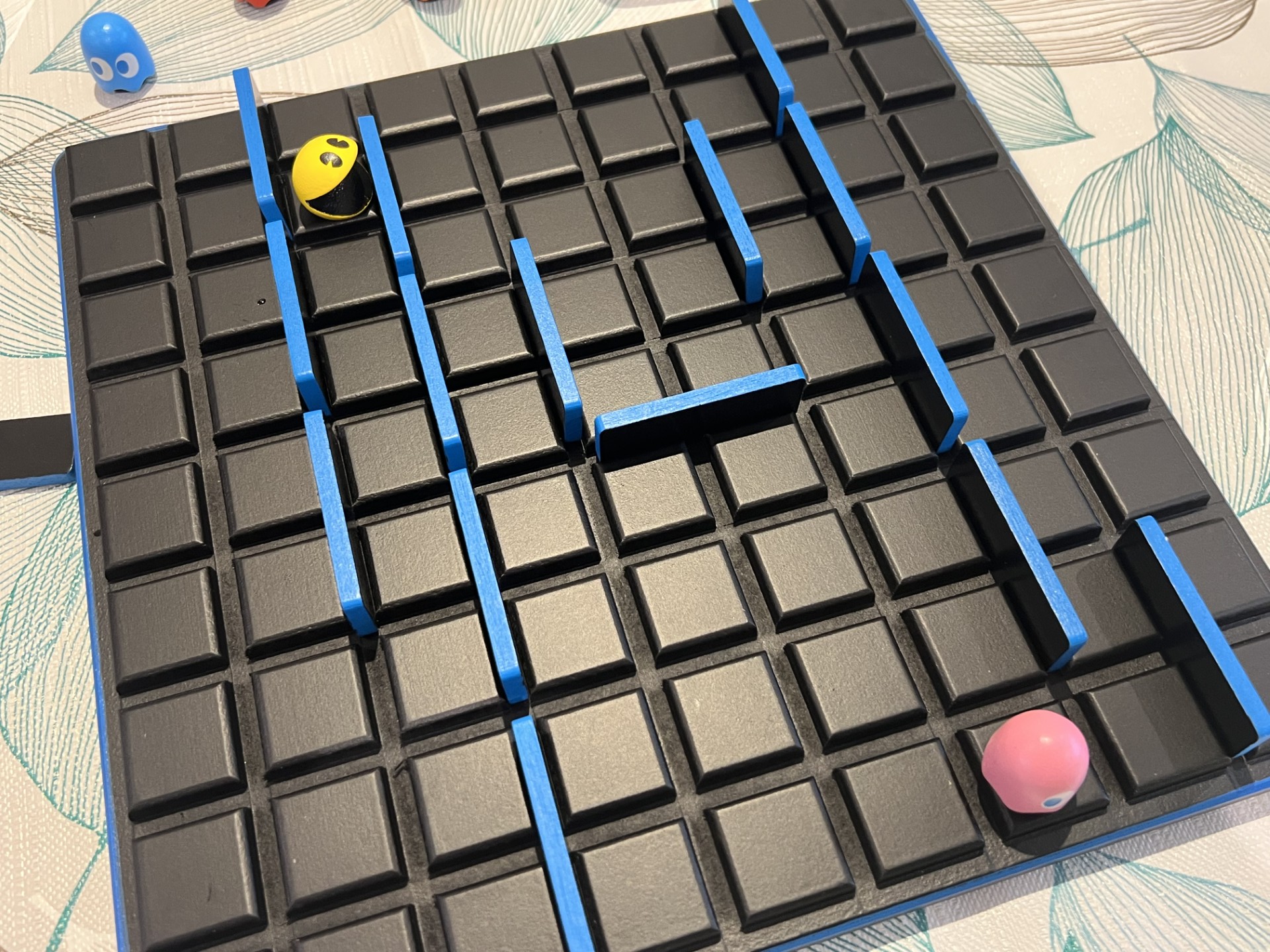
Credit where it’s due, because that’s where Flavien Loisier’s official variant rules come in. Flavien runs Hachette UK (who supplied our copy) and whilst not directly linked to Gigamic, I really appreciate this example of someone senior in the industry taking accountability for a less than perfect design and doing something to solve it.
Flavien’s tweaks (available freely on BoardGameGeek) completely change the Pac-Man mode to make it more authentic to both the Pac-Man IP and the original Quoridor concept. In the variant, the setup is different, as are the ghost respawn mechanics, movement restrictions, and win conditions. For example, ghosts now return to their spawn points after being eaten, rather than being removed entirely. Pac-Man’s boosted movement is capped more tightly, and ghost coordination becomes more viable thanks to clarified turn sequencing. These changes make the chase feel more tactically balanced and less swingy, and they restore the tension that makes the original Quoridor so compelling.

So where does that leave us? Well, Quoridor Pac-Man offers two games in one: a timeless abstract duel and a playful arcade chase that really needs a v1.1 patch to make it work properly—something that wouldn’t have been possible in an original 1980 arcade cabinet.
The classic mode remains sharp and strategic, while the Pac-Man variant—in particular with Loisier’s rules—adds flavour, accessibility, and a surprising amount of depth. With genuinely incredible production values, Quoridor Pac-Man might be well worth a look as we head towards a Christmas season where quality gifts that bring people together should be highly valued.
Quoridor Pac-Man is available now from Zatu Games.


Comments are closed.