

“Greetings Lord Vader, the shield will be down in moments, you may start your landing.” With that line, Battle of Hoth hits the table, giving players the chance to relive one of Star Wars’ most iconic battles. Published by Days of Wonder and designed by Adrien Martinot and Richard Borg, it’s a fast, accessible skirmish game built on the Memoir ’44 system, but with enough twists to stand on its own.
Martinot, Studio Director at Days of Wonder, has overseen hits like Ticket to Ride and Small World. Borg is a veteran designer and the mind behind Memoir ’44. Their collaboration makes perfect sense: Battle of Hoth takes the proven mechanics of Memoir and adapts them to the frozen wastes of Hoth with cinematic flair.
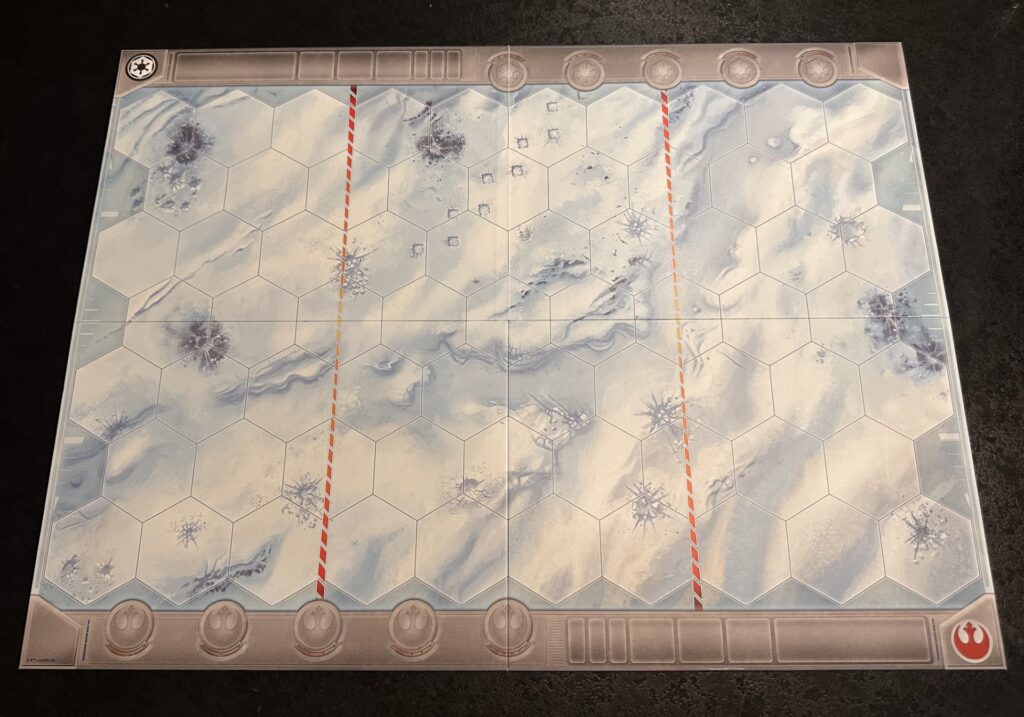
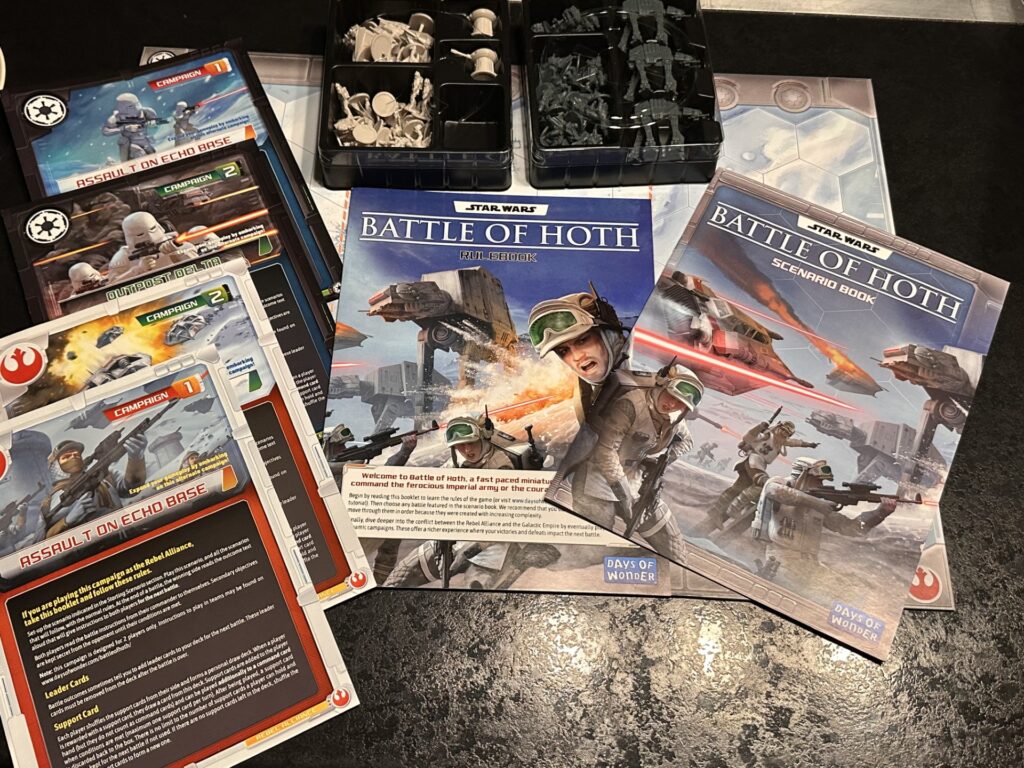
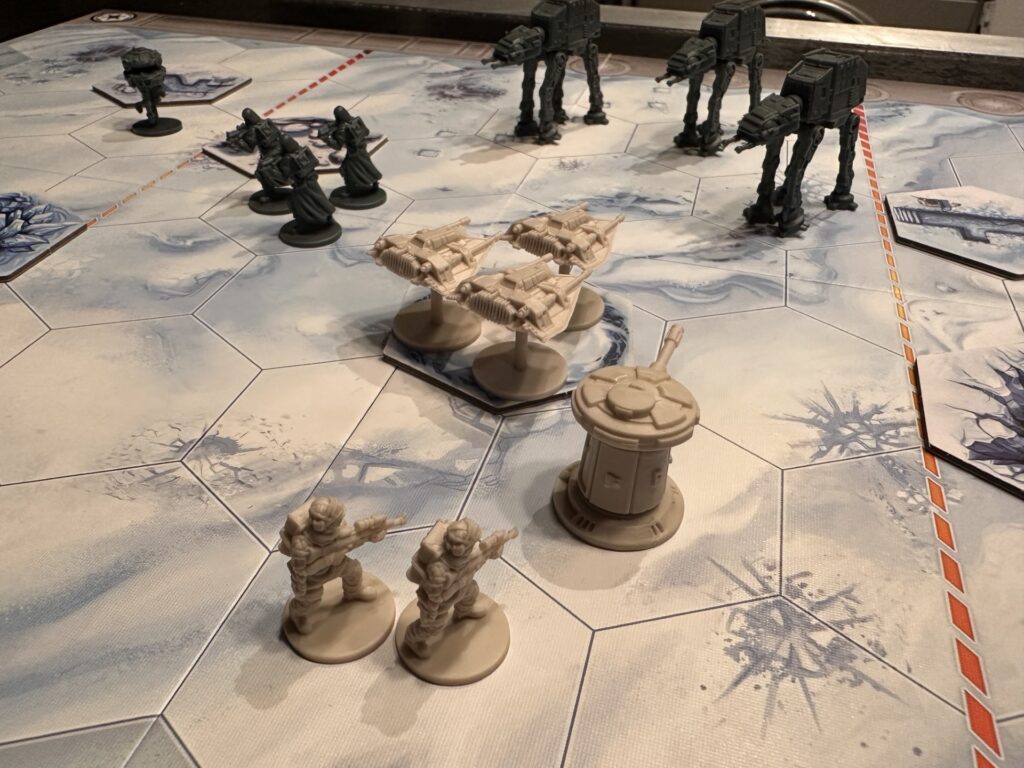
The board is a 67-hex grid, beautifully illustrated to capture the icy battlefield. It’s double sided, and if you own two copies (or at least borrow a friend’s), you can combine them for larger scenarios. Production quality is high across the board. Miniatures come in sturdy trays with faction logos, and the figures themselves are durable, well posed, and thematic, with each unit (bar the Rebel Artillery) giving a feeling of movement. Rebel infantry units field three figures, while Imperial squads get four, reinforcing the sense of underdog Rebels versus overwhelming Imperial might. The AT-ATs, of course, are lumbering juggernauts. Even the 12-page rulebook is clean and approachable, with diagrams and simple explanations, which makes the game accessible for younger players. While the box says ages 8+, the tactical nature of the game makes it better suited for slightly older players or younger ones with guidance.
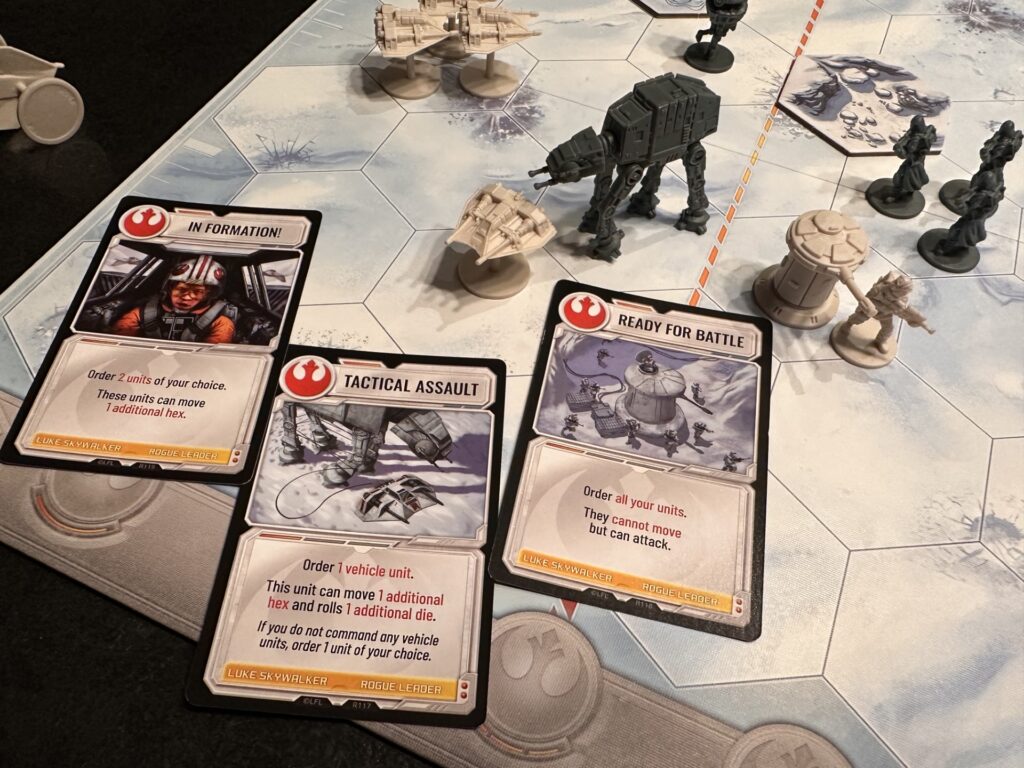
If you’ve played Memoir ’44, the core will feel familiar: command cards, divided battlefields, and dice driven combat. But Battle of Hoth introduces some clever changes. Each side has its own deck of 16 standard command cards, compared to the shared command deck of its predecessor. Optional leader cards, nine for each side, with three cards per leader, add asymmetry and unpredictability. Each leader supports different play styles; Luke Skywalker favours quick movement, with one card that allows for an overwhelming defensive move. Darth Vader has a large impact on small groups of units and gives them a short infusion of overwhelming force. Leia brings flexibility and a well needed reinforcement card. Han Solo’s cards give commands perfect for any scruffy looking Nerf herder, and General Viers some extra assistance to his battlefield dominating machines of war.
The battlefield is divided into three zones, and cards dictate which zones and how many units you can activate per turn, playing one card from a hand of usually four cards. Units move, then attack. Dice resolve combat with symbols for infantry, vehicles, blasts, and retreats. Retreats prevent overly defensive play — although AT-ATs, fittingly, never retreat. The use of symbols makes combat intuitive as there are no strength or defense numbers to work out, just roll the correct symbols to take out a unit. Victory usually comes from collecting medals, gained by completely destroying enemy units, but sudden death objectives like capturing intelligence or holding key positions keep things varied. Units also retain the same combat strength no matter how many parts of them have been removed. A lone stormtrooper survivor is just as lethal at close range as its full squad.
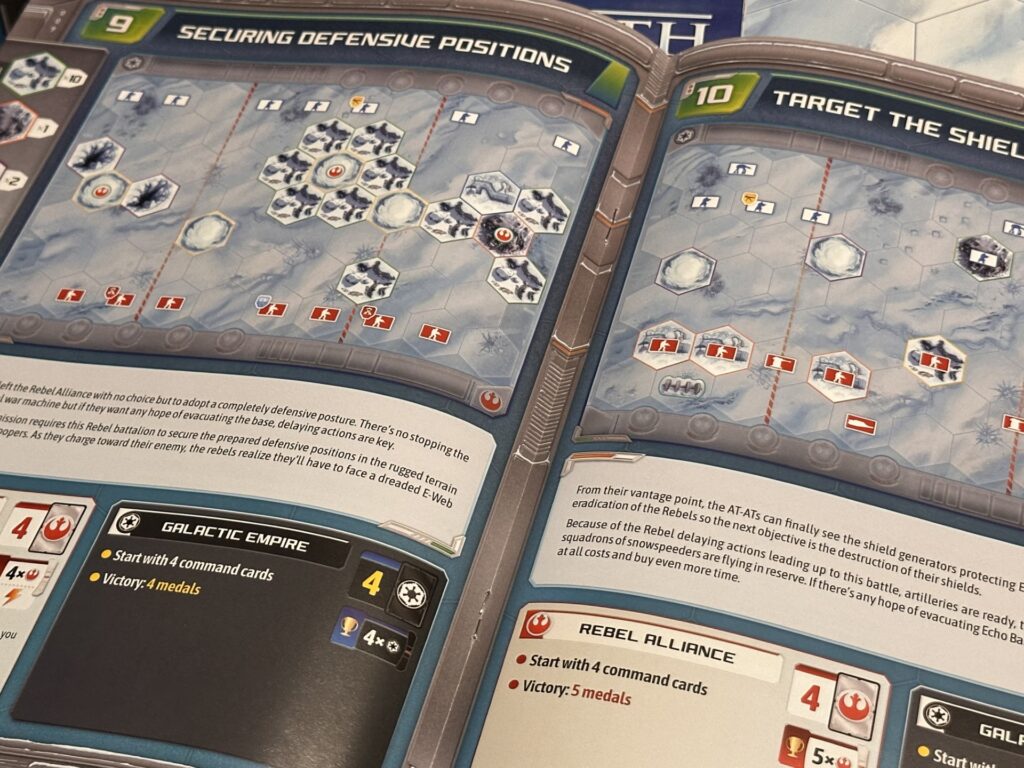
The scenario book includes 18 missions, grouped into four mini campaigns but also playable individually. Early scenarios are simple, easing players in. As the scenarios develop they add new units, terrain, and objectives, ensuring the game never feels repetitive. This gradual escalation is one of the game’s biggest strengths: it teaches through play, layering complexity without overwhelming.
The final scenario, “Assault on Hoth,” recreates the climactic battle from The Empire Strikes Back. Unfortunately, it requires two copies of the game. While ownership of two copies, or finding a friend who also has a copy is a stretch for many, the publisher does support fan made scenarios online, which extends replayability, as long as the website remains supported.
Luck is both the game’s biggest frustration and its greatest equalizer. Command cards in your hand that are not as relevant to your current troop positions can leave you unable to activate your strongest units, while dice rolls can swing outcomes wildly. Taking down an AT-AT, for example, requires first rolling a vehicle/blast hit, then rerolling for a blast hit again with all the dice that hit in the initial roll — a one in eighteen chance per die. That means a lone infantryman might topple an AT-AT, while two squadrons of snow speeders, rolling eight initial dice at close range, could fail completely.
 In practice, this creates cinematic moments. In one game, I snatched victory with a desperate final attack, rushing the Rebels with my depleted, but emotionless Probe Droids, despite being outplayed by my opponent on every turn previously. In another, I lost but felt the outcome was fair, both of us having played equally tactically, and the dice rolls had seemed equally good and bad for us both. The dice ensure no battle feels predetermined, though they can frustrate players who prefer pure strategy as you have no way to mitigate a bad roll or block an opponent’s good roll.
Games last about 30 minutes, with setup and teardown equally quick. That makes Battle of Hoth easy to fit into a game night. The reliance on luck lowers the barrier for less tactical players, making it more approachable than many conflict heavy games. Both myself and my opponent generally dislike direct combat games, but we immensely enjoyed ourselves, since bad rolls softened the sting of defeat and good rolls were celebrated by both sides. The Star Wars theme isn’t just window dressing. Moving miniatures across the snowy battlefield evokes the film’s iconic scenes, and the asymmetry between fragile Rebels and relentless Imperials feels authentic.
There are criticisms. The reliance on luck can undermine careful planning, and the requirement of a second copy for the final scenario feels like an important draw to buy the game is missing. This could be because of simple design and production logistics, or it could be an attempt to milk more out of an adored franchise. But these issues don’t overshadow the game’s strengths.
Battle of Hoth blends streamlined mechanics with cinematic flair. It’s fast, accessible, and thematically rich, offering both newcomers and veterans a chance to relive one of cinema’s most iconic battles. For Star Wars fans, it’s a chance to command the battlefield of Hoth again, and again. For seasoned board gamers, it’s a polished, engaging entry in the Memoir ’44 lineage that is fun to play and has earned its spot on my shelf. It will be interesting to see if more locales from the Star Wars universe are explored beyond Battle of Hoth, such as Endor, Kashyyyk, Naboo, Krait or Geonosis. Send in the clones I say!
Battle of Hoth is available now from Zatu Games


Comments are closed.