

If I had a penny for every turn-based roguelike I’ve reviewed I’d probably be able to afford another avocado toast, or maybe even a Starbucks coffee. The genre isn’t exactly screaming for new releases and yet, little titles like Forsworn show that the same formula, done well, can still make a game worth playing. While I wouldn’t recommend it as a solo game, Forsworn excels as a co-op RPG combat experience with a surprising level of combat depth across six classes.
As is tradition for co-op releases, I enlisted my fiance for a few playthroughs of this one. “Playthroughs” is the term I’d use over the standard “runs” that roguelites tend to be based around. From start to finish you can expect between 90 minutes to three hours in a single string of missions across three acts. The time really depends on the difficulty, level of your heroes, and how long you get distracted drawing silly faces on the map screen. Forsworn won’t do anything that redefines what this genre means to you, but for a game filling the co-op space with this style of free-movement combat it does a fine job at doing what it sets out to do.
Forsworn is combat-heavy and rewards co-operation
Like most roguelite maps you’ll be charting your path between combat rooms, elite fights, shops, rest sites and mysterious events. At each combat location you’ll be fighting monsters, bandits, cults and creatures from hell to earn exp and loot. Nothing about the overarching design is that striking, it’s when you’re in combat that the game springs to life.
Just like genre standouts Hellcard and even Baldur’s Gate 3, Forsworn uses simultaneous turns. This means that all enemies get their turns, and then all players get their turns. Players are free to spend AP and movement in any order and at any time within the “hero” turn. This makes co-operation far deeper and more complex than a standard turn-based system as it allows lateral thinking as well as mechanical. For example, being able to have my co-op partner set up bleed on an enemy so my poison arrow procs for more stacks, then have them retreat after my shot so I can take aggro and dodge tank.
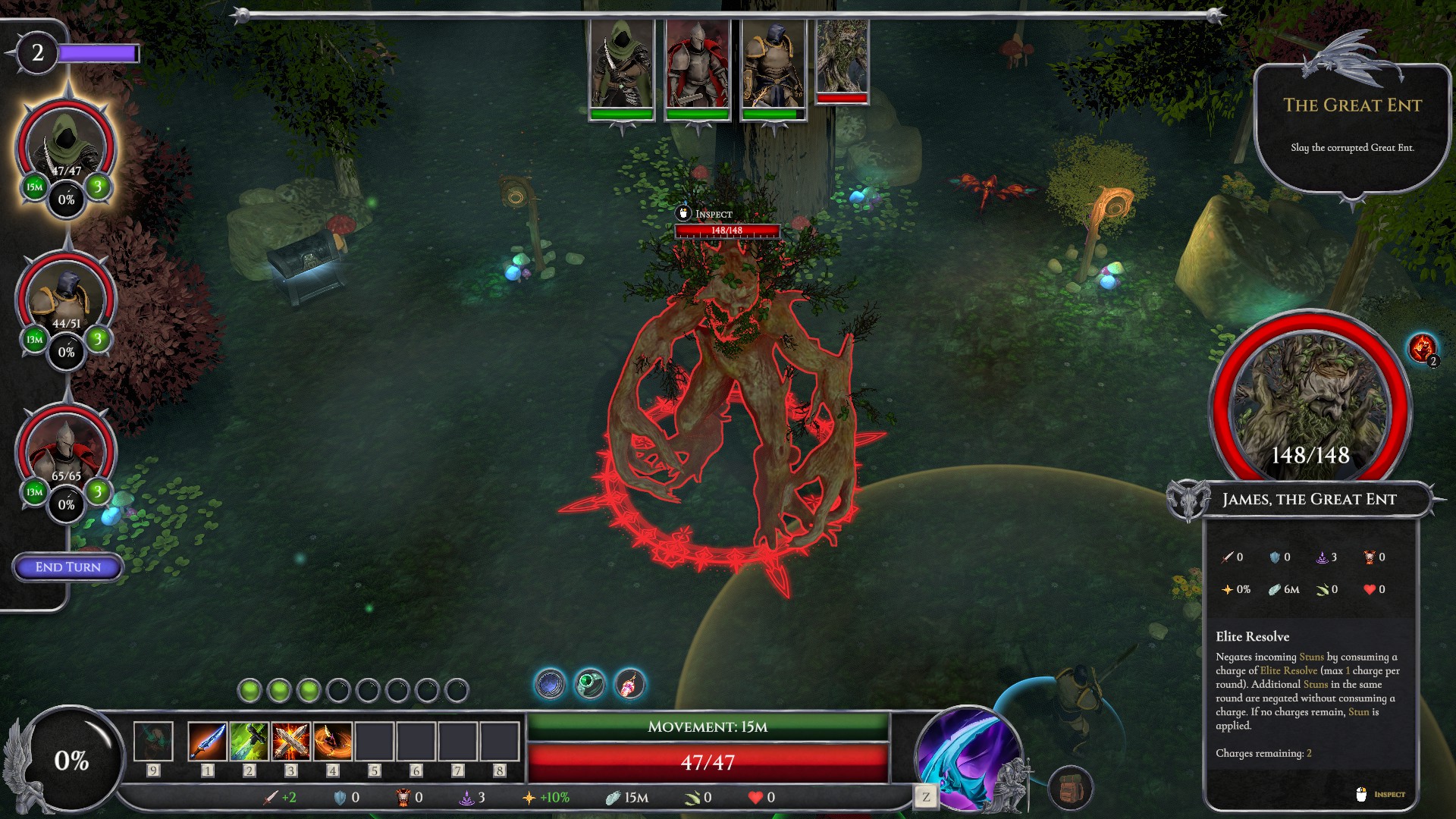
In a traditional turn-based system you’re forced to end your movement and actions without being able to fully incorporate each player. Forsworn’s range of abilities and enemy mechanics makes sure players are constantly scheming and plotting together to overthrow the nasties, leading to a truly co-operative experience. It also means you can mess up and accidentally both fire off a 10 damage attack at the 9 health enemy, wasting one of your moves. These failures to communicate are just as much part of a truly co-operative experience as the successes, and with the right group you’ll have plenty of moments to reminisce about by the end of a playthrough.
Forsworn lets you build for your party not just yourself
As you level up and complete events you’ll earn rings, trinkets and amulets that shape your build. These don’t just contribute to your personal build, though, but the build of your party as a whole. I once had +6 to my attack against bleeding and / or burning enemies despite the fact I couldn’t apply either of those effects, because the Paladin in the party could (and could do so exceptionally well). Even without considering your party the inventory slots available would allow you to create a wide variety of builds, with even some niche entries like a low-health berserker type set-up (shoutout to Dark Souls’ 1 RTSR builds).
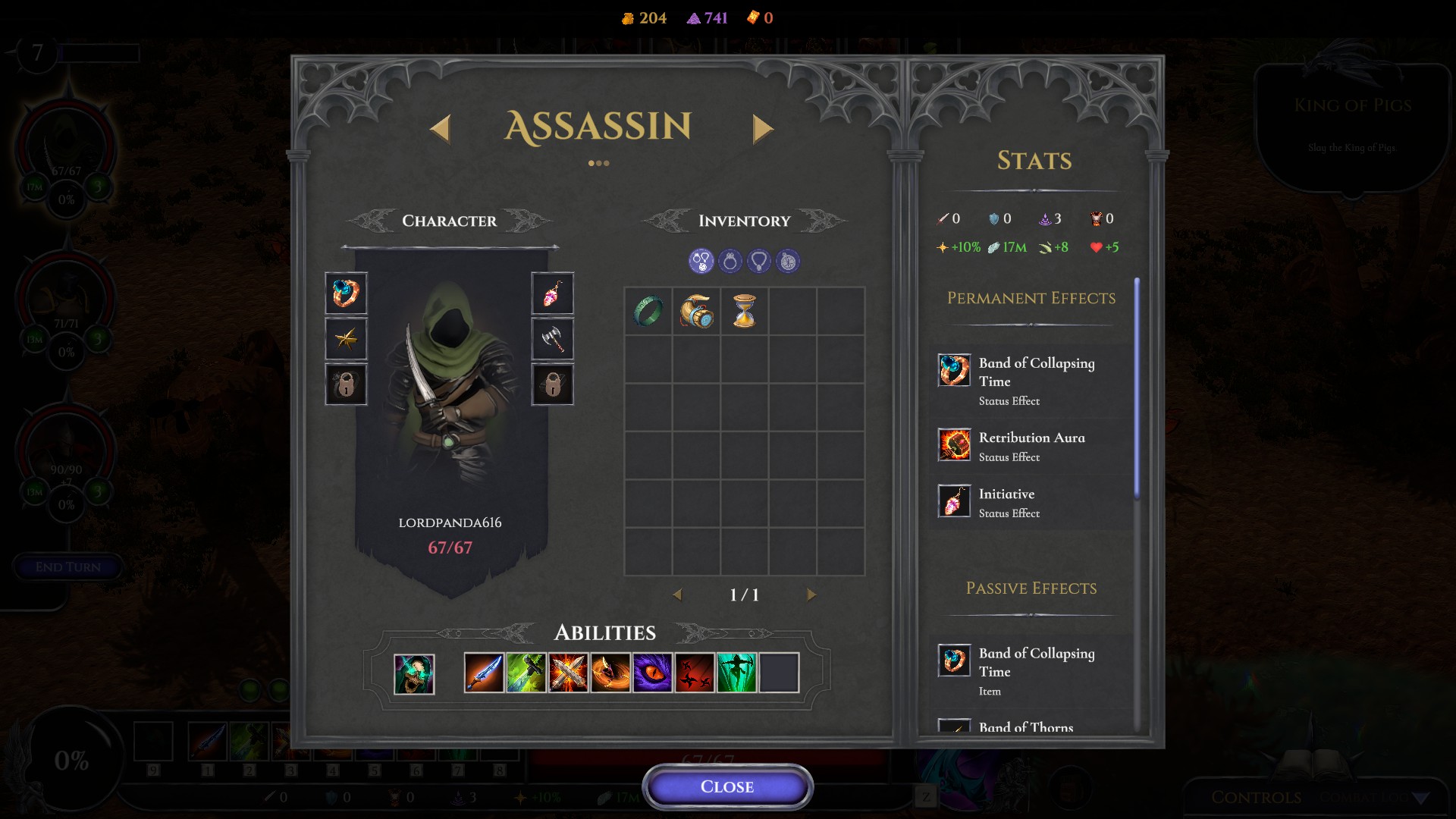
In addition to your equipment you have a range of skills which you earn each playthrough. Many of these are simple damage-dealers and status-givers, while others apply shield or dodge to allies. The exact effect of individual skills is never made too complex, but it’s the fact that the party has access to them all simultaneously that makes the combat pop.
Enemies have a range of behaviours to help make target-prioritisation and skill use as difficult to decide as possible, which is fantastic. If every decision was easy then there’d be no reason to deliberate and discuss with the team. Some enemies get stronger the lower HP they have, so co-ordinating to take them down in one turn can save you a lot of pain. Some will target the nearest hero, some the lowest HP which makes positioning and outranging enemies valid strategies. In boss encounters you’ll be juggling multiple unique behaviours and every player will be looking at their own skills to solve the problem, but it’s coming together and using those skills in harmony that will win the fight.
Interesting quests and secret encounters that wear thin too fast
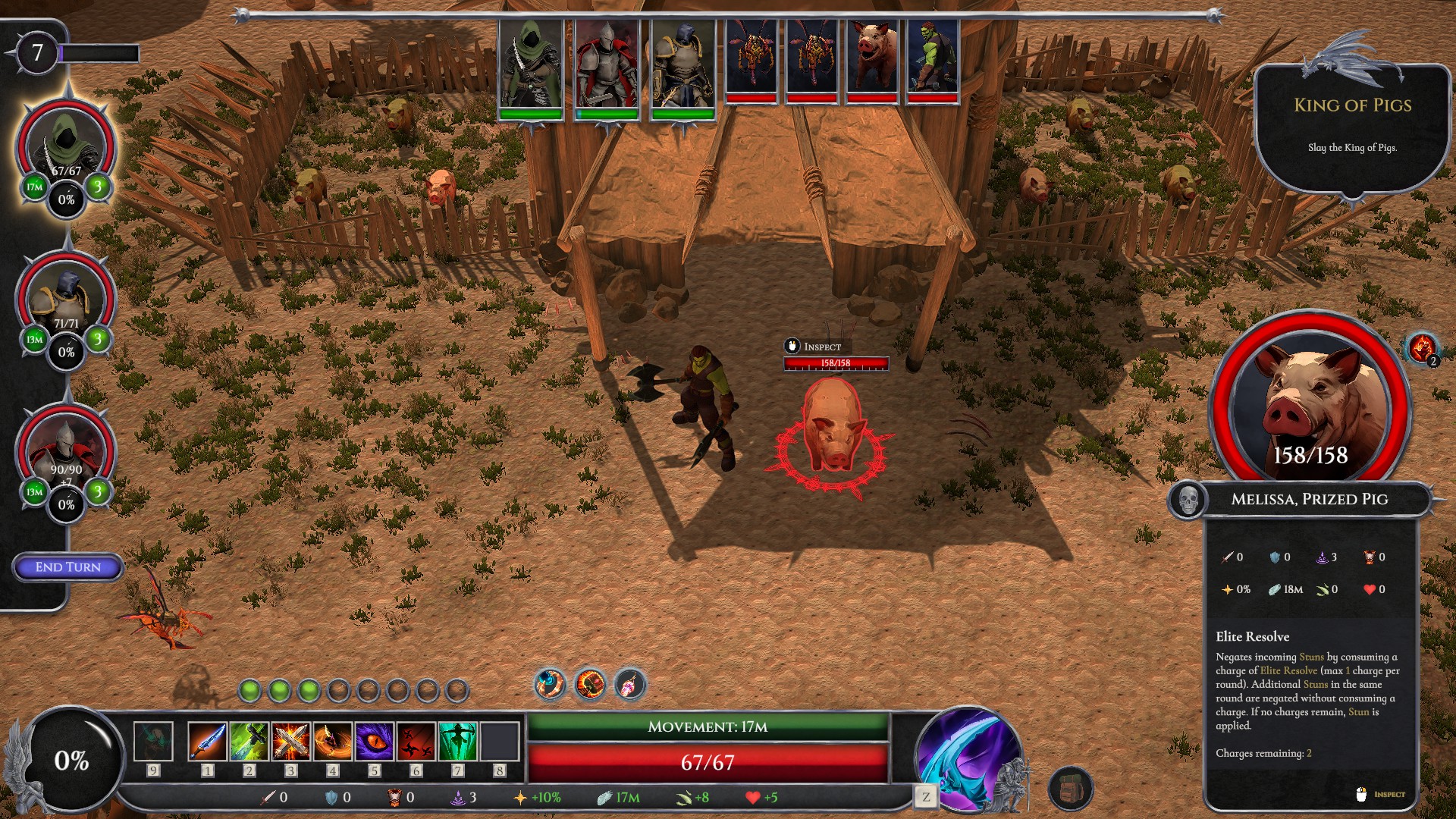
Forsworn’s combat loop may be fantastic, but unfortunately the overall game design does lack the variety and spice we’ve come to expect from serious contenders in the genre. Combat maps are limited, there are four or five quests to complete that aren’t too hard to get done in your first few playthroughs and the events can be boiled down to the same three choices: “Best reward with a sacrifice, mid reward with a cost, no reward” in 90% of cases.
If you go into Forsworn wanting a top-tier roguelite with all the bells and whistles that modern entries show off then you might be let down in that regard. However, if you understand that the combat and co-op communication here is some of the best-in-class then you and two friends will have more than a few fun evenings battling cultists and creating cracked builds together. Here’s to many more turns spent using all my skills to armour up and then seeing my finance taunt everyone…
