

Cairn, designed by Audrey Leprince and developed and published by The Game Bakers, is a game that looked absolutely nothing like the sort of thing I would enjoy.
Don’t get me wrong, in my twenties, I was BIG into climbing. I haven’t climbed anything of note, but every week I was usually clinging to some rock face somewhere. But when I saw screenshots of someone in a game climbing a mountain. I thought, “Well that’s nice dear,” before mentally filing it away under “Games I Will Never Actually Play”. Then I played it, and now I find myself thinking about handholds, climbing routes and whether I have enough water to make it to the next camp whilst making a cup of tea. That is how Cairn gets you.
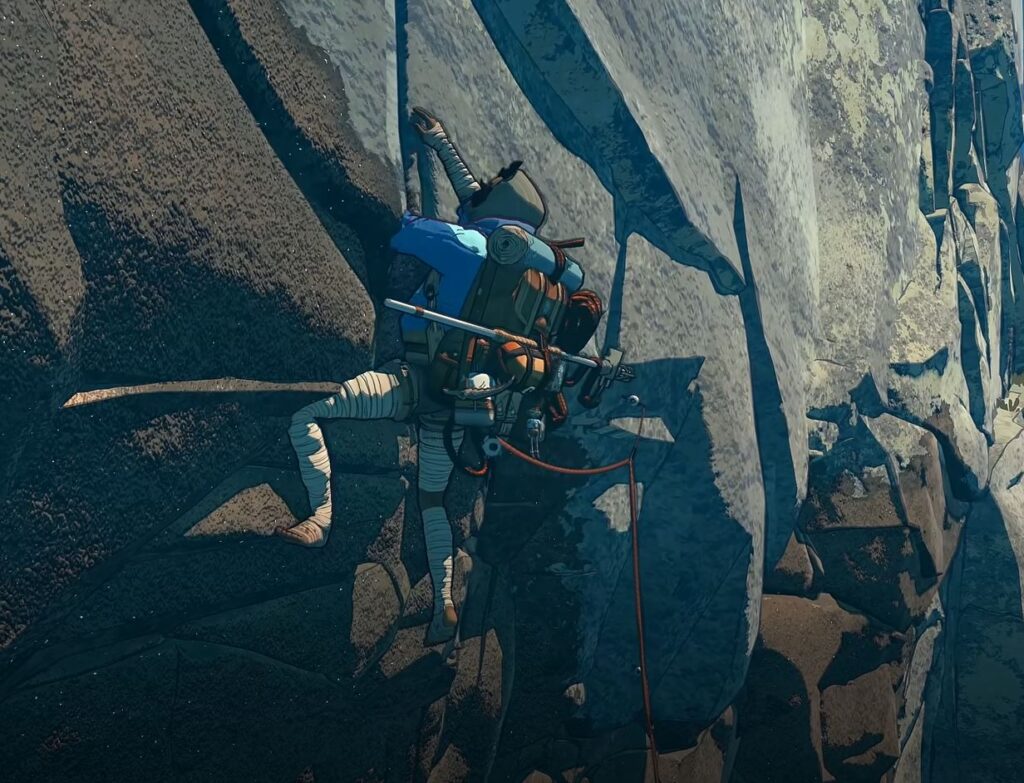
The basic premise is simple, like climbing in real life, see rock, go up rock. You are Aava, a professional climber attempting to become the first person to summit the mysterious Mount Kami. That’s it. There are no dragons to slay, no armies to command and no ancient artefacts to collect. There is just you, a mountain, and an obsession with reaching the top.
Now, if someone told me they were making a climbing simulator, I would assume they had finally run out of ideas, or it was the standard simulator slop we see so much of. But Cairn somehow turns digital climbing into one of the most tense and engaging mechanics I have experienced in years. I’ve become used to climbing in games like Uncharted, Horizon Zero Dawn and many Assassins Creed games as just a form of basic traversal with zero thought or effort. But in Cairn every limb is controlled independently. You don’t simply point Aava at a cliff face and watch her scramble up it. You have to slow the heck down and think (I was gonna use a different word, but want to keep its U rating). Where is her left hand going? Is that foothold secure? Can she stretch just a little bit further without ending up dangling from a rock face wondering where her life went wrong? How art imitates life eh?
The closest comparison I can think of is that every climb feels like a puzzle, and not a nice Times crossword that I might fart out on a lazy Sunday afternoon. So many times, I thought that I had a face worked out perfectly, only for one foot to slip and suddenly… suddenly you’re improvising a rescue plan whilst frantically looking for somewhere safe to put your hand. And sometimes, I came up blank and ended up somewhat resembling a pancake.
I especially liked how physical everything felt. Most games tell you when a character is struggling, Cairn makes you feel it. I remember once talking to a friend about horse riding in games, as I thought Red Dead Redemption (this is way before RDR2) had amazing horse feel (for lack of a better term). He said that Ico was the best, because it felt to him that he was controlling Ico, who was controlling the horse. I have often thought a lot about that. Cairn is like that with climbing to me. When Aava is hanging on by her fingertips, low on stamina and trying to find a route to safety, there is a genuine sense of tension, which for me brought back a lot of memories for my own climbing experiences. The mountain is not your enemy, but it certainly isn’t your friend. Every successful ascent feels earned. Other reviews I have read since Cairn’s release have described the climbing as immersive and tactile, and I can completely understand why; I don’t think I could find someone who didn’t agree.
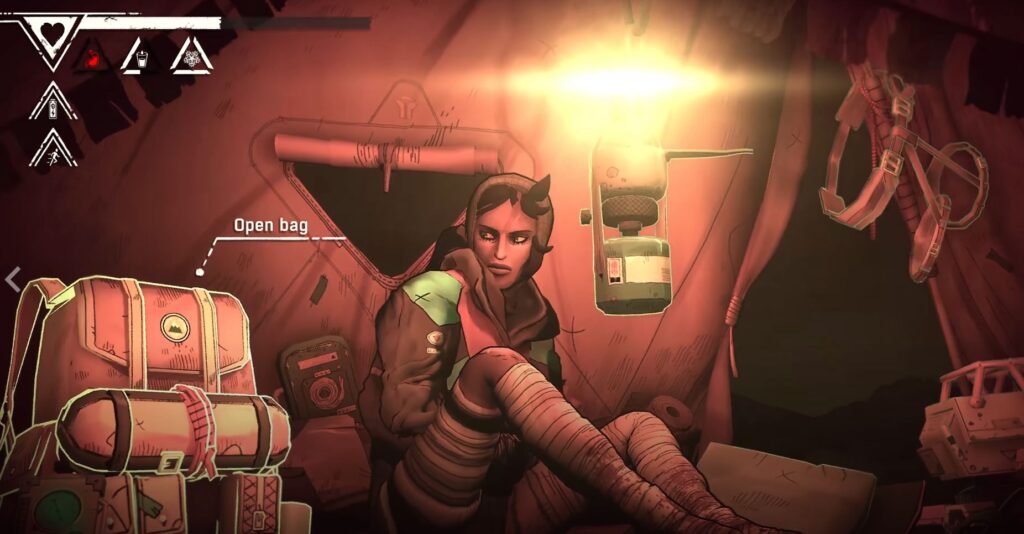
The survival mechanics help with that feeling. You need food. You need water. You need rest. The weather can turn against you and the mountain can quickly become more dangerous as conditions worsen.
Cairn never feels interested in punishing you for the sake of it, in fact there are ample accessibility options available, and The Game Bakers clearly wanted players to focus on the challenge of climbing rather than being buried under a mountain of survival systems. A strong belief of mine is that games are meant to be enjoyed, so if you want to turn on accessibility options to help, more the power to you. I’ll be your climbing buddy any day.
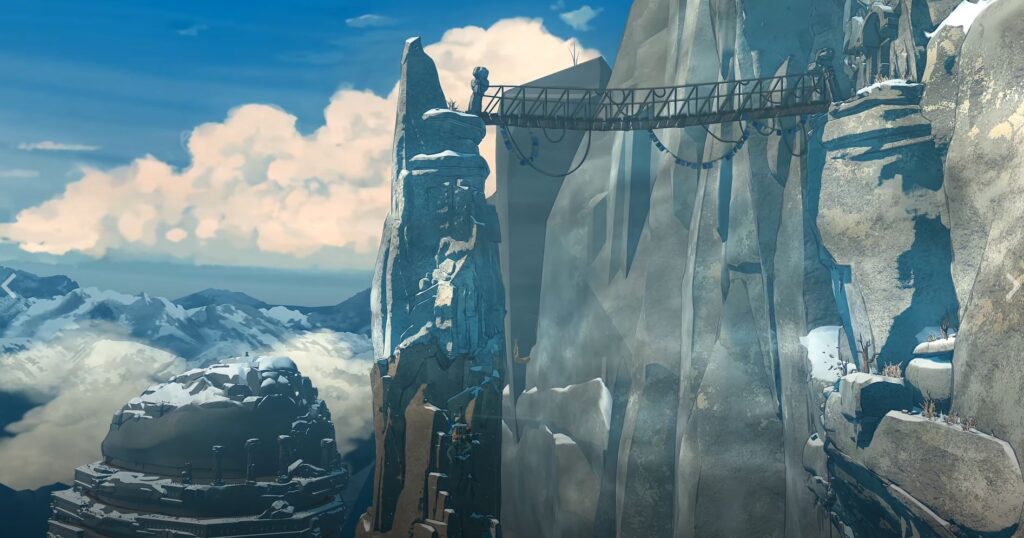
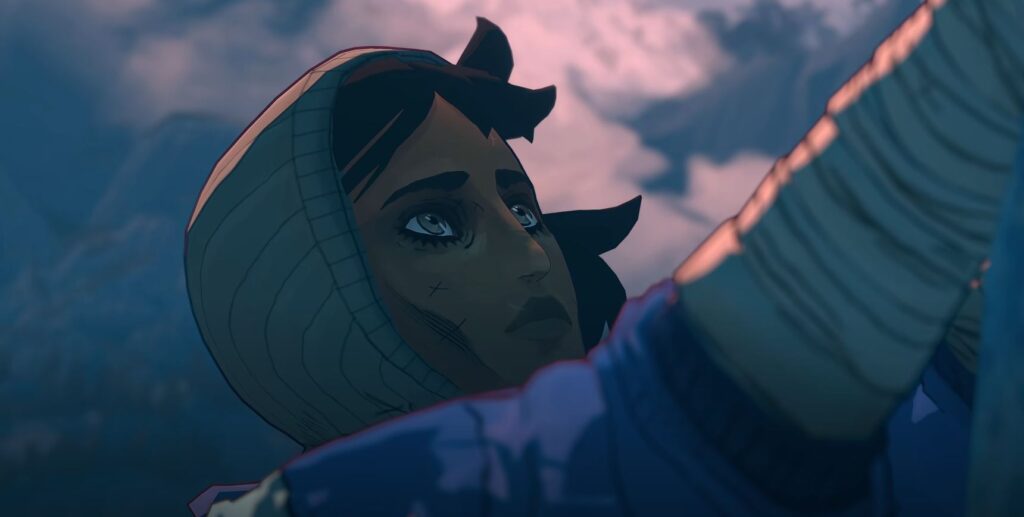
Visually, Cairn is a beautiful game. Mount Kami feels ancient, lonely and slightly mysterious, like a mountain should feel. Hills don’t provoke the emotion that mountains do for a very good reason. The art direction strikes a wonderful balance between realism and stylisation, and there were multiple occasions where I stopped climbing simply to admire the view. Which is probably what a real mountaineer would do if they weren’t constantly worried about falling several hundred feet. In a weird way, I felt the colours and design of Aava reminded me of the cell-shaded colouring and character design of Borderlands. I know, weird, but just have a look and let me know if your thoughts.
The sound deserves special mention as well. There is a wonderful sense of isolation throughout the climb. Wind whistles past. Rocks shift beneath your feet. Climbing is isolating. You can be surrounded by others, but yet its always about you and the rock, so I really liked that I felt very alone when playing and the sound played a huge part in that.
What surprised me most was how emotional the journey became. On paper, climbing a mountain should not be enough to carry an entire game. And I really do think that if you don’t click with Cairn straight away, as I am not sure I did at first, then once you get to the second camp, it opens up and I got it. As the hours passed, I became increasingly invested in Aava’s obsession with reaching the summit. Why climb a mountain? Cairn keeps asking that question, and by the end I realised I didn’t really need an answer any more. I just wanted to keep climbing.
Cairn will not be for everyone. Some players will bounce off the deliberate pace. Others may find the detailed climbing mechanics frustrating before they become second nature. It demands patience, concentration and a willingness to fail. But for those willing to meet it on its own terms, Cairn delivers one of the most unique experiences I have played in a long time.
By the time I reached the summit, I felt exhausted, relieved, triumphant and slightly concerned that I was looking up local climbing walls online once again. I don’t think my hands would ever allow me back on a rock face as I look turning 40 in the eye, but that in a way felt like part of the story Cairn was trying to get across. I didn’t want to delve into the why of the game, you need to find that answer yourself, and I am open to discussing the ending, as that’s open to interpretation – at least in my opinion.
When you do finish the game, it does a great thing of showing you your routes and your failures. I felt there was a certain light being shone on life in that. Cairn is a tremendous game that is worth your time, and it embodies one of my all-time favourite quotes: as George Mallory said when asked why do you want to climb Mount Everest? “Because it is there”
Cairn is available now for PC & PlayStation 5.
