

Grime II is a sequel to Grime, a very well-reviewed game from way back in 2021. I can only judge the original from the bits I see online, but it appears to have earned the praise, so I approached Grime II with a bit of trepidation. I’m a huge fan of metroidvanias,having cut my teeth on them during my teenage years: When I used to only get one or two games a year, I chose the ones that I thought gave me the most to do and see.
Grime II fits that formula rather nicely. There’s a big map, save/warp points, backtracking, some 2D platforming, and plenty of enemies and environmental puzzles to cut your teeth on, but that clearly isn’t the main influence here. Like a good 70% of games that use action-RPG as a descriptor, this damn thing is a soulslike too.
Before we get into it, Grime II has an obsession with hands. Your character is made of hands, their weapons, hands. I’ve yet to meet an enemy that isn’t made of at least fingers! There’s a serious case of cheirophilia going on here. I’m going to try to move past that here, but just… yeah.
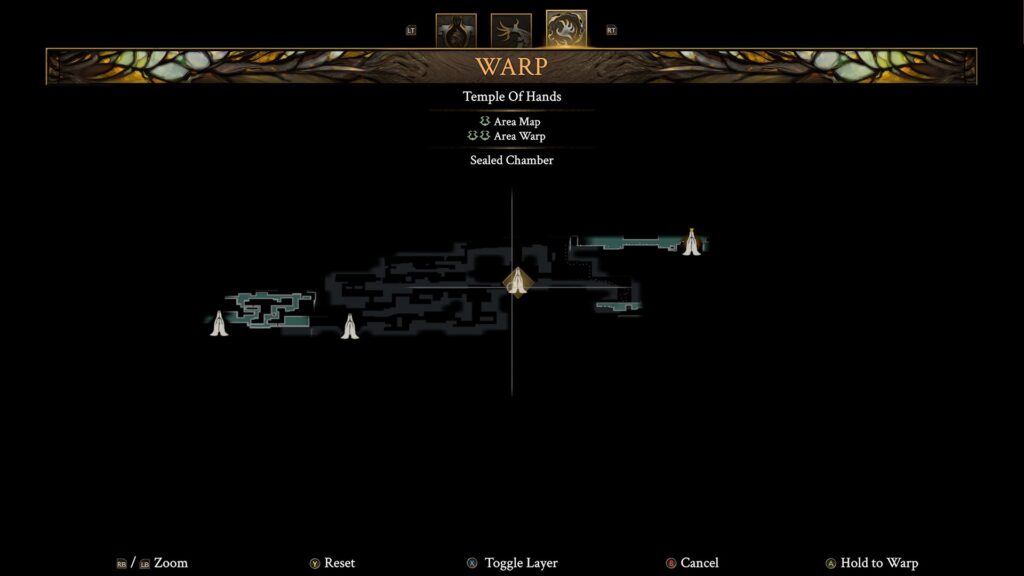
So, where was I? Ah yes! Soulslike. You’ve got bonfires (called Surrogates, and made of hands… damnit), parrying and dodging, and punishing difficulty until you learn attack patterns. I’ve been playing games for a while, patterning, combat, checkpoints, none of these are exclusive to soulslikes (or metroidvanias for that matter), but you’re going to have to trust me. If you play this game for more than a few minutes? You’ll be calling a spade a spade like me.
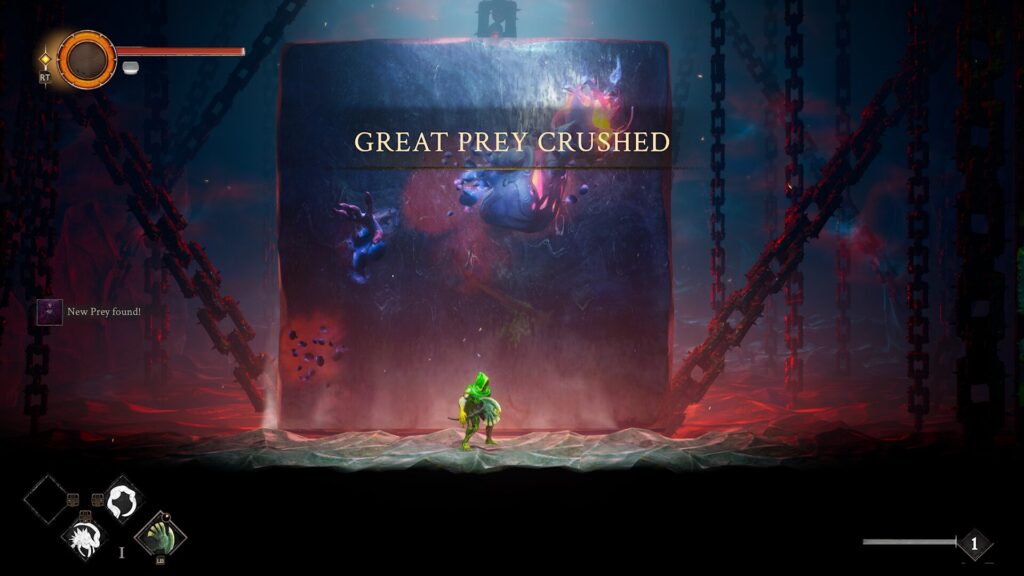
The general cycle of gameplay will be familiar to anybody who’s touched a game with those labels before. There’s some brief lore and you’re dropped into the world. You wander from Surrogate to Surrogate, fighting bosses and absorbing their essence to gain new abilities, unlocking map totems, and kicking ass. Enemies in Grime II are called Prey, and the nomenclature is apt. As much as I’ve mentioned the difficulty here, when you’re in a groove combat is incredibly satisfying.
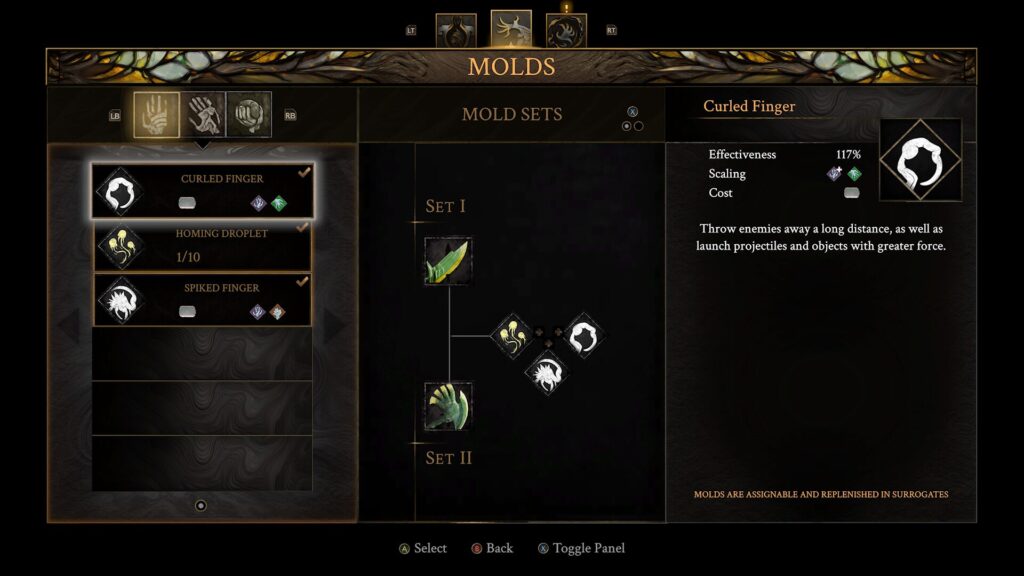
Not only do you have weapons and equipment, but also things called Molds. When you’re beating up an enemy, they will occasionally glow white. If you dash into them at this point, you get a temporary Prey Mold. This is a facsimile of the enemy, that you can summon yourself to do an action, though only once. However, if you keep on getting these Prey Molds, you’ll eventually unlock a permanent one that you can assign to one of three slots. There’s also Item Molds, which have limited uses (recharged at a Surrogate) that increase as you collect more. This system feels ripe for experimentation, and one of the most satisfying early game moments I can recall was getting a Prey Mold that pushes enemies from one beast, then instantly turning around and summoning it, throwing their friend into a bed of spikes.
Rather than having healing items that restore at the bonf- ahem- Surrogates, you instead can heal at any point assuming you have enough Breath (Grime II really loves its key words). You gain Breath by beating up enemies, or by using an early game ability to rip it directly from them after you’ve damaged them enough (this often makes for progress markers in the boss fights).
As much as I’ve teased Grime II for its choices, the whole atmosphere and aesthetic are lovely. Yes, dark, gothic metroidvanias (or soulslikes) are a dime-a-dozen, but the fact they are commonplace does not reduce their effectiveness or my love for them.
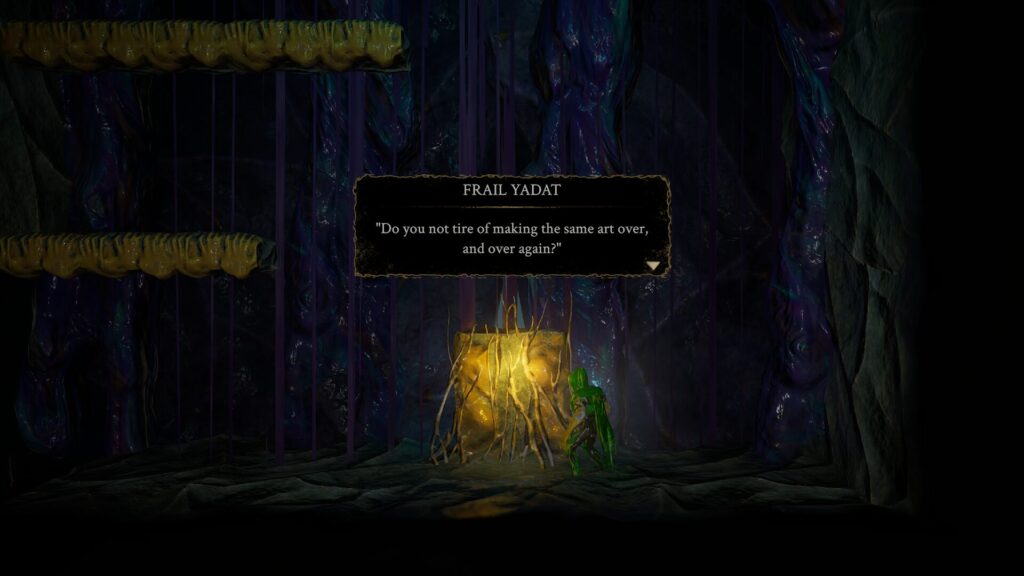
Player reports tend to put full runs at 15-30 hours, and I’m shy of 10 hours with the end seemingly nowhere in sight, so you’re getting a very good “bang for your buck” here, as long as you enjoy this kind of gameplay. The action is crunchy, the mood is tasty, and if you don’t mind a bit of punishment, I can recommend getting a little grimey.
Grime II was reviewed on Xbox Series X, but is also available on Steam and Playstation 5.