

For four and a half years Timberborn has been in Early Access, and now, the dam has burst open and Timberborn is flowing right at you. There’s a certain comfort in city builders. Orderly grids. Predictable growth. The quiet satisfaction of watching numbers go up while your carefully placed infrastructure hums along like a well-rehearsed orchestra.
Timberborn is not that kind of city builder.
I have had Timberborn on my wishlist for several years, but waited for it to get its 1.0 launch. I was ready for that chill management game, with cute beavers cutting wood and growing crops. I would play this the way I play all games like this; slowly, perhaps with an audio book on. Within an hour, my first colony in Timberborn, my capital of Beaverberg was a shell of its glory. Its beavers are starving, and thirsty. Perhaps I should try the tutorial this time? So let’s start again.
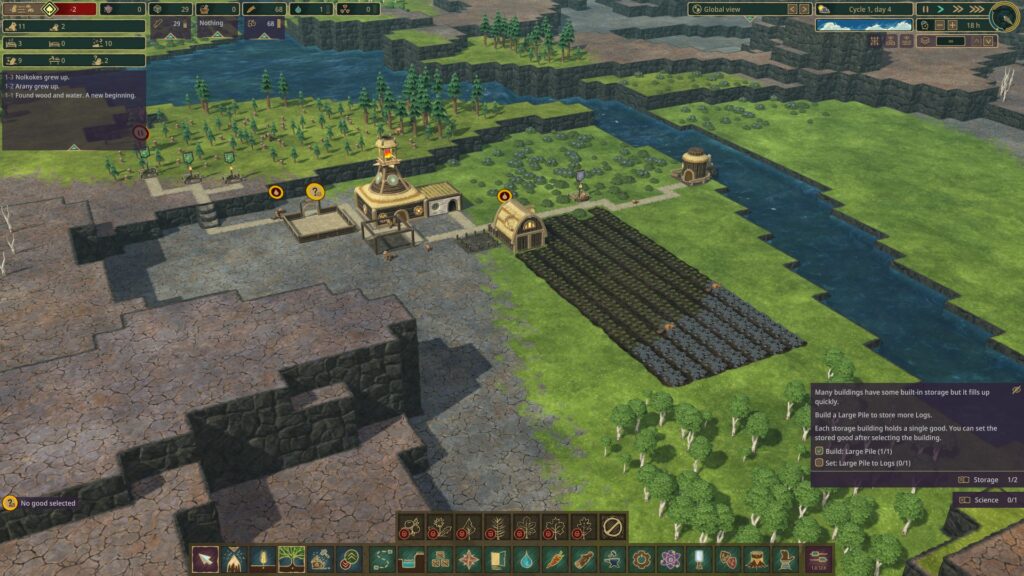 Welcome to the central idea of Timberborn, a game that takes the concept of resource management and runs it directly through a drought cycle. Designed by Mechanistry, it’s a city builder where your greatest enemy isn’t inefficiency or expansion—it’s the complete and utter absence of water, arriving on a schedule that is both predictable and deeply inconvenient.
The tutorial is basic, but it is step by step. Within a few minutes I had the basics: Build water pumps, store supplies, keep your beavers hydrated and fed. Straightforward enough. But Timberborn isn’t interested in letting you settle into routine. Instead, it introduces a cyclical rhythm — periods of abundance followed by droughts that turn rivers into dry trenches and fertile land into dust. My first drought, that was advertised to me well in advance, had me nervously staring at my few water butts and silently praying the citizens of Beaverly Hills made it through.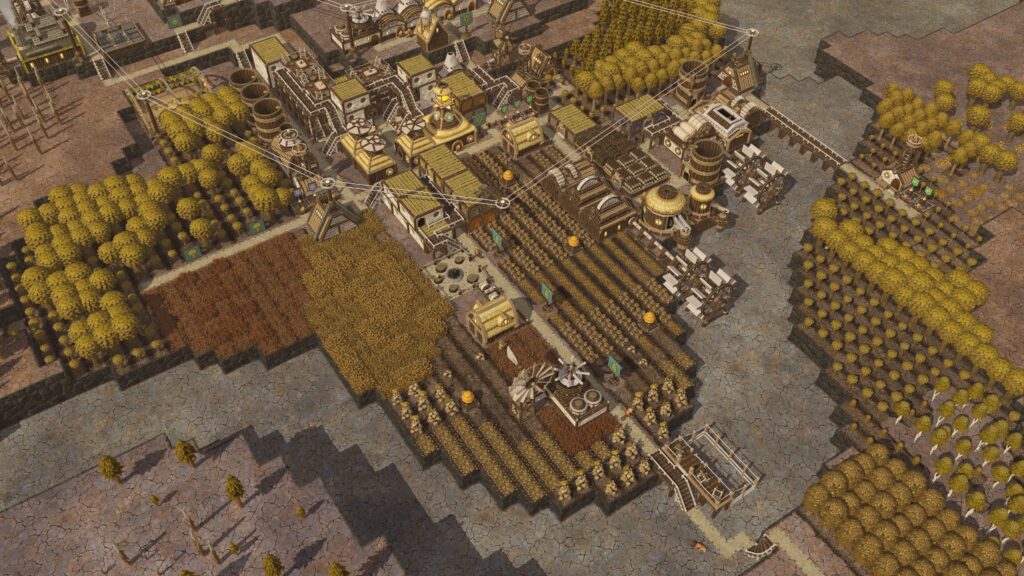
Dams become your first real revelation. Blocking the flow of water feels mildly rebellious at first, like you’re interfering with something you don’t fully understand. Then the drought hits, your reservoir holds, and you realise you’ve just outsmarted an entire season. You think, like I did: This dam idea is stellar, I’ll make more. Surely dams are the point of Timberborn? I expand my dam. Beaverly Hills floods, people starve. Time to start again.
Timberborn: Take three. The new nation of Damsterdam. Time to try this again. Levees, floodgates, irrigation channels—what starts as a small woodland colony gradually transforms into a sprawling hydraulic system. You’re redirecting rivers, storing vast quantities of water, and carefully controlling flow rates like a slightly overwhelmed civil engineer who happens to be managing a population of beavers with an impressive work ethic.
And this is where Timberborn quietly becomes brilliant.
Once Damsterdam started to expand, I built upwards. In order to maximise my housing and industry buildings on the land that wasn’t fertile, you can stack your buildings. However, the research points and materials needed to make some of the different platforms and staircases for this to be functional are difficult to manage, and requires you to build your economy to support the population growth needed, and the industry to build. I found myself focussing on industry and realising that I didn’t have enough beavers to farm. Or food was plentiful, and I could build nothing.
Just as I thought Damsterdam was finding its feet, I was ready for a new drought. Precautions had been taken. I had science, industry, ziplines. A new region of my settlement was established thanks to a new District Center, and the two worked in harmony. I thought this would give me better access to water and I had dammed enough water to see me through.
Then Timberborn threw a badtide at Damsterdam.
Poor, poor Damsterdam.
The very systems built to retain the water for the coming drought, now actively worked against the great people of Damsterdam. The polluted water surged through the land, poison went over all my crops, beavers were now ill. Beavers died.
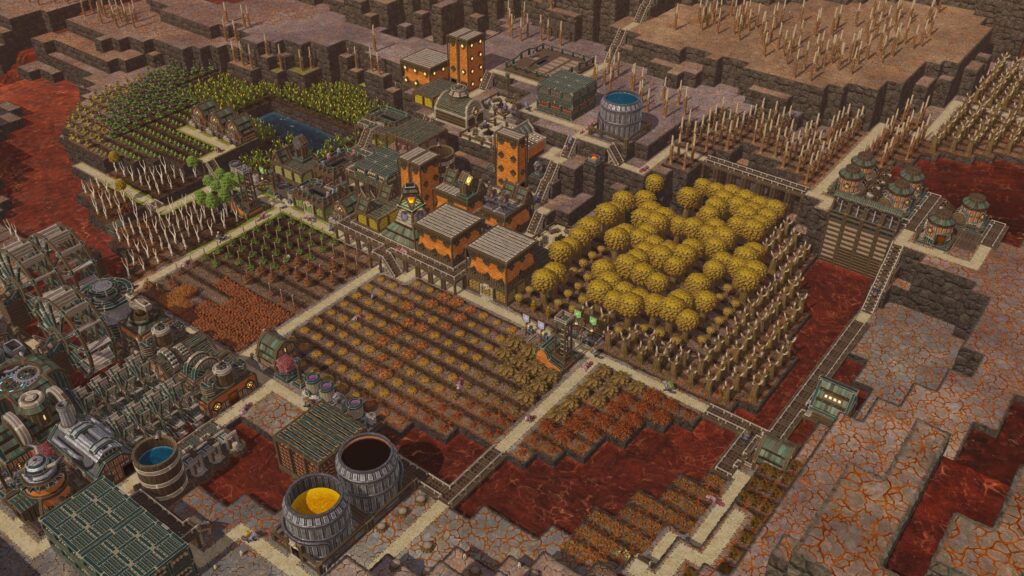
10/10 will lead a furry civilisation to its demise again.
Timberborn gives you two different factions to play as, each has its own approach to survival. The Folktails lean into a more traditional, nature-friendly playstyle, while the Iron Teeth embrace industry with a slightly unnerving enthusiasm. The choice adds a good layer of variety, encouraging different strategies without overwhelming the core experience.
There are criticisms to be made with Timberborn. There are times where I still felt I was playing an early access game. The tutorial is very basic but then if you do want more help understanding more of the complexities to the game and systems, then the internet is your only hope.
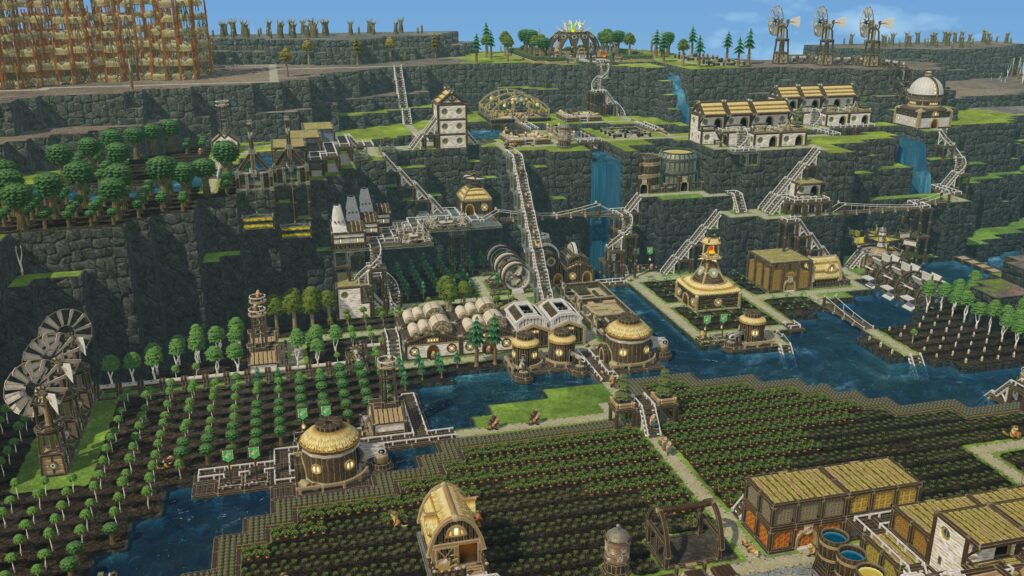
There is also no story to Timberborn. You get a delightful animation on starting that shows how your beavers have braved the world to get where they are. Think Everdell or the Animals of Farthing Wood. But that’s it. There is no campaign where you can be introduced to mechanics slowly, before then emerging into a sandbox environment where you can do what you want. Instead this lack of story means that Timberborn is a mechanically inferior Factorio. I have really enjoyed my time with the citizens of my Timberborn towns, but it isn’t enough to make this a game I want to put hundreds of hours into.
The automation options that come with the 1.0 release of Timberborn provide a lot of possibilities, but I never felt like I got enough time to really try them out. This is part of the problem, but also part of the reason that Timberborn succeeds because it takes a familiar genre and introduces a single, transformative idea—water as both lifeline and threat—and builds everything around it. It turns routine into risk, planning into necessity, and success into something that always feels just slightly temporary.
Timberborn is not about building the perfect city. It’s about building a city that survives the next drought. And the one after that. And the one you forgot to prepare for because you got distracted trying to optimise your lumber production. Which, in a game about beavers, feels entirely appropriate.
Timberborn is available now for PC.
