

The last RTS I played with any consistency came out the same year as Shrek 2, when I was just a wee lad of age [Redacted]. Dawn of War, from 2004. I learnt how to assign units to control groups, how to manage two resources (Or more, as certain factions) and most importantly: That spamming clicks to move in an RTS makes your troops move faster (Okay, jury’s still out on that last one).
While I adored the game and could play it (on the lowest difficulty), I am by no means “an RTS player”. So, when Here Comes the Swarm promised a mix of traditional RTS base-building but with a roguelike and personalisation element, I thought it’d be the perfect time to flex my aching RTS muscles and see if I still got it.
I have to say, despite losing almost every game I played, I enjoyed my time immensely.
An RTS game with lashings of genre-bending on top
Here Comes The Swarm is an RTS game at its base level. You’ll build resource generators, use those resources to build defences and armies, and unlock new building and unit types through investing in your town’s level. There are a variety of resources to manage, but they all feed into systems that, even to a beginner like me, made sense.
You can generate Wood through Lumberjacks, Meat through Butchers, Gas through Vents and Rubies through rent (Acquired from people living in Dwellings). Those people themselves are also a resource called Population. It sounds like a lot going on, but they’re easy to grasp:
- Rubies are your universal currency that take part in almost every construction, repair, unit and upgrade. These are acquired by rent from Dwellings or, if you play my favourite Arcana, acquired through exploring the map and slaughtering enemies instead.
- Wood is a core building resource for walls, dwellings and the like. Later, you’ll switch to Stone, which behaves the same but is “Tier 2” so-to-speak.
- Gas is a resource for some specific units and upgrades, and in my matches it was never low. I built 2 Vents at the start of every game and that was always enough for the whole mission.
- Meat is used to train units like Knights and Arbalests. To make a general Population member a Knight you pay some Wood, Rubies and 1 Meat. Meat acts as a barrier to spamming units, as you need enough to feed your populace and train your army.
- Population is a count of all available people. If a member just lives in a house and has no job at a Lumberjack or Butcher etc, then they are counted as 1 Population to spend on training as a Knight, manning a newly built jobsite, or arming ballistas and defensive towers.
Within the first 30 seconds of a Skirmish you’ll have enough resources to invest in two of basically every generator (two Vents, two Butchers, two Lumberjacks) and many Dwellings (Start with five, but build them out often for more rent and Population to use as your army). The game doesn’t punish you for preparation, and you don’t have to worry about the order you build those generators to avoid softlocking yourself like some RTS games.
This means you get a quick start to set up for the main gameplay loop: The Swarm.
Asymmetric game design in a usually strict genre
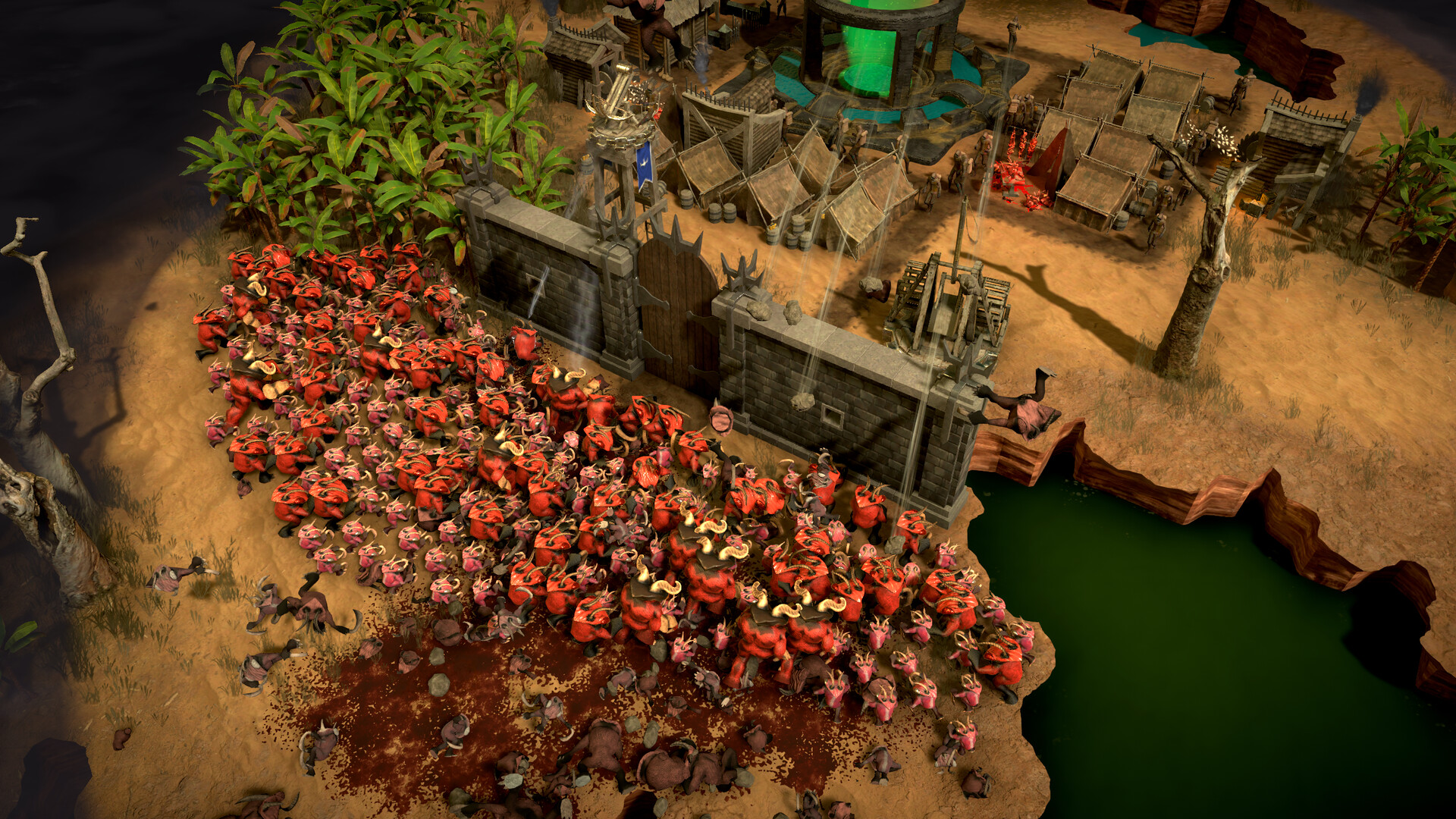
Unlike other RTS games your enemies don’t have a base, they don’t have resources and buildings and armies like you do. Instead, the game is entirely asymmetrical. Your enemies inhabit the entire map besides your small starting point, and packs of stronger enemies are mixed into the general hordes. Your goal isn’t to find the enemy base and defeat it, your goal is just to survive this map of horrors long enough to charge your doomsday device and win (Like a real-time version of The Last Spell, for indie aficionados).
This difference in design from traditional RTS’ means a few things. Firstly, that turtling (The act of staying in your base and building up defensive armies and towers) is actively encouraged as you will, before the Core is charged, have to fend off 5-7 waves of relentless griblies. Secondly, you aren’t racing another force for control of certain points or resources, all your generation and management is on you. Finally, as it’s entirely PvE, the game has a seamless pause function to issue orders, queue upgrades and take a tactical breath before the plunge.
Everybody now: Easy to learn, hard to…
Don’t let this approach fool you into thinking that Here Comes the Swarm is “dumbed down” though, in fact it gives the onus of responsibility to the player for their own progression in a way no other RTS quite does…
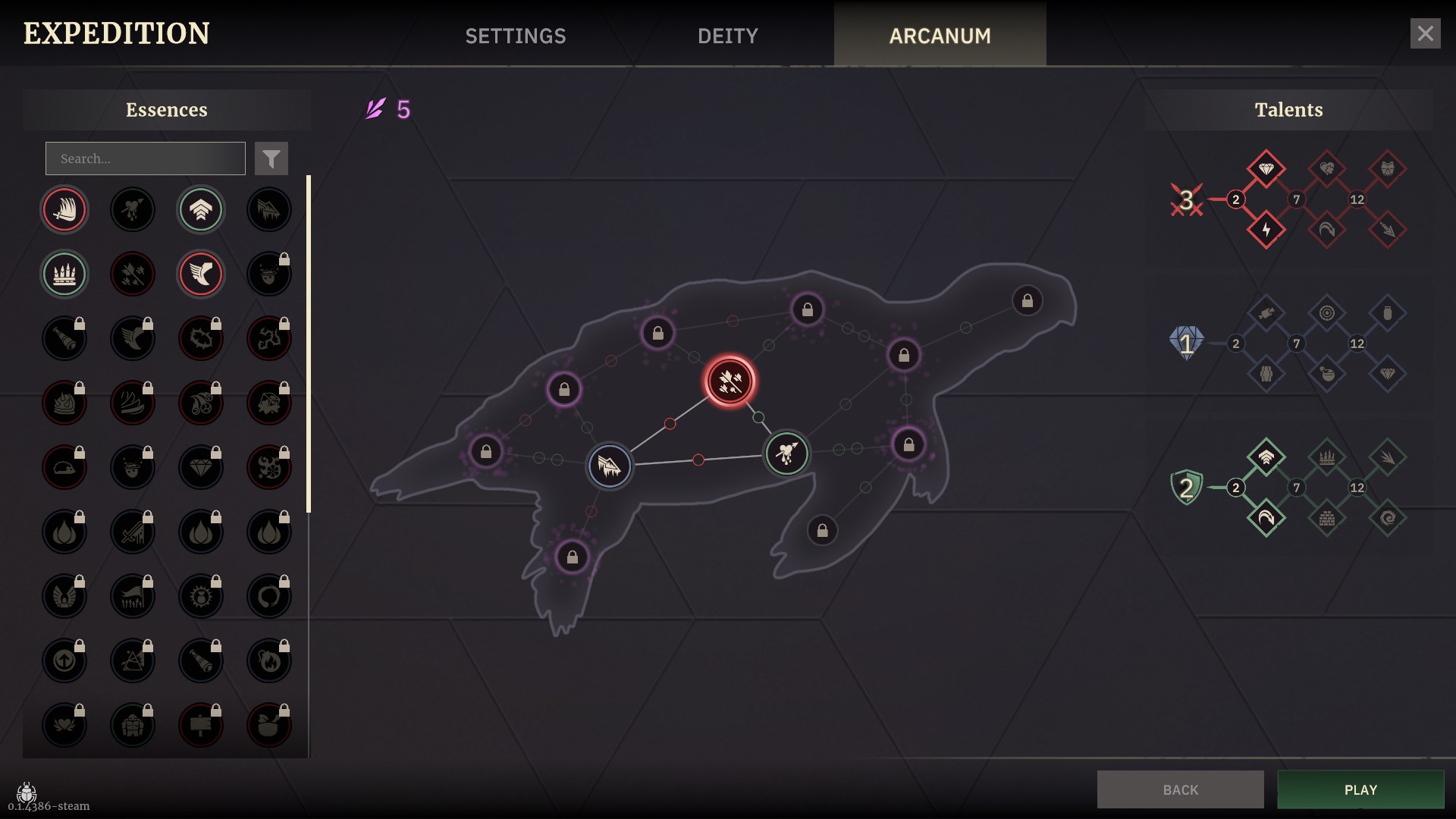
In Here Comes the Swarm you choose an Arcana for each match. This is a God that provides passive abilities and resources. Not only does each Arcana play very differently, but the order in which you can unlock these passives in a game is entirely up to the player. Most RTS games lock into a specific research tree, while Here Comes the Swarm lets you make your own.
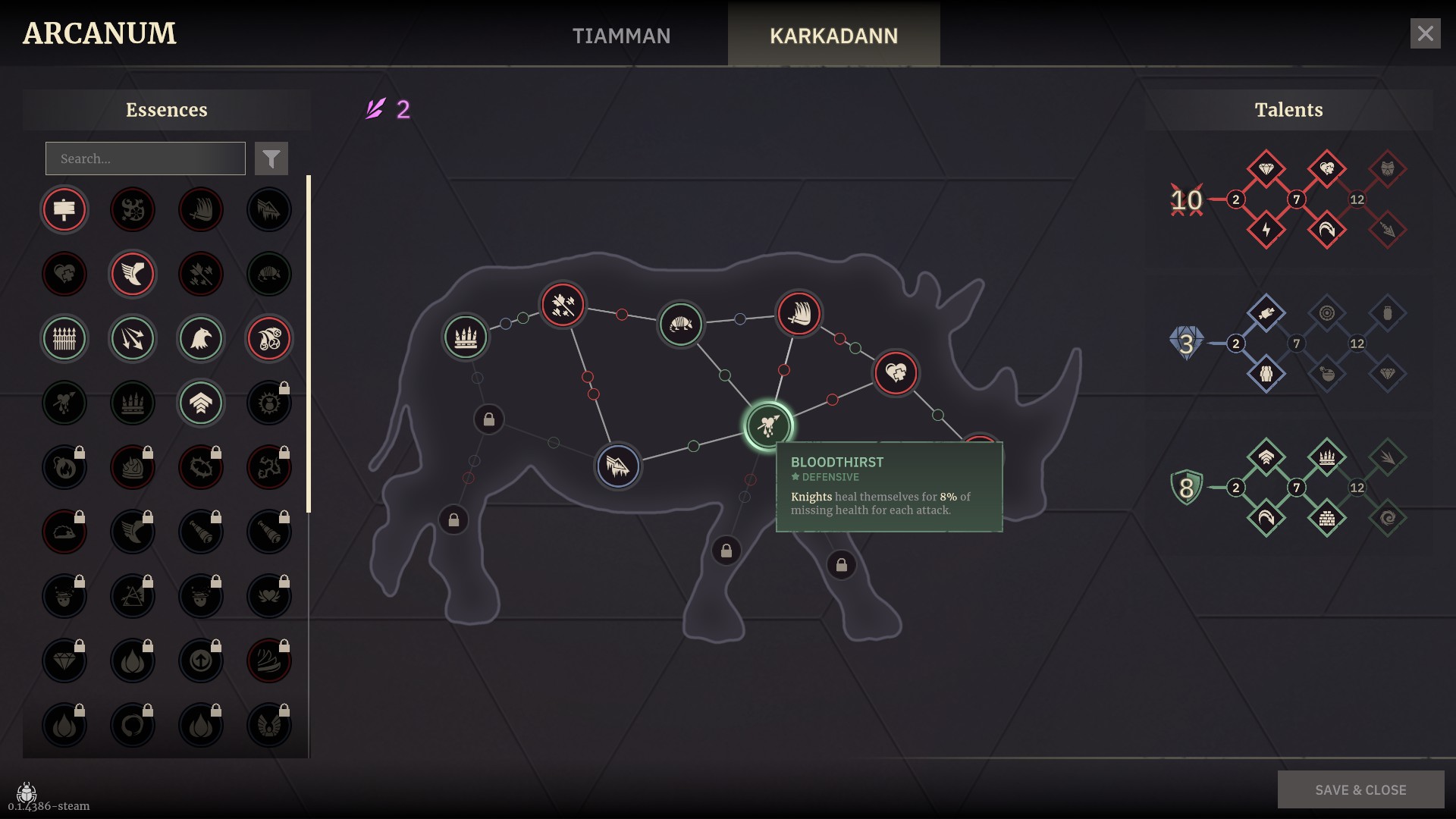
This provides countless possibilities for customisation and, owing to my point about the difficulty, countless possibilities to mess things up. Learning each Arcana and choosing the right perks to put in the right slots to unlock in the right order is an insanely fun learning curve.
The moment I moved my Knight’s Lifesteal perk to the first Arcana slot (the one that starts active) I could begin cleaning out map areas for chests and shrines far faster than before. Sure, extra wall health or defensive tower range is great, but I don’t need it until later in the game when I’m on the defensive. For this reason, I moved all my offensive Knight buffs to the middle of the Arcana and had the defensive base ones on the edges. This let me snowball around the map looting bonus resources and Arcana points with ease.
However, it did mean the last half of the match was a mad rush to build walls, install defenses and arrange my Knights in optimised battlelines as I had spent time and resources exploring and upgrading rather than building.
The finale of a match is meant to feel frantic, but feels inevitable
This is where my only real gripe with Here Comes the Swarm enters the stage. During the game you have an Eradication Bar that fills your Core, and when the Core is charged you win. However, it’s very hard to know how this bar actually behaves. Sometimes it seems very fast, but then whenever the final wave arrives, even if I have Infused the Core to charge faster using some spare Arcana points, it seems to take forever to get to 100%. I lost three missions in a row at 95%+ charge on my Core and it felt like I was being short-changed by the Eradication Bar system.
I understand the core design of a final stand against all odds, sacrificing units and walls and buildings to give the Core time to charge. Unfortunately, in practice, either you’ll stomp the swarm or the swarm will stomp you, and I never felt like my Core was putting in the work it should even when I had Infused it.
Every step of the journey is as important as the destination
Luckily, the journey to that final swarm still interested me. Being able to change Arcana, level them up and explore making your own personal progression tree in a game like this is just so inherently intriguing. Thinking back to my Dawn of War days I remember having breakpoints in my head of when I could get certain upgrades and how I’d get the resources, but in Here Comes the Swarm you simply choose to place the skills you want at the point on your Arcana you want them. The physical buildings and units you do have to manage like a traditional RTS with the resources I listed above, but the element of personalisation that the Arcana brings cannot be understated.
A limited pool of units that already feels expansive and engaging
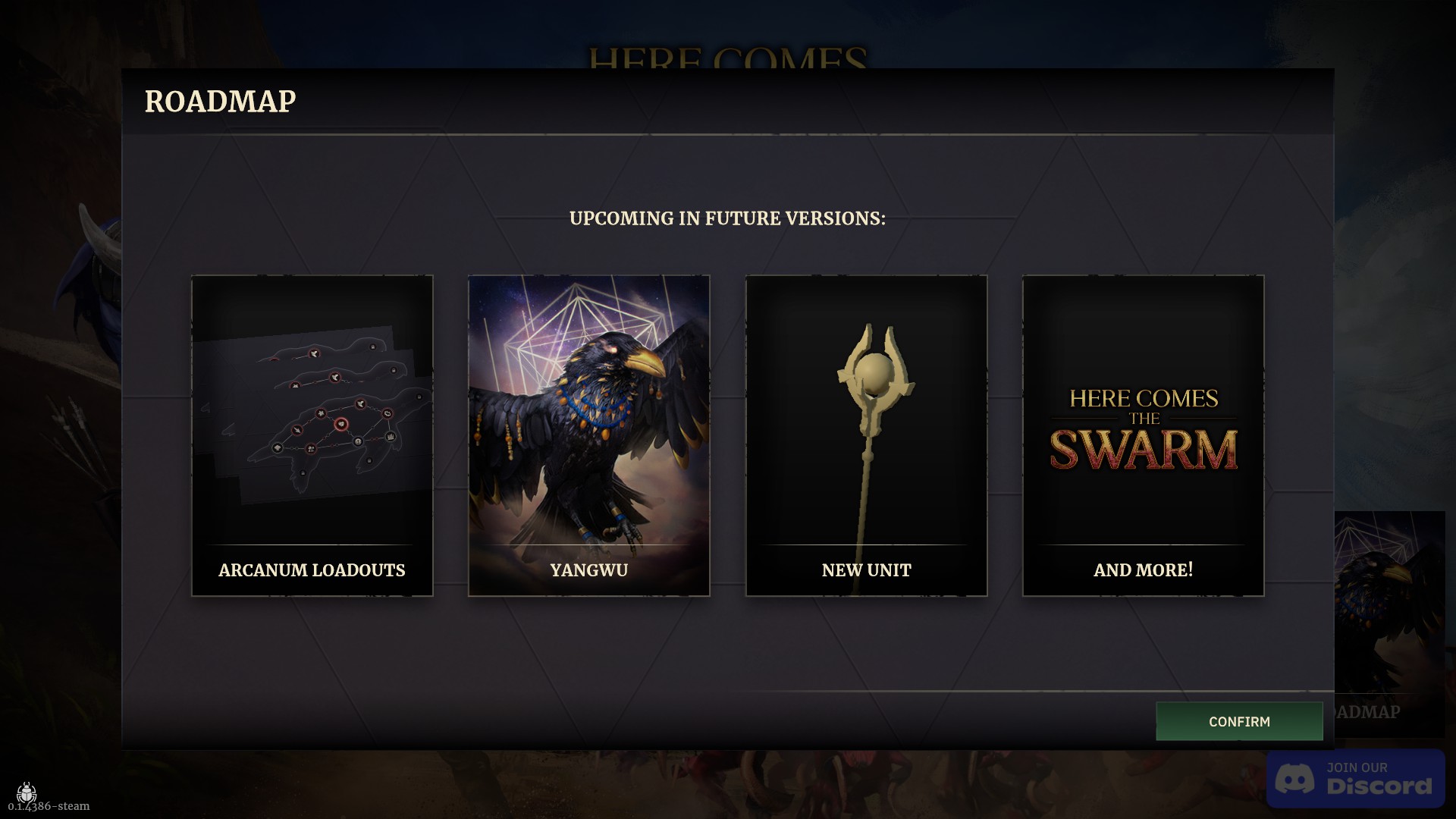
With only four unit types and two Arcana, Here Comes the Swarm is already a fun hybrid of RTS, Tower Defence and Management game. With more Arcana promised and at least 1 more unit on the way I am more than happy to have returned to the RTS genre after *Checks Calendar* twenty two years…
I’m going to go and lie down.
Here Comes the Swarm is available on Steam
