

Chances to hit, effect procs, damage ranges and luck of the draw have been relevant to gaming for decades – longer if you consider the Pen & Paper RPG origins of those mechanics. Luck can make us cry “Bullshit!” just as easily as it can humble us with a clutch victory we almost didn’t deserve. New roguelike The Fortress hinges on dice-based gameplay that, by being wholly unsatisfying, taught the developer a valuable lesson about luck, player input and agency in games.
A strange world with Fear & Hunger vibes
First of all let me clarify that The Fortress does a lot right, and the vision is not inherently flawed. The claustrophobic screen space and off-putting pixel UI, with jittering, shuddering .jpg character models makes the game immediately visually striking and, as the kids say, “dank” (complimentary). Each playable class has their own model and are outwardly strange, with eye-catching armour shapes and a distinct, eerie motion to their idle animation. AI voices for the narrators aside, the style and presentation of The Fortress is fantastic.
Roll the dice on if you’re allowed to continue the game
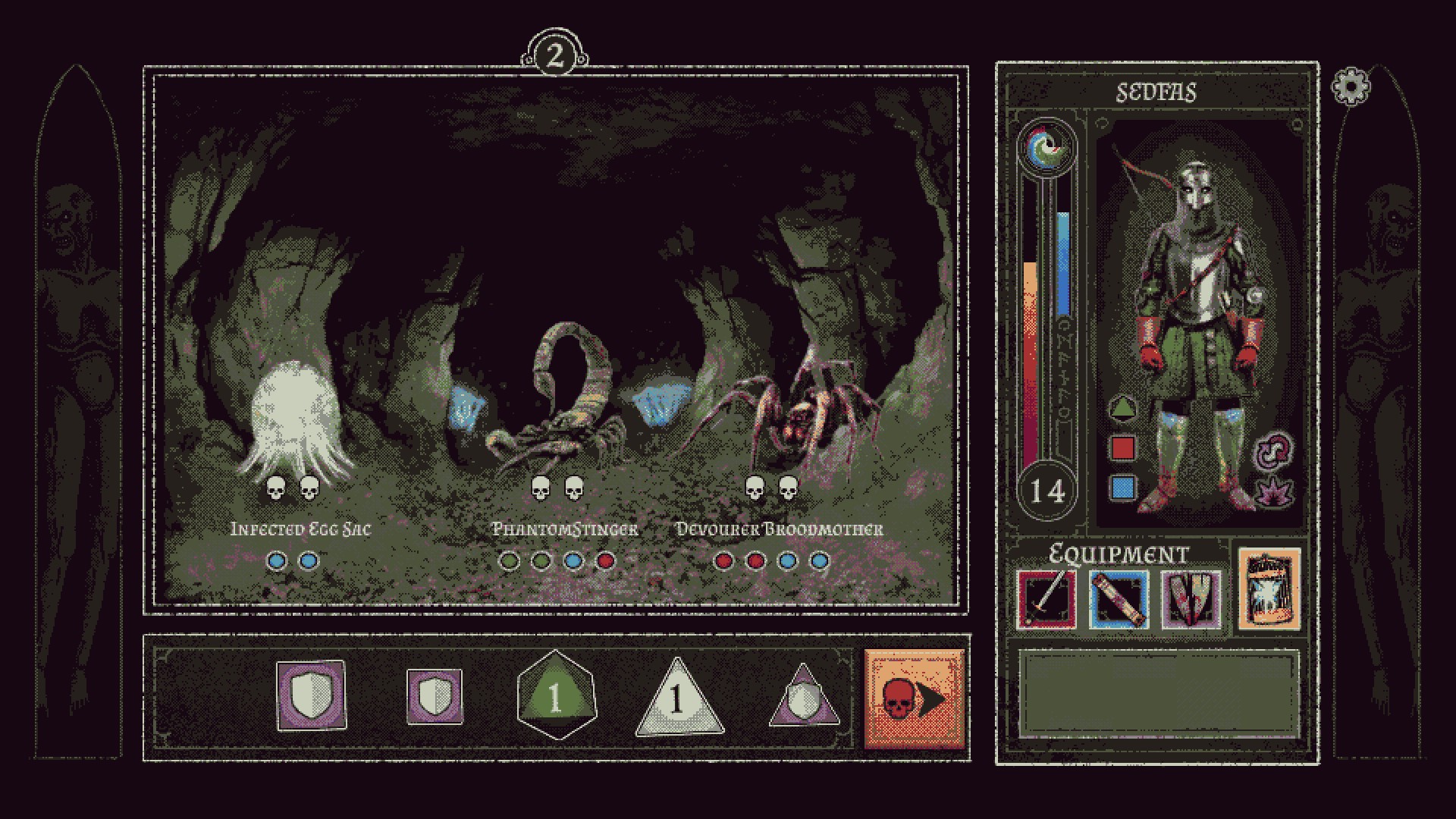
As you step from room to room you encounter strangely portrayed denizens, from rats to prison guards to eldritch horrors. Each enemy has a number of coloured pips below them, and your character has three coloured dice. The dice are rolled, and you assign your points of each colour to enemies as you see fit. When an enemy is out of pips, it’s dead. It’s worth noting that right away this is more forgiving than it could be, as you are never forced to “waste” a high roll of the red die just to do one red pip of an enemy. You spend each point individually among enemy pips.
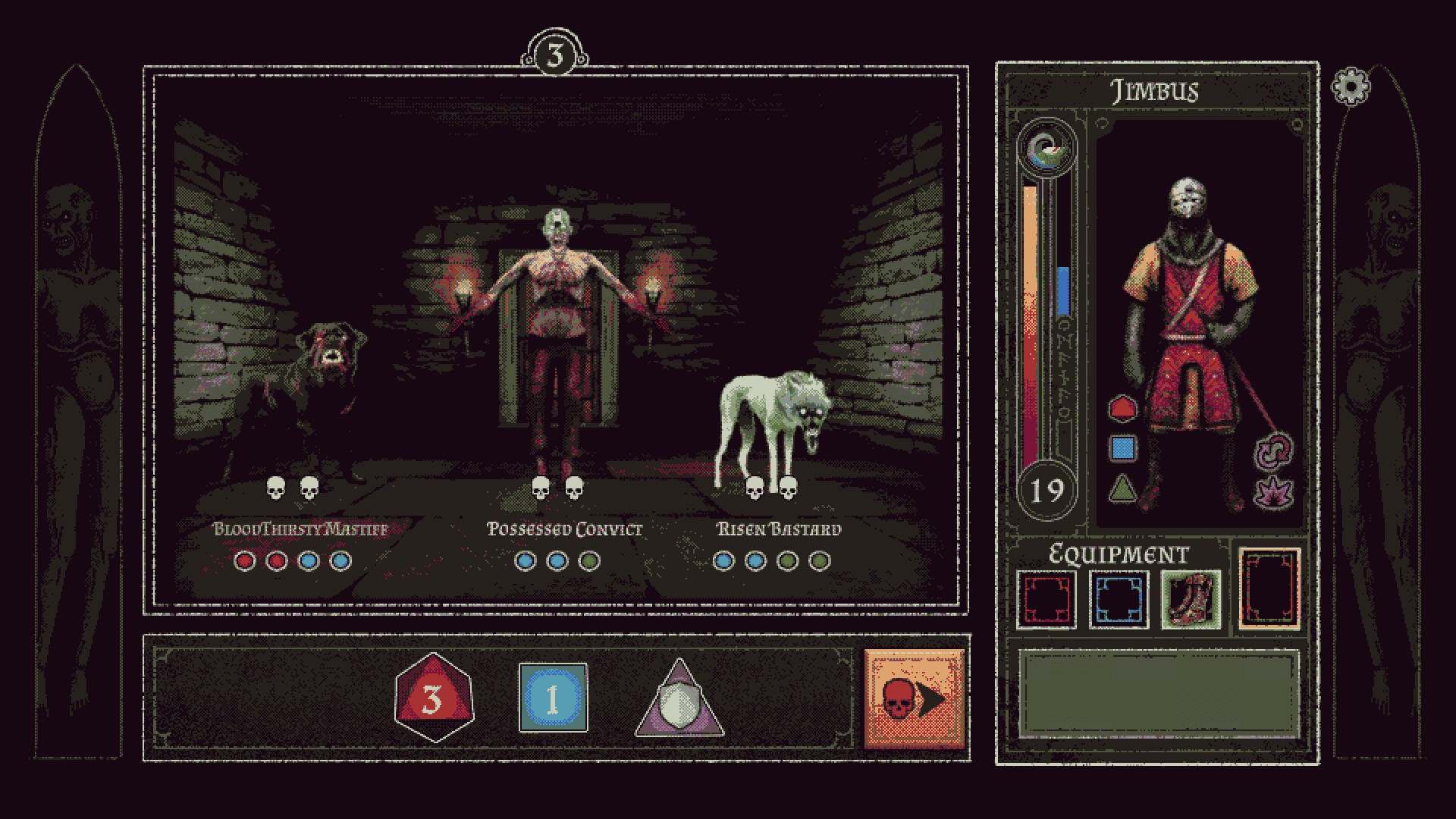 One might think that’d make the game easier, and counter-act some of the bad luck? Ironically, being forced to assign one whole die to each enemy rather than individual points would actually increase player agency and decision-making. Some players would choose to “bank” a kill on a weak enemy, while some would choose to utilise the full roll on a stronger foe despite not triggering the kill that turn. Both options have a degree of tactical validity.
With the current system, though, none of that tactical decision making happens. This is where The Fortress begins to lean too far into luck. Ultimately, there’s always an objectively best way to spend your dice. You are, 90% of the time, in a situation where there’s only really one choice, because there’s only so many pips on enemies and any non-matching colours you can’t use. This makes turn after turn feel like, well, rolling the dice.
If everything is down to luck we may as well flip a coin
Even luck-based games need player agency. We need to be in control of what risks we take, which hits we lessen with resources, and which we are forced to tank. The Fortress doesn’t give you enough tools to really feel that your decisions as a player made any difference, it feels like there’s an objectively best thing to do every turn and even if you do it, you can still lose. If there was meta-progression, a choice of rooms to go into, or some sort of gambling / risk-reward based on how far you get then that’d at least play into the sheer randomness.
Bad luck should be able to tear down your best-laid plans, but players first need the tools and engagement to actually make those plans. As it stands, if you roll no red die result and you only have red pips on enemies left, you are just taking all their damage and there is nothing you can do. I had one arduous boss who was left on 1 red pip and I didn’t roll red for four turns, resulting in a loss. Having a game rely solely on luck makes bad luck feel identical to good luck, it makes the game entirely disconnected from the player.
How The Fortress is adding agency back into the game
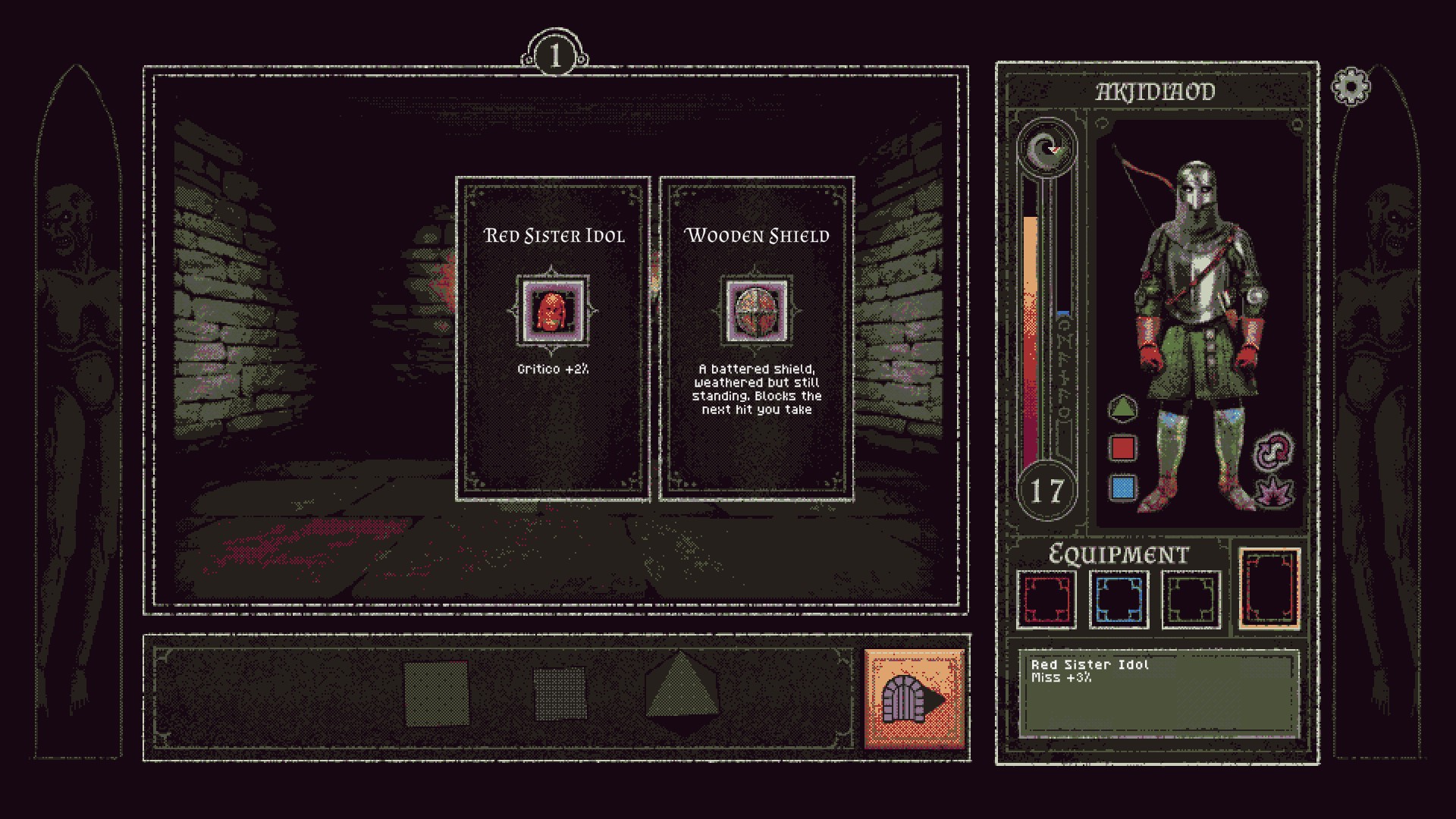
Fortunately, the developer has already stated many changes are being made based on feedback, premier among which is that the game is too luck-driven. Not getting the rolls you wanted should sting, but shouldn’t be the only factor as to if you win. To combat that and add some more decision-making there is a new equipment system and relic system. I tried these, and there was a degree of improvement. Gear can be slotted into three coloured slots which apply to the die of the matching colour. This means you could increase the amount of shields on one die and take another item to increase the damage of another colour, for example.
After the first boss you gain two Wildcard dice, which are able to roll blanks, 1’s and shields. When they do roll a 1, you can use this damage as any of the colours. This would have been nice to introduce sooner, after five failed boss attempts for example. This adds some actual decision-making into the game: Do you use your wildcards to whittle-down enemies or save them to generate power for your special ability? Do you spec your normal dice into attack and rely on the wildcard dice to roll shields? These are gameplay decisions that the player can make – a vast improvement over the standard dice. The system is…a start. It doesn’t solve all the core agency issues with The Fortress but it is at least a recognition that even luck-based games are enjoyable because players make decisions and feel part of the game, rather than an onlooker.
A rough draft of a brilliant vision
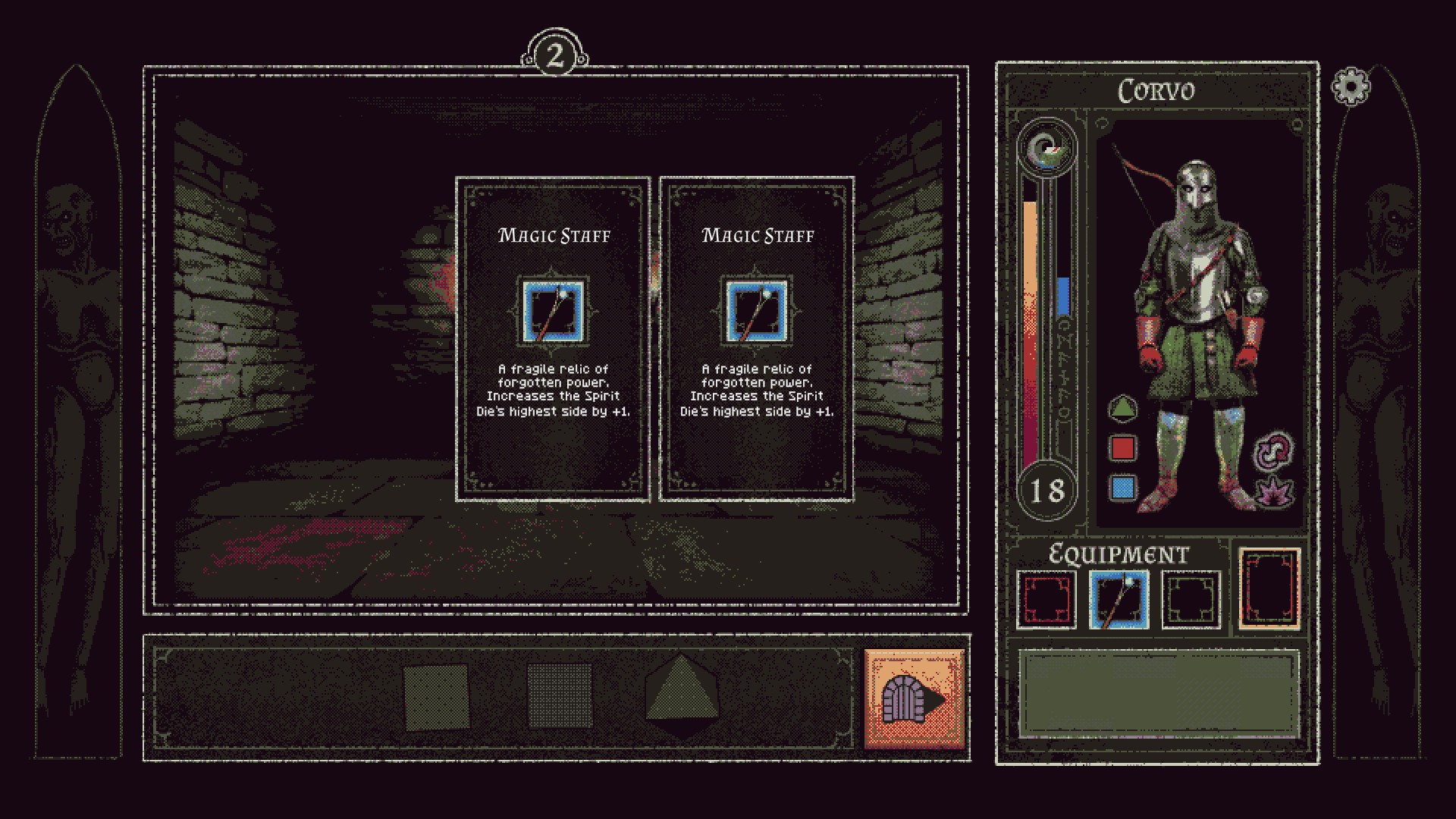
The myriad of minor issues was the nail in the coffin for my time with the game as mismatched text, visible code from failing to properly close attributes, relics failing to activate dice rerolls, being offered two Magic Wand items while I already have a Magic Wand item in my blue slot and more made the game feel like a demonstration of an idea, rather than a strong Early Access release.
I have high hopes for The Fortress, which I didn’t expect I’d say after finishing my first run. However, seeing the dev respond to feedback and actively introspect on the nature of luck-based gameplay gives me hope. It would be easy to yell that the players are the problem and luck is fun, citing any number of examples like Darkest Dungeon or X-Com, but that argument would fail to recognise the core mechanics of those games allow for redemption, off-setting failures and the ability to increase or reduce risk through player choice. Baryonyx Games are clearly on-the-ball when it comes to listening to feedback, and so long as those fixes are implemented correctly (so that means no more visible <color = “red”> code in text boxes…) I can see The Fortress being a hit in the genre.
The Fortress is available now on Steam
