

Yogi is a physical (and occasionally hilarious) party game by Bez Shahriari that has most recently been published by Hachette. It challenges players to twist, contort, and balance their way to victory — a bit like a spiritual successor to Twister, but distilled into a deck of cards and a smaller gameplay footprint.
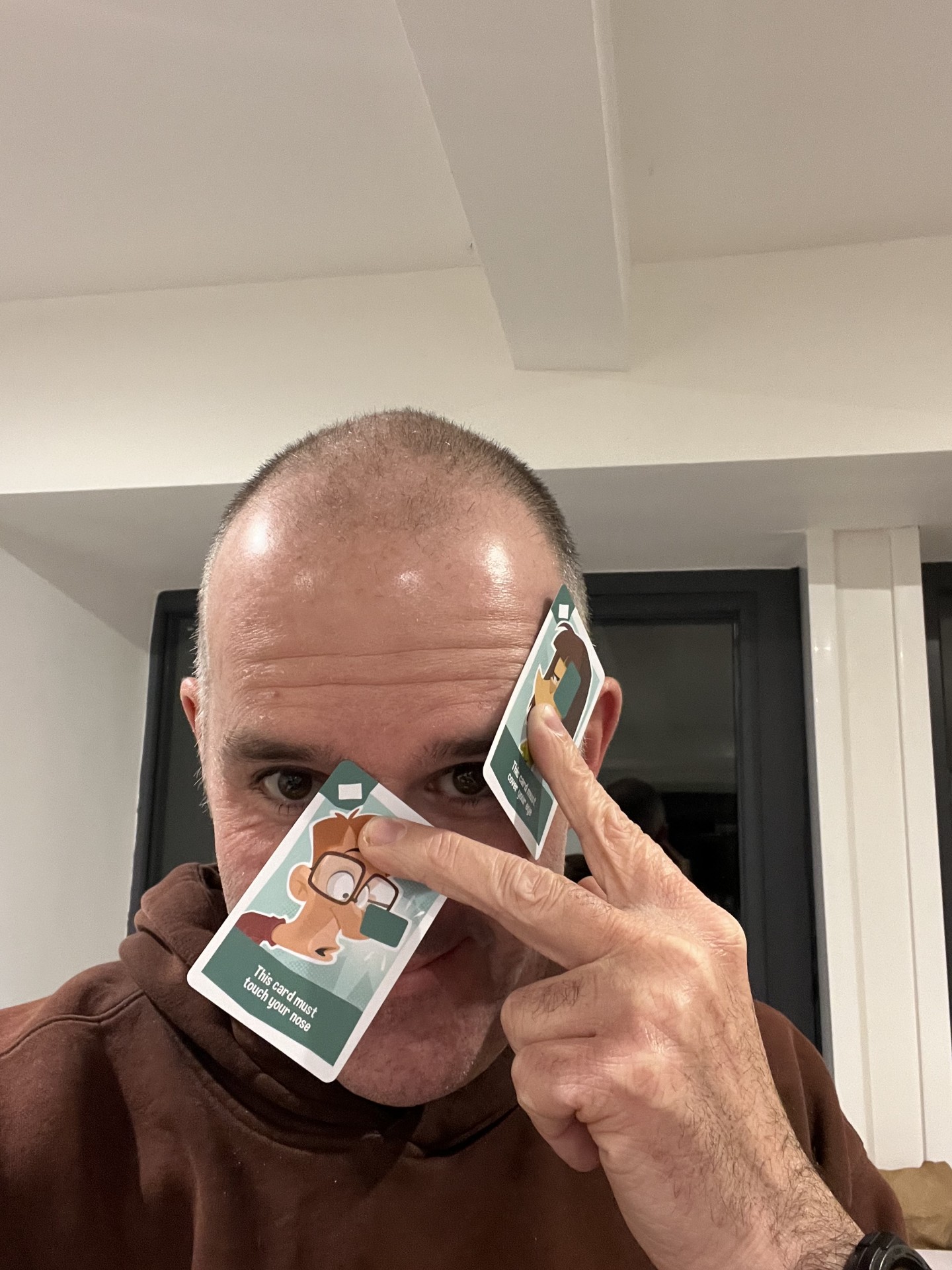
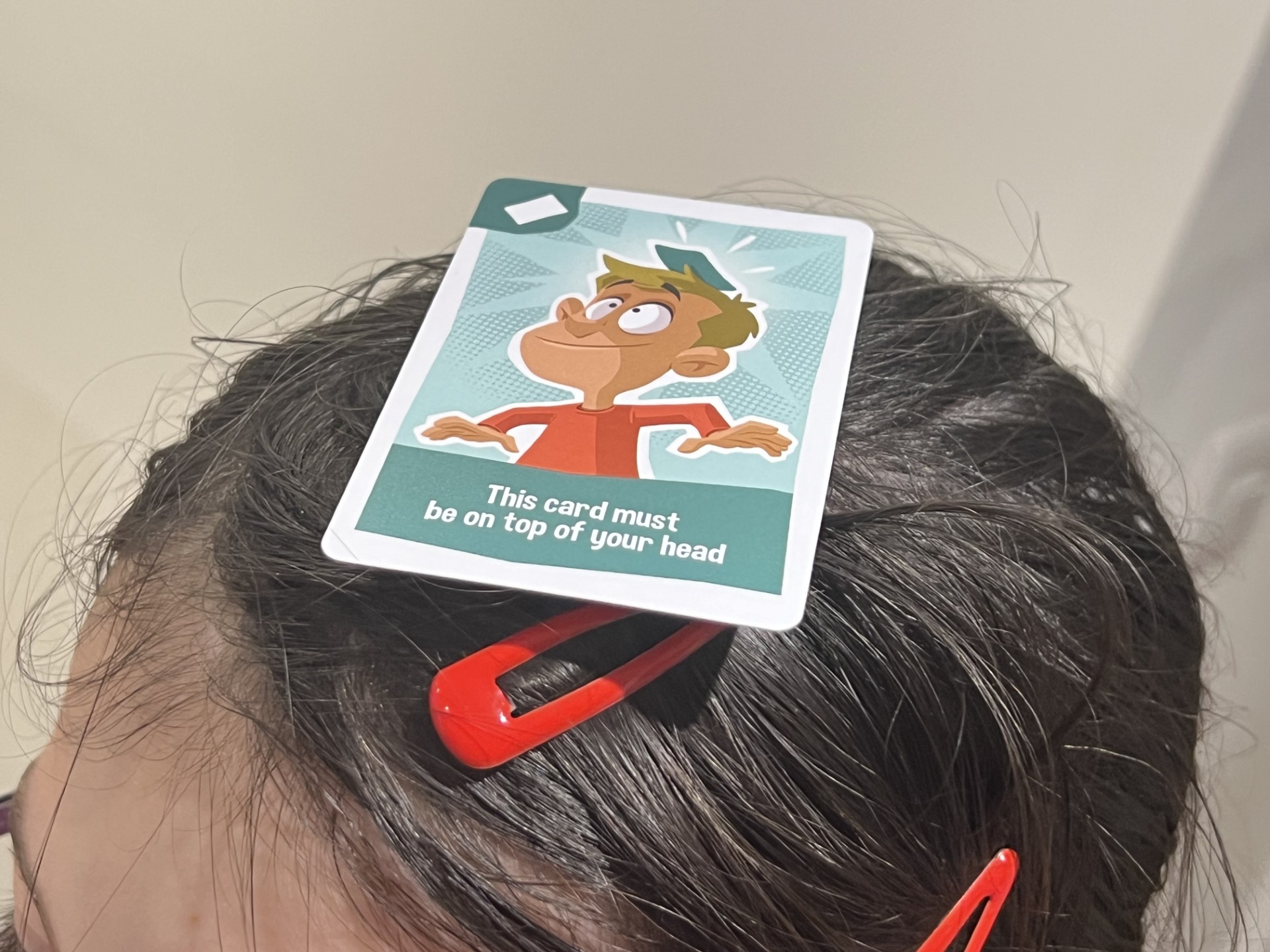
At its core, Yogi is a simple dexterity challenge: on your turn, you draw a card and follow its instruction. These instructions are physical constraints — “Place this card on your forehead,” “Left thumb touching nose,” “Right hand below your knee,” and so on. As the game progresses, each player accumulates more of these restrictions, and the challenge becomes maintaining all of them simultaneously. Fail to comply — drop a card, move the wrong limb, or forget a position — and you’re out. The last player standing wins.
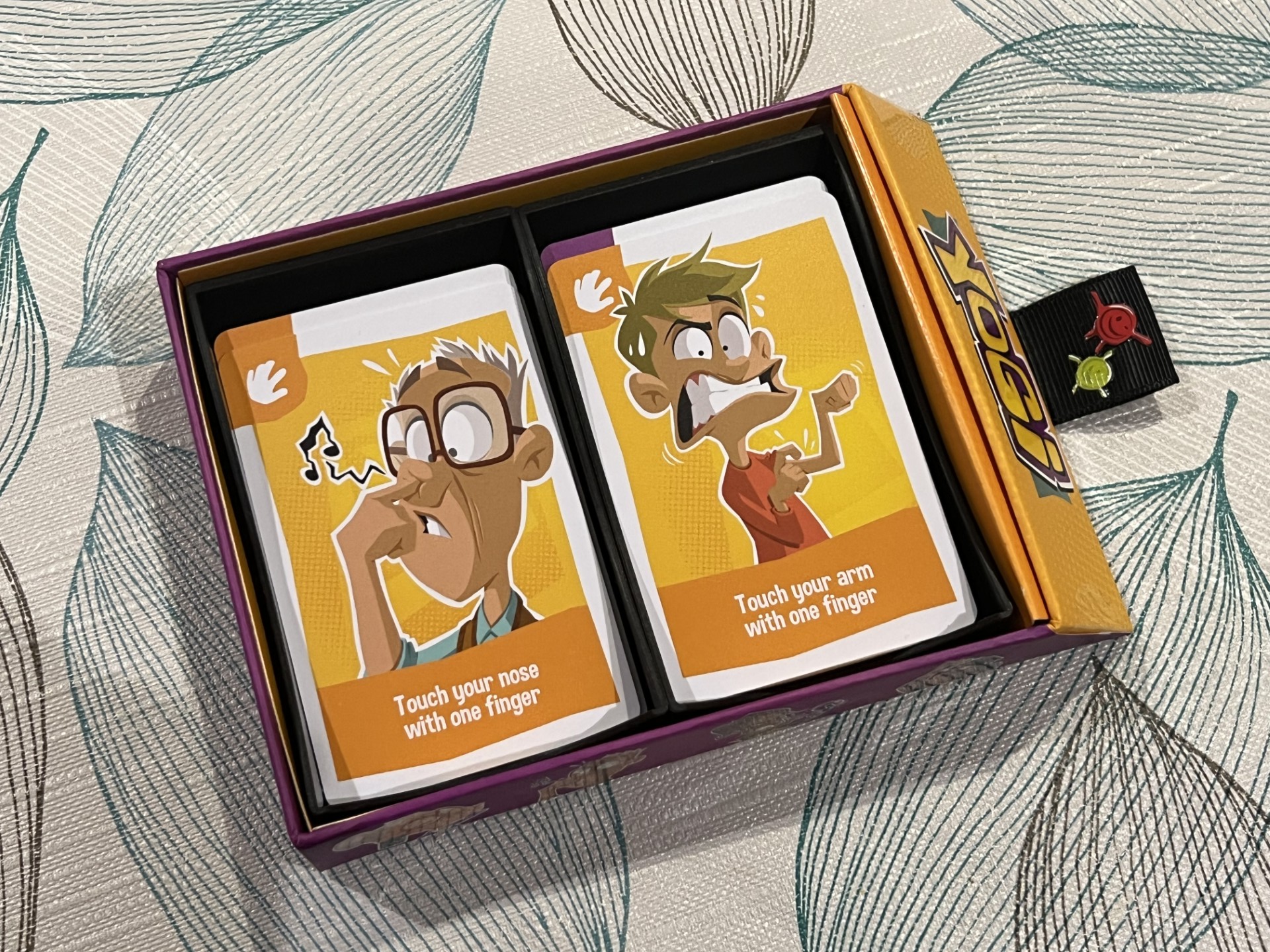
The game includes fifty-something durable and nicely made cards, each with a brightly illustrated prompt and a clear, color-coded instruction. Red cards typically involve holding a card against your body, green cards dictate limb positions, and blue cards involve finger placements. The cards are cleverly designed to escalate in difficulty the more you add, and the randomness of the draw ensures that no two games play out the same way.
What makes Yogi shine is its accessibility and instant hilarity. The rules take less than a minute to explain, and the game supports 3 to 10 players (with some groups even stretching it to 12). It plays best with 5–8, where the chaos and laughter really take off. It’s ideal for parties, family gatherings, classrooms, or icebreakers — anywhere you want to get people moving and giggling.
There’s also a variant called “Yogi Guru,” which introduces a more competitive, memory-based twist. In this mode, players must remember and repeat all previous instructions in order, adding a cognitive challenge to the physical one. It’s a clever way to increase difficulty and replayability for groups who’ve mastered the base game.
I have to praise Yogi for its simplicity, portability, and sheer fun factor. It has the potential for highly amusing gameplay and it’s very easy to teach. It also captures the “oh go on then” spirit of Twister without needing the floor space or creating such a risk of injury. It’s also surprisingly hard, with only two or three cards needing to be in play to create a significant challenge.
That said, Yogi isn’t for everyone. Players with limited mobility or physical discomfort may find some cards difficult or exclusionary, and the game’s reliance on physical humor means it’s best suited to groups who are comfortable being a little silly. Some cards can also create awkward or uncomfortable positions if held for too long, so house rules or time limits may be helpful for longer sessions.
Yogi is a brilliantly simple party game that turns your body into the playing area. It’s quick to learn, more or less endlessly replayable, and guaranteed to generate laughter — a perfect pick for lighthearted fun with friends, family, or total strangers. My kids love it, I am perhaps less enamoured, but games like Yogi have their place for sure.
Yogi is available now from Zatu Games.

