
Toaplan Arcade Collection Vol.1 and Vol.2 feature some of the best shooters in history

If you’re a fan of classic arcade shooters — the kind that throw you into a cockpit, flood the screen with bullets and dare you to survive — then the twin release of Toaplan Arcade Collection Vol.1 and Toaplan Arcade Collection Vol.2 is a gift from the retro gods.
These two compilations, published for modern consoles and reviewed on Xbox, bring sixteen of Toaplan’s most iconic (and occasionally obscure) shoot-’em-ups back into the spotlight. And while they share the common DNA of fast-paced action, pixel-perfect chaos and a legacy that helped shape the bullet hell genre—they offer distinctly different flavours.
Before I go on, let’s start by listing the inclusions in each one.
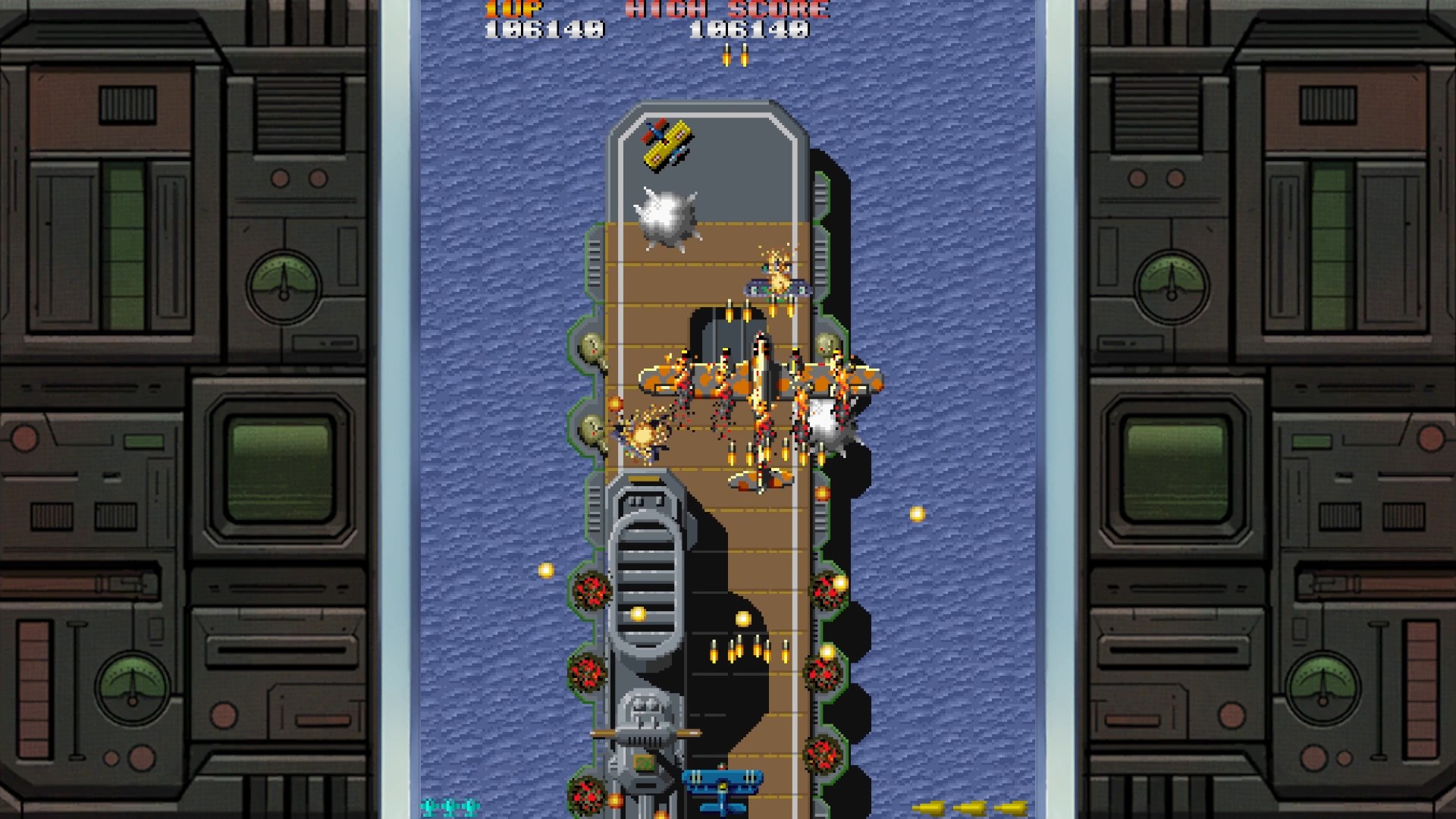
Toaplan Arcade Collection Vol.1 includes:
- Flying Shark
- Fire Shark
- Tiger Heli
- Twin Cobra
- Out Zone
- Fixeight
- Batsugun
- Dogyuun
Toaplan Arcade Collection Vol.2 includes:
- Zero Wing
- Hellfire
- Slap Fight
- Grind Stormer
- Truxton
- Truxton II
- Vimana
- Twin Hawk
Both volumes come with attractive modern conveniences — save states, slowdown, rewind, difficulty tweaks, dip switch settings and online leaderboards. But what they don’t include is much in the way of historical context. There’s no museum mode, no developer interviews, no behind-the-scenes extras. That’s a shame, because Toaplan’s story is worth telling and to be honest, it’s not one I knew anything about before starting this review.
Founded in 1984, the studio was a powerhouse of Japanese arcade development until its closure in 1994. After its demise, many of its developers went on to form Cave, the studio that would define and popularise bullet hell in the years to come. In many ways, these collections are the missing link between old-school arcade shooters and the genre’s modern evolution. Perhaps that’s why I’d never heard of Toaplan, but their fingerprints are all over some of my favourite shooters.
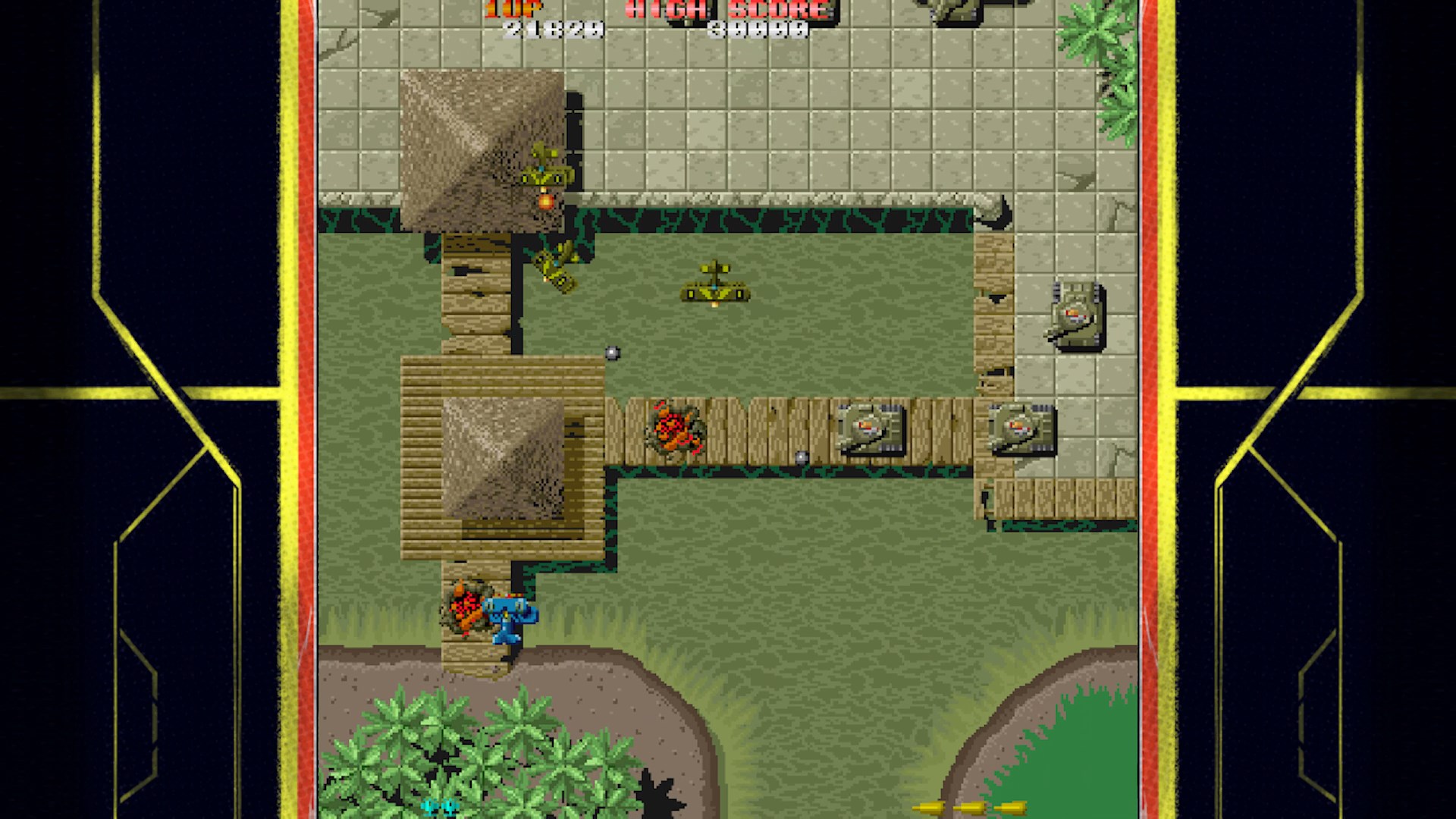
Toaplan Arcade Collection Vol.1 is the more traditional of the two games. It’s heavy on vertical scrollers and military themes, with games like Flying Shark, Fire Shark, and Tiger Heli offering tight, no-frills action. These are the games that built Toaplan’s reputation — simple, brutal, and endlessly replayable. Twin Cobra (also known as Kyukyoku Tiger I would later discover via Wikipedia) is a standout here, a Taito-published hit that became a staple in arcades worldwide. It’s fast, aggressive, and features one of the most satisfying power-up systems of its era.
Then there’s Out Zone and Fixeight, which break the mould by ditching the aircraft and putting players on foot. These are run-and-gun hybrids, more akin to Contra than 1942, and they’re packed with personality. Out Zone in particular is a cult favourite, with its cyberpunk aesthetic and relentless pacing. It’s a game that demands precision and punishes hesitation.
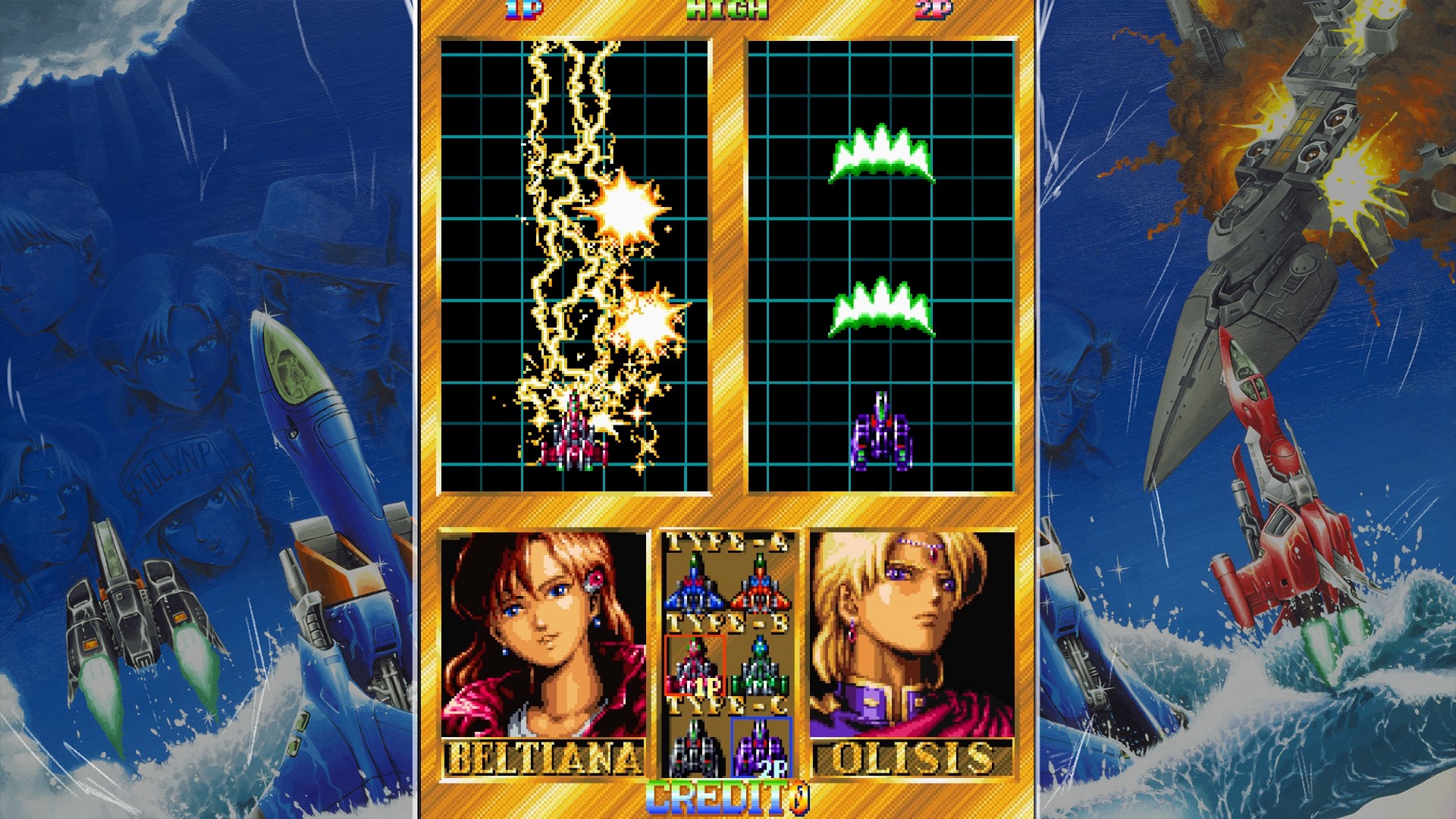
But the real gem of Volume 1 is Batsugun. Released in 1993, it’s widely considered the prototype for modern bullet hell. It was Toaplan’s final shooter before the studio folded and it’s a fascinating blend of old and new. The screen fills with bullets but the hitbox is small. The power-ups are massive, and the scoring system encourages aggressive play. It’s no exaggeration to say that Batsugun laid the groundwork for everything Cave would do later. If you’re interested in shmup history, this is the one to play.
Dogyuun, meanwhile, is a bit of an oddball. It’s visually stunning, with huge sprites and detailed backgrounds, but its gameplay is divisive. The power-up system is convoluted, and the difficulty curve is steep. I didn’t enjoy it all to be honest, but still, it was worth experiencing for its ambition alone.
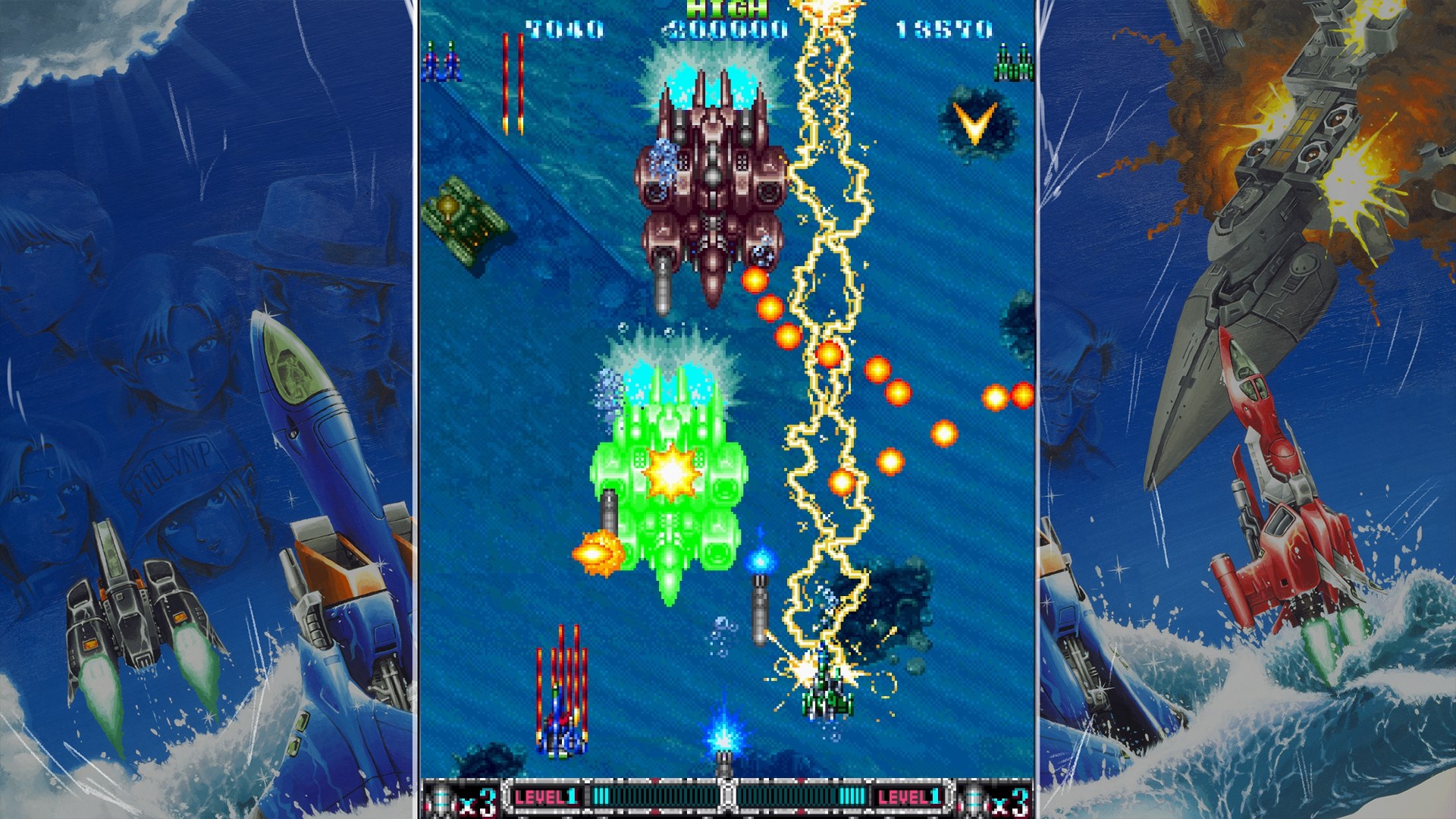
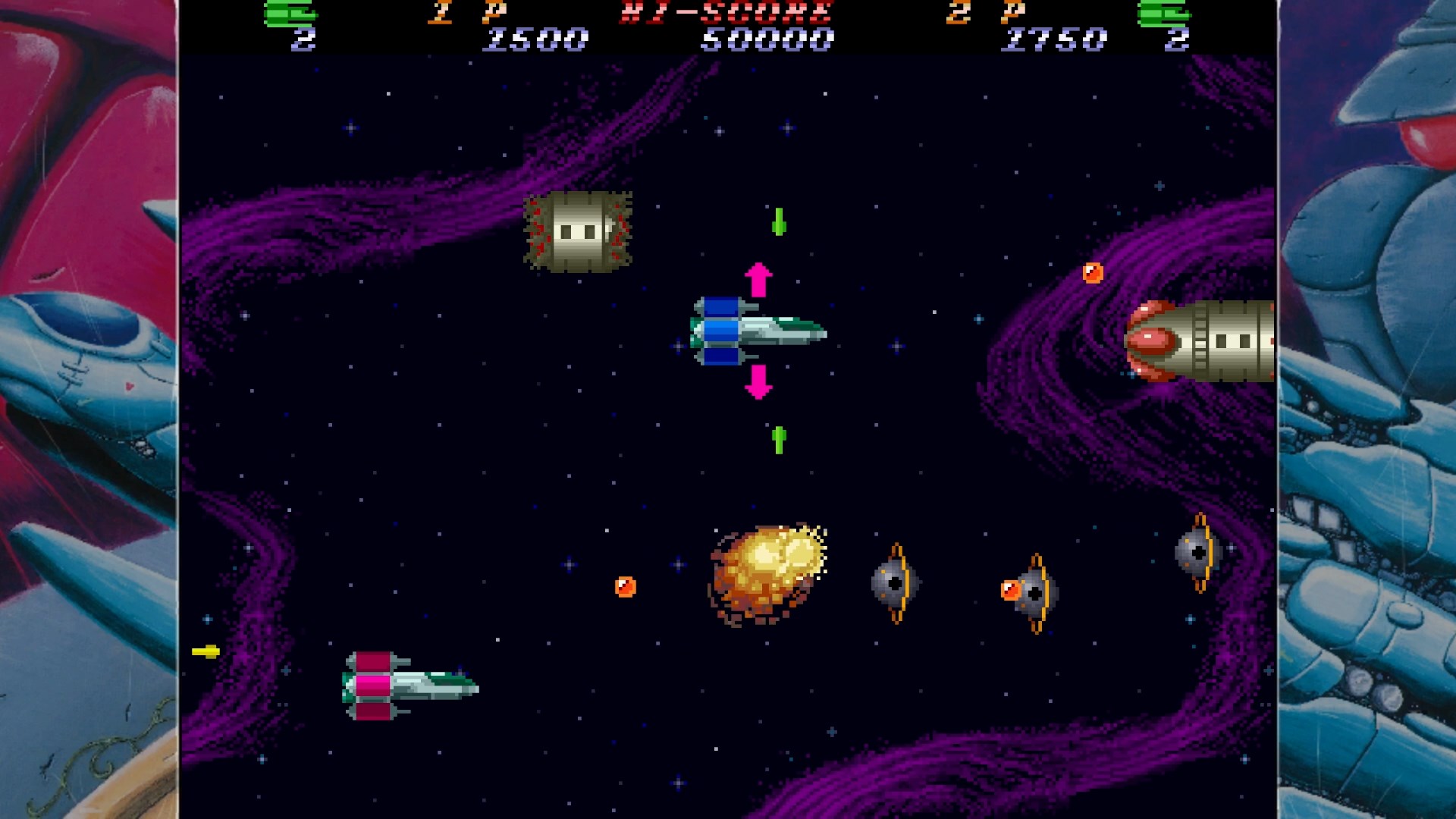
Now let’s turn to Toaplan Arcade Collection Vol.2, which feels more experimental and eccentric. The headliner here is Zero Wing, a horizontal shooter best known for its hilariously botched English translation on the Sega Mega Drive. “All your base are belong to us” became one of the internet’s earliest memes, and while the arcade version doesn’t include that infamous intro, the game itself holds up. It features a unique tractor beam mechanic that lets you grab enemies and use them as shields— a concept later borrowed by games like G-Darius.
Hellfire is another horizontal standout, notable for its directional firing system. You can switch between four shot types — forward, backward, diagonal, and vertical on the fly, adding a layer of strategy rarely seen in shooters of its time. It’s a bit clunky by today’s standards and I sort of wish it were simply a twin-stick shooter, but historically, it was a big step forward.
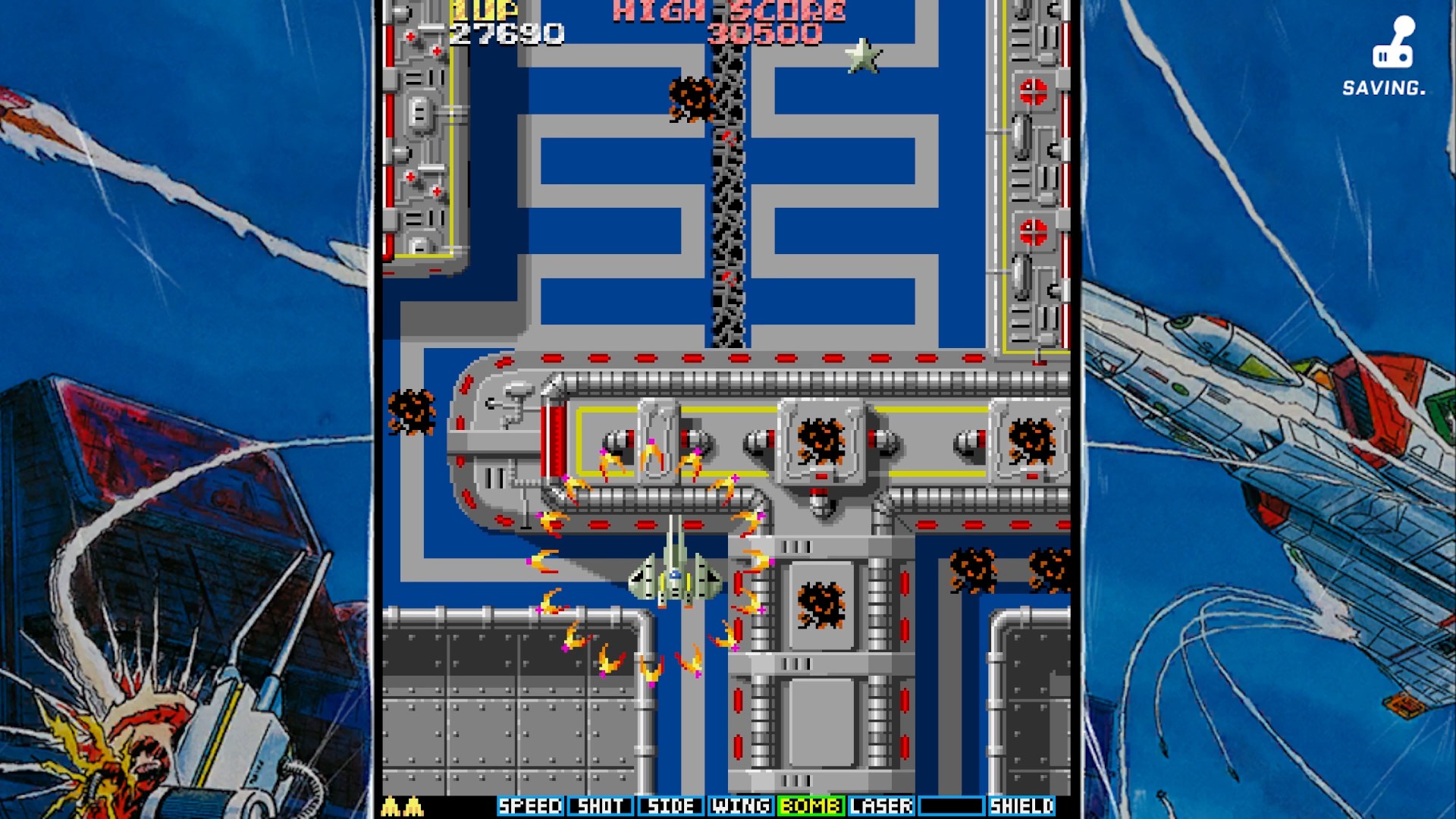
Truxton and Truxton II are pure vertical chaos. These are the games that defined Toaplan’s style: relentless enemy waves, massive explosions, and a soundtrack that sounds like a synthesised marching band on steroids. Truxton was a hit on the Sega Genesis, and its arcade version is even more intense. Truxton II ups the ante with better visuals and tighter design, though it’s also brutally difficult.
Grind Stormer is clearly a transitional title, blending traditional Toaplan design with early bullet hell elements. It’s fast, flashy, and features a unique power-up system that lets you choose between three weapon styles. It’s not as polished as Batsugun, but it’s an important step in the genre’s evolution.
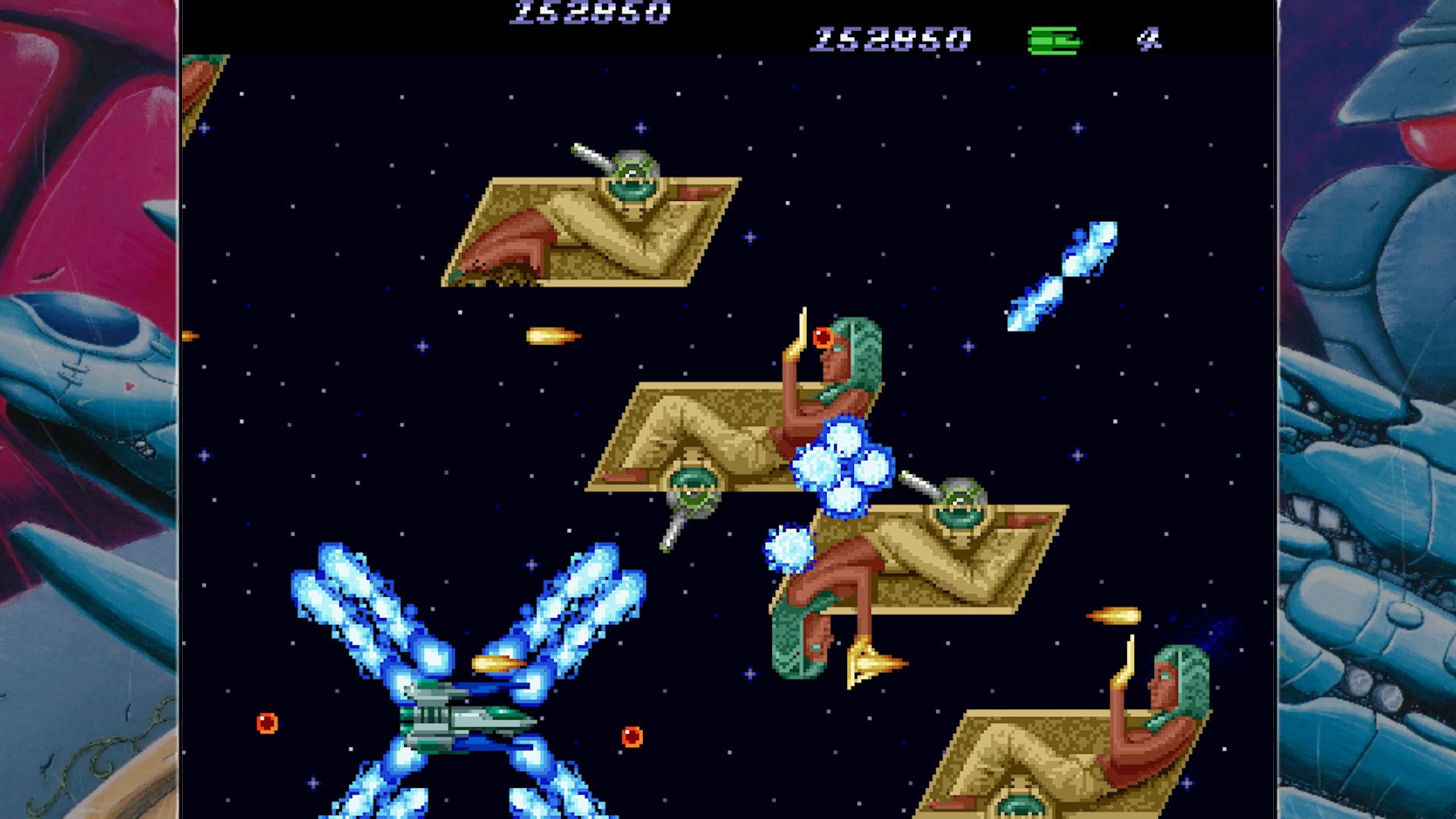
Vimana is perhaps the strangest game in Volume 2. It’s a vertical shooter with a mystical Indian theme, featuring ships that fire psychic energy and enemies that look like temple guardians. It’s not the most refined game in the collection, but it’s sort of pleasingly weird and obviously worth a look if only because you’re never going to see anything quite like it. again.
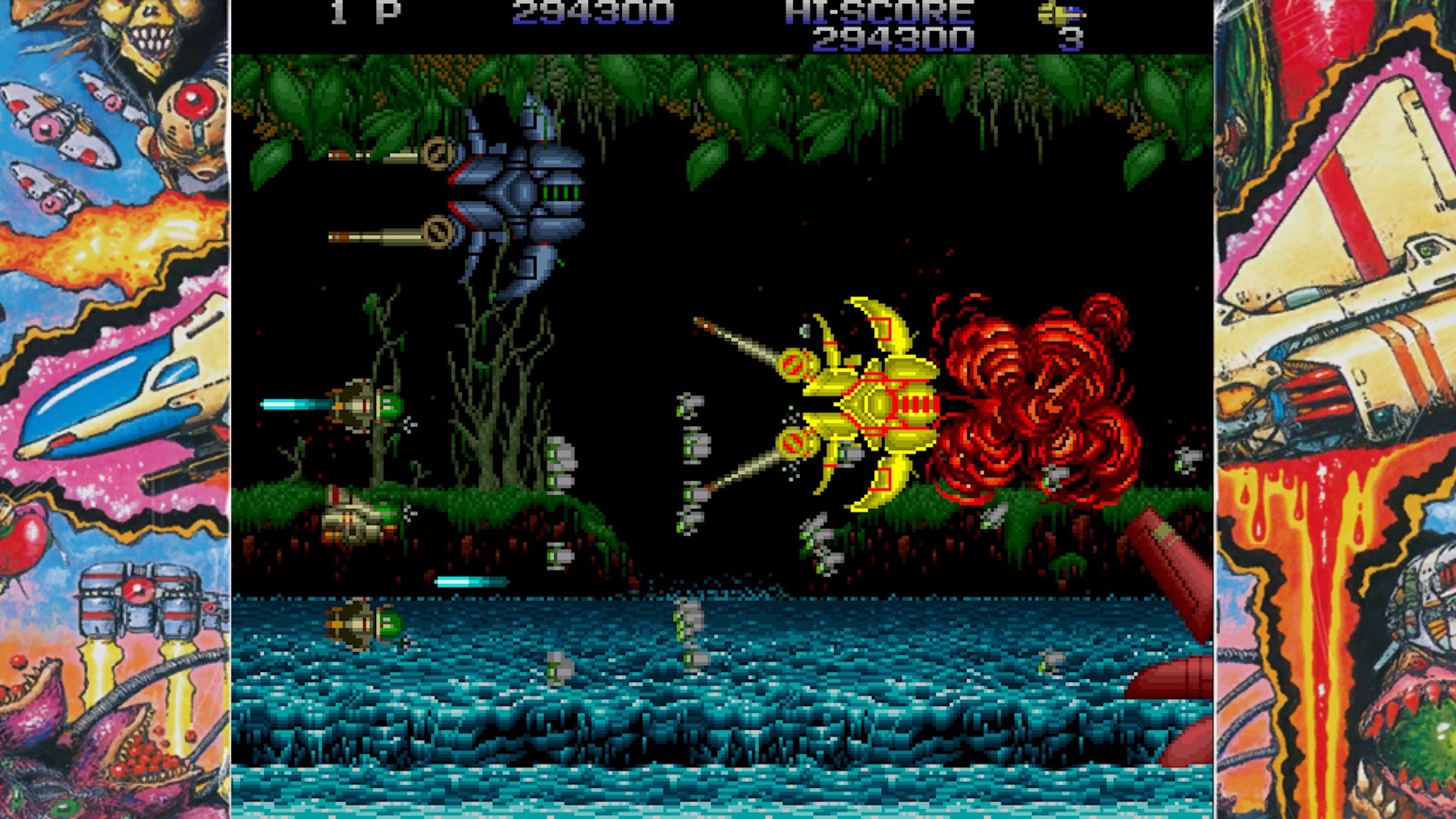
Twin Hawk and Slap Fight round out the set. Twin Hawk is a military-themed vertical shooter with a unique support mechanic — you can call in backup planes that fly alongside you and absorb damage. Slap Fight is older and more primitive, but it features a clever power-up system that lets you trade speed for firepower. It’s a bit slow by modern standards, but it has historical value.
If you want a crash course in Toaplan’s early work—tight vertical shooters, military themes, and the roots of the genre — Toaplan Arcade Collection Vol.1 is the way to go. It’s more consistent, more accessible, and includes Batsugun, which is arguably the most important (and possibly best) game in the entire catalogue.
If you’re after innovation, weirdness, and the seeds of bullet hell, Toaplan Arcade Collection Vol.2 is the better pick. It’s more varied, more experimental, and includes Zero Wing, Hellfire, and Truxton II, all of which pushed the genre forward in meaningful ways and between them are probably a match for Batsugan.
Either way, you’re getting a slice of arcade history. These games aren’t just relics — they’re the foundation of a genre that still thrives today. And while the collections could use more context— developer interviews, design notes, anything to flesh out the story that I’ve since had to seek out on my own — they’re still a treasure trove for anyone who loves shmups.
Toaplan Arcade Collection Vol.1 and Vol.2 are available now for Xbox One.

Comments are closed.