

Star Wars Unlimited is an amazing TCG featuring the loved and feared characters featured throughout Star Wars and its extended universe. Build a deck, pick a leader, pick a base and the aspects to go with it and you’re away! But, if like I was when I started out, half of this means absolutely nothing to you (although you’d like to learn) then this Star Wars Unlimited beginners guide can point you in the right direction to start your Unlimited journey!
First things first, lets talk about deck building. Some people love it, some people hate it, but it’s a crucial part to learning how your deck functions and what cards are in play. But, how do you build a deck? Well, there’s a few things to consider:
- Your Base
- Your Leader
- Which aspects they are (the colours located at the top of the cards) and how to build around them
- Card Traits, Abilities and Cost
- Deck Requirements
Your base is effectively your health pool, these can range anywhere from around 24 – 35 health and ideally serve to give you an action when playing that can help you, give you a larger health pool, no ability but more health or even a negative effect with even more health. Your base will consist of an aspect. The current aspects are: Cunning (yellow), Aggression (red), Command (green) or Vigilance (blue) and this will determine part of what colour scheme to build your starting deck around.
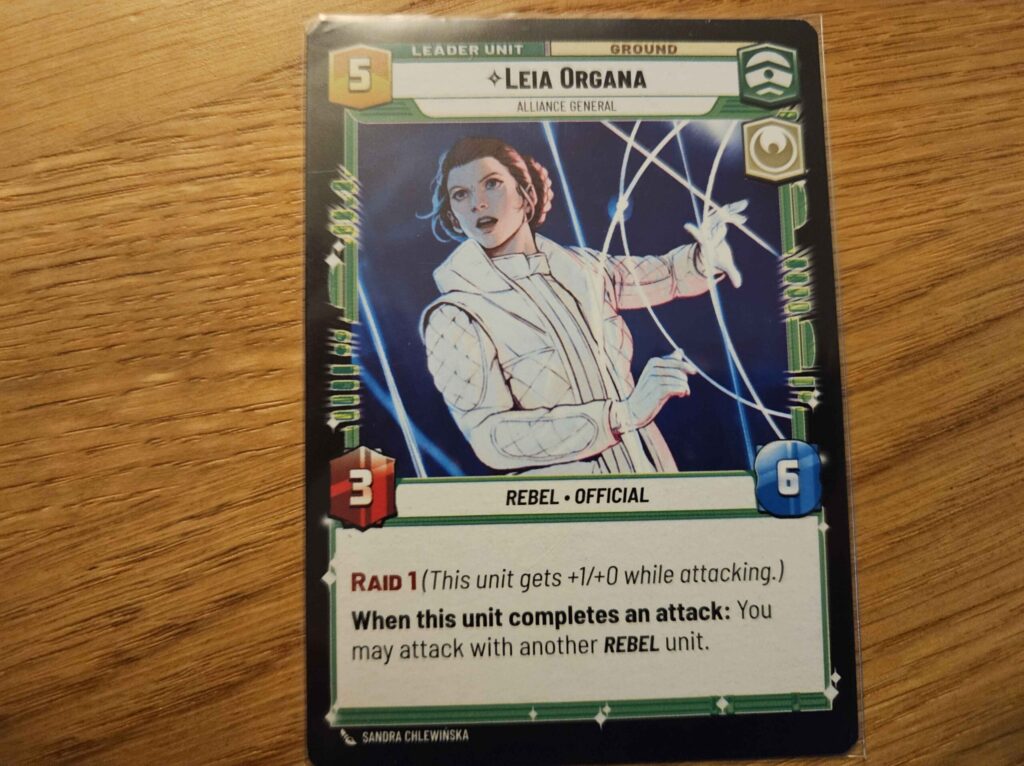
Next you’ll also need to pick a leader, as well as the aspects listed above there’s the addition of Heroism (Gold) and Villainy (Black) for heroes, allowing you to expand your deck even further with units from both the light and dark factions. You leader will come with abilities that may cost, or may be free to use every turn, and when a certain amount of resources are made you will be able to deploy them to the field as units to fight.
It’s a good idea to get a good mix of aspects when making a deck (ideally three different colours) although some decks do not require this and some heroes are purely heroism/villainy, so choose wisely. Once your leader and base has been chosen — as well as what aspects you want to use — it’s time to start looking at the cards themselves.
Most cards will have the same layout, attack in red, health in blue, keywords and abilities listed below, cost in the top left in yellow and finally traits listed just above the ability description or sometimes at the top of the card. To create a deck that has good synergy you’ll want something that has similar traits, whether you choose clones from the Twilight of the Republic for their co-ordination keyword or perhaps Rebel troops with their experience giving abilities, units with similar traits react to each other well generally speaking.
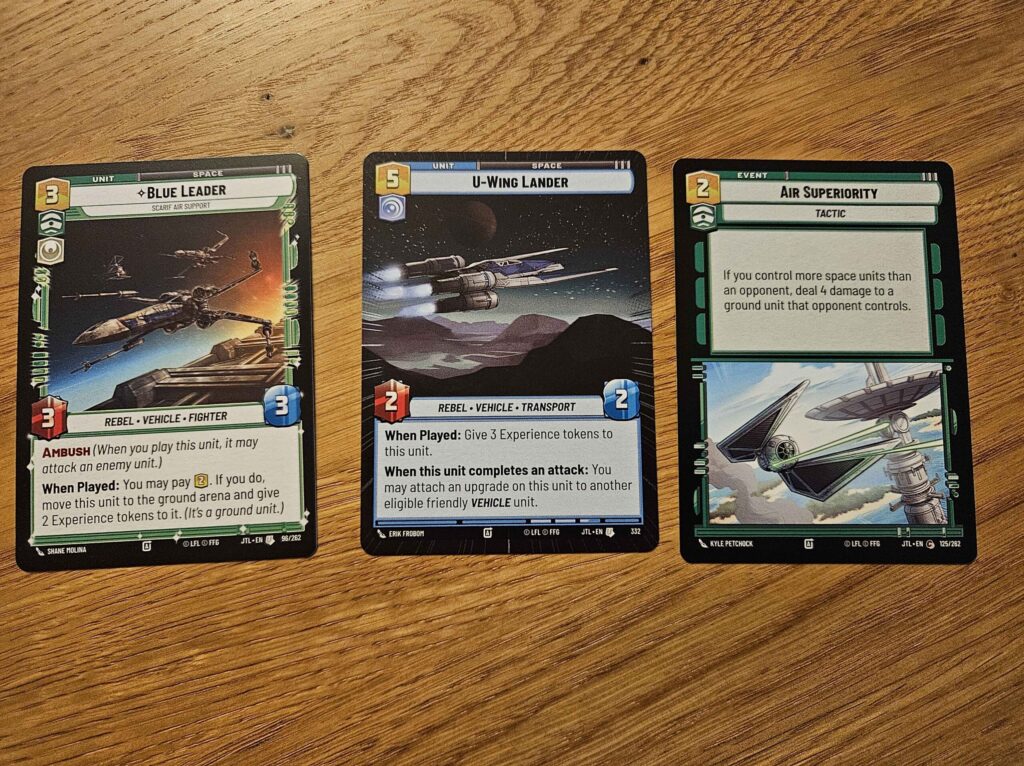
Speaking of units, beginners will notice that there are ground units and space units, this is because there are two fields of play at any one time, Space and Ground. Each unit type will normally only be able to attack units in the same arena i.e. space to space, ground to ground, with the exception of some special units that can damage other areas on the field.
Most people split their decks to about 70/30 ground to space, with some units accompanying ground units for buffs or to get cheeky jabs into the space zone, but you are not limited by your deck composition in this way and are free to create as you please.
If possible, you’ll also want a good mix of units, events and upgrades to get you ready for any situation. Events work a bit like spells in magic, dealing damage, exhausting units, healing or doing all manner of trickery to the field of play. Upgrades are direct buffs to certain units that usually bestow stat buffs and abilities to units with certain traits, like lightsabres to jedi, or guns to ships. Having a good mix of each as well as varying costs is crucial to being victorious.
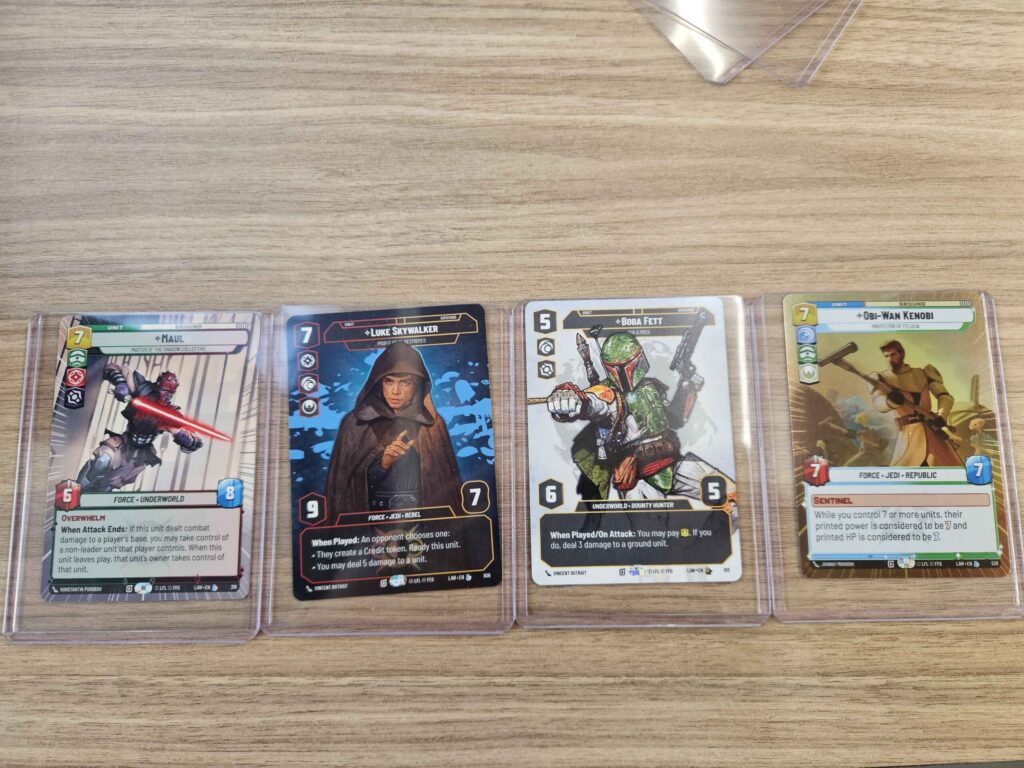
Finally we’ll go over the hard deck requirements, you’ll need a minimum of 50 cards for your standard deck, there are other formats but for 1 vs 1 it’s minimum 50 with no upper limit. You can also only have a maximum of three of the same card in your deck, this is specific to the exact same unit. So, for instance, if you have Darth Vader (loves his beans) and Darth Vader (doesn’t love his beans) as separate characters from separate sets, you can have 3 copies of each.
Other than those rules you are generally free to build away to your hearts content and create whatever combination you can think of. If deck building isn’t for you however, there are pre made decks available that offer viable and competitive experiences, to let you jump straight into the action.
If you would like to check out some of the pre-made decks or the many cards on offer for Star Wars Unlimited, you can see what’s available on the Asmodee website or if you want to look deeper into the game you an find more information on the Star Wars Unlimited website.
