

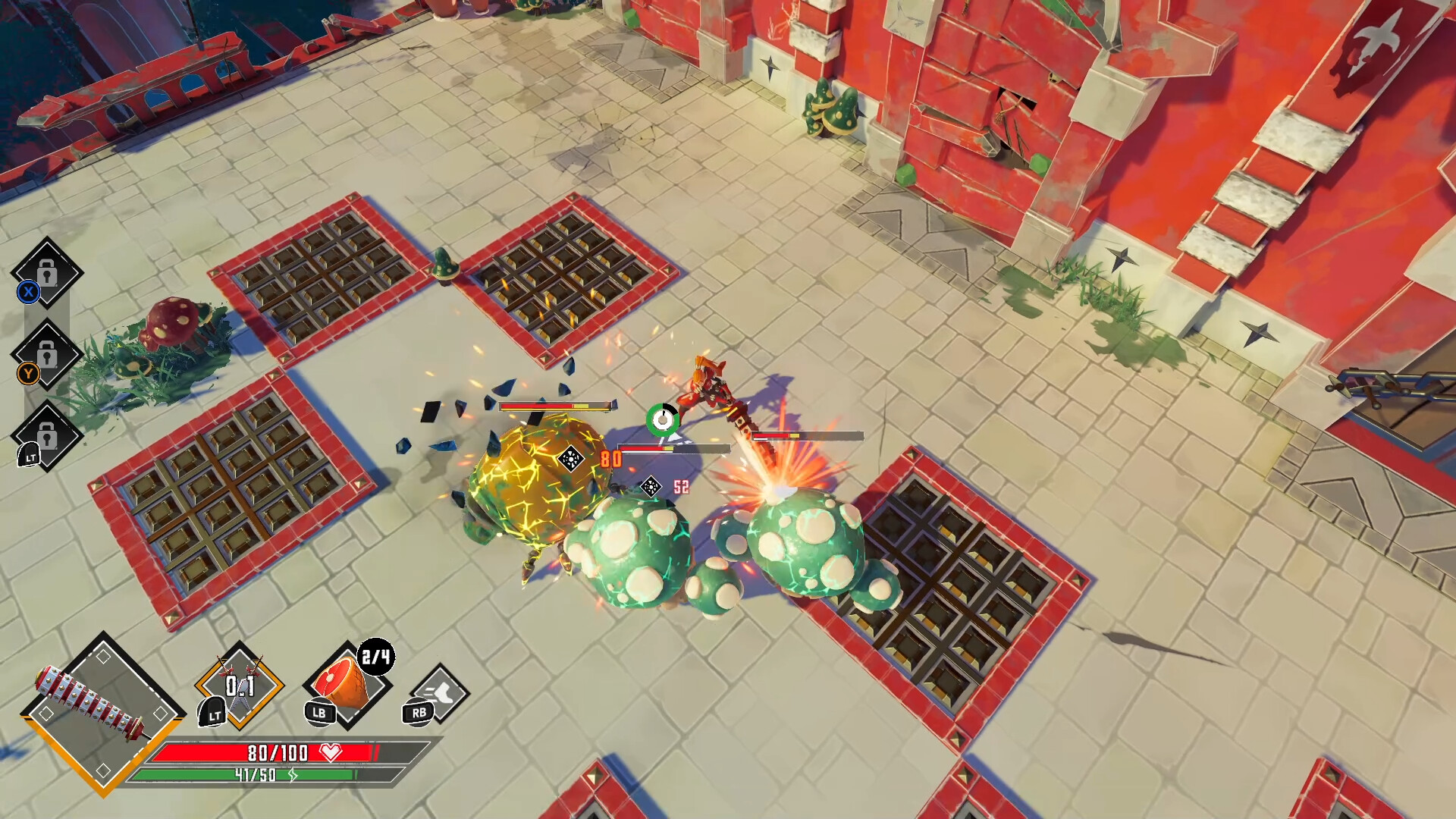
It seems you can’t go a month without seeing a Hades-esque action game on your Steam homepage. To many, the genre is already a write-off. The assumptions that Hades has done it best and the genre is oversaturated result in gamers simply ignoring gems like Savara. A look at some screenshots and a trailer isn’t going to wow you, but Savara is about one thing and one thing only: Gameplay expression.
Technically there is a story, in fact the world of Savara is the same as an obscure French anime series that was never localised to anywhere else (until now, I suppose), so there’s an entire cast of characters and story beats presumably related to the show. Fortunately, the story takes such a backseat in Savara that the anime is hardly what you’d call “required reading”. As it happens, Monster Hunter might more accurately fit that description…
The single most in-depth weapon system in a roguelike
Savara takes you through combat rooms, with a choice of reward and culminating in area bosses, with ramping difficulty in the form of optional modifiers — despite all this sounding like every other of Hades’ illegitimate offspring Savara still manages to ooze originality and engagement.
It achieves this through a frankly baffling weapon and armour system. Armour sets have different stat boosts for matching pieces, but then also all have unique effects per piece. The buffs get more powerful the more of the same set is equipped, but mixing individual piece effects from across multiple sets can just as well create a monster of a build. This creates a balance of accessible playstyles (using sets) and deep personalisation (mixing across sets) with a higher skill ceiling.
I’ll talk numbers later, first let’s dive into the weapons you’ll use alongside these armour sets. Weapons are part of a monster category and a weapon type. Each run, you take two weapons into the fray and can switch between them on a generous two second cooldown. This means choosing a pair of weapons that compliment each other is key to utilising your full moveset. Combining two completely different movesets into one via weapon switch attacks is simply a joy, but that’s not all.
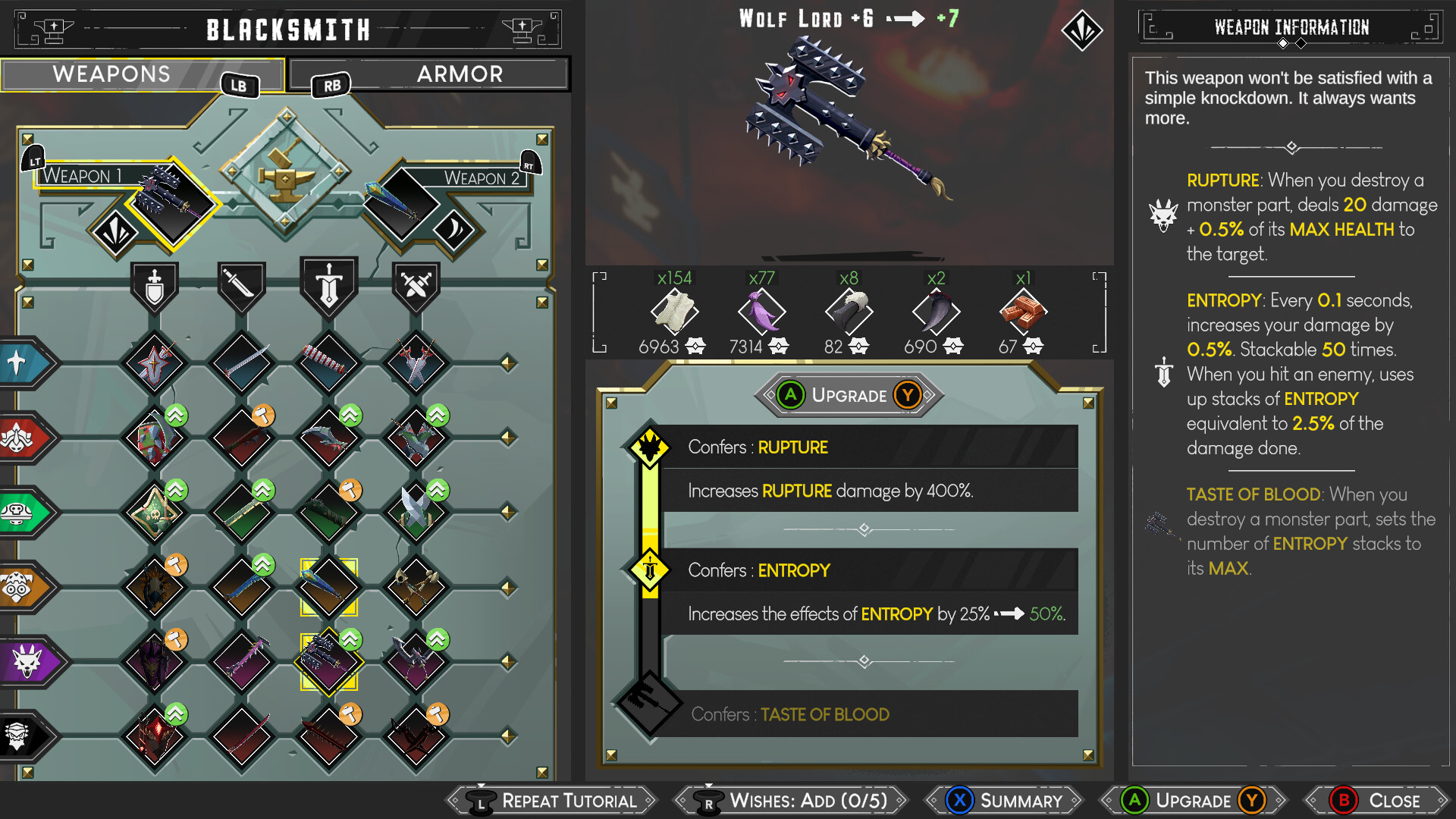
Let me summarise the weapon monster categories and types as simply as I can:
- There are six monster categories. The monster category determines what type of general trait the crafted weapon gets. Maybe it has explosive strikes, maybe it poisons enemies, maybe it specialises in breaking enemy parts.
- There are seven weapon types, one of each in each monster category. The weapon type is a foundation for its moveset and special attack. These are things like “Longsword”, “Hammer”, “Claws”, “Sword and Shield” etc.
- Every weapon has three traits. One is derived from its monster category, one is derived from its weapon type and the final trait for each weapon is unique to that specific armament. For those of you with quick maths, that’s 42 unique weapon traits.
- Every run you choose two of those weapons. I don’t even know what maths I would need to do to calculate the total combination of every weapon with every other weapon, but it’s a mind-boggling amount. If weapons had just a trait from their monster category and a trait from their weapon type I’d find that cool, but the fact there’s also 42 unique effects so that every single item has its own? That’s madness. I love it.
Moveset variety in a system that rewards precision
All of these weapon choices and combinations wouldn’t mean much if the combat sucked. Thankfully, Savara puts your loadout through its paces with aplomb. Enemies are well rendered and engaging, but most importantly they are modular. Each monster has at least two different “parts” such as a head and a shell, or the wings and tail of a dragon. These “monster parts” can be damaged but also broken. Breaking a monster part rewards materials specific to that monster and the part you broke, which can be used at base after a run to forge weapons and armour from that specific monster category.
Breaking parts requires the right damage type or a build that has some part-breaking buffs, and feels satisfying every time. Realising that your current Longsword is great against dragon heads but weak to the rest encourages a methodical playstyle for getting clean slashes across their front — alternatively you could switch weapons and see if maybe your equipped daggers are effective against wings for an easier break hitbox.
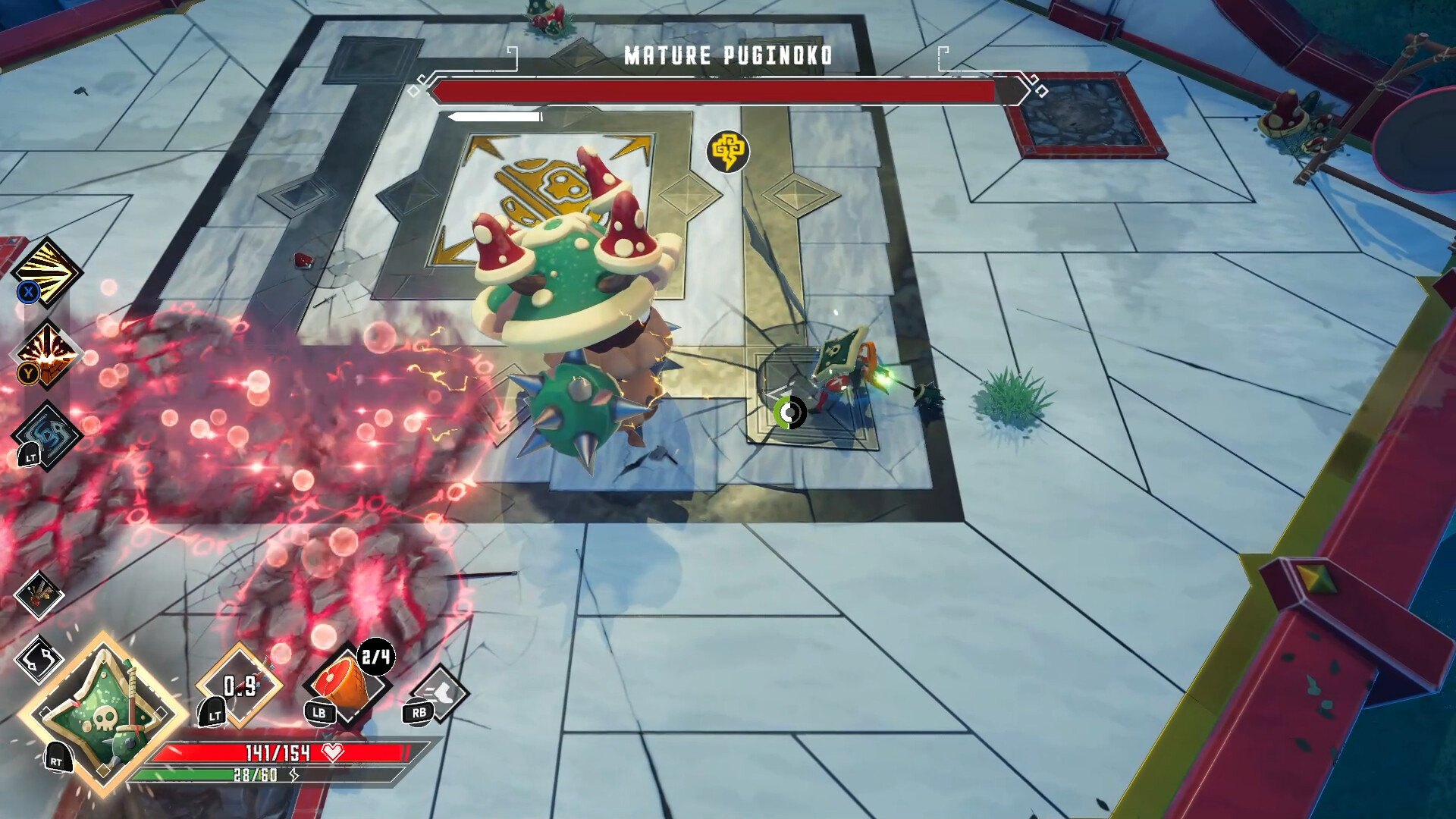
It’s not just light attack and heavy attacks you’re juggling either. All weapon types have their own mechanic. The Sword and Shield can block during attacks, the Spear excels at hitting weaknesses and the fist weapons require “Perfect Timing” inputs to end each combo in a devastating uppercut based on how long the combo was. Landing a fully charged uppercut on a monster part that is weak to your weapon is almost always a break, and pulling it off feels fantastic.
This game rewards fast-paced action as much as it does slow, methodical planning for angles of attack. At any given point you have dozens of options for what to do in the next two seconds. Change weapon? Charge a heavy? Sprint or dodge away? Start a combo? Use an ability? All of these options play into the wider system of knowing your build, knowing your three (well, six across both weapons) weapon traits and even knowing your enemy.
All the usual bells and whistles on top of an already oceanic system
That’s the weapons and armour covered. So, now you can wander off and put your Honour points into permanent boosts like increased stamina regen after a break, or increased healing capacity. Oh, and while you’re there, equip up to four relics that range from extra HP or revives to changing how your dodge works. Each of these relics can be upgraded too, and not just by spamming currency into them. Like everything else in Savara, it’s deeper than that.
Each relic has specific goals to level it up, making your choice of relic affect your build not only through its effect but also through the challenge it offers you to complete. A fully upgraded relic gains an additional effect on all future runs, so there’s just one more effect to stack onto your weapon traits, armour buffs and permanent Honour unlocks.
After completing your first successful run you’ll unlock Prestige which, as they say, is where the real game begins. Add more enemies, more boss attacks and variants, less rewarding rooms and time limits to climb prestige and uncover more of the story. Personally, it was just an excuse to try out a different weapon set combination and spend more time in the expressive combat arenas.
I’ve done the maths since we last spoke about the amount of combinations by the way: It’s 861…
Don’t judge a book by its cover
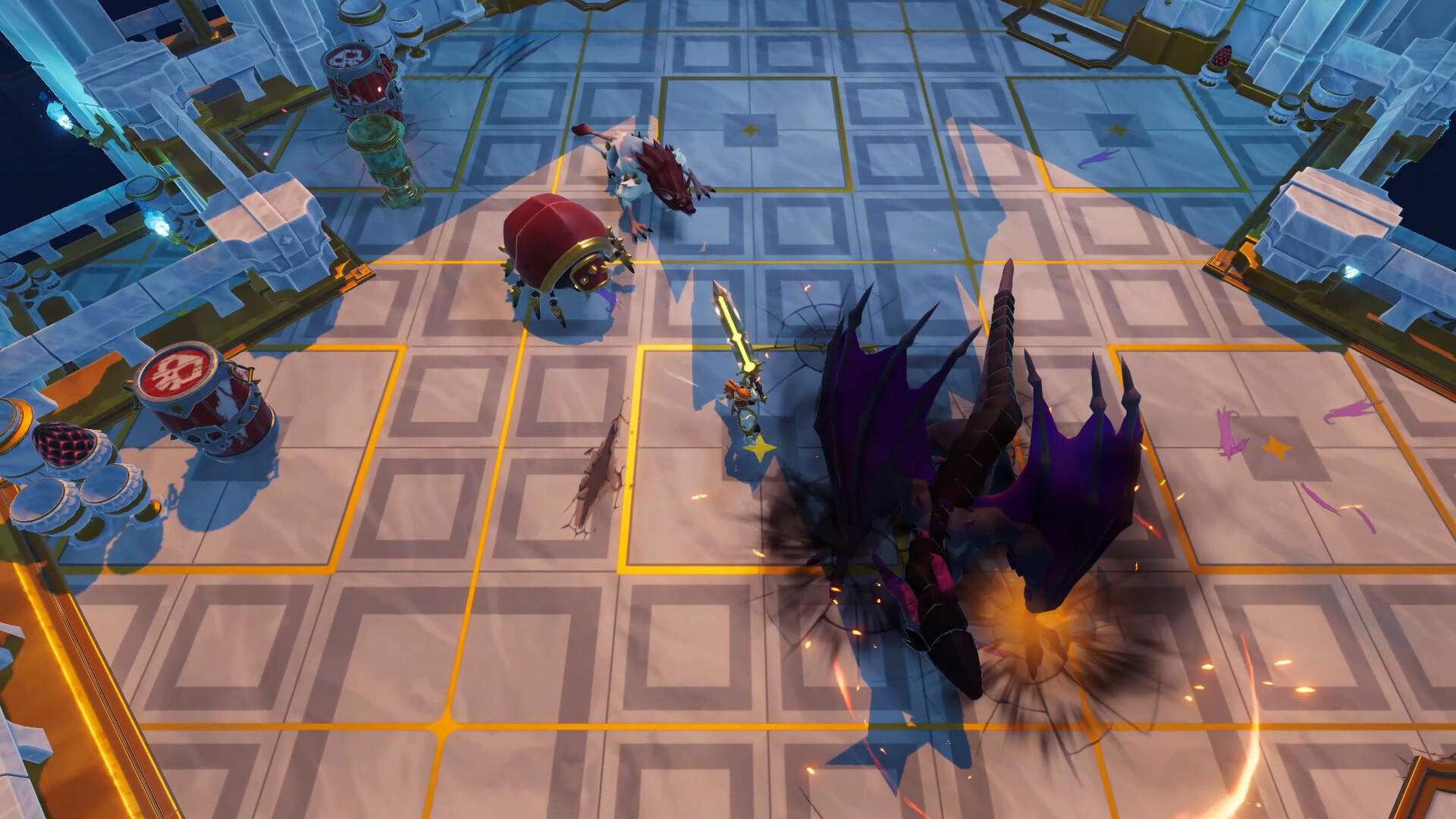
Savara has been an eye-opening experience. Not only does it combine Monster Hunter crafting style with the action of Hades, but it does so while being completely unexpectedly original. The fact every creature has multiple parts, all resistant to different damage types and requiring precise attacking, movement and weapon knowledge to deal with is simply inspired. The level of player expression is through the roof, and in my hours and hours with Savara I barely used more than five of the 42 unique weapons…and one armour set.
It’s easy to look at Savara and expect nothing, but this game isn’t a painting…it’s a game. It needs to be played to be understood and once you do, it’ll change your understanding of what an indie action roguelike can be.
Savara is available now on PS5, Xbox Series X/S and on PC via Steam
