

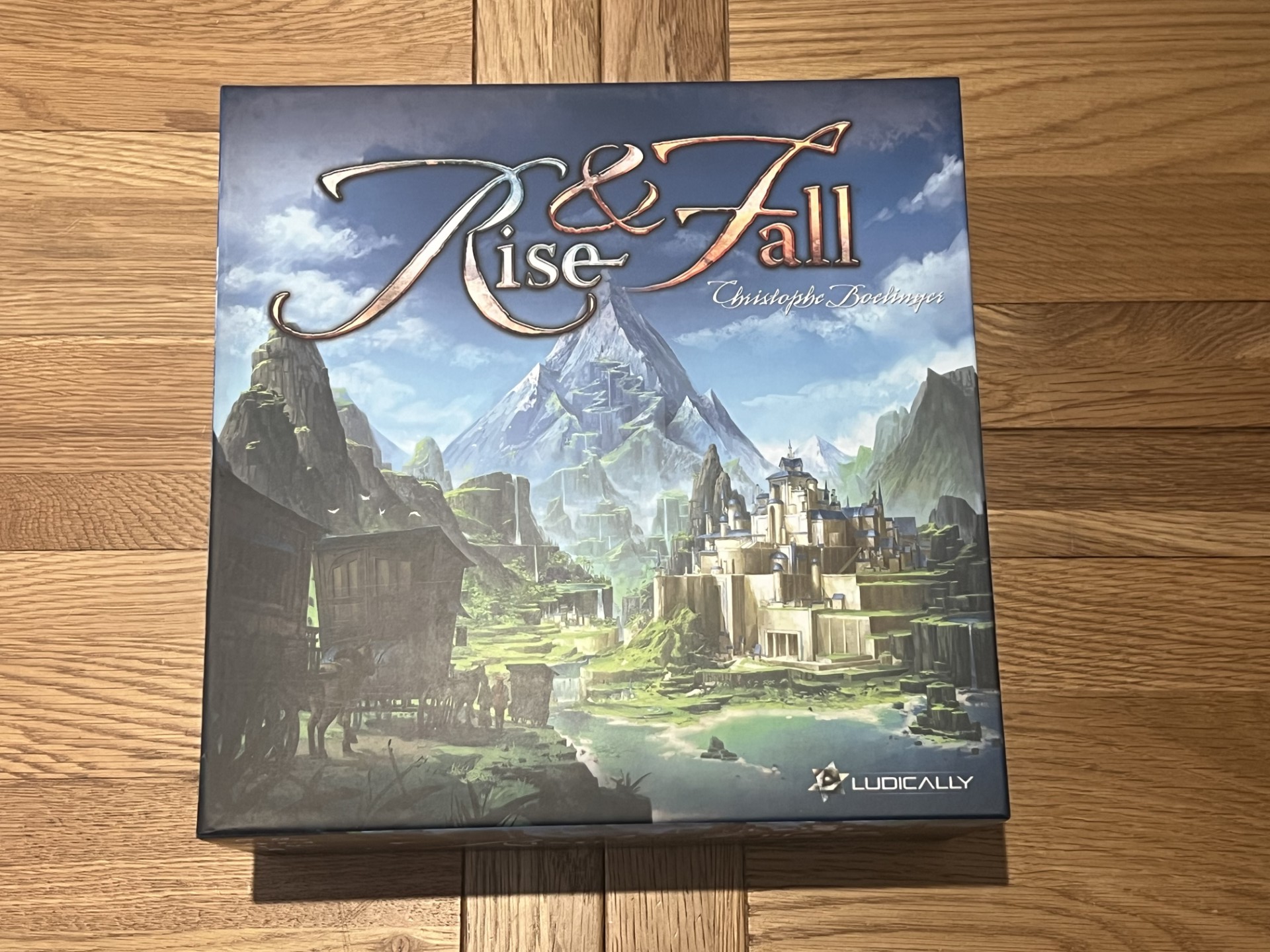
Rise & Fall, the latest design from Christophe Boelinger and published by Ludically, opens with the players building the board piece by piece — an act of divine collaboration that feels more like sculpting a landscape than setting up a board game. It’s a fitting start for a game that is, at its heart, about shaping a civilisation from the ground up — and then watching it evolve, fall, and if you’re lucky, rise again.
Rise & Fall has just landed at UK retail following a somewhat turbulent crowdfunding campaign. The Kickstarter journey was marred by communication issues, delays, and raised eyebrows over production decisions, but whilst the campaign may have left a sour taste for some, the final product is a different story. Rise & Fall is a lean, elegant, and surprisingly cutthroat abstract civilisation game that trades in both spectacle and subtlety, and in doing so, delivers something genuinely special.
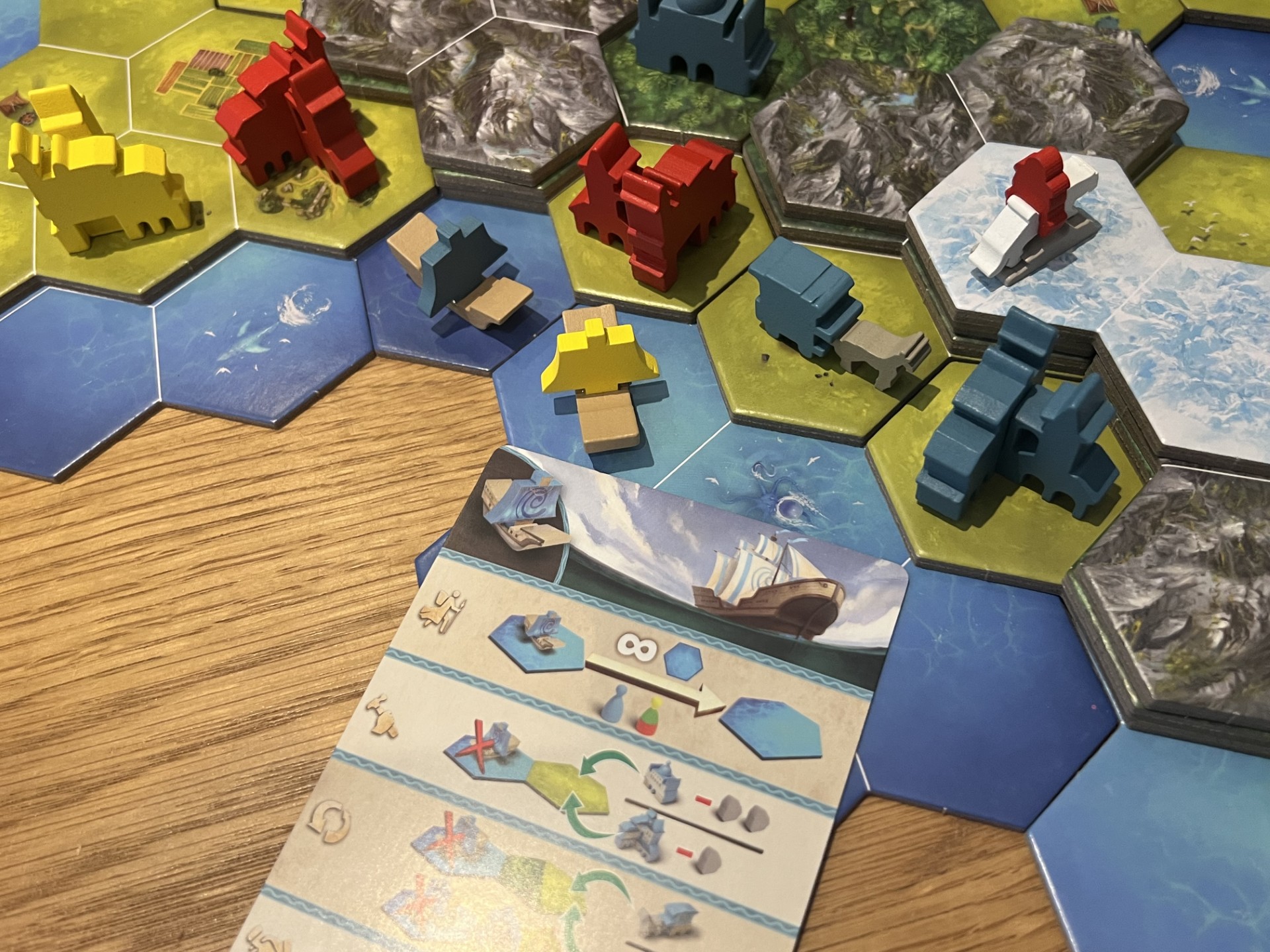
Each player begins with a set of fantastic wooden pieces that often consist of a two-piece construction — nomads, cities, ships, mountaineers, merchants, and temples — and a matching set of cards, one for each unit type. These cards are the engine of the game, and they’re deceptively simple: play a card, activate all units of that type one at a time. That’s it.
Within that simplicity lies a web of decisions that becomes more intricate with every turn. It’s a system that rewards foresight, punishes carelessness, and constantly asks players to weigh short-term gains against long-term flexibility.
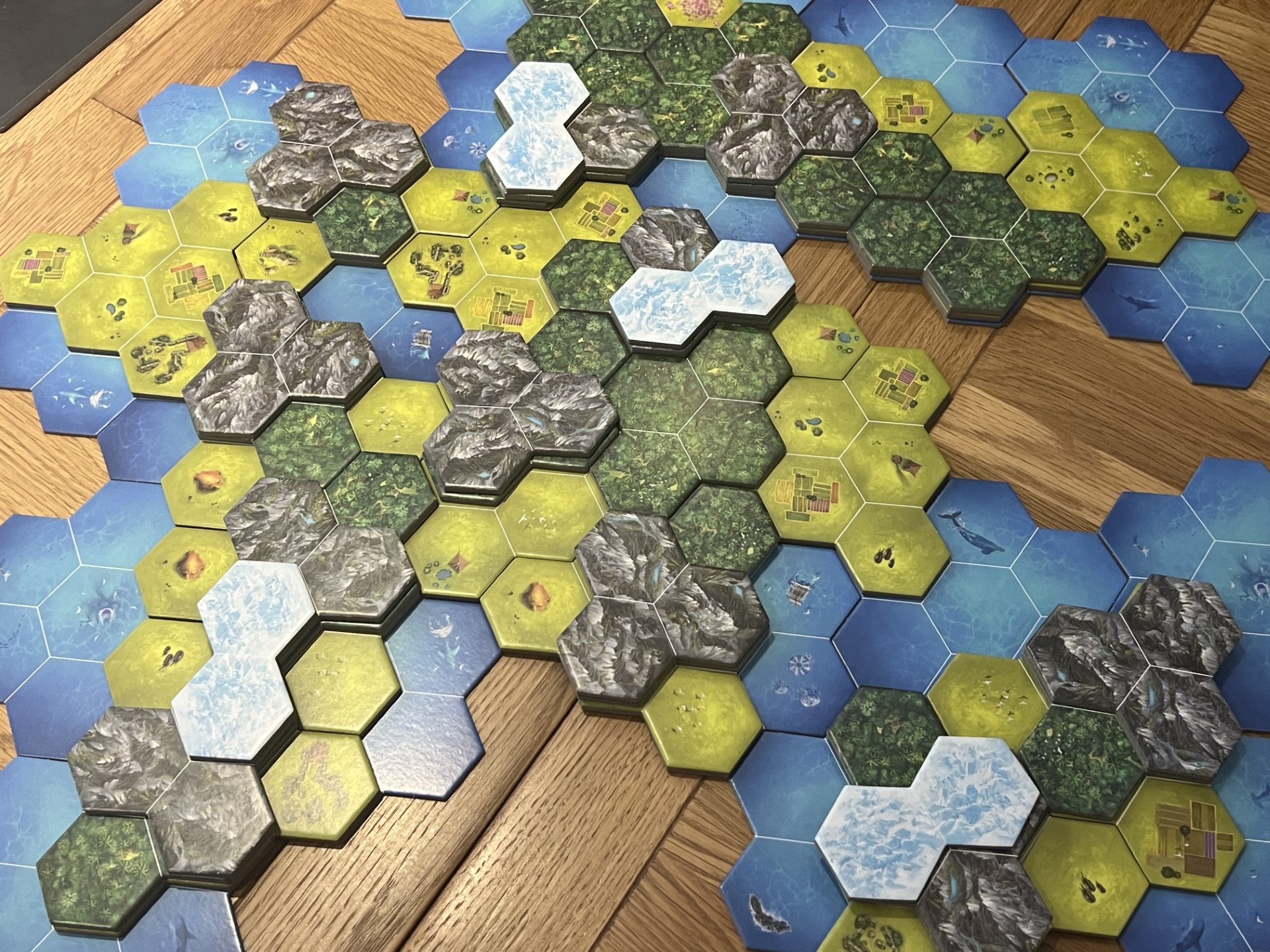
Before any of that begins, though, let’s go back to the map. In turn order, players lay down sea tiles, then plains, then forests, mountains, and finally glaciers — each layer smaller and more precious than the last. The result is a topographical patchwork quilt that’s different each time you play, and which subtly nudges players toward different strategies depending on how the terrain falls.
It’s a brilliant piece of design that makes setup feel like part of the game, not just a prelude to it. And because the terrain stack is finite and layered, there’s a natural sense of scarcity and elevation — both literal and strategic — that emerges before the first unit is even placed.
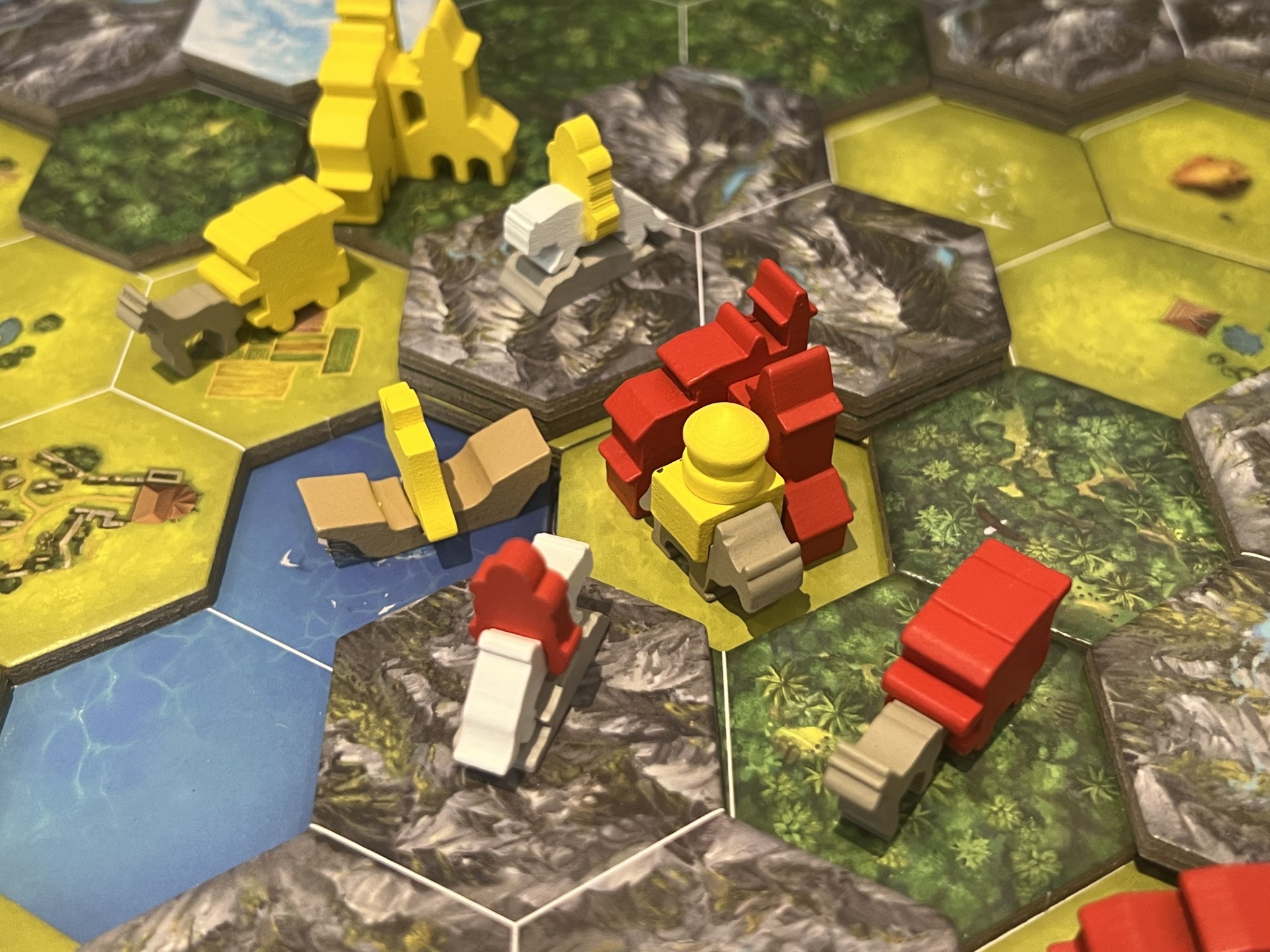
Once the map is set, players place a city, a nomad, and a ship — and then the game begins in earnest. Early turns are often predictable: convert a nomad into a city, then use that city to produce more units. Very quickly however, Rise & Fall opens up.
Do you spread wide and claim territory or build tall and focus on a few powerful units? Do you chase achievements, knowing that by taking one you’ll force every player into decline (which causes them to lose a card?) or, do you play conservatively, keeping your hand lean and your options open?
The card system is where Rise & Fall really shines. Because each card activates all units of a given type, timing and sequencing become crucial. You might want to build a city with one nomad, but need the resources generated from another nomad to do it — so you’ll need to think carefully about the order in which you resolve actions.
Because you only start the game with three cards (corresponding to your starting units), your early game is tightly constrained. Every card you play is a commitment, and every unit you produce is a potential liability if you can’t afford to keep its card in your hand.
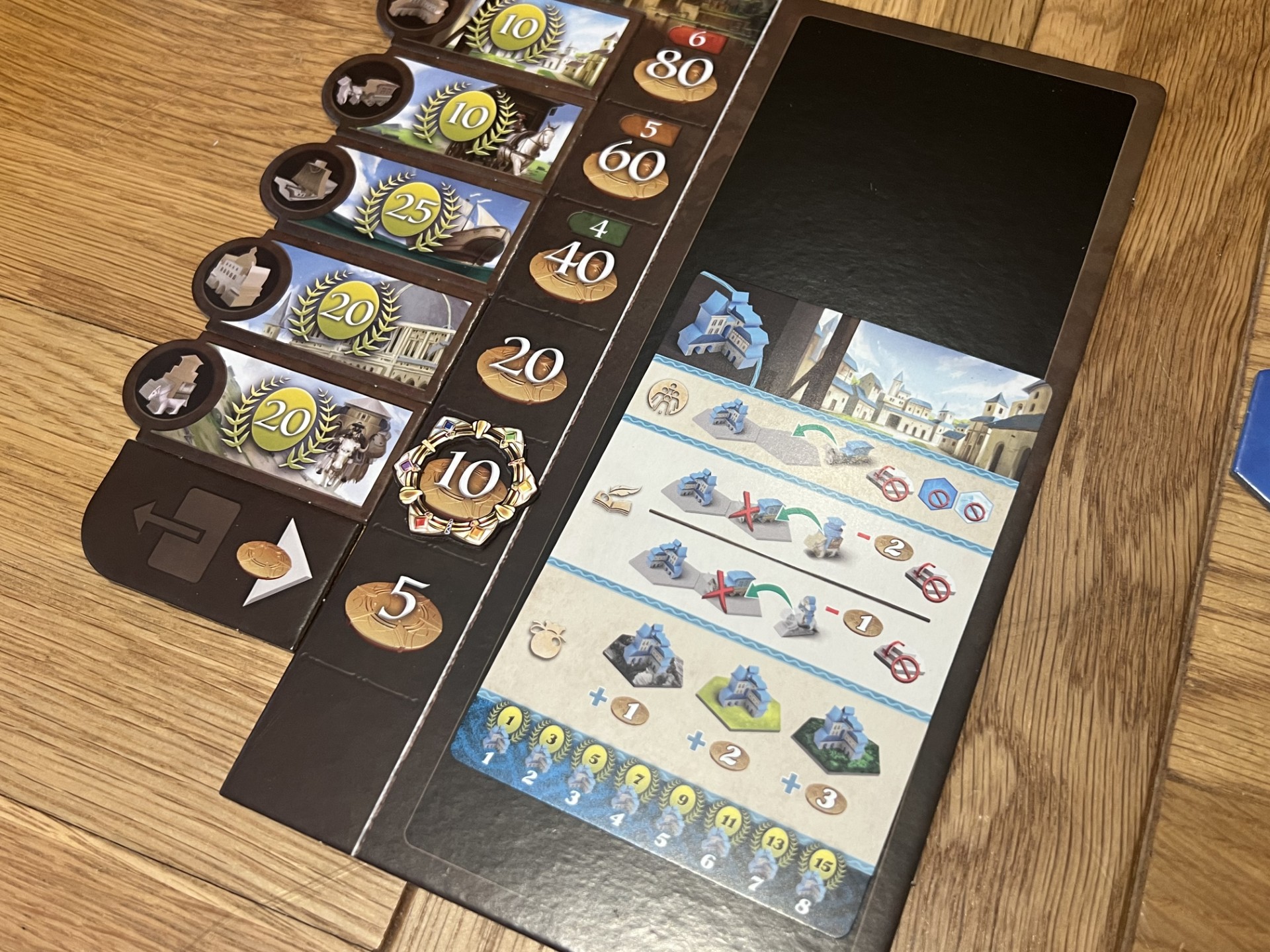
That’s where the decline mechanic comes in — and it’s one of the most interesting features of the game. Every time a player places the last unit of a type (say, the eighth nomad or the third mountaineer), they earn an achievement — and everyone must choose a card to lose, potentially forever.
Cards can be bought back, but the cost doubles each time: Ten coins the first time, then twenty, then forty. And since coins are also points (at a 2:1 ratio), there’s a real tension between flexibility and efficiency. Do you spend your hard-earned coins to recover a card, or do you let it go and adapt your strategy?
This creates a fascinating arc over the course of the game. Early on, players are expanding, building, and exploring. Mid-game, they’re consolidating, specialising, and starting to feel the pinch of decline. And by the end, they’re making hard choices about which parts of their engine to abandon, and which to double down on. It’s a game about growth, yes — but also about letting go. About knowing when to pivot, when to sacrifice, and when to accept that not every piece on the board remains relevant..
Coins, meanwhile, are the lifeblood of the game. Ships and merchants generate them, and they can be spent to recover cards, purchase wood and stone or simply hoarded for points. A strong economic engine can give a runaway lead, and watching someone choke the economy (because coins are limited) can be both infuriating and impressive.
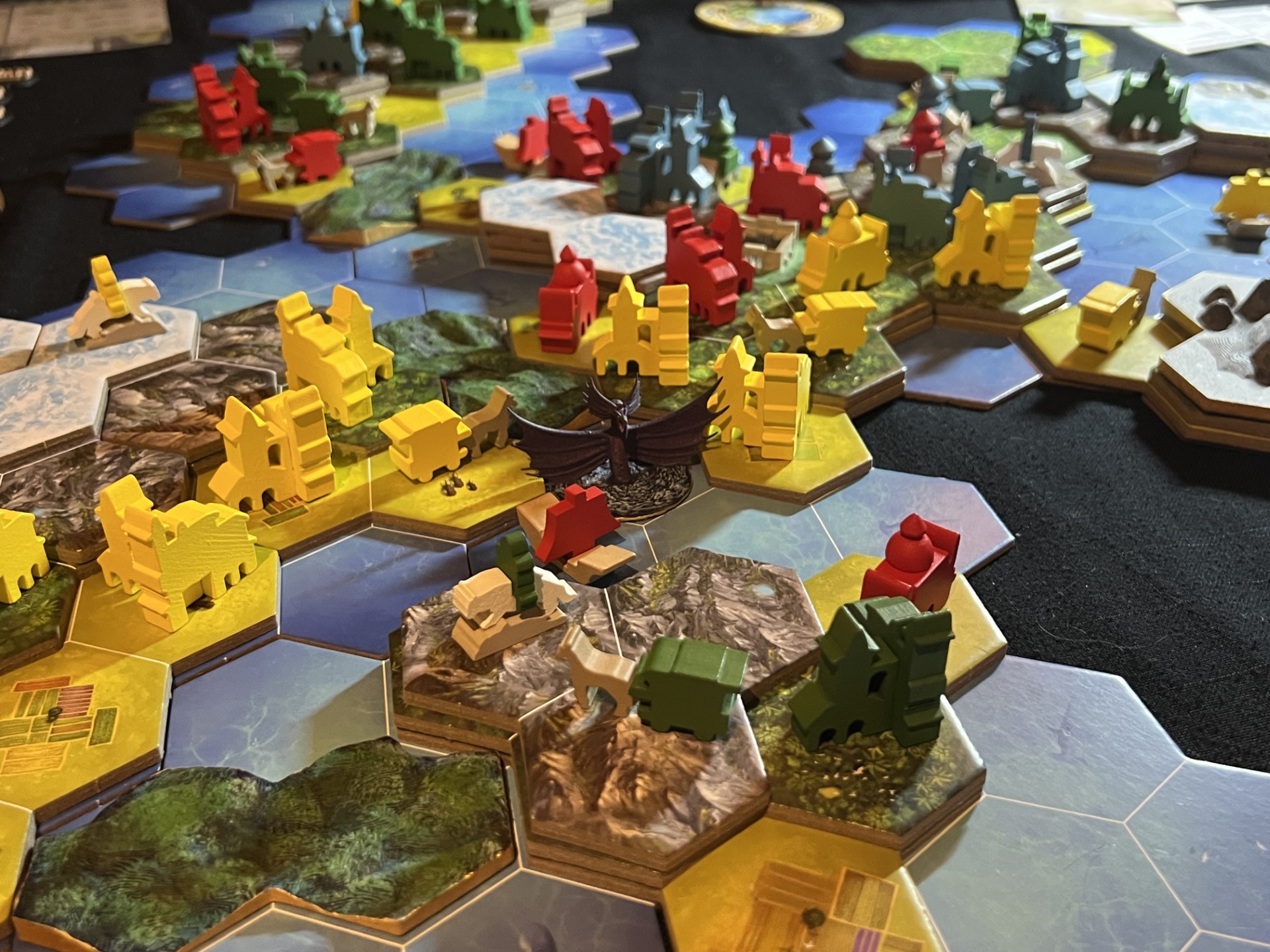
There’s no direct conflict in Rise & Fall, but the competition for space is fierce, and the best players will find ways to block, outmaneuver, or even convert their opponents’ units using temples — offering a subtle, satisfying and suitably expensive form of interaction.
On that note, temples are perhaps the game’s most underappreciated unit. They don’t generate resources or produce new units, but they can convert adjacent enemy pieces in return for gold — a rare form of direct interference in an otherwise passive-aggressive game.
Conversion is not an overpowered strategy — far from it given the cost — but it’s a clever one, and it adds just enough spice to keep players on their toes. If someone’s building a dominant position in a key region, a well-placed temple can throw a wrench in their plans — or at least make them think twice about overextending and potentially force them to change plans with a counter-temple approach.
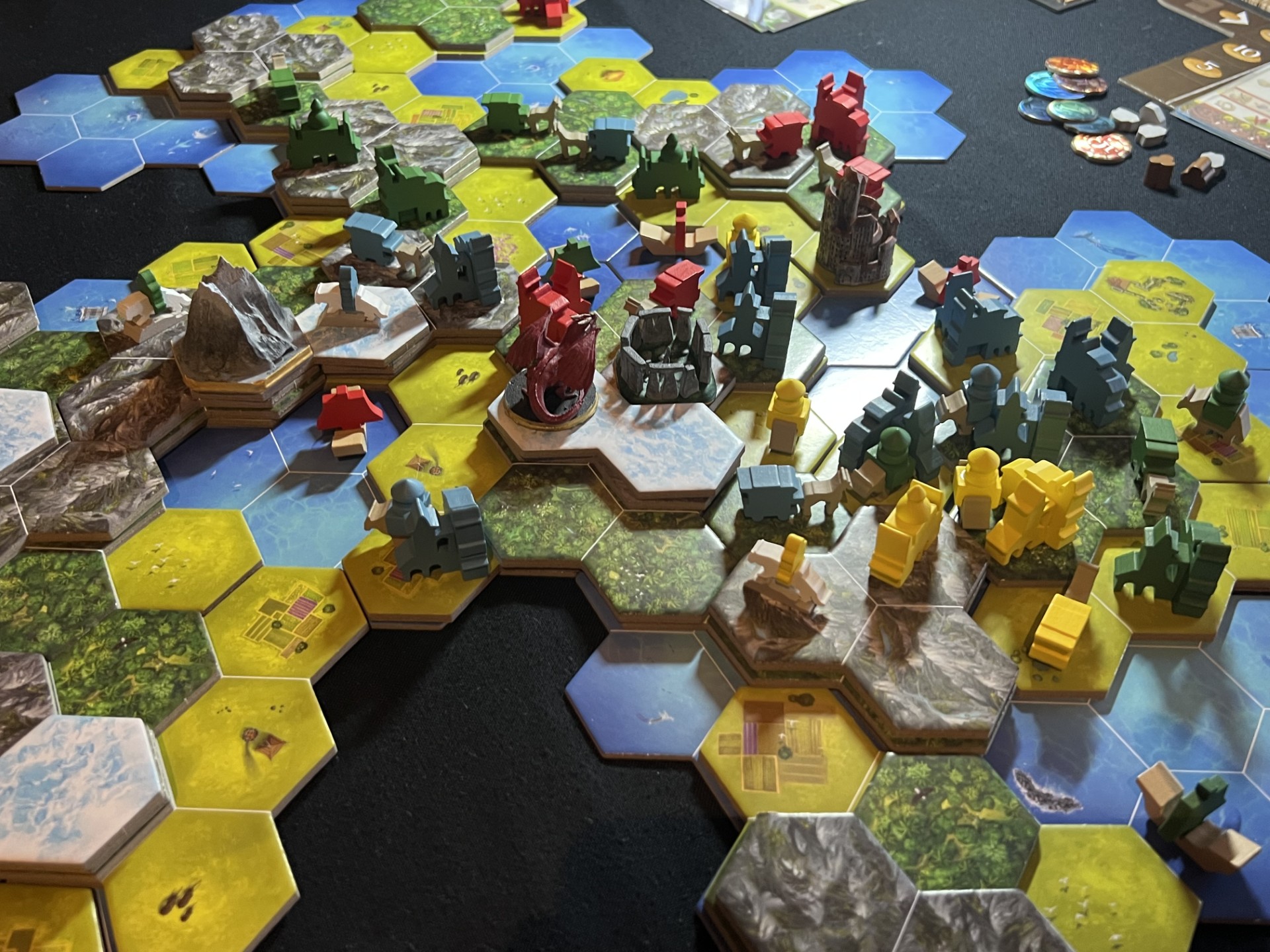
Scoring is a mix of area control and economic success. Regions are worth points based on their terrain type — plains and seas are cheap but plentiful, while forests, mountains, and glaciers are rarer and more valuable. Control is determined by the number of pieces in a contiguous area, which means that even a single well-placed unit can swing a region if it’s left uncontested.
It’s a system that rewards both planning and opportunism, and it ensures that every piece on the board can matter, although it’s worth noting that pieces themselves will not score if their card is in decline, and nor will they add any strength to the regional scoring… That said, it’s critical to note that they still take up space, and can therefore block opponents at strategic chokepoints.
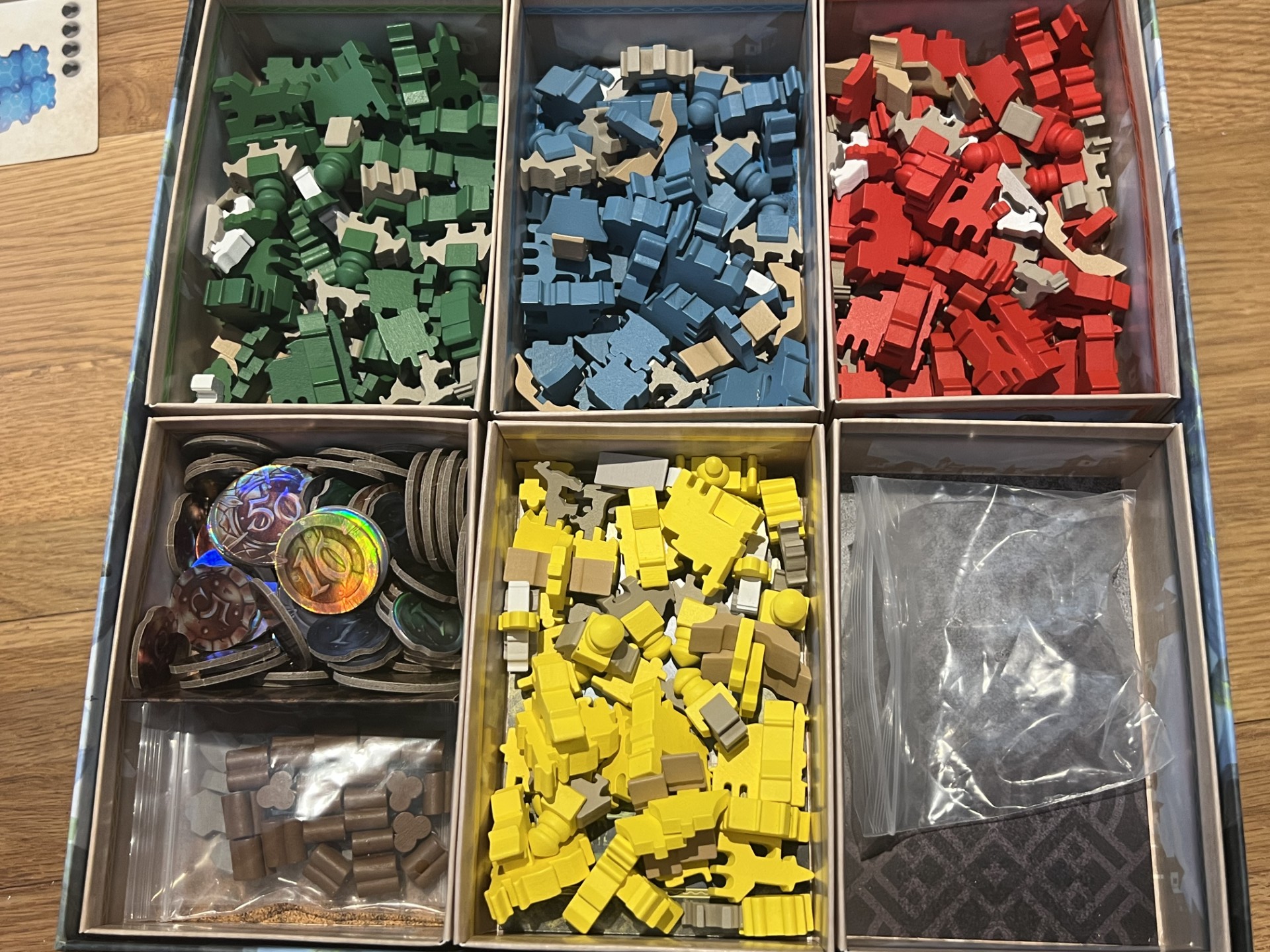
What’s most impressive about Rise & Fall is how much it achieves with so little. The rules are light, the components are minimal (but beautiful), and yet the decisions are rich and satisfying. It’s a game that rewards repeat play, not because it hides complexity behind layers of rules, but because its systems are open-ended and full of possibility. Every game feels like a new puzzle, shaped by the map, the players, and the choices they make.
There are strategies that involve keeping your hand lean, using just one or two cards in a tight loop to maximise efficiency, and there are others that focus on rapid expansion, flooding the board with units and chasing achievements. There are economic strategies, and even temple-based disruption/conversion strategies. And because the map is different every time, no two games play out the same way.
It’s not perfect — the lack of direct conflict might leave some players cold, and the abstract nature of the game means that the theme is more implied than felt. There’s no narrative arc, no sense of historical progression, and no flavour text to speak of. But for those who enjoy games that blend elegance with depth, Rise & Fall is a triumph. It’s a game about building, adapting, and letting go — and in that, it captures something genuinely profound.
In a market saturated with overproduced, overcomplicated games, Rise & Fall stands out by doing less — and doing it better. It looks incredible — yet at most each piece is just two bits of wood stuck together, whilst the board is just simple layers of hex tiles. It’s a game that trusts its players to find the depth, to make the hard choices, and to tell their own stories through play. And for those willing to meet it on its own terms, it offers a rich, rewarding experience that lingers long after the final score is tallied.
Rise & Fall is available now from Zatu Games.

Comments are closed.