

As much a satire about house prices, economic boom and bust and even the world’s most famous capitalist board game, Magnate seeks to build up and then destroy all you know about city-building.
Designed by James Naylor and published by Naylor Games, Magnate is an economic strategy game that puts players in the role of property developers during a booming real estate bubble. You’ll buy land, construct buildings, attract tenants, and flip properties for increasingly absurd profits. And just when you think you’ve mastered the market, it crashes.
The premise is simple: build fast, sell high, and make more money than your rivals before the inevitable collapse. However, beneath that simplicity is a surprisingly sharp critique of speculative capitalism. Magnate doesn’t just simulate a bubble — it celebrates it, exaggerates it, and then (just as you believe you’ve got it all sussed out) punishes you for believing it could ever last.
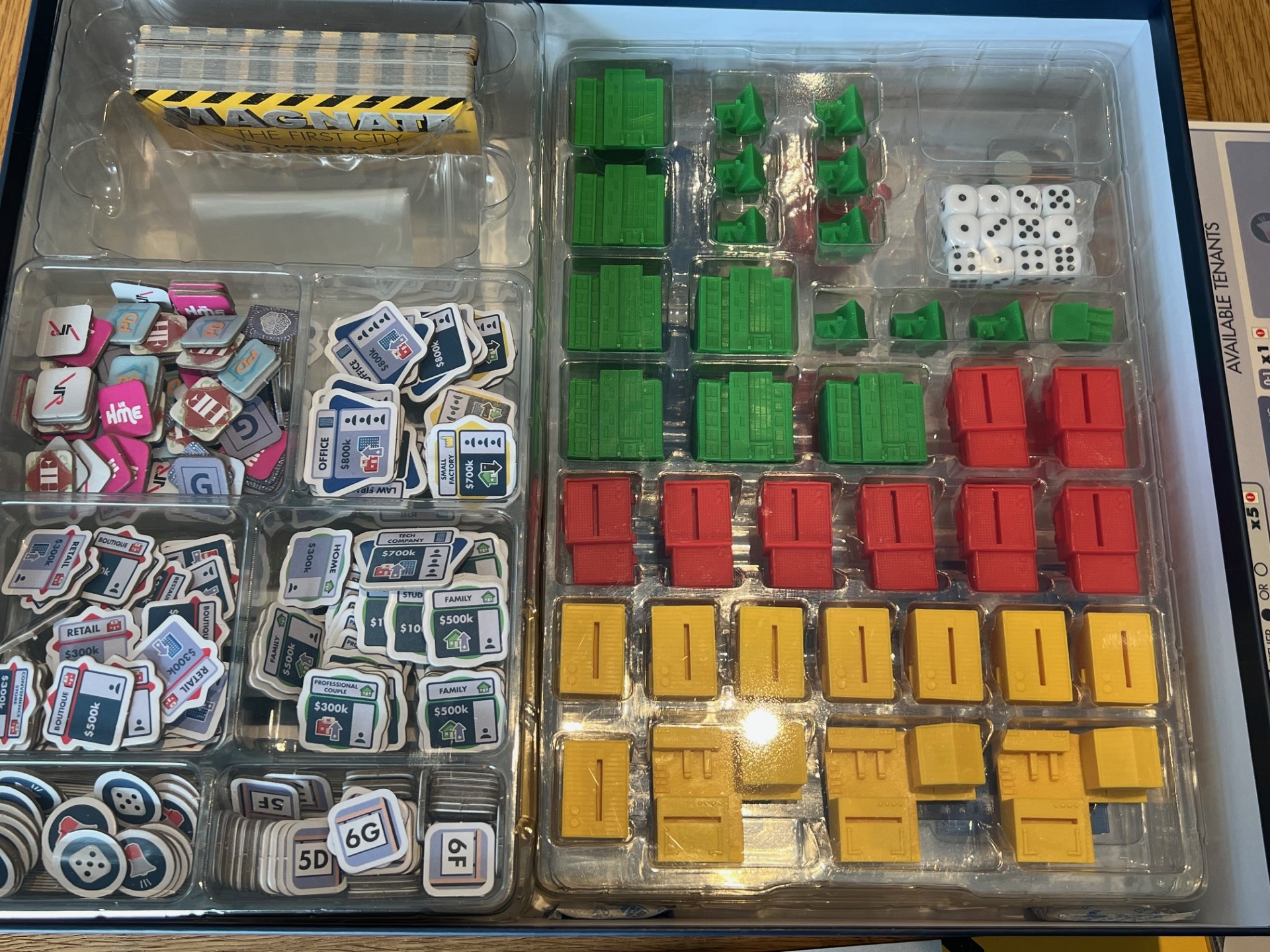
Each round, players bid on plots of land across a modular city grid. Land prices rise steadily, driven by player activity and demand. Once you own a plot, you can construct buildings — residential, retail, office, or industrial — each with its own cost and tenant preferences. Tenants are drawn randomly, and their presence multiplies the value of your property. Adjacency bonuses add further multipliers, and suddenly you’re selling a modest office block for millions more than you paid and it seems every bit as good as it sounds..
It’s a system that rewards timing and spatial awareness. Build next to a park and your residential units become more attractive. Place retail units near offices and you’ll lure in shoppers — just like in SimCity and even matching the colour scheme. The city evolves organically, shaped by player choices and economic incentives. And then, because the crash is triggered by player actions — not a fixed round count — there’s a constant tension between greed and caution.
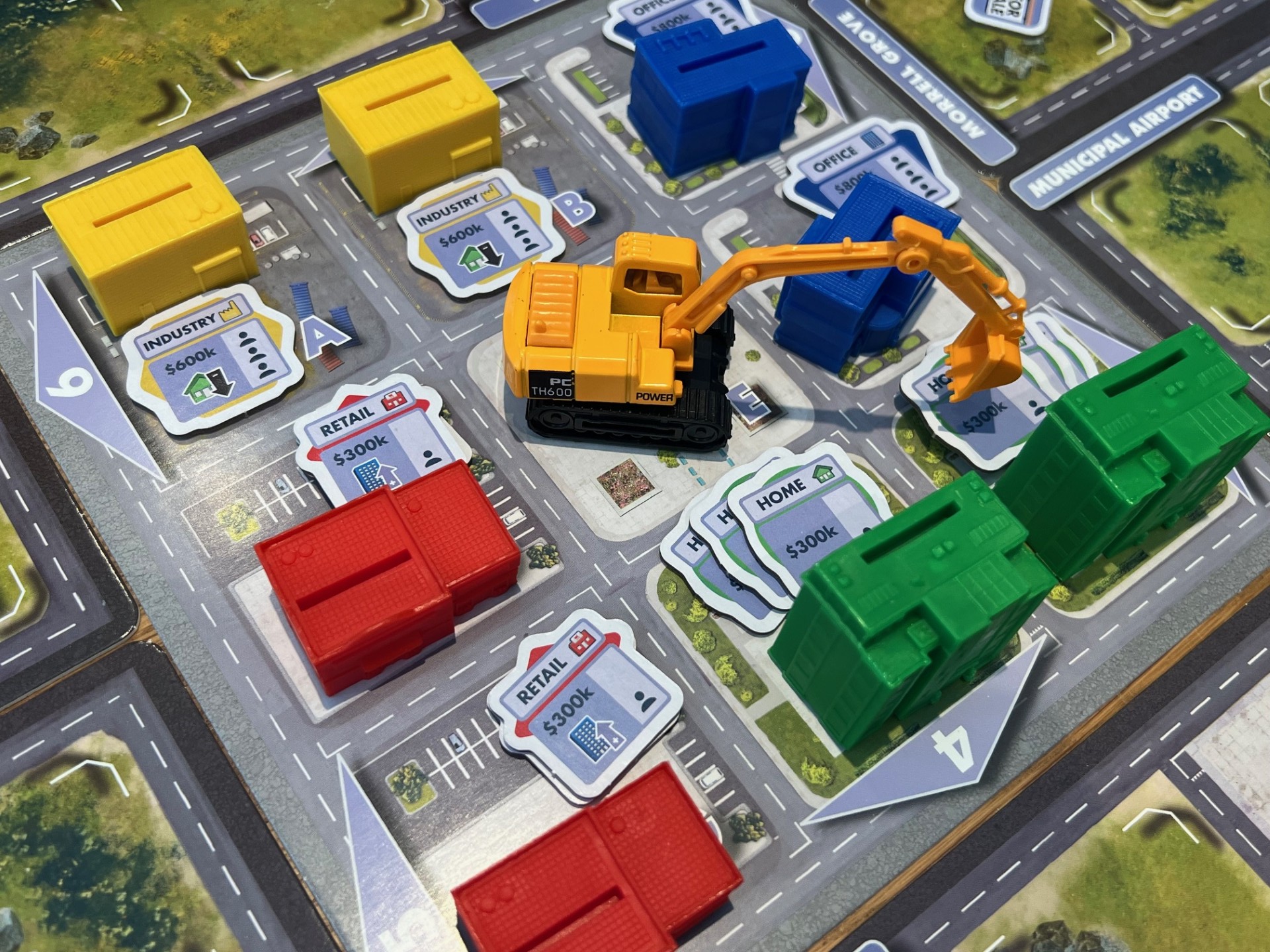
The game’s production reinforces its theme. Plastic buildings in bold primary colours give Magnate’s city a toy-like charm, while the inclusion of paper money and personal wallets adds a layer of secrecy and theatre. Watching players fumble with their wallets, trying to count their cash without revealing their total, is part of the fun. Magnate is deliberately Monopoly-adjacent in aesthetics, but far more strategic in execution.
Learning Magnate is surprisingly smooth. An included tutorial deck walks players through the rules, offering guidance and strategic tips. The core mechanics — buy, build, advertise/attract, sell — are intuitive, and the multiplication-based valuation system, while initially daunting, becomes second nature after a few rounds. Magnate is a game that respects its players by offering depth and complexity in the decision-making process, without drowning them in rules complexity.
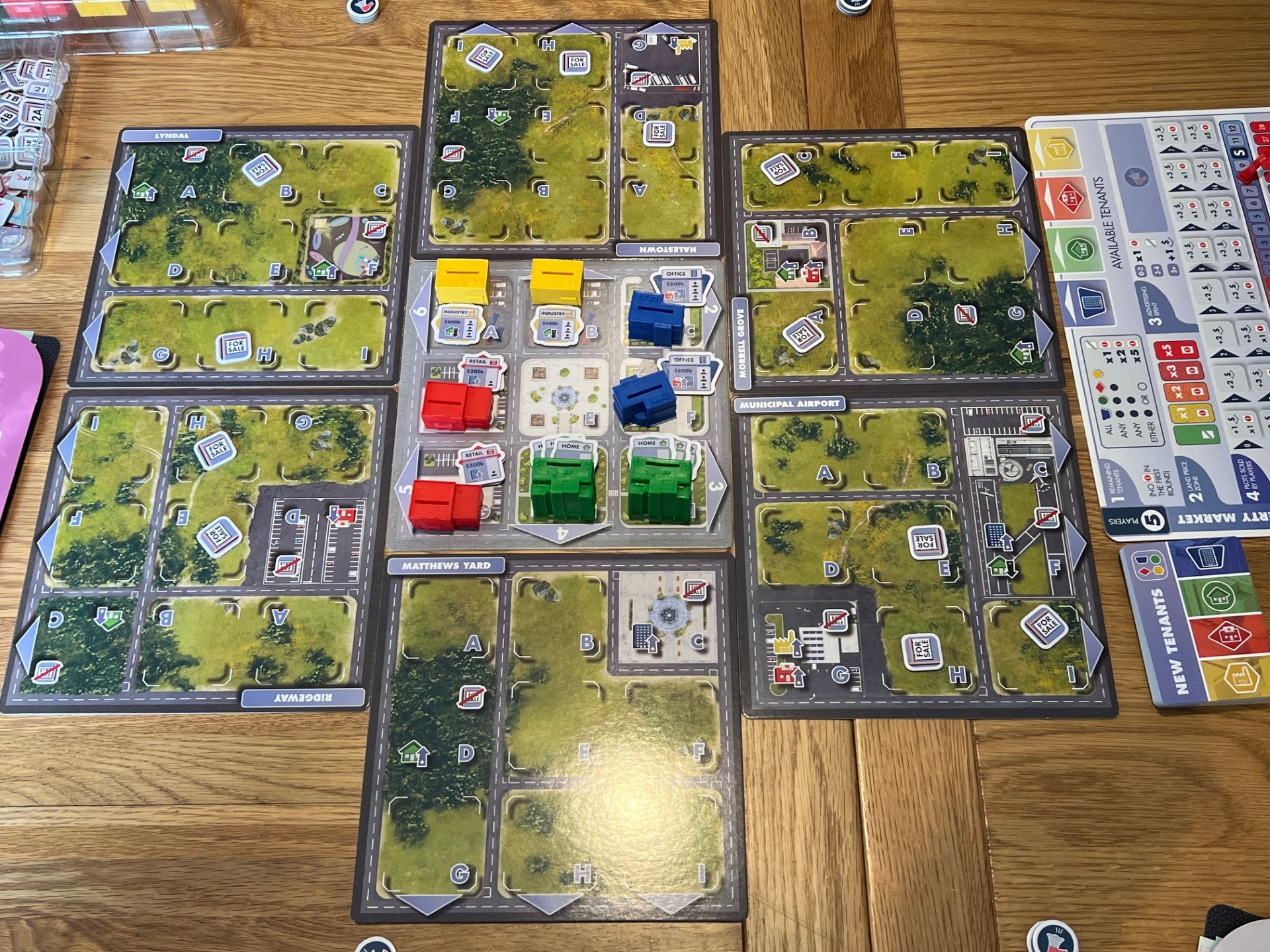
Interaction between players is key. The number of available plots and tenants is limited, creating competition and scarcity. Turn order matters, especially when racing to attract high-value tenants or secure prime locations. There’s room for sabotage, too — placing an industrial complex next to a rival’s luxury apartments can tank their value. It’s not a cutthroat game, but Magnate certainly leaves room for opportunism.
The crash itself is a highlight — and a fundamental part of the game that cannot be avoided. As land prices peak, players face a dilemma: sell now for guaranteed profit, or hold out for even bigger returns. Push your luck too far, and you’ll be left with literally worthless assets. The crash is dramatic, unpredictable (and yet inevitable) and entirely player-driven. It’s a fitting end to a game built on speculation, and it ensures that every session ends with a bang.
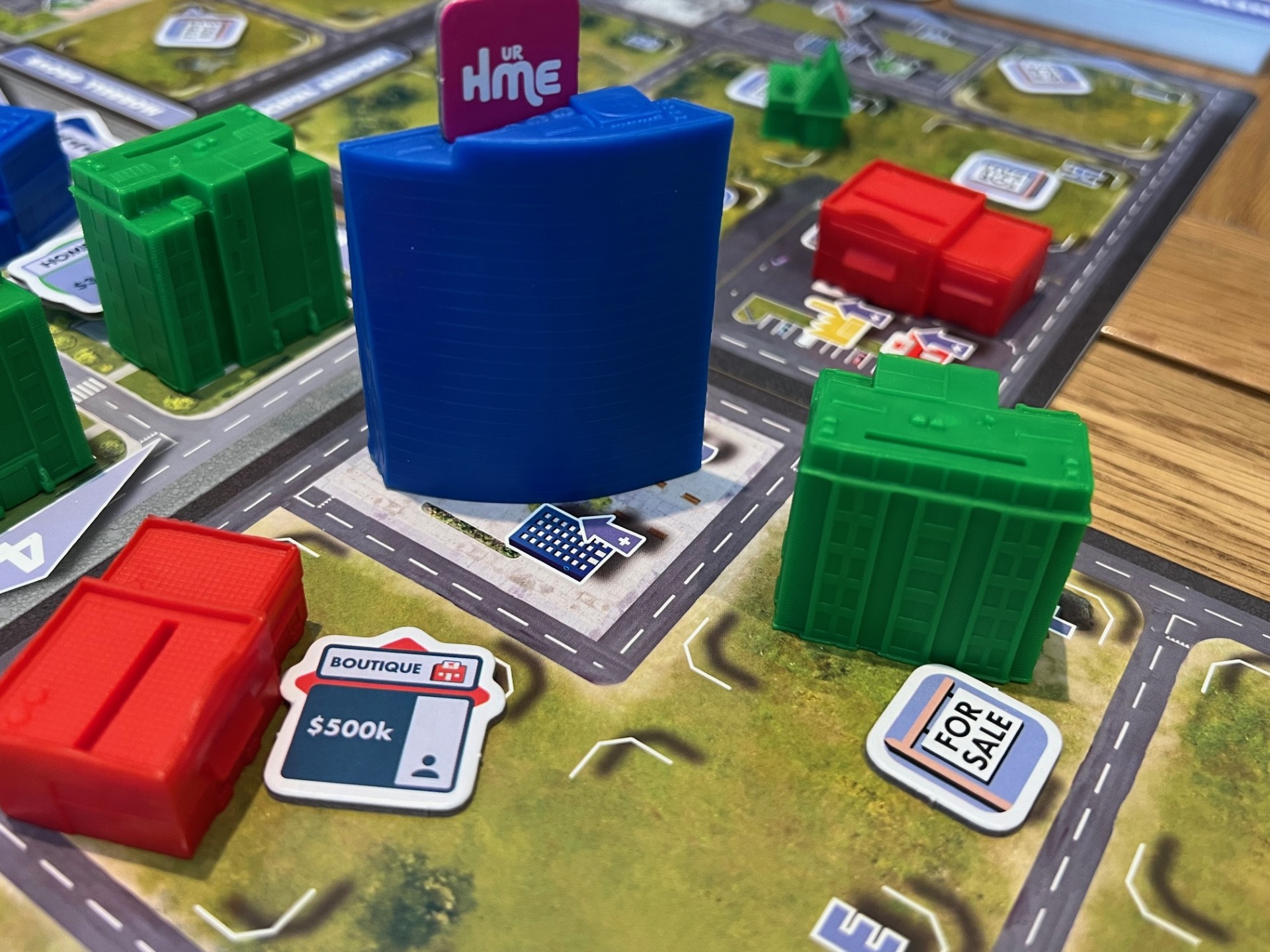
That said, Magnate: The First City isn’t without a few minor quirks. The randomness of tenant placement can occasionally feel swingy, and the adjacency bonuses, while thematic, can create runaway advantages if not balanced carefully. The game also leans heavily into its economic theme, which may not appeal to players looking for narrative or character-driven experiences. It’s clear that Magnate was designed with Monopoly in its sights and I feel confident that James Naylor’s intent was to replace the outdated classic with some smarter, more modern and frankly-better, but Magnate can still be seen as too complex by some.
That said, for those who enjoy spatial strategy, market manipulation and a touch of capitalist satire, Magnate remains a standout. It’s a game that understands its subject matter and isn’t afraid to lean into its absurdity. The mechanics are tight, the theme is clear, and the experience is memorable. We’re quite late to Magnate (which was released in 2021), but time hasn’t worn away the strength of its core mechanics at all. Speculate, accumulate and then survive the crash.
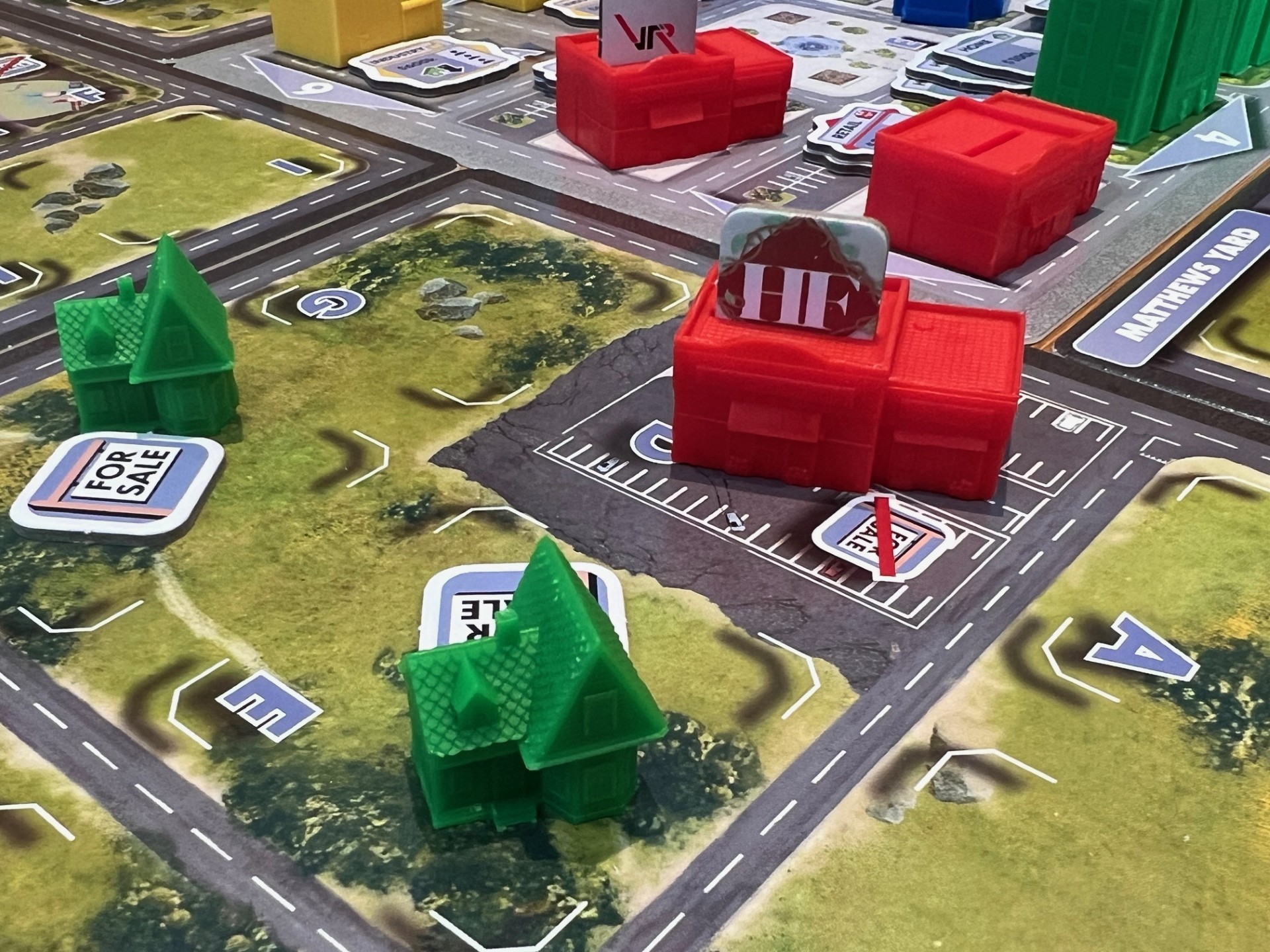
Magnate: The First City is a clever, confident economic game that turns property development into a race against collapse. It’s bold, interactive, and just chaotic enough to keep players guessing. Whether you’re flipping office blocks or tanking the market, it’s a city worth building — just don’t expect it to last once the collapse comes.
Magnate: The First City is available now from Zatu Games


Comments are closed.