

Leviathan Wilds is a game that doesn’t ask you to fight bosses. Instead, it asks you to climb, to heal and to cling on for dear life. It’s an inversion of the recently popular boss battle genre, and it’s all the more compelling for it.
Designed by Justin Kemppainen and published by his own company (Moon Crab Games) this cooperative deck-driven adventure casts players as Rangers ascending massive, corrupted leviathans in a desperate bid to restore balance to a broken world. If the PlayStation classic Shadow of the Colossus made you feel small, determined and vulnerable, then Leviathan Wilds taps into that same emotional vein — only this time, you can bring a friend or two if you wish.
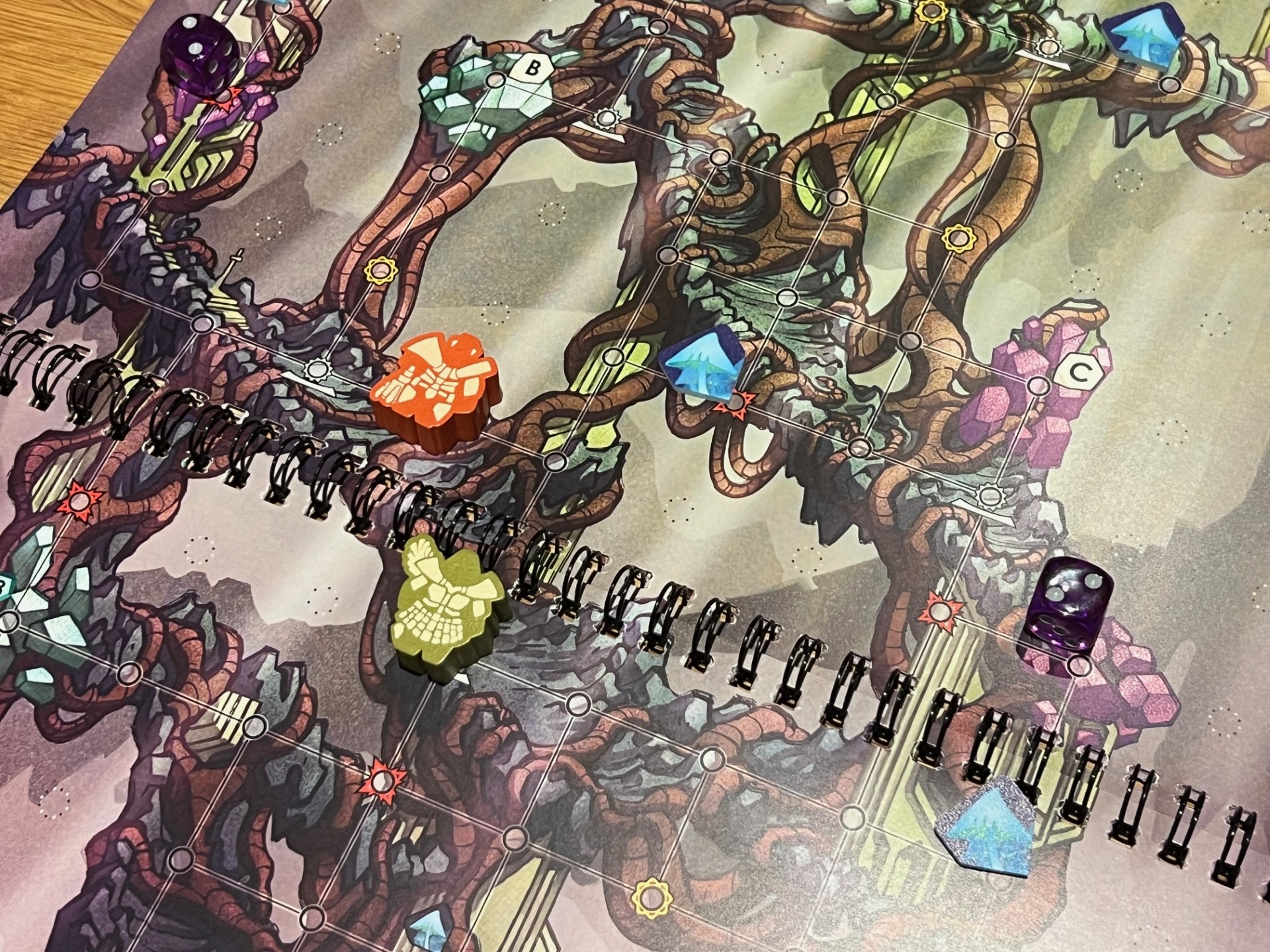
Leviathan Wilds unfolds across a spiral-bound scenario book, each page presenting a new leviathan with its own terrain, hazards, and behavior. These aren’t just big monsters — they’re puzzles. Some shift their bodies mid-game, others lash out with tendrils or spew toxic clouds. You’re not trying to kill them, but to reach their core and cleanse them, all while managing fatigue, positioning, and limited resources. It’s a race against time and gravity, and whilst you mean them not harm, their corruption prevents them from having any such restraint.
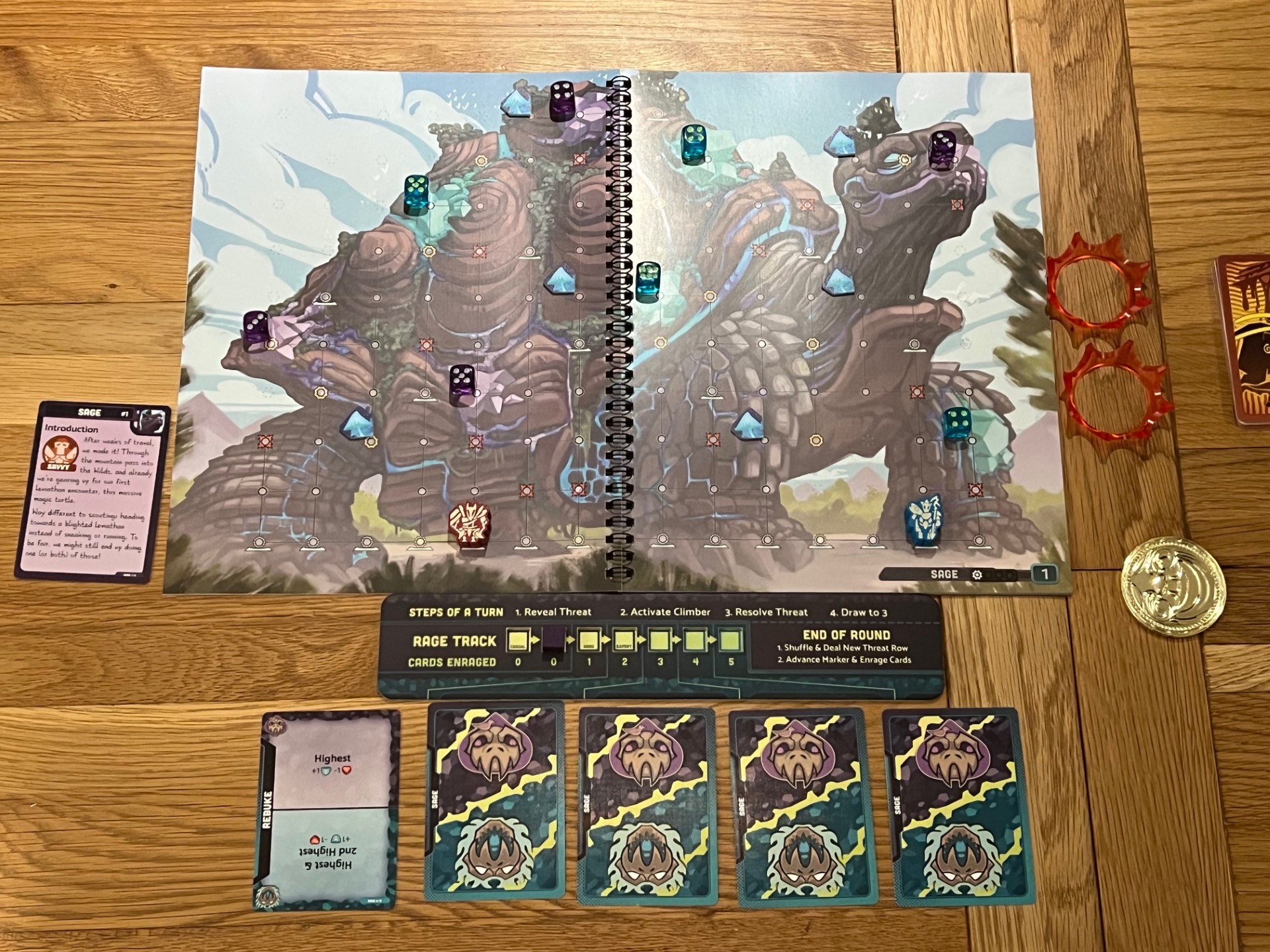
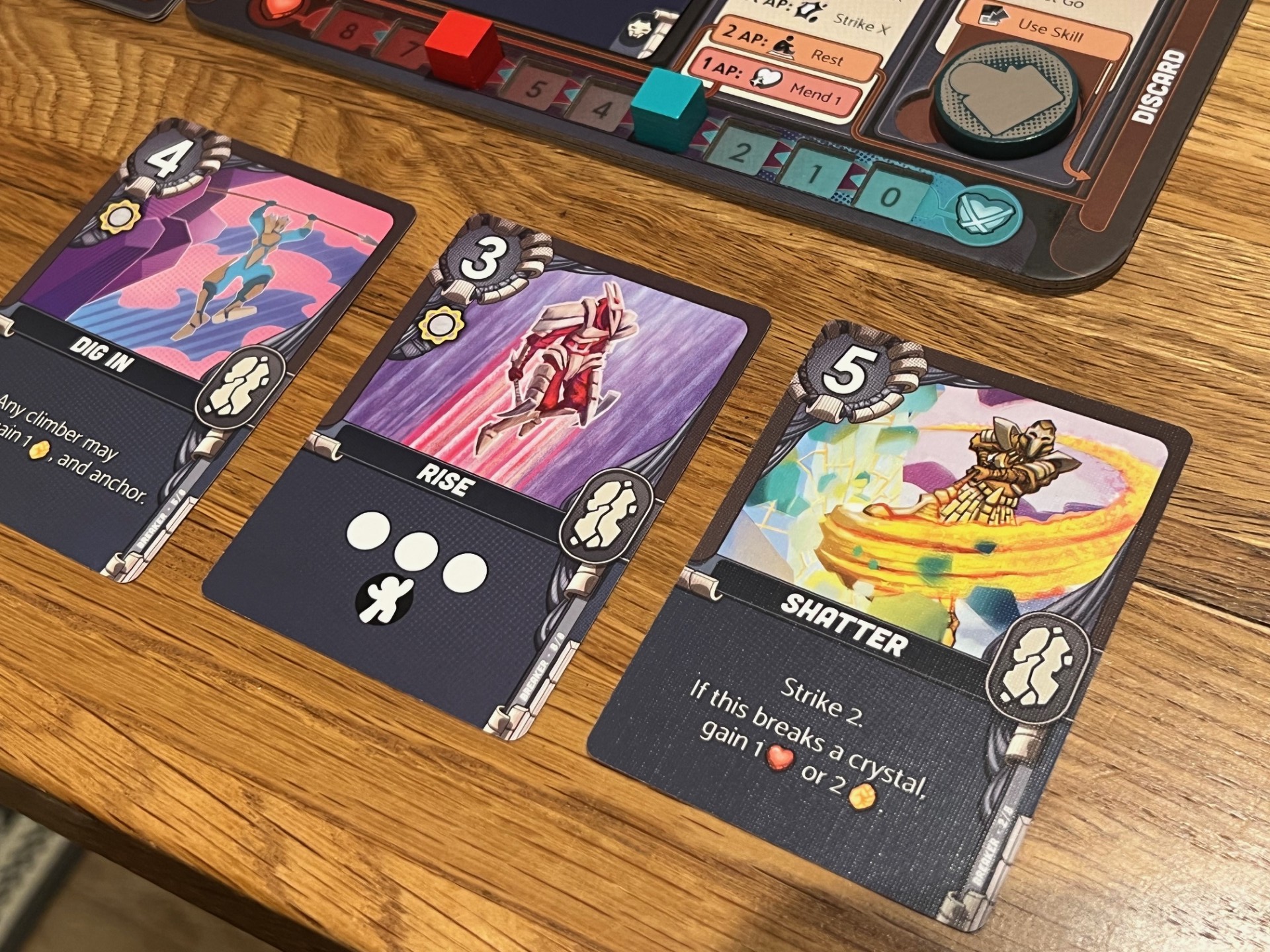
Each player controls a Ranger with a unique deck built around four aspects: Awareness, Focus, Spirit, and Fitness. These cards determine how you move, climb, interact, and recover. Unlike traditional deckbuilders, there’s no mid-game card acquisition — your deck is fixed going in, and the challenge lies in how you use it. That might disappoint players who crave evolving combos or engine-building, but it also sharpens the game’s tactical edge and because each session is quick, Leviathan Wilds isn’t presented as any kind of deckbuilder in the traditional sense.
What makes Leviathan Wilds sing is its cooperative rhythm — even when you’re playing solo with two characters. Rangers can support each other, share buffs, and coordinate climbs by using cards off-turn. There’s no alpha player problem here — each character has a distinct role, and success hinges on timing and teamwork. Leviathan Wilds scales well for solo play, too, with deterministic AI and snappy turns that make it ideal for quiet, focused sessions that last perhaps no more than 45 minutes or possibly less.
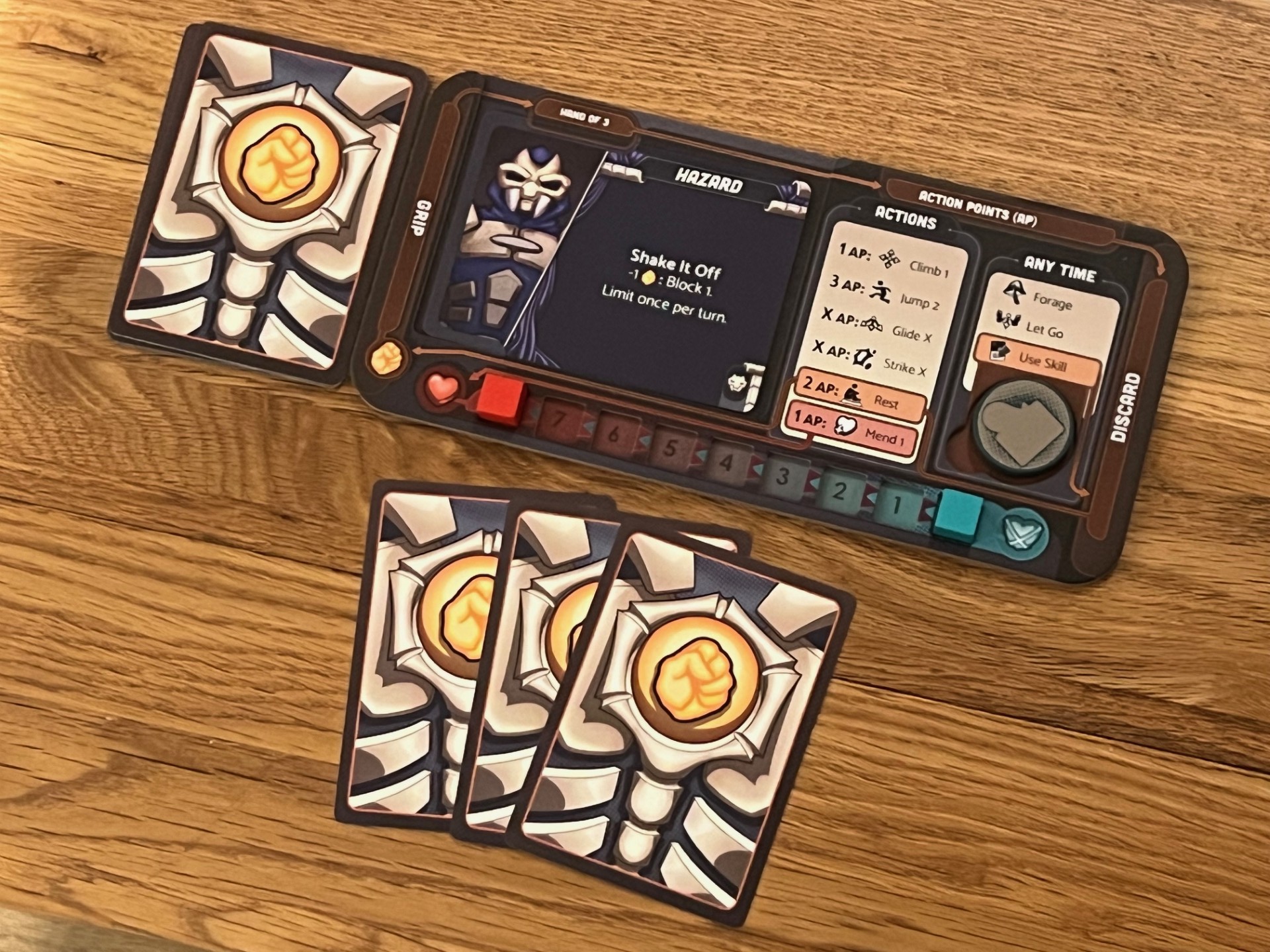
Visually, Leviathan Wilds is somewhat understated but still evocative. The leviathans feel ancient and mysterious, rendered in muted tones that suggest scale without overwhelming the table. The Rangers are refreshingly grounded — no oversized weapons or glowing eyes, just people trying to do good. It’s a tone that echoes ICO more than Monster Hunter, and it works for the most part. One thing I didn’t like was that some of the key information (climbing points of different colour) is easily obscured by tokens when the leviathan is set up. This was fiddly, but not game-breaking.
There’s a meditative quality to Leviathan Wilds’ gameplay. You’re not reacting to random events or dice rolls — you’re solving a living puzzle with a specific set of tools. Every move matters. Every card spent is a step closer to exhaustion. And when you finally reach the core and cleanse the leviathan, it feels well — earned. Not always because you simply beat the challenge — but often just because you saw the right steps to lead you through the puzzle.
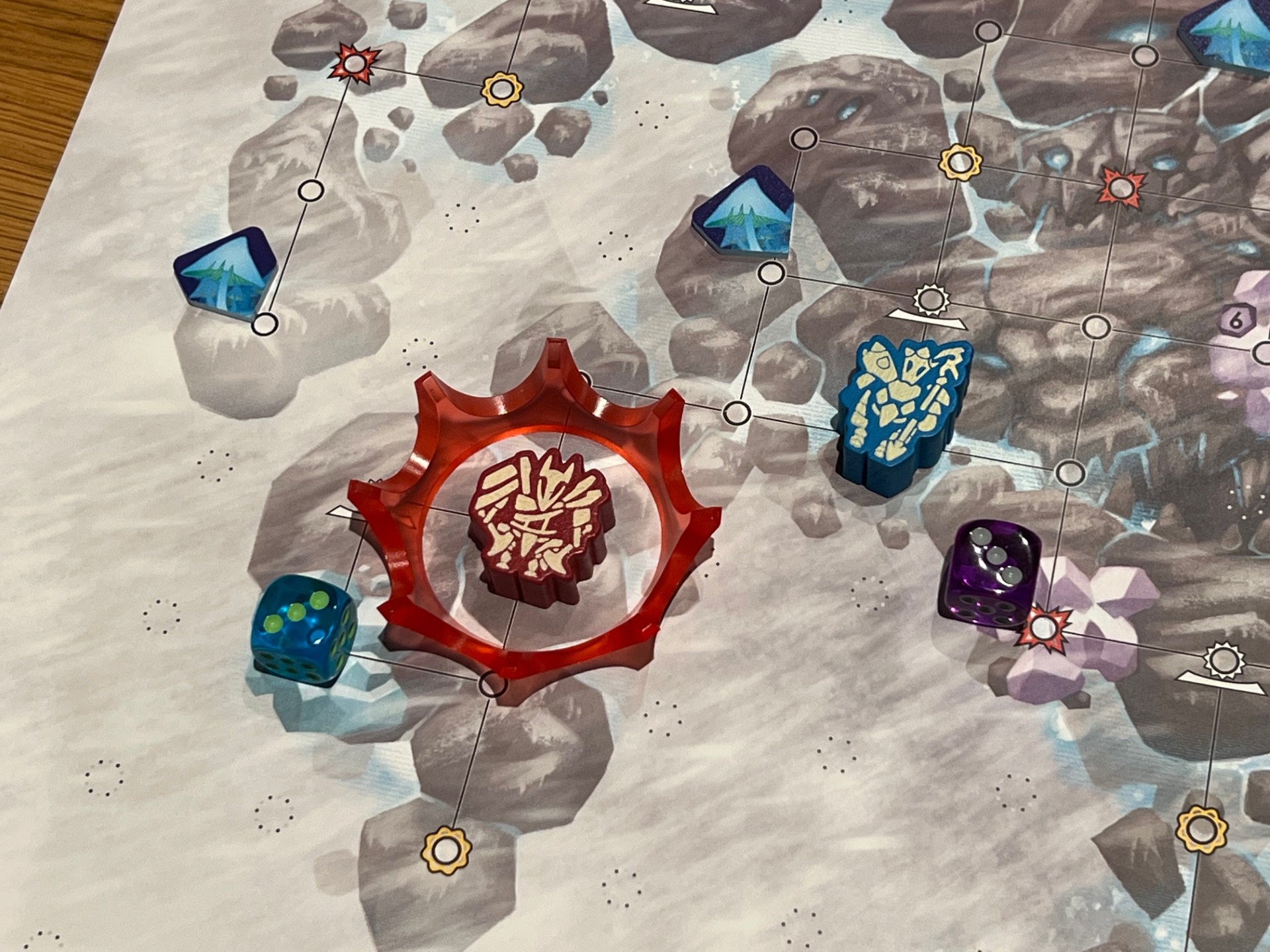
What’s especially striking is how Leviathan Wilds balances accessibility with depth. The rules are clean and intuitive, but the strategic ceiling is surprisingly high. The fatigue system, which forces players to manage their hand and discard pile carefully, creates a natural rhythm of exertion and recovery. You’re constantly weighing whether to push forward or to regroup, and that tension ramps up as each turn passes. You often want to push yourself to reach the next crucial stage of the puzzle, but if your character runs out of cards, they’ll fall directly downwards with occasionally dire consequences. On other occasions, those drops can be your best way to avoid a telegraphed attack that might otherwise squash you.
Leviathan Wilds’ tone also deserves praise. I think it’s rare to find a boss battler that’s family-friendly without being simplistic. There’s no gore, no grimdark aesthetic — just quiet heroism and a sense of purpose that kids (mine at least) really wanted to get behind.
The narrative framing is light but effective, and the worldbuilding — delivered through flavor text and scenario design — feels cohesive and sympathetic in tone. Leviathan Wilds thematic clarity gives the game emotional weight, even when you’re just staring down at dots and working out if you can go “right three and up two” without running out of cards.
The package itself also deserves praise. Leviathan Wilds’ footprint is modest, but the sense of scale it achieves is pretty remarkable. The spiral-bound book keeps setup tight, and the modular components make it easy to reset and replay. I like that the game has the ambition to offer flexibility and strong replay value through the card selection that defines the Rangers, and also in the clever way that it presents its sizeable number of leviathans — 17 in the base game.
If you want to learn more about Leviathan Wilds then check out its Kickstarter.
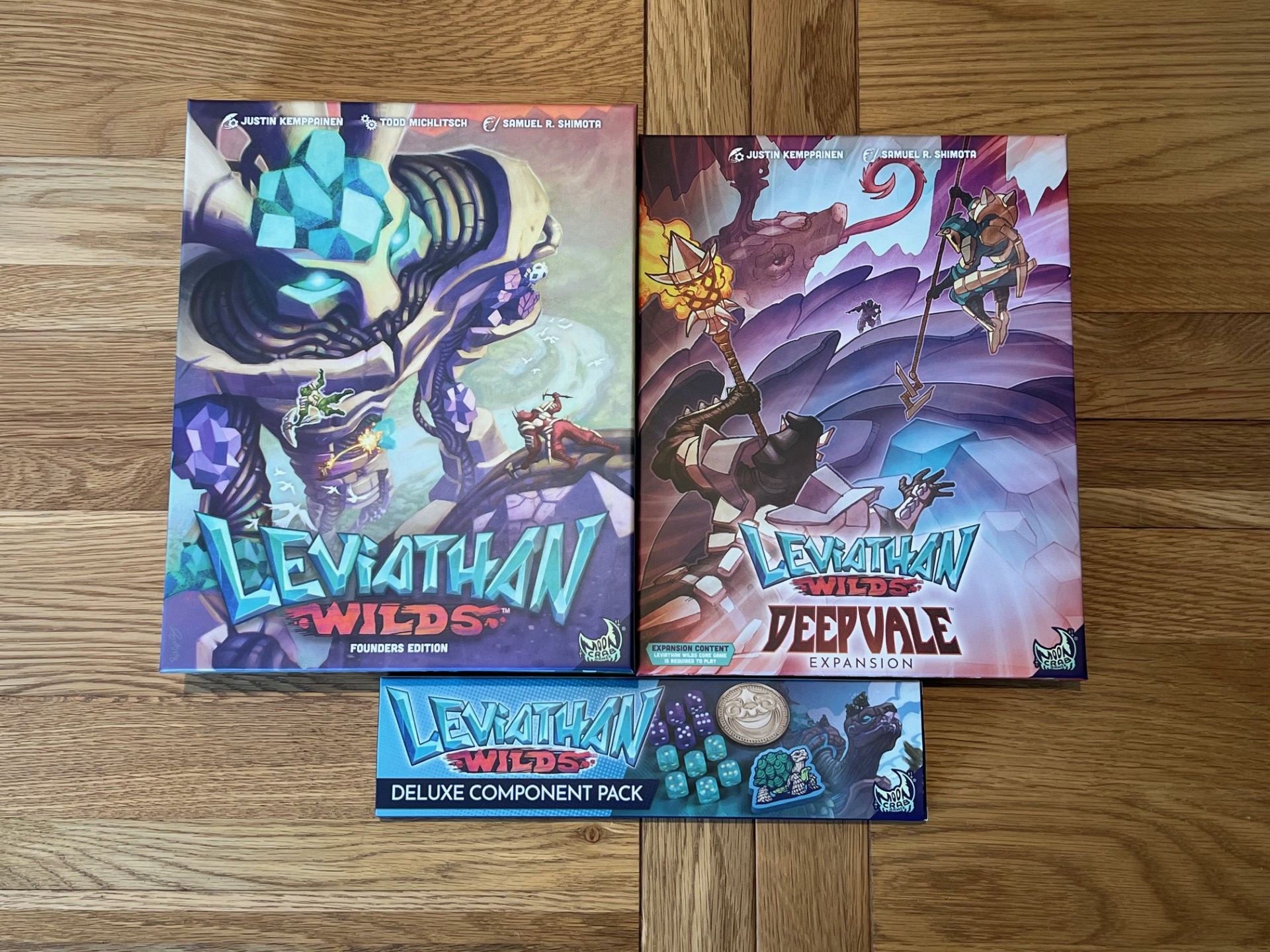
Deepvale and other Expansions
On that note, the Deepvale Expansion Pack adds a new region with its own set of seven additional leviathans, along with new artwork and mechanics to go with them. These aren’t just more maps, they’re quite well-developed evolutions of the core mechanisms. Flying leviathans, shifting terrain, and environmental effects force players to rethink their approach. There’s also a new Ranger and new cards, expanding tactical possibilities without bloating the system beyond the “breezy” scope of the original.
The Mutation Pack introduces modular difficulty tweaks, cards that alter the behavior of existing leviathans by taking the powers from one and effectively splicing them with another. It’s a clever way to add replayability and challenge, especially for experienced players. Think of it like the modifiers we see in roguelike videogames: same boss, new rules.
The Deluxe Component Pack upgrades the tactile experience with premium tokens, beautiful custom dice and better card stock. It doesn’t change gameplay, but it adds weight and texture that elevate the table presence. For players who value production quality, it’s a worthy addition and to be honest, I wouldn’t see the experience as quite the same without it.
Leviathan Wilds is the rare kind of cooperative game that trades spectacle for soul, and combat for compassion. It’s not about domination or destruction—it’s about understanding. Leviathan Wilds tasks players with climbing something massive, mysterious and dangerous and that means you harm, but then choosing to heal it rather than destroy it. It’s hard to describe, but this tone — one of resolution — often leads to players wanting to solve the next puzzle and diving straight back in, rather than “needing a break” as with games that have a heavier theme. Between the setting and the mechanics, Leviathan Wilds has done enough to earn its place on my shelves for at least the foreseeable future.

Comments are closed.