

Unlike a lot of games I play or review, it almost feels like Hollow Knight: Silksong requires no introduction. Its massively successful prequel, Hollow Knight, came out over seven years ago, and immediately impressed with its world building, sense of dread and despair, and most of all, its bone crunching difficulty. I didn’t catch onto the hype train the first time round, for the reason that I don’t usually play ‘souls like’ games — named after the Dark Souls franchise and its famous difficulty curve. However, a fellow journalist recommended the series highly to me, so I put on my big boy pants, and dived in.
Silksong began as an intended DLC to Hollow Knight, following a character you meet in-game called Hornet. In the original, she is a guardian of the land of Hallownest, and she frequently tests you via boss fights to ensure you are ready for the battles ahead. This DLC, it turned out, got so bloated and so full of content — as well as Team Cherry having so much fun making it — that they decided that Silksong would become its own game.
So here we are. Silksong crashed every online platform it could on its release day, shattering records and breaking servers across the world. And after playing it myself… I can absolutely see why.
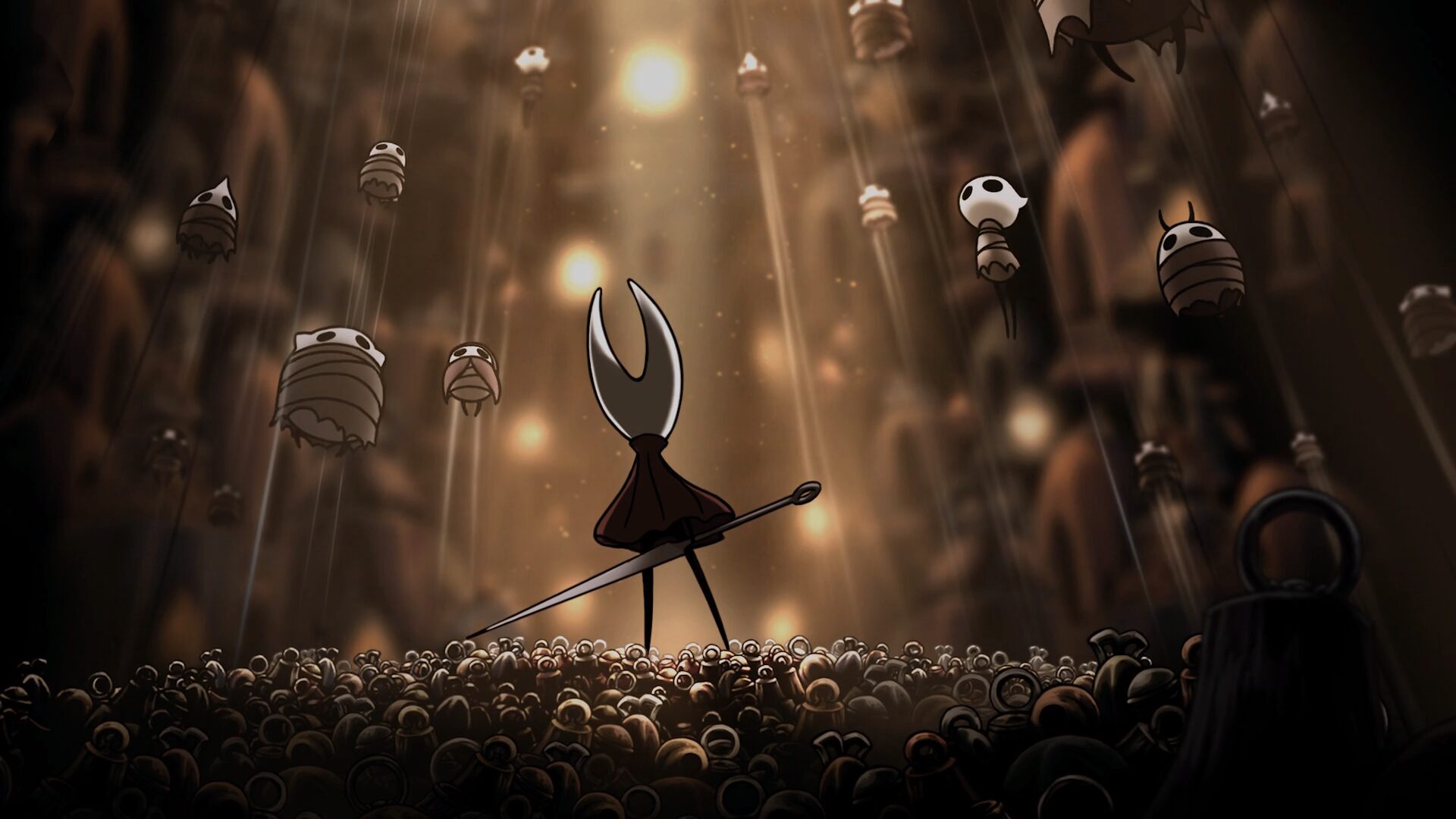
We start with Hornet locked up in a cage, seemingly powerless as she is carried by veiled bugs towards a looming Citadel. A butterfly touches her cage and seems to give her just a fleeting moment of power, as she lashes out with silken thread and collapses the bridge she is being carried over, hurtling her to the very bottom of the world and crashing her cage open. Injured but undeterred, Hornet proceeds upwards through this new world, called Pharloom, and resolves to its local bugs that she was kidnapped, and intends to find out why.
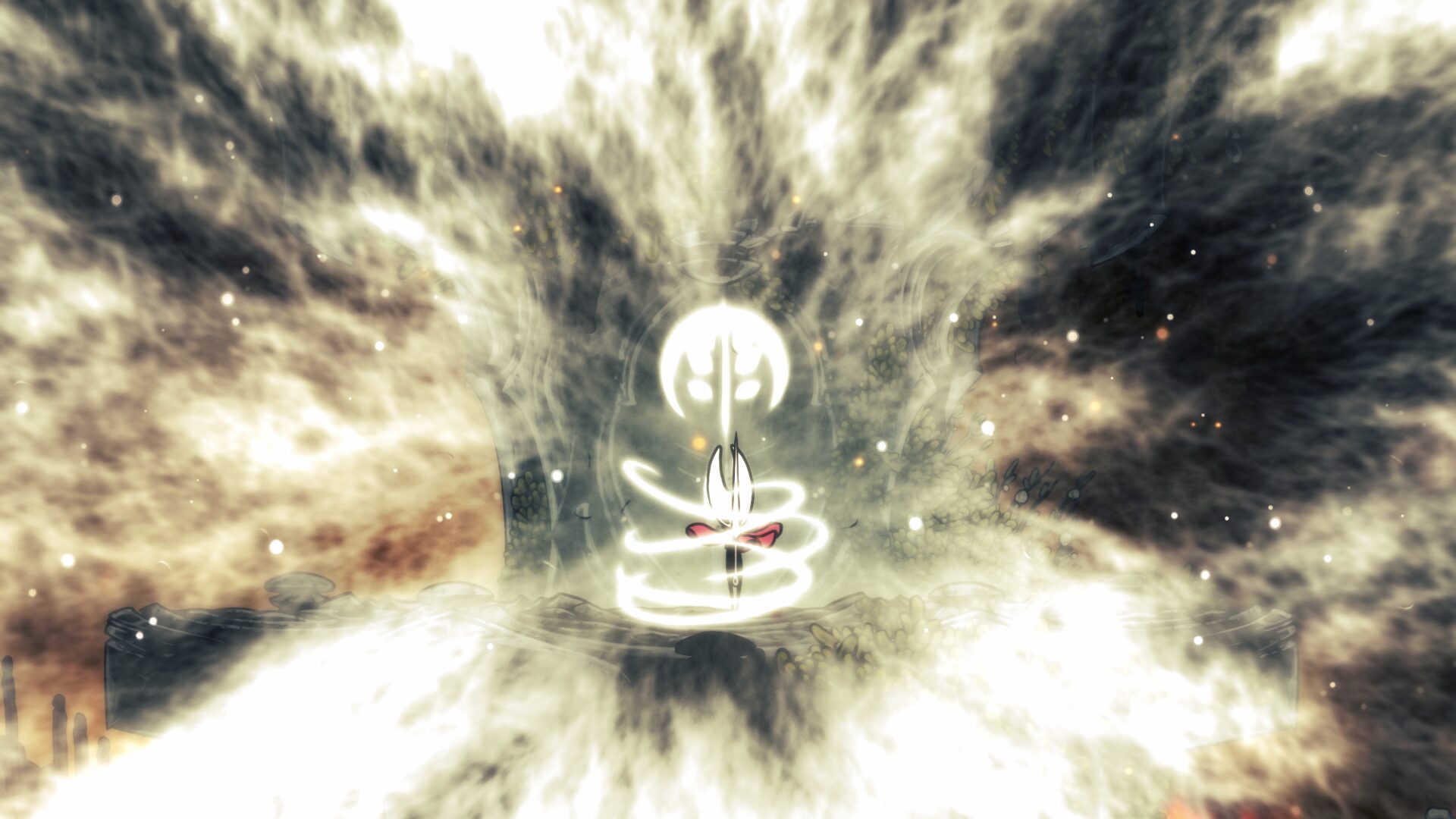 Through her journey, we learn that many thousands of bugs make a pilgrimage up to the Citadel above, and many thousands more perish along the way. The path is full of danger, and Hornet more than once questions the bugs in the world of why they would partake in such a dangerous journey. All of them believe that there is a great reward waiting for them in the Citadel and that they will be handsomely rewarded for their dedication to the climb. So we set out to climb to the top of the Citadel, talk to who’s in charge, and demand answers. This is one of many reasons why I love Hornet as a character.
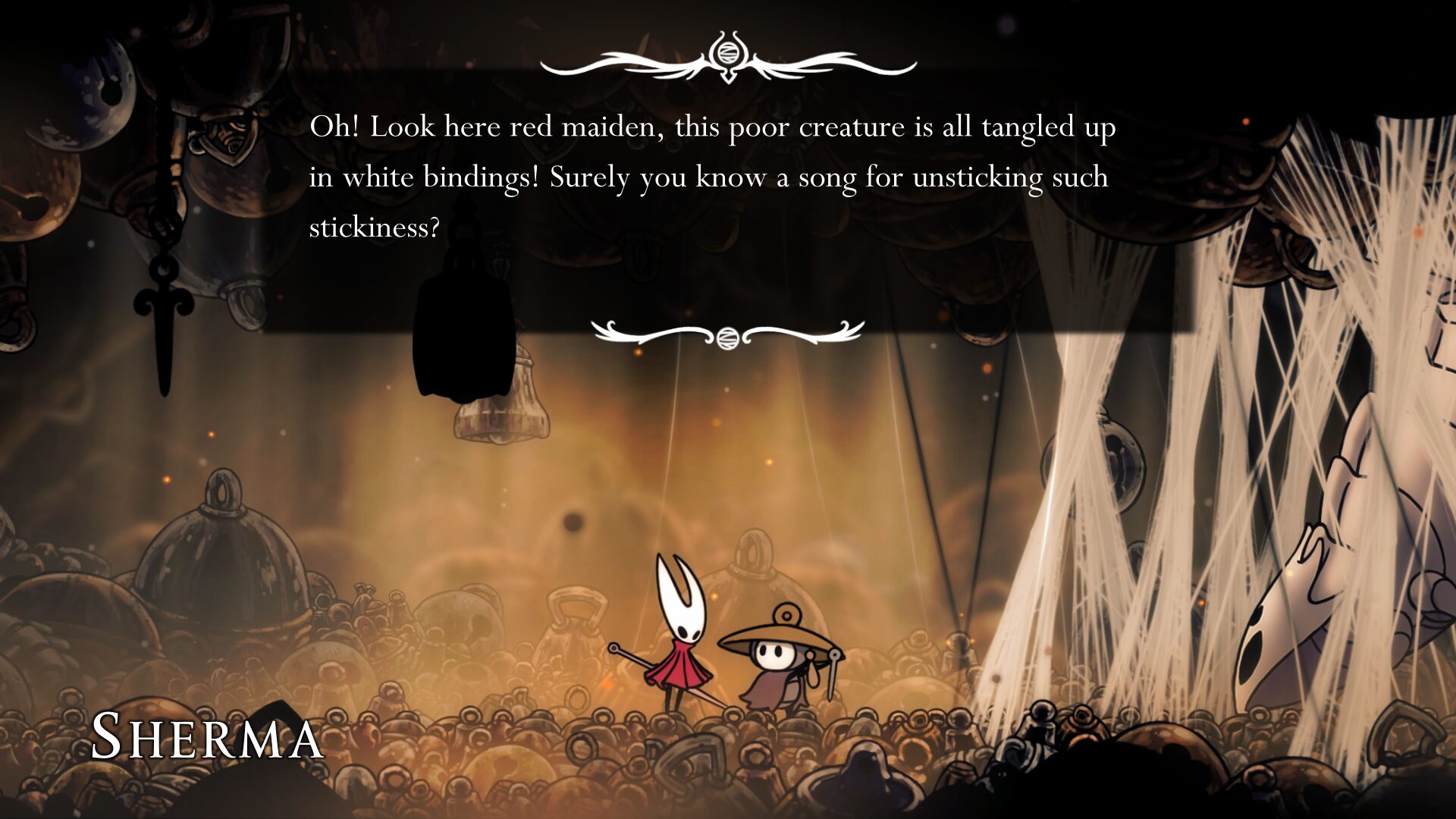
She is confident in her ability, knows who she is and what she is capable of, and doesn’t take being kidnapped lightly. However, even on her journey, she takes the time to help the bugs of Pharloom, ensuring their continued survival and to help free them from what binds them.
Along the way, as any good exploration game does, you unlock lots of different tools and abilities to both help with traversal and combat. Hornets movesets are locked around Crests, which are typically earned by completing shrines you can find located around the world, but not always. These change your basic and charged needle swings, as well as your downward slash, which is used to pogo your way around enemies and the environment. Each leans towards different playstyles and encourages different tactics; my personal favourite was the Reaper Crest. After healing, you briefly extract Silk (which you use for both abilities and healing) from your enemies and leave it floating around the arena, making sure you charge your next heal much much faster.
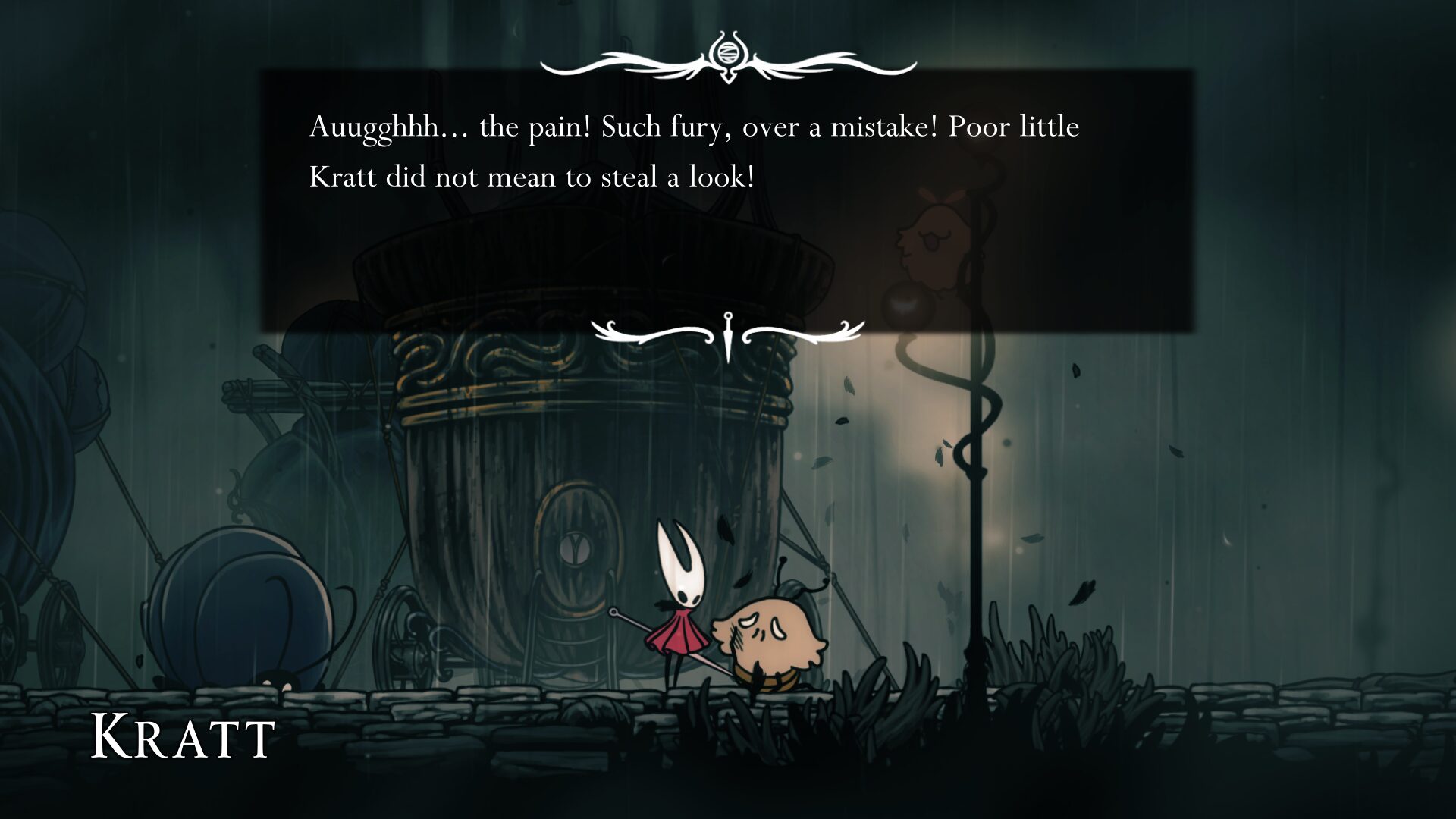
The world of Pharloom is absolutely full to the brim with content, and a lot of it is technically not even required to complete the main story. However, this is a game that really cannot be rushed. It demands you take your time and explore the world, find that extra ability, go looking for that extra tool that might help you tip the balance in the next boss fight.
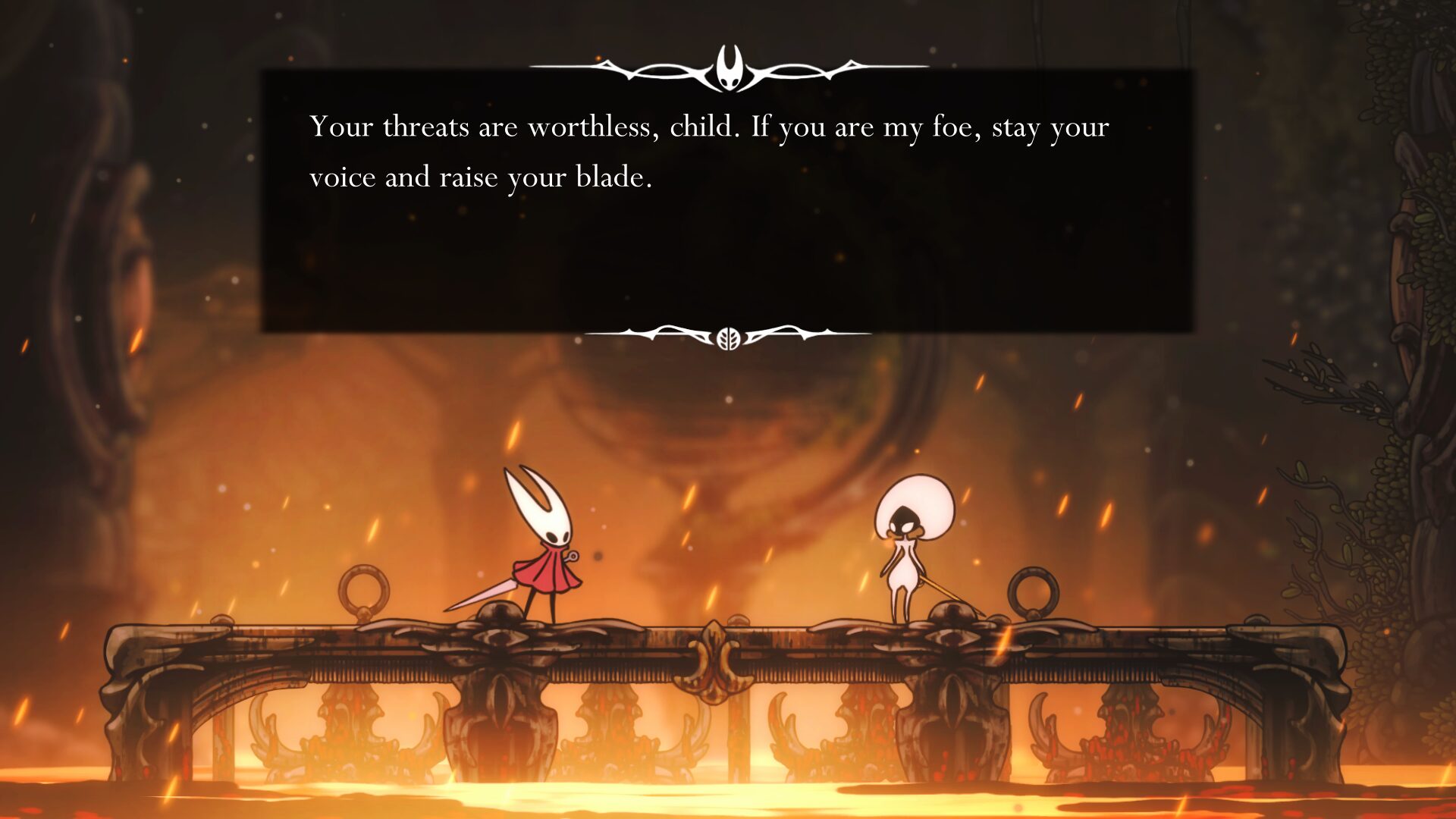
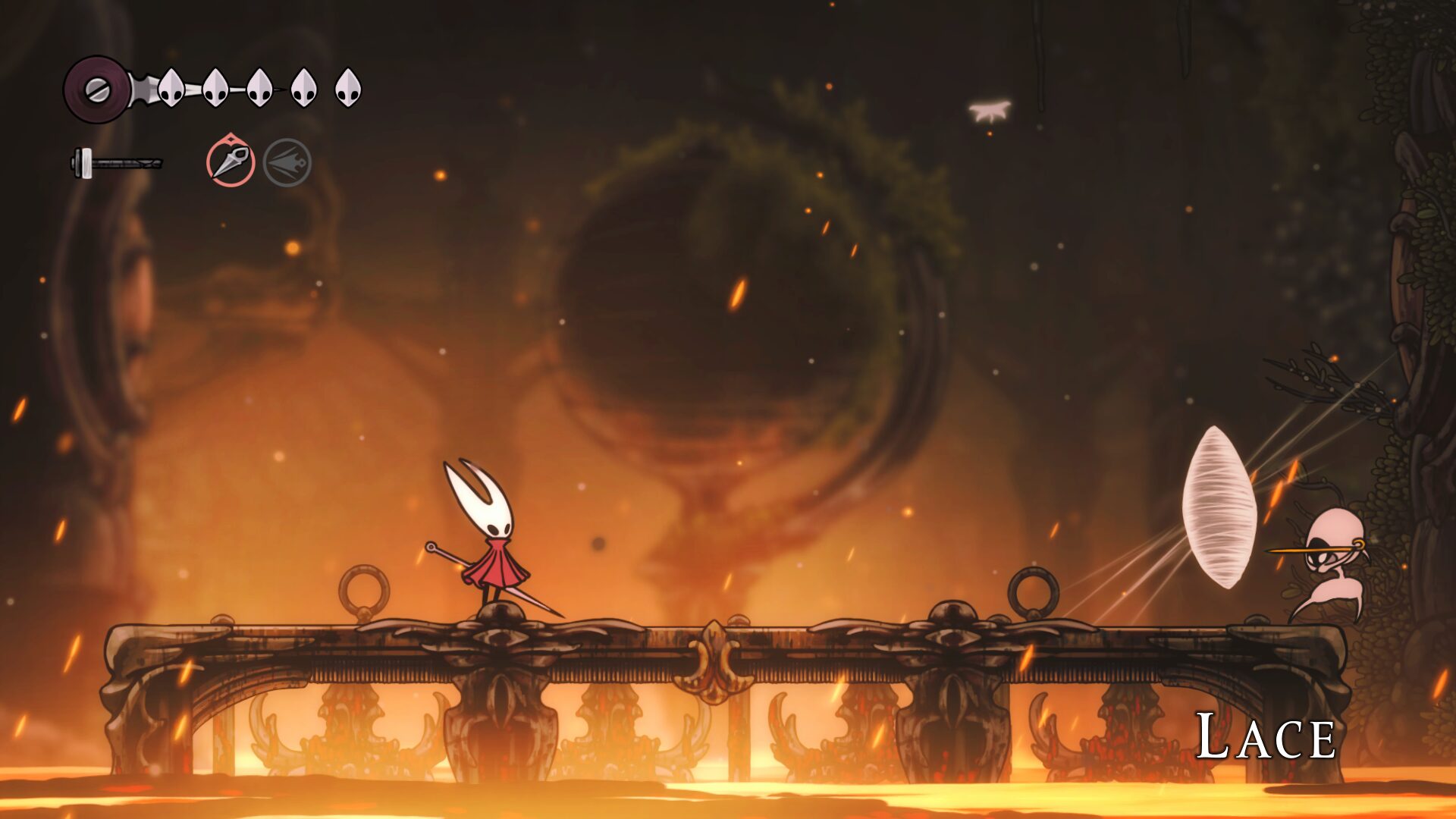
On the subject of bosses, unironically I found the bigger bosses a little boring in design. The fights themselves weren’t boring oh no — they were challenging and difficult, but not insurmountable. However, there are several bosses that are the same size, if not a little bigger than Hornet, and that’s when the game really comes into its own. The fights with Lace, a being composed of Silk, comes to mind. These fights were just as hard, but made it feel like a true dance, a real duel against a skilled equal, as compared to massive beasts. Again, no less fun, but it feels like the game was designed around these same size enemies.
The moment that sealed this game for me, and truly got me to love it, was an early Act 2 boss called the Cogwork Dancers. These two robotic mantises dance around the arena, moving in sync with one another to the music. The fight is not terribly hard — they very clearly telegraph where they are going to go, and move together on the beat, meaning you must observe them both and move with them.
Phase two is more of the same, but faster — and during the third phase, they move independently on each beat, throwing off your sense of timing and forcing you to focus one of them down, almost like they’ve drawn you into the deadly dance and forced you to be an unwilling partner. After you damage one of the two dancers, they explode into pieces and the remaining one returns to its starting position.
I remember gripping my controller and thinking to myself, ‘I’m low on tools and health, little silk, and this is probably gonna be mega fast, don’t let your guard down.’ However, the music is slow. The lone dancer is slow and deliberate, almost sad it has lost its partner. The two had a move where they met in the middle of the stage and would embrace, slashing around them in a massive area of effect. This time, when the dancer comes to the middle, it hangs there as the music swells, letting you hang with what you’ve done, letting you really feel the emotion of your actions. These might’ve been automatons, but this was a truly beautiful fight that I really didn’t feel happy about winning.
Now, Silksong has its issues. A lot of the online complaints are about most bosses doing two damage to you rather than one, but I feel this is honestly not that big a deal. Bosses in these games are deliberately supposed to be difficult and having a huge boss smack me for two health was something I became very accustomed to very quickly. Considering Hornet heals for three health with each heal, four if you have the right upgrades, I really don’t feel like this is of much consequence.
My biggest issues were enemy gauntlets and boss run backs. Hornets moveset is clearly designed around single target combat, whether or not that target is three stories tall or as small as she is. When the game has these gauntlet rooms that throw three or four of different enemy varieties at you, it can often make it very confusing to track exactly what’s going on and the combat is simply not designed for crowd control in most cases.
As for boss run backs, for the most part they weren’t so bad. But there were a few that really got my goat. Every attempt meant I was often going back into the boss fight to immediately heal or heal very early into the fight after recovering enough silk. This often made these particular runbacks, and the bosses they lead too, feel very unfair compared to other areas of the game.
Overall though, Silksong is one heck of an experience and if you can, you should absolutely try it for yourself. I know the difficulty can turn a lot of players away; it was the reason I didn’t play the original. But I feel like the difficulty can be overcome, and the difficulty should not be the reason you deny yourself such an incredible experience. Silksong has become my favourite game of all time, and I’m sure it will leave a very good lasting impression on you too.
Hollow Knight: Silksong is available now on Nintendo Switch , Xbox, PlayStation, PC, Mac and Linux.
A beautiful game ♥