
Dominion is the deck-builder that started them all – but does it still hold up today?

Dominion, designed by Donald X. Vaccarino and published by Rio Grande Games, is one of the few modern board games that can genuinely be called foundational. Released in 2008, it didn’t just popularise an existing mechanism — it effectively created an entirely new genre: the now commonplace deck‑builder. Its core idea is now so ubiquitous that it’s easy to forget how radical it was at the time: instead of starting with a pre‑built deck (as in Magic: The Gathering), you build your deck as you play, buying cards from a shared market and then reshuffling them into your personal engine.
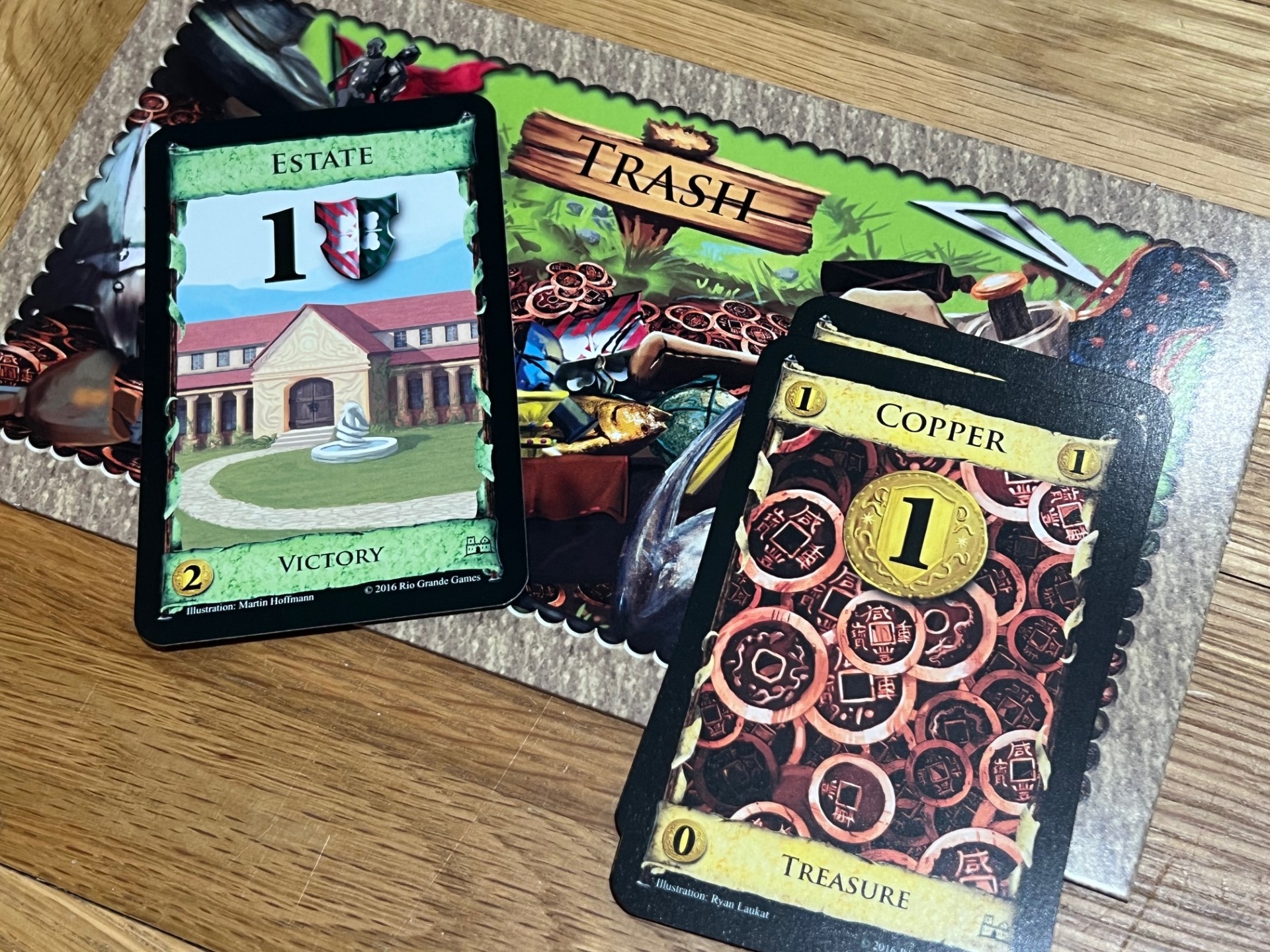
In Dominion, each player begins with the same ten‑card deck: seven basic treasure cards and three low‑value victory cards. On your turn, you draw five cards, play one action (by default), then spend any treasure you’ve drawn to buy exactly one new card from the central supply. At the end of the turn, everything you played and bought goes to your discard pile, and you draw a fresh hand of five. When your deck runs out, you reshuffle your discard pile to form a new deck — now containing any cards acquired since your last shuffle. Over time, your deck evolves from a clumsy pile of coppers and Estates into a tuned engine of powerful actions, efficient treasure, and, eventually, victory points.

The genius of Dominion lies in how much it wrings from that simple loop. The base game includes a large set of Kingdom cards — action cards that sit in piles in the centre of the table. For each game, you choose just ten of these piles (either randomly or by design), and those ten define the entire strategic landscape. One setup might favour heavy draw and chaining actions; another might reward trashing your starting cards to create a lean, efficient deck; another might push you toward big money and minimal actions. The central rules barely change, but the texture of play shifts dramatically depending on which Kingdom cards are in the mix.
The turn structure is famously clean: “Action, Buy and then Clean‑up.” You play action cards (if you have them — there are none in the starting deck), then buy a card (if you can), and then discard everything and draw five new cards. That rhythm is crucial. Because you see a new hand every turn, you’re constantly cycling through your deck, feeling the impact of your purchases quickly.
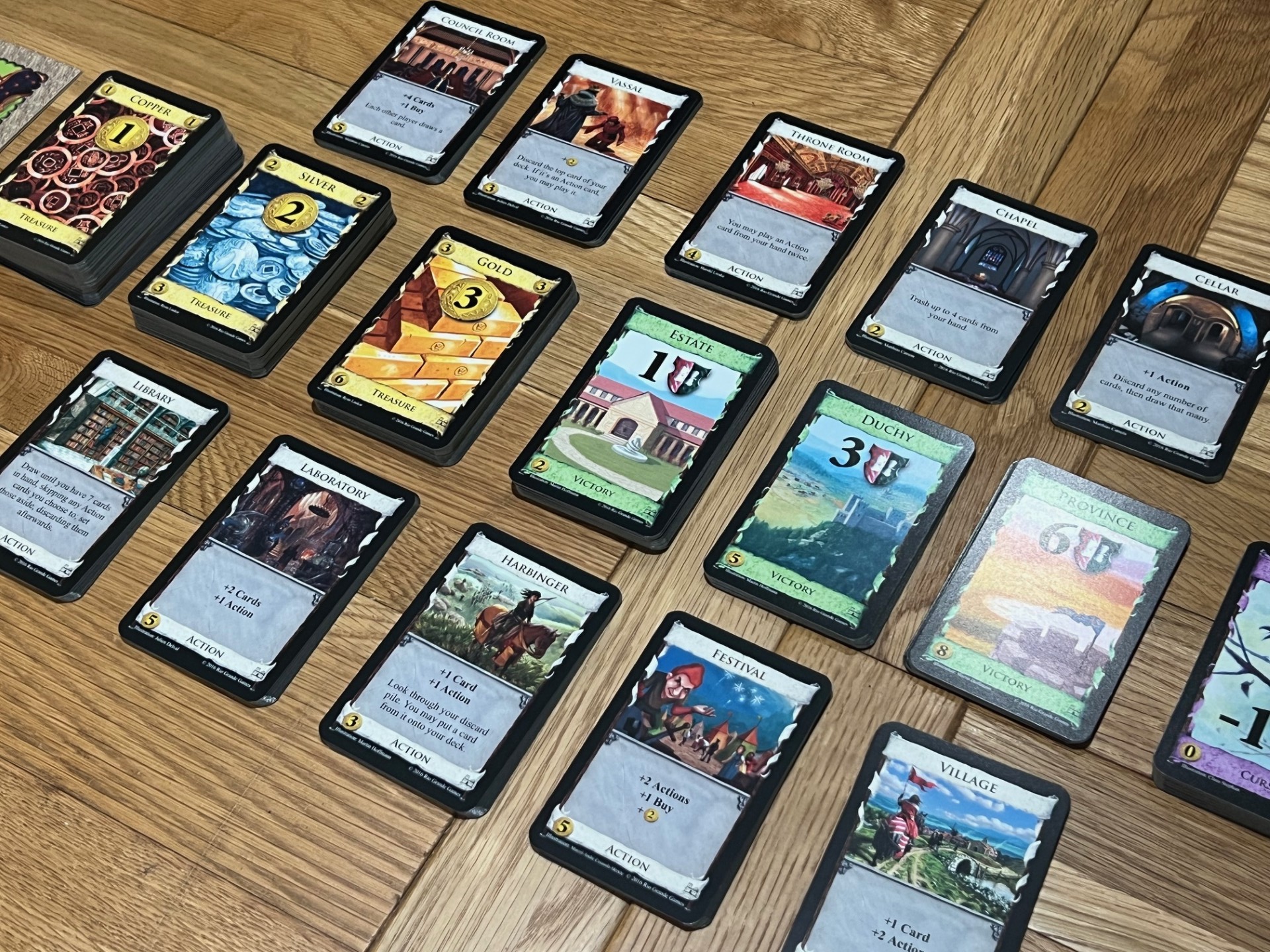
When you add a powerful card, you’ll see it soon; when you clog your deck with green victory point cards, you’ll feel the slowdown almost immediately because whilst these cards are worth points, they generally don’t do anything in the game itself. That feedback loop is what makes Dominion so addictive: every decision about what to buy is reflected back to you within a few turns, and you can feel your deck getting better — or potentially — worse.
The tension between building your engine and actually scoring points is the heart of the game. Victory cards do nothing when drawn; they’re dead weight during play. But you can’t win without them. The central question in Dominion is always: “When do I pivot?” Spend too long building your engine and the game might end before you can cash in. Start buying Provinces too early and your deck will stall, leaving you unable to keep up. That timing puzzle is endlessly replayable, especially because different Kingdom sets change the optimal moment to pivot. There are 25 sets of cards in the base game, and you use ten per game — so you can already imagine the variety on offer.
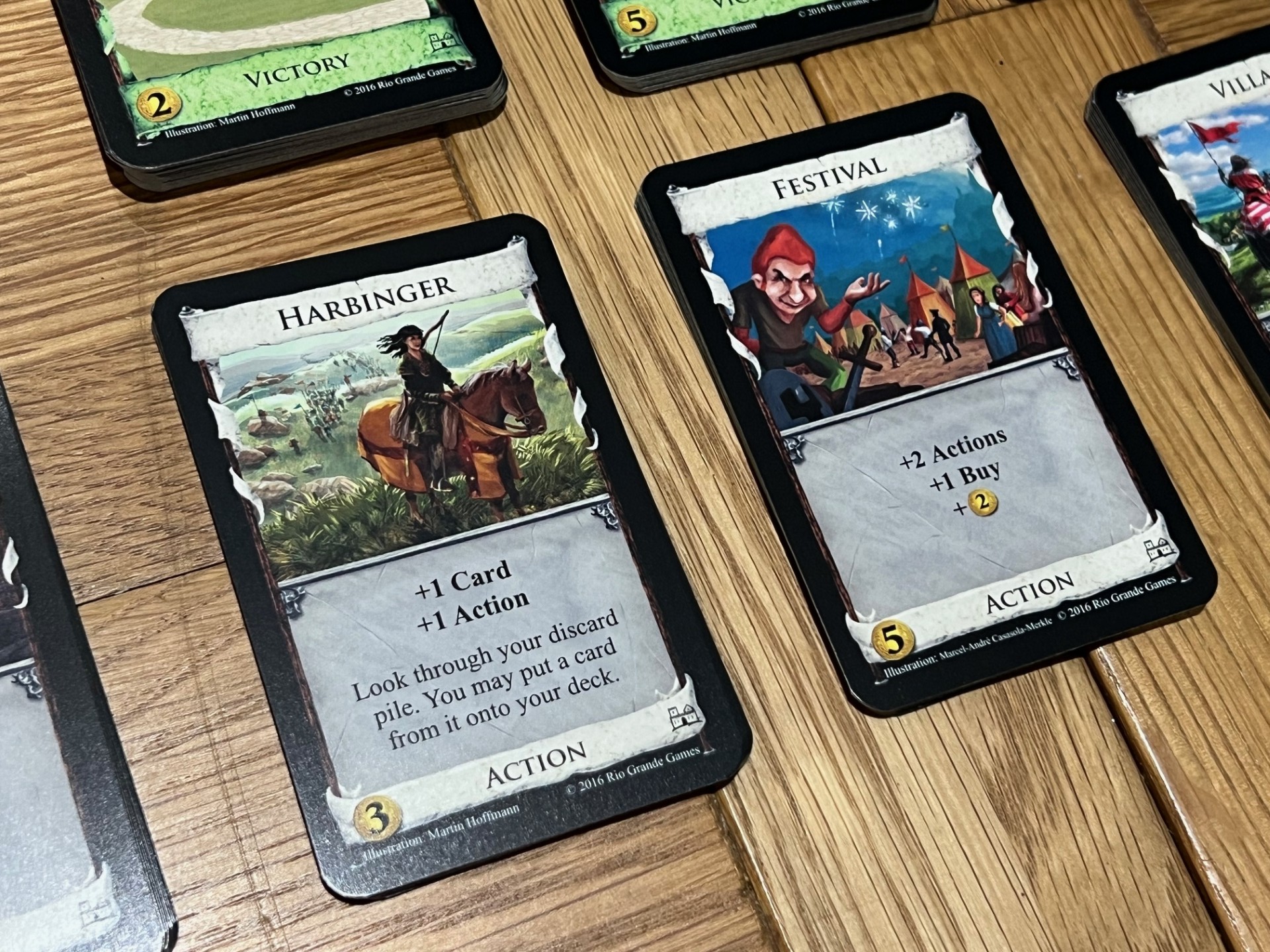
It’s also worth emphasising how Dominion handles interaction. There’s very little direct confrontation in the base game — no attacking units, no board control — but there is constant indirect competition. You’re racing for limited piles of powerful cards, watching what others buy and adjusting your plan accordingly. Some Kingdom cards introduce attacks (like forcing opponents to discard or gain Curse cards), but even in the absence of these cards, the game is highly interactive in a tempo sense: you care deeply about how quickly others are building, how many Provinces are left, and whether you can afford one more “engine” turn before the end.
From a design perspective, Dominion is remarkably pure. The rules overhead is low, the iconography is minimal, and the game length is short — often 20–30 minutes once players are familiar. Yet the decision space is huge. With ten Kingdom piles chosen from a much larger pool, the number of possible setups is enormous, even with just the base game. That variability, combined with the speed of play, is a big part of why Dominion has endured. It’s easy to play multiple games in a row, exploring how different card mixes change the meta.
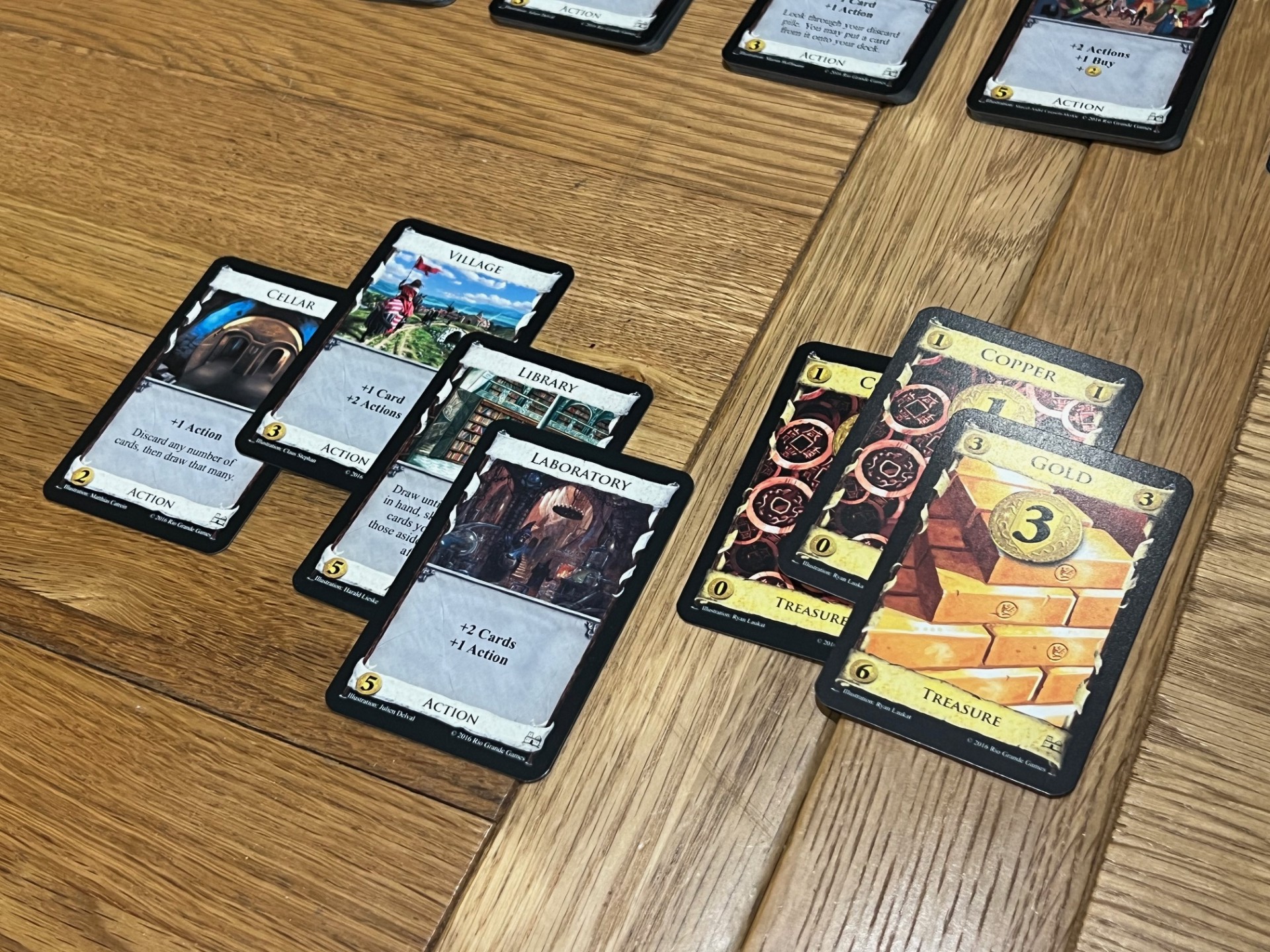
The impact of Dominion on the hobby is hard to overstate. It is widely recognised as the first true deck‑building game, and it directly inspired an entire wave of designs that took the core idea in different directions. You can see its DNA in Ascension (streamlined market row, constant churn), Dune: Imperium (deck‑building plus worker placement), Star Realms (head‑to‑head combat with shared market), Clank! (deck‑building plus board movement and push‑your‑luck), Tyrants of the Underdark (deck‑building plus area control), and many, many more.
All of these games build on the same fundamental loop: start with a weak deck, buy better cards from a shared supply, and let your deck evolve as the game progresses. Dominion didn’t just introduce a mechanism; it provided a template that designers have been iterating on for more than a decade.
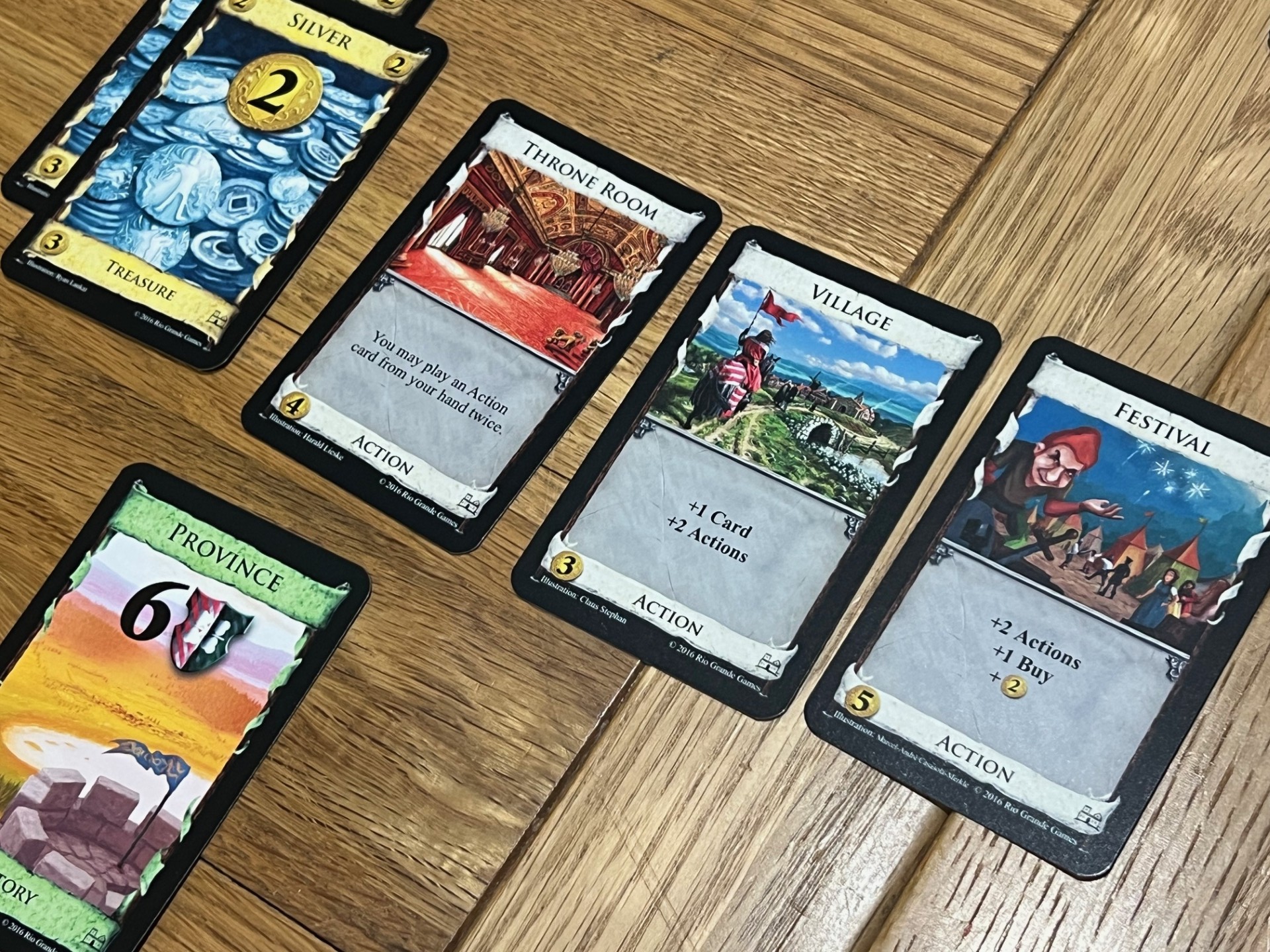
It’s also a game that has grown enormously through expansions. Since 2008, Dominion has received more than a dozen expansions, each adding new Kingdom cards and often new twists on the core rules. Some expansions focus on new resource types, others on duration effects, events, landmarks, or alternate scoring conditions. Collectively, they’ve turned Dominion into a vast sandbox of modular content, with millions of possible Kingdom combinations even before you start mixing sets. That modularity is key to its longevity: the base game is a complete experience, but each expansion reframes what “good play” looks like, introducing new engines, new traps, and new timing puzzles.
The sheer volume of content also speaks to the game’s staying power. Even as far back as 2017, Dominion and its expansions had sold more than 2.5 million copies worldwide, and the line has continued to grow since — although the stats don’t seem to be readily available. It won the Spiel des Jahres in 2009, cementing its status as a modern classic, and it remains in print and actively supported. Few games sustain that kind of life cycle without a fundamental robustness at their core.
What’s interesting, especially looking back now, is how Dominion has managed to remain relevant even as its own “offspring” have pushed deck‑building into hybrid territory. Many newer games bolt deck‑building onto boards, campaigns, legacy systems, or narrative arcs. Dominion stays laser‑focused on the deck itself. There’s no map, story or campaign mode to bloat the experience — just the puzzle of building the best deck under the constraints of the current Kingdom sets. That purity is both its limitation and its strength. It doesn’t try to be everything; it tries to be the best possible expression of one idea.
From a modern perspective, you can argue that Dominion feels “dry” compared to flashier descendants. The theme is thin, the art functional rather than evocative, and the game doesn’t generate the kind of emergent narrative you get from, say, Clank! or Aeon’s End. But if you enjoy systems, tempo, and efficiency puzzles, it’s hard to beat. The satisfaction of lining up a perfect turn — chaining actions, drawing your whole deck, converting it into a Province or two, and then reshuffling to do it again — is timeless.
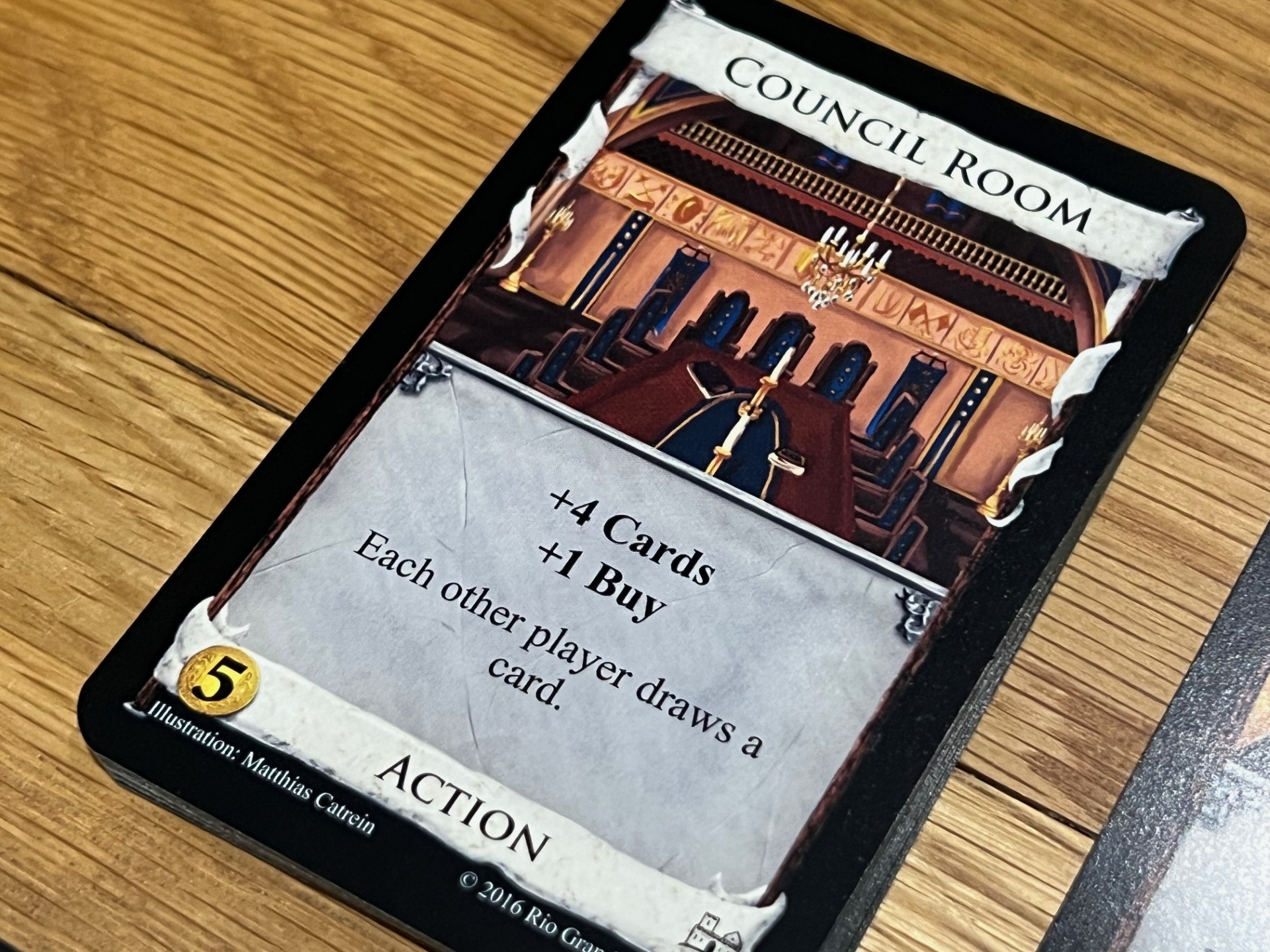
For me, Dominion’s importance lies in three things. First, it proved that you could build a compelling game around the construction of a deck, not just its use. Second, it showed how modular content and variable setups could create enormous replayability without bloating rules. Third, it opened a design space that other games have filled with theme, narrative, and hybridisation, while it remained the pure, crystalline core of the genre.
Its longevity is no accident. Basic Dominion is still a superb introduction to deck‑building, and the expansions — many of which we’ll dig into separately over the next few months — have kept the system fresh, weird, and occasionally wild without breaking its underlying elegance. Dominion is not just historically important; it’s still, in many ways, the benchmark for deck-builders. If you want to understand deck‑building as a mechanism, you start here. And even after you’ve played all the flashy descendants, it’s remarkable how often you’ll find yourself coming back to this understated and surprisingly generous box of cards.
Dominion is available now from Amazon.
