

Club Manager, designed by Colin Webster, is a football management game that aims to capture the long arc of running a club rather than the moment‑to‑moment tactics of a single match. It’s a game about seasons (up to ten), not an individual fixture; about shaping a squad over years rather than picking a starting eleven for one afternoon.
In that sense, it feels like a natural extension of the design philosophy behind Counter Attack, which focuses on the drama of matchday itself. Anyone familiar with our earlier review of Counter Attack will recognise the same respect for detail and authenticity here, but channelled into a very different kind of experience.
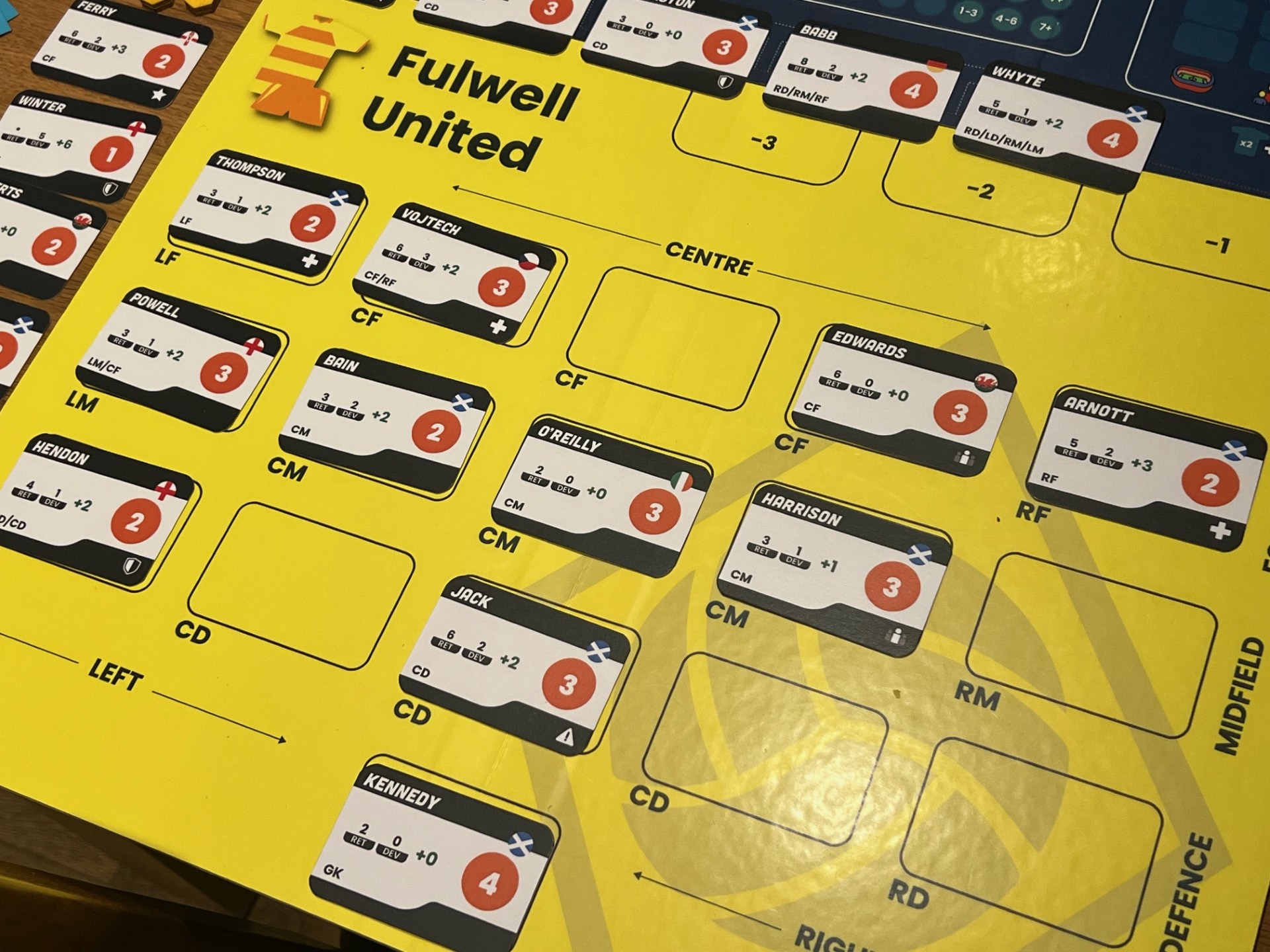
Where Counter Attack zooms in, Club Manager takes a step back. You begin with a modest squad in the lowest division, and from there the game becomes a multi‑season story about growth, decline, risk, and resilience. Each week you’re making decisions that define your club’s trajectory: training players, scouting for talent, nurturing youth prospects, managing finances and preparing for matches. The constraints are tight enough that you always feel the weight of choosing one priority over another. You can’t do everything with your limited workers, and yet each option feels equally integral for your success.
The squad is the heart of Club Manager’s experience. Players are individual entities with attributes, ages, and potential which can change over time. Some develop into stars, others plateau, and some retire with age. Injuries, dips in form and unexpected opportunities all shape the narrative. This gives the club a sense of life that few tabletop sports games manage. You don’t just see players as numbers; you see them as long‑term investments, gambles, or stalwarts who hold the team together. The emotional attachment that Counter Attack creates in a single match becomes something deeper here because you’re living with these players season after season.
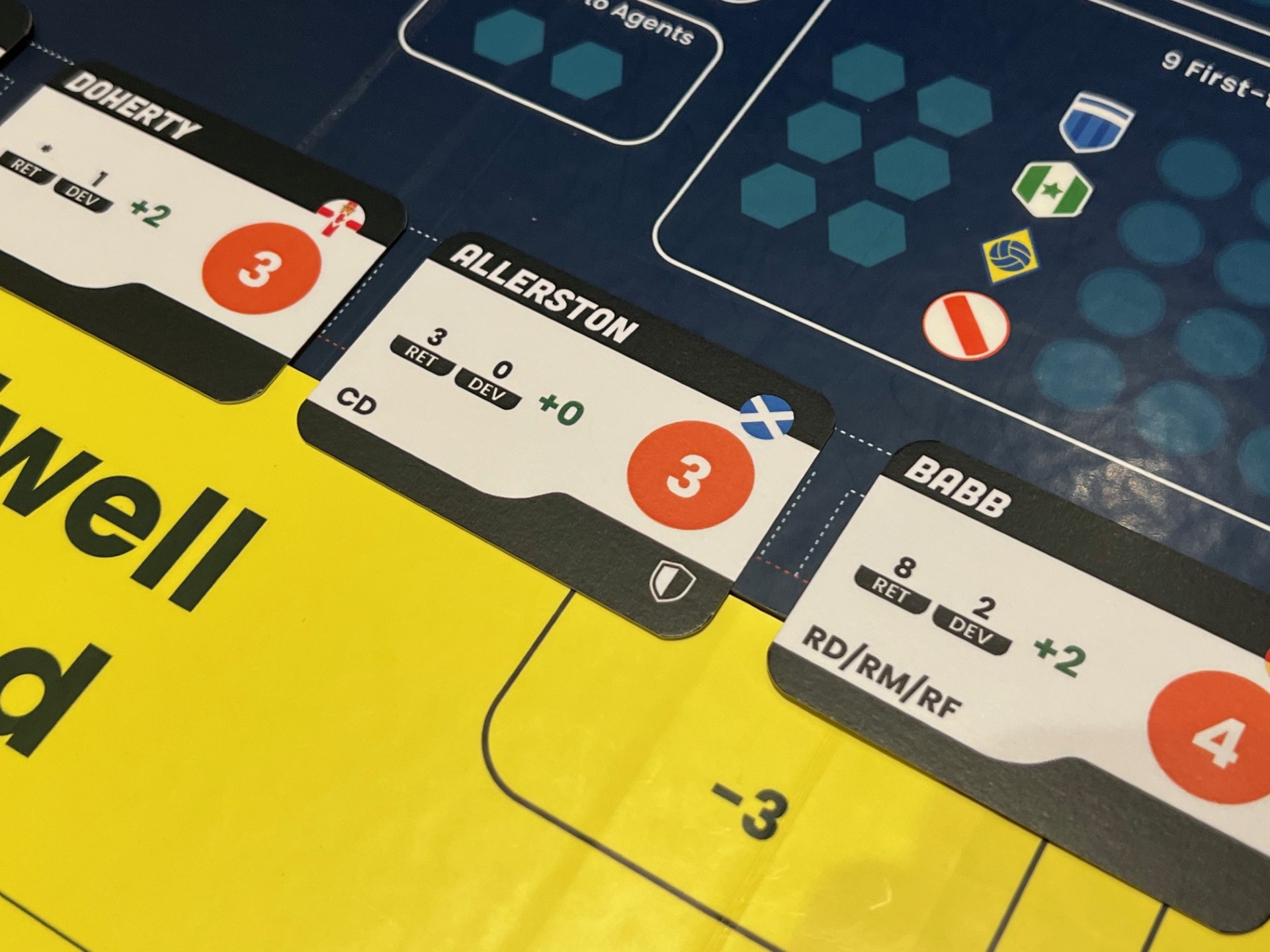
Off the pitch, Club Manager captures the broader pressures of running a football club. Money is tight, especially early on. Wages, transfer fees, and facility upgrades all pull from the same limited pool. Investing in infrastructure pays off later, but it slows your immediate progress. Youth development is slow but essential. A single injury can derail a season. Club Manager doesn’t shy away from the precariousness of football management, and that honesty is part of its appeal. It respects the player enough to let things go wrong, even if sometimes a little bit too much can hang on the roll of a dice.
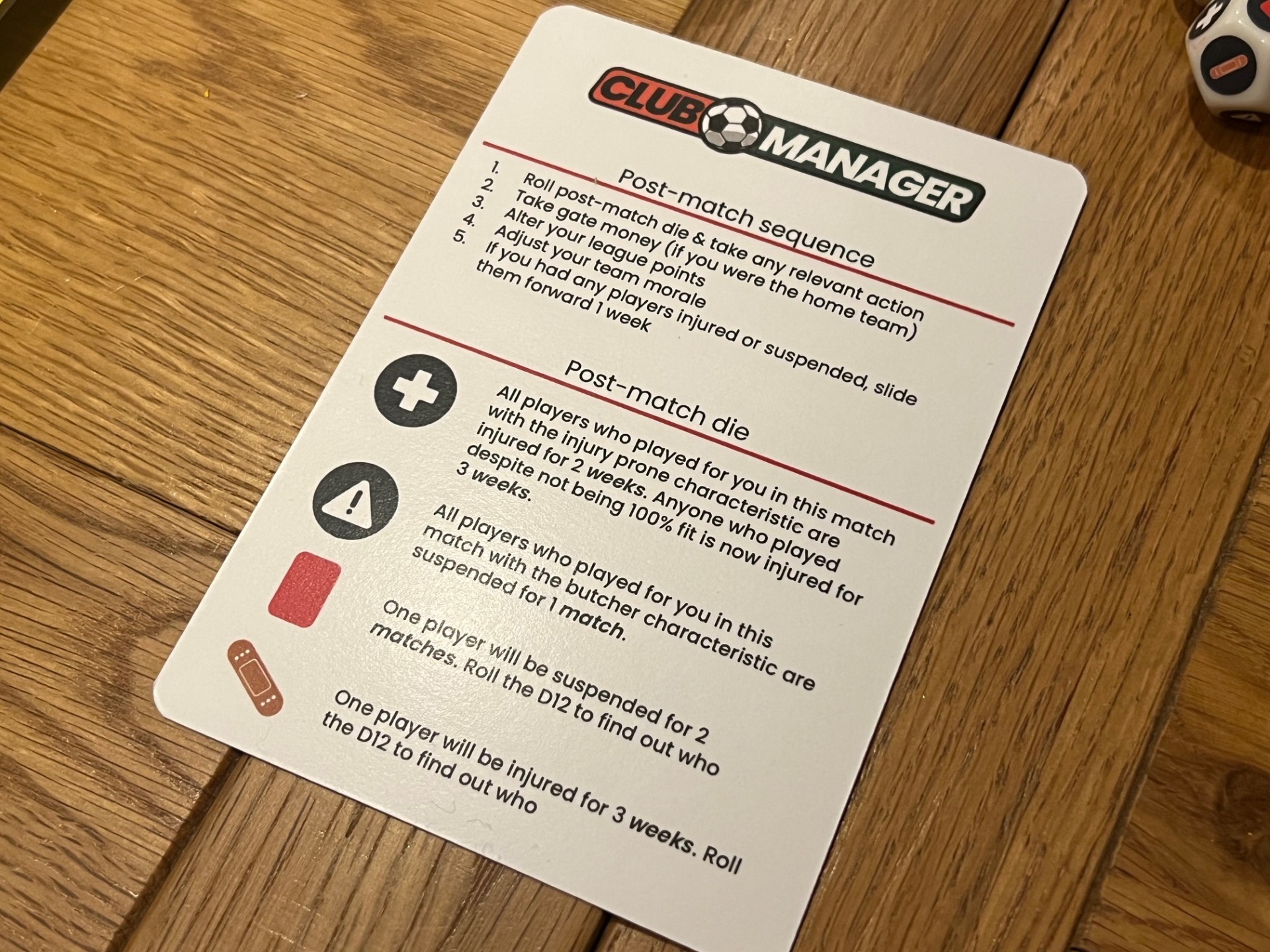
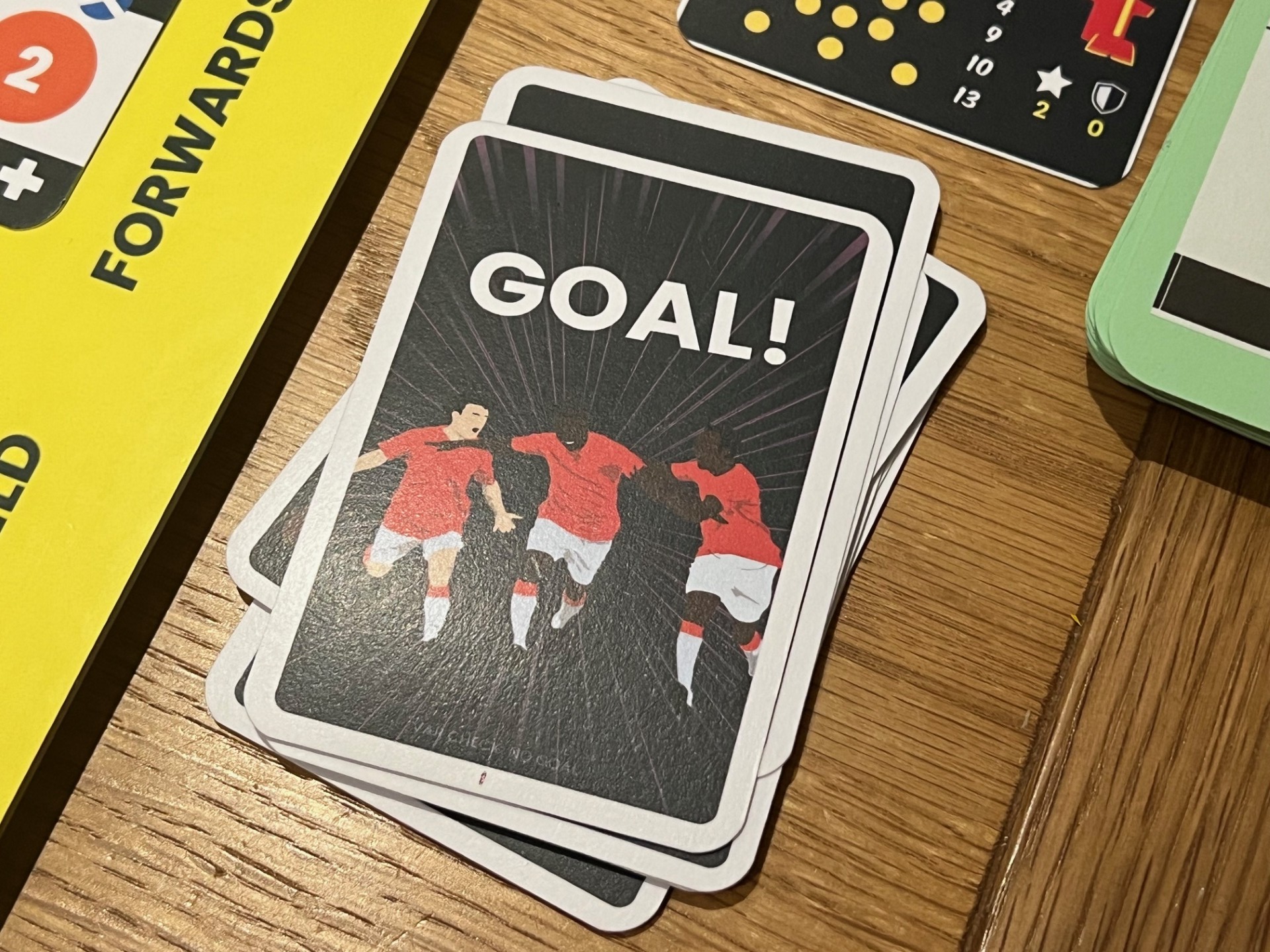
Matches themselves are streamlined but quite laborious and lengthy — especially in multiplayer. This isn’t a tactical simulation like Counter Attack; it’s a summary of how your preparation, squad quality, and tactical choices translate into results that often involve a lot of luck and by contrast, luck mitigation. The match system is clearly outlined in both the manual and on a handy player aid, but it involves a series of mathematical calculations (left wing vs opposing right wing, attack vs defence etc) which result in die rolls. A winning value (calculation plus rolled number) allows the successful player to draw one or more cards — with the ideal draw scoring a goal.
The on-pitch drama in Club Manager comes not from individual passes or shots, but mainly from the deck. In general (especially early in the game) the player(s) will need to pick their battles, setting up their team to win two or three of the comparisons that will take place. On-field decisions such as moving or substituting a player add some depth, as do scouting or preparation cards that can strengthen one area of the team. These things mean that matches will usually go the way they should (with the better team winning), but it’s also possible for a team to win one-nil from winning only one or two phases of play if they are lucky. It’s just… Not very likely.
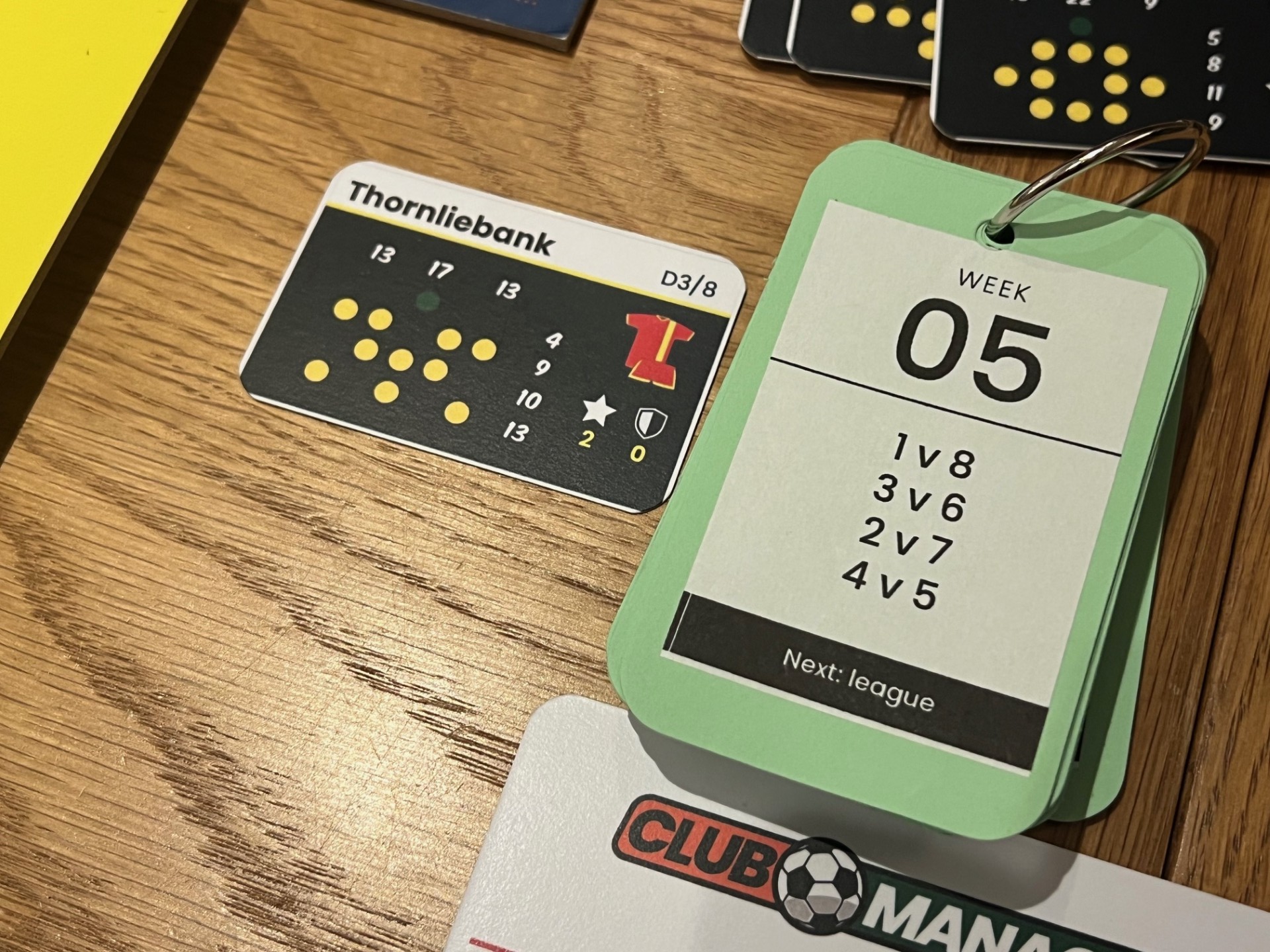
When played solo (which might be Club Manager’s real focus) this is fine and the match system creates both a puzzle to solve and a tension that comes from necessary chance and randomness. Played multiplayer, the game can bog down. Each match takes at least five or ten minutes to resolve per player, and over the course of multiple seasons, that leads to a very long game. I’m yet to find a way to enable all players to resolve their ties simultaneously, although you could do it if everyone agreed to either split the draw deck or just accept that a card they “would have drawn” has just been drawn by someone else playing out their own match at the same time.
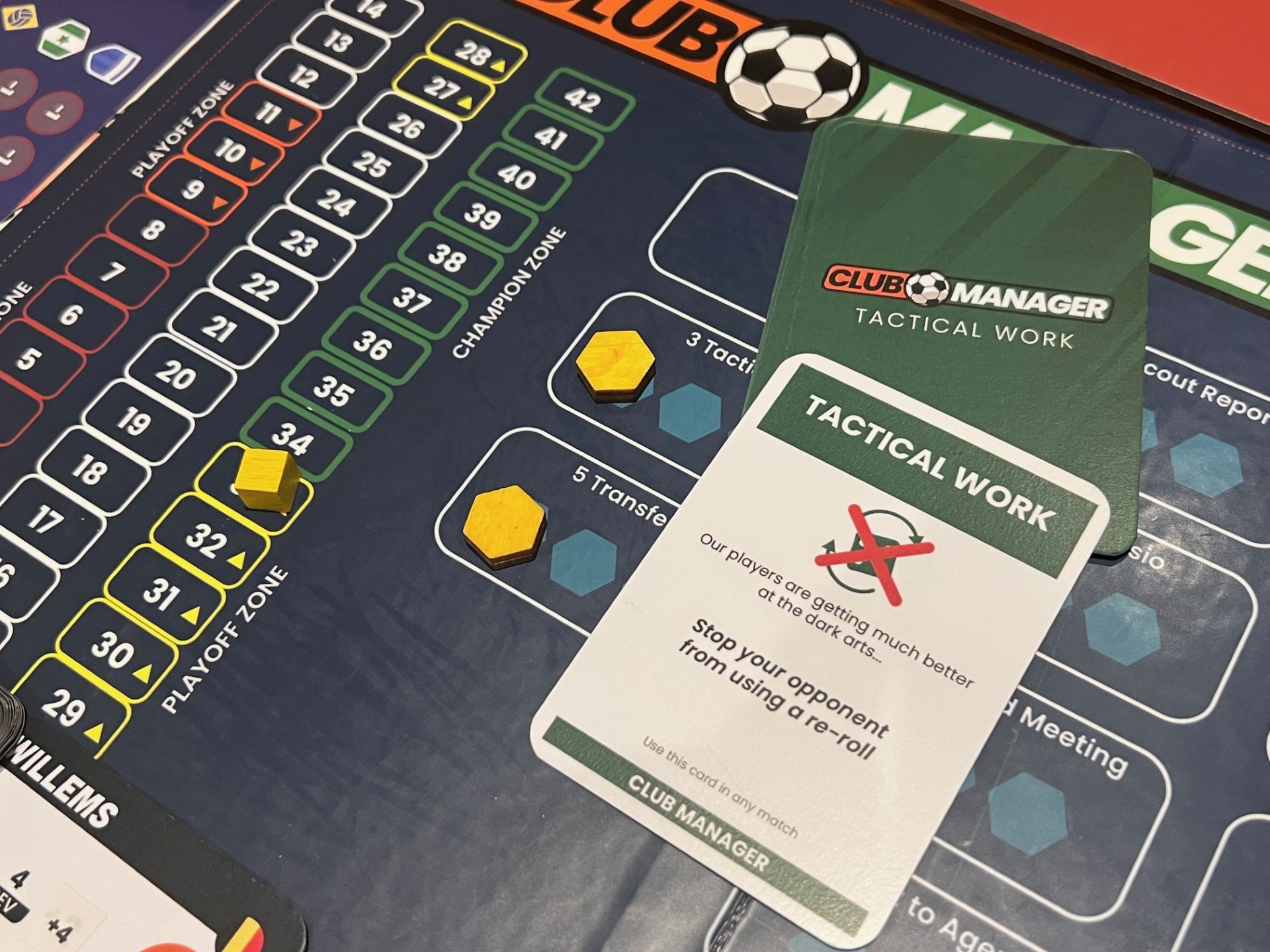
Nonetheless, it is impressive that Club Manager is playable both solo and with others. Solo, it plays like a true career mode, with simple to manage league tables shaping the world around you and cards dictating the other teams in the league(s). It’s easy to imagine players sinking dozens of hours into a single club, watching it rise, fall, and rise again. With multiple players, each person runs their own club within the same competitive structure, and when it comes to game day, the matchday engine that I’ve already described works just as well for head-to-head competitions.
What makes Club Manager stand out is how confidently it embraces the long view of football and how it captures the feeling of early football management PC games. It isn’t quite modern-day Sports Interactive Football Manager, with all the (some say unnecessary) bells and whistles that come with it now. It’s more like Football Manager 2 or perhaps even early Championship Manager. It doesn’t cover every tiny detail, and it might just be a bit more random than you’d like, but the veneer of control is there, as are all of the important decisions that make you feel like the next Marcelo Bielsa.
Club Manager isn’t trying to replicate the spectacle of a match in isolation; it’s trying to replicate the grind, the planning, the uncertainty, and the satisfaction of building a team that will take part in the match — and then measuring the success of that grind. Club Manager captures the feeling of nurturing a youth prospect, of sweating over a transfer decision, of watching a squad gel, of seeing a season slip away or come together at the last moment. It’s a management game first and a football game second, and that’s exactly why I think it has huge potential.
You can find out more about Club Manager on its Kickstarter page, which goes live soon.

Comments are closed.