

When you think of who would create a ‘rules-lite, narrative-first roleplaying game’ the name that jumps to mind is probably not going to be Paizo; the publisher behind Pathfinder, a system known for its complexity and granular detail, which is affectionately known as ‘Mathfinder’ because of it. But with 13 Omens, a horror-themed system about to arrive on Kickstarter, Paizo is out to prove they can tone down the crunch and dial-up the terror.
I got the chance to try out the preview scenario for myself, at a one-shot ran by one of my long-time gamemasters. I won’t necessarily be delving into the rules preview myself, which you can grab by reserving your spot for the upcoming crowdfunding campaign, but I’ll be giving my thoughts as a player.
Ghost Chasers again
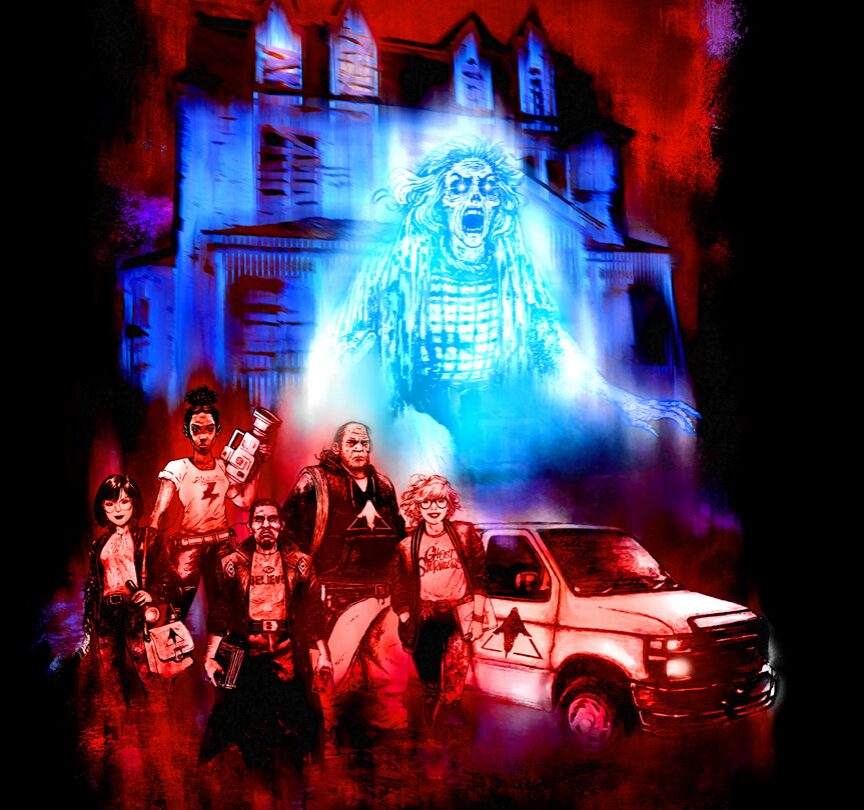
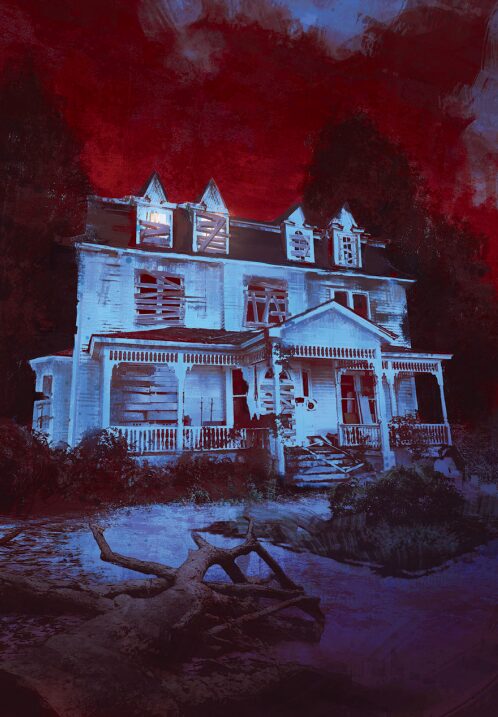
The scenario we played through was called ‘The Haunting of Hollybrook’, and focused on your standard group of not-quite-authentic ghost hunters, called Ghost Stormers. Naturally though, their investigation of the fictional Hollybrook Inn has them realising the supernatural may not be as fake as they’ve made it seem in the past.
It’s a simple scenario, and one we’ve seen done before in Call of Cthulhu with modules like Viral. It’s also a concept that I’ve run myself. That’s not a problem though, as this is a solid set-up with plenty of potential for both scares and laughs, that works well to show where 13 Omens stands out from Call of Cthulhu, which is what it will inevitably be compared to.
The scenario took about three-and-a-half hours to complete, my lateness notwithstanding, and moved along at a decent clip. Our GM also showed us (after the fact) that there were more than a few scenarios for potential player actions which were taken into account by the module, and details like that are always welcome.
The character sheets that were provided offered a great mix of direction and customisability. Your character has a single stat pre-defined, but everything else such as name, relation to other characters or personality traits is entirely up to your discretion. You even get to pick from an array of provided perks and gear, although the choices are tailored to the archetype of character you’re playing.
It’s a simple, straightforward module that easily offers potential for both straight horror and the usual shenanigans that ensue when any group tries to dip their toes into a spookier tone. And this module may be the best way to experience 13 Omens, because it’s a system heavily leaning towards a single session of play.
One in the Chamber
13 Omens is one of many systems that’s aimed towards one-shot scenarios. But what sets it apart from Mothership, Call of Cthulhu or PbtA is that this emphasis is very explicit, and baked into the system itself. Rather than a gradually dwindling pool of resources you have a built-in ticking clock in the form of Omen Dice, which we’ll get into once I’ve set out how 13 Omens actually works in practice.
The core of 13 Omens is a simple 2d6 resolution system that meets or beats a target number for your skills; here called ‘Aspects’. Character creation has you assign a simple array of numbers for your Aspects, ranging from 4 for ‘Great’ to 10 for ‘Terrible’. On that previously mentioned character sheet you have one stat already set as Great, with the assignment of the rest up to you. Aspects in this preview were split into two categories, one core set and another specifically tailored to the story.
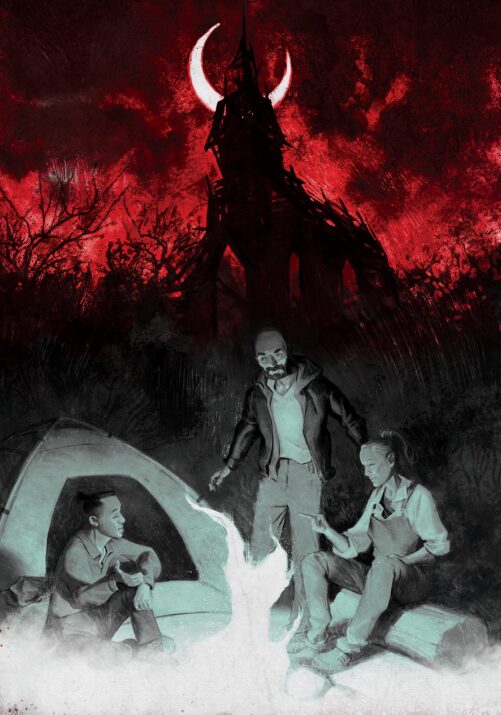
Aspects are your skills and also a means of slowly chipping away at your character. Checks can, at the GM’s discretion, be declared as ‘Risky’. This means if you fail you either lose a piece of equipment, face some other consequence, or most often suffer a ‘Strain’ to your Aspect, which imposes a Flaw (meaning you lose a dice).
Bonuses are mostly in the form of Edges, which depend on you having some circumstantial advantage or a piece of equipment that’s helpful in the situation you find yourself in. In this case, you instead draw another dice. Flaws and Edges cancel each other out; so far so normal. But, it also means you have a better chance of drawing Omen dice…
It’s an Omen-e-e-e-e-n
Rather than using your own dice for rolling, they’ll instead be placed inside a blind bag and drawn out at random. Not a major issue since it’s d6, but this is where the Omen dice come into play, as eventually you’ll draw the distinctive (in our case) red die. This dice is bad because, well, it’s what can kill you. Roll a 1 on this dice, and you take a wound; four of those means you’re d-e-a-d.
These dice are basically your ‘shit goes wrong’ button. 13 Omens relies on a three-act structure, with each act ramping up the tension by making the Omen die more dangerous. At the start only a roll of a 1 (whether the check is successful or not) will cause you to take an actual wound, rather than simple strain, which only causes penalties.
But as the acts progress that number climbs, from 1, to 2 and then finally to 3. That works quite well in pushing forward the pace of the adventure and making it more dangerous, while not needing to have the place literally falling down around your ears or ghosts popping out of every corner. Admittedly, it seemed to me there is still some onus on the GM to decide when to add the dice, but I’ll give Paizo leeway there as a rules-lite system has a necessary amount of responsibility placed on the game runner.
What I really liked about the Omen die system is that it makes the gradual build-up in tension and danger feel more natural and narratively appropriate. We’ve all played Call of Cthulhu and gotten our leg stuck on an iron spike while climbing a railing or something similarly ludicrous, and suffered serious injury. That works for the world of CoC because it emphasises the realism, and makes the terrifying monsters that follow that much more frightening because of the danger they pose. But since 13 Omens is trying to emulate actual horror media, the Omen dice fit the typical tropes and structure of the genre, and tacitly encourage you to ‘play along’ with its conventions.
I think ‘playing along’ is a good way to see the system. Rather than yucking it up when your character manages to suffer a wound from opening a door, failure early on in 13 Omens is usually clumsiness or simple incompetence. But that flashlight you dropped in the toilet could’ve come in real handy as you run from the horrific shadow creature through the darkened utility corridors…
Too often horror-focused systems make virtually every move dangerous. But 13 Omens instead slowly adds in more risk, and lets you slowly get used to simple failure, before eventually that entire handful of red dice are drawn in the third act, and suddenly you’re faced with the very real potential that your goofy little guy is about to get his head torn clean off in one fell blow.
My overall thoughts as a player
I enjoyed my time with 13 Omens, but as always that’s a judgement that carries a big asterisk. Reviewing role-playing games or even just previewing them is difficult since you can never know how well it’ll work in practice. A bad or good GM can make all the difference, after all.
However, in terms of the system itself and the aesthetic of the preview rules I got the chance to look through, 13 Omens is a solid contender in the horror RPG scene. While it may be rules lite, it’s not a slapdash approach, and the Omen dice system shows that Paizo have a great understanding of how the actual crunch helps to emphasise the tone and atmosphere of the game.
So, I feel that 13 Omens is definitely one to keep an eye on here. And given Paizo have been in a sticky situation thanks to their recent problems with Diamond Distribution, they’ll probably be similarly hopefully that 13 Omens is a success. You can reserve your pledge for 13 Omens now to gain access to the preview rules for this upcoming rules-lite horror TTRPG.
