

Fathom is a compact, tense tile‑laying game that turns limited hidden information and a shared sonar wheel concept into a steady, satisfying test of timing, memory and spatial judgement. It isn’t especially flashy or sprawling, but it looks like a bigger game than it is when set out, and as a result it never fails to attract attention.
The gameplay in Fathom is actually based around a handful of recurring choices that require considerable thought that keeps everyone invested. The pleasure in games like this comes from the small, decisive moments when you happen to get exactly the tile you need, and place it in just the right spot.
The rules of Fathom set a tight rhythm. Each round runs the same short sequence: draw and place discovery tiles that represent different species, claim wedges on the sonar wheel and then move your submersible to flip and collect tiles. That three step loop repeats six times, and because placement is simultaneous the pace is pretty rapid once you’re all used to it. The core idea of placing tiles face down on your personal board to then reveal later is the engine of the game, and it turns otherwise ordinary tile placement into a bit of a psychological gamble: do you place a tile that might be crucial, or seed it on the sonar and hope you can reach it when the time comes?
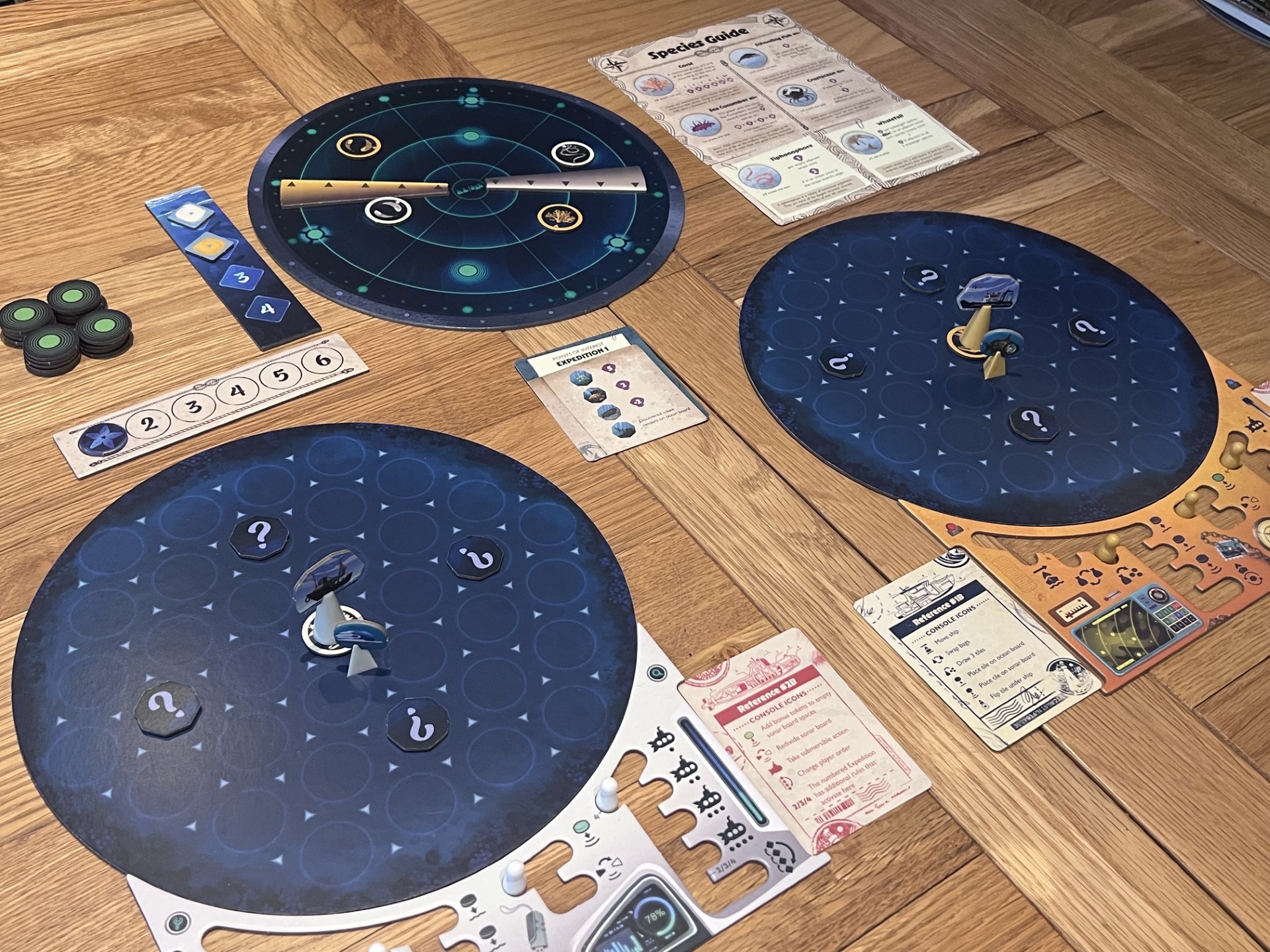
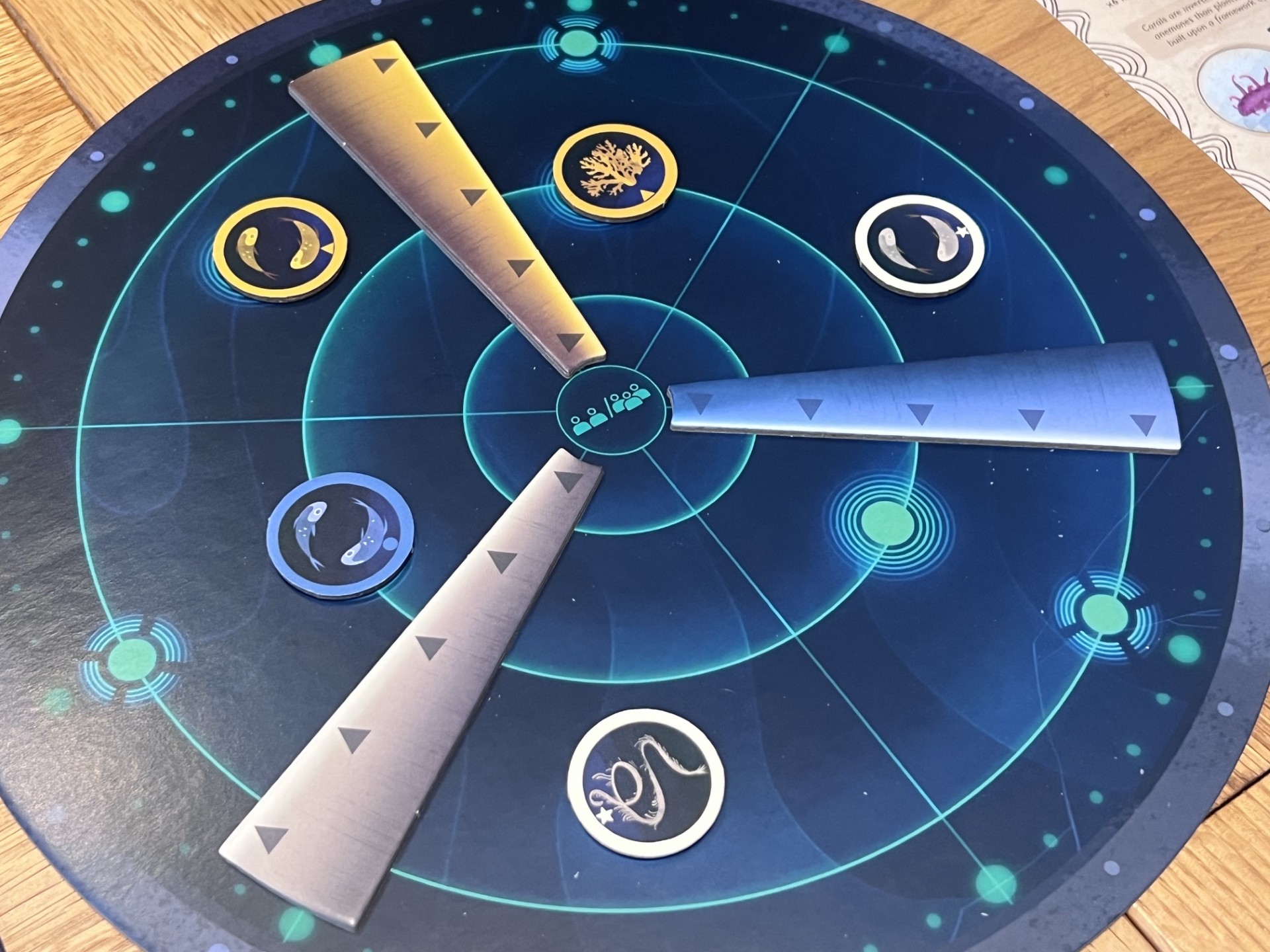
The sonar wheel is Fathom’s focal point. Claiming a wedge (of which there will always be one per player) grants access to the tokens and secrets within it (whilst also denying your opponents) so interaction is about timing and contested access rather than direct removal. That makes the social aspect of the game quite subtle and much more about jockeying for opportunity based on timing than it is on direct competition. As this is a lighter game, hobby gamers might be frustrated that they can control some of what they need, but not all, and this leads to making the most optimal choice you can, but not always the perfect one.
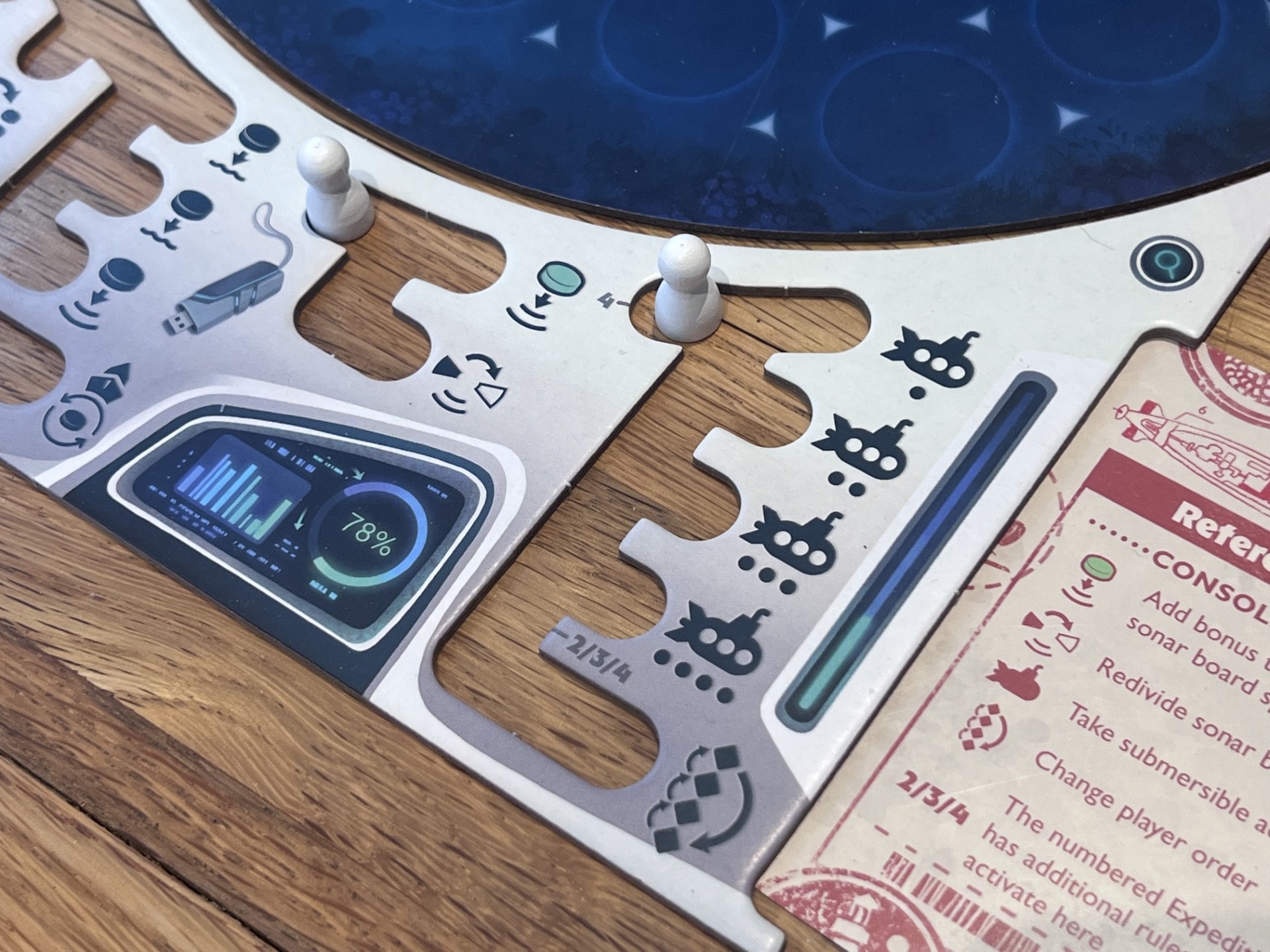
Fathom’s components are modest but functional, but that’s OK because it’s a relatively cheap game. The largely unnecessary and overproduced player consoles keep your part of the ocean readable, discovery tiles are sturdy, and the sonar board has a nice look to it that makes all the difference to immersion (pun intended). The layout is designed for clarity because its tension depends on readable information and quick, simultaneous planning. There are no needless frills; everything on the table exists to make the mental game run smoothly.
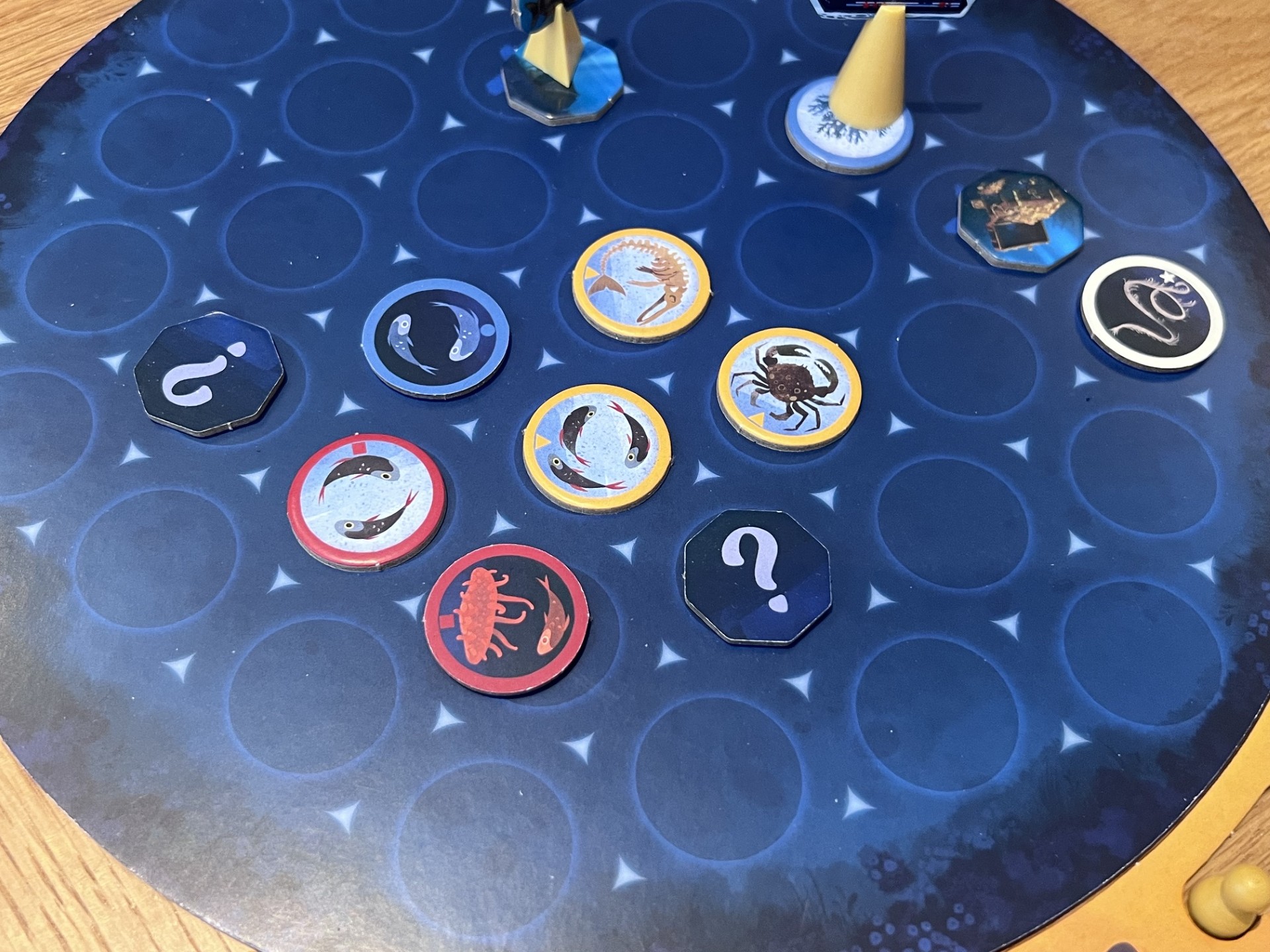
Strategically, Fathom rewards flexibility. Early rounds lean a little bit towards diversification: scatter a few different species or scoring elements (which vary across five setup options) and avoid being locked out of options and you won’t go far wrong. By the mid to late game, you’ll be running out of space and adjacency is essential for scoring. Some spaces want to be grouped together, others prefer to be next to other species and some want to be alone. Because the game arc is short, mistakes bite, but clever play can still salvage a faltering plan and in most cases, all players will occasionally be forced to place a piece they didn’t want to.
Player count changes the feel in meaningful ways. Two players produces quite an intimate duel where every decision feels much more impactful and the table becomes a chessboard of deliberate decisions. Three players is probably the sweet spot because sonar contention is frequent enough to create tension but not so chaotic that the table loses coherence. Four players makes the game busier and more opportunistic, with more options for players earlier in turn order when it comes to the claiming of sonar sections but much less chance of observing what each opponent is doing.
That said, Fathom is compact by design and it doesn’t outstay its welcome no matter how you feel it’s going. Players who crave long emergent systems or heavy asymmetry may find it a bit modest and perhaps even I would say that a few “upgrades” or features that make the in-game power level advance might have been nice. Simultaneous planning and experience can reduce Fathom to an almost filler-weight experience in terms of pacing and decision weight. It’s possible that this is completely deliberate, resulting in a fast, breezy game with a fairly unique set of ideas overlaid on top of relatively classic tile placement and scoring.
What Fathom does exceptionally well is the accumulation of small moments that make people feel clever. There’s a definite satisfaction in the quiet placement of a tile that results in a perfect cluster, or the sighs and cries as one player claims a sonar wedge that someone else wanted. Those moments are the currency of Fathom, and they often add up to make it feel more than the sum of its relatively modest parts. Some of its appeal is pure novelty, but the rest is the sum total of your decisions on the sonar and from the movement of your main ship and its submersible partner.
If you’re building a shelf of compact, thoughtful games, Fathom could easily justify a place. It offers theme and novelty, but it also offers fairly tight decision-making across both tile selection (via the sonar) and placement, with a unique movement and spatial element via the ship movement part of the game. If played at the right table — with attentive players who enjoy tight decision‑making and a fast pacer — it becomes quite an addictive experience.
Fathom is available now, including from Amazon.
