

In a world where TCG Card Shop Simulator and a deluge of other “simulator” games exist, perhaps it isn’t surprising that we have a few about smithing. For the appeal that a hot smelter and hard anvil might have, though, none have really taken off. Bladesong aims to change that, and manages to bring a level of polish and variety to the genre that makes it a premier smith simulator.
Bladesong doesn’t just put the experience of smithing a blade into the player’s hands, it puts the entire lifestyle of being a smith in front of you through Citizen Sleeper style dialogues and progression. This isn’t a game about smithing, it’s a game about being a smith.
Swords are money makers…and weapons
The first time I saw one of my swords used for murder I understood that, in Bladesong, being a smith is more than just hammering steel.
The job was simple and paid well, no fancy materials were needed. There was a length requirement, a One-and-Half hand requirement (Meaning the distance from crossguard to pommel had to accommodate space for two handed grips while also being comfortable in just one) and it needed to have good weight. All the hallmarks of an easy-to-use blade for a beginner. I had made it a habit to not pry my customer’s business, and this man seemed to have no clear connection or motive compared to any other client.
The next day, they found the Gravedigger’s body. The Gravedigger had stolen the man’s late wife’s jewelry when burying her, and the man used my blade for revenge. But, hey, the Gravedigger had a sword commissioned from me too, so let’s say it was at least an even fight…
These sorts of situations immerse you in a rich and living world in which the smithing gameplay takes place. It would have been easy to have this game only be a robust sword creation tool, but to have it seamlessly and meaningfully integrated into a low-fantasy world is astonishing design.
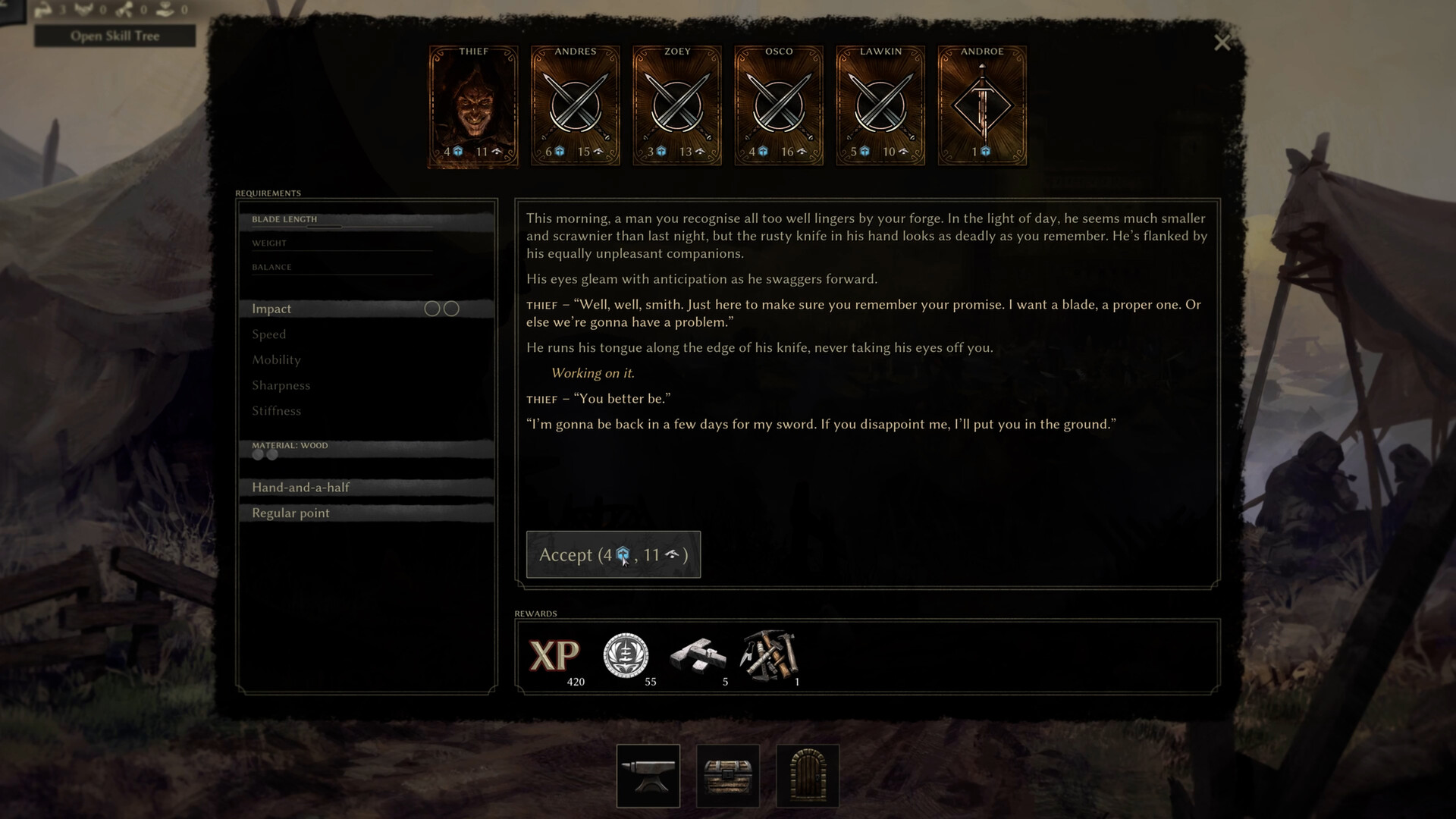
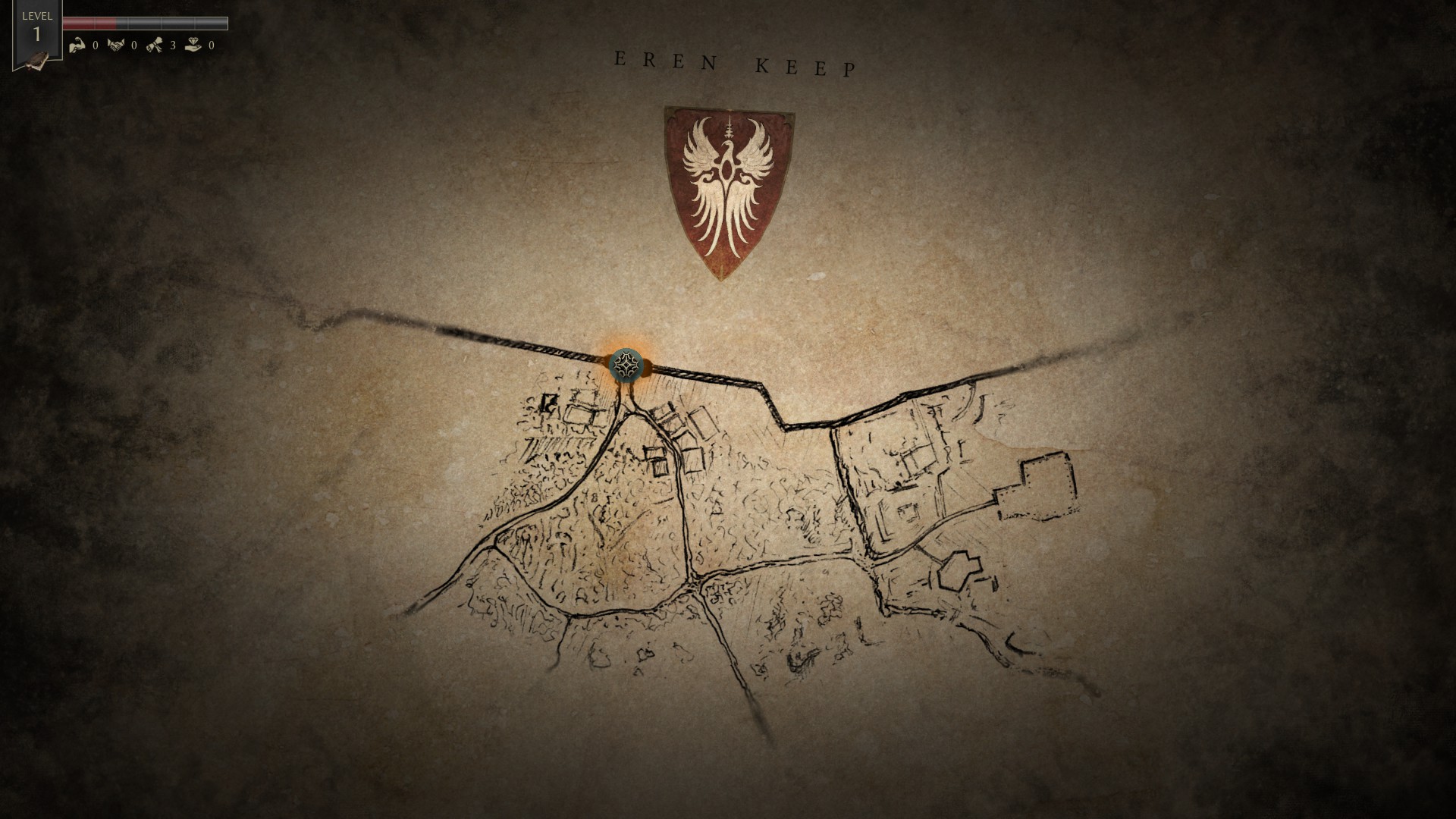
The events and characters don’t only exist on the day they visit your forge. Instead, after work each day, you can venture out into the world and explore. From finding new suppliers of precious materials like steel and leather, to forging (pun intended) alliances with locals in the hope of raising your station and avoiding an untimely death by starvation, beast, or blade…
Meticulous hammering and un-hammering
Once all the shopping is done and you’re thoroughly soaked in the world’s atmosphere, you return to the forge to divvy up your daily Action Points and decide which jobs to take. You can’t do every order every day, so priorities matter. Sometimes you’ll choose based on faction or personality, but other times you’ll be forced to complete whatever orders you actually have the materials for. This makes finding a steady supply of gold, for example, extremely valuable.
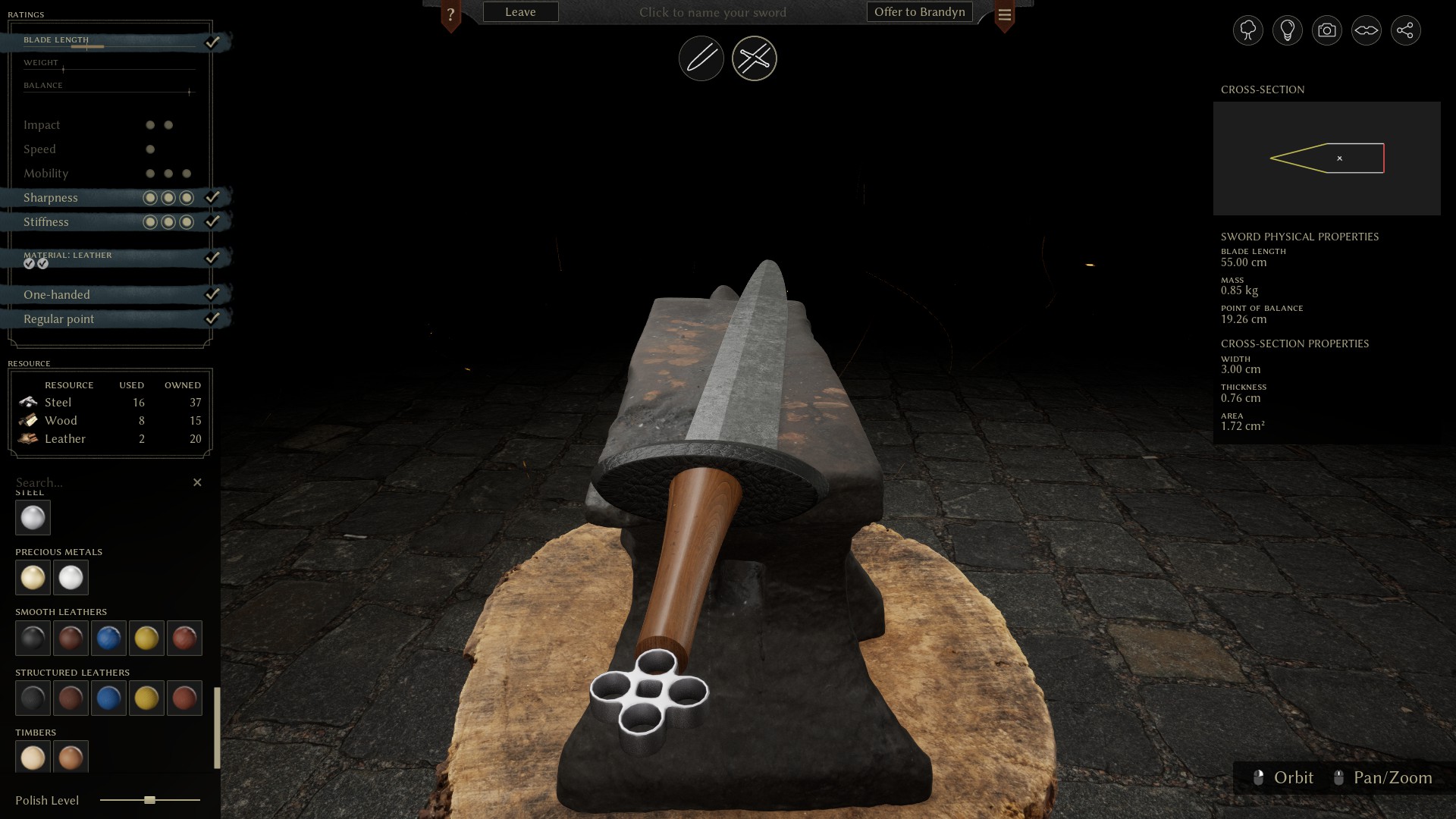
The forging process itself is, in its current state, more leaned towards creativity. That’s not to say some of the higher-class clients don’t have challenging requirements, but even then you are free to change all “Abilities” of a blade at will. Materials are only spent when the sword is finalised. This means you are free to accidentally make the blade 2 inches too wide and subtly “un-hammer” the blade to make it thicker and thinner again. Must be some special magic hammer you inherited.
While it isn’t necessarily realistic, it does make the game more engaging. Without being able to undo changes you could easily soft-lock yourself by wasting materials and failing commissions. More importantly, you wouldn’t learn anything. It is the freedom to say “Well, what happens to the sharpness if I make the blade thicker, but shorter?” and over time your list of techniques grows through your own discovery. Not through the game holding your hand, but through your own inquisitiveness. I can definitely foresee a “Hard Mode” where all changes are permanent but I am glad that the default allows you to experiment.
The tuning of Pocket Circuit or Armoured Core, but swords
Swords are forged using “Abilities”. These are basically statistics the sword has such as “Blade Length” and “Blade Thickness”, or the angle of the “Cross-Section”. There’s more of these to discover, and all allow you to forge differing blades. I once battered my hammer against this lump of steel for 10 minutes trying to get it to somehow have Impact level 3 and sharpness level 3, and I just couldn’t do it. Turns out I left the width of the blade at the hilt as default. After adding the extra width the sword was too cumbersome (And very resource-heavy) so I extended the “Point” ability on the sword so that the angle of the point extended further down the blade. While this made the point angle shallower, it removed more metal from the added width, but only on the point end. This gave me the balance of impact and sharpness I needed.
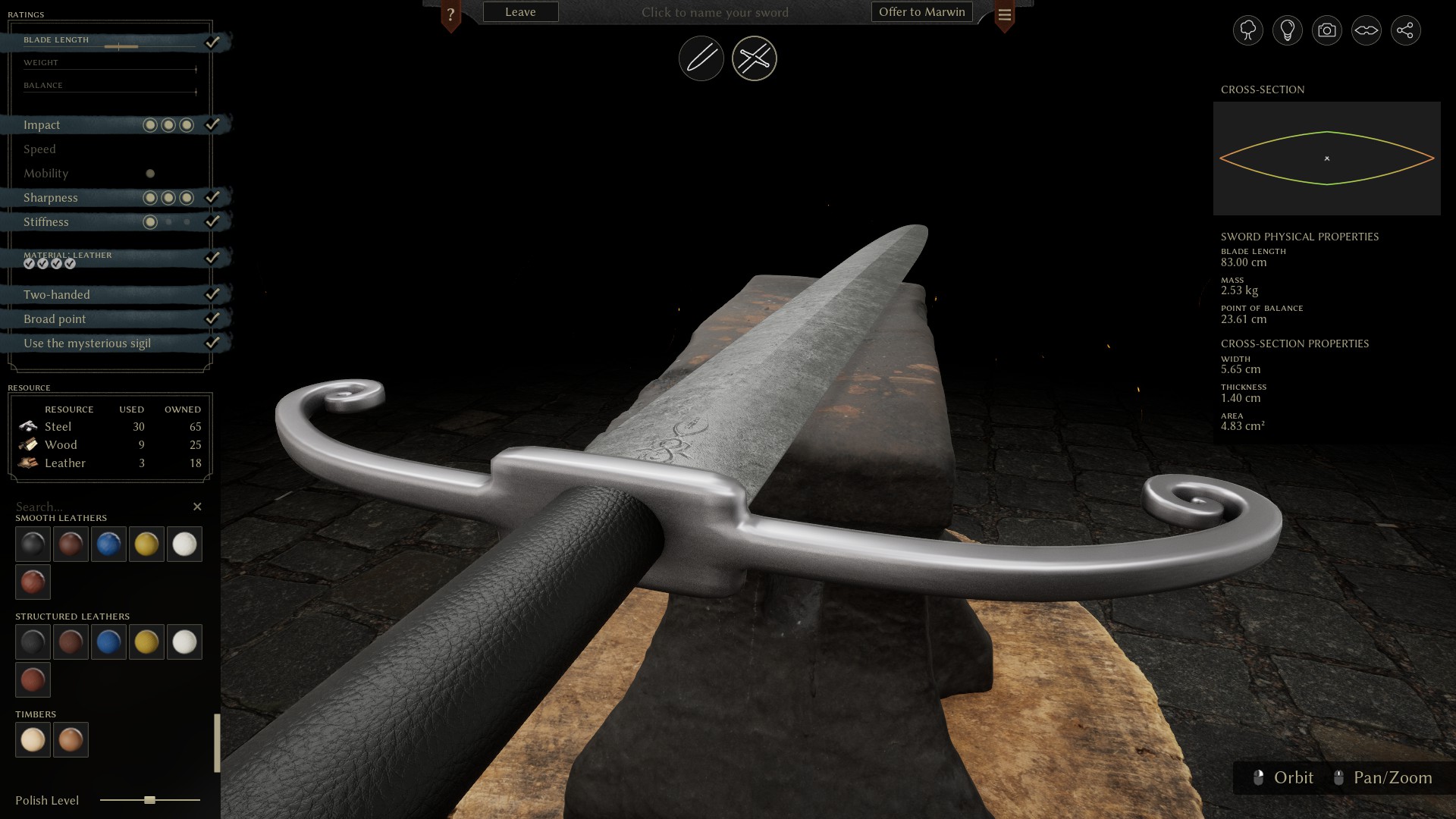
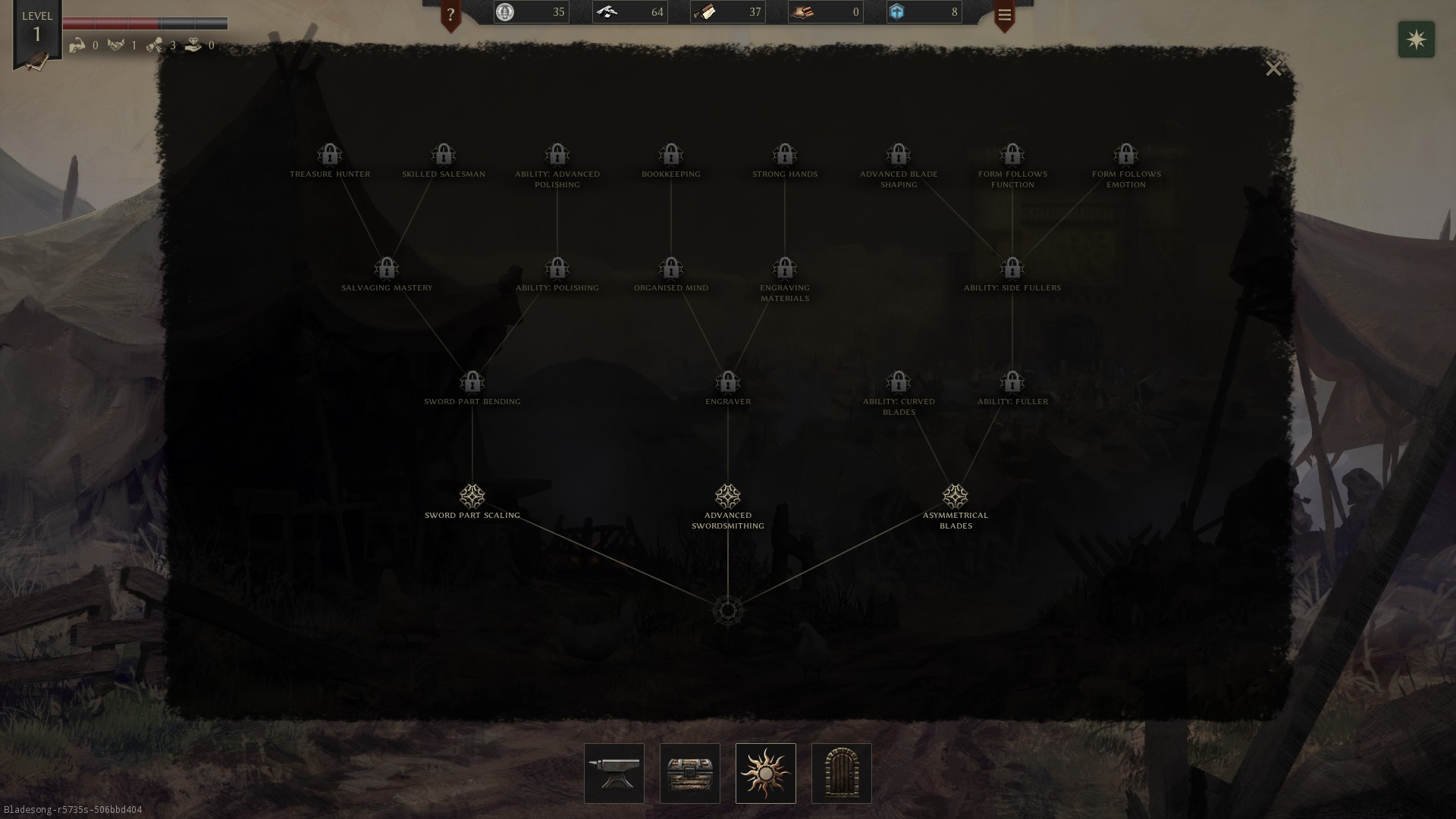
You’ll unlock curvature, engravings, counterweights, cross-guards and more as you play and find new smithing texts – or you can just jump into creative mode with everything unlocked and enjoy smithing your favourite blades.
Bladesong is sharp right off the anvil
Not to glaze the game too much, but I am struggling to find too many downsides to Bladesong, and that’s even taking into account the “It’s early access so missing content” line of thought. You could argue that the smithing is too simple for a game wholly about smithing. My response to that is twofold – firstly, the smithing is exactly as complex as you want or need it to be based on your taste, and the level of jobs you accept. Secondly, the game isn’t wholly about smithing. The game is wholly about being a smith, and being a smith is more than just hammering steel. It’s about clientele, suppliers, and survival.
Bladesong is available now on Steam
